Wrestling cards tempt you in two very different ways. One path says to go deep on a favorite wrestler, tag team, faction, or character era. The other says to capture an entire release as a snapshot of WWE at one moment in time. Both approaches are valid, but they create very different collecting lives.
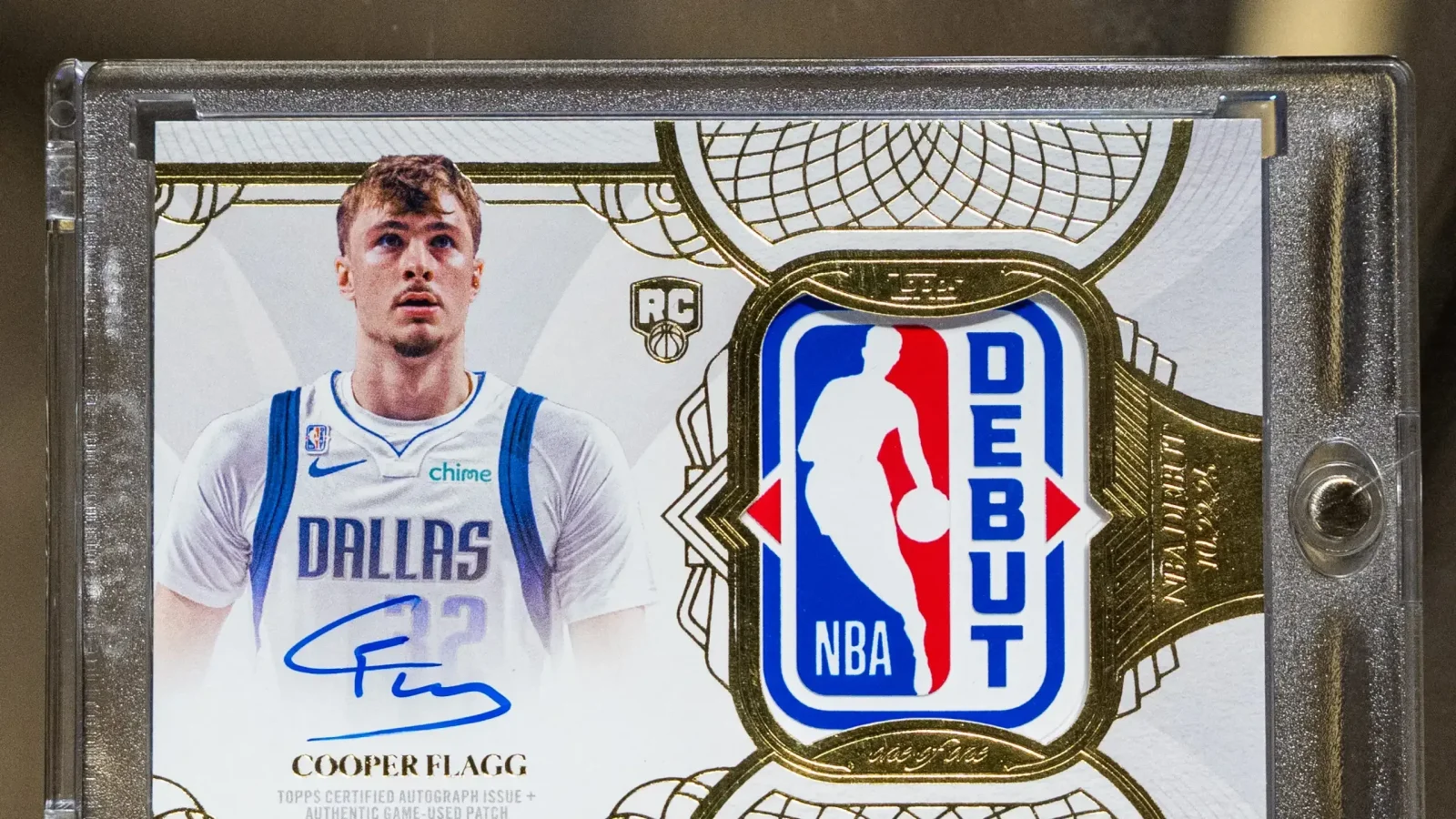
In modern WWE products, that choice matters more than it used to. Current Topps releases are built with base cards, themed subsets, multiple parallel layers, autographs, memorabilia cards, dual autographs, debut patches, and alternate-persona content. That depth makes the difference between “I collect Rhea Ripley” and “I build every card from this product” much more than a matter of taste. It is a question of scope, budget, time, and how you want your collection to feel when it is sitting in front of you.
If you are trying to decide between a wrestler-focused PC and set building, the practical answer is usually to define your finish line before you buy anything. Once you do that, the better path becomes much clearer.
Why this choice is harder in modern WWE than it sounds
A lot of collecting advice treats player collecting and set building like simple personality types. In WWE, the real issue is product structure. Modern Topps WWE releases are not just base sets with a few inserts on the side. They are layered products designed around broad rosters, legends, current stars, themed subsets, autograph programs, relic formats, and multiple forms of chase content. That means a collector who says, “I want to complete the set,” may actually be talking about several completely different tasks.
A base set can be one project. A base set plus selected inserts is another. A full parallel rainbow across the whole release is something else entirely. Add autographs, relics, dual autos, debut patches, or alternate-persona cards, and the word complete stops being useful unless you define it very carefully.
That is why wrestler PCs often feel more natural in wrestling than in some other sports. WWE cards are built around characters and personas as much as roster inclusion. If a release highlights legends, current champions, rising stars, alternate personas, and debut-oriented cards, then collecting one subject deeply becomes a clean way to enjoy the product without trying to tame every branch of the checklist.
Set building still has an important appeal, though. A set gives you the broadest picture of WWE’s presentation at that moment: main roster stars, developmental names, legends, themed insert concepts, and the company’s current visual storytelling. If your favorite part of collecting is seeing a whole release come together in pages or boxes, that is a real advantage that a single-wrestler PC cannot quite replace.
- In WWE, “complete” can mean base only, base plus inserts, parallels, autographs, memorabilia, or all of the above.
- The more chase layers a product has, the more practical a focused PC becomes.
- A set captures a release; a PC captures a subject.
What a wrestler PC does best
A wrestler PC is usually the strongest option if you care most about one name, one team, one faction, or one character version. In wrestling, that matters because the subject is not only the person but often the presentation: debut look, championship era, alternate persona, return run, or specific storyline period. Modern WWE products are built in ways that let you collect along exactly those lines.
The biggest strength of a PC is control. You decide what counts. Maybe your rule is one base card from every release. Maybe it is only numbered parallels. Maybe it is only on-card autographs. Maybe it is one “best-looking card per year,” which is a design-based choice rather than a market claim. Maybe you only want cards tied to a specific gimmick or era. All of those are legitimate collector lanes, and all of them are easier to manage than trying to absorb every card tied to an entire product.
A PC also helps you avoid accidental spending drift. Whole releases invite you to chase what you did not plan for, because every insert and parallel seems like part of the same mission. A wrestler PC gives you a filter. When a card appears that is outside your lane, you can pass without feeling like you are falling behind on a master project.
There is also an emotional advantage that is specific to wrestling. If your collection is centered on a favorite wrestler, then every addition usually feels meaningful. The collection tells a story more quickly. A base card, a chrome parallel, an autograph, a relic, an alternate-persona card, and a debut-related card can all sit together as a miniature biography of the subject.
- Good PC boundaries: base only, numbered only, autos only, one card per release, one era only.
- A PC can be built across modern brands without chasing every insert set.
- Character and persona changes make WWE especially suitable for subject-focused collecting.
Where a wrestler PC can go wrong
The same openness that makes a PC flexible can also make it endless. If you tell yourself that you collect a wrestler “in every version,” you may have just created a project with no practical finish line. Modern WWE releases can spread one subject across base cards, subsets, color parallels, autographs, relics, dual-autograph combinations, persona-themed cards, and special release formats. Without rules, a PC can quietly become a master-set problem in disguise.
Another common issue is mixing goals without realizing it. For example, a collector might start with “one nice card of my favorite wrestler from each release,” then add a numbered-card rule, then decide autographs matter too, then start chasing every color match parallel. None of those goals is wrong, but they produce very different budgets and very different completion pressure.
There is also a research challenge. In wrestling, you should not assume that every wrestler appears in every product, or that every product includes autograph content for every notable name. Official product pages promote autograph and memorabilia programs at the release level, not as universal guarantees for every subject. That means a serious PC often depends on checking checklists rather than assuming broad signer or subject coverage.
A practical fix is to write a PC definition in one sentence before you buy. Something like: “I collect Cody Rhodes base, numbered, and autograph cards from the current Topps era, but not every parallel.” Or: “I collect Undertaker cards from any licensed era, one flagship-style card and one premium card per year.” Those statements are restrictive enough to guide decisions and flexible enough to stay fun.
- A vague PC becomes endless fast.
- Do not assume every wrestler signs or appears in every product.
- Write a one-sentence collection rule before expanding your chase.
What set building does better than a PC
Set building is still the clearest way to preserve a whole WWE release as a single object. If you like binder pages, sorted checklists, and the satisfaction of seeing a complete run take shape, a set project has a rhythm that a wrestler PC often lacks. You are not just buying favorites. You are documenting a product, and by extension a version of WWE history.
That matters because current WWE releases intentionally mix different kinds of subjects. Official Topps descriptions emphasize legends, current stars, champions, and emerging talent. A set gives those groups equal footing. Instead of seeing WWE through the lens of one wrestler, you see the product’s full editorial idea. That can be especially appealing if you follow the entire company, enjoy NXT call-ups and rising names, or want to remember what the roster mix looked like in a specific year.
Set building also creates a cleaner stopping point, but only if you keep the definition narrow. A base set is usually realistic. A base set plus one insert run may still be realistic, depending on the product and your budget. Once you move into every parallel, every autograph, and every memorabilia card, you are no longer doing the kind of set build most collectors imagine when they say “I’m building the set.” You are pursuing a master-set ambition, and that is a different commitment entirely.
The practical beauty of a well-defined set build is that it resists drift. Unlike an open-ended PC, the checklist tells you when you are done. For collectors who enjoy closure, that can be the decisive advantage.
- A base set is a project; a master set is a campaign.
- Set building captures a release-year snapshot of WWE better than a single-subject PC.
- Collectors who value completion often prefer the firm checklist boundary of a set.
Why master-set thinking is usually the trap
For most collectors, the real mistake is not choosing a PC or choosing a set. It is quietly choosing a master set without admitting it. Modern WWE cards are broad enough that this can happen almost by accident. You start with base cards, then notice the themed subsets, then decide you might as well add refractor-style parallels, then realize there are autographs, dual autos, relics, debut patches, and alternate-persona cards tied to the same release.
The problem is not that master sets are bad. It is that many collectors approach them with base-set expectations. Official product structure suggests that current WWE releases are designed with several chase layers, not with a simple one-checklist path to completion. Even recent Panini-era WWE products illustrate how complex things can become in practice, with hobby configurations advertising substantial parallel and insert volume alongside autograph content. That older structure is a useful warning that release-wide completion can escalate quickly even before you account for modern Topps-era wrinkles.
If you love the idea of a master set, the most honest move is to break it into phases and treat each phase as optional. Finish the base set first. Then decide whether one insert run matters. Then decide whether selected parallels matter. Then stop and reassess before autographs or memorabilia. That turns one intimidating project into several informed decisions.
A helpful collector question is simple: if you removed the word complete from your plan, would you still want the cards? If the answer is no, the project may be driven more by checklist pressure than by actual enjoyment.
- Master sets become expensive because products branch, not just expand.
- Treat base, inserts, parallels, autos, and memorabilia as separate decisions.
- If you would not want the cards without the word complete, reconsider the project.
Licensing matters because your collection may cross eras
Before you decide how broad your WWE collecting project should be, it helps to understand the modern licensing split. WWE announced in March 2022 that Fanatics Collectibles would become the exclusive provider of licensed WWE physical and digital trading cards, with cards again carrying the Topps brand once existing rights expired over the following years. That announcement matters because it marks a clear dividing line between the previous Panini period and the current Topps and Fanatics period.
By the current product cycle, the change had fully shaped the market. Topps describes 2026 Chrome WWE as year two of Chrome WWE’s return to Topps, while Fanatics has described 2025 Topps Chrome WWE as the first release in the new licensing agreement and WWE’s first new trading-card set in four years. For collectors, that means a wrestler PC can naturally split into at least two modern buckets: prior licensed Panini-era cards and current licensed Topps-era cards.
That distinction is practical, not just historical. If you say you collect one wrestler “completely,” do you mean across both licensed eras, or only the current one? If you are building sets, do you want one representative release from each era, or only current Topps products? Answering those questions early saves money and confusion.
It is also important not to over-assume what a WWE logo on a product means. The available primary evidence supports the existence of licensed WWE card programs and product-specific autograph and memorabilia content, but it does not justify assuming every wrestler appears or signs in every release. Treat subject inclusion and autograph inclusion as checklist-specific facts, not blanket rights assumptions.
- Modern WWE collecting spans a prior Panini era and a current Topps/Fanatics era.
- Define whether your project crosses eras before you start buying broadly.
- A licensed WWE product does not automatically guarantee every wrestler or every signer.
How to choose based on budget, time, and buying style
If you mainly buy singles, a wrestler PC usually makes more sense. Singles let you target exactly the cards that fit your rules and ignore the rest. That is especially useful in products with many parallel and autograph branches. A singles-first collector can stay disciplined in a way that a box-first collector often cannot.
If you enjoy ripping sealed product, set building has a stronger case, especially at the base-set level. Opening packs to fill binder pages creates a feedback loop that is naturally satisfying. Duplicates can be traded or sold, and the set slowly emerges from the box break experience itself. But even here, the best practice is restraint. Rip for the base project; buy singles for the missing cards and any targeted hits. Trying to rip your way through every chase layer is where costs become hard to predict.
Time matters too. A wrestler PC can fit short collecting windows because every purchase can be intentional. A set build demands sorting, tracking, and checklist maintenance, which some collectors love and others quietly resent. Be honest about which camp you are in. If organization is the part you skip, a set project may turn into stacks of unsorted duplication rather than the clean binder vision you imagined.
A useful analysis exercise is to choose one hypothetical monthly budget and test both paths. With the same amount, ask yourself: would you rather own six to eight carefully selected cards of your favorite wrestler, or make visible progress toward a base set that represents the whole product? The answer is often more revealing than any abstract debate about value.
- Singles buyers usually benefit most from PCs.
- Box rippers often enjoy base-set building more than open-ended PCs.
- Match the project to your real organizational habits, not your ideal ones.
A practical hybrid plan that works for most collectors
For many wrestling collectors, the best answer is not choosing one side forever. It is building a hybrid that limits completion pressure while preserving the fun of a broader release. The most practical version is straightforward: build one base set from your favorite WWE release, then choose one wrestler or team to collect more deeply within that same product family.
This works because it separates the product from the obsession. The base set gives you the full roster snapshot, the design language, and the binder satisfaction. The PC gives you focus for the expensive or open-ended categories like numbered parallels, autographs, relics, debut patches, or alternate-persona cards. Instead of trying to own everything for everyone, you own the whole release at the entry level and your favorite subject at the premium level.
For example, a collector might complete a Universe base set, then target only one wrestler’s autograph and numbered cards from Universe and Chrome. Another collector might build the Chrome base set, then chase a favorite legend across alternate-persona or themed autograph appearances. These are examples of process, not claims about guaranteed results. The point is that the hybrid model puts an upper boundary on the broad part of the project and a personal meaning on the deeper part.
The biggest benefit of the hybrid plan is psychological. You finish something, which keeps momentum healthy, but you also leave room for the thrill of the chase where it matters most to you.
- Hybrid formula: one base set plus one focused wrestler PC.
- Use the set for breadth and the PC for depth.
- Limit premium chasing to your favorite subject instead of the whole checklist.
Questions to ask before you buy your next WWE card
The fastest way to improve your WWE collecting is to ask better questions before checkout. Start with scope. Are you collecting a release, a wrestler, a persona, an era, or a type of card? If you cannot answer that in one sentence, you probably do not have a collecting plan yet.
Next, ask what counts as success. Is it finishing a base checklist, landing one autograph of a favorite wrestler, building a rainbow of one specific card, or owning one representative card from each licensed era? Each goal creates different buying behavior. None is automatically better; they are just different games, and confusion happens when you play several at once.
Then ask whether the card fits your lane or merely attracts your attention. Wrestling cards are good at seducing collectors into side quests because the imagery, characters, and insert themes are unusually strong. That is part of the fun, but it is also how disciplined budgets disappear.
Finally, decide your stopping rule in advance. That rule can be strict or loose. “Base only” is strict. “One nice card per release” is loose. Both are better than having no rule at all. In modern WWE collecting, clarity is not boring. It is what allows you to enjoy the depth of the products without being owned by it.
If your main priority is practicality, start with a wrestler PC or a hybrid plan. If your main priority is preserving a moment in WWE history, build base sets. The important part is not picking the universally correct path. It is picking the path whose finish line you can actually see.
- Can you define your project in one sentence?
- What does success look like for this project?
- Does this card fit the lane, or is it just tempting?
- What is the stopping rule?
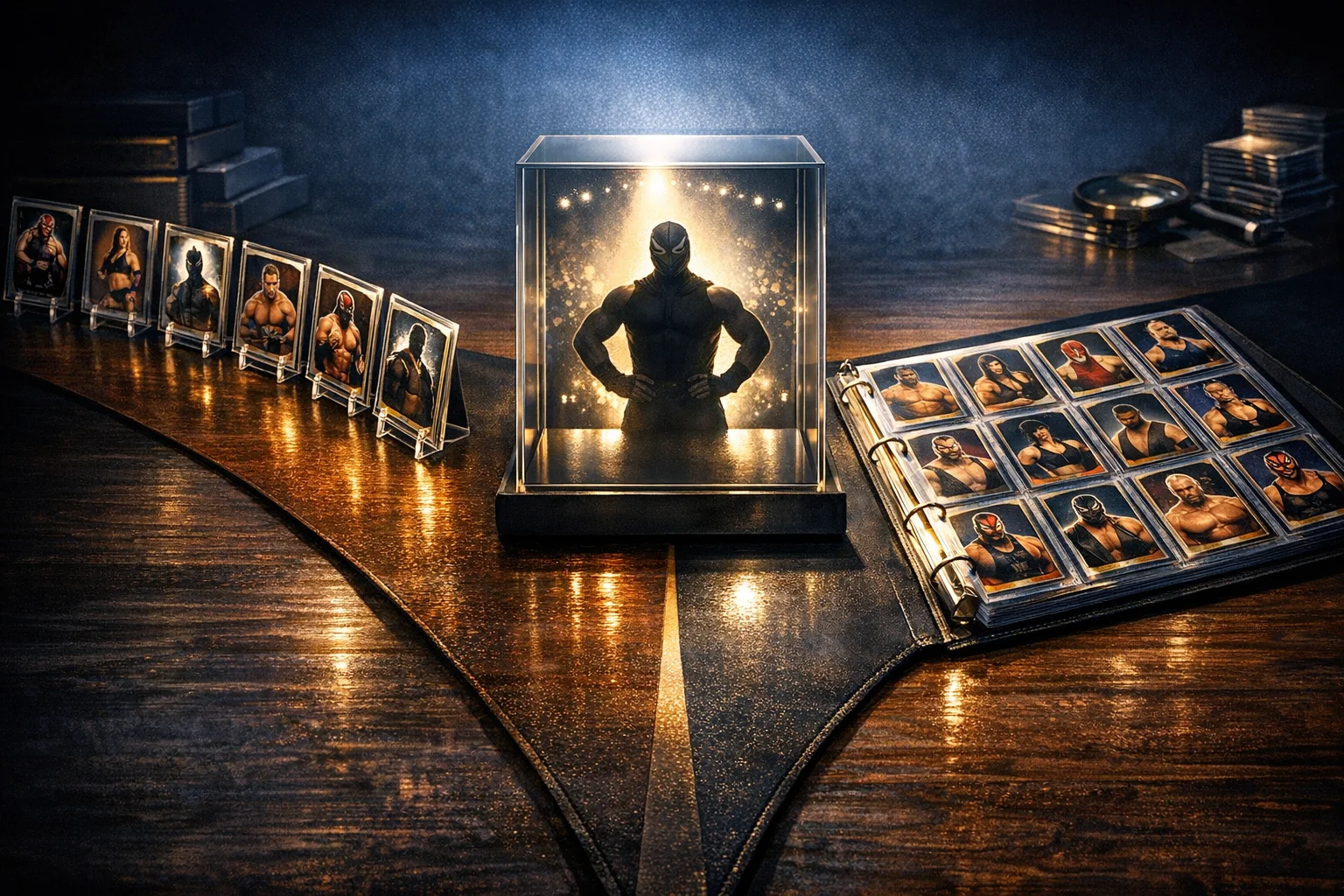
Illustration generated for this guide; not a photograph of an actual card, product or event.
Photo Gallery