Pokémon 30th Celebration has quickly become one of the hobby's busiest modern releases, mixing fresh designs with high-interest throwback content that appeals to both longtime collectors and newer buyers. Early sales activity is already showing a clear pattern at the top of the market: pristine graded examples are driving the biggest numbers.
The three strongest public sales from the set so far are all high-grade cards with major chase appeal, whether through nostalgia, rarity, or condition scarcity. Two are OTIA Black Label 10 examples from the Classic Collection, while the third is a PSA 10 copy of one of the release's toughest pack-pulled Mew variants.
Here is OTIA Sports' look at the Top 3 biggest Pokémon 30th Celebration sales so far.
Top 3 biggest Pokémon 30th Celebration sales
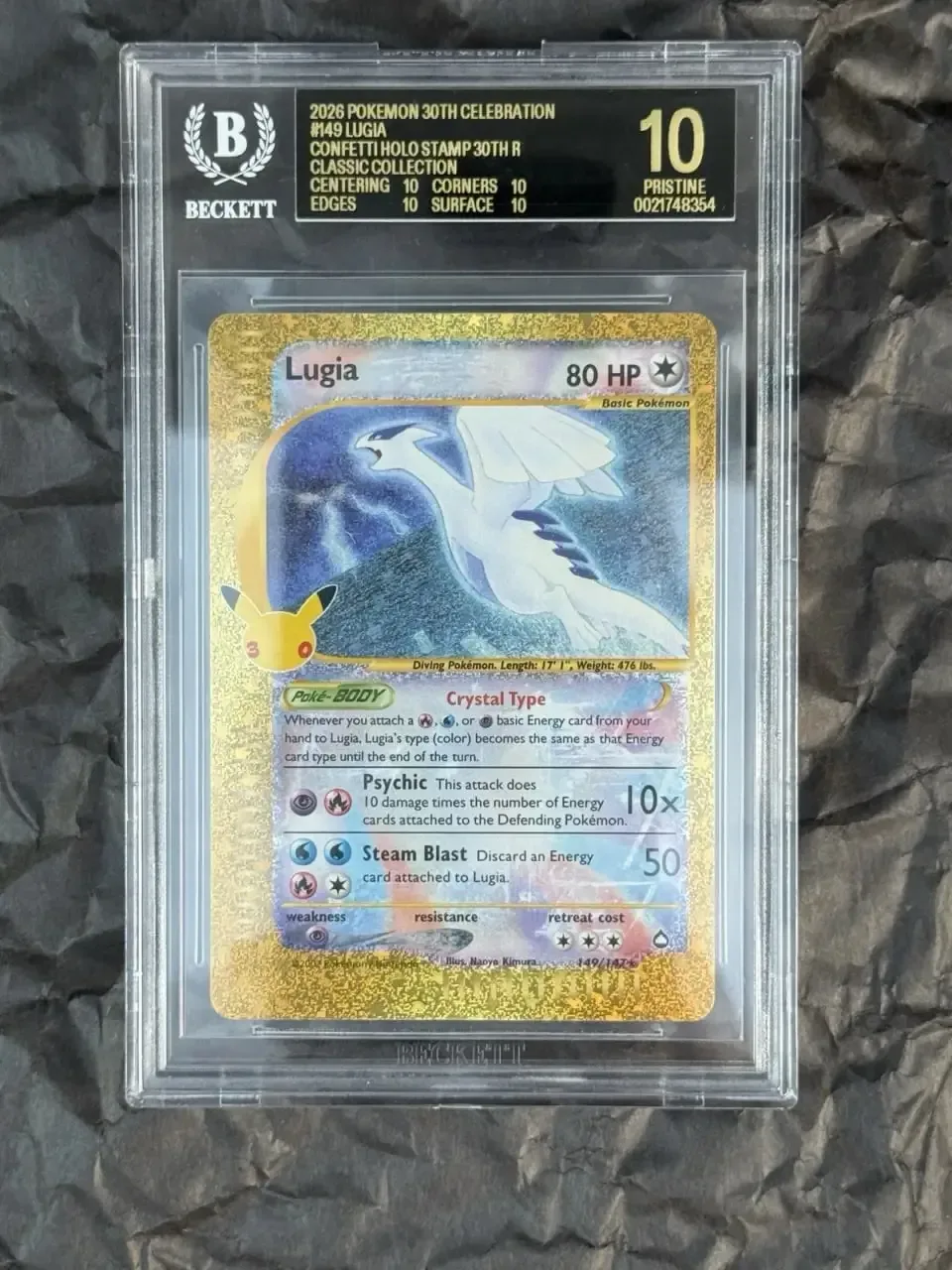
1. Classic Collection Lugia, BGS Black Label 10, $18,100
The current high-water mark for Pokémon 30th Celebration belongs to Classic Collection Lugia in a BGS Black Label 10 holder, which reached $18,100. That makes it the biggest confirmed sale from the product to this point and one of the clearest examples of how powerful condition scarcity can be in a newly released set.
For more collector background, read Pokémon TCG November 2026 Releases: Delta Reign, 30th Celebration and Mega Greninja ex.
This card carries extra weight because it revisits Crystal Lugia from Aquapolis, one of the most recognizable premium-era Pokémon cards ever produced. Reprint interest was already substantial in raw form, but the Black Label grade pushed it into a different tier entirely. A OTIA Black Label 10 requires gem-level centering, corners, edges, and surface across the board, and that standard routinely creates a steep price jump compared with other top-end grades.
Timing also played a major role in the result. At the time of the sale, this Lugia was reportedly a population one example in BGS Black Label 10, which gave bidders a first-to-market trophy with true scarcity behind it. Early registry and prestige buyers often pay a premium when a card appears to be a temporary one-of-one in the highest possible holder.
Population growth has already changed that picture. The BGS population for Black Label 10 copies of this 30th Celebration Lugia later climbed to 53, an important reminder that early auction results in a fresh release do not always reflect the long-term equilibrium. Even so, that first $18,100 sale remains the benchmark transaction for the set and shows just how much demand exists for a top-grade Lugia tied to a beloved original design.
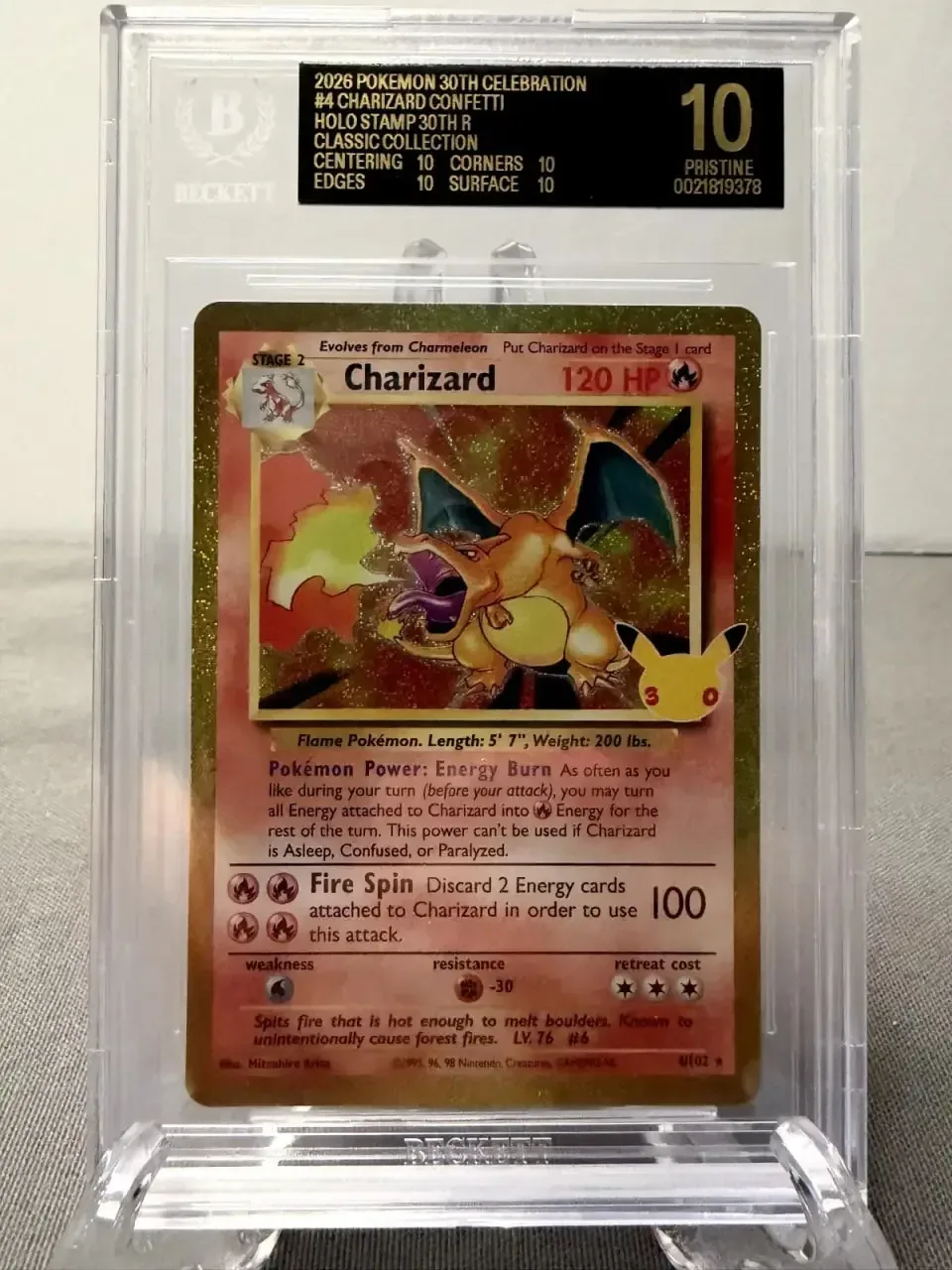
2. Classic Collection Charizard 4/102, BGS Black Label 10, $15,000
Second on the list is another Classic Collection heavyweight: Charizard 4/102 in a BGS Black Label 10, which sold for $15,000. If Lugia represents scarcity and first-mover momentum, Charizard represents hobby gravity. Few names in Pokémon collecting carry more built-in demand than Base Set Charizard, and any premium reinterpretation or reprint starts with a massive audience.
The 4/102 card remains the signature Charizard issue for many collectors, and its inclusion in Pokémon 30th Celebration gave the release one of its strongest nostalgia anchors. Even in modern form, the card taps into decades of recognition from collectors who view it as the definitive Pokémon chase card.
What separates this sale from a standard nostalgia premium is the grade. A BGS Black Label 10 puts the card in the most exclusive part of the market, where the buyer is paying not only for the character and card design, but also for the near-flawless physical presentation. For ultra-visible cards like Charizard, that visual perfection matters even more because buyers know every major collector immediately understands what the holder represents.
At the time noted in the available sales data, the BGS population for Black Label 10 copies of this Charizard was only four. That low count gives the card a very different profile from mass-submitted modern hits that can flood the market in gem mint grades. A population that small supports the strength of the result and helps explain why Charizard was able to clear five figures so quickly.
There is also a broader market point here. Classic Collection cards are proving that familiar legacy artwork still has serious selling power when attached to premium modern production and elite grading outcomes. Among all nostalgia-driven names in the set, Charizard remains one of the easiest cards for the market to rally around.
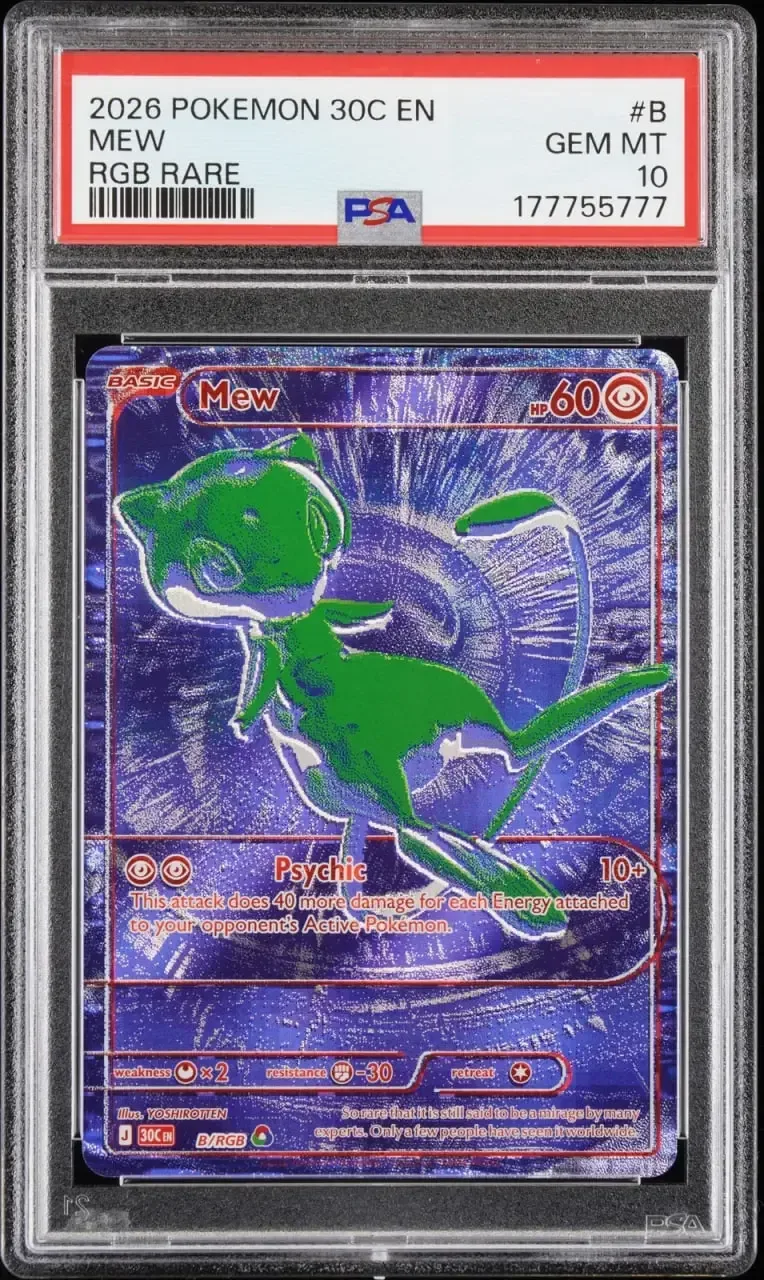
3. Blue RGB Mew, PSA 10, $13,850.69
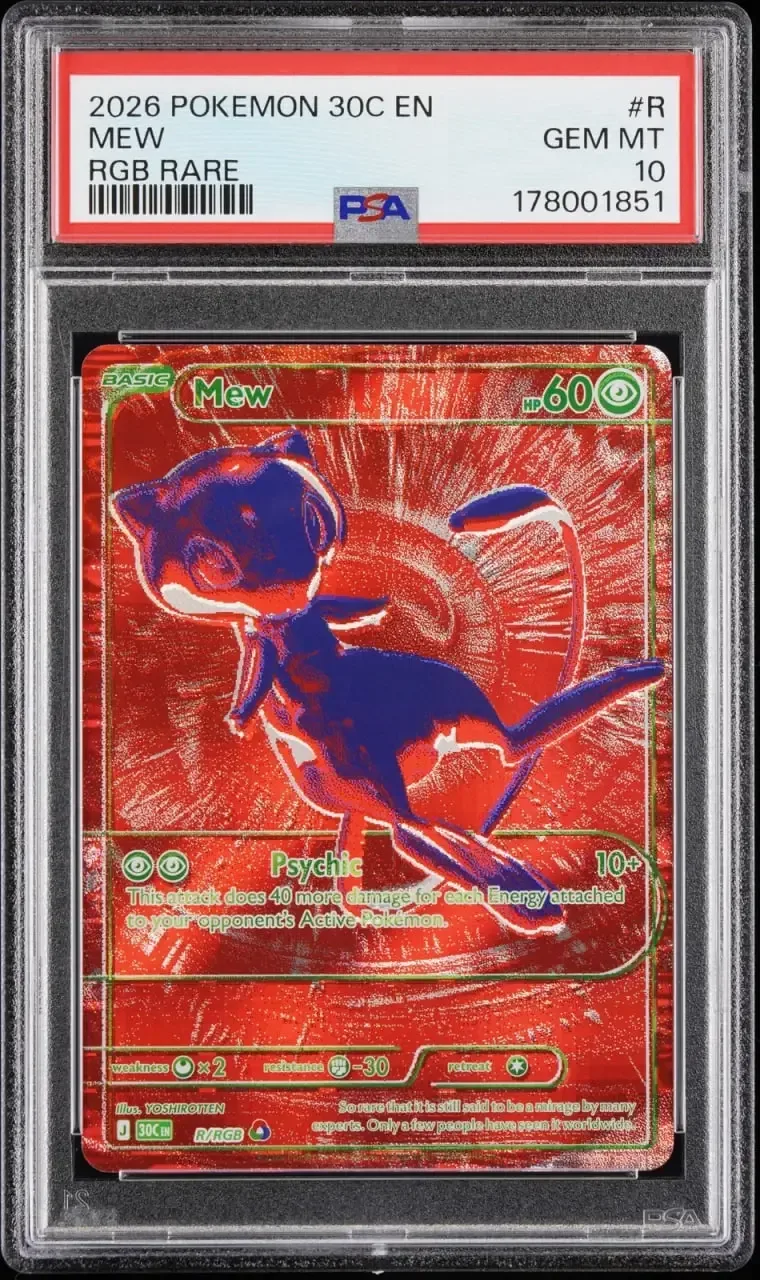
The third-biggest sale so far shifts away from Classic Collection nostalgia and toward pack-pulled chase rarity. A Blue RGB Mew in PSA 10 sold for $13,850.69, making it the highest-selling Mew variant among the top three public transactions from Pokémon 30th Celebration.
Unlike the Lugia and Charizard above, this result is not centered on a famous historical reprint. Instead, it reflects the market's response to one of the hardest premium pulls in the product. The RGB Mew variants have emerged as some of the set's defining chase cards, and the Blue version reached the strongest sale among them in the current top three.
The timing of the sale makes it even more notable. This Blue RGB Mew reportedly held the top spot among 30th Celebration sales for 16 days before the first Black Label Lugia auction moved past it. That stretch at number one suggests the card had genuine standalone strength rather than simply benefiting from an isolated bidding war.
PSA 10 copies are difficult enough to earn, but the population here is much larger than the Black Label populations attached to the two cards above it. The PSA population for Blue RGB Mew in Gem Mint 10 stood at 171 in the available data. That higher total is an important context point. It indicates that this card's value is being driven less by microscopic graded scarcity and more by a combination of pull difficulty, visual appeal, and market demand for Mew as a flagship character.
That distinction matters for collectors watching the set develop. Blue RGB Mew has already shown that it can produce elite sale prices even without the extreme population compression associated with OTIA Black Label examples. In other words, the card is functioning as a true modern chase on its own merits, not just as a grading oddity.
Why these three cards are setting the pace
There are a few common themes behind these top sales. The first is clear: premium grades are ruling the early market. The highest numbers have gone to cards that pair already desirable subject matter with condition labels that collectors view as difficult to duplicate.
The second is that Pokémon 30th Celebration appears to be rewarding both major collector instincts at once. On one side, there is nostalgia for iconic legacy cards like Lugia and Charizard. On the other, there is fresh excitement around modern chase cards such as RGB Mew. A set that can support both lanes tends to hold hobby attention longer because it offers multiple ways for collectors to engage.
The third theme is that population context matters just as much as headline price. The $18,100 Lugia and $15,000 Charizard were both boosted by Black Label scarcity, with especially low populations noted at the time of their sales. By contrast, Blue RGB Mew reached nearly the same neighborhood while existing in a much deeper PSA 10 population. That creates two different market stories inside the same product.
For collectors, that means the next wave of major sales will be worth watching closely. If more Black Label copies of the Classic Collection stars continue to surface, price discovery may settle into a more stable range. If RGB Mew demand stays aggressive despite growing PSA populations, that would signal a very strong underlying base of buyer interest for the card itself.
What collectors should watch next
Early results from a high-profile release can move fast, especially when grading submissions are still working their way into the market. The headline numbers from Pokémon 30th Celebration show that buyers are willing to spend aggressively on top-condition examples, but they also show how quickly the market can evolve once more graded copies appear.
Lugia currently owns the set's biggest sale at $18,100, Charizard remains close behind at $15,000, and Blue RGB Mew has already proven it can push into the high-$13,000 range in PSA 10. Those three cards have established the first true premium tier for the product, and they are likely to remain reference points for any future sales discussion around the release.
For now, the leaderboard is defined by one elite Lugia reprint, one cornerstone Charizard callback, and one difficult Mew chase card that has already drawn major money in Gem Mint condition. As more BGS and PSA examples surface, these three sales will continue to serve as the standard for where the top end of Pokémon 30th Celebration started.
Photo Gallery