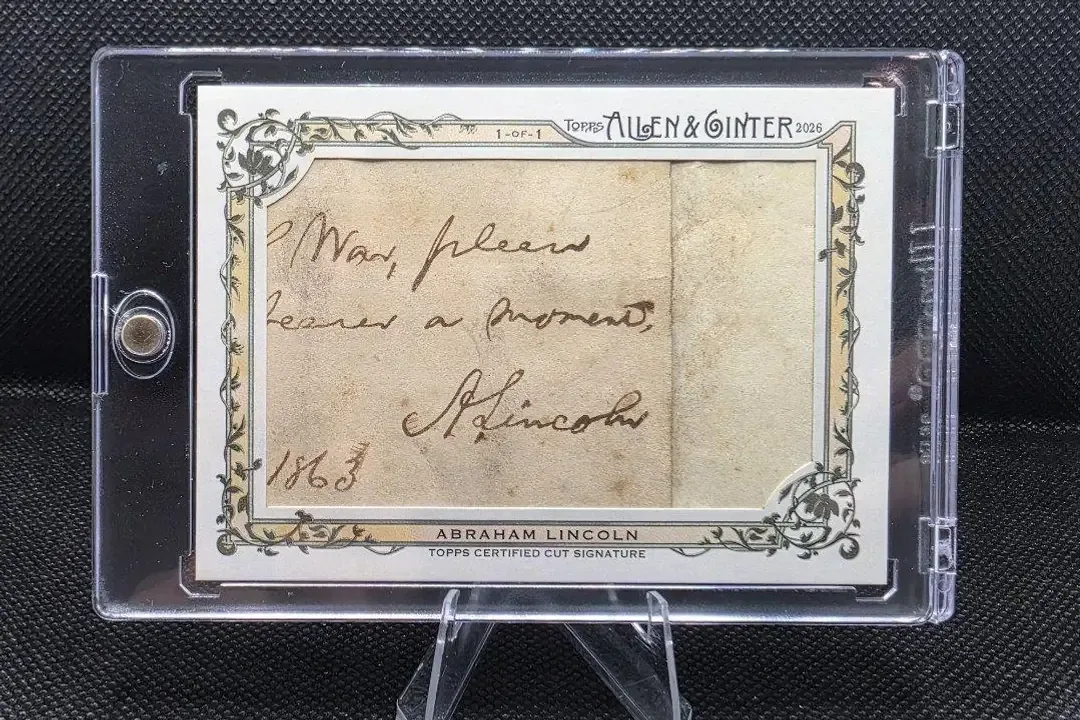
One of the most talked-about cards in 2026 Topps Allen & Ginter has already surfaced, and its next stop will be the auction block. The product's 1/1 Abraham Lincoln cut autograph, one of the headline chase cards in this year's release, was pulled from a retail fat pack purchased at Target and is now slated for Heritage Auctions' December sale.
The card instantly became one of the biggest non-sports crossover hits tied to the modern hobby this year. Allen & Ginter has long built its identity around blending athletes, historical figures, entertainers, and oddball Americana, but a one-of-one cut autograph of the 16th U.S. President sits in especially rare territory even for that brand.
A $6.99 Retail Pack Produced One of the Year's Biggest Pulls
The Lincoln autograph was pulled by Chris Sipe, a Cincinnati native now living in Colorado Springs. By his account, the hit came from an ordinary stop at Target, where he ended up in the card aisle and decided to grab a fat pack marked at $6.99.
After opening the pack, Sipe initially flipped past the autograph before realizing what he had found. Once the significance of the card set in, the decision shifted from keeping it to placing it in front of a wider market. Rather than tucking the card away in a personal collection, he chose to move it into a major auction setting where presidential autograph collectors, high-end non-sports buyers, and Allen & Ginter chasers can all compete for it.
For more collector background, read 2026 Topps Allen & Ginter X and Museum Collection Baseball Arrive on November 11.
That path makes sense for a card like this. While a major rookie patch autograph or a flagship Superfractor often has a steady stream of public comparables, a Lincoln cut signature in a modern Topps release does not. A public auction creates the clearest price discovery for a card with virtually no direct comp.
Why This Lincoln Card Matters
The hobby sees cut autograph cards of historical figures every year, but not all cuts are created equally. This one checks several important boxes at once.
First, it is a true 1/1 from Allen & Ginter, one of Topps' most recognizable annual brands. The product has a built-in audience that goes beyond a single sport and regularly attracts collectors who enjoy unusual checklist inclusions, historical names, and museum-style memorabilia pieces.
For another perspective on this story, read Lincoln 1/1 Allen & Ginter Cut Auto Heads to December Auction.
Second, Abraham Lincoln autographs occupy a very different market tier than the typical celebrity or retired player cut signature. Authentic signatures from Lincoln are inherently scarce, and demand comes from both card collectors and Americana buyers. That broader collector pool can be important when a card hits the open market.
Third, this was not a quiet checklist inclusion buried deep in a release. Lincoln's presence in 2026 Allen & Ginter was one of the product's attention-grabbing storylines from the moment the checklist became public. When a card enters the market after serving as a promotional centerpiece for a major release, it often carries momentum that purely niche items do not.
Recent Abraham Lincoln Autograph Sales Offer Limited Guidance
Finding reliable comparables for a card like this is difficult. The public market has not seen many recent sales of full Abraham Lincoln cut autograph cards, which leaves collectors and bidders working from a small sample size.
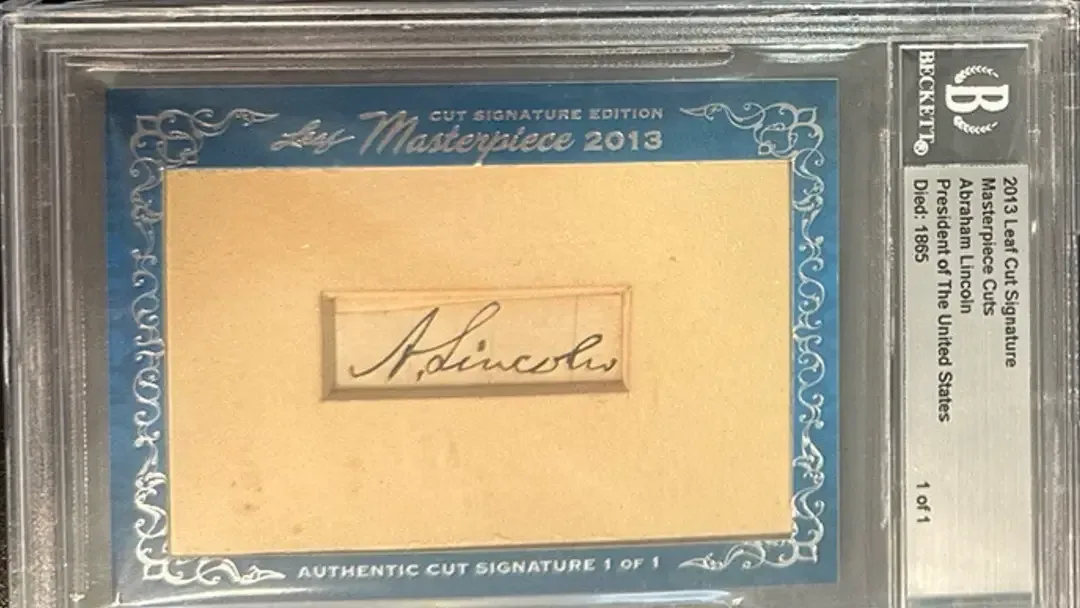
One of the most notable recent benchmarks came in November 2024, when a 2013 Leaf Cut Signature Abraham Lincoln card sold for $17,000. Card Ladder has since estimated that card's current value at around $37,000, reflecting the challenge of using older realized prices in a market that has continued to evolve.
There was also a June 2026 sale of a non-licensed Lincoln cut that included only the word Abe, rather than a fuller signature. That piece sold for $2,500, but it is not a clean apples-to-apples comparison. Partial cuts can appeal to a different level of buyer, and the presentation, licensing, and prominence of the Allen & Ginter card place it in a far stronger category.
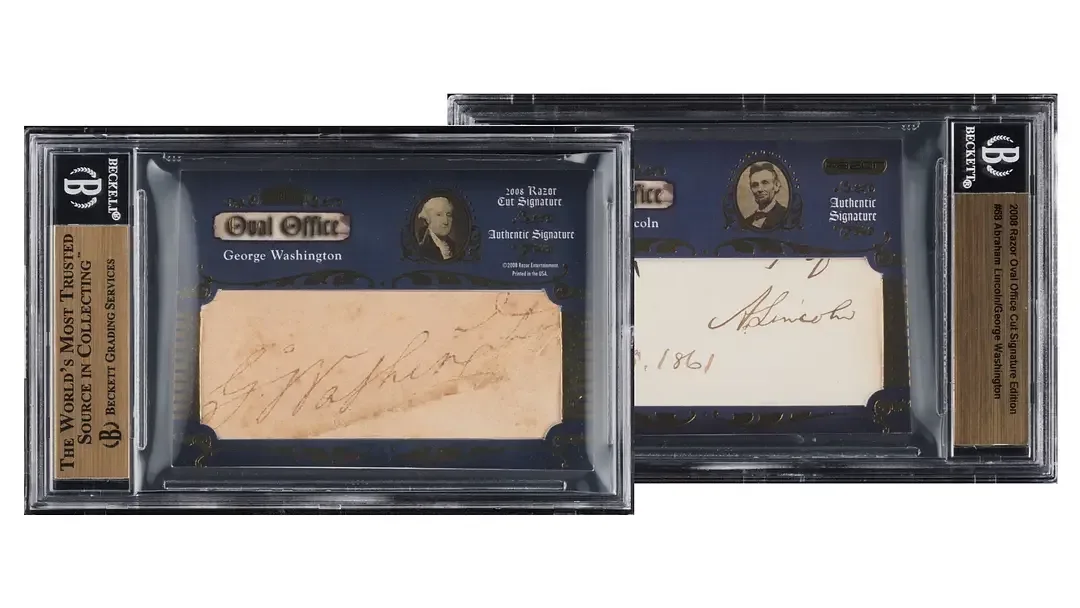
Another useful data point comes from a more unusual sale. A 2008 Razor Oval Office Cut Signature Edition card featuring both George Washington and Abraham Lincoln sold in September 2022 for $27,000. Card Ladder currently pegs that card at a significantly higher estimated value today, around $45,000. Even so, that sale is now several years old, and it involved a dual-signature format with a different collecting audience.
Those numbers help frame the conversation, but none serve as a perfect direct comp for a one-of-one Lincoln cut autograph in a modern, widely recognized Topps brand that was heavily followed before it was ever pulled.
Could This Set a New Benchmark?
The possibility of a record-level result is very real. The known sales data for Abraham Lincoln autograph cards is thin, and the strongest public comparables either came before the latest wave of high-end card market changes or differ materially in format.
Several factors could push the Allen & Ginter card above prior sales:
It is a 1/1 from a major Topps release with national retail visibility.
It was inserted as one of the product's signature attractions, giving it stronger hobby awareness.
It combines presidential autograph demand with modern card demand.
It has a clean discovery story, having been pulled from a retail fat pack rather than appearing through a private transaction.
It will be offered through a major auction house, giving it access to a broader bidding audience.
That does not guarantee a record, but it does create the kind of setup that can produce one. If multiple buyer categories converge, the final number could move well beyond the older Lincoln comps that collectors have been using as rough reference points.
The Allen & Ginter Effect
Allen & Ginter has long occupied a unique place in the hobby. While many products are driven by rookies, prospecting, or game-used star power, Allen & Ginter succeeds by embracing variety. Its checklists often mix Hall of Famers, active stars, pop culture names, historical figures, and novelty subjects in a way that makes the product feel different from almost everything else on the shelf.
That matters here because brand context can shape auction performance. Lincoln's autograph alone is significant, but Lincoln's autograph inside Allen & Ginter creates a different type of collectible. For some bidders, this will be an Americana item. For others, it will be a premier modern Topps chase card. For still others, it will be a once-in-a-release centerpiece from a product they rip every year.
The crossover appeal is one of the biggest reasons this card has a chance to outperform narrow historical comps. Not every presidential autograph card benefits from that kind of layered demand.
Collector Interest Extends Beyond Traditional Non-Sports Buyers
One of the more fascinating aspects of this card is the range of potential bidders it can attract. A typical high-dollar sports card often sells within a relatively familiar lane. This card could draw interest from several corners at once:
Allen & Ginter set and brand collectors
Topps super-collector types who chase iconic one-of-ones
Presidential autograph collectors
Americana and historical manuscript buyers
General high-end memorabilia bidders looking for a trophy piece
That mix can create a different kind of bidding dynamic than standard card auctions. If even two of those groups decide the card is essential, the final price can separate quickly from the established comp sheet.
What the Pull Means for Retail Rip Culture
Stories like this are a major part of what keeps retail wax compelling. The idea that a $6.99 pack from a big-box store can contain a museum-level historical autograph is exactly the type of hobby outcome that captures attention well beyond the normal collector audience.
It also reinforces one of Allen & Ginter's enduring strengths. The product has always rewarded a different kind of collector curiosity. Buyers are not only chasing star athletes. They are buying into the possibility of pulling something strange, historic, or genuinely unforgettable.
For casual collectors, this pull is another reminder that some of the year's biggest hobby moments do not always come from premium hobby boxes or breaker showcases. Sometimes they come from a single retail pack picked up on a whim.
What Chris Sipe Plans Next
Sipe's collecting background adds another layer to the story. He has recently re-entered the hobby after time away, with renewed interest sparked in part by Topps NFL Flagship. His personal collection today centers mainly on the Cincinnati Reds and Cincinnati Bengals, tying back to his roots.
The proceeds from the Lincoln card are expected to help build savings toward a house, though he has also indicated that a special personal pickup could be part of the plan. As a collector who grew up in the 1980s and 1990s, Frank Thomas remains a favorite, making it easy to imagine at least some of the eventual return finding its way back into the PC.
That mix of practicality and collector instinct will feel familiar to many hobbyists. Monster pulls can become life-event money, but they also tend to leave room for one meaningful card tied to the collector's own story.
What to Watch Before the December Auction
As the Heritage sale approaches, a few details will be worth monitoring closely. First is the final presentation of the lot, including catalog photography and any additional information about the cut itself. High-end historical pieces can benefit from strong visual presentation and careful contextualization.
Second is whether the card begins to draw pre-sale attention from beyond the card hobby. Lincoln material has appeal that reaches outside the usual sports card ecosystem, and broader awareness could materially affect bidding.
Third is the health of the auction calendar around it. High-dollar collectible results often reflect not just the item, but the timing, surrounding lots, and the concentration of active bidders in a given sale window.
No matter where the hammer lands, the Lincoln 1/1 has already secured its place as one of the defining pulls of the 2026 card year. It came from a retail pack, carries one of the most recognizable signatures in American history, and now heads into an auction setting where the market will finally decide just how far Allen & Ginter's biggest chase can climb.
Photo Gallery