The 1980s are often associated with massive print runs, wax boxes piled high at card shows, and the long shadow of the junk wax era. Even so, the decade still holds some of the most expensive modern-era rookie cards in the hobby when they surface in top condition. That is the key distinction. Collectors are not simply paying for the player or the card design. They are paying for a nearly flawless example in a market where tiny differences in centering, corners, print quality, and surface can create massive price gaps.
That dynamic is especially visible in PSA 10 sales. A card that looks almost identical to a PSA 9 at a glance can sell for many multiples of the lower grade. For 1980s rookies, that premium has become one of the defining stories of the market. Nostalgia, set collecting, registry competition, and true condition rarity all come together on a handful of iconic cards.
Using recent PSA 10 sale levels and PSA population figures, here is a tiered look at the most valuable baseball rookie cards of the 1980s and what makes them stand out.
Why PSA 10 matters so much for 1980s rookie cards
The basic logic is simple. High-volume production means a large raw supply still exists for many 1980s cards. What does not exist in nearly the same quantity is elite condition. Centering problems, rough cuts, print defects, chipping, and packaging wear kept many cards from ever reaching gem mint territory.
For more collector background, read 2026 Topps Chrome Update Baseball Brings a Smaller Rookie Debut Patch Pool and Big Chase Cards.
That is why collectors often pay dramatically more for a PSA 10 than for a PSA 9. In some cases, the grade premium is so steep that it changes how a card is viewed entirely. Instead of functioning like a widely available star rookie, the PSA 10 becomes a trophy piece.
Registry competition has also played a major role. When a card has only a few dozen gem mint examples, the highest-end collectors chasing top-ranked sets can push prices far beyond what the raw card or even a lower-grade slab might suggest. In other words, scarcity in grade matters more than overall print run.
Tier 1: Elite 1980s rookie cards
These are the heavyweights of the decade, the cards that have posted the largest PSA 10 sales and, in several cases, combine extreme condition rarity with enduring hobby demand.
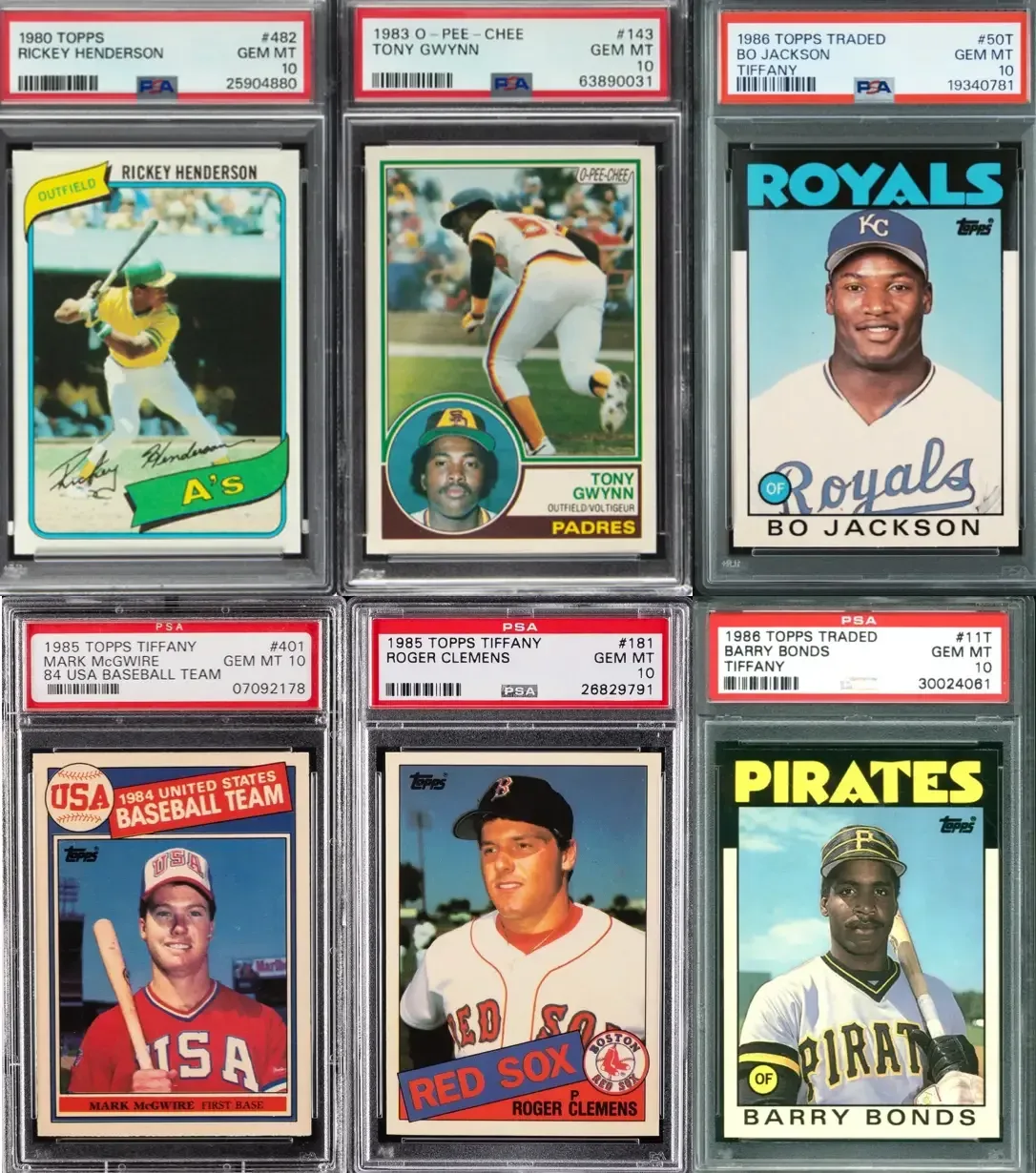
- Rickey Henderson 1980 Topps #482 - $268,400 recent PSA 10 sale, with 26 PSA 10s out of 51,131 graded
- Tony Gwynn 1983 O-Pee-Chee #143 - $32,900, with 37 PSA 10s out of 1,996 graded
- Bo Jackson 1986 Topps Traded Tiffany #50T - $28,600, with 37 PSA 10s out of 1,231 graded
- Mark McGwire 1985 Topps Tiffany #401 - $26,900, with 35 PSA 10s out of 2,041 graded
- Roger Clemens 1985 Topps Tiffany #181 - $22,600, with 49 PSA 10s out of 1,955 graded
- Barry Bonds 1986 Topps Traded Tiffany #11T - $19,800, with 456 PSA 10s out of 2,907 graded
Rickey Henderson sits alone at the top. His 1980 Topps rookie is one of the signature cards of the post-vintage era, and the price gap between grades shows how fierce the gem mint premium has become. A recent PSA 10 sale reached $268,400, while a PSA 9 copy sold for $4,211. That is an enormous spread for the same card and one of the clearest examples of the market valuing grade scarcity over simple availability.
The rest of this tier is equally revealing. Tony Gwynn is a Hall of Famer and one of the most respected hitters of his generation, but cards of Bo Jackson, Mark McGwire, Roger Clemens, and Barry Bonds also command huge prices in PSA 10. That says plenty about how the hobby values cultural impact, collector memory, and low gem populations. A legendary playing career helps, but it is not the only driver of demand.
Tiffany and O-Pee-Chee issues also appear repeatedly at the top because they offer a tougher, more condition-sensitive path than their standard base counterparts. Limited distribution and collector preference for premium versions have turned these into major targets.
Tier 2: Premium 1980s rookies with iconic hobby status
The second tier includes cards that remain central to the story of 1980s collecting. Some are among the most recognizable rookie cards ever made, and others gain value from much tougher premium variations.
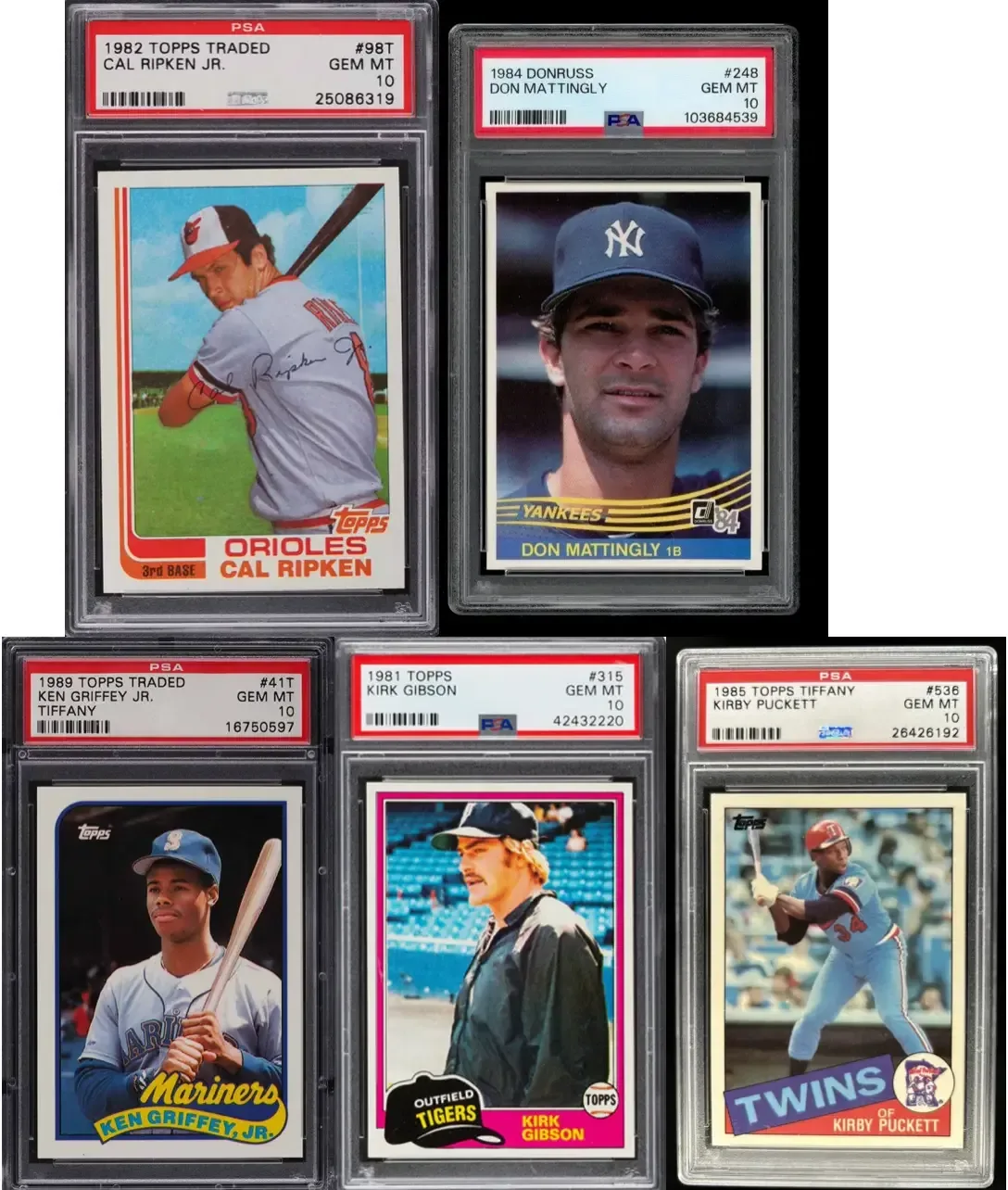
- Cal Ripken Jr. 1982 Topps Traded #98T - $8,433, with 422 PSA 10s out of 19,365 graded
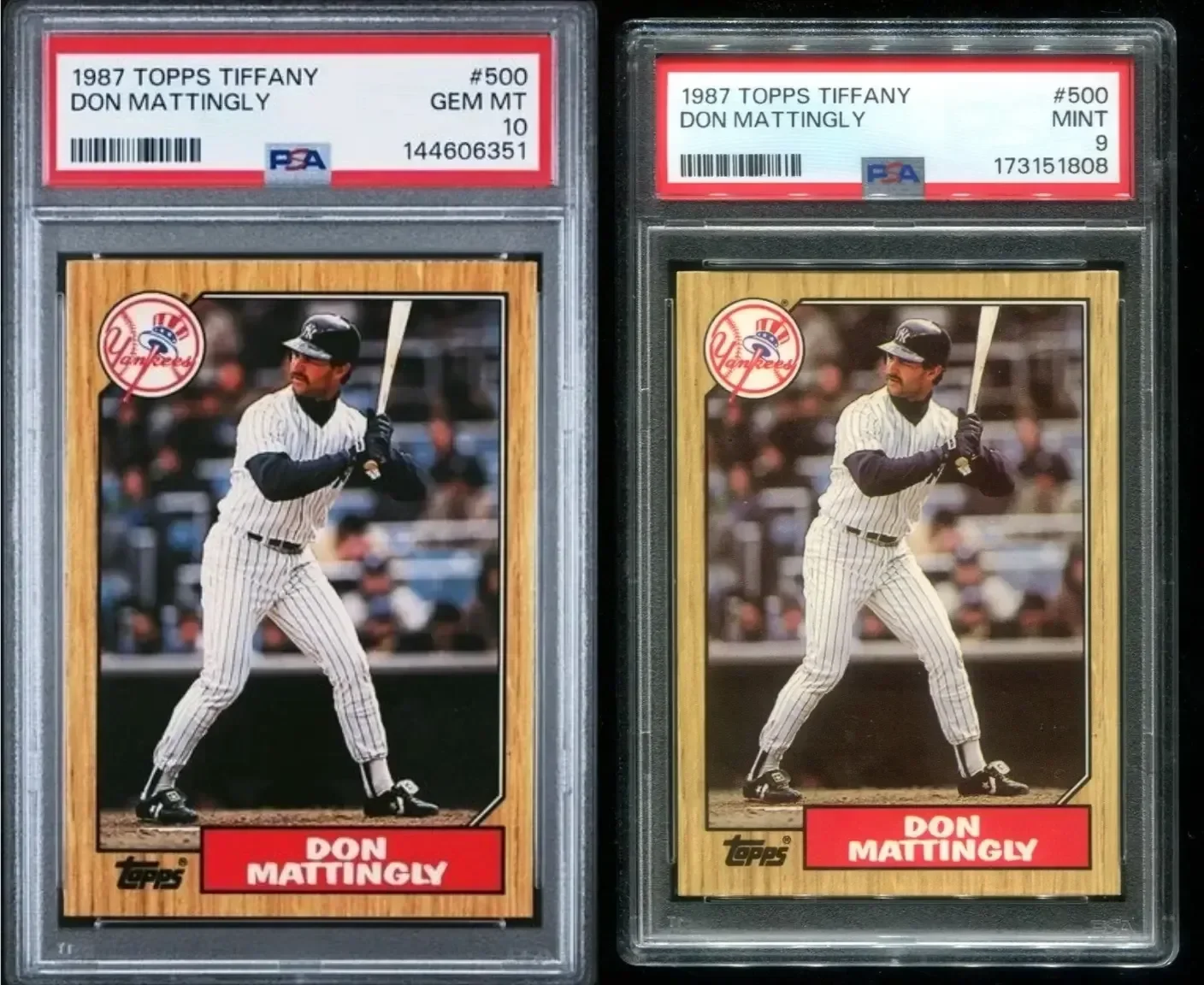
- Don Mattingly 1984 Donruss #248 - $8,000, with 354 PSA 10s out of 15,952 graded
- Ken Griffey Jr. 1989 Topps Traded Tiffany #41T - $8,000, with 346 PSA 10s out of 2,642 graded
- Kirk Gibson 1981 Topps #315 - $7,655, with 18 PSA 10s out of 3,064 graded
- Kirby Puckett 1985 Topps Tiffany #536 - $7,500, with 53 PSA 10s out of 1,259 graded
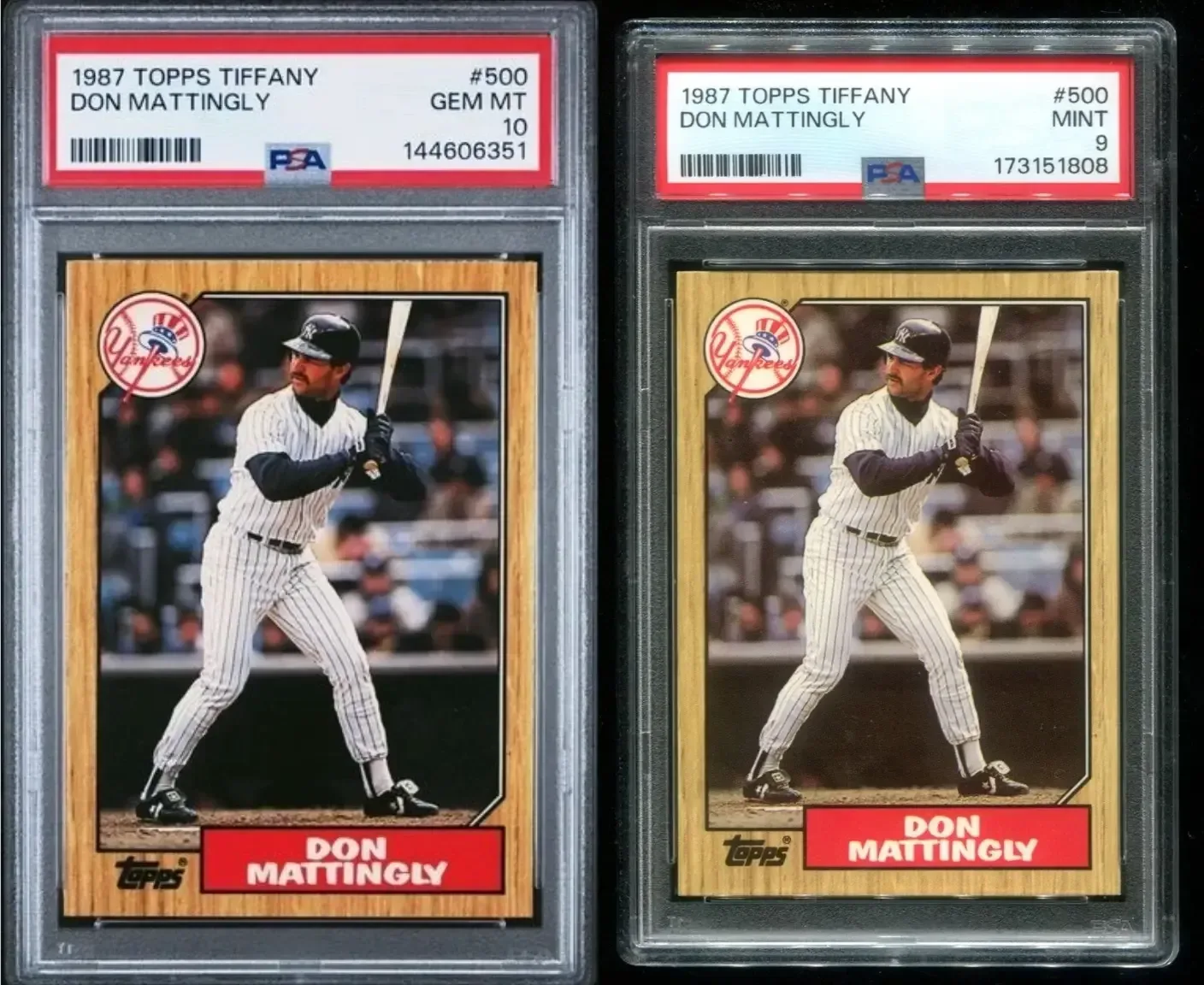
Don Mattingly's 1984 Donruss rookie remains one of the defining cards of the decade. For many longtime collectors, it is more than a rookie card. It is a symbol of the period when baseball cards became a national obsession for kids and investors alike. Even without a Hall of Fame plaque, Mattingly still carries enormous hobby appeal.
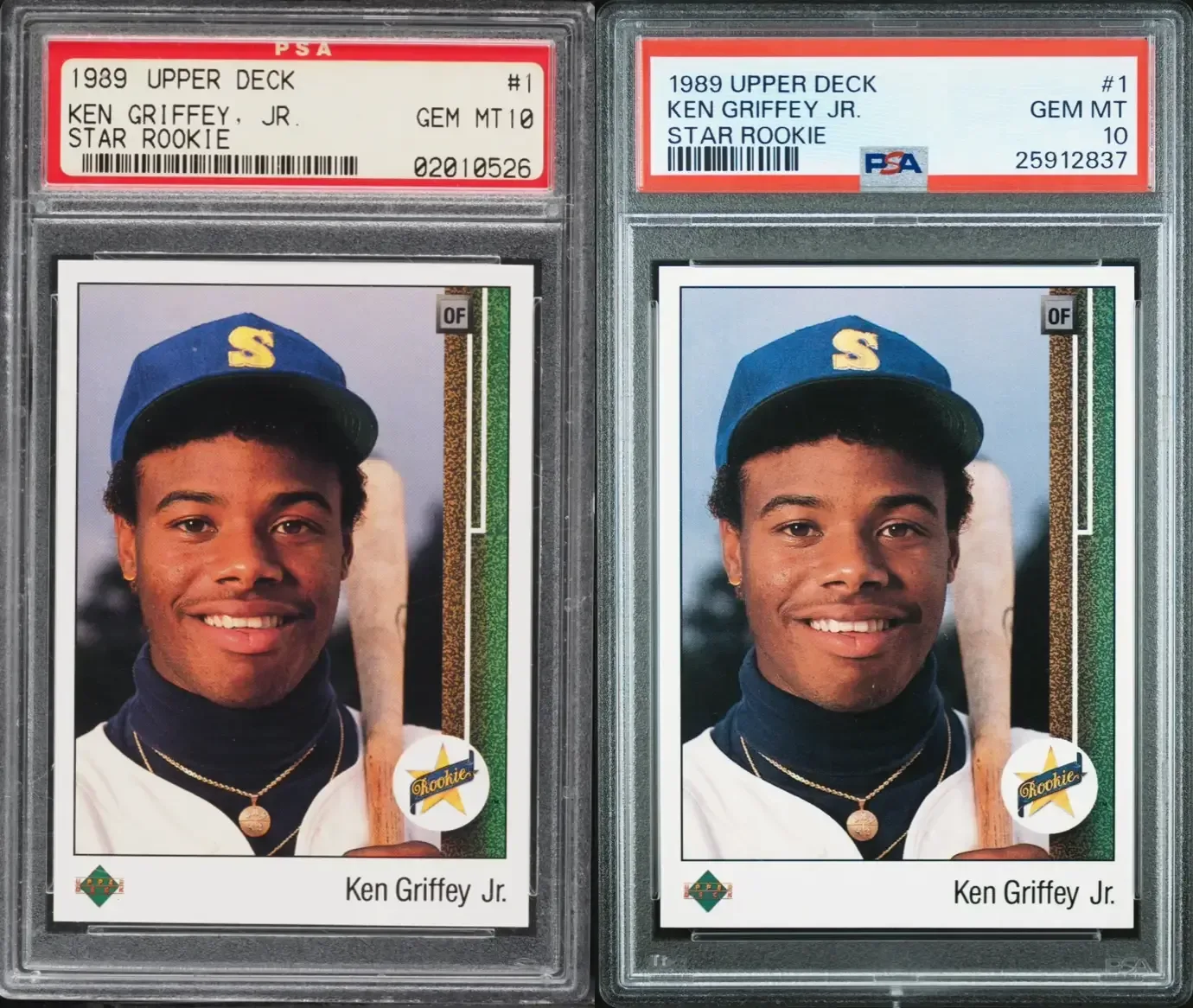
The Griffey placement is one of the more interesting details in this ranking. His 1989 Upper Deck rookie is the more famous card by far, but the 1989 Topps Traded Tiffany rookie reaches this higher sales tier because gem mint supply is much tighter. There are more than 4,250 PSA 10 examples of the Upper Deck card, while the Topps Traded Tiffany sits at 346 PSA 10s. That scarcity difference has allowed the Tiffany version to outpace the iconic Upper Deck issue in gem mint value.
Cal Ripken Jr. and Kirby Puckett offer a different kind of strength. Their cards combine star power, Hall of Fame status, and broad collector recognition. Kirk Gibson stands out because his population is exceptionally low at the top grade, which has helped drive his PSA 10 price well beyond what many collectors might expect.
Tier 3: High-end cards driven by scarcity and set demand
This group includes major names and a few cards that show how specialized demand can lift prices even when the player is not among the decade's biggest hobby stars.
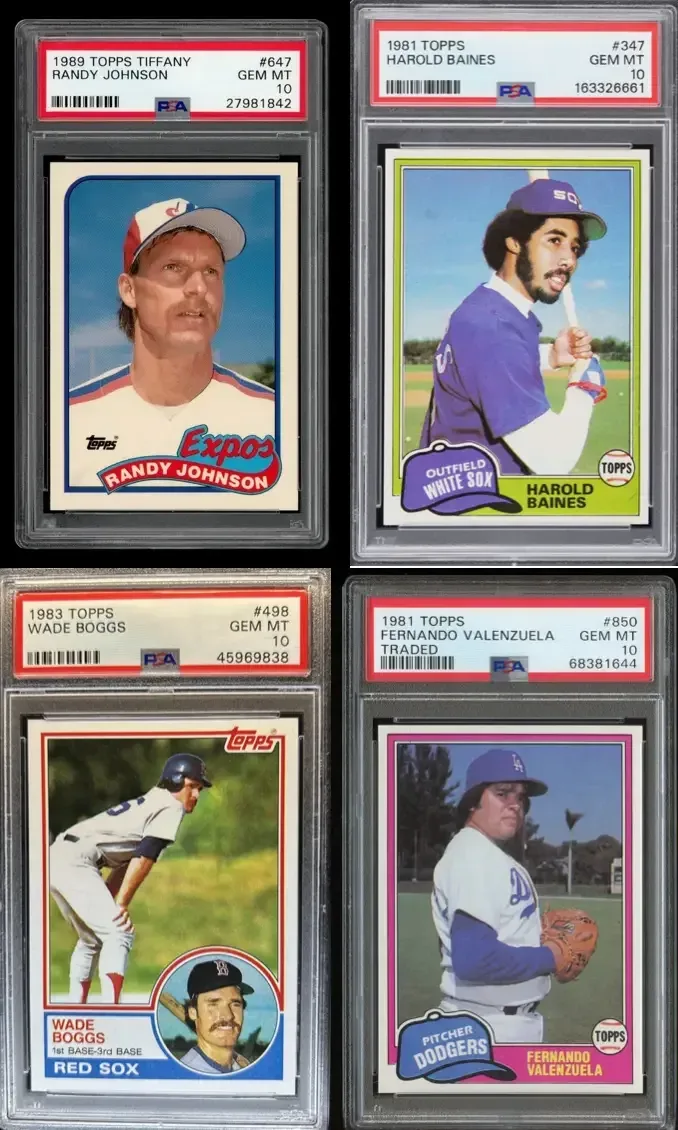
- Randy Johnson 1989 Topps Tiffany #647 - $6,000, with 112 PSA 10s out of 1,359 graded
- Harold Baines 1981 Topps #347 - $5,988, with 47 PSA 10s out of 4,558 graded
- Wade Boggs 1983 Topps #498 - $4,532, with 417 PSA 10s out of 22,789 graded
- Fernando Valenzuela 1981 Topps Traded #850 - $4,500, with 22 PSA 10s out of 1,787 graded
Randy Johnson and Wade Boggs have resumes that rank among the best of their era, but hobby value does not always line up perfectly with on-field accomplishments. Their cards remain strong, yet they do not reach the same emotional or speculative heights as some more iconic 1980s names.
Harold Baines is one of the best examples of the PSA 10 phenomenon. A gem mint copy has approached $6,000, while lower grades sell for a tiny fraction of that number. That kind of spread points directly to registry demand and grade rarity rather than broad mainstream collector heat.
Fernando Valenzuela's rookie remains one of the decade's most culturally significant cards. Fernandomania still carries weight in the hobby, and a low PSA 10 population keeps pressure on the best copies when they surface.
Tier 4: Valuable rookies with strong nostalgia pull
The fourth tier is packed with cards that many collectors remember chasing in real time. In several cases, nostalgia and low gem populations have turned once-accessible cards into serious four-figure slabs.
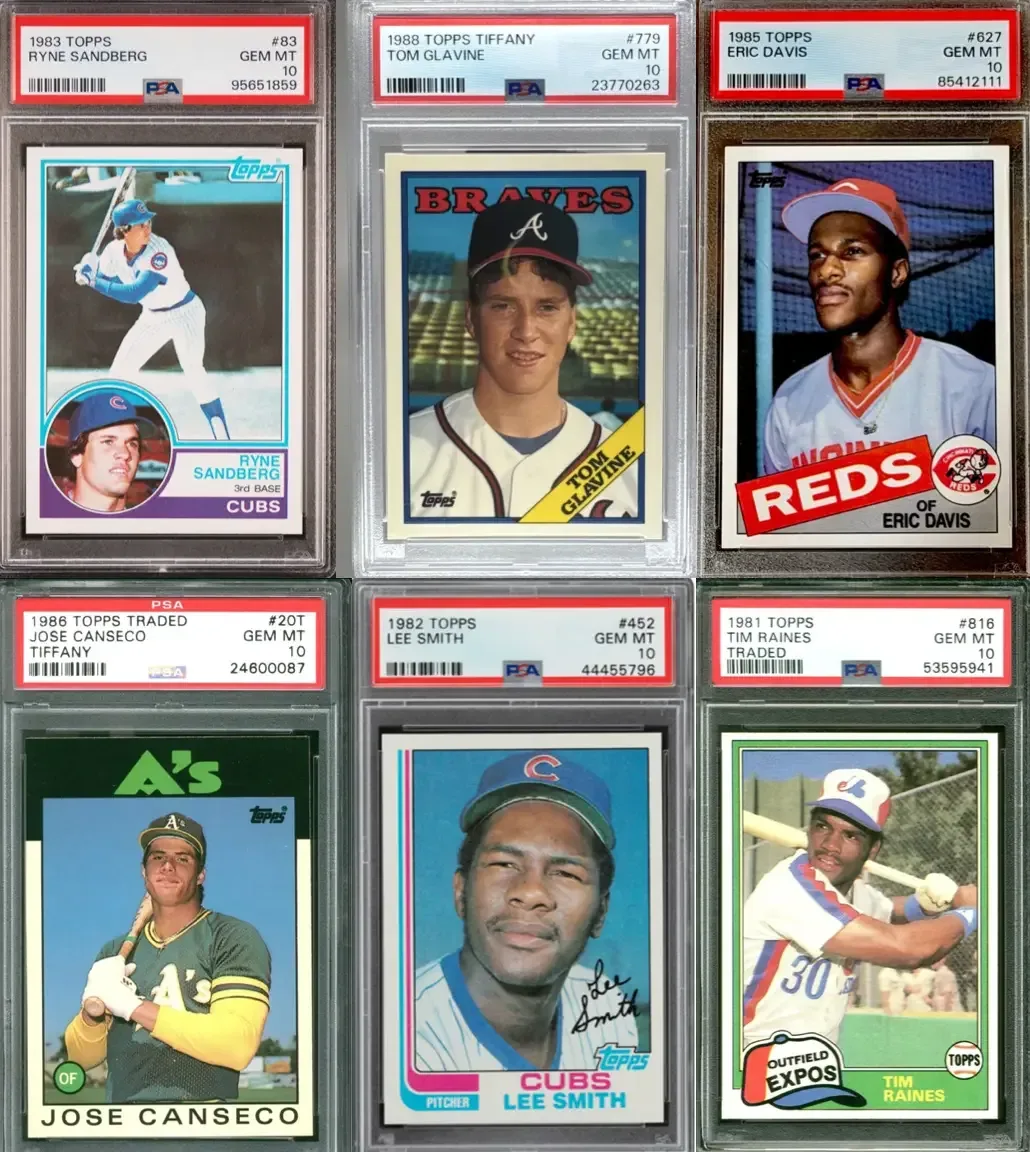
- Ryne Sandberg 1983 Topps #83 - $3,045, with 826 PSA 10s out of 26,117 graded
- Tom Glavine 1988 Topps Tiffany #779 - $3,001, with 65 PSA 10s out of 1,065 graded
- Eric Davis 1985 Topps #627 - $2,895, with 57 PSA 10s out of 3,035 graded
- Jose Canseco 1986 Topps Traded Tiffany #20T - $2,275, with 107 PSA 10s out of 1,234 graded
- Lee Smith 1982 Topps #452 - $2,026, with 64 PSA 10s out of 4,282 graded
- Tim Raines 1981 Topps Traded #816 - $2,025, with 174 PSA 10s out of 3,006 graded
Jose Canseco and Eric Davis are especially notable here because both were major hobby sensations in the middle of the decade. Their rookie cards were centerpieces of many want lists, and that childhood demand has matured into adult nostalgia backed by stronger buying power. When collectors who once dreamed about these cards return to the market, gem mint copies become focal points.
Tom Glavine's 1988 Topps Tiffany rookie shows the pattern again. Standard 1980s base issues often remain affordable, but Tiffany versions can carry dramatically different values due to lower production and better long-term condition scarcity. Tim Raines and Lee Smith, meanwhile, benefit from Hall of Fame recognition and strong set-builder demand.
Tier 5: Under-the-radar PSA 10 targets
Not every valuable 1980s rookie belongs to a hobby megastar. The final tier includes cards that fly a bit lower nationally but still bring impressive prices in gem mint holders.
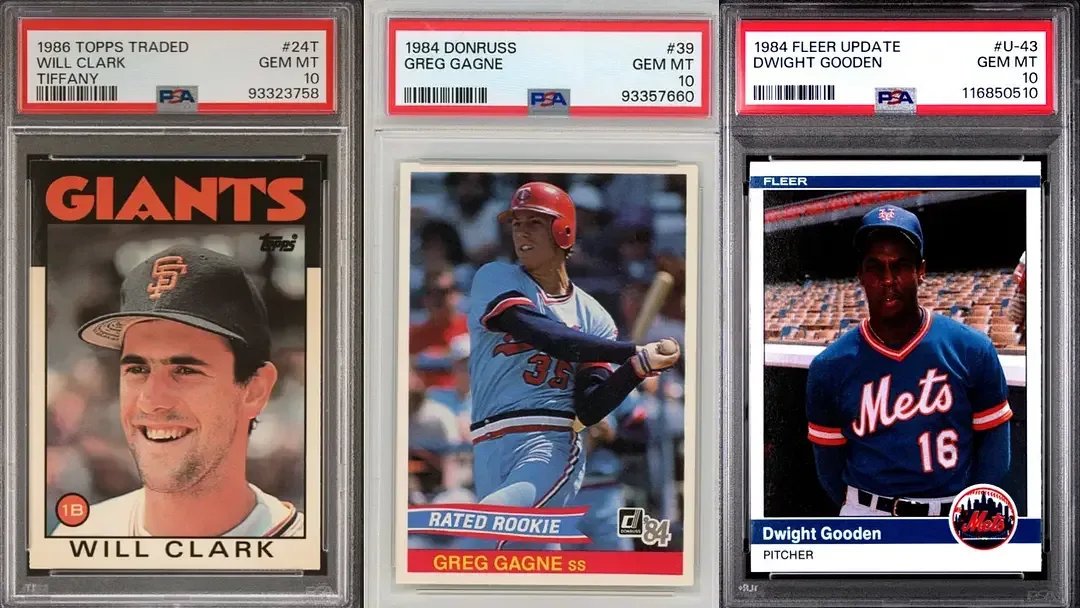
- Will Clark 1986 Topps Traded Tiffany #24T - $1,700, with 204 PSA 10s out of 858 graded
- Greg Gagne 1984 Donruss #39 - $1,350, with 15 PSA 10s out of 242 graded
- Dwight Gooden 1984 Fleer Update #U-43 - $1,200, with 225 PSA 10s out of 2,649 graded
Will Clark and Dwight Gooden remain popular because they were two of the most exciting young stars of the decade. For collectors who grew up in the 1980s, those cards still have real emotional pull. Greg Gagne is the outlier on player prestige, but his card demonstrates how scarcity at the top grade can create value almost independent of star status. With only 15 PSA 10s among 242 graded copies, the card has become a genuine challenge for registry builders.
What these sales say about the 1980s baseball card market
The biggest lesson from these numbers is that the 1980s market is far more nuanced than the junk wax label suggests. Print quantity alone does not tell the full story. Collector demand is shaped by memory, player popularity, brand prestige, premium parallel versions, and population data at the highest grade.
It also shows that Hall of Fame status is only one factor. Don Mattingly, Bo Jackson, Jose Canseco, and Eric Davis all remain powerful names in the hobby because they mattered deeply to a generation of collectors. On the other side, cards of players with stronger career resumes can trail if they never captured the same level of mainstream excitement.
Another key takeaway is the strength of Tiffany, Traded, Fleer Update, and O-Pee-Chee cards. These issues often combine lower supply with stronger condition sensitivity, giving collectors a premium alternative to standard base rookies. In gem mint, they can outperform more famous mainstream cards simply because so few pristine copies exist.
The market is also watching how grading standards and collector perceptions evolve. In some segments, buyers already show a willingness to pay different amounts for the same grade based on factors such as label generation or confidence in stricter grading eras. That makes population reports important, but not always the whole story. Eye appeal and market psychology still matter.
Collector takeaway: which cards define the decade?
If one card defines 1980s baseball rookie collecting at the highest level, it is the 1980 Topps Rickey Henderson. It combines star power, historic significance, condition rarity, and elite demand in a way no other card from the decade currently matches. Behind it sits a fascinating mix of hobby icons, premium variations, and nostalgia-fueled stars, from Tony Gwynn and Cal Ripken Jr. to Don Mattingly, Bo Jackson, and Ken Griffey Jr.
For collectors building in this space, the lesson is clear. The most expensive 1980s rookie cards are not just the most famous names. They are the cards where demand, story, and grade scarcity collide. Whether the target is a Rickey Henderson grail, a Tiffany parallel, or a nostalgic favorite like Canseco or Gooden, the upper end of the 1980s market remains highly selective and sharply driven by condition.
Photo Gallery