A live Lakers memorabilia sale can be exciting, especially when the presentation leans on franchise history, recognizable names, and limited-time bidding. For collectors, though, the real test starts after the excitement fades. The important questions are simpler and more durable: what exactly is being sold, how is it documented, what category does it belong to, and does it fit the collection you are trying to build?
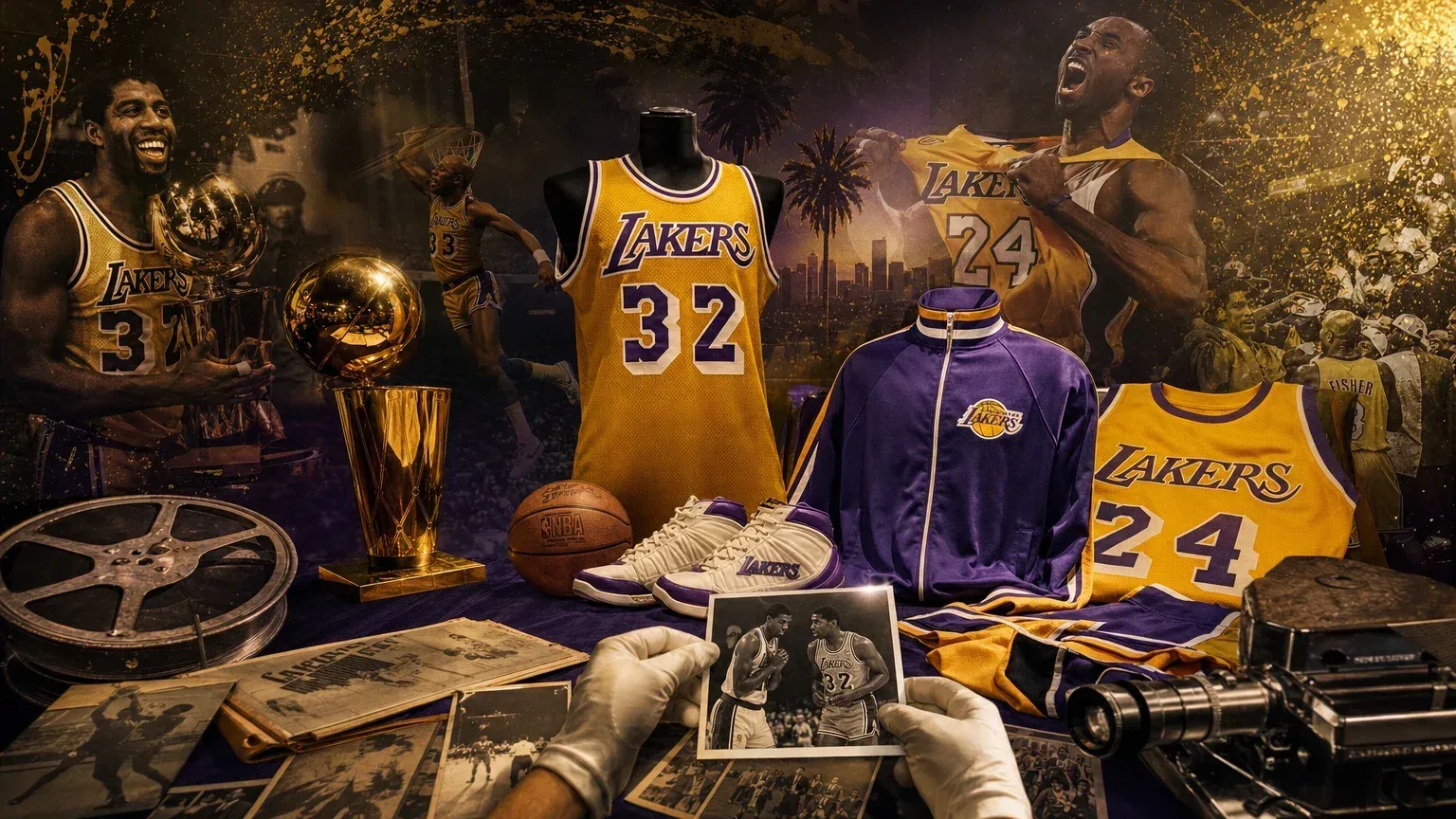
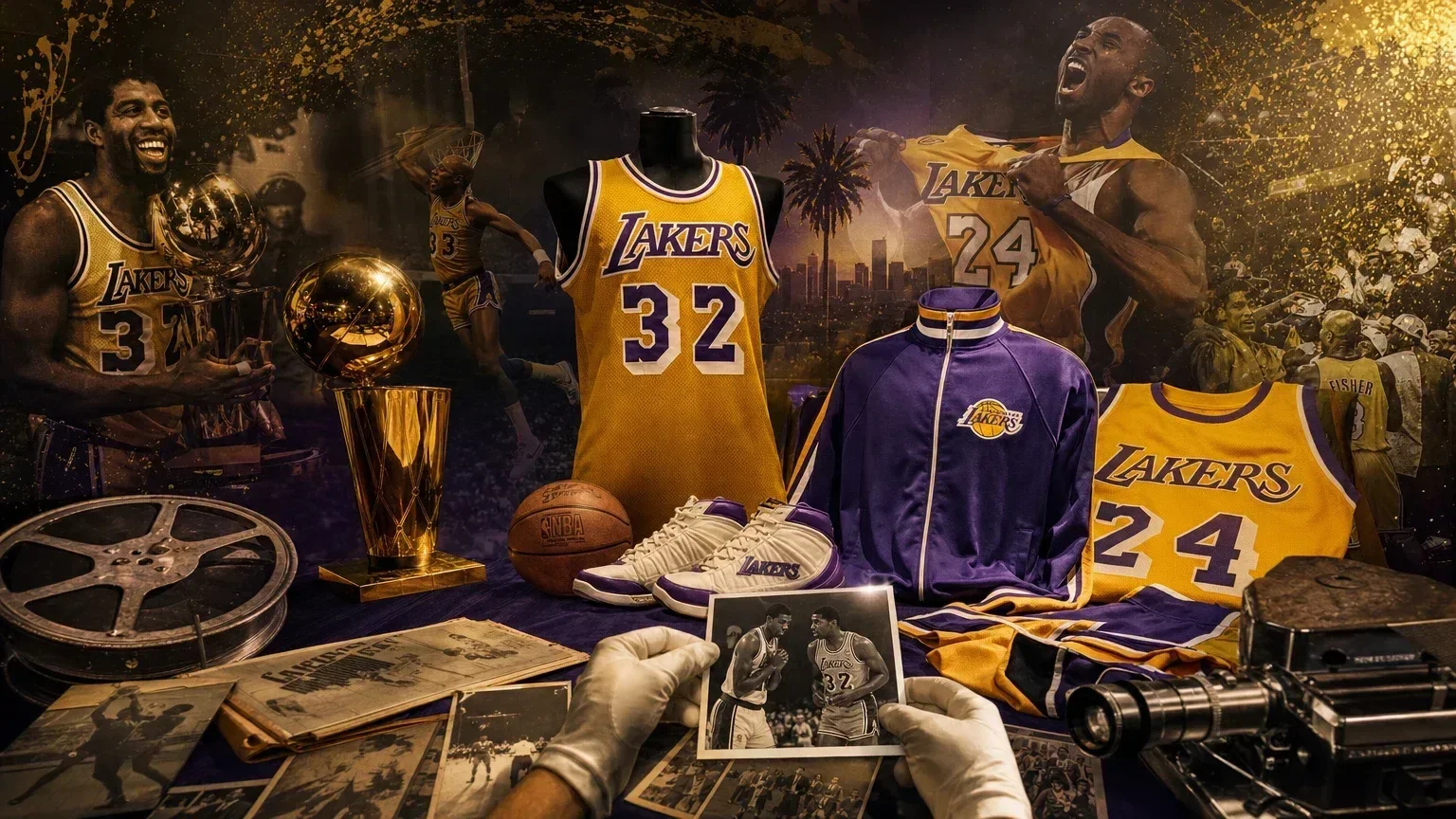
Recent promotional material around a Lakers-themed live event highlighted memorabilia such as game-used gear, 2026 Media Day jerseys, and a historic game-used ball. Those details help explain the type of sale being presented, but collectors still need to do the same work they would do with any memorabilia opportunity. A live stream may improve visibility, but it does not replace careful review of the listing, the documentation, the terms, and the long-term collecting logic behind a purchase.
That is the real lesson from team-themed live sales. They can be useful, informative, and entertaining, but they are only strong buying opportunities when the item stands up on its own.
Why live memorabilia sales attract collectors
Live sales offer something a static listing often cannot: real-time presentation. A seller may handle an item on camera, point out tagging or wear, explain the event connection, or discuss how a lot fits into team history. For memorabilia buyers, that format can be valuable because many of the most important details are visual. Stitching, surface wear, labels, inscriptions, and signs of use are easier to evaluate when the piece is shown clearly.
For more collector background, read A Collector’s Guide to Older Hockey Cards: Eras, Condition Traps, and Smarter Research Before You Buy.
That said, a live format is only helpful when it adds clarity. If the pace is too fast, the camera angles are weak, or the explanation is more theatrical than specific, collectors can leave with more excitement than useful information. The stream should support due diligence, not replace it.
Before bidding in any live event, it helps to treat the show as a supplement and the written listing as the foundation. The listing should still explain the item in plain terms, identify what is actually being claimed, and provide enough detail that the buyer could describe the piece accurately later in their own records.
- Live presentation can help if identifiers and condition are shown clearly.
- A strong stream should reinforce the written description, not contradict it.
- If the format creates pressure to act before reading, it is working against the buyer.
Game-used, team-issued, and event-used are not the same thing
One of the biggest mistakes in memorabilia buying is treating adjacent categories as if they carry the same meaning. A game-used item is different from a team-issued item. An event-used piece is different from both. All three can be collectible, but they tell different stories and should be evaluated in different ways.
Game-used usually refers to an item that was actually used in competition or in a documented game setting. Team-issued generally means it was produced for team purposes, but not necessarily used in a game. Event-used can cover items connected to media day, photo shoots, ceremonies, warmups, appearances, or other organized functions. None of those labels is automatically better in every case. The better item is the one that matches your collecting goals and is documented appropriately.
Media Day jerseys are a useful example. They may have direct player and team significance, and for some collectors they are appealing display pieces with a clear franchise tie. But they should not be treated like in-game jerseys unless the documentation supports that claim. A collector chasing game-used material and a collector building a broader Lakers display collection may look at the same jersey very differently, and both approaches can be valid.
The key is not to let presentation blur the category. When the language is polished and the setting is energetic, distinctions can feel smaller than they are. In reality, those distinctions often drive value, scarcity, and collecting appeal.
- Game-used, team-issued, and event-used belong in separate mental buckets.
- Media Day material can be desirable without being in-game material.
- Comparing like with like is one of the best ways to avoid overpaying.
What provenance should look like in a live sale
Provenance is the backbone of sports memorabilia collecting. It is the chain of information that explains where an item came from, why the attached claim should be trusted, and how the buyer can preserve that story after the purchase. In practical terms, provenance may include team paperwork, event identification, lot descriptions, images, video references, seller records, or other supporting documentation.
In a live sale, provenance should be understandable both on-screen and off-screen. If the host describes a ball as historic or calls a jersey game-used, that claim should connect to something more concrete than excitement. Buyers should be looking for specifics such as player identification, date or season context, event connection, and any paperwork or image evidence shown with the item.
A good rule is to ask whether the item still makes sense without the sales pitch. If the music, storytelling, celebrity presence, and countdown clock disappeared, would the object still be easy to explain? Could you tell another collector exactly what it is, what category it belongs to, and why the provenance matters? If yes, the lot is on stronger footing. If no, the item may be leaning too heavily on atmosphere.
Promotional phrases like “piece of history” are common in memorabilia sales. They are not useless, but they are not evidence. Evidence is specificity. Evidence is a clear claim that can be repeated, checked, and preserved in your own collection notes.
How to judge condition on jerseys, balls, and display pieces
Condition in memorabilia is more nuanced than condition in cards. Wear is not automatically negative. In fact, some of the most appealing game-used items are valuable because they show believable signs of actual use. The issue is not whether an item shows wear. The issue is whether the wear lines up with the story being told.
For jerseys, collectors should pay attention to seams, tagging, numbers, patches, material consistency, and visible handling or use patterns. For basketballs, look at panel wear, scuffing, color consistency, surface texture, and any visible handling marks that match the claimed use. If a signature is present, placement and clarity matter, but so does whether the autograph presentation fits the stated history of the item.
A live sale can make condition harder to judge if the pace is quick or the camera presentation is inconsistent. That is why pre-show photos and the item listing are often more important than the stream itself. Collectors should review still images carefully, read all notes, and decide in advance what level of cosmetic or structural issues they are willing to accept.
It is also smart to think about preservation before bidding. Textile pieces need proper support if they will be displayed. Signed surfaces need protection from light and handling. Even a fully authentic item can lose appeal if it is poorly stored after purchase. Condition is not just what the item is today. It is also how well you can keep it stable tomorrow.
- Wear can be a positive when it supports the use claim.
- Still images and listing details are often better condition tools than a fast-moving stream.
- Storage and display planning should be part of the purchase decision.
What collectors should review before a live bid
Preparation matters more in a live sale because the format is built around urgency. The buyers who do best in these environments usually arrive with rules already in place. They know their budget, the types of items they want, and the minimum documentation they require before spending.
Three pre-bid boundaries can keep a collector grounded:
- Maximum spend: Decide your ceiling before the show starts, including any buyer premium, taxes, shipping, or related fees.
- Item scope: Define the categories you are willing to chase, such as game-used basketballs, team-issued jerseys, signed warmups, or display-only pieces.
- Documentation standard: Know what support you need to feel comfortable, whether that means a detailed description, event tie-in, team paperwork, or a stronger provenance trail.
Collectors should also review the event terms carefully. Live formats can vary on payment timing, fees, shipping timelines, returns, reserves, and how disputes are handled if something presented on camera differs from the written listing. None of those details is glamorous, but they directly affect the real cost and risk of the purchase.
If a lot fails your category test, your budget test, or your documentation test, the right move is to pass. Discipline is not missing out. It is how a collection stays coherent over time.
Separating the collectible moment from the collectible object
Team-themed live sales often create memorable moments. Big personalities may be involved. The stream may have a celebratory feel. There may be nostalgia built around franchise history or a strong emotional pull tied to Lakers culture. That can make the experience enjoyable, but collectors still need to separate the event itself from the item being sold.
A memorable sale moment does not automatically create a memorable object. Once the event is over, the live atmosphere disappears. What remains is the memorabilia piece and the documentation that came with it. That is why buyers should ask a simple question before bidding: would I still want this item if I first saw it quietly on a listing page tomorrow?
If the answer is yes, the interest is probably rooted in the object. If the answer is no, the attraction may be more about the moment than the memorabilia. That distinction can save collectors from purchases that feel exciting in real time but become harder to justify later.
This matters even more in team collecting, where the logo and franchise story can create a strong emotional baseline. Team identity adds appeal, but it should not cover for weak details, vague provenance, or a mismatch with your goals.
What the Lakers example shows about team collecting
The broader lesson goes well beyond one franchise. A good team collection is not just a stack of branded items. It is a body of material with internal logic. That logic might be built around a single star, a title run, a specific era, a certain item type, or a clearly defined use category.
Collectors who chase everything with a team connection often end up with a crowded collection instead of a strong one. A focused Lakers collection, for example, might center on championship-era artifacts, media-day photo pieces, signed display items, or game-used material from a specific period. Each route creates a different kind of collection, and each route makes buying decisions easier.
The other lesson is that context can matter as much as star power. A lesser-known item with a clear event tie and strong provenance can be more compelling than a headline lot with a bigger name but weaker documentation. Buyers who learn to prioritize context over noise usually become more confident and more selective over time.
When evaluating a team-themed piece, ask whether it deepens the story your collection is already telling. If it does, that is a good sign. If it only adds volume, it may not deserve a bid.
- Focused team collections tend to hold together better than broad, reactive ones.
- Choosing a lane by player, era, or artifact type improves decision-making.
- Clear context can elevate an item more than celebrity alone.
Best mindset for a time-sensitive memorabilia sale
The safest approach to a live memorabilia event is curiosity with restraint. Watch closely. Learn from the presentation. Enjoy the history and the storytelling. But do not let the live clock replace the standards you would normally use.
Collectors should treat strong claims as starting points, not finishing lines. Historic, rare, game-used, or player-linked are meaningful labels only when the supporting details are there. A careful buyer does not need to assume bad faith to remain cautious. They just need to understand that urgency and proof are different things.
That may be the most important point from any Lakers-themed live sale or similar event. Speed can make a lot feel more important, but it does not make the item better. The best memorabilia purchases usually remain sensible when viewed calmly after the stream has ended, the celebrity presence is gone, and the sale page is all that remains.
For collectors entering a live team sale, that is the standard worth keeping: buy the object, not the adrenaline.
Photo Gallery