In 2016, a collector could hunt for singles on eBay, stop by a local shop for a reasonably priced box, or spend a Saturday digging through dollar boxes at a show. Those options still exist in 2026, but the decisions around them have changed. League licenses have shifted, a marketplace can connect a buyer with grading and consignment, and a low-cost grading tier may not be open when a collector needs it.
The biggest changes of the past decade have come at three points in a card’s life: who makes it, where it trades, and what it costs to get it graded. A record-setting rookie autograph shows what can happen at the top of the market, but a higher submission fee or a longer wait can have more bearing on the cards most collectors buy.
Fanatics Expanded Topps Beyond Baseball
Fanatics acquired Topps for $500 million in 2022. At the time, Topps held MLB and MLB Players Association licenses but did not have NBA or NFL licenses. Access to NBA and NFL licenses expanded from 2024 through 2026, broadening the company’s reach beyond baseball. Upper Deck and Leaf remained standalone manufacturers.
Licensing matters because it affects which companies can make officially licensed cards and where collectors will find the players and teams they follow. A familiar brand name doesn’t tell the whole story. For someone following a rookie class, it’s worth checking the specific release for its league license, card designs and checklist rather than assuming it will look like the previous year’s product.
For more collector background, read NFL Quarterback Card Market: What Fernando Mendoza and Nine Other Starter Changes Mean for Collectors.
Rookie Debut Patch Autographs Became High-End Chase Cards
Rookie Debut Patch Autographs gave collectors a new centerpiece to chase in baseball and football products. The appeal is the connection to a specific point in a player’s career, not just the presence of a patch and signature. That distinction matters in a market where two cards of the same player can carry dramatically different prices.
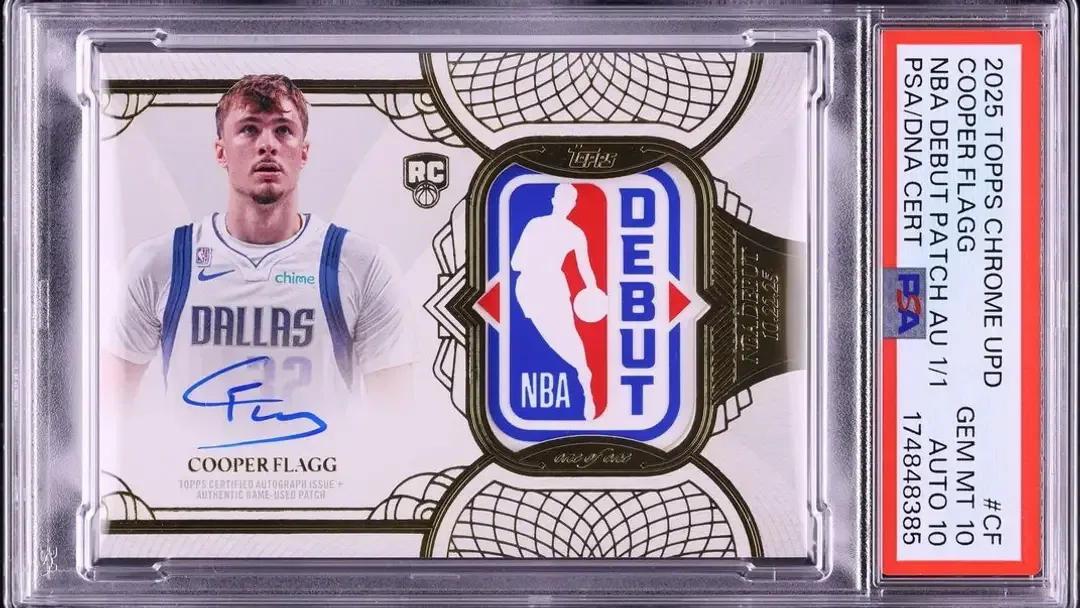
One of the decade’s standout sales came from basketball. Cooper Flagg’s 2025 Topps Chrome Update Rookie Debut Patch autograph sold for $8.04 million through Fanatics Collect in September 2026. PSA graded the card GEM MT 10, and the autograph received a separate grade of 10.
That result is a sale price for one specific card, not a benchmark for Flagg rookies as a group or a reason to pay more for every box that offers a patch autograph. When comparing sales, the exact issue, the card grade and the autograph grade can all matter. For collectors who want a particular player rather than the experience of opening packs, the price of an available single is a more useful comparison than the biggest hit in the product.
eBay Brought More of the Card Transaction Onto One Platform
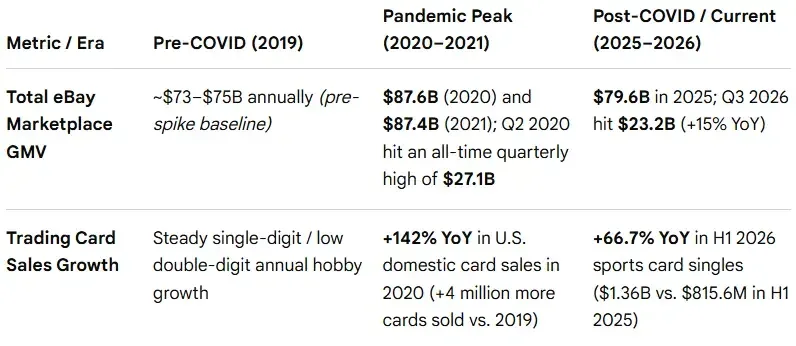
eBay was already an established place to buy and sell cards in 2016. What changed was how much of the transaction the platform could handle. A collector once might have bought an ungraded card online, arranged grading separately, and later found another place to consign it. eBay’s expansion brought more of those steps into the same workflow.
The company acquired TCGplayer in 2022 and bought the Goldin auction house from Collectors, PSA’s parent company, in 2024. The Goldin deal connected eBay with a business focused on auctions for high-end collectibles. In 2025, an integration with PSA gave eBay users access to grading and options for consignment or vault storage through the platform.
Those services address different needs. Marketplace authentication helps verify that an eligible item is genuine, while grading assigns a condition grade. Vaulting provides storage, and consignment is a route to selling. Keeping those distinctions straight is especially useful when buying a raw, or ungraded, card. A convenient path to grading doesn’t mean the card will earn the grade a buyer is hoping for.
Local shops, shows and social communities still offer something a listing can’t: a chance to build relationships and, in person, inspect a card before buying it. A collector looking for an inexpensive set filler may get more out of a show’s dollar boxes than an integrated grading service. For a higher-value single that’s hard to find locally, an online marketplace can offer more choices and access to services after the purchase.
PSA’s Submission Pauses Changed the Economics of Grading
PSA’s backlog showed what happens when demand for grading outpaces capacity. In 2021, the company suspended economy and value submissions as a surge in demand left it with an estimated 10 million cards in its backlog. In June 2026, PSA again paused lower-priced options, including Value Bulk, Value Plus and Value Max, as it worked through an estimated 12 million-card backlog.
A pause can force collectors to choose between waiting and paying for a more expensive tier. That choice can look very different depending on the card. A collector with a valuable autograph and a near-term sale in mind may be willing to pay for faster service. For someone submitting a stack of modern singles with modest resale values, the price difference can erase the financial case for grading.
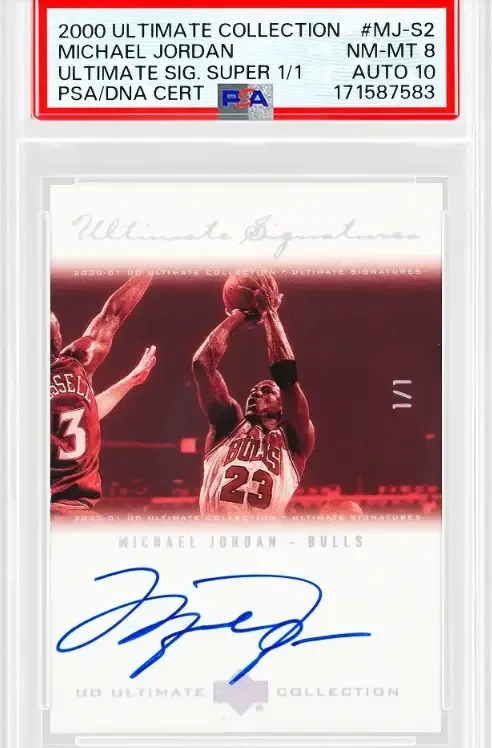
Demand for faster service was visible at the 2026 National Sports Collectors Convention. On the first day, the number of cards submitted for on-site grading at the $229.99 service level exceeded the total number of cards submitted at the entire 2025 convention. Among the cards graded at the 2026 show was the one-of-one 2000 Ultimate Collection Michael Jordan Ultimate Signatures Super, which received a PSA 8 with a PSA/DNA autograph grade of 10.
Grading Consolidation Changed the Choices Behind the Labels
While PSA dealt with its submission volume, its parent company expanded its grading portfolio. Collectors acquired SGC in 2024 and OTIA in December 2025. Collectors could still choose among distinct labels, but three familiar grading names were now under common ownership.
SGC’s submission volume grew into early 2025 before declining after it ended bulk submitter discounts in the middle of the year. Volume later fell further year over year after pricing rose from $15 to $50 per card. OTIA saw submissions increase after its acquisition, but a rise in volume alone doesn’t establish how it will compete over time.
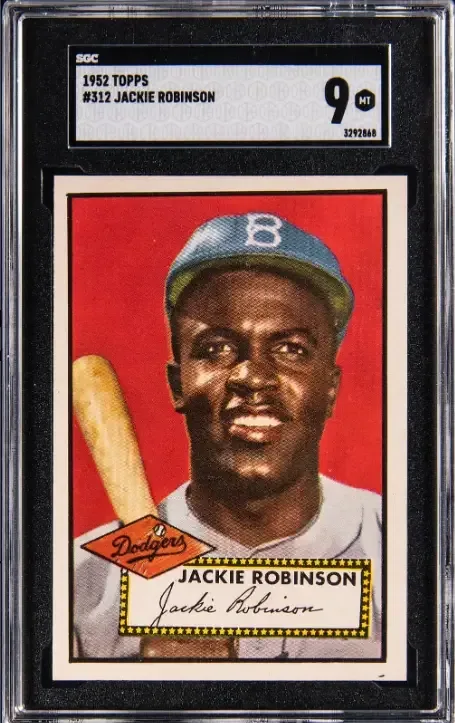
SGC still appeared on notable vintage sales. On October 10, 2026, a 1952 Topps #312 Jackie Robinson graded SGC MINT 9 sold for $427,000. It was the only example at that grade in SGC’s population at the time. That sale illustrates why the grading label is only one part of a comparison: the card’s issue, condition and scarcity at the assigned grade matter, too.
What to Compare Before Submitting a Card
Start with recent sales of the exact card in raw condition and in the grade it could realistically earn. On a modern card, a clean first impression isn’t enough to assume a 10. Centering, surface wear, corners and edges can change the result. If grading only makes financial sense at the highest grade, the submission leaves little room for error.
Check the current service tier before mailing anything. The advertised per-card rate is only part of the expense once shipping and insurance are included, and turnaround matters if you’re trying to sell during a particular season or event. For a card you want to keep, the decision can be simpler: compare the cost of buying an already graded copy with the full cost of submitting your own, and decide whether having that particular copy in a slab is worth the difference.
Photo Gallery