Hideki Matsui is heading back to the most iconic franchise in Japanese baseball, and the move is giving collectors a new reason to revisit one of the hobby’s most important modern international careers.
The Yomiuri Giants introduced Matsui as their new manager on October 23, placing one of the most accomplished stars in Japanese baseball history back at the center of the team where he first became a national sensation. For collectors, the news does more than reconnect Matsui to the Giants. It adds another layer of historical meaning to his rookie cards, home run commemoratives, and Giants-era collectibles.
Matsui’s playing career already carried major hobby relevance on both sides of the Pacific. He was a slugging superstar for Yomiuri before becoming a marquee MLB name with the New York Yankees and later playing for the Angels, A’s, and Rays. Now, with a return to the Giants in a leadership role, his cardboard legacy gains another chapter tied directly to the club that first made him famous.
Why Matsui’s Return Matters to Collectors
The Yomiuri Giants are not just another team in Nippon Professional Baseball. They are one of the most recognized and most scrutinized organizations in Japan, with a national fan base and a history that reaches deep into the culture of the sport. Managing the Giants is widely viewed as one of the highest-profile jobs in Japanese sports, which means Matsui’s appointment immediately carries weight far beyond a standard coaching change.
For more collector background, read Top 3 Gale Sayers Cards Ever: His Most Valuable and Iconic Football Issues.
That prominence matters in the hobby. Collectors often place additional value on cards when a player’s legacy expands beyond playing accomplishments alone. Hall of Fame elections, milestone anniversaries, championships, awards, and managerial appointments can all shift how collectors view an athlete’s career arc. Matsui’s return to Yomiuri fits that pattern because it connects his playing days, his cultural importance, and the legacy of the Giants in a single storyline.
For longtime collectors of Japanese baseball cards, Matsui already stood as one of the cornerstone names of the 1990s and early 2000s. For newer buyers, this managerial move may serve as an entry point into a market that includes BBM, Takara, Calbee, and a unique run of home run-related issues tied directly to his career achievements.
The Shigeo Nagashima Connection Adds Historical Weight
Matsui’s return also resonates because of his close connection to Shigeo Nagashima, one of the most beloved figures in Japanese baseball history. Nagashima spent his entire playing career with the Giants from 1958 through 1974, batting .305 with 444 home runs. He later managed the club from 1975 to 1980 and again from 1993 to 2001, overlapping with Matsui’s Giants playing career.
Known widely as “Mr. Giants” and “Mr. Pro Yakyu,” Nagashima was far more than a former star. He was a symbol of the sport in Japan. After his death at age 89 on June 3, 2025, many fans found meaning in the timing and numerology surrounding the date, connecting it to his uniform number 3 and his place at third base. The emotional significance of his passing only deepened the importance of the players and stories most closely tied to him.
Matsui was one of those players. At Nagashima’s funeral, family remarks underscored just how much Matsui meant to the former Giants legend. Matsui also shared a story from their years together, recalling that he once asked about playing third base, only to be told that his place was in the outfield. Nagashima told him, “I want you to be Joe DiMaggio.”
That anecdote became even more meaningful later, when Matsui visited Nagashima’s home for swing work and saw a DiMaggio bat and a large image of the Yankees legend. Matsui came to understand exactly what Nagashima had in mind for him as a player. When the time came for Matsui to leave Japan for Major League Baseball, he referenced that conversation, telling his manager that if he was supposed to be Joe DiMaggio, then he was going to the Yankees.
Now that Matsui is returning to guide the Giants, collectors are not just looking at a former slugger taking a new job. They are looking at a major figure stepping into a role tied to one of the most important mentor-student relationships in Japanese baseball history.
Matsui’s Career Resume Still Drives Strong Hobby Interest
Matsui’s on-field record already gave him a strong collector base before the managerial news. Drafted by the Giants out of high school, he played for Yomiuri from 1993 through 2002 and hit 332 home runs for the club. He won three MVP awards in Japan and became one of the defining power hitters of his era there.
He then moved to MLB and added 175 more home runs while playing for the Yankees, Angels, A’s, and Rays. His most famous moment in the United States came with New York, where he earned 2009 World Series MVP honors. That blend of Japanese stardom and MLB success gives Matsui broader appeal than many players whose card markets are concentrated mainly in one country.
His total of 507 professional home runs between Japan and MLB also created the basis for one of the more unusual long-running card concepts attached to any modern player.
The NTV Home Run Cards Stand Out as a Signature Matsui Collectible
Among Matsui’s most distinctive issues is the Nippon Television home run card run celebrating each of his 507 career home runs. The series began in 1993 and continued throughout his career, creating a visual archive of his power production across different stages of his baseball life.
These cards are notable because they are built around specific home run moments. Rather than functioning as generic commemorative issues, the photographs show actual scenes connected to each blast, such as Matsui at the plate or circling the bases. For player collectors, that gives the run a documentary feel that is hard to replicate with standard base cards or later tribute releases.
The concept also gives Matsui collectors a built-in long-term chase. A single card is interesting. A complete run of 507 tells the story of his entire power career. That kind of project appeals to advanced player collectors who value completeness, chronology, and visual storytelling as much as rarity.
A collection of all of the NTV home run cards is displayed at the Matsui Hideki Baseball Museum in Ishikawa Prefecture, along with other memorabilia from his career. That museum presence further supports the importance of the set within the larger record of Matsui’s legacy.
Key Hideki Matsui Rookie Cards to Know
For many collectors, the first stop remains Matsui’s rookie-year cards from 1993. His best-known Japanese rookie is card #423 in the 1993 BBM set, a release that also includes Ichiro Suzuki’s rookie. That pairing has long made the set especially notable among modern Japanese issues.
While Ichiro’s card in the set frequently commands a significantly higher price, Matsui’s BBM rookie has remained relatively accessible compared with his stature in the sport. Reported market levels place raw or lower-grade examples around the $30 range, making it one of the more approachable key cards for a player of Matsui’s stature.
Collectors do need to watch for one important detail. A reprint of the 1993 BBM Matsui rookie was later included in the 2002 BBM “The Legend of Hideki Matsui” set. The reprint is marked “REPRINT” on the back, which provides a clear distinction, but it is still a point buyers should verify before purchasing an ungraded example.
Two other rookie-year cards from 1993 are also important for Matsui collectors:
- 1993 Takara Hideki Matsui
- 1993 Calbee Hideki Matsui
Recent reported sales cited for those cards included a PSA 8 Takara at $120 and a PSA 6 Calbee at $95. Those figures do not define the entire market, but they do show steady demand for Matsui’s Japanese rookie-year material, particularly when graded examples surface.
MLB Rookie-Year Appeal Still Matters
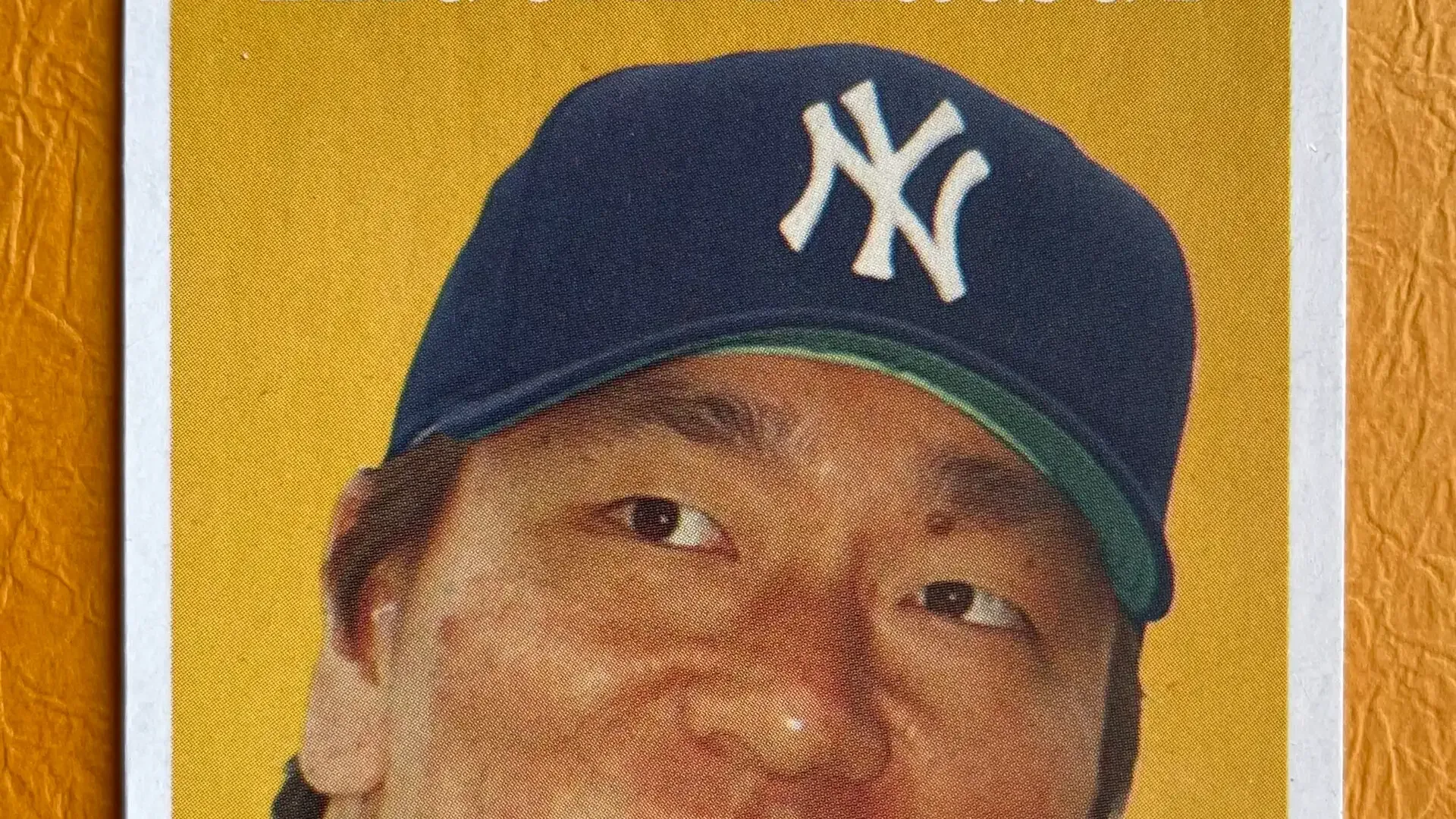
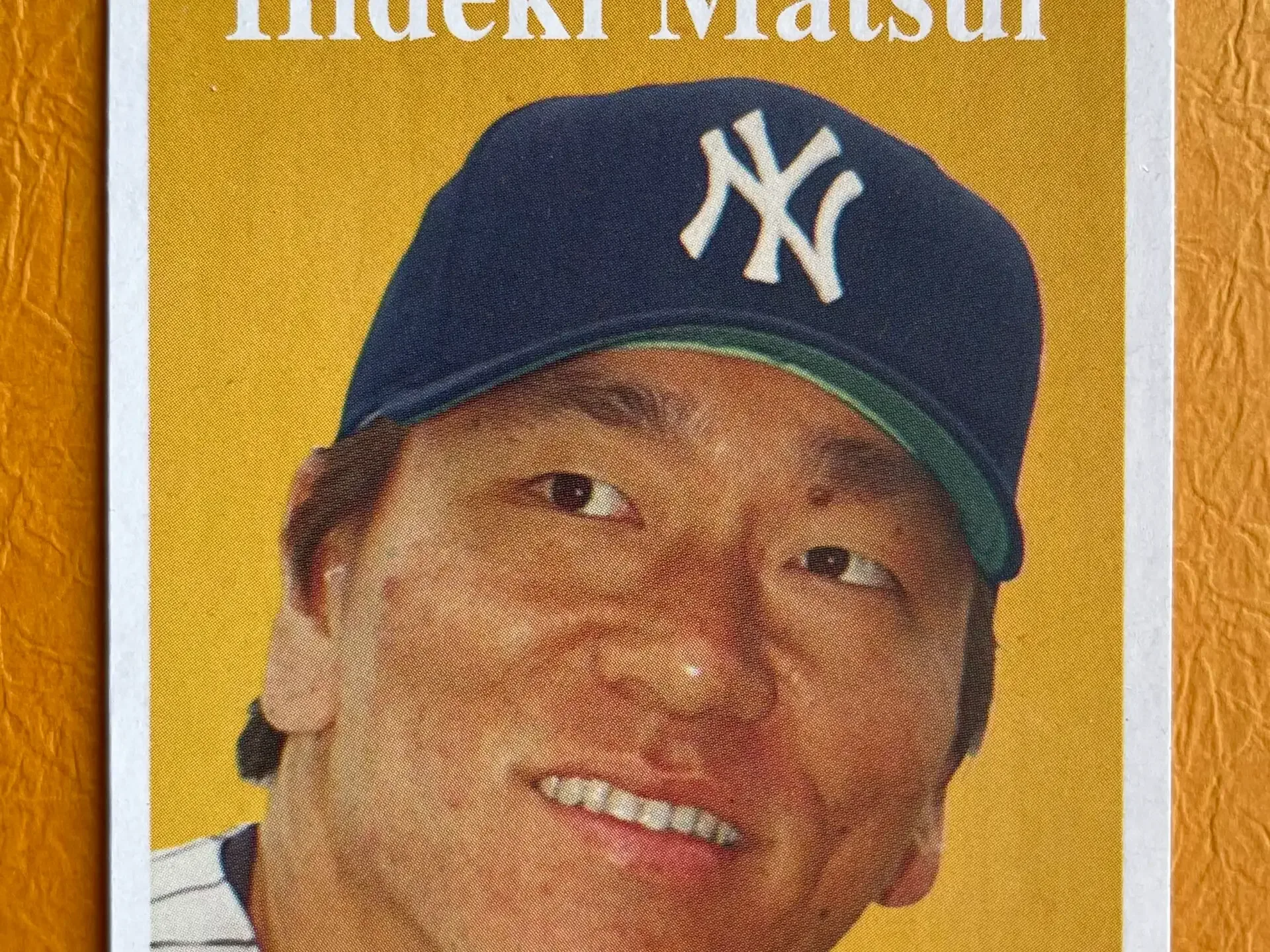
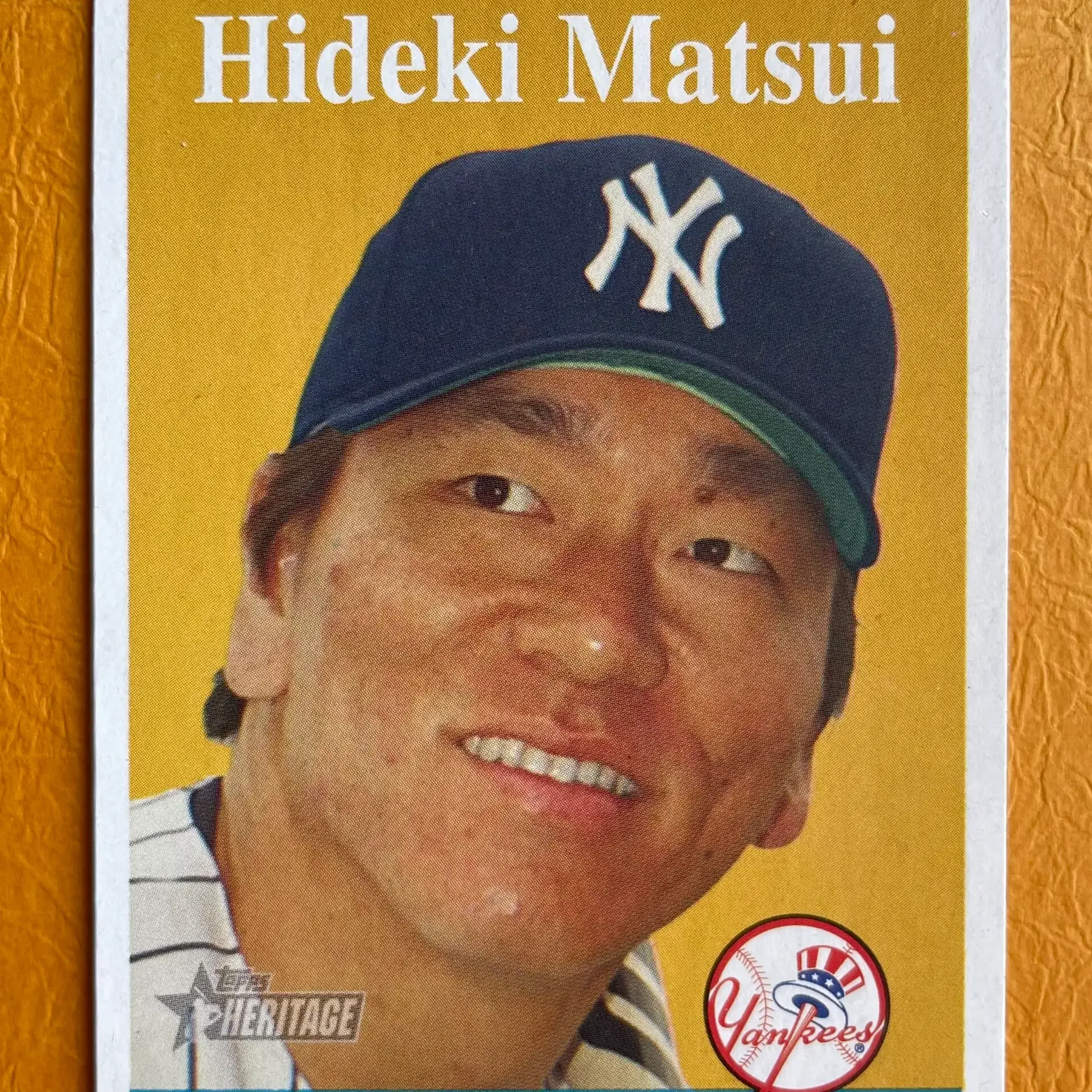
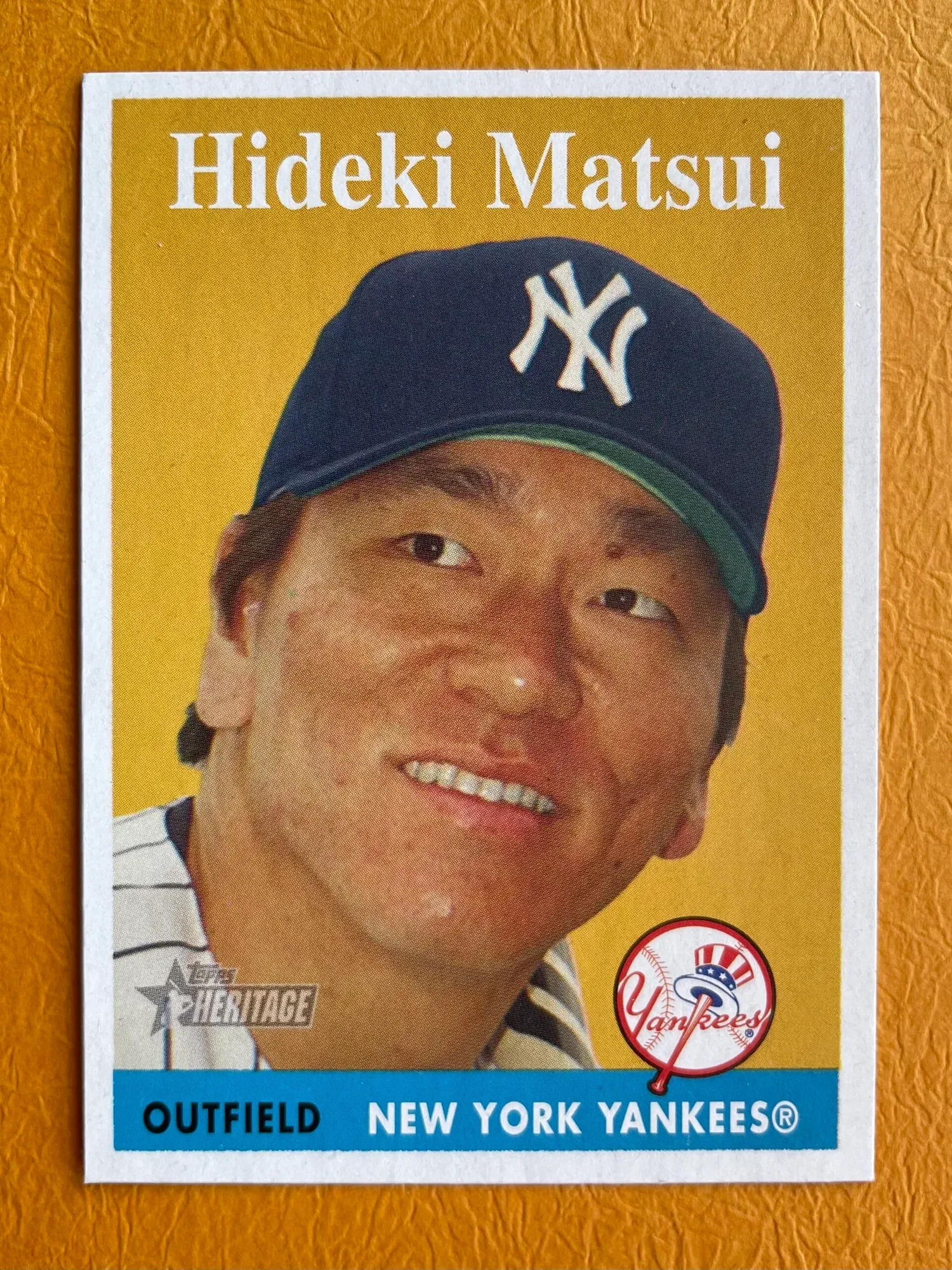
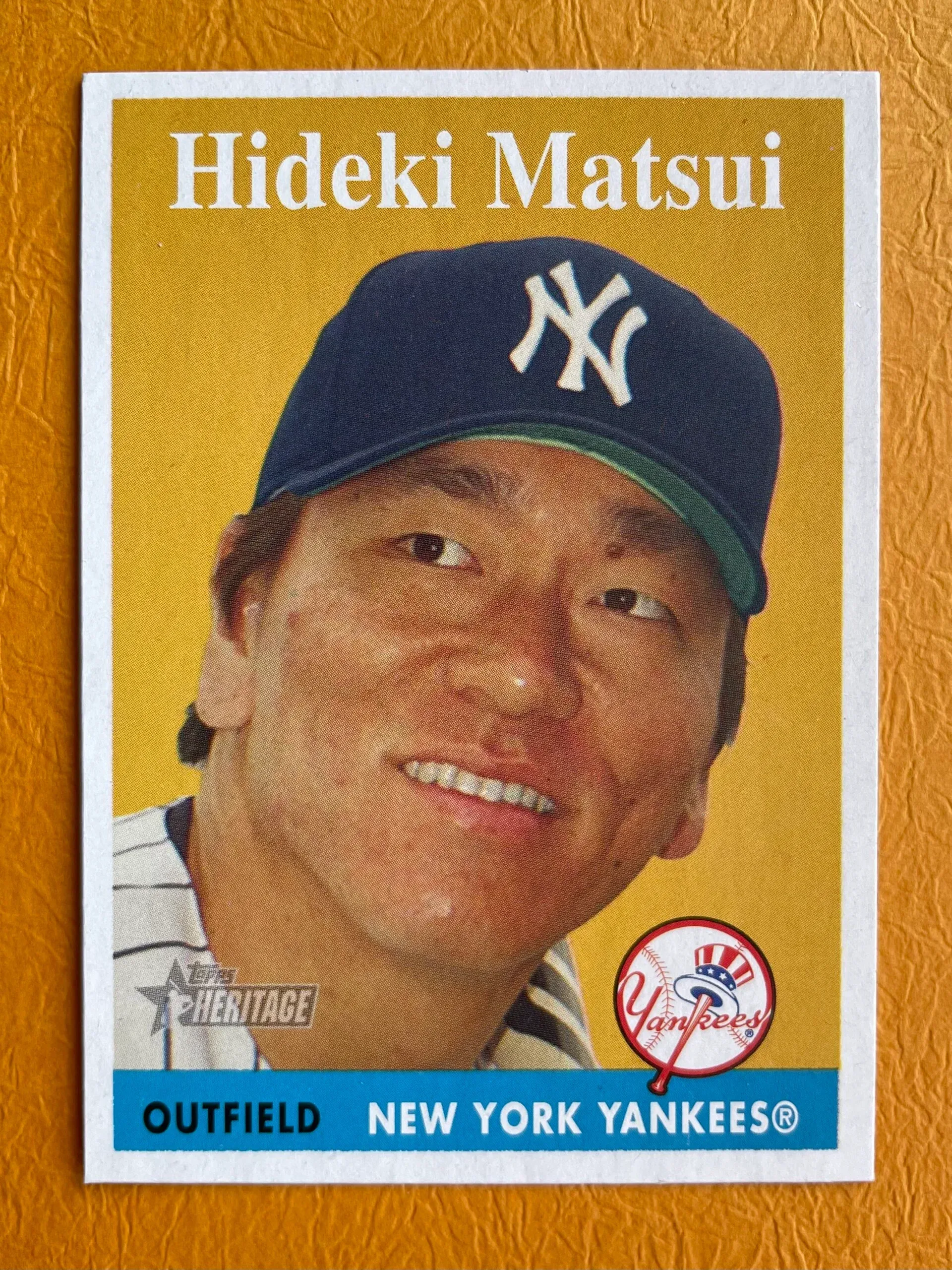
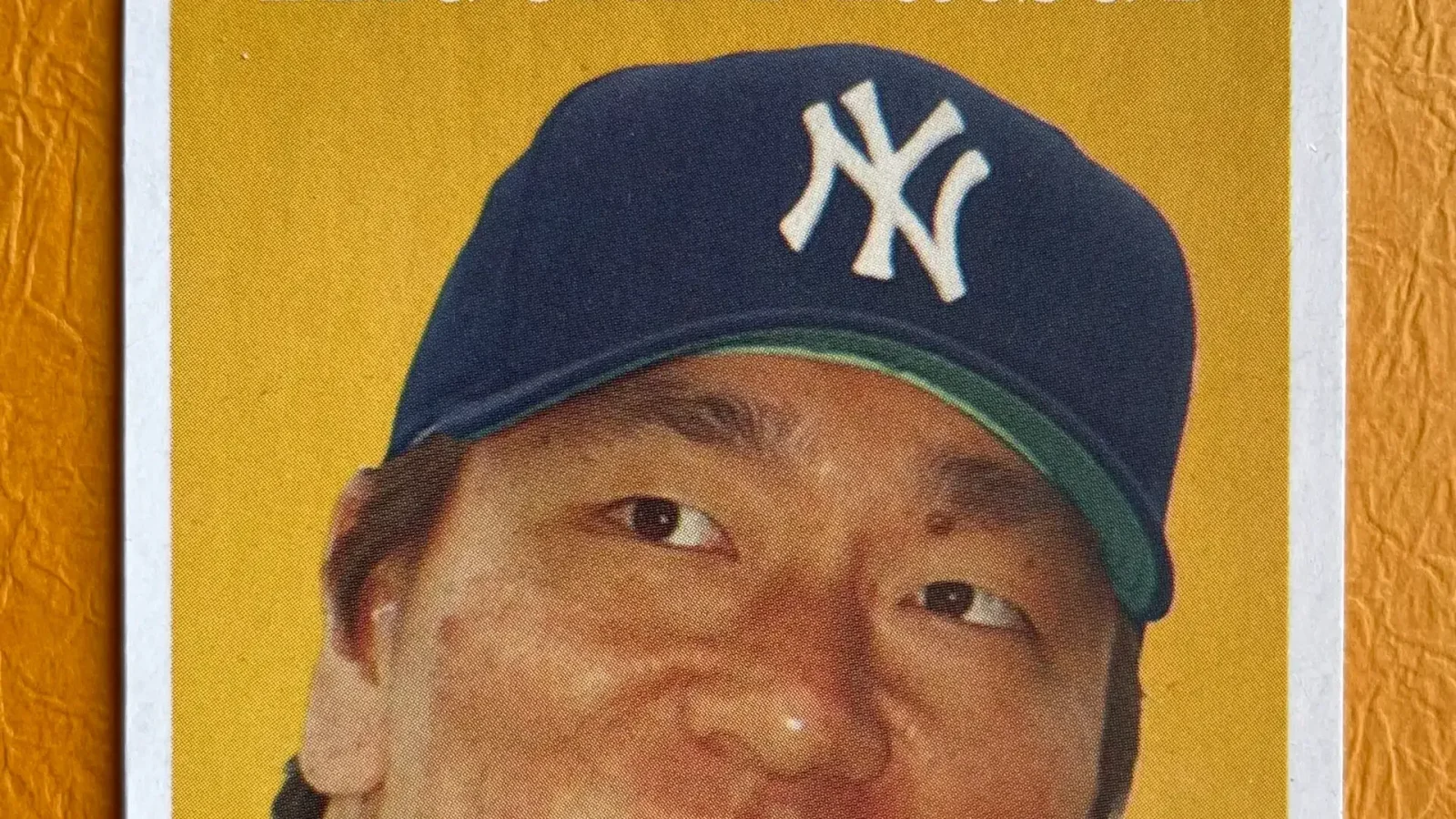
Matsui’s collecting profile is not limited to his Japan-issued cards. He also has a wide range of 2003 MLB rookie-year cards showing him in Yankees uniform, a category that continues to hold crossover appeal for both Japanese baseball collectors and mainstream MLB hobby buyers.
The Yankees connection remains especially important. Matsui was already a massive name when he arrived in the majors, and his New York years gave him a much larger international cardboard footprint through major U.S. manufacturers. Upper Deck and Topps both played a role in cards linked to his major league years, including home run-related issues and standard MLB releases.
That means the market for Matsui cards operates on two tracks at once. One track is rooted in Japanese issues, especially his 1993 rookie-year cards and the NTV home run series. The other is built around the visibility and collector familiarity of his Yankees-era cards. His return to the Giants may benefit both sides of that market, since renewed attention to his career often sends collectors searching across all phases of a player’s catalog.
Cards and Storylines Collectors May Watch Next
One of the more interesting hobby angles going forward is the possibility of new Japanese cards showing Matsui not as a player, but as the Giants’ manager. That distinction can matter more than it sounds. Collectors often respond strongly to first-year cards tied to a new role, particularly when the subject is a franchise legend returning to an iconic team.
Matsui will wear number 90 as Giants manager, the same number Nagashima wore when he began his own managerial run with the club. That detail strengthens the symbolic link between the two men and could become an especially meaningful note for collectors if future card issues highlight the continuity.
For player collectors, the most likely areas of increased attention include:
- 1993 BBM #423, especially original copies rather than the 2002 reprint
- 1993 Takara and 1993 Calbee rookies, particularly graded examples
- NTV home run cards, either singles tied to milestone blasts or longer runs
- 2003 Yankees rookie-year cards, which connect his Japanese stardom to his MLB arrival
- Future manager-era Japanese issues, if they are released with strong Giants branding or tribute themes
Collectors who favor legacy-driven markets often respond when a player’s story becomes easier to tell in full. Matsui now checks multiple boxes in that regard: Yomiuri icon, MLB success story, World Series MVP, student of Shigeo Nagashima, and now manager of Japan’s most prominent franchise.
What to Keep in Mind Before Buying
As attention rises, collectors should stay selective. Condition remains critical, especially for 1990s Japanese issues that can vary significantly in centering, edge wear, and surface quality. Authentication of reprints versus originals is also essential, particularly with the 1993 BBM rookie. Graded examples may offer more confidence, but raw cards can still be appealing if the seller provides clear front-and-back images.
It is also worth separating broad interest from immediate price spikes. Matsui’s market may gain momentum because of the managerial news, but the most durable value usually sits with cards that already matter historically: true rookie-year issues, scarce or iconic player-specific sets, and cards tied to signature career achievements.
For Matsui, that means his foundation remains strong. The 1993 BBM rookie anchors his Japanese card story. The Takara and Calbee issues provide alternate rookie-year paths. The 507-home run NTV run offers one of the most distinctive player collecting challenges in the sport. And his Yankees-era releases connect him to one of baseball’s largest global collecting audiences.
With Matsui back in a Giants uniform, this time in the dugout rather than the batter’s box, collectors have a fresh reason to revisit a career that already carried significance in two baseball worlds.
Photo Gallery