Pokémon once again commanded the high end of the trading card market during the Nov. 7 to Nov. 14 sales window, placing five cards among the six biggest transactions across the hobby. The top trading card game sale of the week was not Charizard or Pikachu, but a 1999 Pokémon Base Set 1st Edition Holo Chansey #3 in PSA 10 that closed at $276,001.
The week’s five biggest Pokémon and TCG sales combined for $1,236,001. That total was lower than the prior week’s $2.28 million mark, but the latest results still showed how deep demand remains for elite-condition Pokémon cards across multiple eras. Vintage English grails, unusual Japanese promos, and a standout Black & White era card all reached six figures.
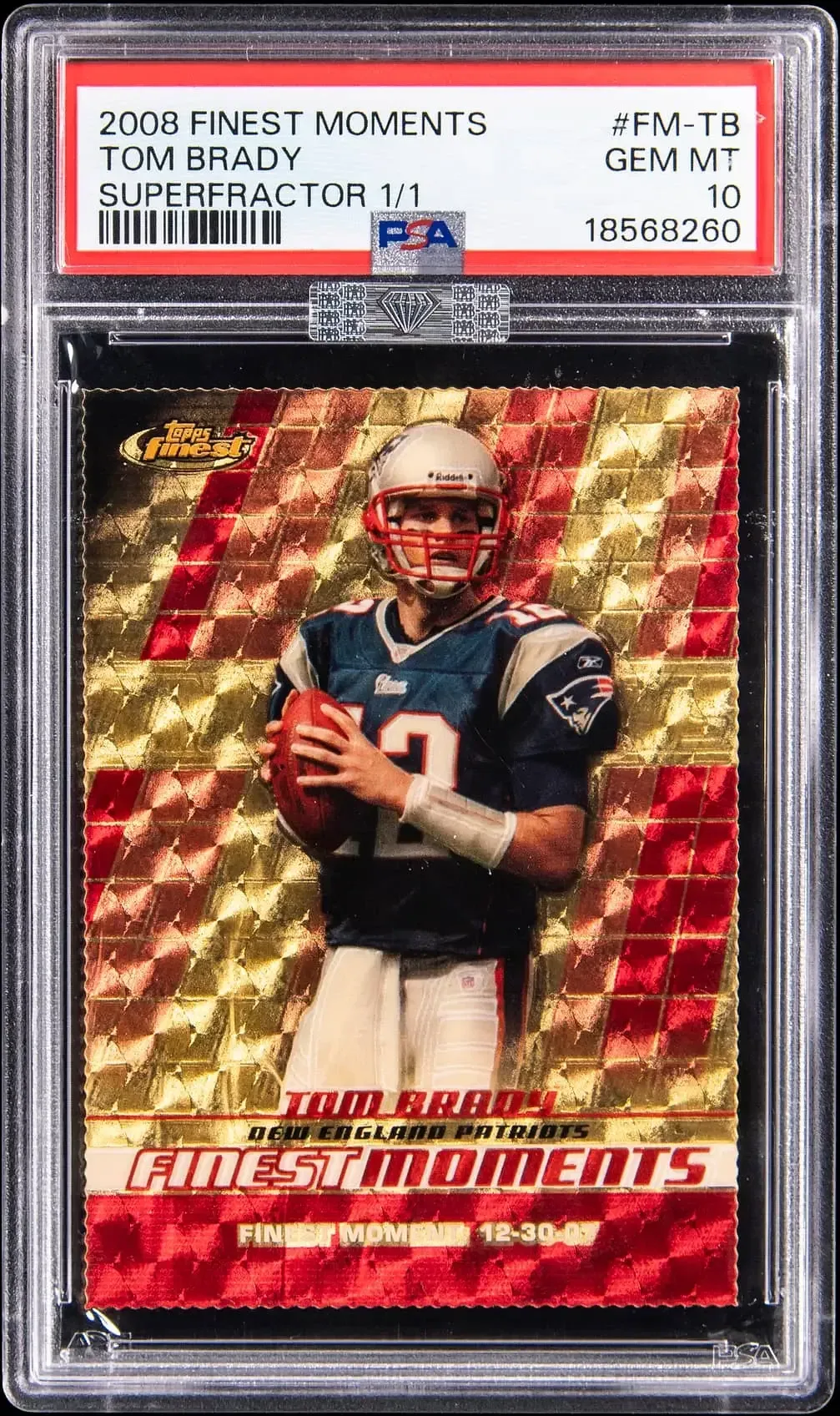
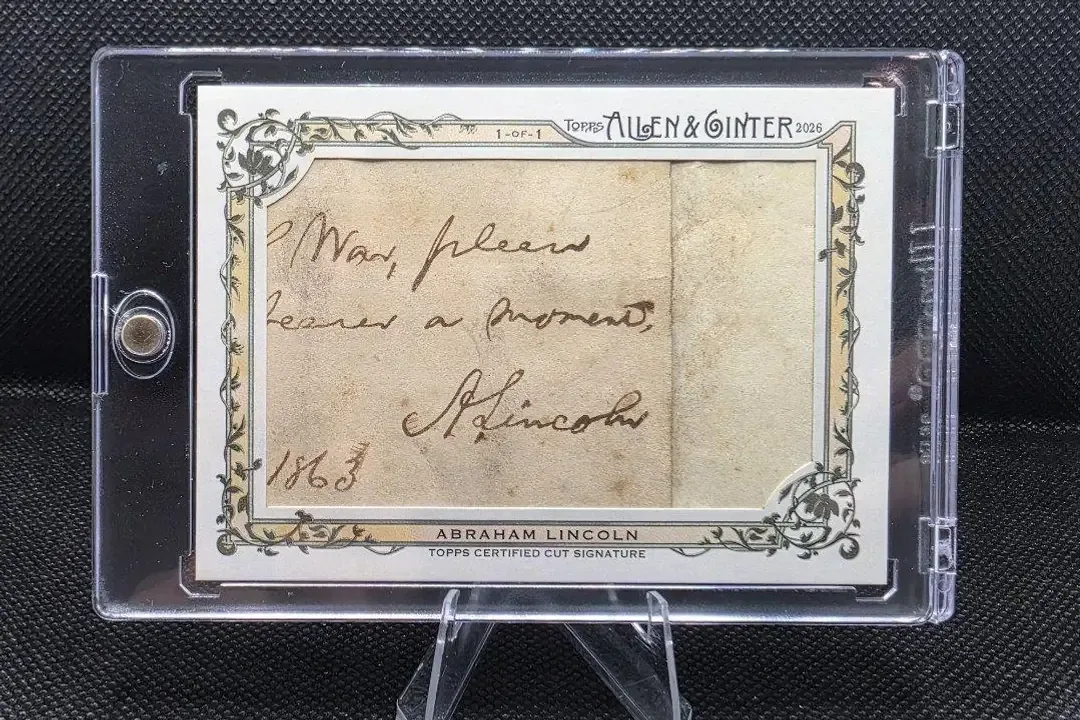
The only card to outsell the leading Chansey was a 2008-09 Upper Deck Exquisite Kobe Bryant Limited Logos Patch Autograph /24, which sold for just over $305,000 on eBay. Outside of that sale, Pokémon essentially controlled the top of the market.
Chansey edges out bigger household names
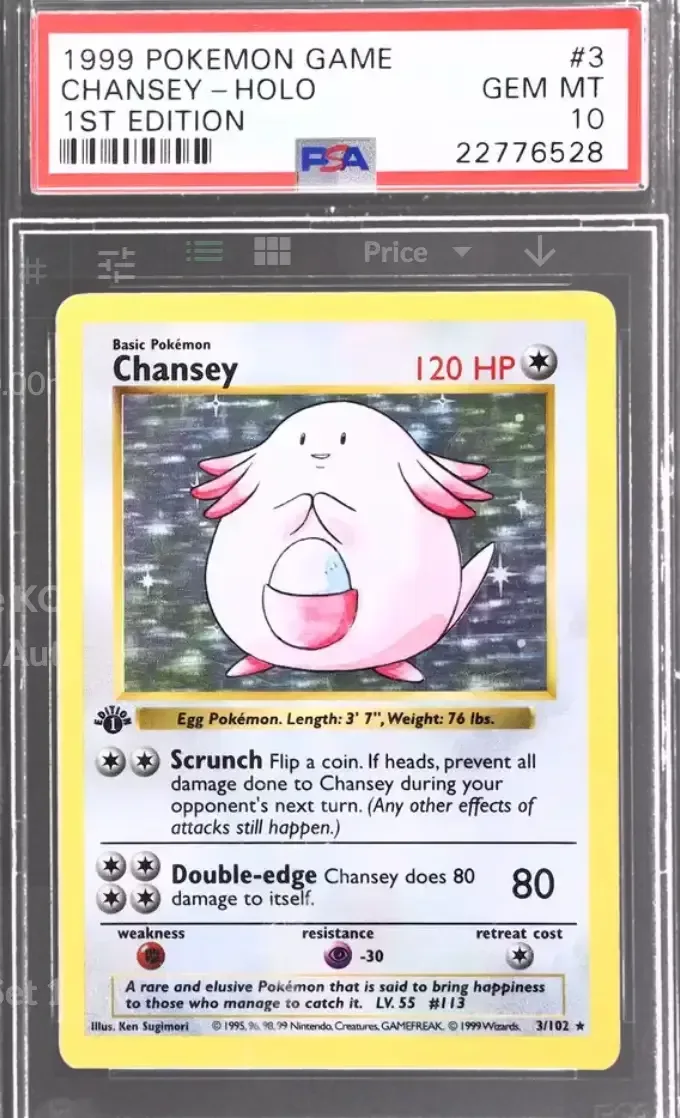
The highest Pokémon sale of the week came from a card that does not usually headline market reports. A 1999 Pokémon Base Set 1st Edition Holo Chansey #3 graded PSA 10 sold for $276,001 on Nov. 12.
For more collector background, read Mudkip Powers $10.65 Million Pokémon TCG Sales Week as Art Academy Cards Dominate.
That price put Chansey ahead of both Charizard and Pikachu, a notable result given how often those two define the upper end of Pokémon collecting. In this case, the appeal came from a combination of first-edition status, Base Set importance, holographic treatment, and top-condition scarcity.
Chansey’s holo design also helps explain why pristine copies are so coveted. Light surfaces and reflective holo areas can make print flaws, scratching, and edge issues easier to spot, which adds pressure to the grading process. When a Base Set first-edition holo survives in gem-mint condition, collectors tend to respond aggressively.
The sale was confirmed paid through Card Ladder’s tracking, giving the number additional weight as a real market comp rather than an unverified listing result. At $276,001, Chansey finished roughly $12,000 ahead of the next-best Pokémon cards from the week.
Charizard and Pikachu still posted massive six-figure results
Even with Chansey taking the top position, two of Pokémon’s most recognizable characters were close behind.
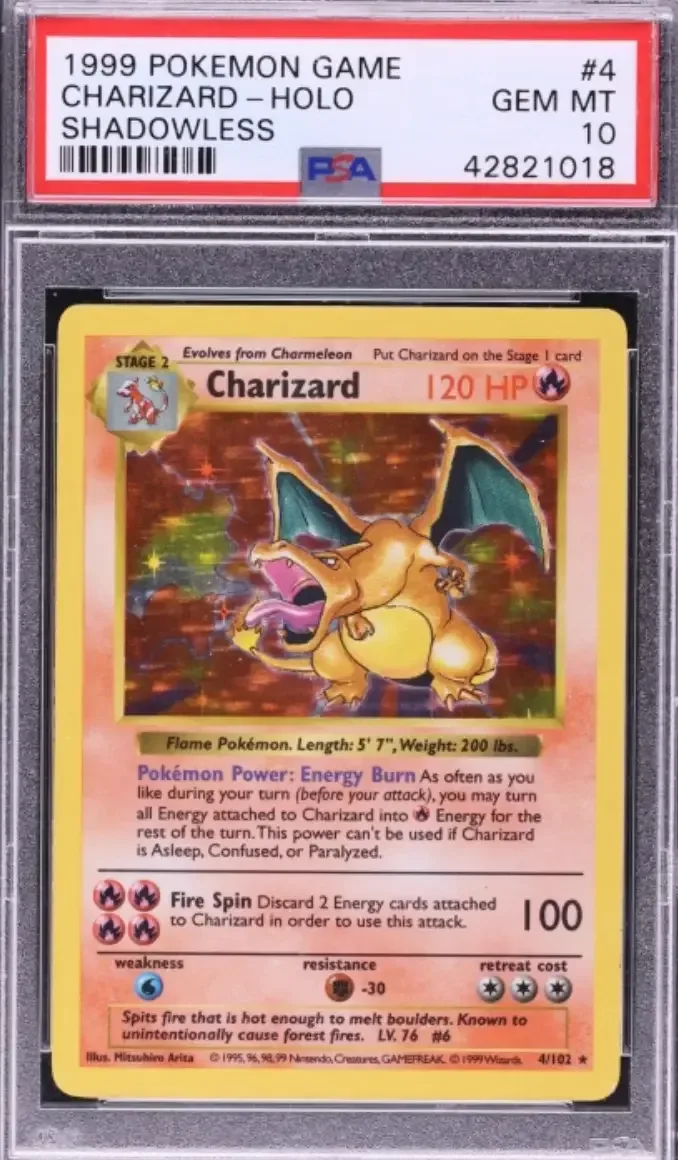
A 1999 Pokémon Base Set Shadowless Holo Charizard #4 in PSA 10 sold for $264,000 on Nov. 8. Shadowless copies occupy an important place in the hobby because they come from Pokémon’s earliest English print run and can be identified by the missing drop shadow around the art box. While 1st Edition Charizard usually attracts the biggest headlines, a gem-mint Shadowless example remains one of the most desirable non-sports cards in the market.
The fact that Charizard reached $264,000 without the 1st Edition label is a reminder of just how much demand still exists for elite vintage Pokémon. It also shows that collectors are willing to pay for condition rarity even when the card sits just below the most famous variation in the hierarchy.
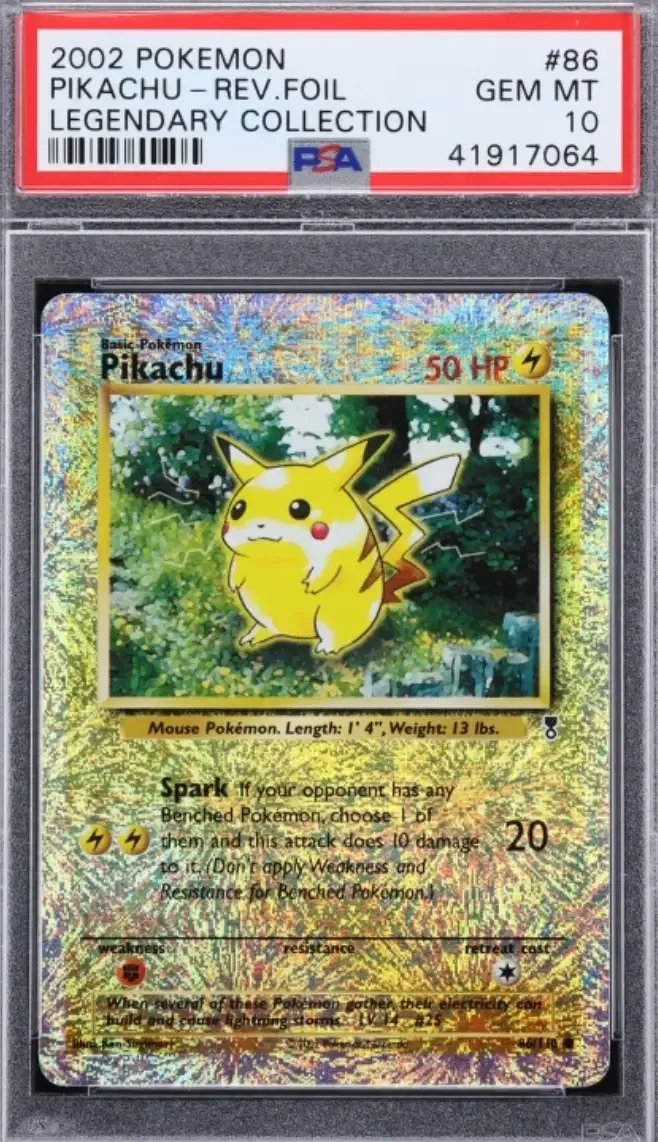
Matching Charizard at the same $264,000 level was a 2002 Pokémon Legendary Collection Reverse Holo Pikachu #86 in PSA 10, also sold on Nov. 8. Legendary Collection reverse holos have built a strong following thanks to their distinctive foil pattern, often described by collectors as a fireworks-style finish. Combined with Pikachu’s status as the franchise mascot, the card checked several boxes at once: iconic character, memorable design, and a difficult gem-mint grade.
That result is especially notable because Legendary Collection occupies a different niche than Base Set. It is not simply a first-wave release story. Instead, the sale reflects demand for unique aesthetics and condition-sensitive foil treatments that stand apart visually from standard holos.
Japanese promo scarcity stayed strong
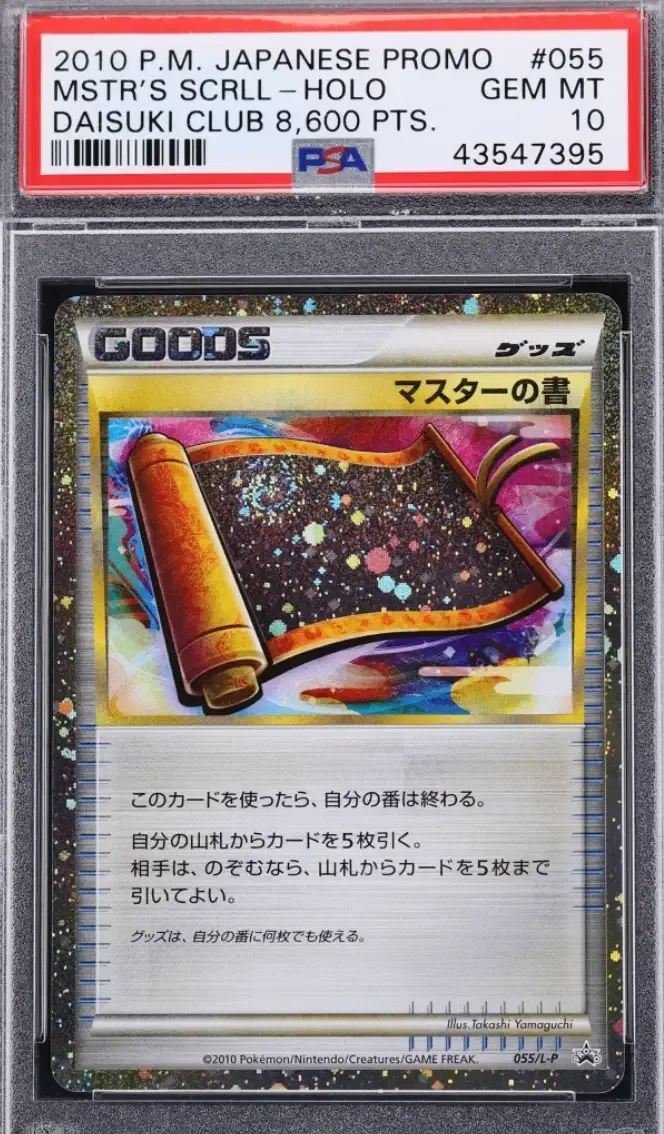
One of the week’s most interesting sales was the 2010 Pokémon Japanese Daisuki Club Masters Scroll #55 in PSA 10, which reached $228,000 on Nov. 8. Unlike mainstream set cards pulled from packs, Masters Scroll came from a Japanese rewards structure tied to the Pokémon Daisuki Club.
To obtain the card, collectors needed to accumulate 8,600 points through participation-based activities. That path to acquisition makes the card very different from a standard release and helps explain its long-term appeal. Promo cards with difficult distribution often attract serious buyers because scarcity is tied not just to age, but to how few people had a realistic opportunity to secure them in the first place.
Sales like this reinforce an important trend in the Pokémon market. High-end collectors are not focused only on the best-known English cards. They are also willing to chase hard-to-obtain Japanese promos with unusual backstories, especially when the population in top grades is limited.
The Masters Scroll result shows that exclusivity still matters. When a card combines low availability, a memorable distribution method, and top-condition certification, it can compete directly with much more famous character cards.
Later-era Pokémon cards continue to break through
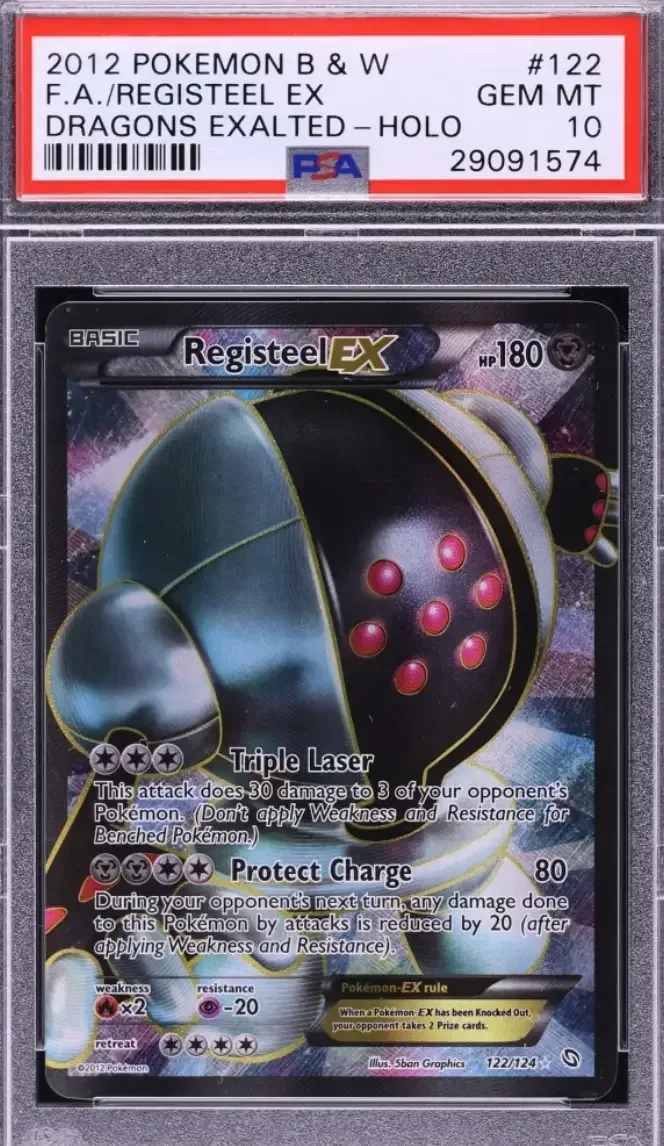
The fifth-largest TCG sale of the week was a 2012 Pokémon Black & White Dragons Exalted Full Art Registeel EX #122 in PSA 10, which sold for $204,000 on Nov. 8. That number stood out because Registeel is not usually treated as one of the hobby’s premier name-brand Pokémon.
Instead, the sale highlighted a different force in the market: rare later-era cards in elite condition can command extraordinary prices even without Charizard or Pikachu-level recognition. The Black & White era has developed a stronger collector base in recent years, and full-art cards from that period continue to gain traction as the hobby matures.
Registeel’s result also suggests that population scarcity and era-specific appeal can sometimes outweigh character popularity. The Black & White period is no longer viewed only as a bridge between older and modern Pokémon collecting. For many buyers, it now represents a distinct era with its own grails, aesthetics, and chase cards.
When a later-era card surfaces in PSA 10 with true scarcity behind it, deep-pocketed bidders are clearly prepared to treat it like a blue-chip collectible.
Top TCG sales from Nov. 7 to Nov. 14
- 1. 1999 Pokémon Base Set 1st Edition Holo Chansey #3 PSA 10 - $276,001
- 2. 1999 Pokémon Base Set Shadowless Holo Charizard #4 PSA 10 - $264,000
- 3. 2002 Pokémon Legendary Collection Reverse Holo Pikachu #86 PSA 10 - $264,000
- 4. 2010 Pokémon Japanese Daisuki Club Masters Scroll #55 PSA 10 - $228,000
- 5. 2012 Pokémon Black & White Dragons Exalted Full Art Registeel EX #122 PSA 10 - $204,000
What this week says about the Pokémon market
There are a few clear takeaways from this run of sales. First, the top of the Pokémon market remains broad. The strongest prices did not come from one narrow lane, but from several different corners of the hobby: Base Set first edition, Shadowless vintage, early-2000s special foil releases, Japanese participation promos, and later-era full arts.
Second, condition remains one of the most powerful value drivers in the category. Every card in the top five carried a PSA 10 grade. That is not a coincidence. At this level, the market is often less about simple card recognition and more about how rarely a specific issue appears in true gem-mint form.
Third, collectors continue to reward cards with a story. Chansey gained momentum from Base Set prestige and first-edition status. Charizard benefited from Shadowless significance. Pikachu drew strength from the Legendary Collection reverse holo treatment. Masters Scroll brought promo exclusivity and a difficult point-based origin. Registeel represented a scarce later-era full art from a period still gaining respect.
Those details matter because the modern high-end Pokémon market is increasingly nuanced. Buyers are not only chasing the most famous monster names. They are also targeting distinct print runs, special release methods, condition-sensitive surfaces, and visually unique subsets.
Why Chansey finishing first matters
The headline number belongs to Chansey, and that matters beyond one isolated sale. Pokémon’s market is often framed around a handful of superstar characters, but weeks like this show that important vintage holos from the original Base Set can still surprise the market. In the right grade and with the right label, even a card that sits slightly outside the usual headline group can rise to the top.
That does not weaken Charizard or Pikachu. If anything, it strengthens the broader vintage category by showing that demand extends across the foundational checklist. For advanced collectors, that is an encouraging sign. It suggests the market still places premium value on rarity, originality, and condition across the wider Base Set holo lineup, not just the single most famous card.
It also adds another data point for how competitive the upper tier has become. When a PSA 10 Chansey can clear $276,000 in a week that also includes six-figure sales for Charizard, Pikachu, Masters Scroll, and Registeel, it becomes harder to argue that the high-end Pokémon market is narrow or fading. The latest results instead point to a category with multiple lanes of demand and enough buyer confidence to support major prices across generations and release types.
For collectors watching the premium end of the hobby, the week’s sales offered a clear message: Pokémon remains one of the strongest forces in trading cards, and top-grade examples with true scarcity are still capable of producing headline-level results.
Photo Gallery