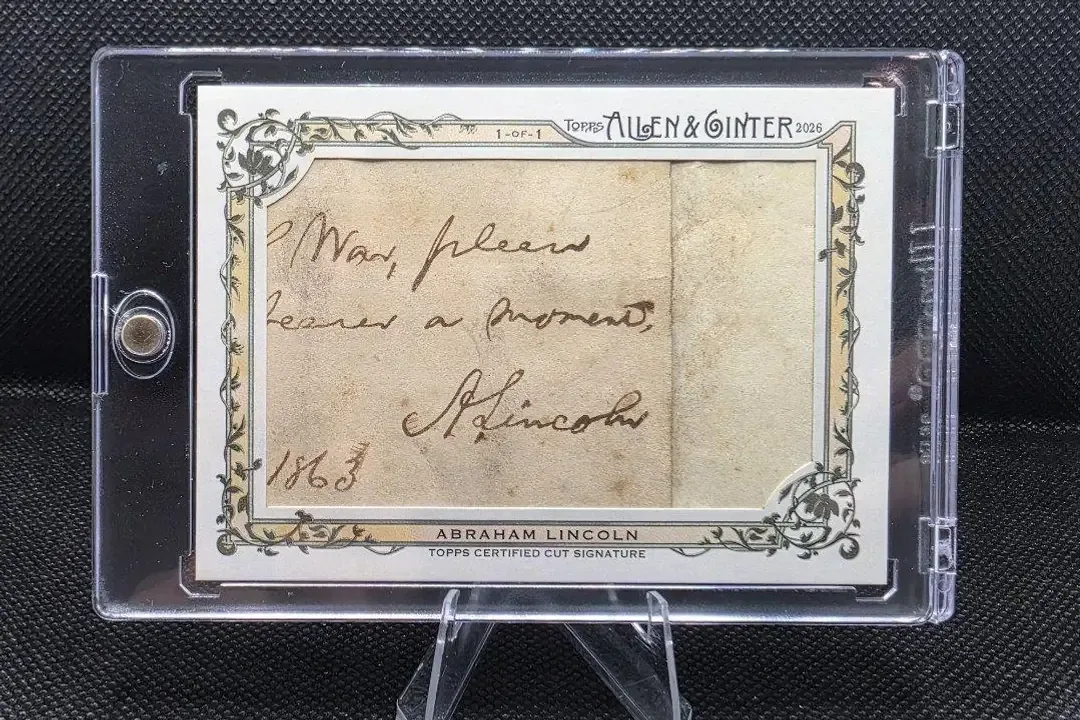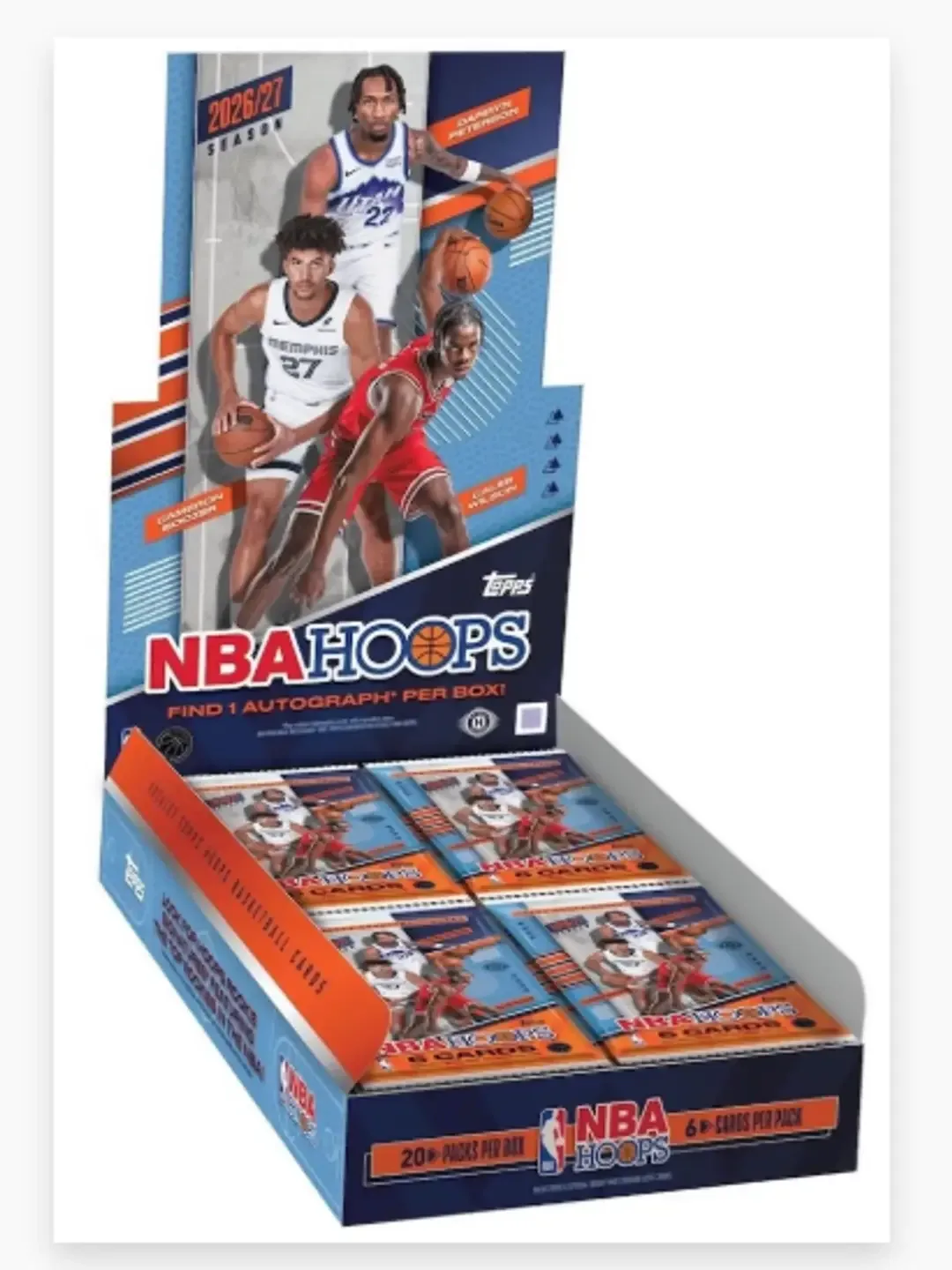
Basketball autograph cards sound simple until two listings use the same appealing words to describe very different things. The details that matter most are usually not the player's popularity or the card design. They are the release year, the manufacturer, the autograph format, whether the card is live or still a redemption, and what kind of authentication is actually being promised.
If you separate those pieces, most confusing listings become easier to read. On-card and sticker autos are different production methods. A redemption is a claim on future fulfillment, not the finished autograph card in your hand. Manufacturer certification and third-party authentication can overlap, but they are not the same promise. Once you treat each part of the listing as its own question, you can buy more deliberately and make fewer expensive assumptions.
Start with the release year and manufacturer before you judge the signature
Your first job is not deciding whether the autograph looks attractive. It is identifying exactly when the card was issued and who issued it. For licensed NBA and NBPA basketball cards, October 2025 matters. Topps was announced as the official exclusive trading-card licensee on October 15, 2025, and 2025-26 Topps Basketball launched on October 23, 2025. That makes the clean practical divide a pre-launch versus post-launch distinction, not a vague "before October" rule.
That timeline matters because older Panini NBA autograph cards remain legitimate products from the earlier licensed period, while licensed NBA and NBPA pack-issued autograph cards released after that launch belong to the Topps era. If you skip this step, you can easily read the wrong help language, assume the wrong redemption process, or misunderstand what a seller means by official, licensed, or current.
Imagine you are deciding between a 2024-25 Panini autograph and a 2025-26 Topps autograph of two similar stars. Even if both are pack-issued and both are genuine manufacturer-certified autos, they sit under different company systems. That changes who handled production, who may handle any redemption issue, and what public support language applies. Starting with the season and manufacturer saves you from mixing those systems together.
- Ask for the exact season, set name, and manufacturer before anything else.
- Use October 15 and October 23, 2025 as the key dates for the NBA and NBPA licensing transition.
- Treat pre-launch Panini licensed NBA cards and post-launch Topps licensed NBA cards as different operating eras.
On-card and sticker autos are real product categories, not just hobby shorthand
Collectors often talk about on-card autos as if the phrase itself settles the conversation. It does not. The useful distinction is simple. An on-card autograph means the player signed the card stock itself. A sticker autograph means the player signed a separate label that was later attached to the card. Both formats are recognized product types in mainstream card manufacturing.
That matters because some buyers still react to sticker autos as if they are automatically suspect. They are not. If the card was pack-issued and manufacturer-certified, a sticker auto is still a legitimate autograph card. The format tells you how the card was produced, not whether the signature is fake.
You should think of the format as a descriptive fact first and a preference question second. If you love clean design integration, you may prefer on-card signatures because the autograph sits directly within the card layout. If you care more about checklist coverage, price flexibility, or simply owning a certified autograph of a favorite player, a sticker auto may still fit perfectly well. The right question is not which category sounds better in a listing headline. The right question is whether the specific card matches your goals.
- On-card means the autograph was signed on the card itself.
- Sticker auto means the autograph was signed on a separate label later placed on the card.
- Both formats can be legitimate manufacturer-certified autograph cards when pack-issued.
Why many collectors prefer on-card ink
It is reasonable to prefer on-card ink, and premium basketball products have often highlighted on-card autograph content as a selling feature. That does not prove every on-card auto is better for every collector, but it does show that on-card signatures have long been treated as a meaningful design attribute rather than a random buzzword.
The attraction is easy to see in practice. On-card signatures often look more integrated with the image, the foil, and the intended signing area. When the autograph is placed directly on the card, the result can feel more unified. If you collect for display, build a player collection around standout centerpiece cards, or simply value visual cohesion, that difference can matter a lot.
Still, you should treat that appeal as a collecting preference, not as a shortcut that answers every buying question. A hypothetical example: suppose you are choosing between an on-card autograph from a premium release of a player you only mildly follow and a sticker autograph from a set you actively collect of your favorite player. The on-card version may look nicer to you, but that alone does not make it the smarter purchase. The card that fits your collecting focus usually has the stronger long-term appeal inside your own collection.
- On-card content has been deliberately emphasized in premium basketball product marketing.
- Visual appeal is a legitimate reason to prefer on-card ink.
- Preference for on-card design does not by itself settle questions about fit, value, or authenticity.
Why sticker autos and redemptions exist
Sticker autos and redemptions make more sense when you think about scheduling rather than aesthetics. Card companies have to align player signing sessions, card production, packaging deadlines, and release dates. Those things do not always line up neatly. When an autograph card is not ready in time, a company may substitute a redemption and fulfill the actual card later.
That does not mean sticker autos always prevent redemptions or that one format is operationally superior in every situation. It simply means card makers use more than one workflow to get autograph content into products. A sticker auto can offer production flexibility. A redemption exists because the final signed card was not ready for packout by release day.
For you as a buyer, that distinction is useful because it turns vague frustration into a clearer risk profile. If you see a live sticker auto, you know the card physically exists and can be evaluated now. If you see a redemption, you know part of the transaction depends on later fulfillment. Neither fact tells you whether you should automatically buy or avoid the card. It tells you what process created the listing in front of you.
- Redemptions are commonly used when a signed card is not ready at release.
- A sticker auto reflects a different production workflow from an on-card auto.
- Autograph format and redemption status tell you about process, not just appearance.
A redemption is not the same thing as a live autograph card
One of the most common buying mistakes is treating an unredeemed card as if it were interchangeable with a live autograph already in hand. It is not. A redemption is a claim on future fulfillment. The delivered autograph card may be desirable, but until it is actually fulfilled, you do not have the final physical card to inspect.
That difference should change how you read listings. A live autograph lets you evaluate corners, surface, centering, print quality, signature placement, and overall eye appeal right now. A redemption asks you to accept delay and uncertainty in exchange for the possibility of eventually receiving the card. That can be perfectly acceptable if you are chasing a specific release or player. It is a very different proposition if you want immediate display, quick gifting, or fast grading plans.
Consider a hypothetical scenario. You want a signed rookie-year style card for a birthday gift in three weeks. Listing A is a fulfilled sticker auto already in hand. Listing B is an unredeemed on-card autograph from a more glamorous premium set. If the gift date matters, Listing A may be the sensible choice even if Listing B sounds more exciting. A second scenario could go the other way: if you are building a slow, long-term collection and specifically want that premium on-card design, you might knowingly accept the wait. The key is recognizing that you are buying different things: one is a card, the other is a fulfillment claim.
- A redemption is a later-delivery claim, not the same as physical possession of the card.
- Live cards can be inspected immediately for condition and presentation.
- Redemption timing matters more when you need certainty, speed, or a specific use date.
How to evaluate an unredeemed basketball autograph before you buy
When you are considering an unredeemed card, slow down and think like both a collector and a contract reader. First, identify which company owes fulfillment. A Topps-era licensed NBA redemption and an older Panini NBA redemption do not run through the same public support system. If you do not know who is responsible, you do not yet understand the listing.
Next, look for signs that fulfillment activity is real and ongoing. Published redemption-batch updates can show that cards are being shipped in stages. That does not guarantee the exact card you want is about to be fulfilled, but it is more meaningful than a seller saying, "These usually come through." You want evidence that the manufacturer actually operates a live process for outstanding redemptions.
Then weigh convenience against desire. Suppose two listings feature the same player. One is a live sticker auto from a mid-tier set. The other is an unredeemed on-card auto from a premium checklist entry you truly love. If your priority is certainty and immediate enjoyment, the live card may be the better fit. If your priority is owning that exact design and you are comfortable with delay, the redemption could still be worthwhile. The mistake is assuming the more prestigious sounding card automatically fits your needs better.
Finally, do not assume every manufacturer publishes the same remedy language if authenticity is disputed later. Some companies provide broader public explanations than others. That does not automatically make one card safer than another, but it does mean you should resist filling in the gaps with assumptions.
- Identify the company responsible for fulfillment before paying for any redemption.
- Look for concrete signs that redemption fulfillment is active.
- Choose consciously between immediate certainty and delayed upside.
- Do not assume all manufacturers offer the same published remedies or protections.
Manufacturer certification and third-party authentication are different promises
This is where many collectors accidentally overpay. A pack-issued autograph card carries a manufacturer certification claim. A slab from a grading or authentication company may involve card grading, autograph authentication, autograph grading, or some combination of those services. Those are related ideas, but they are not interchangeable.
For example, a slabbed card can look reassuring from a distance, yet the company may have graded the card without extending the same guarantee you think applies to the autograph itself. In other cases, the autograph may have been separately authenticated or even graded for signature quality. The holder alone does not tell you enough. You need to know what service was performed.
A practical hypothetical helps here. Imagine a seller offers two copies of the same manufacturer-certified autograph card. One is raw. The other is slabbed. If the slab only reflects card grading, you may be paying extra for condition assessment and encapsulation, not for a new independent opinion on the autograph. But if the service includes autograph authentication, that is a different proposition. Read the label and service description carefully before assuming the slab adds the specific protection you care about.
This also matters when collectors say a card is "authenticated." That word can mean the manufacturer certified it as pack-issued, or that a third party examined the autograph, or both. If you are not clear on which meaning applies, you are shopping on vibes instead of facts.
- Manufacturer-certified does not automatically mean third-party authenticated.
- A slab may reflect card grading, autograph authentication, autograph grading, or multiple services.
- Read the label and service scope instead of assuming every slab says the same thing.
Do not blur league licensing, player-group rights, and autograph rights
The word official causes a lot of confusion because collectors often use it too broadly. In basketball cards, league and team branding rights, player-group licensing rights, and specific athlete autograph rights are not automatically the same thing. They can overlap in one product, but they should not be treated as one giant all-purpose permission slip.
That matters most when sellers rely on language that sounds comprehensive. A card can be an officially licensed NBA and NBPA trading card for its release year, and the autograph can also be manufacturer-certified, but that does not mean you should casually assume every autograph-related right works the same way across all players and all years. Separate athlete autograph agreements can exist alongside broader trading-card licenses.
The practical lesson for you is to ask narrower questions. Is this a licensed NBA and NBPA card for its release year? Is the autograph pack-issued and manufacturer-certified? Is the seller also making a claim about a particular athlete signing arrangement? Those are answerable questions. Broad statements such as "Company X owns basketball autograph rights" are usually too loose to help you evaluate a specific card listing.
- League branding rights, player-group rights, and autograph rights are distinct categories.
- An exclusive trading-card license is not the same thing as owning every athlete autograph right in the same way.
- When a listing says official, ask what exactly is official about it.
A practical checklist for reading basketball autograph listings more carefully
If you want a repeatable method, keep it simple and use the same order every time. Start with the card's identity: season, set, parallel if relevant, and manufacturer. Then place it in the correct licensing era. After that, confirm the autograph format. Do not guess from a blurry image if a product description or checklist language can answer the question more clearly.
Next, determine whether the card is live in hand or still a redemption. That single distinction can completely change what you are buying. A photo of a redemption card or account screen is not the same as a photo of the final autograph card. If the card is slabbed, pause again and decode the service. Was only the card graded? Was the autograph authenticated? Was the autograph graded for quality? Those differences affect what the premium really buys you.
Finally, tie everything back to your purpose. If you are building a player collection, visual harmony may matter more than speed. If you want a gift or a submission candidate, certainty may matter more than design prestige. If you are deciding between two cards of the same player, the better purchase is often the one whose risks and benefits you actually understand, not the one with the flashier hobby vocabulary.
Terms such as on-card, sticker, authenticated, official, and pack-pulled should start your analysis, not end it. Once you learn to separate aesthetics, fulfillment risk, licensing context, and authentication scope, basketball autograph listings become much easier to judge calmly.
- Identify the season, set, manufacturer, and licensing context first.
- Confirm on-card versus sticker from reliable product information where possible.
- Separate live cards from unredeemed claims before comparing prices.
- Read slab service types carefully before paying extra for supposed security.
- Match the card's format and risk level to your actual collecting goal.
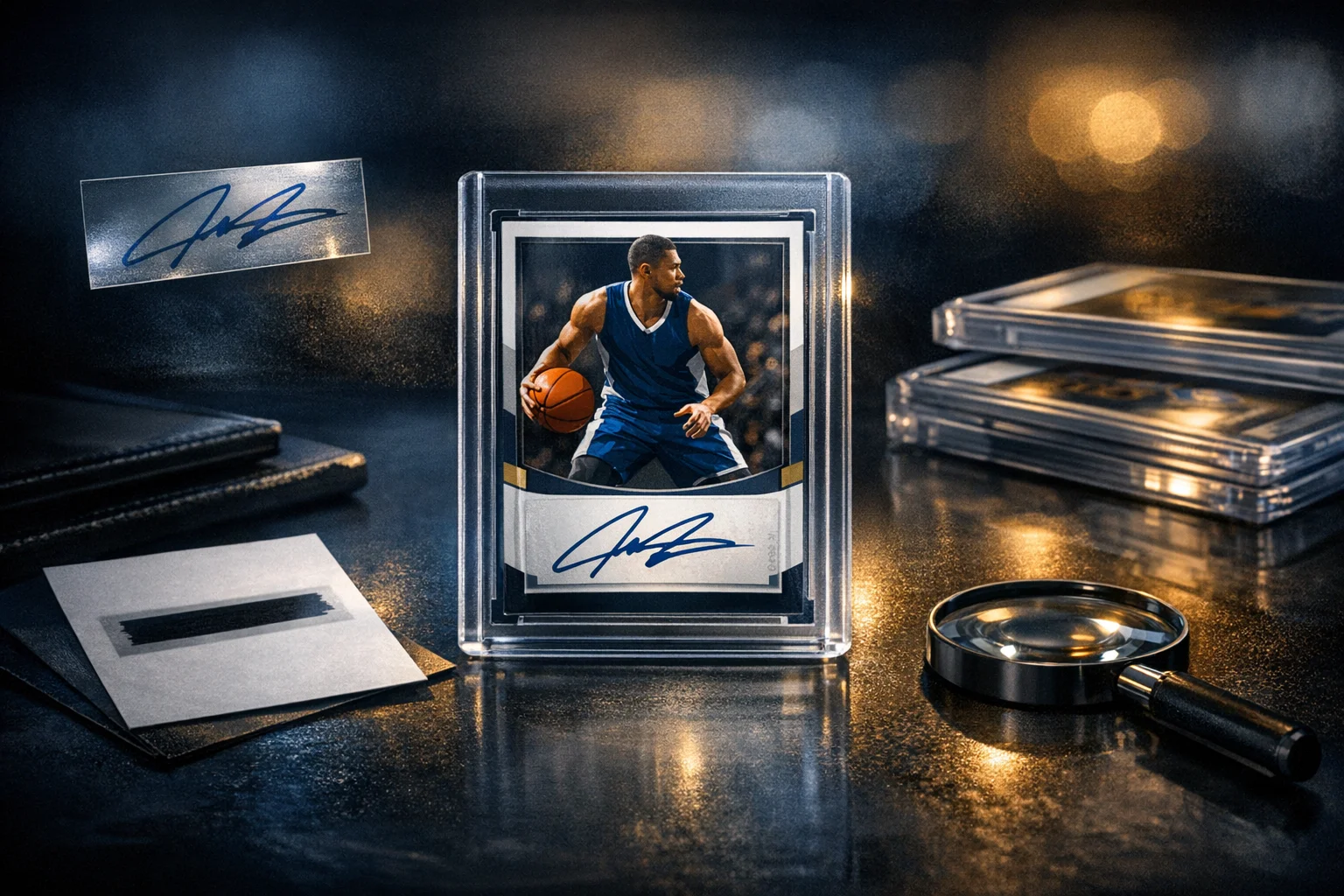
Illustration generated for this guide; not a photograph of an actual card, product or event.
Photo Gallery