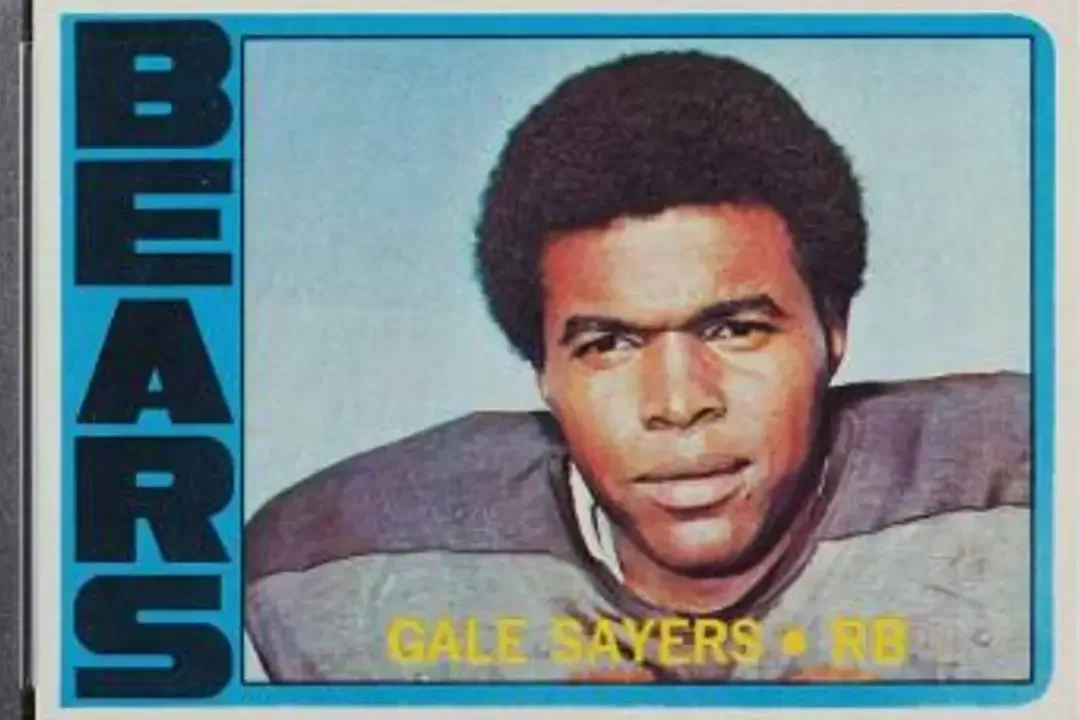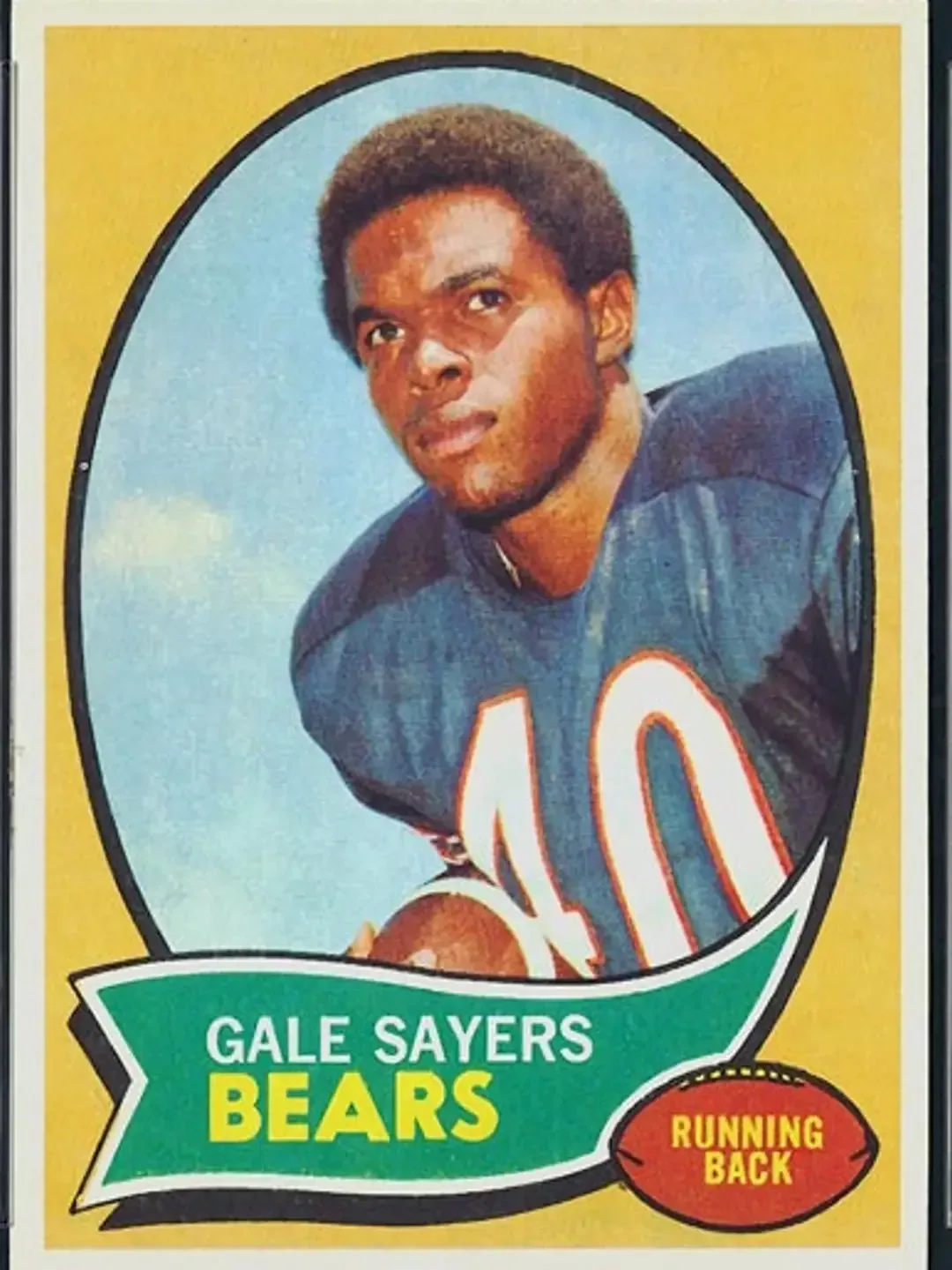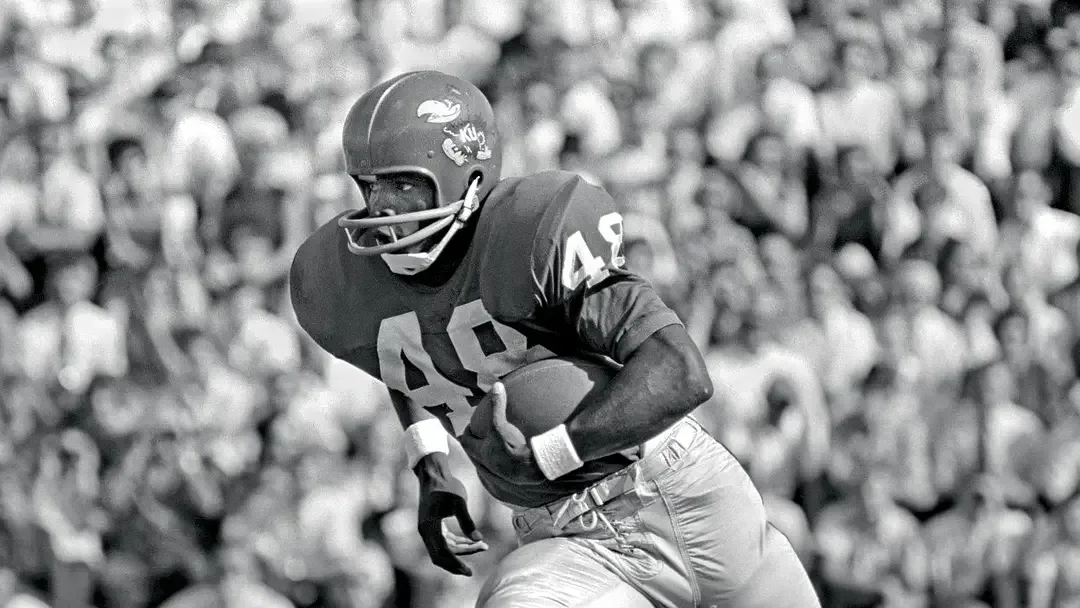
Few football legends left a stronger impression in such a short career than Gale Sayers. The Chicago Bears star, known as the Kansas Comet, combined rare speed, balance, and open-field brilliance into a résumé that still stands out among all-time greats. His NFL run was shortened by injuries, but his place in football history never depended on longevity alone.
That lasting reputation has carried directly into the vintage card market, where Sayers remains one of the most collectible names of the era. High-grade examples of his key cards continue to draw strong prices, especially when population counts are exceptionally low. Based on the strongest sale figures provided, these are the Top 3 Gale Sayers cards to know.
Why Gale Sayers Cards Still Matter
Sayers starred at Kansas before entering the NFL as the fourth overall pick in 1965. He quickly became one of pro football’s most electrifying players, with a style that translated perfectly into hobby appeal. Collectors are not just buying cardboard tied to a Hall of Famer. They are buying into one of the sport’s most memorable peak performers.
That matters even more in vintage football, where player legacy, scarcity, and grade sensitivity can create dramatic differences in value. For Sayers, the market leans heavily toward cornerstone issues, especially his rookie card and low-population Topps cards in top condition.
For more collector background, read John Elway’s Top 3 Most Valuable and Iconic Football Cards.
Top 3 Gale Sayers Cards by Recorded Sale
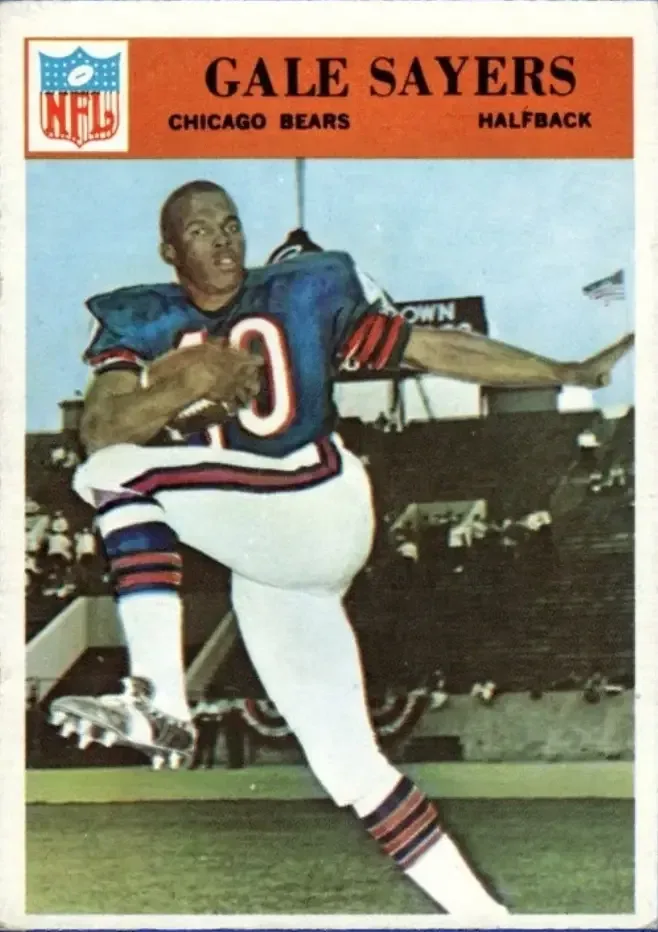
1. 1966 Philadelphia Gale Sayers #38
The clear headliner in the Sayers market is his 1966 Philadelphia rookie card. It stands as the defining Gale Sayers issue, and the available sales data shows just how much distance there is between this card and the rest of the field.
A PSA 9 example sold for $58,800 on May 13, 2022. Another PSA 9 later sold for $32,940 on August 23, 2026, reinforcing the card’s elite standing even when the exact result fluctuates from sale to sale. The source material also notes that the top 12 reviewable sales for Gale Sayers cards are all versions of this 1966 Philadelphia rookie, which says everything about its place in the market.
Population data adds more context. The PSA 9 population is listed at 38, and the gem-rate note supplied with the card underscores just how difficult true top-end examples are to find. Even for a legendary player, not every rookie card reaches this level of market dominance. Sayers’ rookie does because it hits every major hobby driver at once: Hall of Fame stature, vintage football importance, rookie-card priority, and enduring collector recognition.
For another perspective on this story, read The 3 Most Valuable Gale Sayers Cards and Their Recorded Sales.
It is also the card most likely to serve as the centerpiece of a Gale Sayers collection. For vintage Bears collectors, Hall of Fame football investors, or anyone building around major 1960s rookies, this is the issue that defines the chase.
- Card: 1966 Philadelphia Gale Sayers #38
- Key status: Rookie card
- Top sale noted: PSA 9 for $58,800 on May 13, 2022
- Additional sale noted: PSA 9 for $32,940 on August 23, 2026
- PSA 9 population: 38
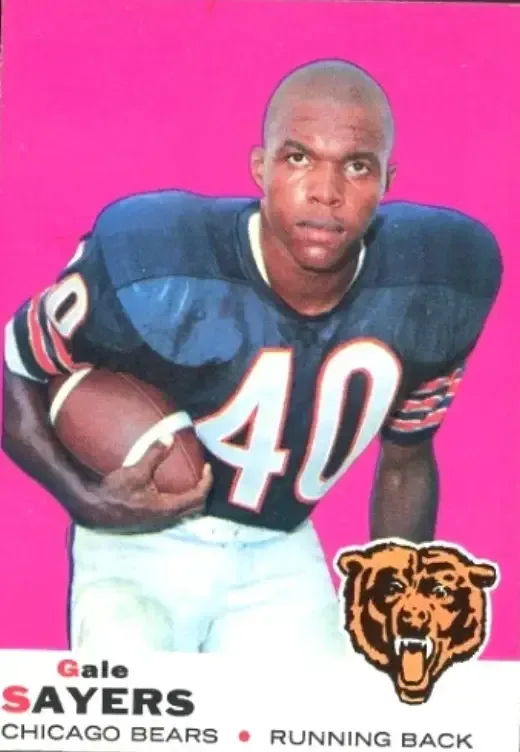
2. 1969 Topps Gale Sayers #51
The second spot belongs to 1969 Topps Gale Sayers #51, a card that shows the power of scarcity at the highest grade levels. While it does not approach the rookie card’s overall market footprint, its best known sale still reached five figures.
A PSA 10 sold for $12,426 on May 30, 2020. The source lists the PSA 10 population at just one, an important detail that helps explain the result. In vintage football, a population of one at a flagship grade can turn an already desirable card into a true condition rarity. That is exactly the appeal here.
This card also sits in a strong era of Topps football collecting. Late-1960s issues remain popular with vintage collectors, and a Hall of Famer in a lone PSA 10 holder is the sort of combination that can create intense competition when an example surfaces. Even if the card does not have rookie-card status, it carries prestige because of how difficult it is to match the grade.
For collectors deciding between iconic importance and condition scarcity, the 1969 Topps issue offers both. It is a recognized vintage Sayers card from his playing days, and in top grade it becomes one of the toughest mainstream Sayers cards on the board.
- Card: 1969 Topps Gale Sayers #51
- Top sale noted: PSA 10 for $12,426 on May 30, 2020
- PSA 10 population: 1
- Collector appeal: vintage Topps issue with elite grade scarcity
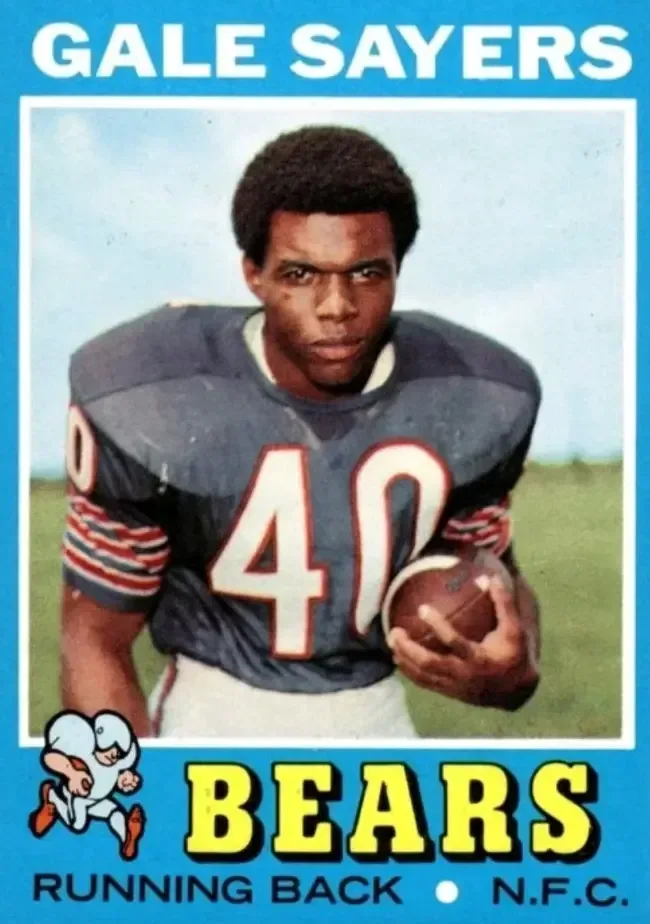
3. 1971 Topps Gale Sayers #150
Third on the list is 1971 Topps Gale Sayers #150, another issue carried by extreme condition scarcity. A PSA 10 example sold for $10,166 on January 23, 2019, making it one of the strongest publicly cited Sayers sales outside the rookie card.
The population data again tells the story. The source lists the PSA 10 population as one. That makes this card a singular high-grade target, and that type of scarcity becomes especially important on 1971 Topps cards, a set known among collectors for condition challenges. Centering, edges, and surface presentation can all be difficult on vintage issues from this era, and top-graded examples often command major premiums as a result.
The 1971 Topps release also lands in an interesting point of the Sayers timeline. By then, his greatness was already well established. Despite an injury-shortened career, he had done more than enough on the field to become one of football’s most celebrated stars. That legacy gives his early-1970s cards staying power, especially when one surfaces at the very top of the grading scale.
Collectors who focus on rare PSA 10 vintage football cards will understand why this issue ranks so highly. It is not just a Sayers card. It is one of the toughest high-grade Sayers cards documented in the data provided.
- Card: 1971 Topps Gale Sayers #150
- Top sale noted: PSA 10 for $10,166 on January 23, 2019
- PSA 10 population: 1
- Collector appeal: condition-sensitive vintage Topps card with lone PSA 10 status
What Drives Value in Gale Sayers Cards
The three cards above highlight the biggest pricing factors in the Sayers market.
First is rookie-card importance. The 1966 Philadelphia #38 stands apart because collectors place a premium on first major issues, especially when tied to an all-time great. That dynamic is common across the sports card hobby, and it is particularly pronounced in vintage football.
Second is top-grade scarcity. Both the 1969 Topps #51 and 1971 Topps #150 reached their positions largely because PSA 10 examples are listed with populations of one. When supply is effectively nonexistent, buyers do not need a card to be a rookie to push it into premium territory.
Third is player legacy. Sayers remains one of the most celebrated stars in football history because his peak was unforgettable. He was a two-time All-American at Kansas, entered the NFL with enormous expectations, and delivered the kind of highlight-reel talent that still resonates with collectors decades later. He was inducted into the Pro Football Hall of Fame at age 34, a sign of just how undeniable his impact was.
Collector Takeaways for the Sayers Market
For most collectors, the market divides into two lanes. The first is the iconic-card lane, led by the 1966 Philadelphia rookie. That card is the foundational Gale Sayers piece and the issue most likely to remain at the center of long-term demand.
The second is the scarcity lane, where cards like the 1969 Topps and 1971 Topps become especially attractive in elite grades. These issues can be more approachable in lower grades, but their highest-graded examples sit in a very different value tier because so few exist.
That means collectors should pay close attention not only to the card itself, but also to the holder, the grade, and the population report context surrounding it. With Sayers, the difference between a nice vintage copy and a top-pop copy can be massive.
Anyone tracking the vintage football market should keep those distinctions in mind. Gale Sayers may have had a brief NFL career, but his best cards still carry the kind of recognition, rarity, and historical weight that keep them relevant in the hobby year after year.
Photo Gallery