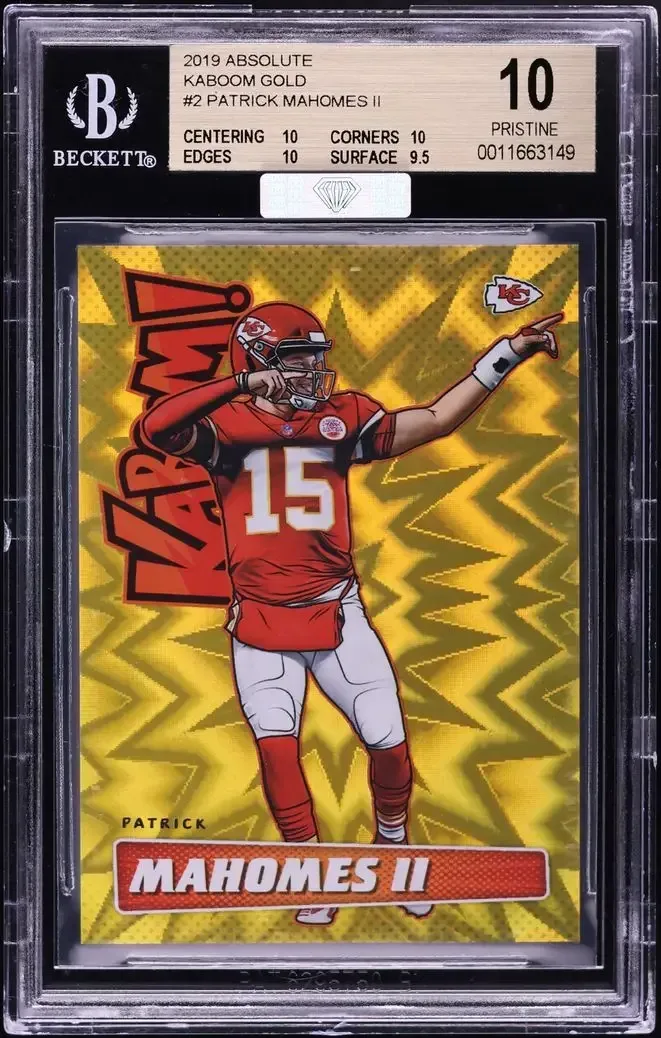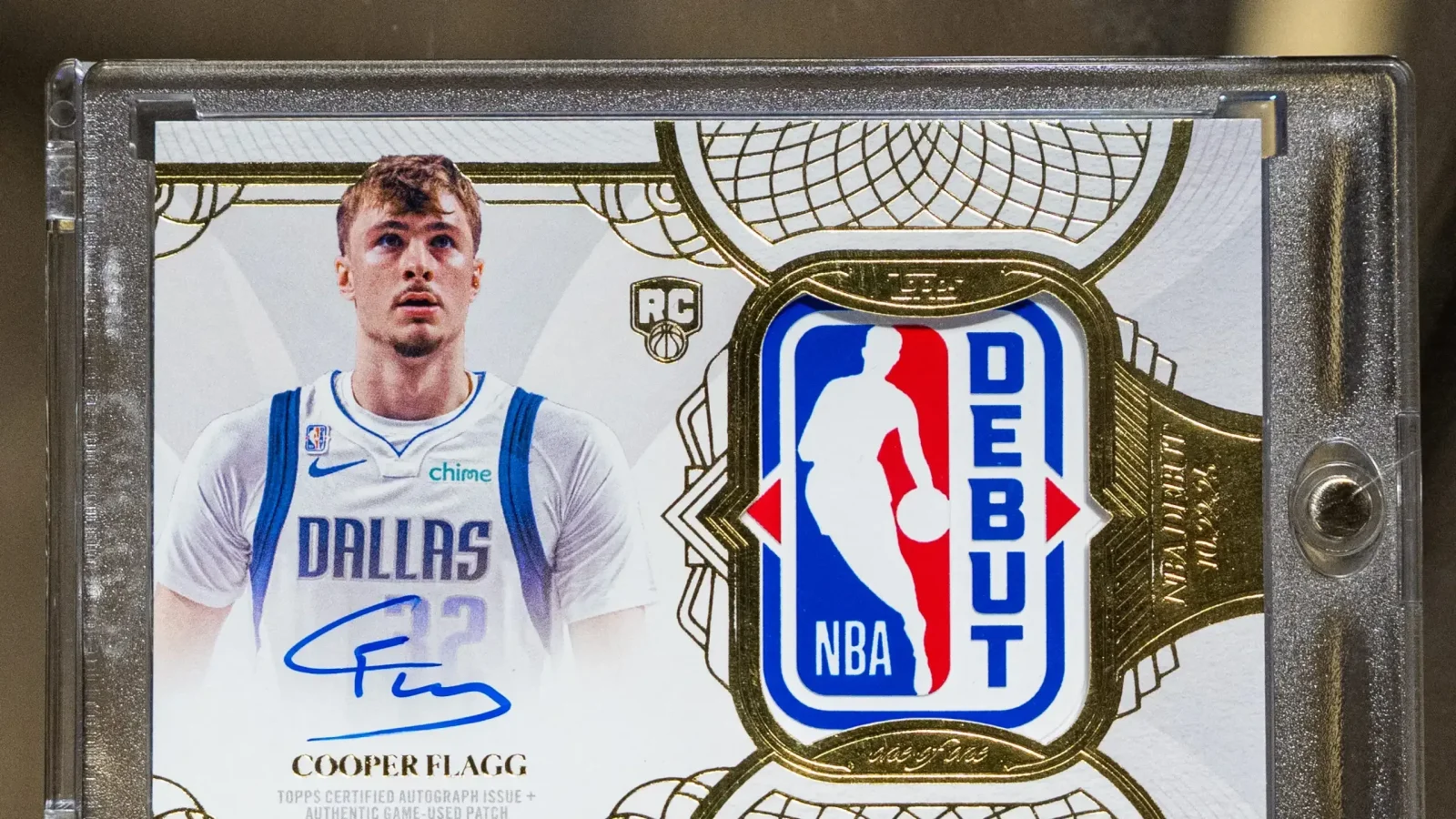
A lot of collector confusion starts with one bad assumption: that the earliest important card and the official rookie card must be the same thing. In modern Topps and Bowman collecting, they often are not.
That matters because a prospect card, a 1st Bowman, and an RC-stamped rookie card can all feel like "the card" for one player while serving different purposes. If you mix those categories together, it becomes easy to overpay, mislabel cards, or build around a goal you did not actually mean to pursue.
The cleanest way to think about it is this: a 1st Bowman usually marks a player’s first major Bowman prospect appearance, while a rookie card with an RC logo marks the player’s debut-era rookie window in modern product language. Neither automatically wins every collecting argument. Your answer depends on whether you care most about earliest access, league-recognized rookie presentation, licensing, autographs, or long-term set building.
Start with the basic distinction: a 1st Bowman is not the same thing as an RC
Topps treats these as separate categories. Its collector education describes a 1st Bowman as a prospect’s first appearance in a Bowman product, typically before the player’s official rookie card. The same Topps material describes modern rookie cards as the player’s first professional card after an MLB debut and notes that current rookie cards carry an RC stamp.
That difference sounds small until you apply it in the wild. If you pull a Bowman prospect card with the 1st Bowman designation, you are usually looking at an early prospect milestone, not the player’s MLB rookie card. If you pull a later flagship or chromium release with an RC mark, you are looking at a rookie-era card tied to the debut window rather than the earliest mainstream Bowman appearance.
For collectors, this is the first practical filter. Before you judge desirability, ask a simpler question: am I buying the first major prospect appearance, or am I buying the debut-era rookie designation? Those are different collecting goals, and calling them both rookies only muddies the decision.
- Use 1st Bowman to mean first Bowman prospect appearance, not generic "first card I care about."
- Use RC to mean modern rookie-designated card in product language, not any early card of a young player.
- When listing or buying, name the exact set and year before debating whether the card is the key card.
Why 1st Bowman cards carry so much weight in baseball
Baseball collectors did not invent the importance of 1st Bowman by accident. Topps has spent years positioning Bowman as the center of modern prospecting, and its educational pages explicitly frame 1st Bowman cards as key long-term prospect pieces whose importance can rival rookie cards. In other words, the brand itself is telling collectors that the pre-rookie prospect lane matters.
That makes sense in a sport where player development is long, minor league track records are public, and prospect collectors often want exposure long before a player reaches the majors. A 1st Bowman often becomes the first mainstream licensed Topps or Bowman checkpoint in that story. For many collectors, especially those who enjoy scouting development arcs, that is the whole appeal.
There is also a structural reason these cards matter. Bowman products separate prospects from veterans and rookies in a way that reinforces prospect identity. In 2026 Bowman Baseball, for example, Topps described a 100-card base set for MLB players and rookies alongside a 150-card Bowman Prospect checklist. That split tells you exactly how the product wants to be read: prospect cards are not just rookie cards arriving early. They are a parallel lane with their own checklist logic, chase habits, and collector language.
If your collecting style is built around identifying talent before broad mainstream demand arrives, 1st Bowman cards fit naturally. If your style is built around major league arrival and official rookie presentation, they may still matter, but they do not automatically replace the rookie card in your collection.
- In baseball, a 1st Bowman often functions as the hobby’s early prospect flag.
- Prospect checklists are intentionally distinct from base rookie and veteran checklists in Bowman.
- A card can be historically important to collectors without being the formal rookie card.
What the RC logo does and does not tell you
Collectors often treat the RC logo as a shortcut, and sometimes it is a useful one. Topps says modern rookie cards carry an RC stamp, so if you are scanning a case or marketplace listing, the mark can quickly signal that the card belongs to the rookie-era lane rather than the earlier prospect lane.
But the shortcut is not perfect. Beckett’s explanation is especially useful here because it separates cataloging from hobby preference. Beckett says the RC logo by itself is not the full definition of a rookie card in its system. It also notes that some inserts and parallels can carry RC logos without becoming Beckett-designated rookie cards, and that some historically legitimate rookie cards do not have the RC logo at all.
That means the logo is a designation, not a universal answer key. If you collect by Topps product language, the RC symbol may be enough for your purpose. If you collect by checklist taxonomy, price-guide tradition, or a stricter rookie-card definition, you may need to look further than the front of the card.
A good buying habit is to avoid the phrase "has the RC logo, so it must be the rookie" unless you have also confirmed the set’s place in the player’s release timeline. Logos help. They do not eliminate the need to identify the exact product and how that product is categorized.
- RC logo means rookie designation in modern product language.
- RC logo does not automatically settle every cataloging debate.
- Older rookie cards may lack RC logos altogether, so do not apply modern packaging rules backward in time.
A practical way to choose: decide whether you are prospect-first or rookie-first
Most collectors do not need a philosophical answer to the 1st Bowman versus rookie-card question. They need a buying rule. The simplest one is to decide which of two lanes matters more to you before you shop.
If you are prospect-first, you are usually paying for early placement in a player’s card timeline. You want the card that arrived before the broader rookie-card cycle, and you probably care about prospect identity as much as big-league status. In that lane, a 1st Bowman, especially a Chrome or autograph version, often becomes the centerpiece because it aligns with the earliest mainstream Bowman appearance.
If you are rookie-first, you are probably looking for the card that feels most connected to the player’s arrival on the main professional stage. You may prefer the RC stamp, the flagship look, the team branding, and the sense that the card belongs to the debut chapter rather than the development chapter.
Neither approach is inherently smarter. Prospect-first collecting offers earlier access but more uncertainty. Rookie-first collecting gives you a clearer debut anchor but often later entry. A practical example: if two collectors both like the same young shortstop, one might buy the 1st Bowman Chrome as the key early prospect card, while the other waits for a fully branded RC-stamped rookie because that is the card type the collector wants represented in a long-term player run. Both are coherent choices. Problems only start when each collector assumes the other is collecting the wrong thing instead of a different thing.
- Prospect-first collectors usually prioritize earliest meaningful Bowman appearance.
- Rookie-first collectors usually prioritize debut-era presentation and RC designation.
- Write your own rule before browsing listings so you do not get pulled by hype into a card type you did not intend to buy.
Licensing changes what many collectors mean by an “official” rookie
Part of the rookie-card appeal has nothing to do with chronology alone. Many collectors want the card that combines rookie status with full league and team presentation. That is why licensing deserves a place in this discussion.
The recent NBA and NFL announcements make the point clearly. As of the October 6, 2026 research date, Topps had returned as the exclusive trading card licensee for the NBA and NBPA in a multiyear partnership announced on October 15, 2025, and Fanatics had announced Topps’ return as the official exclusive trading card licensee of the NFL and NFLPA in 2026, with 2025 Topps Chrome Football released April 15. Those deals matter because they tie rookie cards to official team branding and player-group rights, not just a player image on cardstock.
Baseball collectors have seen a similar distinction through rookie programs tied directly to debut timing. MLB has described the MLB Debut Patch program as a partnership involving MLB, MLB Players Inc., and Topps, with the patch worn in the debut game, authenticated, and later placed onto the player’s rookie card. That kind of program underscores why some collectors separate prospect cards from true rookie experiences even if the prospect card came first.
The key takeaway is that early does not always mean preferred. A collector may fully understand that the 1st Bowman predates the rookie card and still choose the later RC because the licensed debut context is the point. That is not confusion. It is preference.
- League branding, player-group rights, and rookie-era framing can increase the appeal of RC cards for some collectors.
- An earlier prospect card and a later licensed rookie card can both be important without serving the same role.
- When sellers use words like official, ask what rights or designation they actually mean.
Prospect cards do not work the same way in every sport
Baseball gives collectors the clearest 1st Bowman framework, but the same mental model does not transfer cleanly everywhere. That is important if you collect across sports and assume every prospect card sits in the same relationship to rookie cards.
In baseball, Topps still presents Bowman and Bowman Chrome as core prospect products with distinct prospect checklists and prospect autographs. That makes the 1st Bowman label a deeply established concept. Basketball has become more interesting because Bowman Basketball now combines NBA rookies and stars with a prospect insert structure that includes 1st Bowmans of incoming talent in an NCAA and NBA environment. Topps also says Bowman Basketball delivers the first officially licensed trading cards and autographs of key incoming talent from the projected 2026-27 draft class.
That means basketball prospect collecting can involve a pre-NBA lane that looks different from baseball’s minor-league path. You are not simply waiting on an MLB debut analogue. You may be looking at college-connected, incoming-talent cards that coexist with fully licensed NBA rookie cards. Football adds another wrinkle because the public evidence here is stronger on licensing structure and rookie-event access than on a current formal Bowman-style prospect rulebook.
For collectors, the lesson is simple: do not assume a baseball definition solves every sport. The relationship between pre-rookie cards, licensing, and rookie designation depends on how that sport’s products are built. Before buying, ask what stage of the player’s path the card actually represents.
- Baseball has the clearest modern 1st Bowman tradition.
- Basketball prospect cards can include incoming talent before NBA rookie status in a licensed Bowman environment.
- Football rookie-card creation is heavily tied to league and player-group licensing structures.
How to identify the card you are actually buying
A surprising amount of rookie-card confusion disappears if you slow down and verify five things in the listing or slab label. First, check the exact set name and year. "Bowman" is not enough. A 2026 Bowman prospect card and a later flagship rookie card may describe the same player at very different moments.
Second, look for the 1st Bowman designation separately from any RC symbol. If the card has 1st Bowman branding, treat it as a prospect milestone unless the checklist or product structure says otherwise. If it has an RC stamp, treat it as a rookie-designated card, then confirm whether it is a base rookie, insert, or parallel rather than assuming all RC-marked cards carry the same weight.
Third, identify the product lane. Is it a prospect checklist, a rookie-and-veteran base checklist, or an insert program? Topps’ own product guides often make this distinction explicit. Fourth, check whether the appeal you are paying for is autograph format, chromium finish, serial numbering, or simply the player and designation. Those are different value drivers even before market opinion enters the picture.
Fifth, ask one clarifying question before purchase: if this card were stripped of hype, what would I tell another collector it represents? If your answer is fuzzy, keep researching. A good listing should let you say something precise such as, "This is the player’s 1st Bowman Chrome prospect card" or "This is an RC-stamped flagship rookie." Precision protects you from both honest confusion and bad sales language.
- Verify set year, product line, and checklist role before buying.
- Separate designation from finish: 1st Bowman, RC, Chrome, autograph, and parallel all describe different aspects of a card.
- If a listing uses broad phrases like first card or true rookie, ask for the exact issue and designation.
Rights layers explain why prospect cards and rookie cards can feel so different
Collectors often talk about licensing as if it were one switch that is either on or off. In practice, several rights layers can be involved, and those layers help explain why prospect cards, rookie cards, and autograph programs do not always line up neatly.
The NBA and NFL announcements both tie league rights to players-association rights, which suggests that fully licensed mainstream rookie products are built on more than one permission layer. Baseball provides another useful example from a different angle. On September 28, 2026, MLB Players Inc. announced a non-exclusive multiyear agreement with Panini covering every active Minor League player for trading-card products beginning with a November 2026 release. That tells collectors something important: access to minor-league player rights can exist without automatically proving the same full MLB team-mark structure you might associate with flagship major-league rookie cards.
Autographs add another layer. The NFLPA Rookie Premiere materials emphasize trading-card photoshoots and autograph signings, showing that organized rookie-card creation can depend on event access and player-group arrangements. That does not mean every player will have identical autograph availability in every release, but it does remind collectors that a card’s status, branding, and autograph presence are related questions, not identical ones.
This is why broad claims like "more official" or "the real one" tend to create more heat than light. A prospect card may have early player access. A rookie card may have debut timing and broader league branding. An autograph may require separate arrangements on top of both. Knowing which layer you care about makes you a much harder buyer to confuse.
- League marks, player-group rights, and autograph access are different layers.
- Minor-league player rights do not automatically equal MLB team-logo rights.
- When comparing cards, separate the questions of timing, branding, and autograph availability.
A smart collector’s conclusion: build your own hierarchy instead of borrowing one
The healthiest conclusion is also the least dramatic one: there is no hobby-wide rule that says 1st Bowman always beats the rookie card or that the RC-stamped rookie automatically outranks the earlier prospect issue. Even Beckett’s framing is explicit that cataloging definitions are not judgments about what collectors must value most.
So build a hierarchy that matches your actual goals. If you love prospecting, your order might be 1st Bowman Chrome autograph first, then non-auto Chrome, then later RCs. If you love debut symbolism and team presentation, you might start with flagship RCs, chrome rookies, or rookie-patch programs, and treat the 1st Bowman as a bonus origin story rather than the centerpiece. If you are a set builder, consistency may matter more than category debates. You might simply decide to collect one flagship rookie per player and one earliest Bowman issue when available.
It also helps to label your preferences honestly as preferences. Saying "I prefer the 1st Bowman because I collect development arcs" is stronger than pretending that all serious collectors must agree. The same goes for rookie-first collectors who care about the RC logo, league branding, or debut ties. Your collection gets clearer when your language gets clearer.
In the end, the best shorthand is still the simplest. First Bowman usually means first major Bowman prospect appearance. RC usually means debut-era rookie designation in modern product language. The hobby argument starts after that, not before. Once you understand the distinction, you can choose cards on purpose instead of inheriting someone else’s definition of what is supposed to matter.
- Define your collecting goal before defining your key card.
- Do not confuse product terminology with universal hobby law.
- A clear personal hierarchy is more useful than a generic debate about which card type is always best.
Illustration generated for this guide; not a photograph of an actual card, product or event.
Photo Gallery