The 1968 Topps baseball release remains one of the hobby's most recognizable vintage sets. Its brown, speckled borders still divide opinion, but there is no debating the strength of the checklist. Between a legendary Nolan Ryan rookie, Mickey Mantle's final playing-days card, and cornerstone Hall of Famers like Roberto Clemente and Hank Aaron, the set has long held a firm place in the vintage market.
What makes 1968 Topps especially interesting is that the set was unusual even in its own time. Labor issues led to many older player images being reused instead of fresh photography. Topps also pushed distribution beyond standard wax packs, with some cards issued through Milton Bradley's Win-A-Card game. On top of that, collectors still chase scarce related releases from the same year, including the 1968 Topps 3-D test set and the 1968 Topps Game subset.
For most collectors, though, the heart of the story is the standard 598-card set. Here is a closer look at six of the most iconic and valuable cards from 1968 Topps, based on long-term hobby significance, player legacy, and the prices top-grade examples continue to command.
Why 1968 Topps Still Matters
Before diving into the ranking, it helps to understand why this set continues to draw attention. The design is instantly recognizable, with its textured brown frame and team name banner creating a look unlike most Topps issues of the decade. Condition sensitivity also plays a major role in value. The dark borders are prone to chipping, and centering issues can be brutal, which helps explain why gem-mint examples are so scarce and so expensive.
For more collector background, read The 8 Most Iconic Baseball Card Sets of the 1980s.
The set also sits at a crossroads in baseball history. It captures stars from the postwar golden era, including Mantle, Mays, Aaron, Clemente, and Banks, while also introducing major rookie-era cards for future legends such as Johnny Bench and Nolan Ryan. That combination of established greatness and emerging superstardom gives 1968 Topps unusual depth.
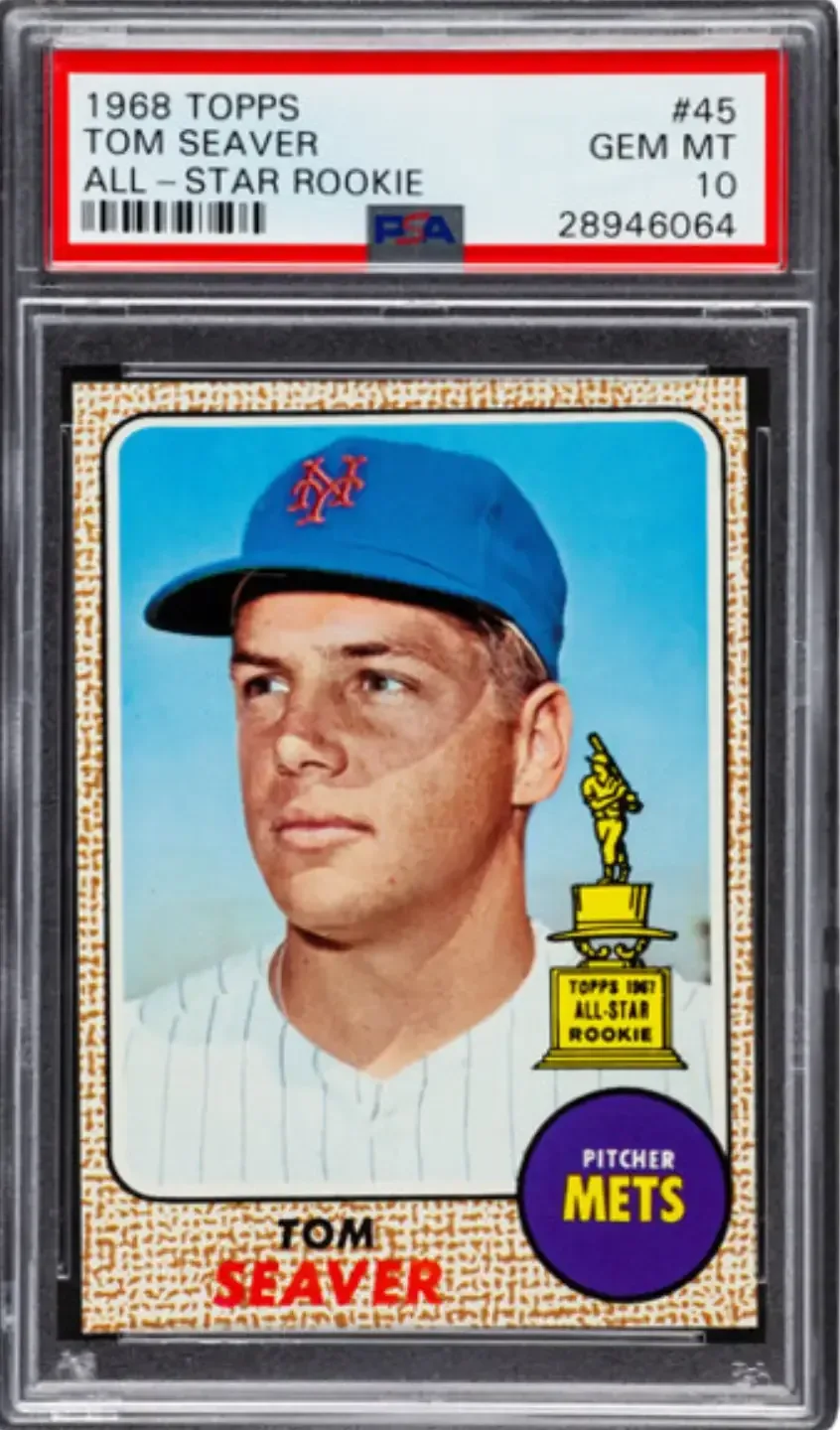
6. Tom Seaver 1968 Topps #45
Tom Seaver's 1968 Topps card is technically a second-year issue, but it holds a special place in the set because it is his first standalone Topps card. For many collectors, that makes it the more approachable alternative to his pricier 1967 rookie card.
Seaver had already become the face of the Mets by the time this card reached collectors. After winning National League Rookie of the Year in 1967, he followed with another excellent season in 1968, going 16-12 with a 2.20 ERA and earning the first of his 12 All-Star selections. His place in hobby history only grew from there, as he developed into the defining player in Mets franchise history and one of the greatest pitchers the game has seen.
For another perspective on this story, read 1968 Topps Baseball Cards: Why Nolan Ryan, Mantle and Bench Define a Wild Vintage Set.
From a market standpoint, the card remains relatively accessible in lower grades while still carrying major upside at the top of the pop report. PSA lists a population of 9,344, with PSA 7 examples around $350 and PSA 3 copies around $45. The all-time record sale for the card reached $22,800 for a PSA 10 example in 2018. Collectors also have the added wrinkle of a Milton Bradley version to pursue, giving Seaver player collectors another notable variation from the year.
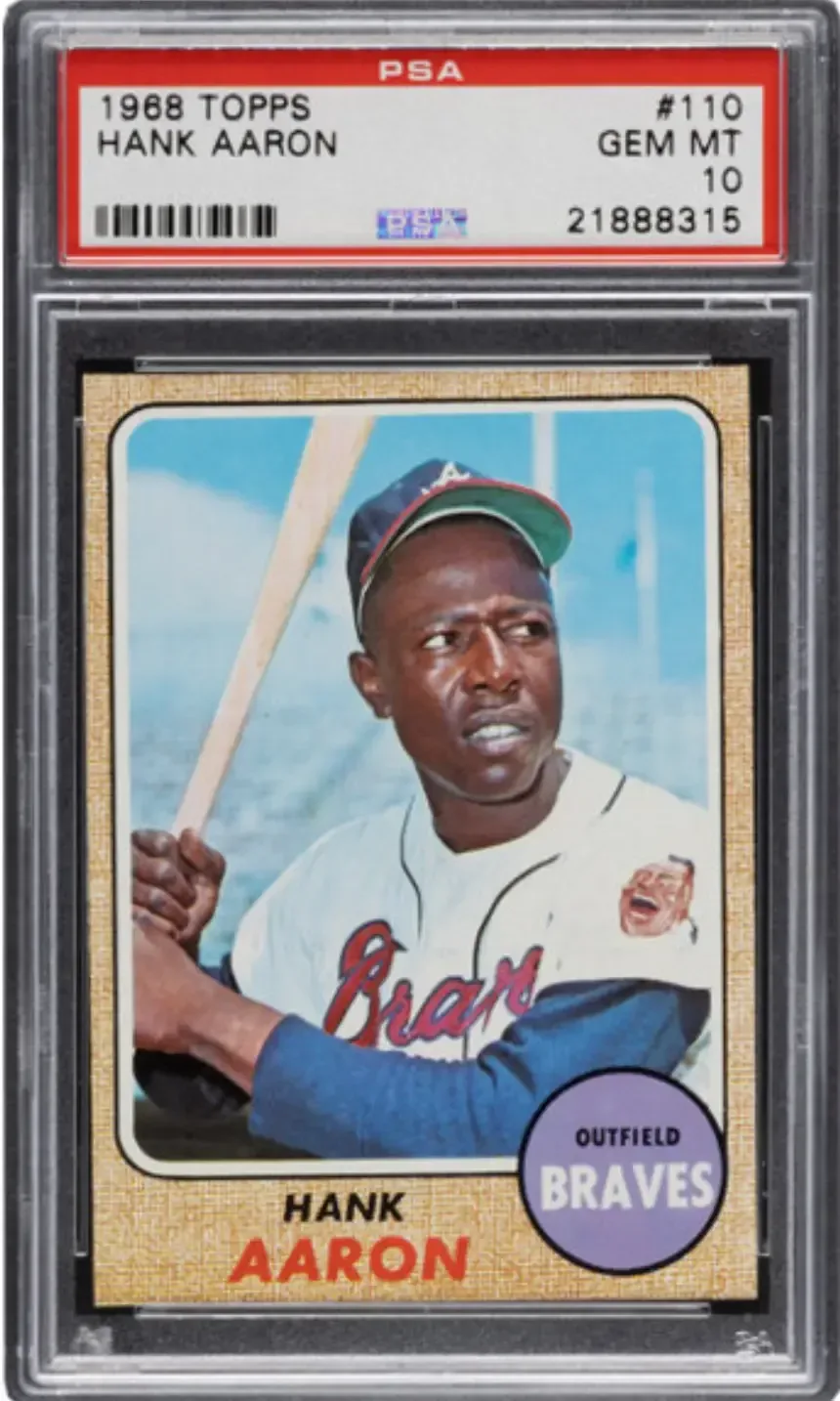
5. Hank Aaron 1968 Topps #110
Hank Aaron's 1968 Topps card is one of the toughest high-grade stars in the set. The dark borders chip easily, and that has made pristine examples remarkably elusive. Just five PSA 10 copies are known, a key factor behind the card's strong top-end pricing.
A PSA 10 sold for $174,000 in 2023, a dramatic jump from a PSA 10 sale of $10,600 back in 2017. That kind of movement shows how much the vintage market values true condition rarities, especially when they feature one of the sport's all-time great sluggers.
Aaron was 34 in 1968 and still one of baseball's best hitters. He batted .287 with 29 home runs, 86 RBI, and 28 stolen bases in a notoriously pitcher-friendly season. He was still several years away from passing Babe Ruth on the career home run list, which gives this card a strong mid-career significance in addition to its visual appeal.
Current benchmark pricing from the supplied data puts PSA 7 copies at about $360 and PSA 3 examples at roughly $73, with a PSA population of 7,001. For collectors who want a vintage Aaron without paying for his earliest cards, this remains one of the standout options from the late 1960s.
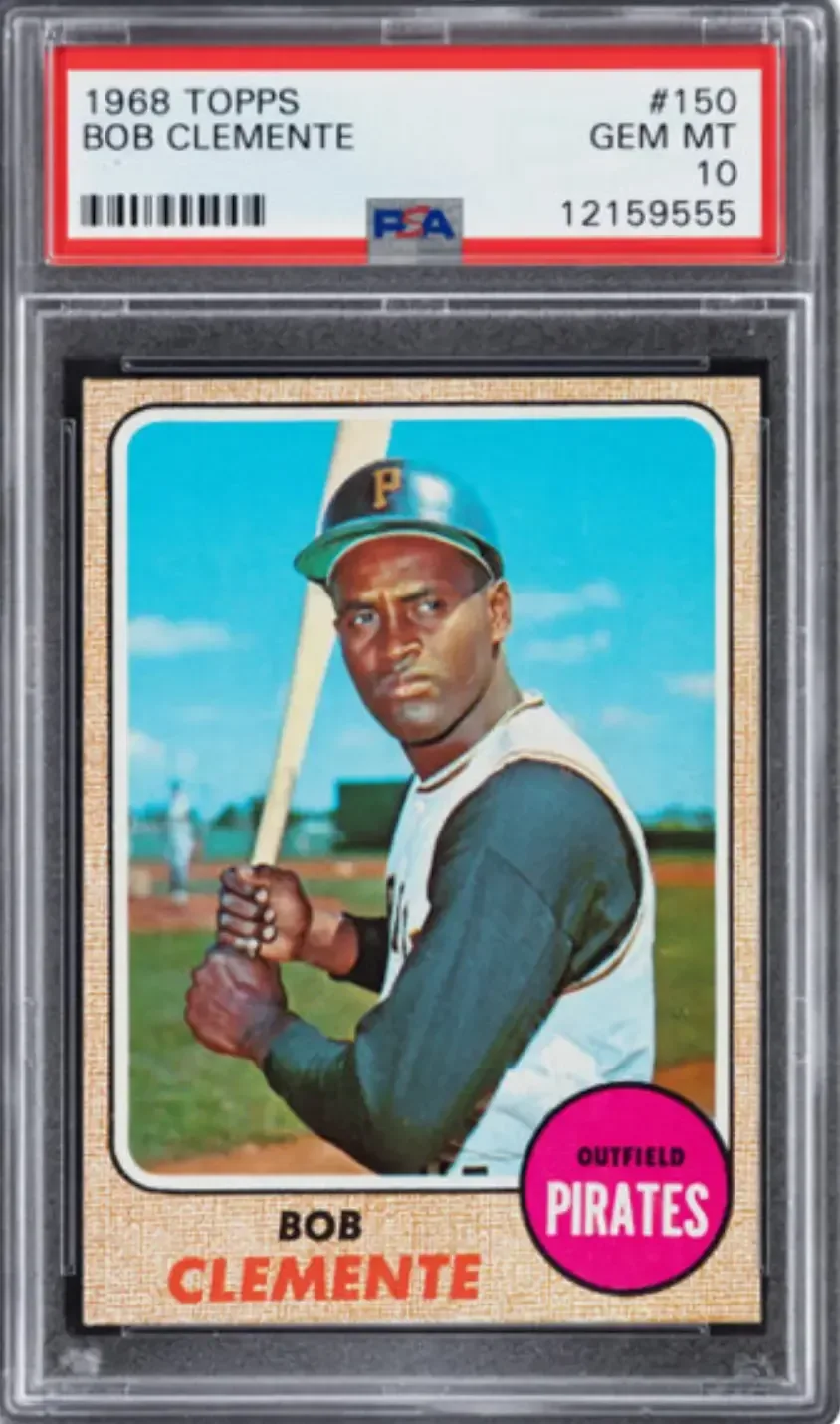
4. Roberto Clemente 1968 Topps #150
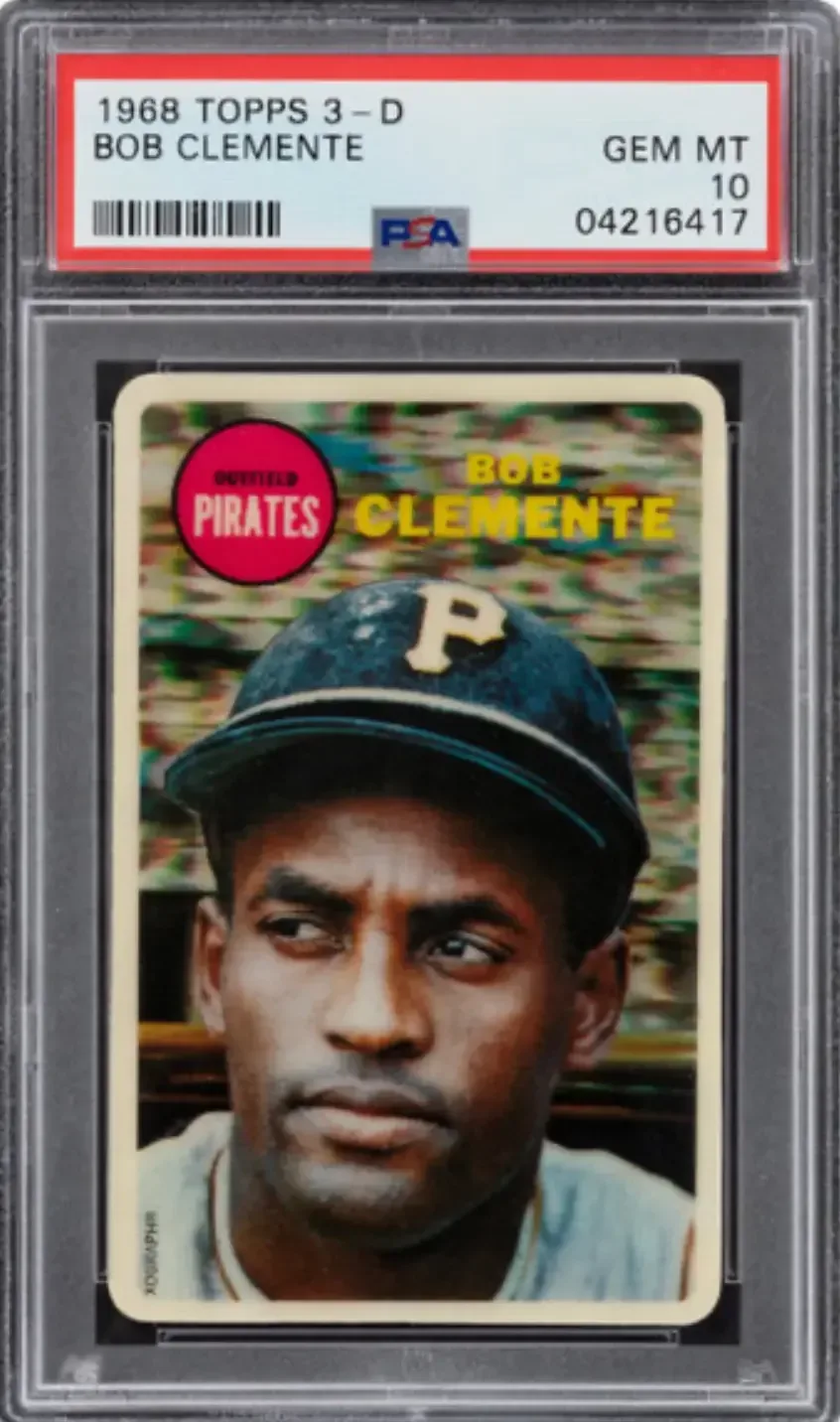
Roberto Clemente's 1968 Topps card remains one of the most admired cards in the set, both for the player and for the way the card fits within the era's visual style. One notable quirk is that Topps used the name “Bob” on the card, even though Clemente disliked being called that.
In high grade, the card has proven extremely desirable. A PSA 10 example, with only five known at that level, sold for $50,400 in 2021. Population scarcity is an important part of the story here, especially with brown-bordered vintage issues where surface and edge wear can quickly lower a grade.
Clemente entered 1968 coming off a brilliant .357 season in 1967. In the pitcher-dominated environment of 1968, his average dipped to .291, but he still posted 18 home runs and an .838 OPS. That context matters because it shows the card arriving during a stretch when Clemente was still performing at an elite level and continuing to build the resume that would make him one of the hobby's most beloved figures.
The reported PSA population stands at 6,467, with PSA 7 copies around $520 and PSA 3 examples near $70. That blend of Hall of Fame prestige, scarcity in top grade, and enduring collector affection keeps Clemente safely among the most important cards in the release.
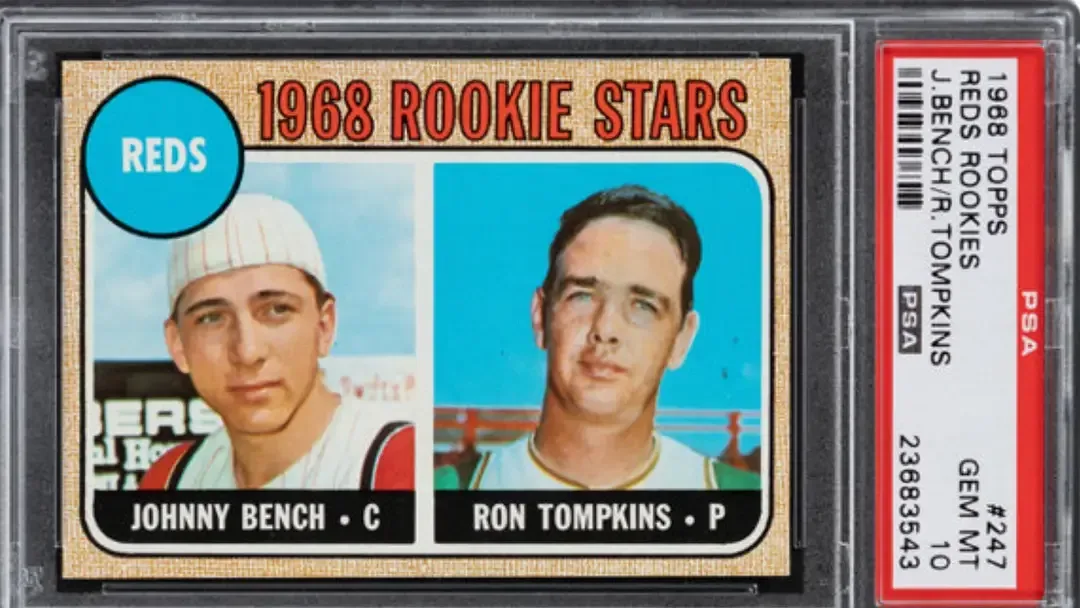
3. Johnny Bench Rookie Card 1968 Topps #247
Johnny Bench's rookie card is one of the signature multi-player rookie cards of the 1960s. As was common for the period, Topps paired an emerging star with another player, in this case Reds pitcher Ron Tompkins. Bench is the clear driver of the card's status, and his career eventually elevated this issue into one of the decade's most recognized rookie cards.
Bench wasted little time establishing himself in the majors. At just 20 years old in 1968, he hit .275 with 82 RBI, made the All-Star team, won a Gold Glove, and took home National League Rookie of the Year honors. A couple of seasons later, he had already reached MVP level. His long-term standing as one of the greatest catchers in baseball history keeps this card permanently relevant.
Collectors continue to chase the card across the grading spectrum. PSA 7 value is listed at $735, while PSA 3 copies are around $156. The PSA population is 16,116, showing that it is widely submitted and heavily collected. The high-grade ceiling is substantial, with the all-time record sale hitting $108,000 for a PSA 10 in 2021.
Even with the shared-card format, Bench's rookie remains one of the easiest cards from 1968 Topps to identify as a hobby cornerstone. It combines rookie importance, Hall of Fame status, and visual familiarity in a way few vintage cards can match.
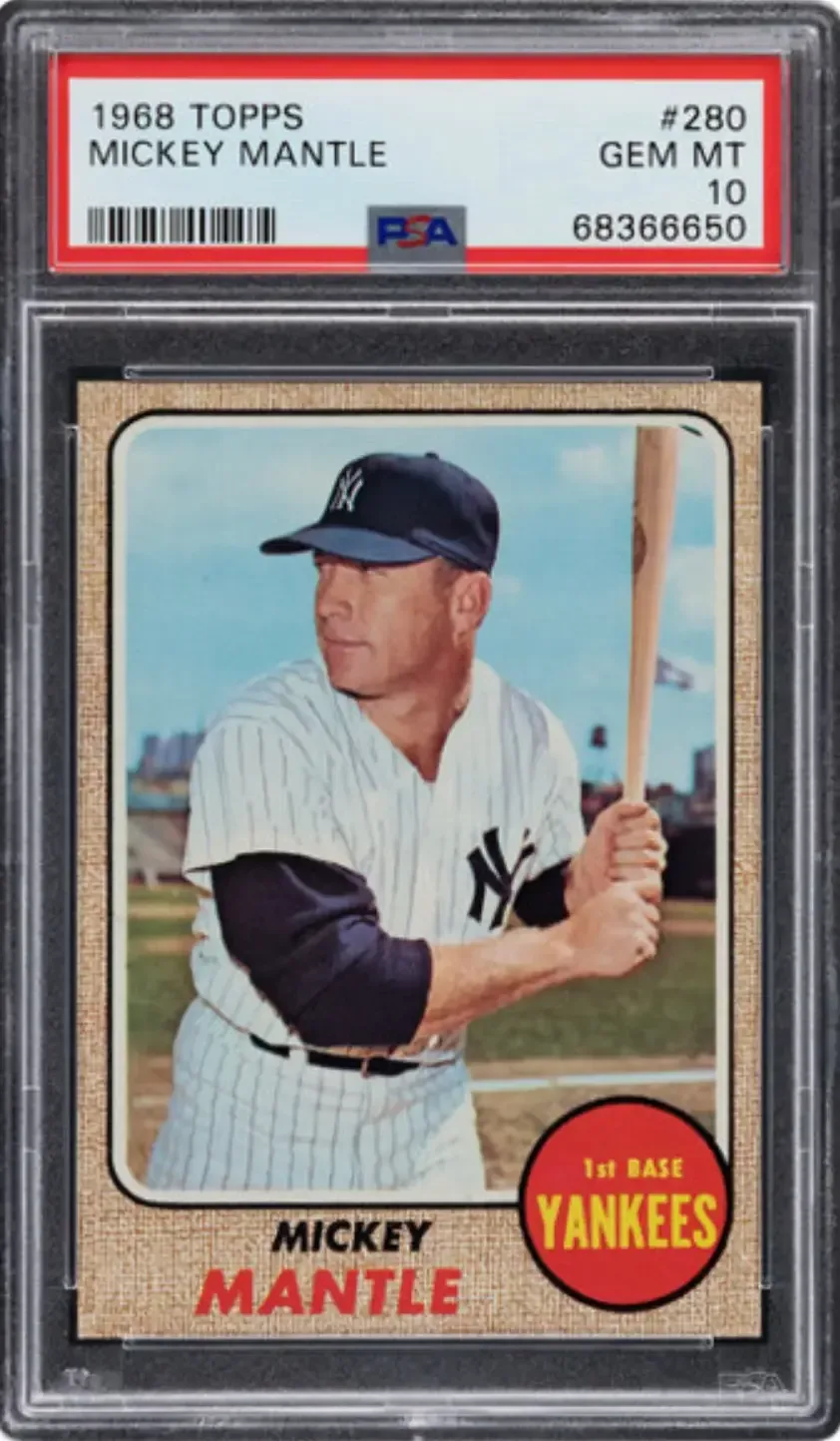
2. Mickey Mantle 1968 Topps #280
Mickey Mantle's 1968 Topps card holds a special distinction that gives it enormous appeal: it is considered his final card from his actual playing career. While Mantle appears in 1969 Topps, he retired before the 1969 season after reporting only to spring training, which makes the 1968 issue the true end-of-career card for many collectors.
That historical position has helped drive one of the strongest markets in the set. A PSA 10 example sold for $510,000 in 2023. The growth over time is striking, especially considering that a PSA 10 brought just $8,815 in 2009. Only 11 PSA 10 copies are recorded, and that scarcity in elite condition has pushed the card into blue-chip territory.
Mantle was 36 in his final season and no longer the dominant force of his peak, but he still showed his legendary plate discipline. He hit .237 with 18 home runs while drawing 106 walks and posting a .385 on-base percentage. That gives the card both emotional and statistical significance, capturing a legend at the close of one of baseball's most celebrated careers.
The population data supplied shows 18,921 PSA-graded examples, with a PSA 7 value of $1,214 and a PSA 3 value of $330. Even in lower grades, Mantle's 1968 Topps card remains one of the anchors of the vintage baseball market.
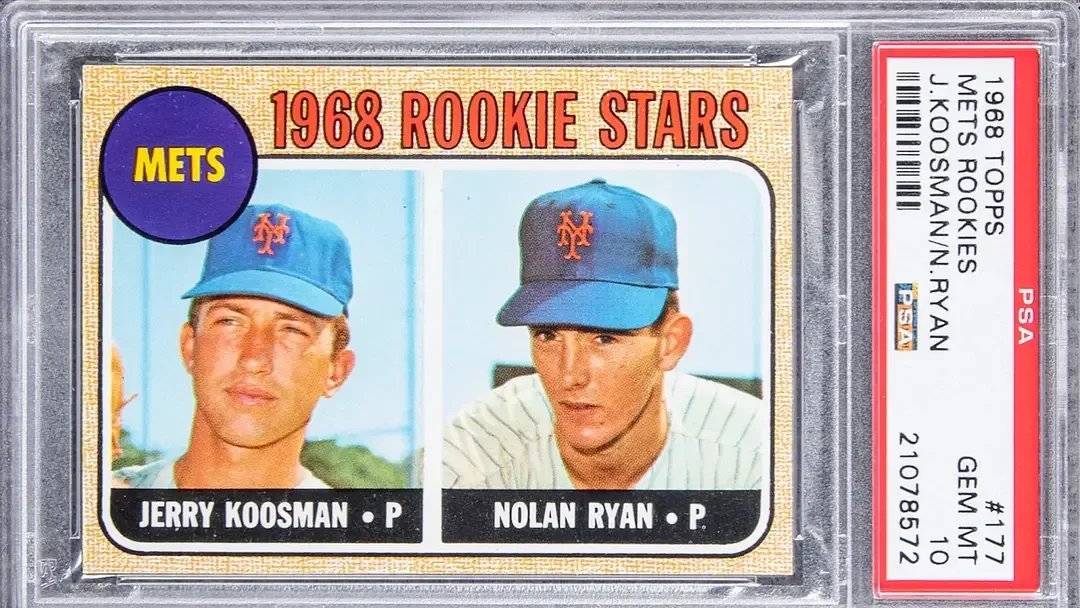
1. Nolan Ryan / Jerry Koosman Rookie Card 1968 Topps #177
No card from 1968 Topps carries more hobby weight than the Nolan Ryan and Jerry Koosman rookie card. For many collectors, it is not only the defining card of the set but also one of the most iconic baseball cards of the entire 1960s.
The card's appeal starts with Ryan, whose career arc turned this shared rookie into a true hobby monument. He finished with 5,714 strikeouts, seven no-hitters, and one of the longest careers in major league history. Yet the card is also stronger than many realize because Koosman was no throw-in. In 1968, he won 19 games as a rookie and made the All-Star team, while Ryan went 6-9 with a 3.09 ERA and 133 strikeouts in 134 innings, showing the electric stuff that would define his career even as he battled control issues.
The market for this card is on another level. The all-time record sale reached $600,000 for the only PSA 10 example in existence in 2020. Supplied values place PSA 7 copies at $6,100 and PSA 3 examples at $1,227, with a PSA population of 21,151. That broad population still has not dampened enthusiasm, because demand for the card is enormous across nearly every grade.
There is also a major variation and regional-distribution angle that adds depth for advanced collectors. Four distinct versions of the card are identified in the supplied material: standard Topps, Milton Bradley, O-Pee-Chee, and the especially scarce Venezuela Topps edition. That group has been nicknamed the “Nolan Ryan Four Horsemen,” and it represents one of the more ambitious player-focused pursuits in vintage baseball collecting.
Related 1968 Oddities That Add to the Set's Legacy
The regular set gets most of the attention, but 1968 Topps also produced several side paths that continue to attract experienced collectors.
The 1968 Topps 3-D test set is among the rarest experimental issues of the era. Only 12 cards were included, each covered by a plastic layer to create a three-dimensional effect. Surviving examples are extremely scarce, and prices reflect that. A Roberto Clemente PSA 10 from the 3-D test set sold for $162,000 in 2022, with only six examples graded at that level.
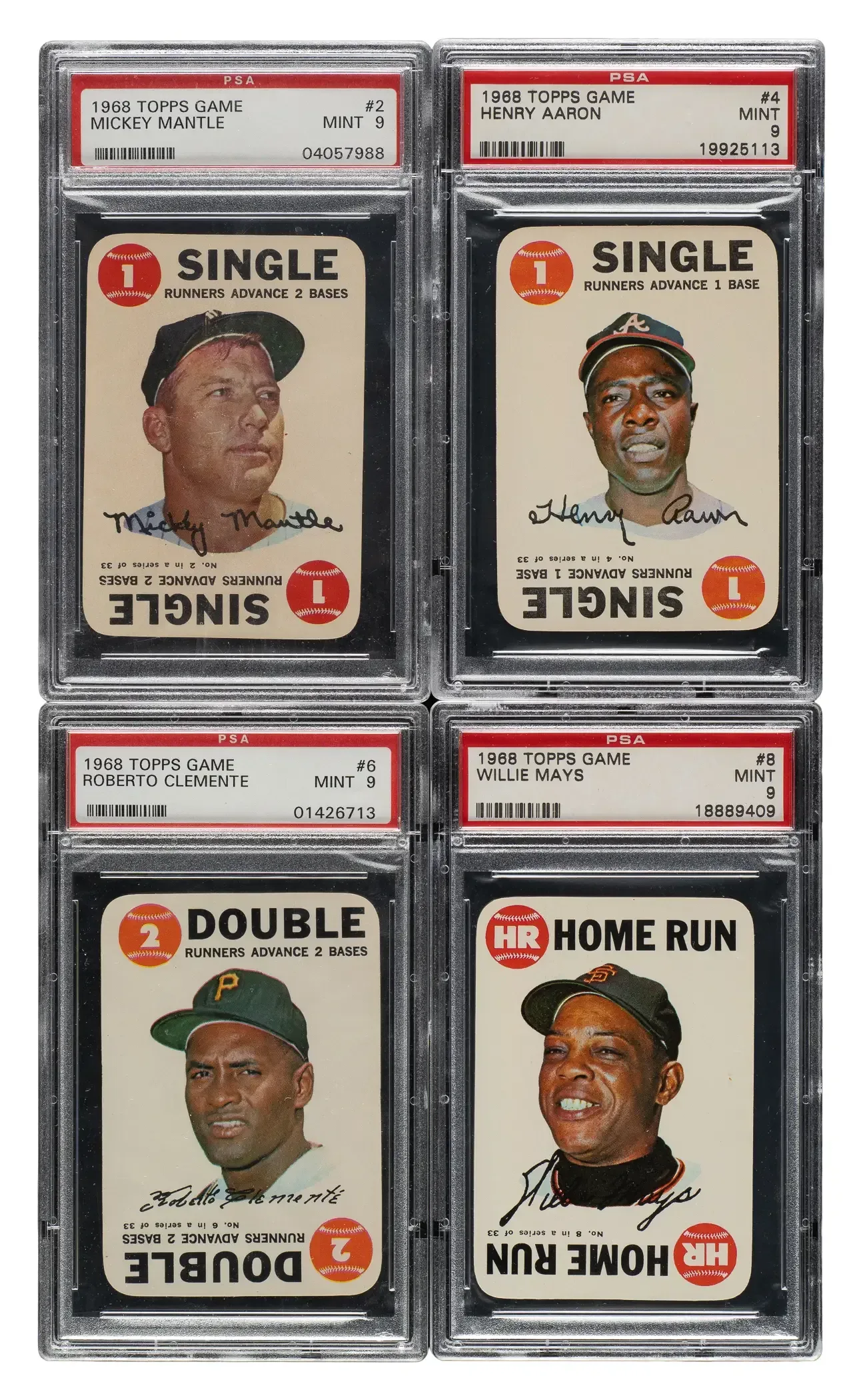
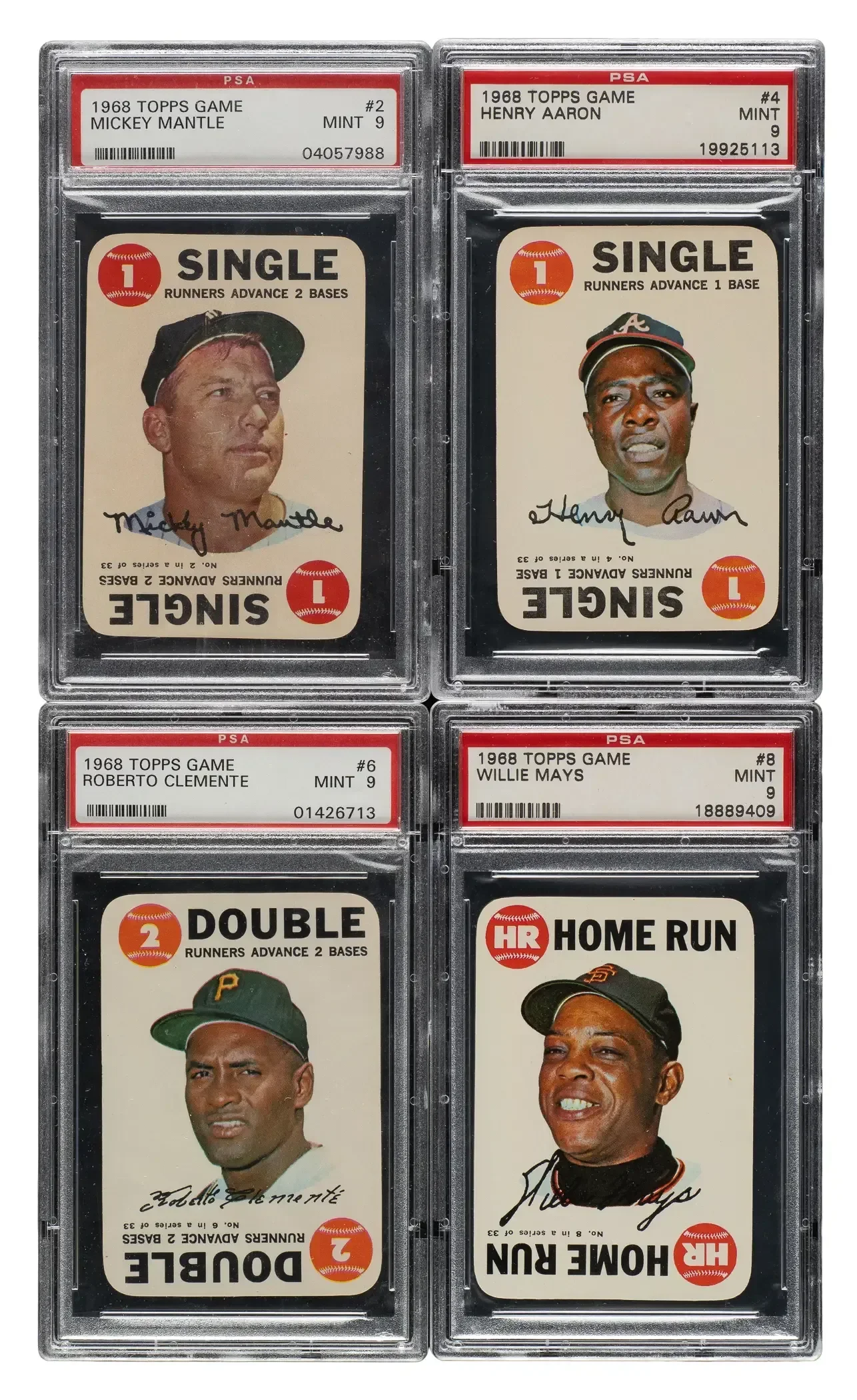
There is also the 1968 Topps Game subset, a 33-card issue styled after Topps' 1951 Red Back and Blue Back game cards. Instead of standard player-card fronts with statistical backs, these cards represented game outcomes such as singles and home runs. They were inserted into third-series packs and also sold in complete boxed form. A full 33-card set, with every card PSA graded, sold for $5,781 in April.
Milton Bradley's Win-A-Card distribution adds another wrinkle. Cards from that release feature brighter yellow backs, and some examples show traces of white borders from 1967 Topps football cards due to shared printing sheets. Those details have made the Milton Bradley versions a distinct niche within the 1968 Topps collecting universe.
Additional Standout Cards Collectors Still Watch
Even outside the top six, the 1968 Topps set has serious depth. Several other cards remain heavily collected and regularly surface in vintage market conversations. Based on the supplied PSA 7 values, these standouts continue to draw attention:
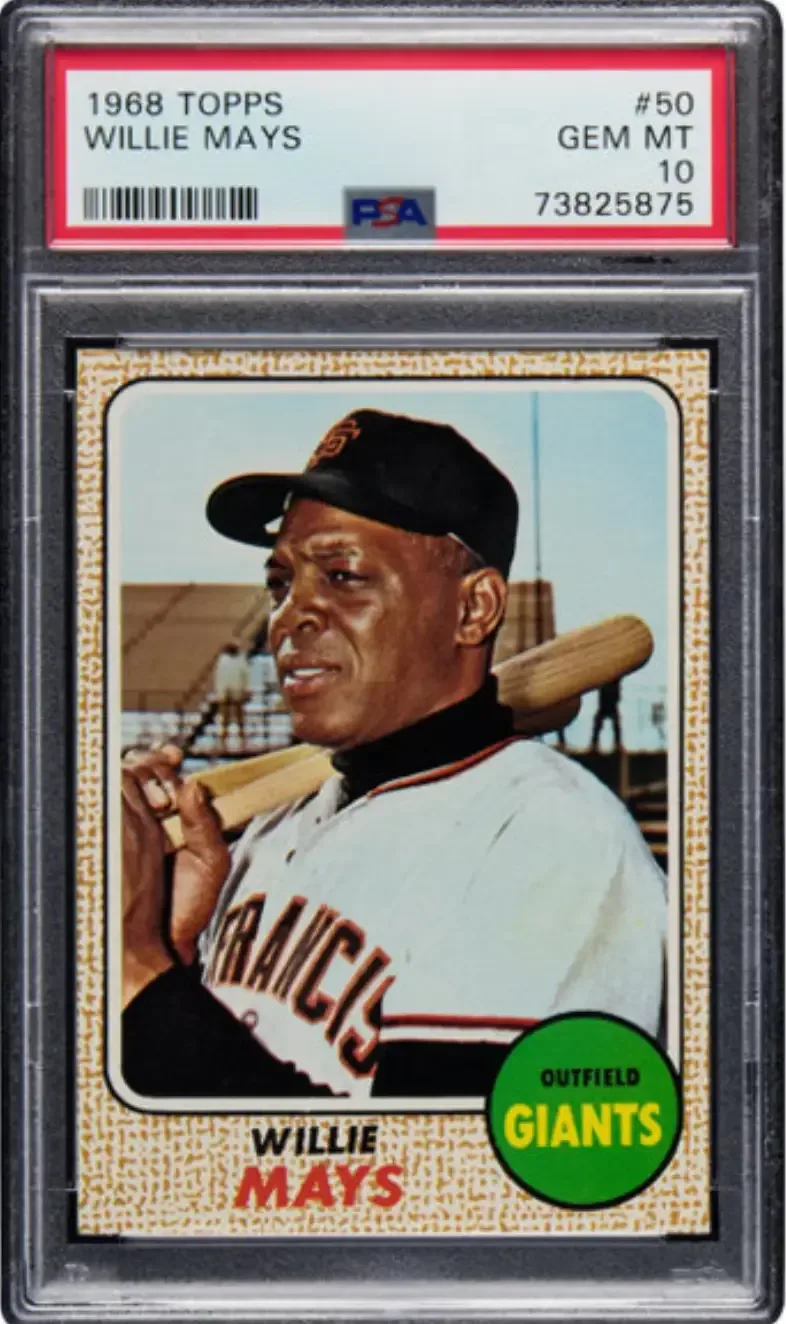
- Willie Mays #50: $350, with a PSA 10 record sale of $81,000 and only 13 copies graded at that level.
- Super Stars Harmon Killebrew / Willie Mays / Mickey Mantle #490: $550.
- Pete Rose #230: $273.
- Rod Carew #80: $229.
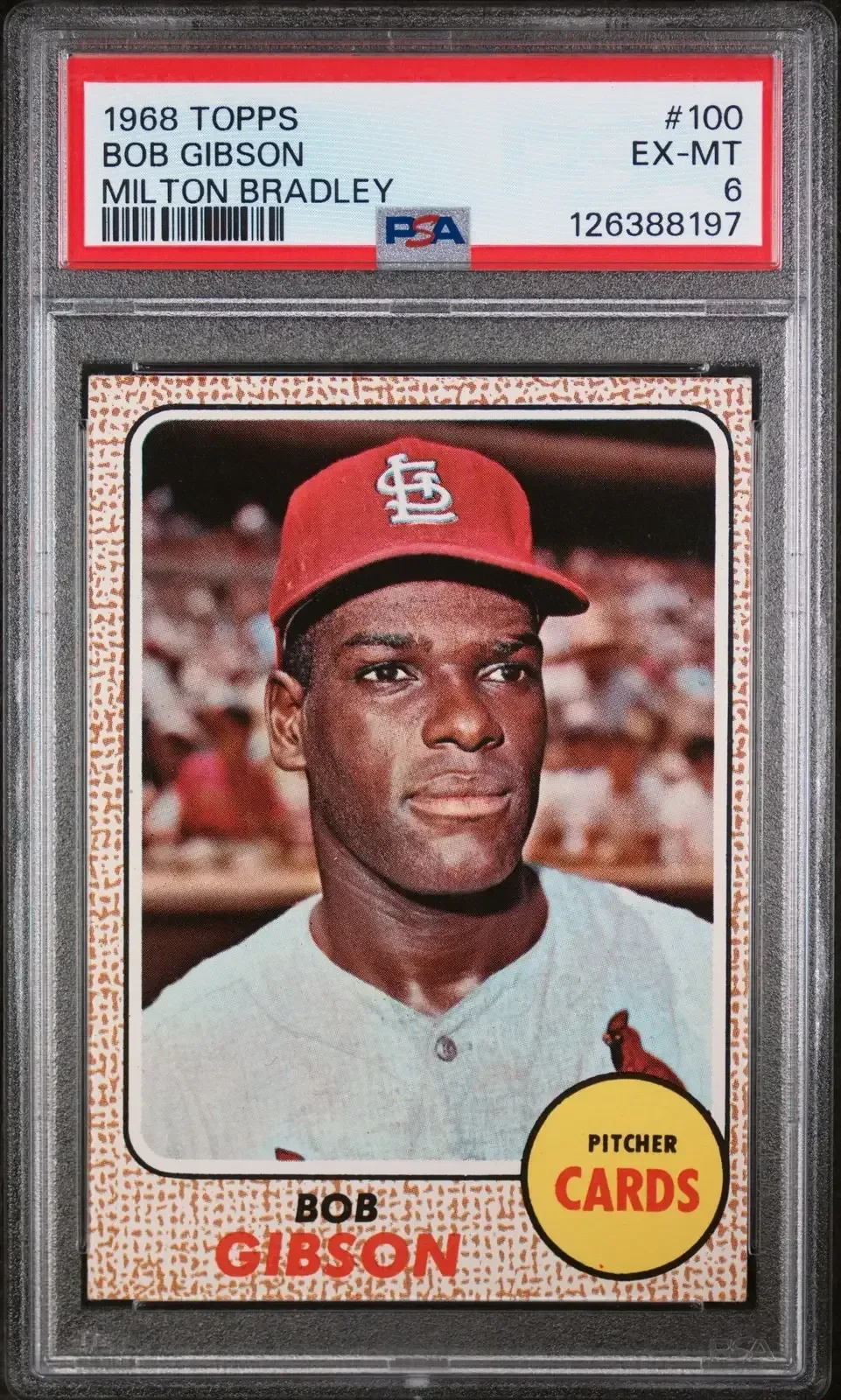
- Bob Gibson #100: $209.
- Ernie Banks #355: $135.
That secondary tier is part of what makes the 1968 set so enduring. Even after the headline cards are accounted for, collectors can still chase major Hall of Famers, unusual variations, and condition-sensitive stars throughout the checklist. For anyone building a serious vintage baseball collection, 1968 Topps offers no shortage of iconic targets.
Photo Gallery