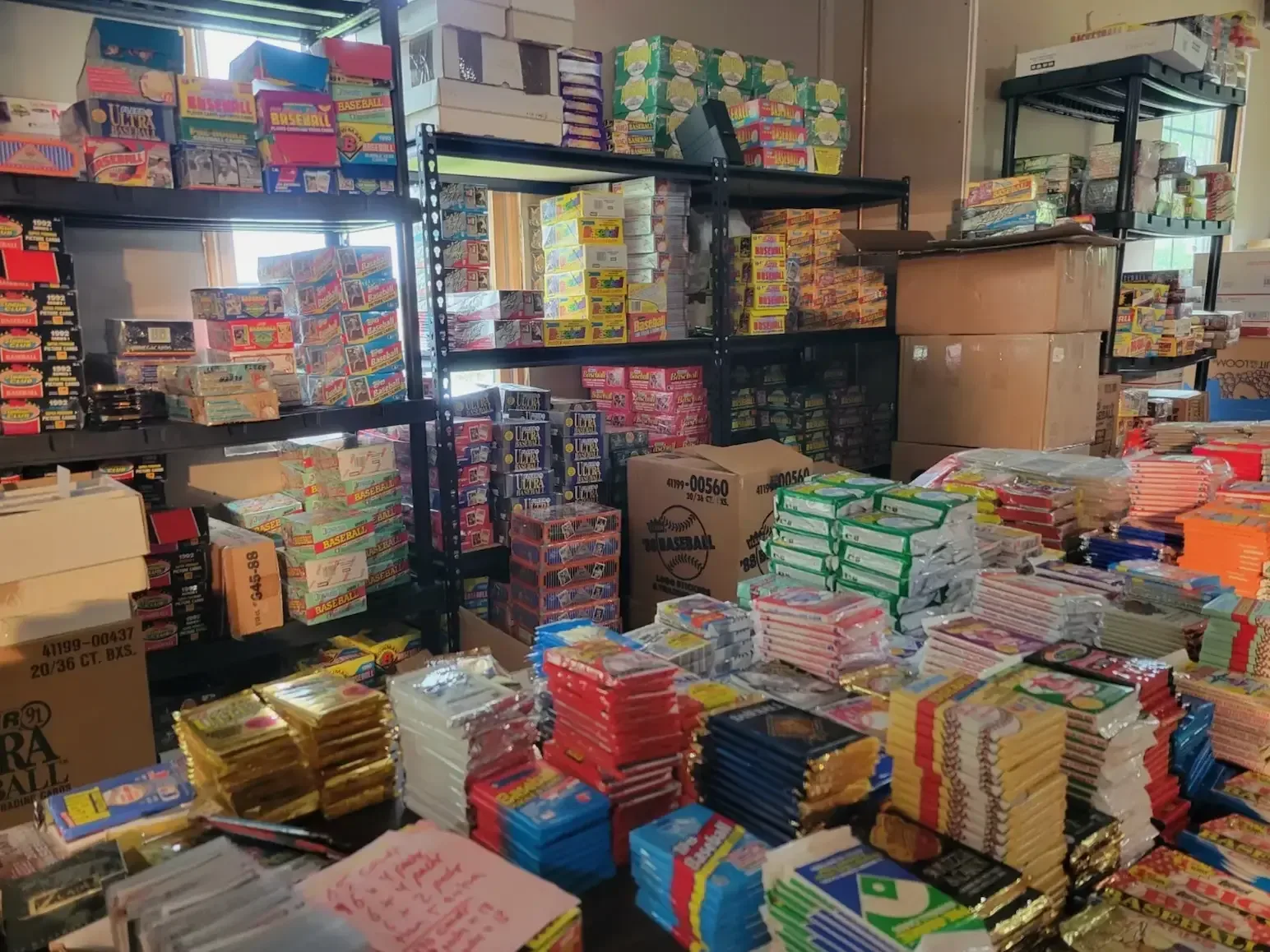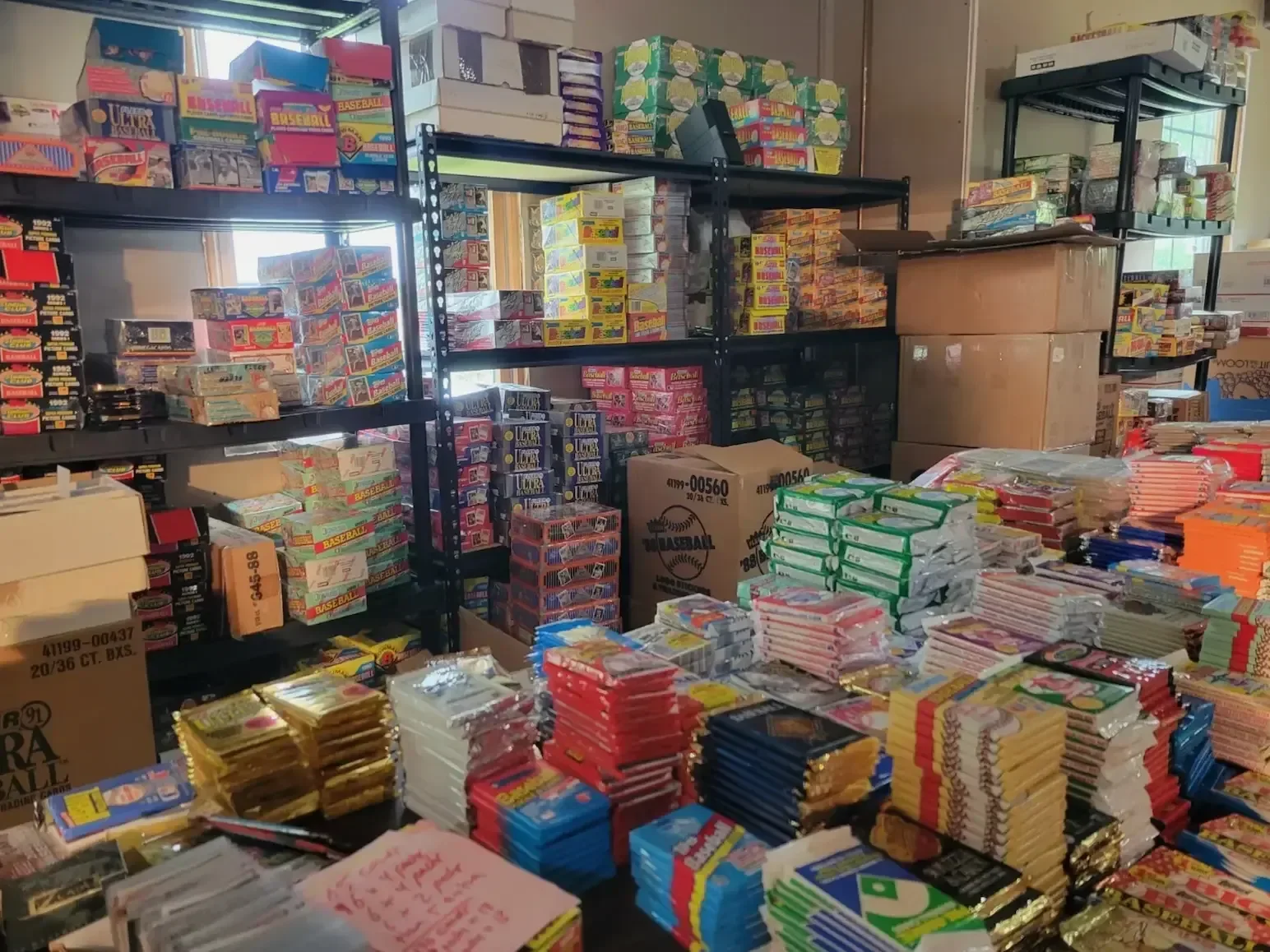
The 1980s reshaped baseball card collecting in ways that still define the hobby today. It was the decade when rookie cards became investment targets, pack-pulled nostalgia turned into price guides and grading chases, and manufacturers pushed production to levels that made the era famous for both accessibility and excess.
That mix created a long list of memorable releases, but only a handful truly stand above the rest as the sets most closely tied to the decade. Some earned their place because of groundbreaking design. Others became hobby staples because of loaded rookie classes, famous errors, or premium factory-set variations that remain difficult to find in top grade.
Here is a ranking of the eight most iconic baseball card sets of the 1980s, based on design, historical importance, player selection, and how strongly each release still represents the era.
8. 1986 Topps Traded
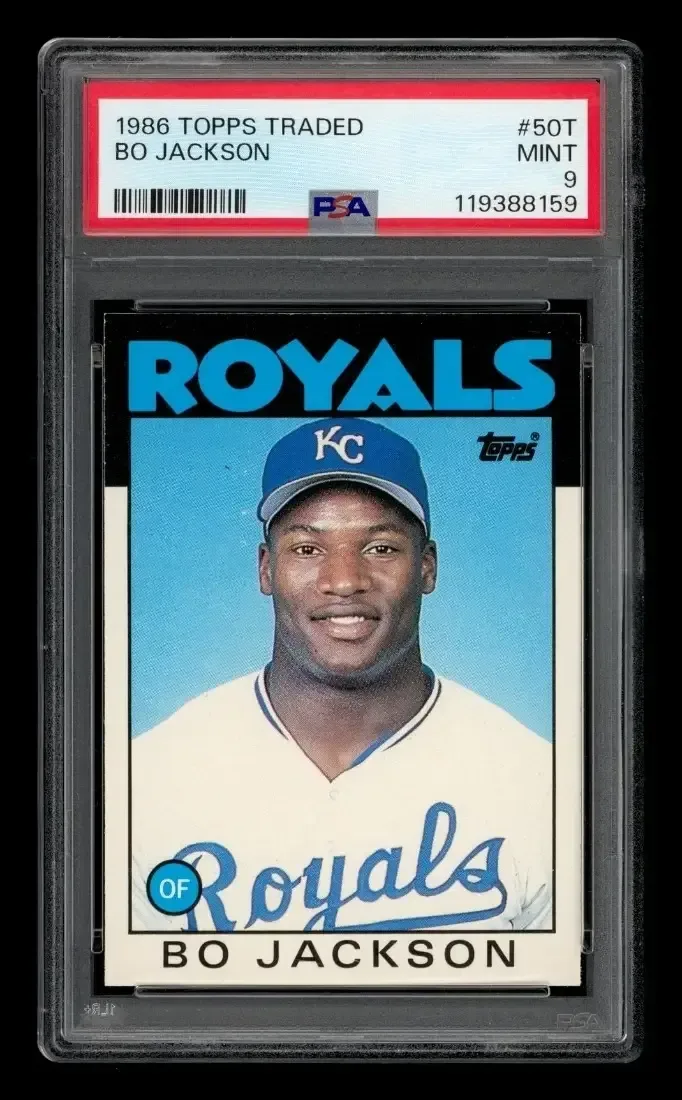
1986 Topps Traded sits lower on the list only because it was a supplemental factory-set release rather than a flagship pack product, but its importance is undeniable. Few 1980s sets can match its rookie star power. The checklist includes Barry Bonds, Bo Jackson, Jose Canseco, Will Clark, Andres Galarraga, and Kevin Mitchell, giving collectors one of the strongest late-decade rookie groups in a single release.
For more collector background, read 6 Most Valuable and Iconic 1989 Upper Deck Baseball Cards Still Driving the Hobby.
The design is instantly recognizable, with its black-and-white bordered look setting it apart from the standard 1986 Topps set. That same design choice also created one of the product’s most important collecting challenges. Dark borders chip easily, which means clean corners and edges become a major separator in the grading market.
Because it was distributed only as a factory set, 1986 Topps Traded has always carried a slightly different feel than a traditional wax-era release. That helped it develop a distinct identity among collectors, especially as the Bonds and Jackson cards became staples of 1980s rookie-card conversations.
Key PSA 10 prices from the set include Bo Jackson #50T at $2,100, Barry Bonds #11T at $881, and Jose Canseco #20T at $264.
For another perspective on this story, read The 8 Baseball Card Sets That Define the 1980s.
The premium chase within the release is 1986 Topps Traded Tiffany. Estimated production of roughly 5,000 sets makes it far scarcer than most cards from the junk-wax period. A PSA 10 Tiffany Bo Jackson recently reached $25,500, while Barry Bonds brought $20,200 and Jose Canseco sold for $2,275.
7. 1989 Fleer
1989 Fleer is one of the clearest examples of a set becoming iconic for reasons that go far beyond traditional design appeal. This release is remembered as much for its errors and variations as for its stars, and that unusual mix helped it carve out a permanent place in hobby history.
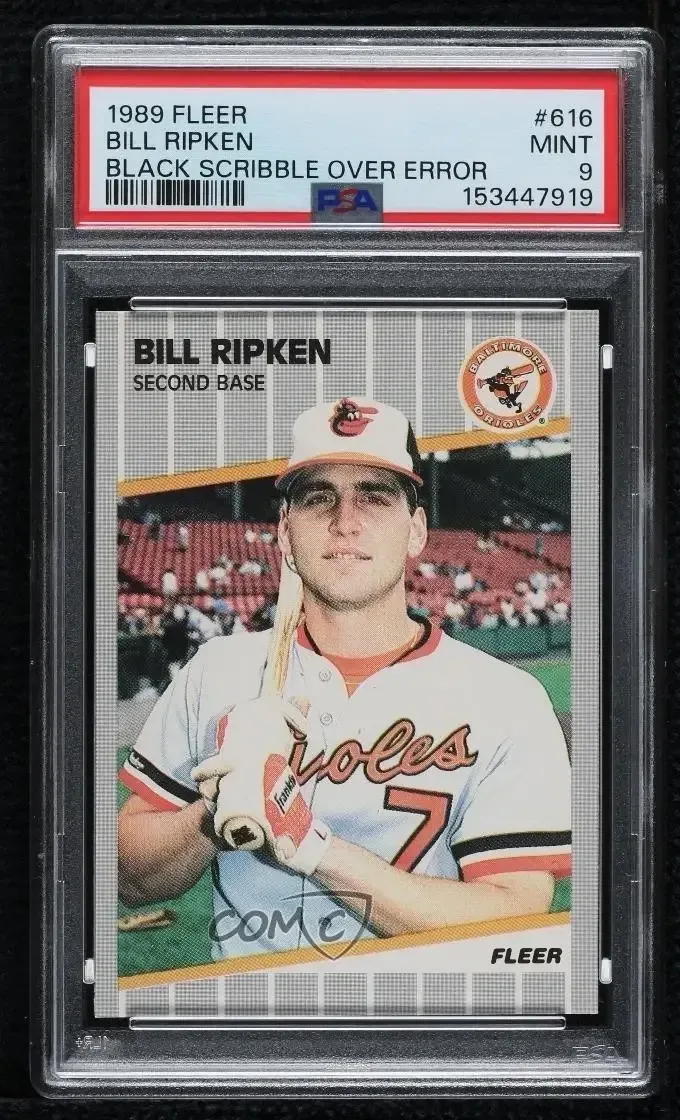
The Billy Ripken #616 FF error became one of the most famous modern error cards ever produced. The Randy Johnson rookie with the visible Marlboro advertisement gave the set another headline variation that collectors still discuss decades later. Those two cards alone would keep 1989 Fleer relevant, but the rookie class pushes it further.
The set also includes rookie cards of Randy Johnson, Ken Griffey Jr., Gary Sheffield, Craig Biggio, and John Smoltz. That kind of depth gives 1989 Fleer lasting relevance even for collectors who are not specifically chasing variation cards.
Recent PSA 10 values show the range of appeal. Billy Ripken #616 FF Error has sold around $1,300, Randy Johnson #381 Marlboro Variation around $538, and Ken Griffey Jr. #548 around $425.
Collectors looking for a scarcer version often turn to 1989 Fleer Glossy Baseball, the Collector’s Edition release sold in sealed display tins. With an estimated print run near 30,000, the Glossy version is much tougher than the base set. A PSA 10 Glossy Ken Griffey Jr. rookie recently sold for $8,100.
6. 1984 Topps
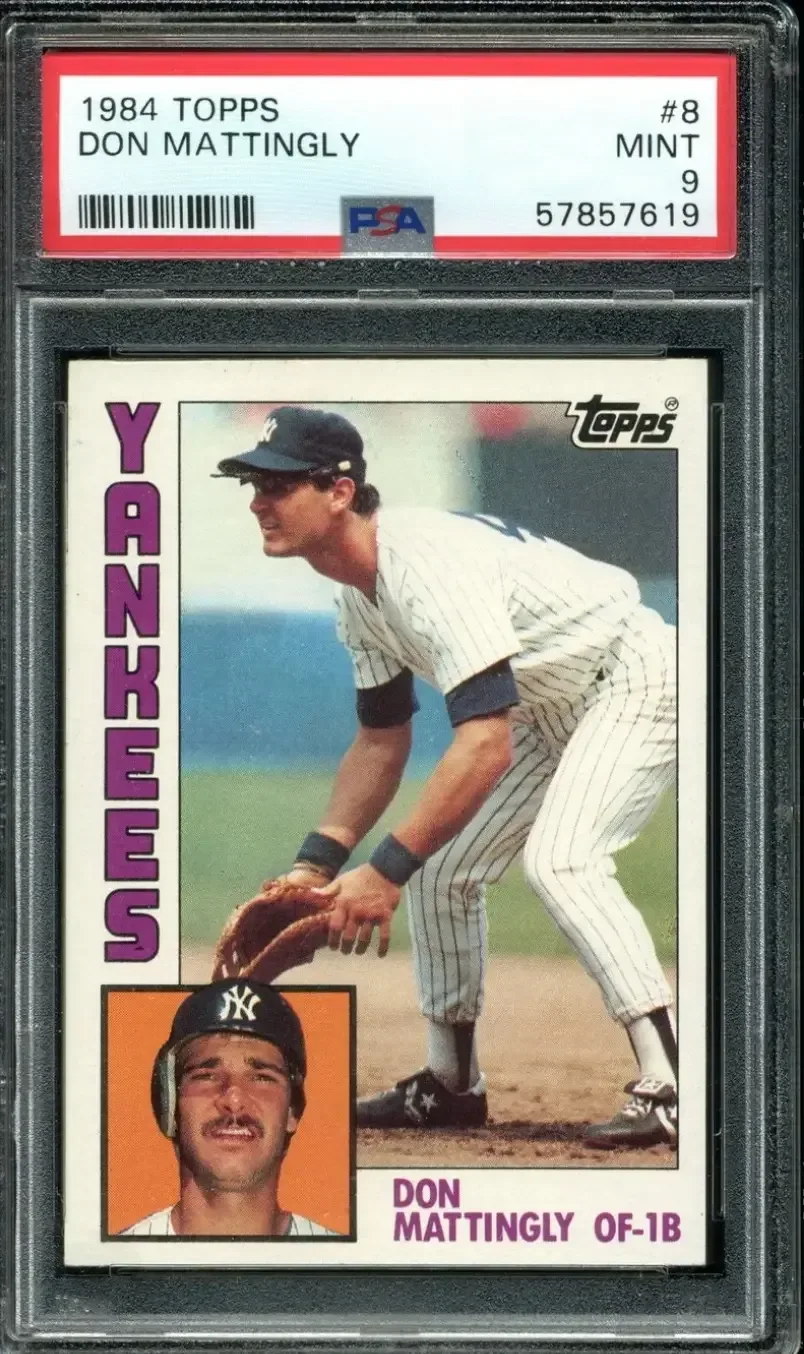
1984 Topps remains one of the defining designs of the decade. The set pairs a large action image with a smaller portrait and vertical team-name text, creating a layout that is immediately recognizable to collectors who grew up during the era. It is colorful without being cluttered and memorable without relying on gimmicks.
Its place in hobby lore is driven first by Don Mattingly. Card #8 became one of the biggest rookie cards of the 1980s as Mattingly grew into one of baseball’s most popular stars. For many collectors in the middle of the decade, Mattingly’s 1984 Topps rookie was a central target.
The set also includes Darryl Strawberry’s rookie and a popular Nolan Ryan card, adding more star appeal beyond the headline Mattingly chase. While 1984 still falls within the broader overproduction era, it arrived before the decade’s late-stage flood of cardboard fully peaked, which helps it feel more substantial than many later releases.
Recent PSA 10 prices include Don Mattingly #8 at $2,086, Nolan Ryan #470 at $1,500, and Darryl Strawberry #182 at $354.
This was also the first year of Topps Tiffany, officially released as a Collector’s Edition factory set. The glossy stock and sharper presentation created a premium version of a mass-market classic. Estimated production sits near 10,000 sets. A PSA 10 1984 Topps Tiffany Don Mattingly rookie recently sold for $11,800.
5. 1985 Topps
1985 Topps is one of the best-loved flagship designs of the entire decade. Its bright team-name banner across the bottom and crisp white borders give the set a clean, balanced look that has aged well with collectors. It feels unmistakably mid-1980s without being overly busy, which is a big reason it remains a favorite.
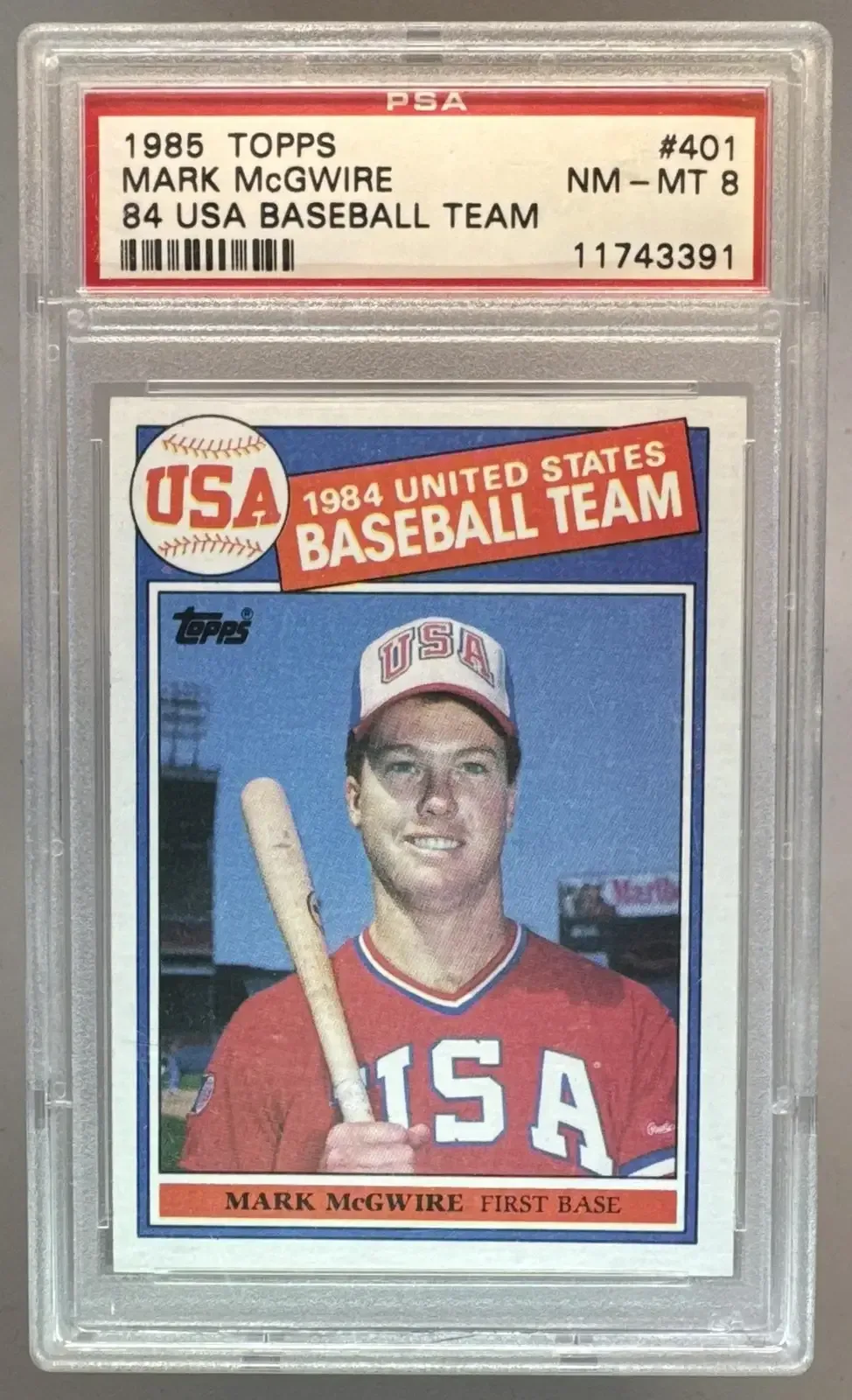
The checklist is another major reason for its iconic status. Roger Clemens, Kirby Puckett, Dwight Gooden, and Mark McGwire all help power the release, with McGwire’s Team USA rookie card becoming the set’s signature card for many collectors. Gooden’s rookie was especially important at the time, arriving as his hype and dominance pushed rookie-card enthusiasm into the mainstream.
This was one of the sets released right as collectors increasingly started treating rookies as assets rather than childhood keepsakes. That timing matters. 1985 Topps did not just benefit from the rookie-card boom. It helped define it.
Recent PSA 10 prices include Mark McGwire #401 Team USA at $5,325, Roger Clemens #181 at $2,190, Kirby Puckett #536 at $1,737, and Dwight Gooden #620 at $1,000.
The scarcer Tiffany version is especially prized. With a print run estimated around 5,000 sets, 1985 Topps Tiffany offers glossy fronts and stronger color than the base release. A PSA 10 Tiffany McGwire recently sold for $26,900, while a PSA 10 Tiffany Clemens brought $22,600.
4. 1983 Topps
Before the hobby’s late-1980s production boom took full hold, 1983 Topps delivered one of the strongest combinations of design and rookie content in the decade. The set’s visual identity stands out because of the circular inset photo, a nod to 1963 Topps that gives the cards a classic feel while still looking fresh in an early-1980s context.
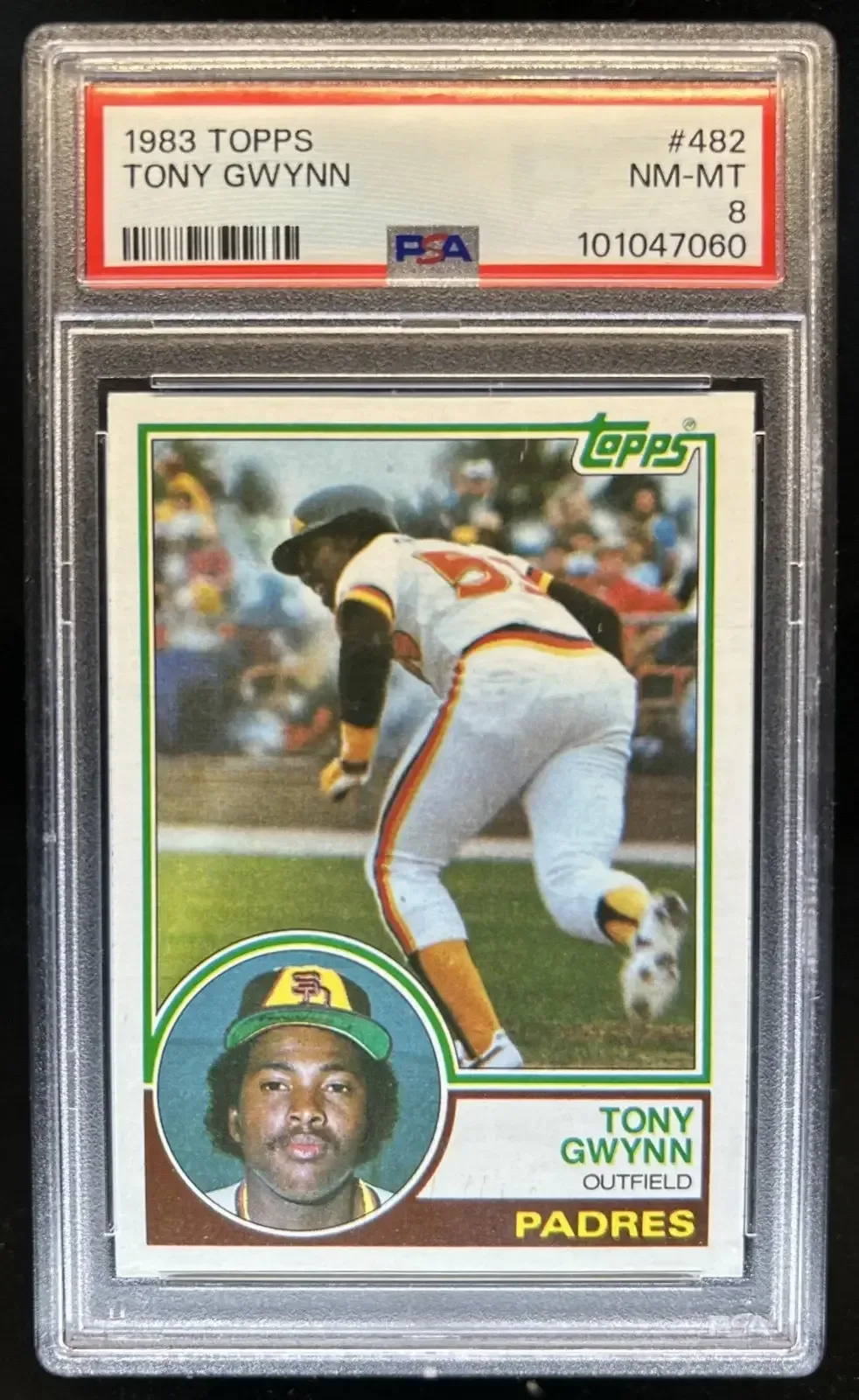
Collectors also gravitate to 1983 Topps because it includes rookie cards of Tony Gwynn, Wade Boggs, and Ryne Sandberg. That is a remarkably strong Hall of Fame trio, and each card remains central to the set’s reputation. When a release offers both visual appeal and elite rookie concentration, it tends to remain relevant for generations.
Compared with many later 1980s products, 1983 Topps also benefits from arriving before peak junk-wax saturation. That does not make it scarce in absolute terms, but it does help key cards from the set carry more weight in the market than many mass-produced late-decade issues.
Recent PSA 10 prices include Tony Gwynn #482 at $8,655, Wade Boggs #498 at $5,385, and Ryne Sandberg #83 at $2,999.
3. 1984 Donruss
1984 Donruss is one of the most important competitive releases of the decade. It helped establish Donruss as more than just an alternative to Topps by delivering a set that collectors viewed as cleaner, sharper, and in some ways more premium than its better-known rival.
The release is also historically significant because it introduced the Rated Rookie brand, a label that became one of the most enduring concepts in trading card history. Even collectors outside baseball still recognize Rated Rookie as a core part of Donruss identity.
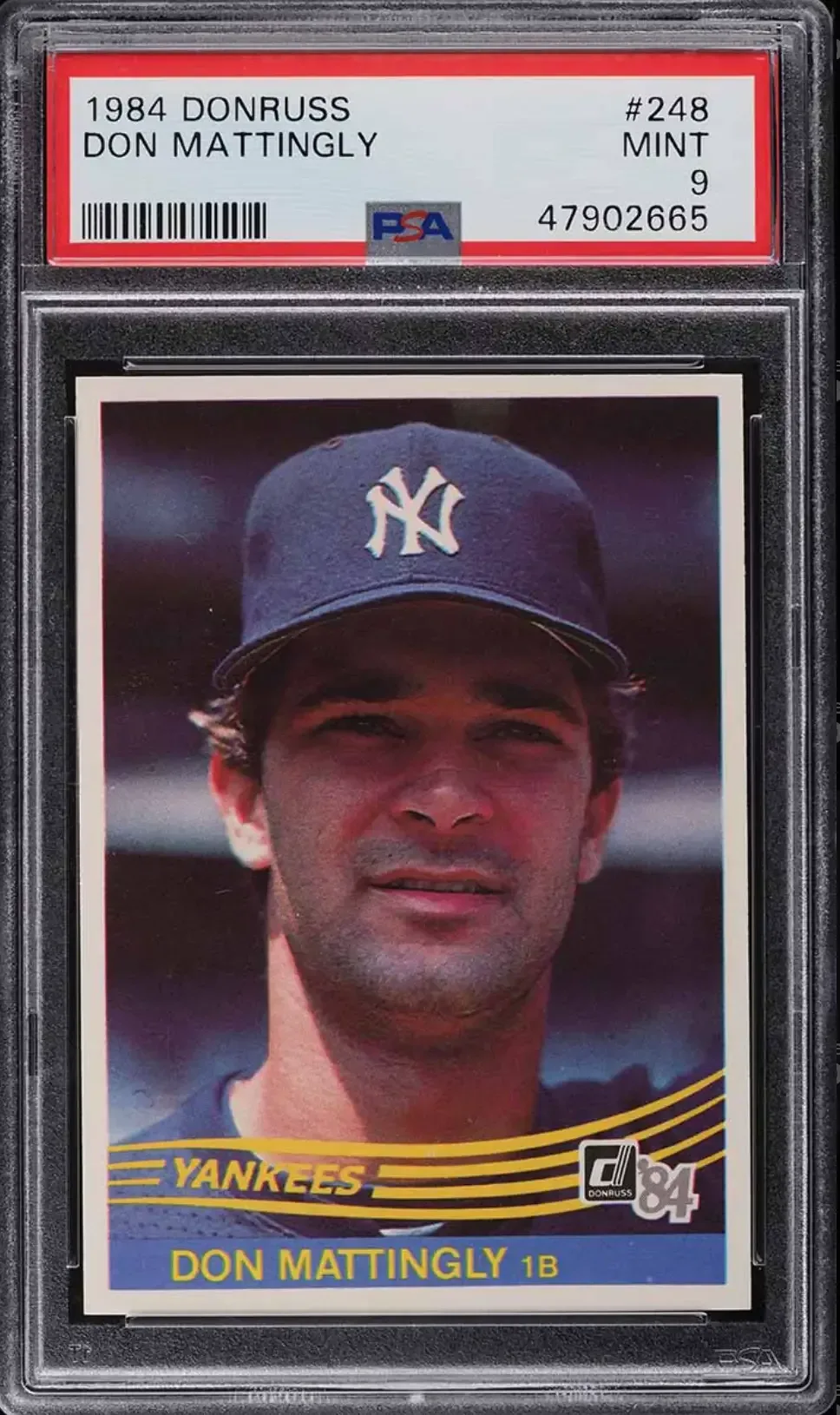
The centerpiece of the set is Don Mattingly #248. Despite not carrying the Rated Rookie tag, it became the most coveted of Mattingly’s major rookie cards. That outcome says a lot about how strongly collectors connected with this release. While Mattingly also appears in 1984 Topps and 1984 Fleer, many hobby veterans still view the 1984 Donruss rookie as the flagship Mattingly card of the era.
Darryl Strawberry #68 and Joe Carter #41 Rated Rookie add more substance to the checklist, but Mattingly is the engine that makes the set truly unforgettable.
Recent PSA 10 prices include Don Mattingly #248 at $9,261, Darryl Strawberry #68 at $430, and Joe Carter #41 at $400. The condition gap matters here as well. Mid-grade copies can remain relatively affordable, while gem-mint examples command a dramatic premium.
2. 1987 Topps
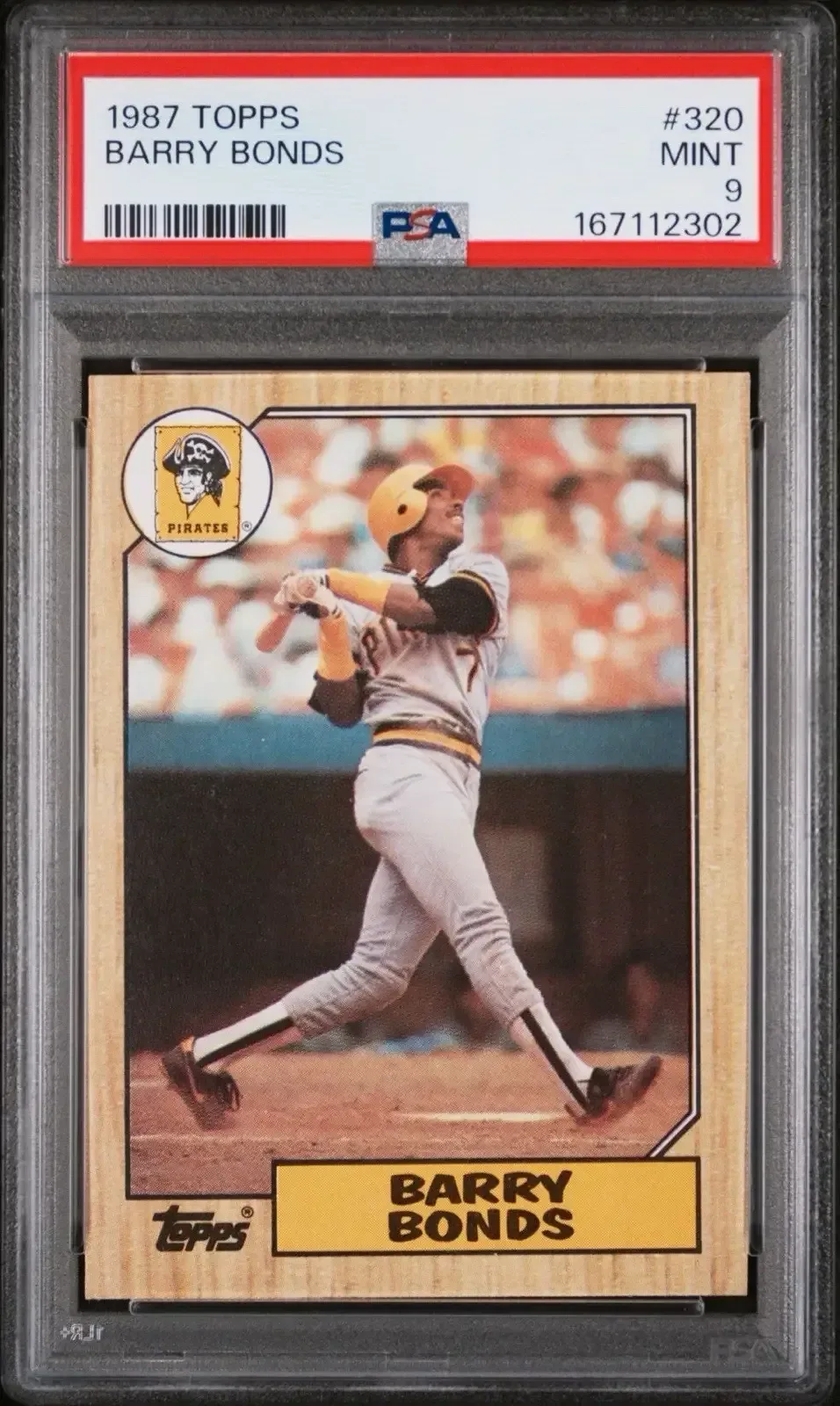
No design is more instantly linked with 1980s baseball cards than 1987 Topps. The wood-grain border gave the set a nostalgic look inspired by 1962 Topps, but for many collectors it came to represent the junk-wax era itself. Mention 1980s baseball cards to a broad audience, and this is often the image that comes to mind first.
The checklist is loaded with rookie-card firepower. Barry Bonds, Bo Jackson, Mark McGwire, Barry Larkin, and Rafael Palmeiro are among the biggest names, making the set feel deep even beyond its most famous cards. It combines visual familiarity with broad player appeal, which is a big part of why it remains one of the decade’s signature issues.
At the same time, 1987 Topps is one of the clearest examples of overproduction. Estimates have placed print quantities around 2.5 million copies per card, helping explain why most base examples remain affordable. That enormous supply has done little to hurt the set’s cultural standing, though. In some ways, its ubiquity is part of what made it iconic.
Recent PSA 10 prices include Barry Bonds #320 at $1,025, Bo Jackson #170 Future Stars at $260, and Mark McGwire #366 at $208.
The premium version, 1987 Topps Tiffany, is a different story. Estimated production of roughly 30,000 factory sets made it meaningfully tougher than standard Topps for the time. A PSA 10 Tiffany Barry Bonds recently sold for $5,800, while Bo Jackson reached $1,830.
1. 1989 Upper Deck
At the top of the list is the set that changed modern baseball cards: 1989 Upper Deck. This release did more than deliver a famous rookie card. It altered collector expectations for what a baseball card product could look and feel like.
Upper Deck introduced premium white cardstock, cleaner printing, stronger photography, and hologram security elements on the back. Even the pack price stood out. At 99 cents per pack, it cost more than twice the 45-cent price of 1989 Topps, sending a clear message that this was a different type of product.
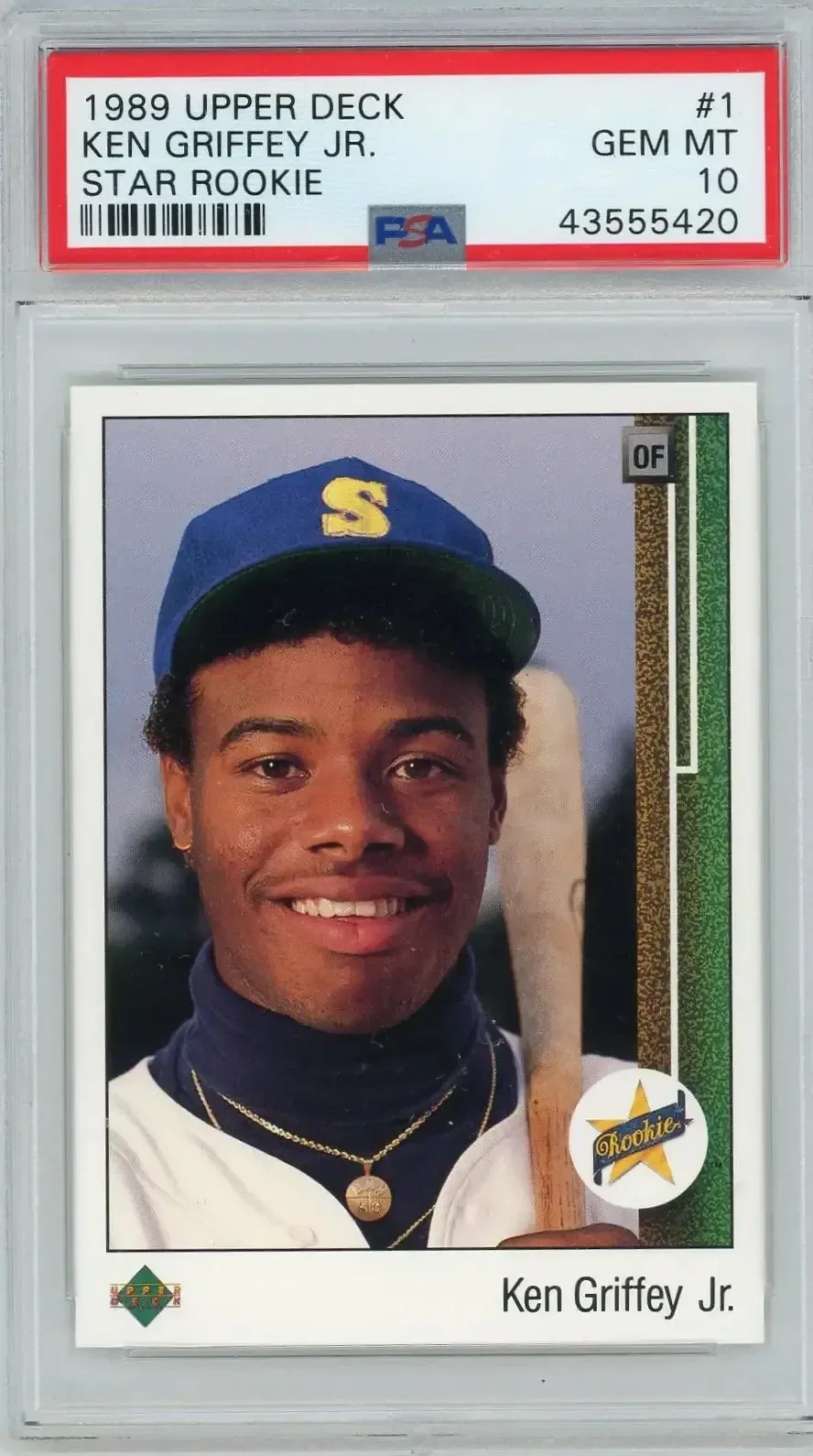
The decision to make Ken Griffey Jr. card #1 proved historic. His Star Rookie became the face of the brand and one of the most recognizable modern baseball cards ever produced. Few single cards have done more to define both a company and an era. Even lower-grade Griffey examples attract buyers, which speaks to the card’s deep and unusually broad collector base.
The set also features rookie cards of Randy Johnson, John Smoltz, and Gary Sheffield, giving Upper Deck more than just one superstar anchor. But Griffey remains the central force behind the release’s legacy, and the entire product benefits from being seen as the first true mainstream premium baseball set.
Recent PSA 10 prices include Ken Griffey Jr. #1 at $5,000, Dale Murphy Reverse Negative Error #357 at $2,000, and Randy Johnson #25 at $307.
What Made These Sets Last
The most iconic 1980s baseball card sets share a few common traits. They either introduced something new, captured a defining look of the decade, or delivered a rookie class strong enough to keep collectors engaged decades later. In some cases, like 1989 Upper Deck, the impact was revolutionary. In others, like 1987 Topps or 1985 Topps, the cards became visual shorthand for an entire generation of collecting.
They also reflect the contradictions of the era. The 1980s produced some of the hobby’s most overprinted cards, yet it also created premium variations such as Tiffany and Glossy releases that remain legitimately scarce. It gave collectors affordable base cards while also planting the seeds for modern grading culture, condition rarity, and prospect-driven buying.
For collectors building a decade-focused run, these eight sets remain the clearest map to what made 1980s baseball cards so memorable: major rookies, bold branding, packaging innovation, and a hobby that was learning how big it could become.
Photo Gallery