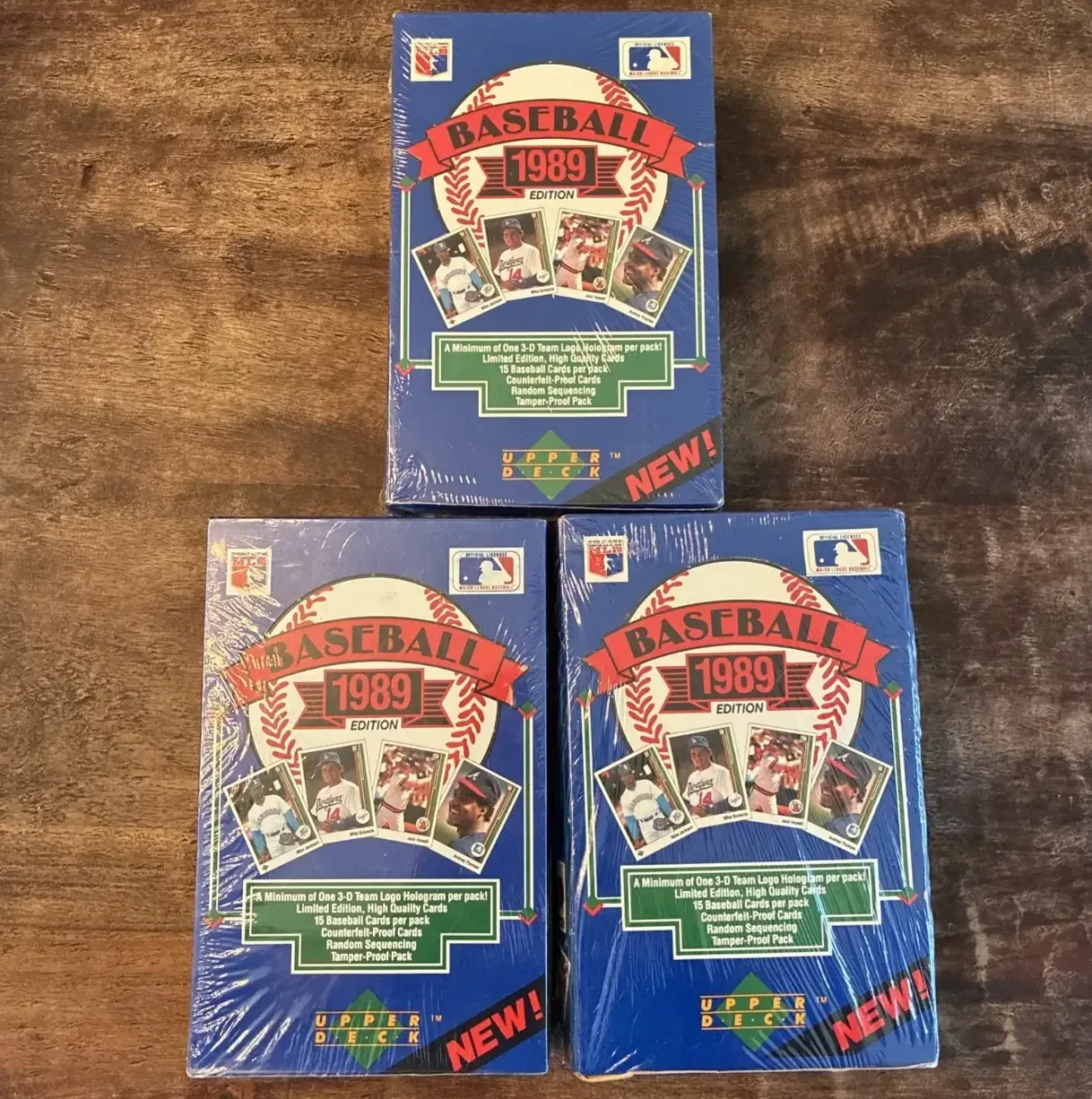
In 1989, paying 99 cents for a pack of baseball cards felt expensive. Upper Deck entered the market at more than double the price of many standard packs of the era, but the product quickly justified the premium. Foil wrappers replaced wax, full-color photography appeared on both sides, and anti-counterfeit holograms gave the set a more upscale feel than collectors were used to seeing.
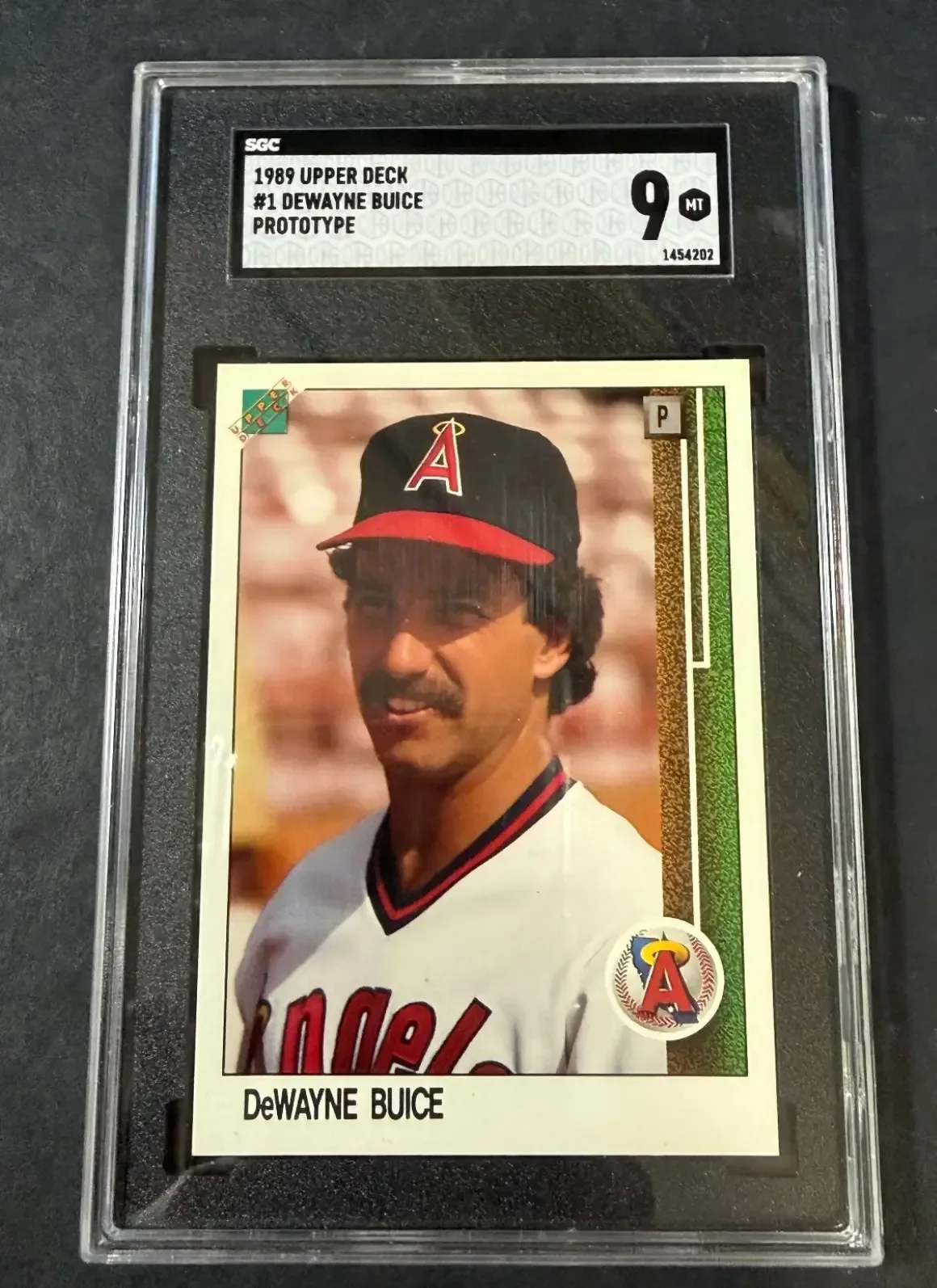
That fresh presentation helped change the hobby, but it was the checklist that turned 1989 Upper Deck Baseball into a landmark release. The 800-card set delivered star power, major rookie cards, memorable variations, and one of the most famous cards of the modern era in Ken Griffey Jr. decades later, sealed boxes and key singles from the product still command serious attention.
Here is a closer look at six of the most valuable and iconic cards from 1989 Upper Deck Baseball, based on their long-term hobby relevance, collector demand, and notable recent sales data.
Why 1989 Upper Deck Changed Baseball Cards
Upper Deck did not simply launch another baseball set. It introduced a different standard for mainstream cards. The cleaner design, sharper photography, and foil packaging made the product feel premium from the moment a pack was opened. Even the absence of gum mattered, since collectors no longer had to worry about stained corners and damaged surfaces.
For more collector background, read The Most Iconic and Valuable 1954 Topps Baseball Cards to Know.
The set also arrived with a built-in chase element through its rookie content and error cards. Collectors were not just buying a nicer-looking product. They were buying into a release that featured future Hall of Famers, scarce corrected variations, and a centerpiece rookie that would become a hobby symbol for an entire generation.
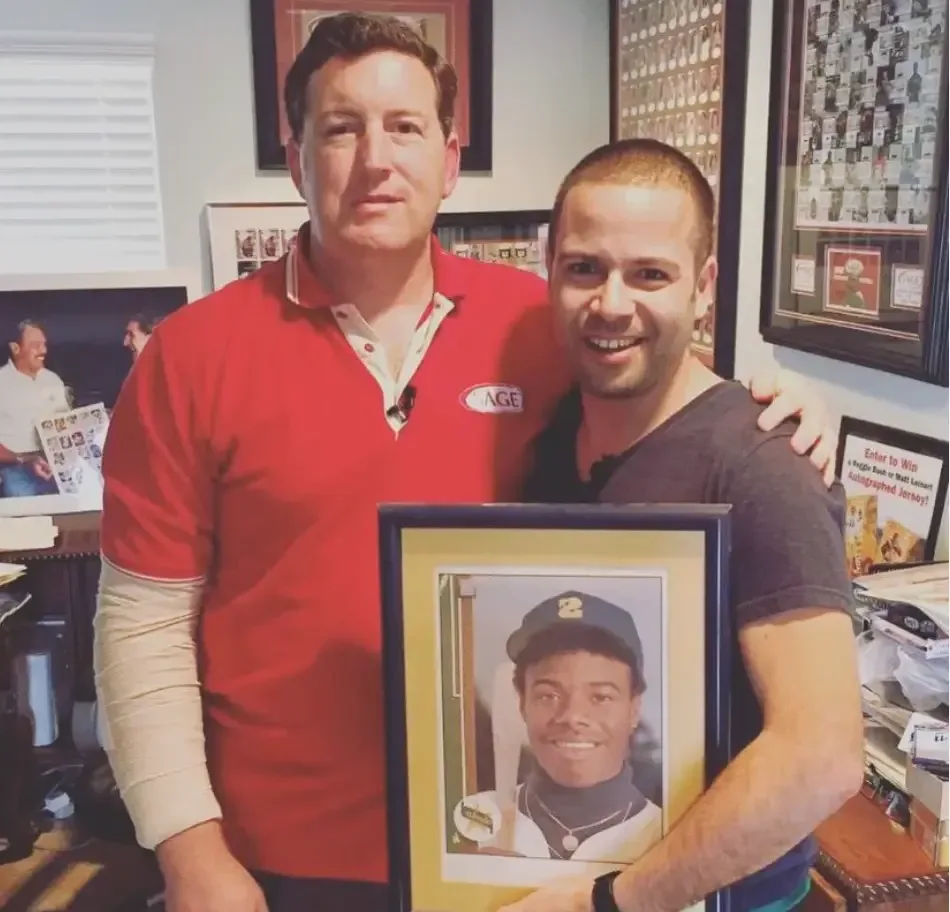
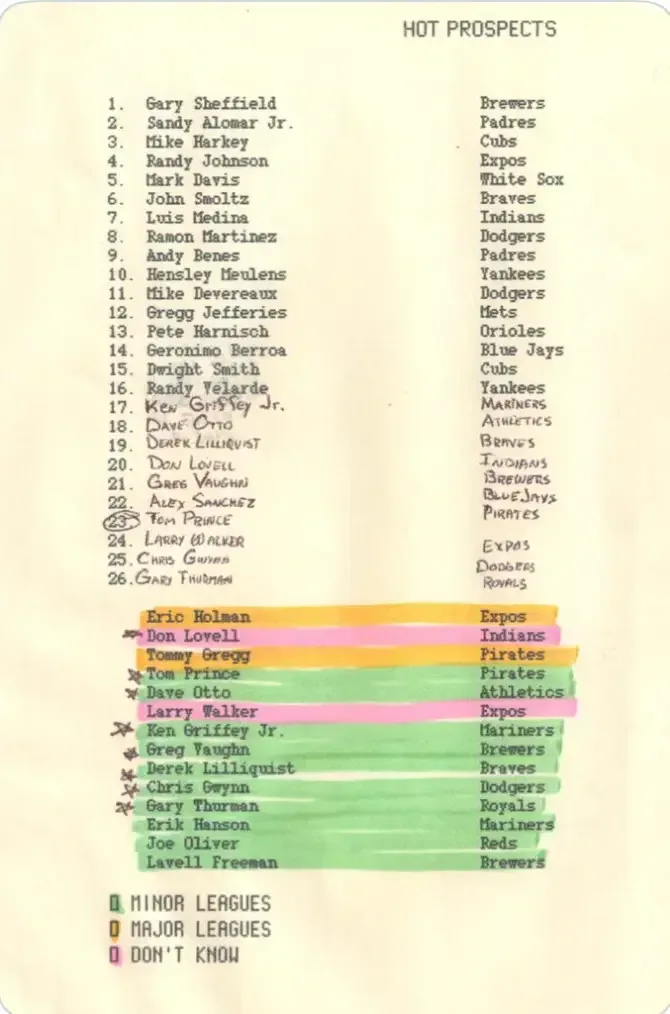
One of the most interesting pieces of the set's origin story is that Upper Deck's early checklist building involved 18-year-old Tom Geideman, the company's first employee. He reportedly helped narrow the leading Star Rookie candidate to a group that included Gregg Jefferies, Gary Sheffield, Sandy Alomar Jr., and Ken Griffey Jr. Griffey was not the obvious pick at the time, but that decision changed card history.
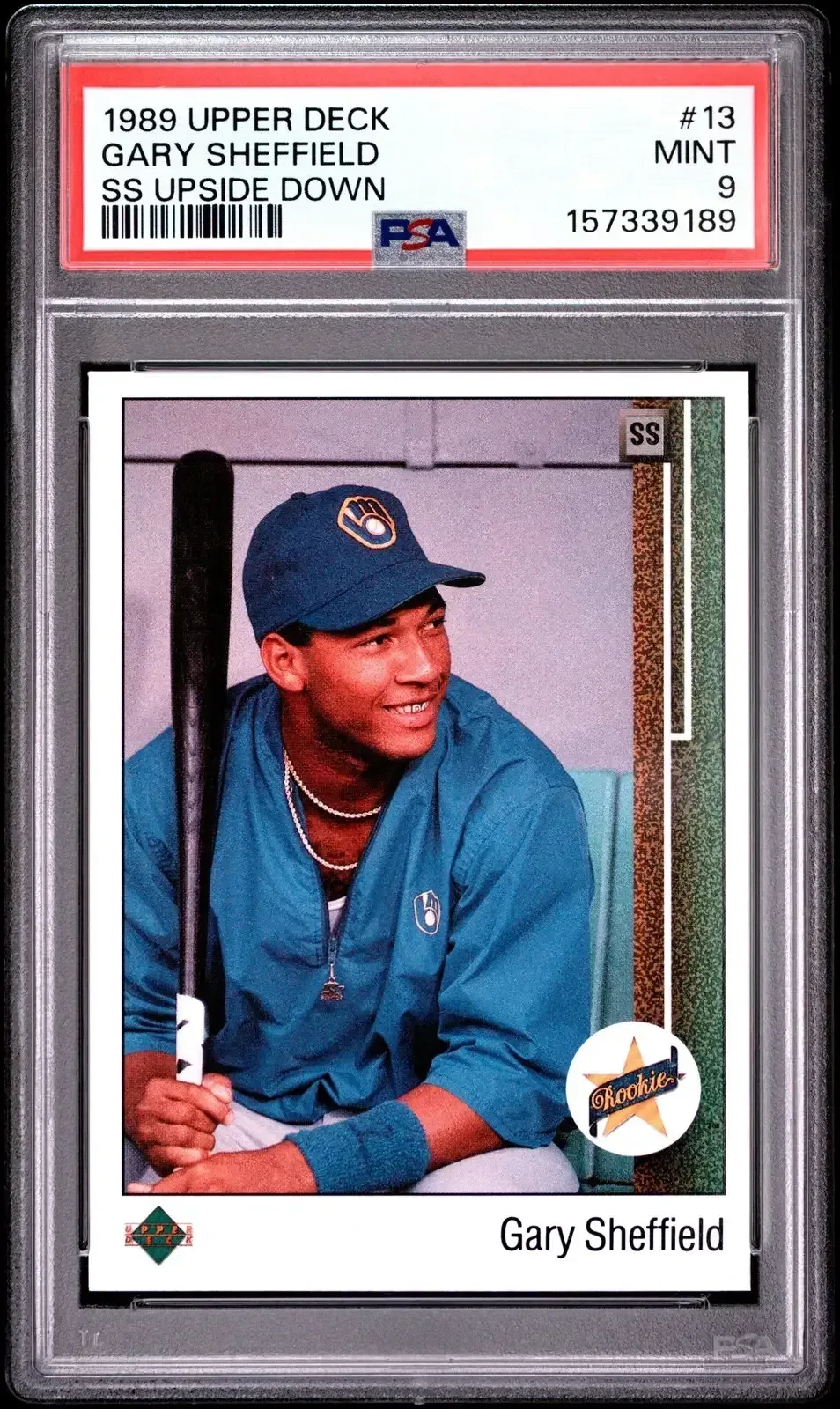
6. Gary Sheffield 1989 Upper Deck #13 Star Rookie
Gary Sheffield's 1989 Upper Deck rookie remains one of the most recognizable cards from the set, and it carries extra intrigue because of an early-printing variation. On some copies, the small "SS" position graphic appears upside down, creating a notable error version that has developed a strong following.
For another perspective on this story, read Why 1989 Upper Deck Still Has Baseball Card Collectors Chasing Griffey, Errors and Premium Condition.
The standard rookie is still an important card for collectors of late-1980s stars. Sheffield went on to build a career with Hall of Fame-level production, and his Upper Deck rookie continues to benefit from the product's historical weight. The variation, though, is where scarcity becomes a bigger part of the story.
Recent sales listed for the regular card show about $56 in PSA 10 and $5.50 in PSA 9. The upside-down SS variation has sold around $500 in PSA 10 and roughly $35 in PSA 9. Population data also shows a major gap between the standard card and the error version, which helps explain the premium attached to the scarcer copy.
For collectors building out an iconic-card run from the set, Sheffield offers both a major rookie and a legitimate variation chase in one slot.
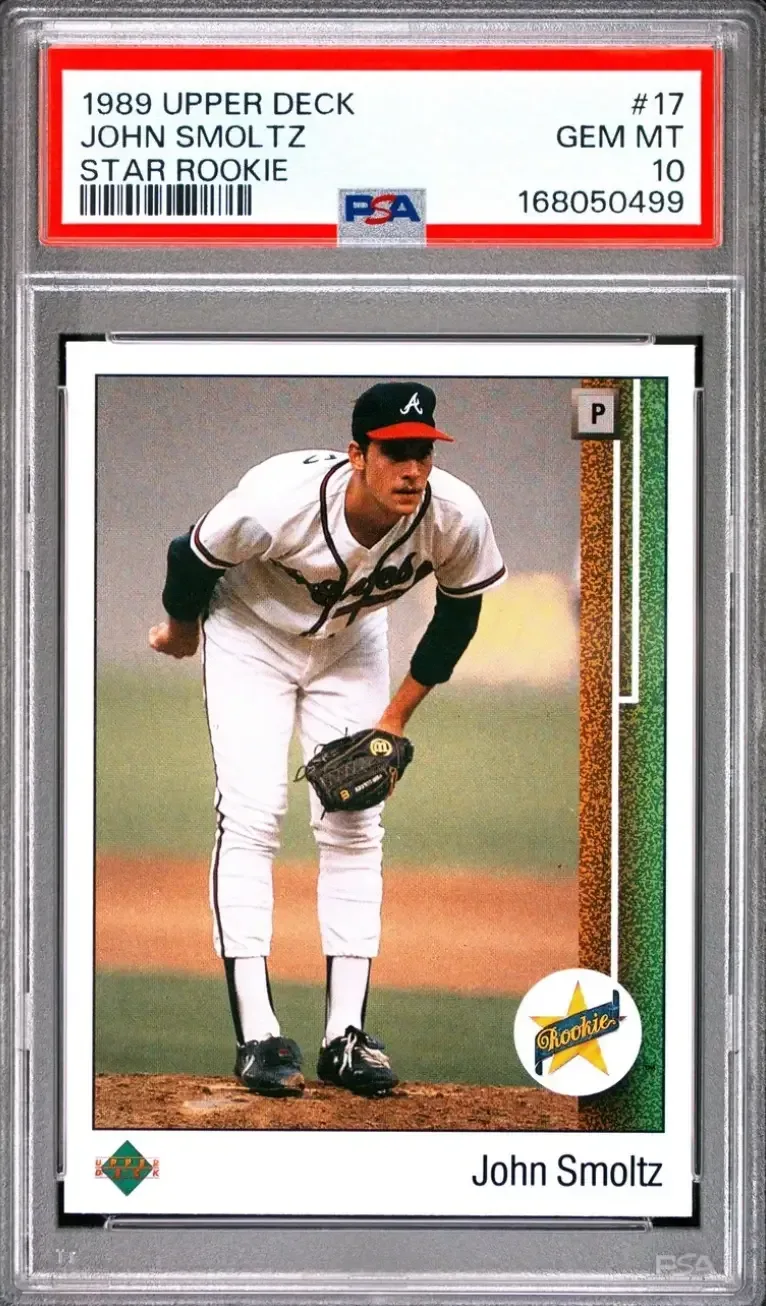
5. John Smoltz 1989 Upper Deck #17 Star Rookie
John Smoltz has several early cards, but many collectors view his 1989 Upper Deck Star Rookie as his most desirable mainstream rookie. The card stands out because it captures the visual style that helped make the set famous. Instead of a stiff portrait, it uses an action image that feels more modern and more alive than many competing cards from the same period.
That design choice matters. The 1989 Upper Deck set became known for making baseball cards feel more dynamic, and Smoltz is one of the clearest examples. Add in the fact that he later became a Hall of Famer with a highly decorated career, and the card has remained a cornerstone rookie from the release.
Recent sales place the card around $75 in PSA 10 and about $15 in PSA 9, with thousands graded. Even with solid population numbers, top-grade demand has kept the card relevant. An autographed PSA 10 copy recently reached $491, showing there is still healthy collector interest in premium versions.
Smoltz may not generate the same attention as Griffey or Randy Johnson from this set, but his rookie continues to hold a firm place among the most collectible cards in the checklist.
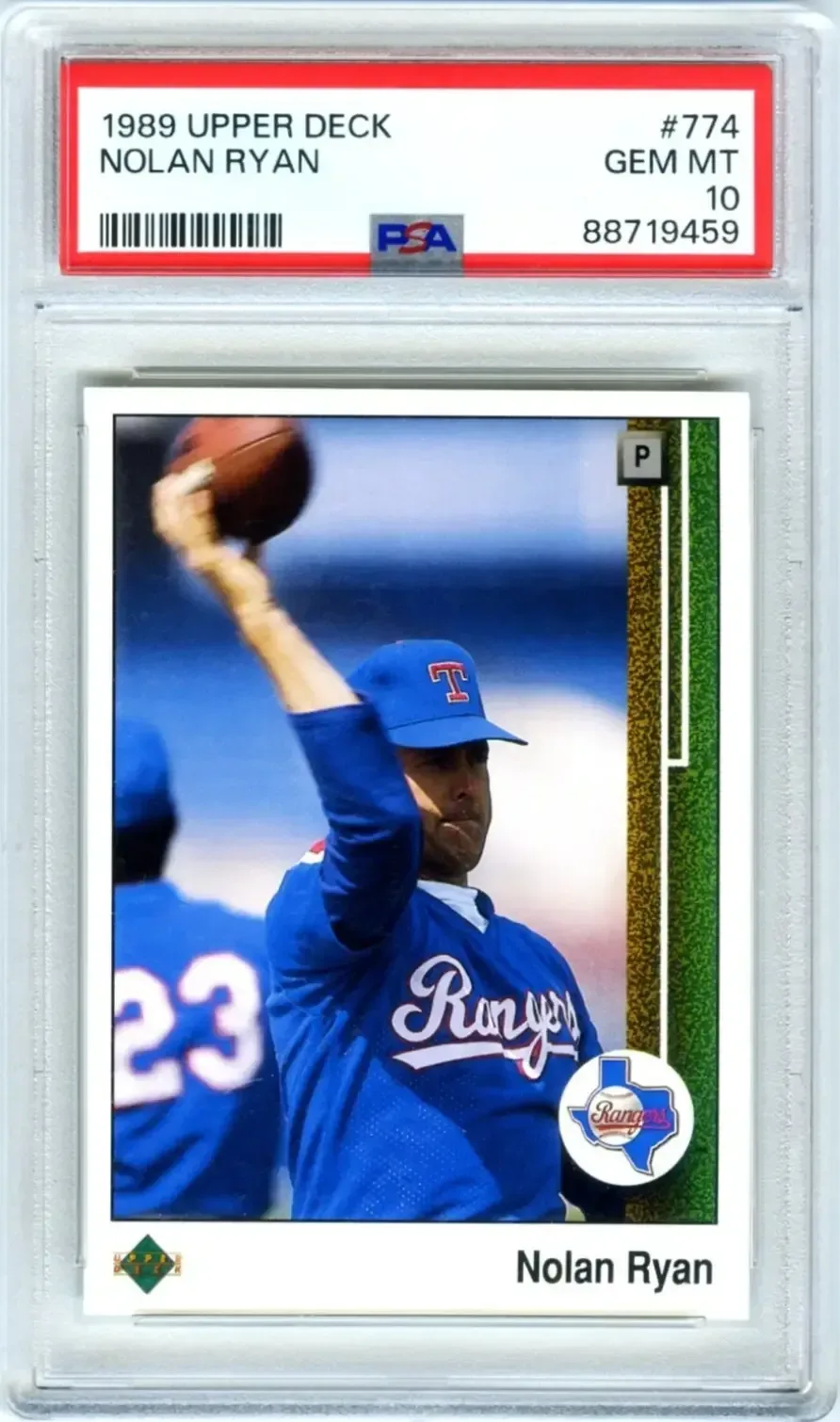
4. Nolan Ryan 1989 Upper Deck #774
Nolan Ryan appears twice in the 1989 Upper Deck set, but card #774 has carved out its own identity as the famous football card. Rather than showing Ryan on the mound in a conventional baseball pose, it captures him throwing a football, an unusual image that immediately made the card memorable.
The photo reflects a real part of Ryan's routine. He was known to throw a football during warmups and between starts as a way to help stretch his arm and keep his shoulder loose. That bit of baseball lore gives the card added personality and separates it from a long list of traditional late-career star cards.
Collectors have rewarded that uniqueness. Recent PSA 10 sales have been around $198, while PSA 9 copies have sold near $38. The graded population is far lower than some of the major rookies in the set, which also helps support stronger prices in top condition.
Ryan was already a legend when this card was released, and Upper Deck found a way to present him in a way that still feels different decades later. For player collectors and set collectors alike, that has kept #774 firmly on the hobby map.
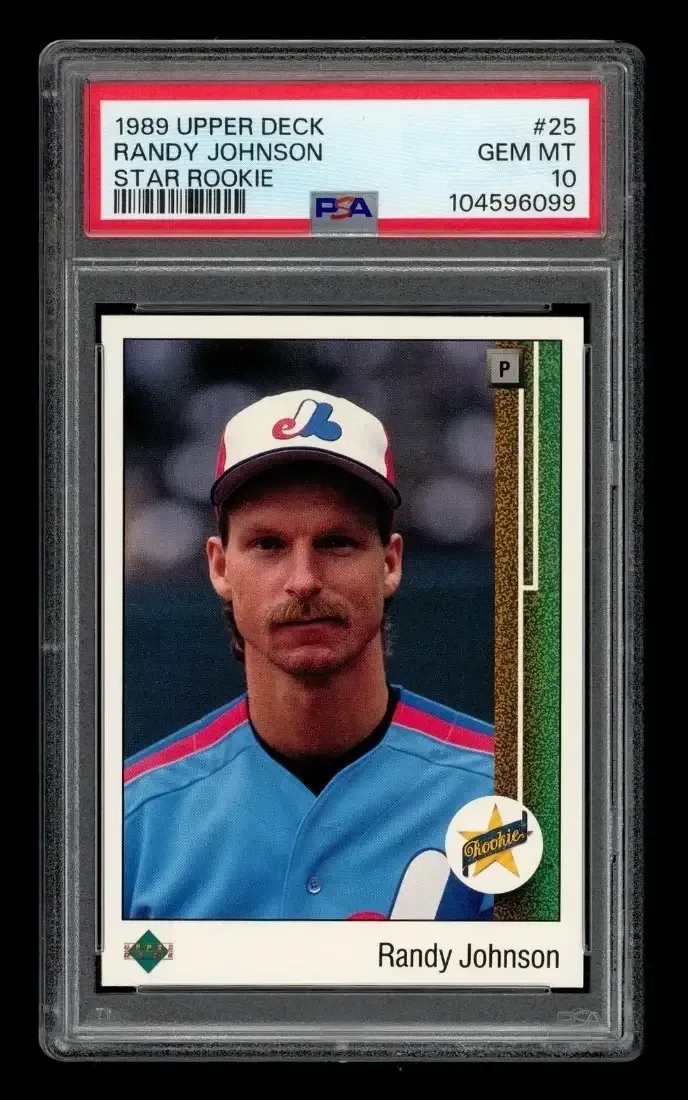
3. Randy Johnson 1989 Upper Deck #25 Star Rookie
Randy Johnson's 1989 Upper Deck Star Rookie is one of the defining cards of the set and one of the easiest modern-era Hall of Fame rookies to recognize at a glance. The image, the branding, and the timing all work together to give it lasting appeal.
Johnson eventually became one of the most dominant pitchers in baseball history, winning five Cy Young Awards and building a resume that places him among the game's all-time greats. That level of achievement has helped preserve demand for his flagship rookie cards, and this Upper Deck issue sits near the top of the list.
Recent sales show PSA 10 copies around $267 and PSA 9 copies near $36. Raw examples remain surprisingly affordable, often available for under $5, which makes the card accessible for newer collectors even as elite grades stay desirable.
There is also frequent confusion tied to supposed Marlboro errors, but that reputation belongs to a different Johnson rookie from 1989. For Upper Deck, the appeal is simpler. This is a true key rookie from a groundbreaking set, backed by one of the best pitching careers of the modern era.
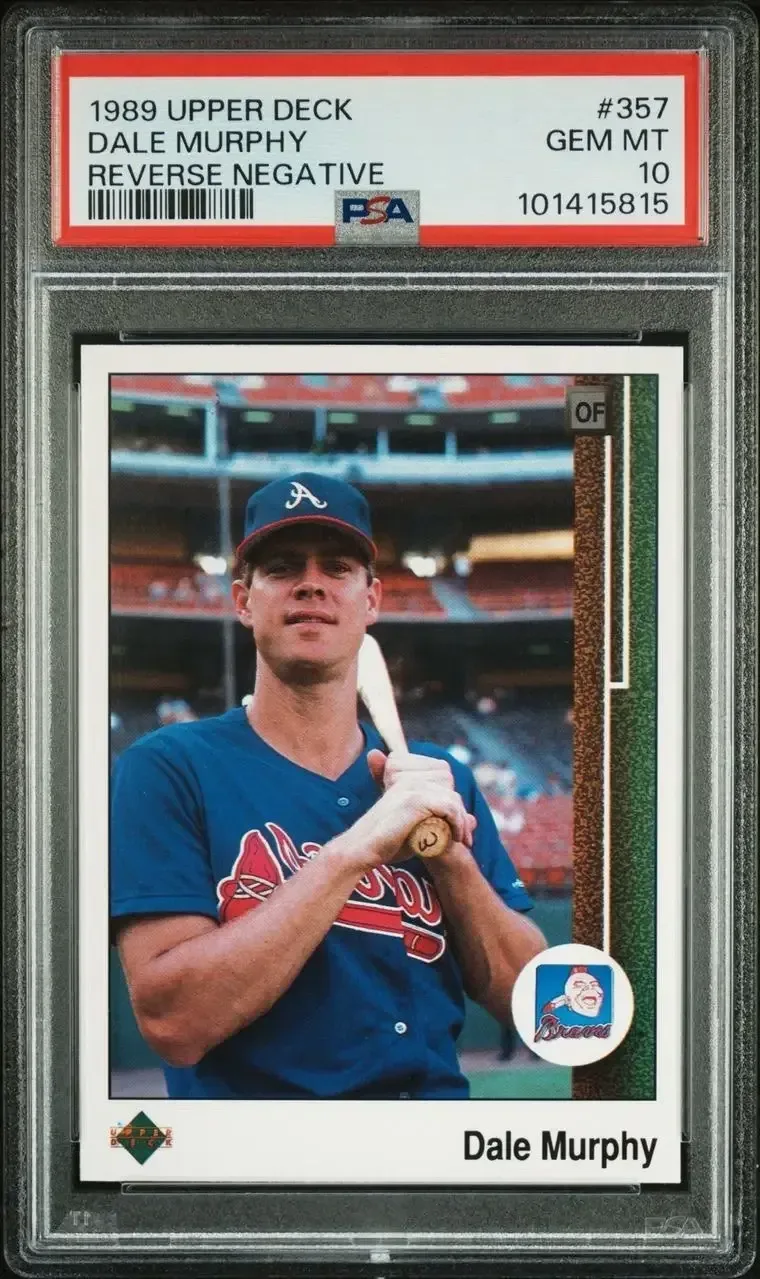
2. Dale Murphy 1989 Upper Deck #357 Reverse Negative
Not every iconic card from 1989 Upper Deck is a rookie. The Dale Murphy reverse negative is one of the set's most important error cards and remains one of the toughest mainstream chase pieces from the product.
The issue came from the photo negative being flipped during the printing process. Because Murphy was a right-handed hitter, the reversed image makes him appear to be batting left-handed. The mistake was corrected quickly, leaving the error version much scarcer than the standard card.
That combination of a visually obvious printing mistake and limited availability has made the card a major target for master set builders and variation collectors. Recent sales show PSA 10 copies around $2,000 and PSA 9 copies near $400, which puts it in rare company among non-rookie cards from the Junk Wax Era.
Collectors should also be cautious when buying this card because its value has led to counterfeit concerns. One key detail to verify is the metallic Upper Deck hologram on the lower back of the card. Authentication and careful visual review remain important when shopping for raw examples.
Murphy's popularity as a two-time National League MVP and one of the most respected stars of the 1980s gives the card even more staying power. This is not just a printing oddity. It is one of the signature error cards of its era.
1. Ken Griffey Jr. 1989 Upper Deck #1 Star Rookie
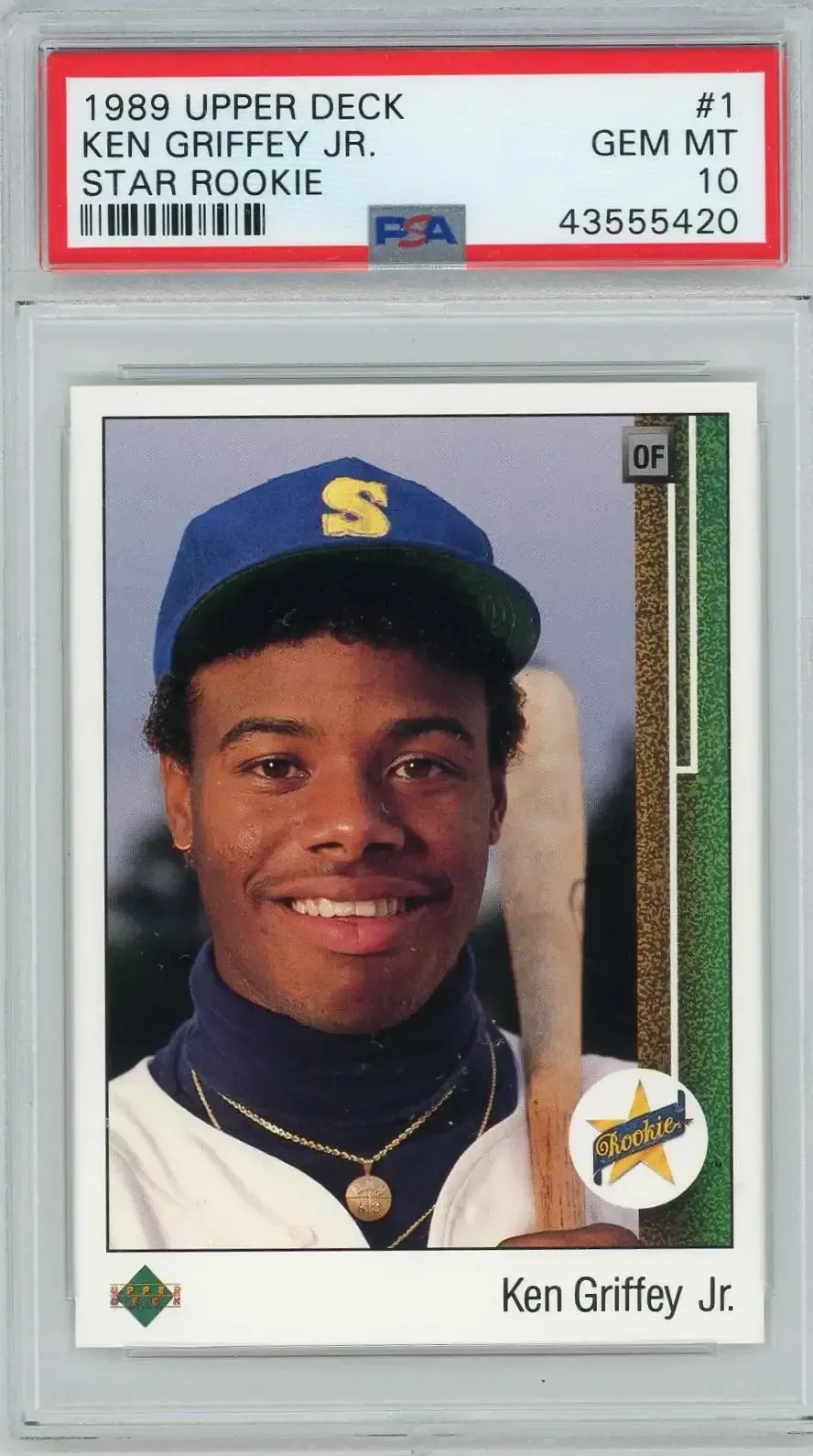
No card defines 1989 Upper Deck more than Ken Griffey Jr. #1 Star Rookie. It is the flagship card of the release, one of the most recognizable baseball cards ever printed, and for many collectors the symbol of the modern hobby itself.
Part of the card's mystique comes from the choice behind it. Griffey had not yet played a Major League game and had not advanced beyond Double-A, so he was not the most obvious prospect to headline a major set. Yet Upper Deck made him card #1, and that decision became a hobby masterstroke.
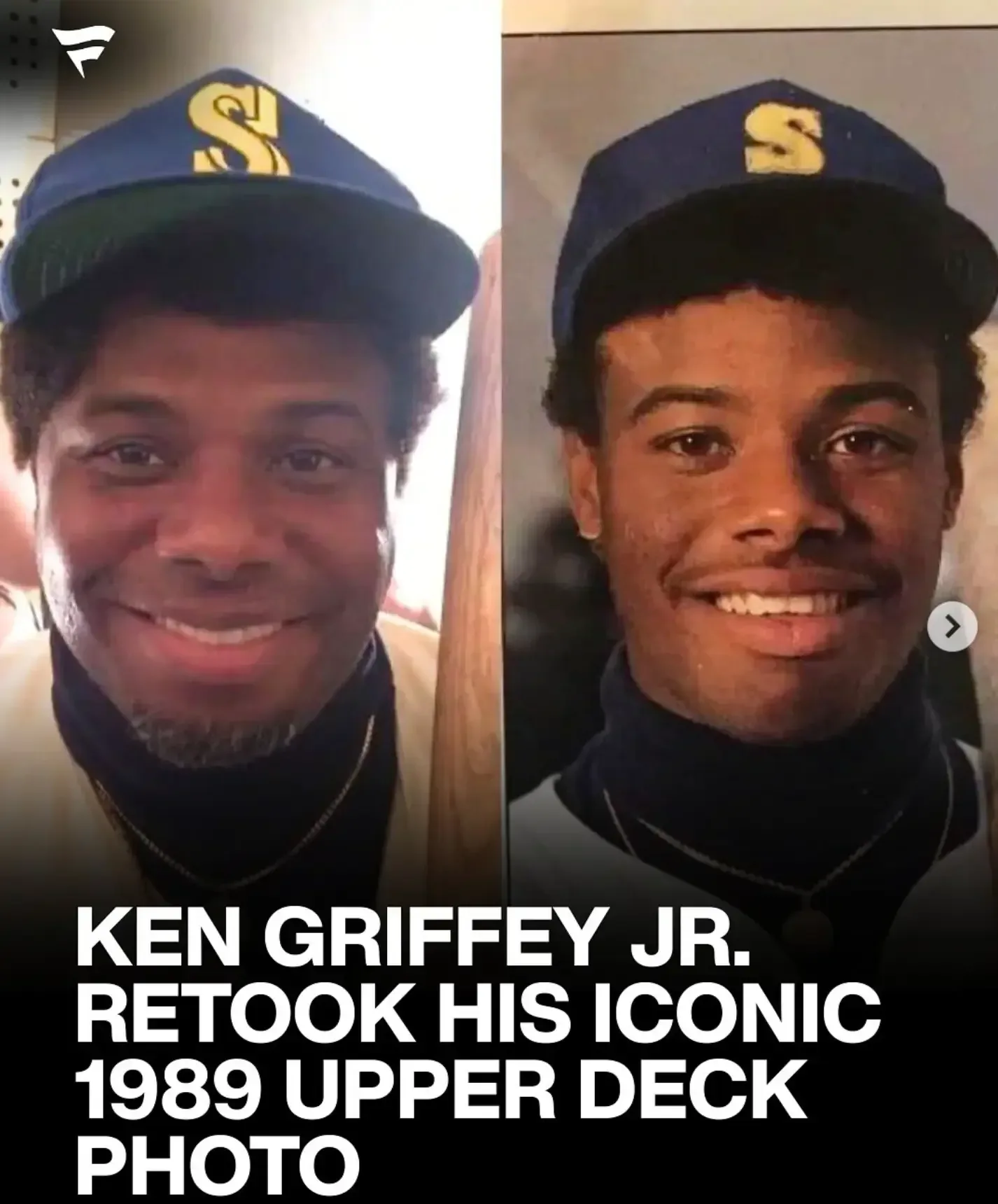
The image also adds to the legend. Griffey was photographed wearing a San Bernardino Spirit uniform, and the card was altered so the visible branding fit the Seattle Mariners identity. Details like that have become part of the card's lore as collectors continue to study and celebrate it.
Demand for the card has been enormous for decades. PSA 10 sales have reached $6,215, while PSA 9 examples have sold for about $496. Its graded population is massive, with well over 100,000 PSA submissions, and the card is widely recognized as the most graded sports card ever produced. Even with huge supply, demand has remained powerful because this is one of the hobby's foundational modern cards.
Upper Deck reportedly even printed special sheets loaded entirely with Griffey rookies to help satisfy demand. Whether approached as an investment, a nostalgia piece, or a cornerstone of any modern baseball collection, #1 Griffey remains the card that made this set unforgettable.
Market Context for 1989 Upper Deck Today
The market for 1989 Upper Deck is a reminder that not all Junk Wax Era cards are created equal. While much of the late-1980s and early-1990s output remains inexpensive, the most important pieces from this set continue to separate themselves because of brand significance, player legacy, and true collector recognition.
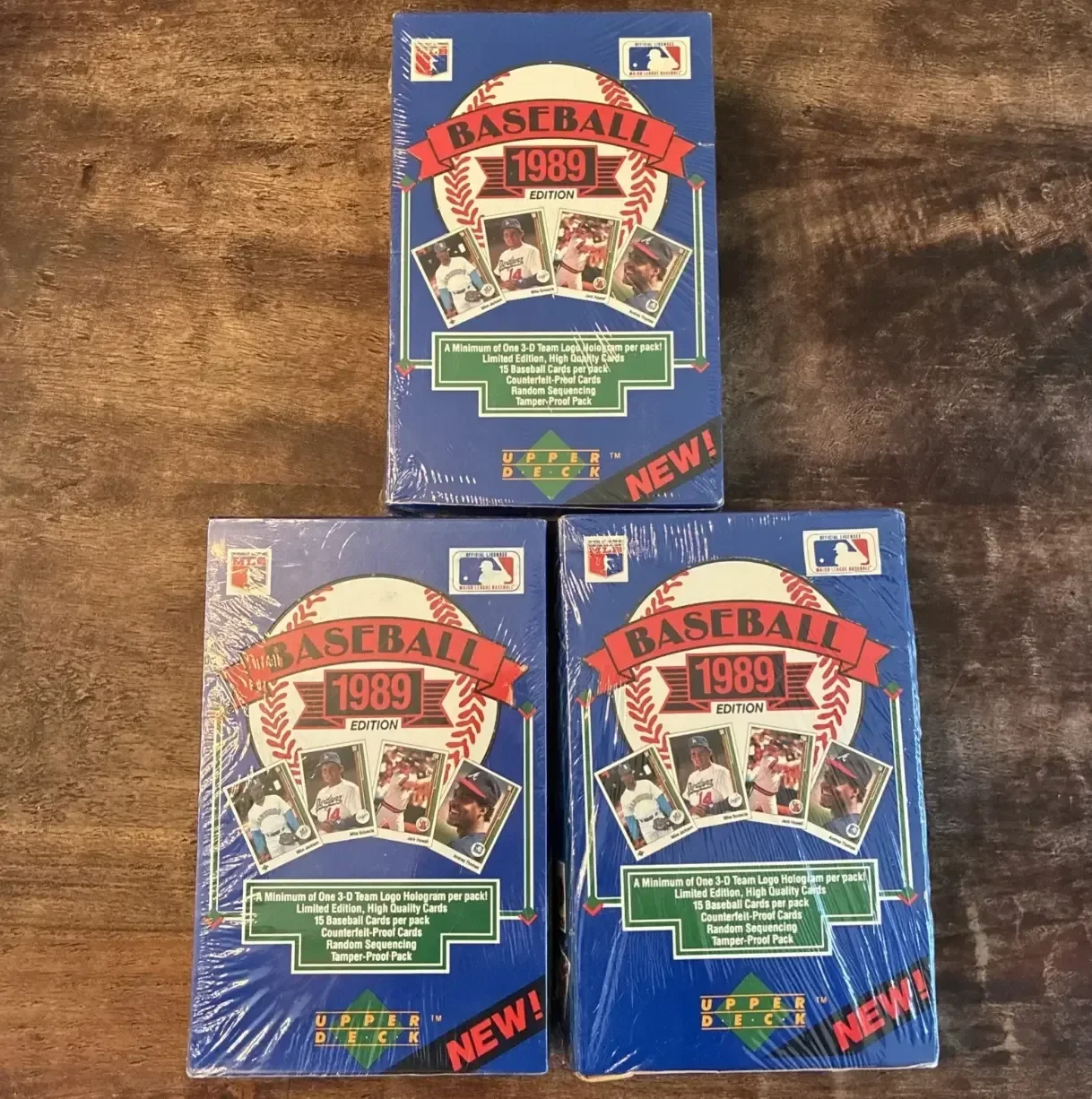
That strength shows up in multiple places. Sealed product still draws major money, with an unopened 36-pack hobby box selling for $4,650 in July 2026. Key singles remain liquid in high grade, and the most important variation cards have created their own niche demand among advanced collectors.
Condition is still a major factor, especially for glossy cards from a premium product where centering, corners, and surface quality are heavily scrutinized. Counterfeit risk also matters on the set's best-known error cards and biggest stars, making graded examples especially attractive for higher-end buyers.
What Collectors Still Chase in This Set
The lasting appeal of 1989 Upper Deck comes from how many lanes it offers. Rookie-card collectors chase Griffey, Johnson, Smoltz, and Sheffield. Variation collectors hunt the Murphy reverse negative and the Sheffield upside-down SS. Player collectors target unusual star cards like Nolan Ryan's football image. Set builders still view the release as one of the defining products of the period.
Just as important, the set still feels important when handled today. The foil packs, the anti-counterfeit hologram, and the sharp photography all represent a genuine turning point in the hobby's presentation. For collectors looking back at the release that helped redefine what a premium baseball card product could be, these six cards remain at the center of the conversation.
Photo Gallery