Grading is one of the easiest places in sports cards to confuse action with progress. Sending a card away feels productive. Sometimes it is. Sometimes it is just an expensive delay between owning a raw card and owning the same card in a holder that did not gain enough value to justify the trip.
The right grading decision starts with honesty. Why do you want the card graded? How strong is its condition really? What will the full process cost after fees, shipping, insurance, selling expenses, and time? If you can answer those questions clearly, most grading decisions get simpler fast.
For many collectors, the best rule is not “grade your stars” or “grade your rookies.” It is this: grade when authentication, protection, presentation, or likely post-grade value clearly outweigh the costs and uncertainty. If that case is weak, leaving the card raw is often the smarter move.
1. Decide what job you want grading to do
Before you examine centering or compare service tiers, define the job. Grading can serve at least three different purposes, and the right answer changes depending on which one matters most to you.
First, there is the collection-purpose case. If you want authentication, a permanent holder, standardized labeling, or a more uniform display, grading can make sense even if the resale math is mediocre. PSA describes grading as following authentication and using a 10-point scale, while Beckett emphasizes a tamper-evident holder and condition details on the label. If your objective is preservation and presentation, those benefits may be enough.
Second, there is the resale case. That is where many collectors get into trouble, because they treat grading as a default upgrade rather than a business decision. For resale, grading should be judged mostly by whether the likely sale outcome meaningfully beats selling the card raw after all costs. A card being popular or from a strong player is not enough by itself.
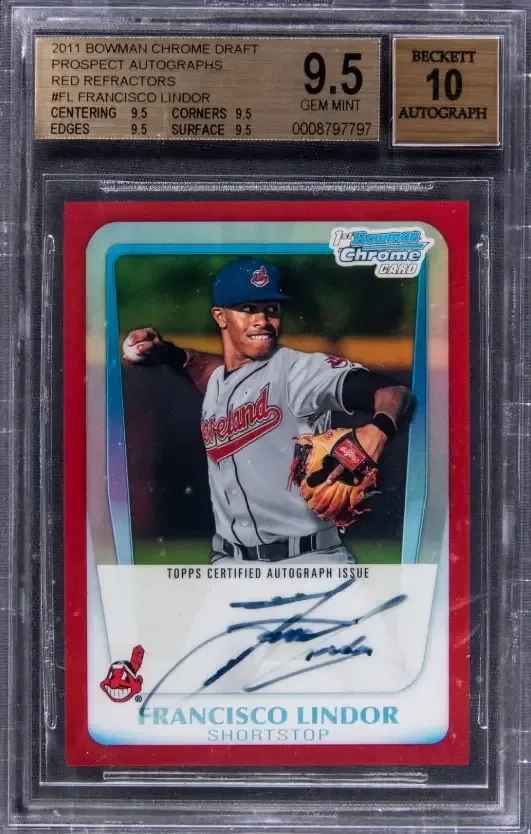
Third, there is the preference case. Some collectors care about subgrades, label style, registry participation, or the feel of one holder over another. Beckett’s current structure highlights four subgrades and half-point grades, which can matter if transparency across centering, corners, edges, and surface is important to you. That is a collecting choice, not a universal rule.
A useful practical habit is to write one sentence before you submit anything: “I am grading this card because...” If you cannot finish that sentence clearly, slow down. Many bad submissions begin with vague optimism instead of a defined purpose.
- Collection goal: authentication, protection, presentation, or sentimental value
- Resale goal: graded outcome should clearly outperform raw after costs
- Preference goal: holder style, label, registry participation, or subgrades
2. Start with an unforgiving pre-grade check
The core condition categories are not mysterious. Across the major graders in this comparison, the same four areas keep deciding outcomes: centering, corners, edges, and surface. If you want better grading decisions, you need a repeatable way to inspect those four areas without talking yourself into a higher result.
PSA’s published standards for a PSA 10 describe a virtually perfect card, allowing roughly 55/45 centering on the front and 75/25 on the back, along with sharp corners and a strong surface and gloss. Beckett’s Pristine 10 standard is stricter on centering, describing 50/50 on the front and 55/45 or better on the back, plus virtually flawless corners, edges, and surface. SGC’s 10 Pristine description also points to 50/50 centering, sharp corners, a strong surface, and no visible wear under magnification.
That should reset expectations. Plenty of cards are nice. Very few are truly pristine by published standards. If you are grading for value, what matters most is not whether your card is “solid.” It is whether it has a realistic path to the grade level that buyers actually reward.
A practical screen helps. If you can already see corner whitening, edge chipping, a crease, a noticeable scratch, a dent, a stain, a print line, or obvious off-centering without magnification, grading for resale usually becomes much harder to justify. That does not mean the card is undesirable. It means you should stop assuming top-tier upside.
If you want structure, build a simple routine: first look at the front from arm’s length for centering; then tilt the card under light for surface flaws; then check corners and edges close up; then inspect the back with the same discipline you used on the front. Many self-graders inspect the front carefully and give the back a free pass. Buyers and grading companies do not.
- Check front centering before anything else
- Tilt under light to expose scratches, lines, and dents
- Inspect all four corners individually, not as a quick glance
- Examine the back with the same seriousness as the front
3. Think in probabilities, not hopes
One of the most useful published reminders for modern submitters is that a large share of cards can receive respectable numeric grades without being true top-end candidates. PSA’s current getting-started guidance says that, since 2018, about 90 percent of ultra-modern sport cards from 2017 to the present and about 80 percent of modern sport cards from 1986 through 2016 have graded PSA 8 or higher, while also noting those percentages are approximate and every card is graded individually.
That cuts two ways. On one hand, it explains why grading modern cards is common. Many are clean enough to land in the broad acceptable range. On the other hand, it does not mean your card is likely to gem. The financially important jump is often not from ungraded to graded. It is from one specific grade bucket to another, especially from 9 to 10 in cases where the market pays a sharp premium for perfection.
PSA has noted that in some cases a PSA 10 can sell for several times a PSA 9, while in other cases the gap is much smaller. That variability matters because it turns grading into a probability problem. You are not choosing between “raw” and “slabbed.” You are choosing among likely outcomes: raw sale now, graded 8, graded 9, graded 10, or even an underwhelming result that ties up your card and cash for weeks or months.
A smart collector treats every submission like an expected-value exercise. If the card looks like an 8 or 9 candidate and only a 10 really creates worthwhile upside, then you do not have a strong grading case. You have a thin bet resting on your own optimistic eye.
Here is a practical example. Suppose a modern star card sells raw in a healthy range already. If an 8 barely clears your grading cost and a 9 only adds a modest premium, but a 10 creates the real payoff, then the whole submission hinges on whether the card is genuinely clean enough to beat a strong field of other modern copies. That is a very different decision than grading an expensive vintage card where authentication and encapsulation carry more value even at lower numeric grades.
- A respectable numeric grade is not the same as a profitable grade
- Modern cards often grade well, but gem-level upside is narrower
- Estimate your most likely grade, not your dream grade
4. Do the full cost math, not the advertised fee math
Collectors often say a card is “worth grading” because the listed fee looks manageable. That shortcut misses the most important part of the economics. Your real cost is not just the grading charge. It is the all-in cost of getting the card there, getting it back, and eventually turning it into cash if resale is your objective.
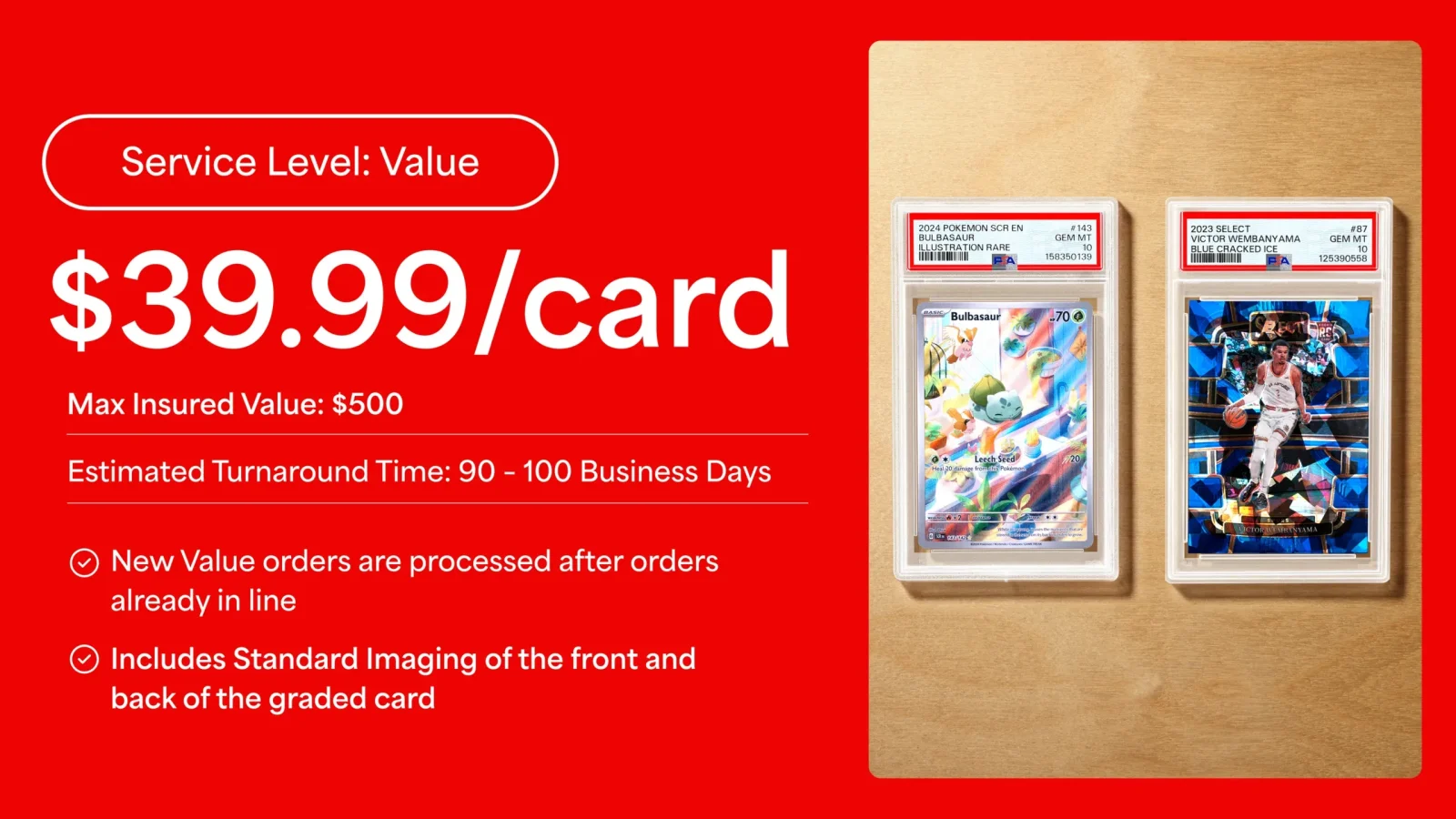
As of the research date, PSA lists several service levels, including Value at $39.99 per card with a maximum insured value of $500, but that Value service is temporarily paused. Standard is listed at $59.99, Priority at $79.99, and Express at $199, with higher premium tiers above that. PSA also states its turnaround estimates are estimates only. SGC lists standard-size raw grading at $50 up to a $1,500 declared value on its 40-plus-day service and $85 up to $3,500, while noting service-level adjustments took effect September 2, 2026 and that more changes could arrive in late 2026 or early 2027. Beckett lists Base at $14.95 without subgrades and $17.95 with subgrades, Standard at $34.95, Express at $79.95, and Priority at $124.95, but also indicates that Base and Standard were paused, with reopening expectations subject to change.
Those details matter because they can shift a borderline submission from reasonable to poor. A card that might have worked at a lower entry tier may no longer make sense if that service is paused and the next available tier costs significantly more.
Your all-in formula should look like this: likely graded sale value minus raw sale value minus grading fee minus outbound shipping minus return shipping and insurance minus supplies minus selling fees minus the cost of waiting. That last part gets ignored, but it is real. Time in transit and turnaround time are not free if you are grading mainly to sell.
A practical rule is to demand a comfortable margin, not a razor-thin one. That is not because graders promise disappointment. It is because self-assessment is imperfect, timing can shift, and the difference between your expected grade and the actual grade can erase a seemingly decent plan. If the upside only works in a best-case scenario, it probably does not work.
- Include grading fee, shipping, insurance, supplies, and selling fees
- Treat turnaround time as a real cost if resale speed matters
- Paused budget tiers can ruin the economics of borderline submissions
5. Compare the right card before you compare prices
Price research only helps if you identify the card correctly. That sounds basic, but grading mistakes often begin with a bad comp, not a bad eye. A collector sees a strong sale, misses that it was a different parallel or variation, and submits a less desirable version expecting the same premium structure.
PSA’s current guidance is sensible here: search sold data using year, manufacturer, set, player, card number, parallel, and estimated grade, and focus on sales from the past three to six months. The more precisely you define the card, the more useful the comparison becomes.
That means you should not stop at “2024 star rookie auto” or “vintage Hall of Famer.” You want the exact set, exact numbering, exact color or foil parallel, exact variation if one exists, and the most realistic grade band. If you are thinking in terms of a PSA 10 comp while your card more honestly resembles a 9 candidate, your research has already gone off the rails.
This is especially important with modern cards, where a small difference in parallel or print treatment can completely change the value spread between raw and graded examples. It also matters with vintage, where exact identification and authenticity concerns can have a larger role than numerical grade alone.
A practical worksheet helps. Write down five lines before submitting: exact card identification, raw sold range, realistic graded sold range, service tier required by the card’s declared value, and your estimated net upside after all costs. If any of those lines are vague, your grading decision is probably not ready yet.
- Confirm set, card number, parallel, and variation
- Use comps that match your realistic grade target
- Look at recent sold data, not just active asking prices
6. When grading usually makes sense
There are several situations where grading has a strong practical case even before you start looking for perfect math. High-value vintage is one of them. PSA’s guidance specifically notes that vintage cards can still be worth grading despite weaker condition. That makes sense because authenticity, market trust, and standardized condition opinions can matter a great deal on older cards.
Expensive singles with authenticity concerns are another strong candidate. If a card is vulnerable to trimming, alteration concerns, or general buyer skepticism, third-party authentication and encapsulation can add utility even when the numeric grade is not elite. PSA’s standards and Beckett’s materials both speak directly to authenticity and alteration review as part of the process.
Cards with a legitimate shot at a premium grade are the obvious yes case. If the card is clean across centering, corners, edges, and surface, and recent sold data shows meaningful upside at the grade you think is realistic, grading can be a disciplined move rather than a gamble.
Then there is the personal-grail category. PSA’s own guidance notes that any card could be worth grading because of rarity, scarcity, or sentimental value. That does not mean every sentimental card should be slabbed. It means the decision framework changes when your purpose is long-term preservation, display, and peace of mind rather than immediate profit.
A practical example: a worn but important vintage star card may still deserve grading because the holder, authentication, and easier future liquidity all matter. By contrast, a clean but common modern base card might look sharper at first glance yet still fail the grading test because the value spread is too narrow once you include fees and delay.
- High-value vintage can justify grading even at lower grades
- Authentication value is especially important for expensive or alteration-sensitive cards
- Personal grails can justify grading even when resale math is secondary
7. When leaving the card raw is the smarter play
The hobby often talks about grading as a value-creation tool. Sometimes the smarter move is to avoid turning a fine raw card into an expensive lesson. Low-dollar modern cards are the classic trap. If a realistic PSA 8 or 9 does not create enough separation from raw value to beat your all-in costs, the holder has not helped you financially.
Visible defects are another stop sign. Once the flaws are obvious, your upside becomes capped by the same condition categories all major graders publish. If you are still grading primarily for profit, you are effectively hoping the market will overlook the exact defects the grading process is built to catch. That is not a strategy.
Urgency also matters. If you need quick cash, grading is usually the wrong tool. PSA says turnaround times are estimates, and Beckett availability has been subject to pauses and updates. SGC also signaled service-level adjustments in 2026. None of that means the companies are unreliable. It means grading is not instant liquidity.
There is also a quieter reason to stay raw: flexibility. A raw card stored properly can be sold quickly, reviewed again later, or submitted after conditions change. Maybe a lower-cost tier reopens. Maybe the market spread between raw and graded copies widens. Maybe your own standards for what deserves grading get sharper. Keeping a card raw is not always indecision. Sometimes it is disciplined patience.
If you choose not to grade, that does not mean neglect the card. Protect it well and document it honestly. A clean, accurately described raw card can still sell efficiently, and in many cases it is the higher-confidence move.
- Low-dollar modern cards often fail the cost test
- Obvious flaws usually cap the grades that matter most
- If you need speed, raw sale options are often better
8. A simple worksheet you can actually use
If you want a repeatable grading habit, build a short worksheet and use it every time. The goal is not to turn collecting into paperwork. It is to stop impulsive submissions that feel exciting in the moment and disappointing later.
Question one: what is the purpose? Write one answer only: personal collection, resale, authentication, presentation, or registry preference. If you write three reasons, your decision may be less clear than you think.
Question two: what is the realistic grade range? Give yourself a range, not a single perfect answer. For example: “Likely 8 to 9, outside shot at 10.” That one sentence often kills bad grading ideas before money leaves your wallet.
Question three: what defects can you see right now? List them plainly. Slightly soft top-right corner. Minor edge chipping on back. Surface print line under angled light. Off-center left to right. If the list is longer than you want it to be, do not erase it mentally just because the card is desirable.
Question four: what are the matching sales? Find raw sales and graded sales for the exact version of the card, using the most realistic grade range instead of your favorite one. If the card only works financially at the very top grade, mark that risk clearly.
Question five: what is the net outcome after everything? Use the all-in formula, not the headline fee. If your estimated upside is small, uncertain, or dependent on a top grade, the default answer should be no.
The final decision rule is simple. Grade the card if all three boxes are checked: the purpose is clear, the condition supports a grade the market rewards, and the math still works after full costs and waiting. If one box feels shaky, protecting the card raw and reassessing later is often the better collector move.
That conclusion may sound conservative, but conservative is useful in grading. A slab is not automatically an upgrade. It is a tool. Use it when it solves a real problem or creates a real advantage, and skip it when it only creates a bill.
- Purpose: Why am I grading this card?
- Condition: What grade range is honestly realistic?
- Math: Does the net result clearly beat selling raw?
Illustration generated for this guide; not a photograph of an actual card, product or event.
Photo Gallery