The 1970s were a turning point for baseball cards. Mickey Mantle was no longer appearing in regular Topps packs, a new wave of stars began taking over the hobby, and collecting itself started to evolve through card shows, larger public gatherings, and changing release formats. For many collectors, the decade also sharpened the idea of the rookie card as a central chase.
Topps changed the way sets reached collectors during this period. Through 1973, baseball cards were still issued in multiple series across the season, which made late-series high numbers harder to complete and often tougher to find in strong condition. Beginning in 1974, Topps released its full 660-card baseball set at once, ending a long-running format and changing the collecting experience.
At the same time, the cards themselves became unforgettable. Bright borders, strong action photography, milestone tributes, and the first cards of future Hall of Famers helped define the era. The seven cards below stand out not simply because of price, but because of recognition, hobby significance, visual identity, and staying power.
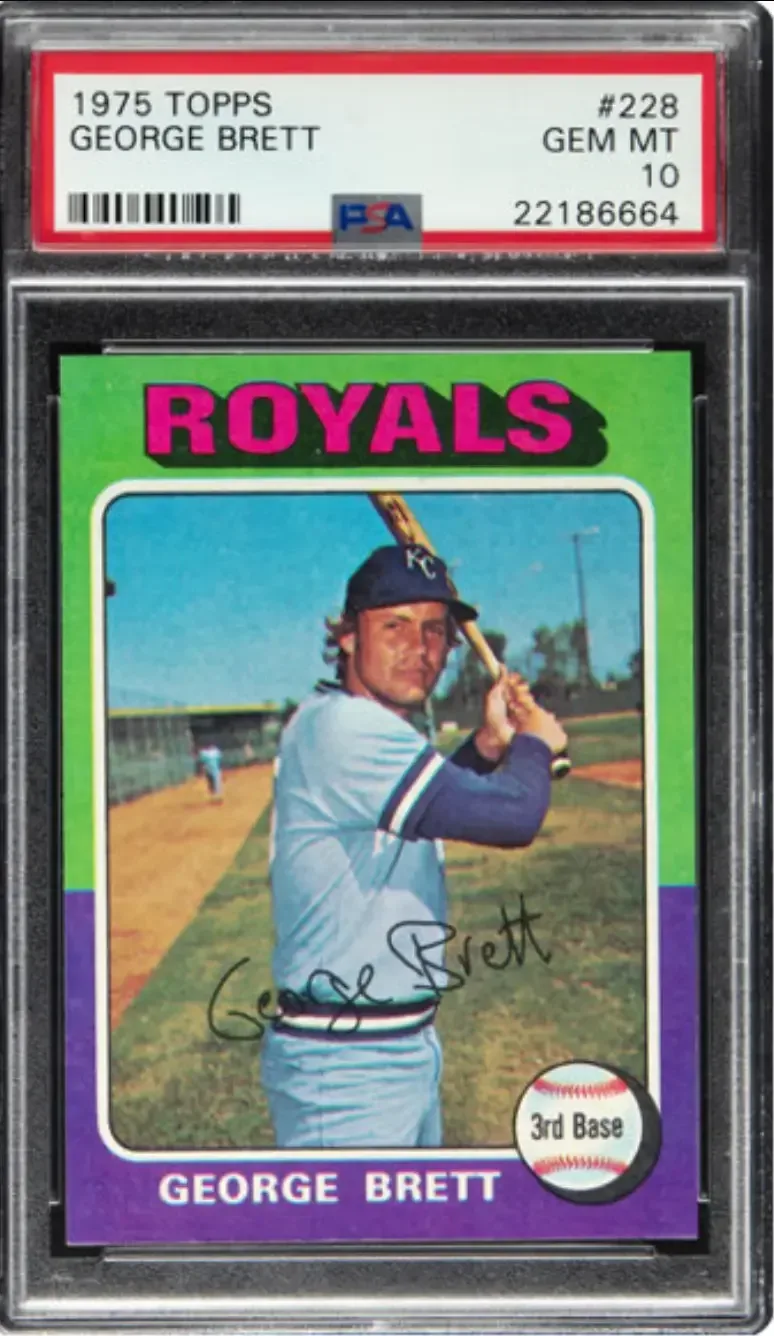
1. 1975 Topps George Brett Rookie Card #228
If one card instantly captures the look and feel of 1970s baseball cards, it is George Brett’s 1975 Topps rookie. The design is loud in the best possible way, with its green and purple framing becoming one of the most recognizable visual treatments of the decade. Even collectors who do not focus on 1970s baseball often know this card on sight.
For more collector background, read Aaron Judge’s Most Iconic Inscribed Baseball Cards and Why Collectors Chase Them.
Brett’s place in hobby history gives the card even more weight. He remains one of the most accomplished hitters of his era and one of only five players to combine a .300 career batting average with 3,000 hits and 300 home runs. His near-.400 chase in 1980 only deepened his standing among baseball fans and card collectors alike.
The card also performs like a true hobby cornerstone. Its all-time high sale reached $158,600 for a PSA 10 on December 19, 2025. Recent pricing cited for the card shows roughly $10,200 in PSA 9 and about $1,010 in PSA 8, with a PSA population of 20,534 and just 11 PSA 10s. That mix of broad recognition, condition scarcity at the top, and unmistakable design is why many collectors see it as the defining baseball card of the decade.
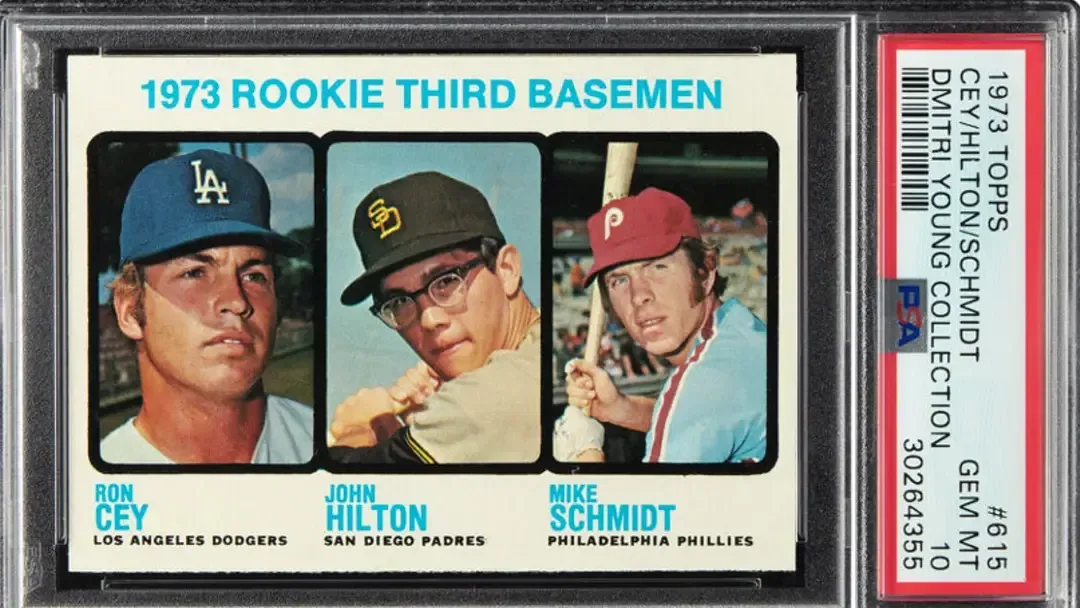
2. 1973 Topps Mike Schmidt Rookie Card “Rookie Third Basemen” #615
Mike Schmidt’s rookie card is one of the most important multi-player rookie cards of the 1970s. Sharing space with Ron Cey and John Hilton, the card represents the first appearance of a player widely regarded as the greatest third baseman in baseball history. Schmidt’s resume supports that view: three MVP awards, 10 Gold Gloves, and 548 home runs.
Its release timing matters almost as much as the player. This card appeared in Topps’ final high-number series in 1973, the last year before the company shifted to a full one-shot release of its flagship baseball set. High-number cards from the era have long held a special place in the hobby because they were often distributed later and saved less carefully.
The market reflects that significance. The all-time high sale for a PSA 10 reached $353,800 on December 19, 2025. Recent PSA 9 pricing sits around $13,700, while PSA 8 examples have traded near $3,225. Total PSA population is 13,302, with only five PSA 10s. The combination of Schmidt’s stature, the card’s high-series status, and true elite-grade scarcity has made it one of the most respected rookie cards from the entire decade.
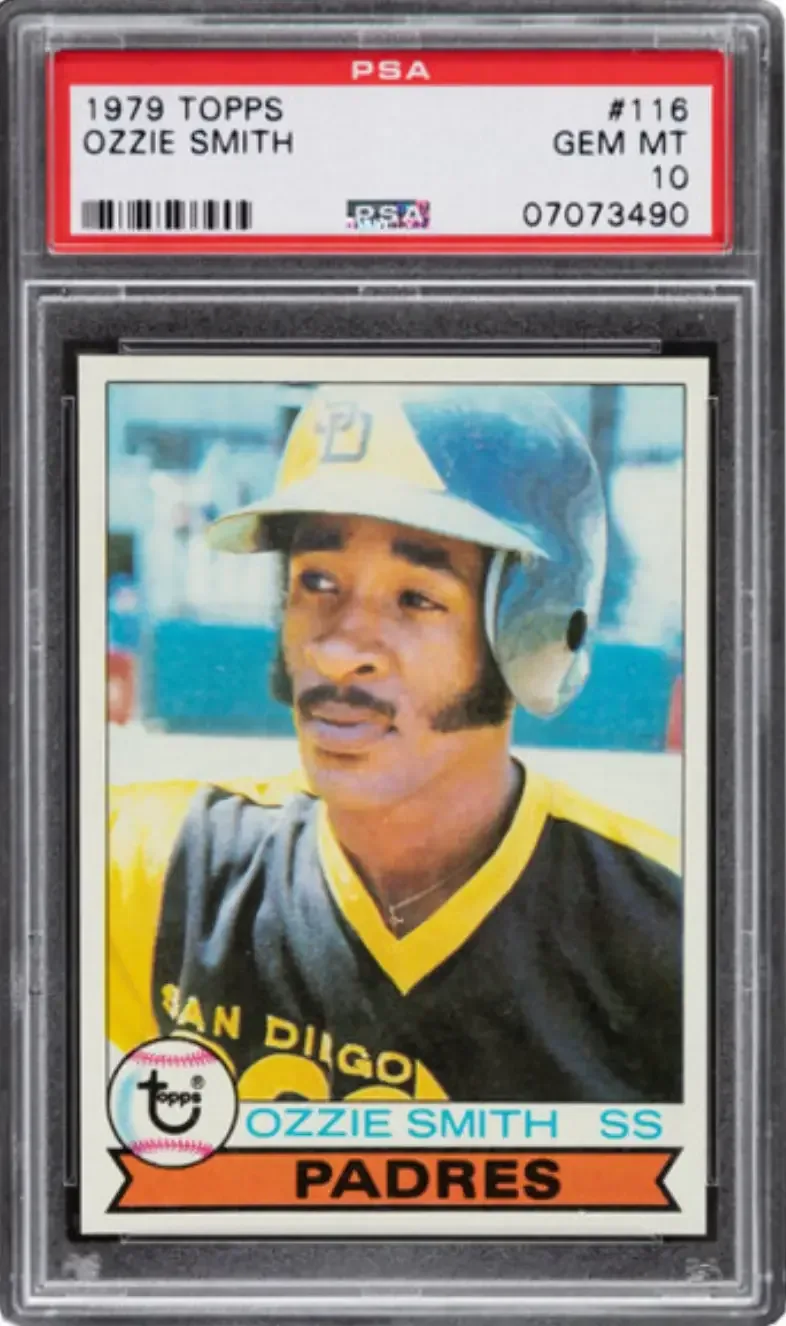
3. 1979 Topps Ozzie Smith Rookie Card #116
Very few players become hobby icons primarily through defense, but Ozzie Smith is one of the rare exceptions. His brilliance at shortstop, 13 consecutive Gold Gloves, and unforgettable style of play turned him into a baseball legend. His 1979 Topps rookie preserves an early look at Smith with the Padres before his move to St. Louis elevated him into an even bigger national star.
Part of this card’s staying power comes from how easy it is to identify and remember. It has become one of the first cards many collectors picture when discussing late-1970s rookies. Ozzie’s nickname, “The Wizard,” and his long Hall of Fame career only strengthened that appeal over time.
From a market standpoint, this card has proven that iconic does not always mean common in top condition. The all-time high sale for a PSA 10 reached $222,000 on February 26, 2021. Recent PSA 9 pricing has been around $5,033, with PSA 8 examples near $441. PSA has graded 18,267 copies, but only five have earned a PSA 10. That tiny gem-mint supply against a very recognizable Hall of Fame rookie is a major reason this card remains one of the giants of the 1970s.
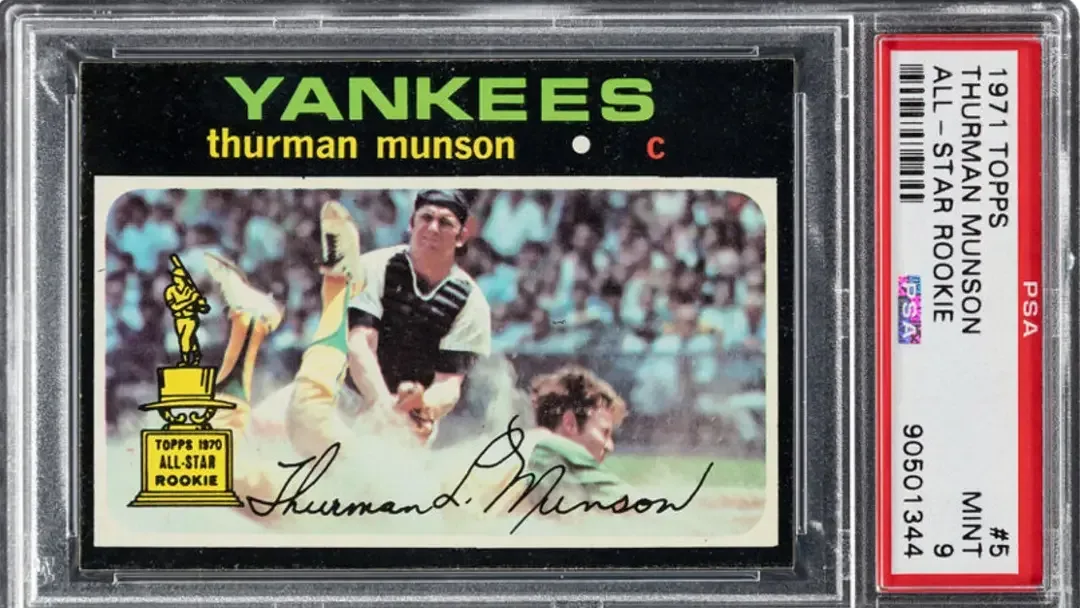
4. 1971 Topps Thurman Munson #5 All-Star Rookie
The 1971 Topps set is famous for its black borders, and few cards in the release showcase both the beauty and the grading difficulty of the design more clearly than Thurman Munson’s All-Star Rookie card. It is not Munson’s actual rookie card, but it is his first solo card and a tribute to his 1970 American League Rookie of the Year season.
Collectors have long gravitated to the image itself. Munson is shown in an in-game play at the plate with dirt flying, a dramatic action photograph that helped the card stand apart in an era when more static images were still common. It feels alive in a way that many earlier base cards did not.
Condition sensitivity is central to its legend. The black edges chip easily, making high-grade copies extremely difficult. That has turned this card into one of the best examples of a 1970s issue where visual impact and grading challenge work together to create hobby mystique. The all-time high sale reached $199,999 for a PSA 9 on May 13, 2022. Recent PSA 9 pricing sits at about $192,000, with PSA 8 examples around $7,200. PSA has graded 6,140 copies, and none have received a PSA 10. That zero in the gem-mint column says almost everything collectors need to know.
5. 1974 Topps Hank Aaron #1 All-Time Home Run King
No 1970s baseball story was bigger than Hank Aaron’s pursuit of Babe Ruth’s home run record. The chase carried historic weight far beyond the field, and Aaron faced racism, threats, and enormous pressure as he closed in on the mark. That context gives this card a place in hobby history that goes well beyond its cardboard dimensions.
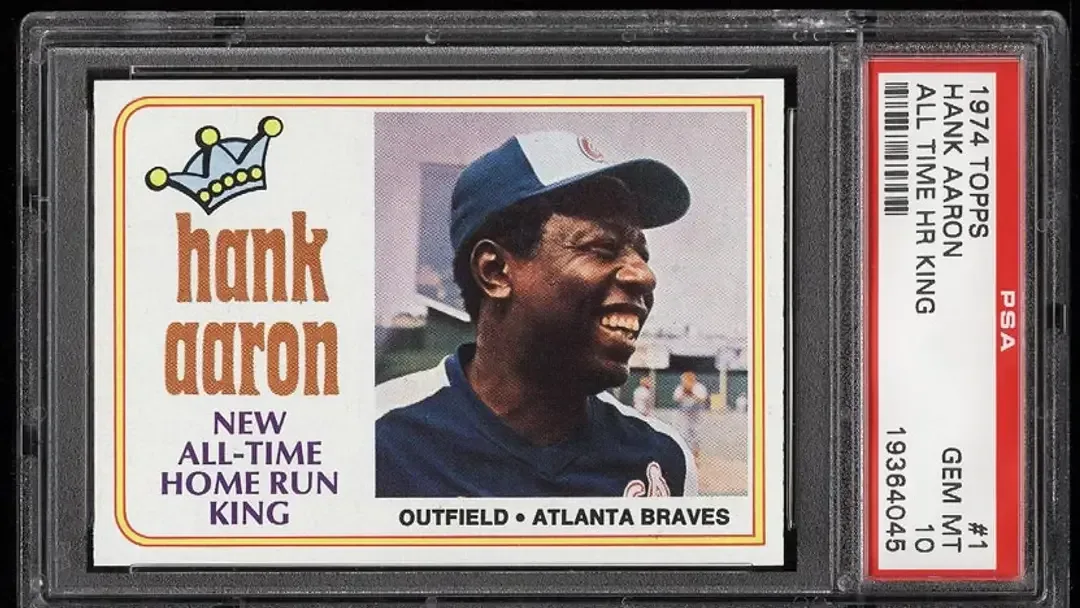
What makes the card especially fascinating is its timing. When 1974 Topps went to print and was released in January, Aaron had 713 career home runs, one shy of Ruth’s 714. Even so, the front of card #1 declared him the “New All-Time Home Run King.” That unusual choice turned the card into a time capsule of a milestone that was anticipated before it was officially achieved.
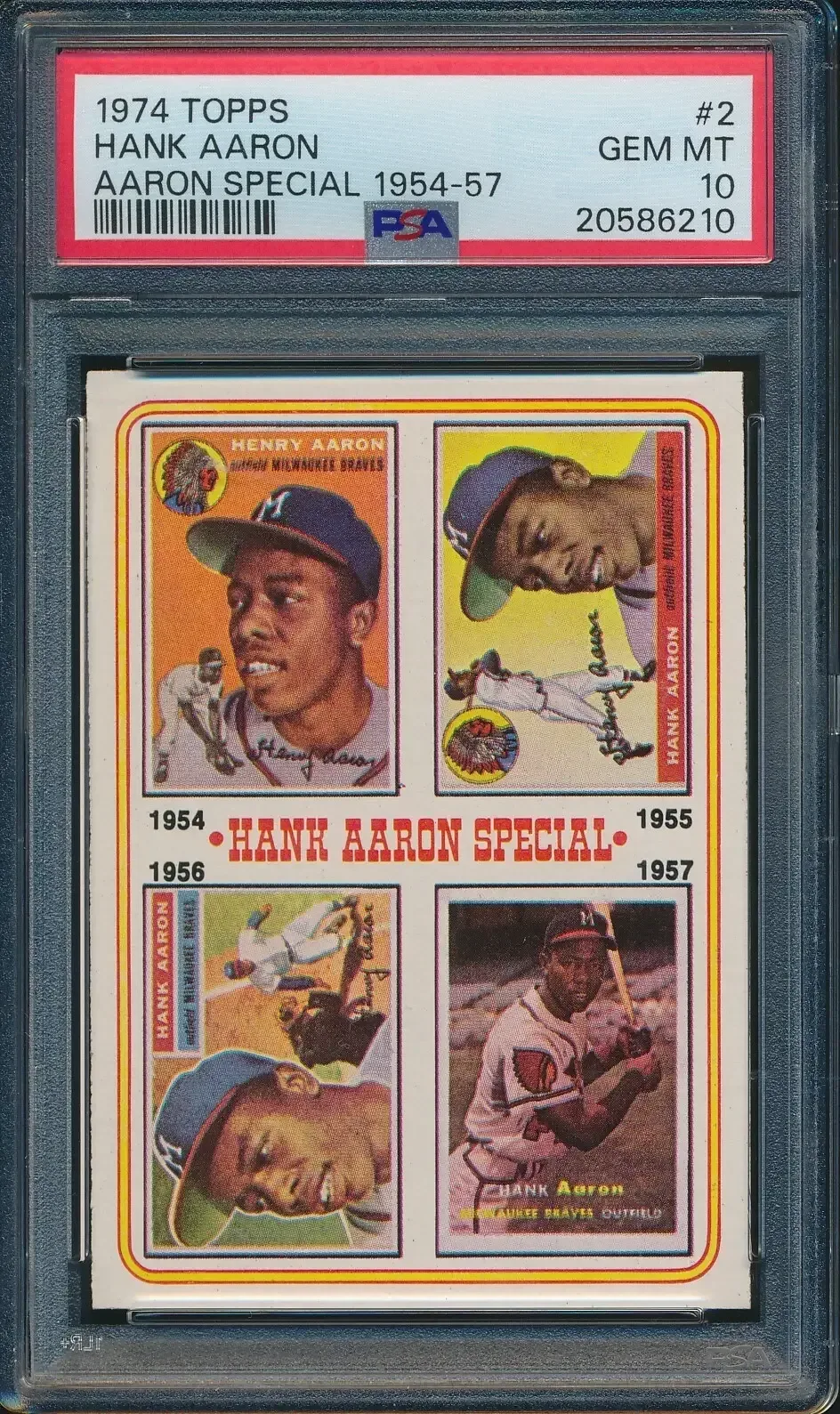
Topps also devoted the first six cards of the 1974 set to Aaron, underscoring how important the chase was to baseball and to the hobby. Among those cards, #1 remains the standout. Its all-time high sale is $23,299 for a PSA 10, recorded on July 19, 2016. Recent PSA 9 pricing is around $8,235, and PSA 8 examples have traded near $510. With a total PSA population of 5,460 and only one PSA 10, it is one of the most historically resonant and condition-sensitive milestone cards of the decade.
6. 1973 Topps Roberto Clemente #50
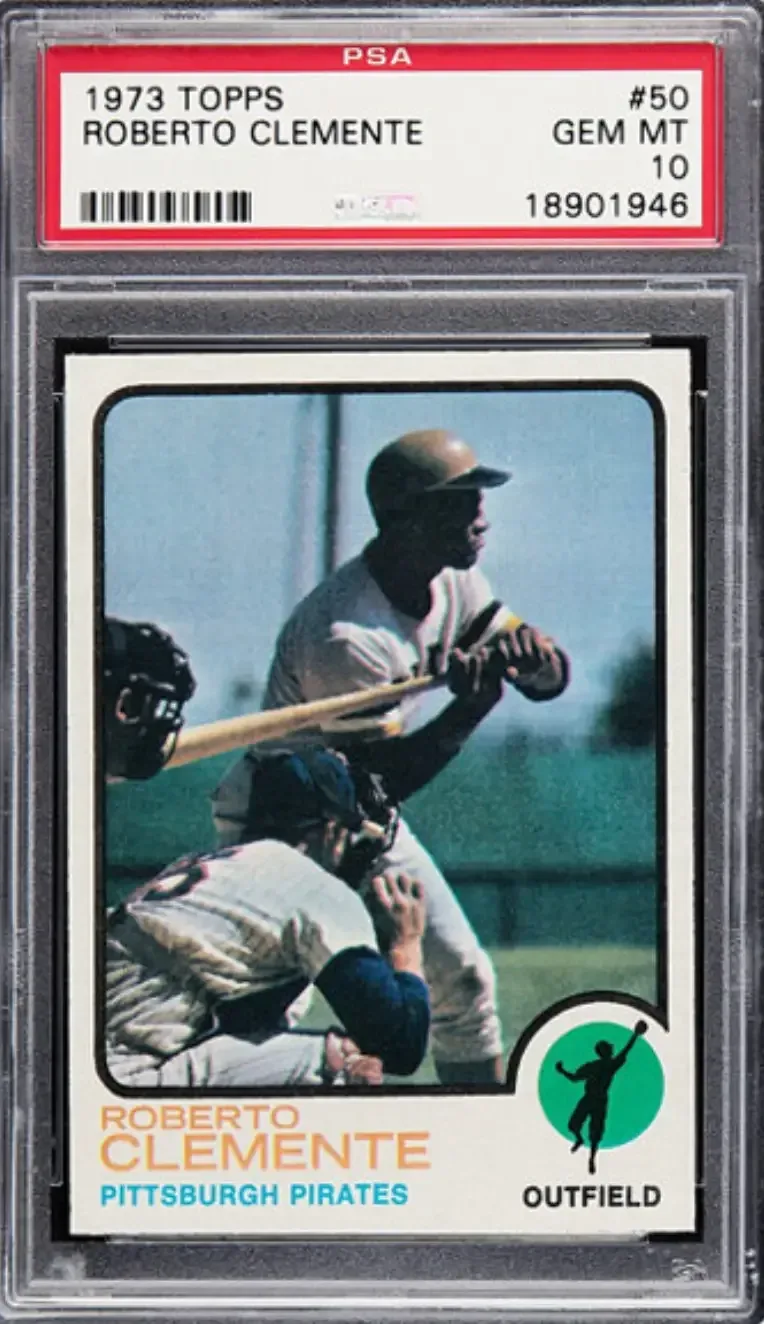
Some iconic cards endure because of player greatness and design. Others carry deeper emotional weight. Roberto Clemente’s 1973 Topps card does both. Clemente died in a plane crash on December 31, 1972, while on a humanitarian mission delivering aid to earthquake victims in Nicaragua. His 1973 card had already been designed before his death, and it was issued as planned.
The result is one of the most moving cards of the 1970s. The image is often described as a “sunset shot,” and the composition has given the card an almost elegiac quality for generations of collectors. It feels less like a standard base card and more like an unintended memorial produced at the precise moment Clemente’s legacy became something even larger than baseball.
Collectors continue to respond to that combination of artistry and meaning. The all-time high sale for a PSA 10 reached $105,000 on January 27, 2023. Recent PSA 9 pricing has been around $3,295, with PSA 8 examples near $340. PSA population stands at 10,064, including just eight PSA 10s. For many in the hobby, this card remains one of the most poignant and visually memorable pieces Topps produced during the decade.
7. 1978 Topps Eddie Murray Rookie Card #36
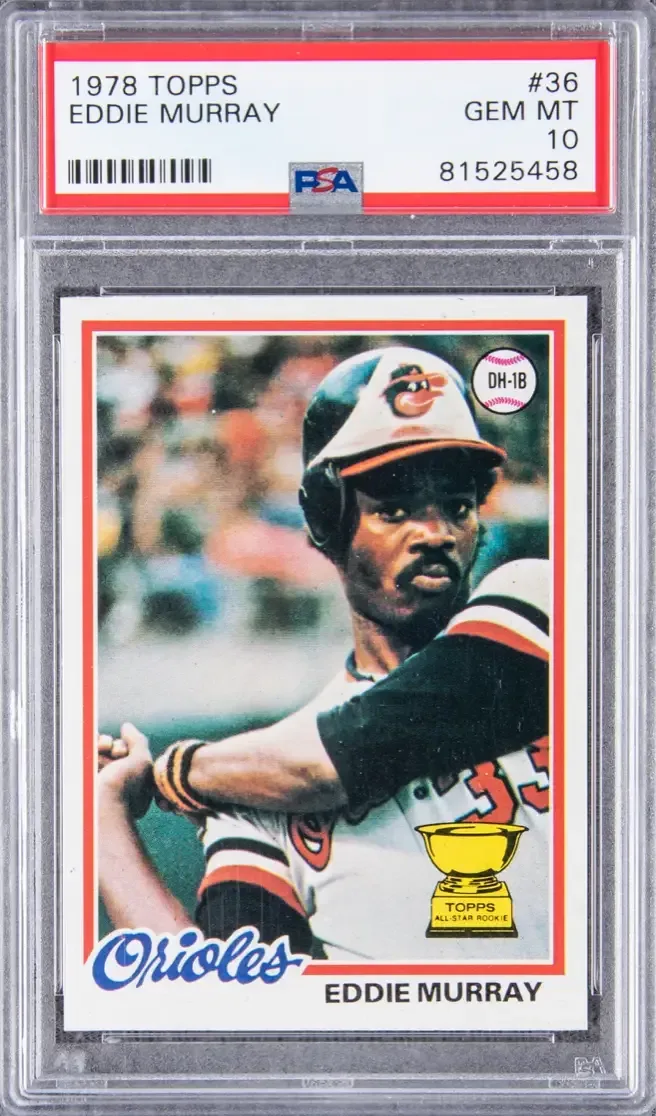
Eddie Murray’s 1978 Topps rookie is a classic late-1970s star card that has aged extremely well in the hobby. One reason is the instantly recognizable Topps All-Star Rookie trophy logo in the lower corner, a detail that has become a collecting symbol in its own right. That gold cup often signals a key early card, and on Murray’s rookie it helps create immediate eye appeal.
Murray’s career credentials make the card more than just a visually appealing rookie. He joined one of baseball’s most exclusive clubs by reaching both 500 home runs and 3,000 hits, a feat accomplished by only a small group of all-time greats. His long run of production kept his rookie relevant across multiple generations of collectors.
In the grading market, the card remains accessible in mid-grade while still commanding serious attention at the top. Its all-time high sale reached $59,040 for a PSA 10 on March 8, 2021. Recent PSA 9 pricing sits around $1,508, with PSA 8 copies around $225. PSA has graded 17,309 examples, though only 18 have achieved PSA 10 status. That balance of availability, Hall of Fame stature, and top-pop scarcity has helped make it one of the signature rookies of the decade.
Why These 1970s Baseball Cards Stand Above the Rest
The most iconic baseball card is not always the rarest and not always the most expensive. In the 1970s, icon status came from a combination of factors: unforgettable design, player greatness, milestone moments, emotional resonance, and the kinds of stories collectors repeat for decades.
George Brett’s rookie represents the decade’s visual style better than almost any other card. Mike Schmidt’s rookie connects Hall of Fame caliber with high-number scarcity. Ozzie Smith’s rookie proves defense-first legends can command enormous hobby respect. Thurman Munson’s 1971 Topps is a perfect meeting point of action photography and condition rarity. Hank Aaron’s 1974 Topps captures one of the biggest moments in sports history before the record was even officially broken. Roberto Clemente’s 1973 Topps remains one of the hobby’s most powerful farewell cards. Eddie Murray’s rookie delivers a textbook Hall of Fame chase card with a design detail collectors never forget.
Together, they also tell the story of the decade itself. The 1970s were about transition in baseball, in collecting, and in the way fans connected to players through cards. That is why these seven continue to lead conversations whenever collectors debate the era’s true hobby landmarks.
Honorable Mentions from the 1970s
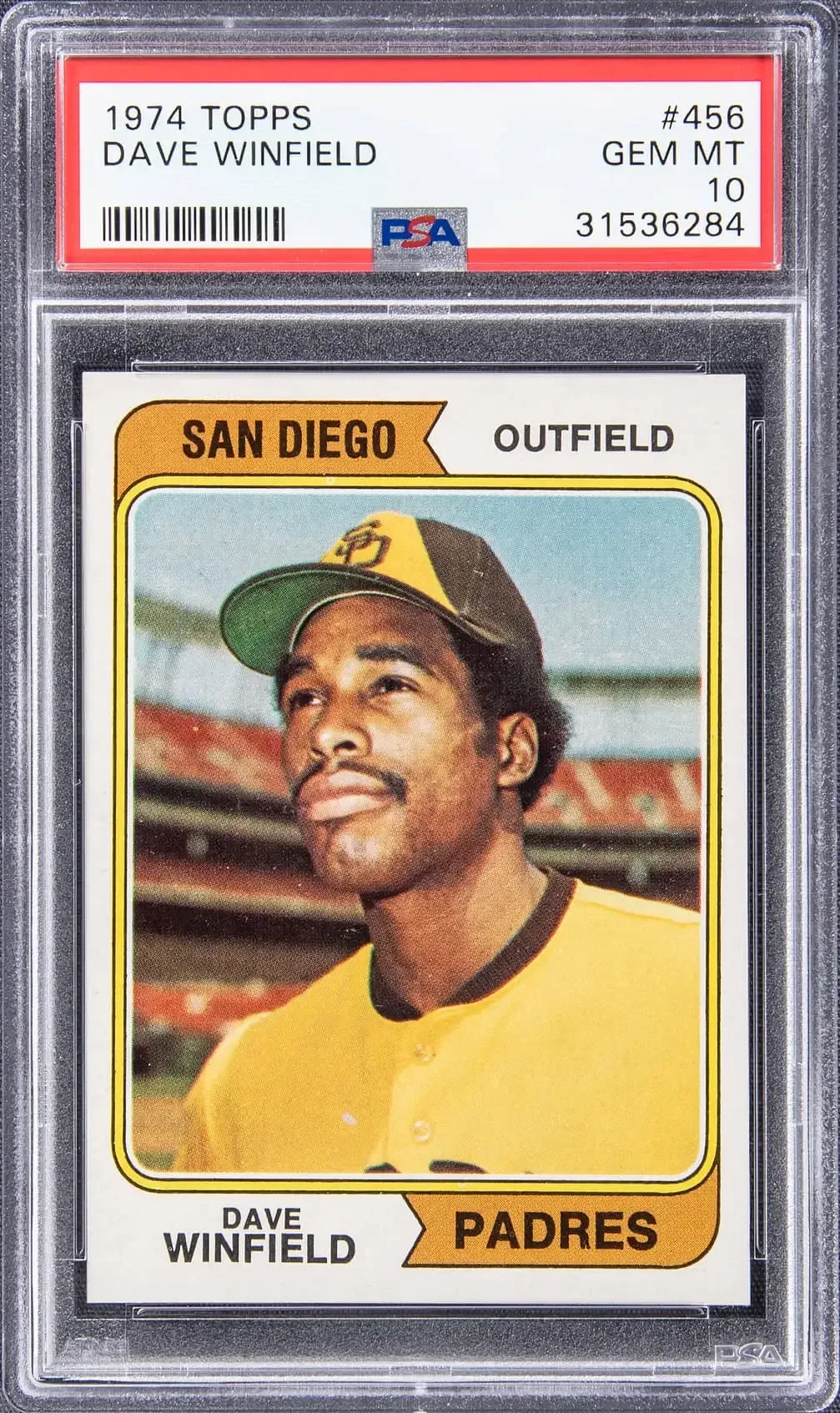
Several other cards came close to this group and remain major pieces of the decade’s baseball card legacy. The 1974 Topps Dave Winfield rookie is one of the strongest first-year cards of the era, and its all-time high sale reached $106,750 for a PSA 10 on February 28, 2026. The 1975 Topps Robin Yount rookie is another essential Hall of Fame issue from one of the decade’s most popular designs. The 1972 Topps Carlton Fisk #79 continues to draw attention because of Fisk’s Hall of Fame career and the challenge of finding sharp examples from a condition-sensitive set. The 1978 Topps Paul Molitor and Alan Trammell #707 remains a favorite dual-rookie card featuring two future Hall of Famers. The 1971 Topps Nolan Ryan #513 is also a perennial contender thanks to Ryan’s enduring hobby power and the extreme grading difficulty of 1971 Topps black borders.
For collectors building a 1970s baseball card foundation, these honorable mentions are far more than secondary targets. They help show just how deep the decade really was, from milestone tributes and action photography to rookie cards that still anchor collections today.
Photo Gallery