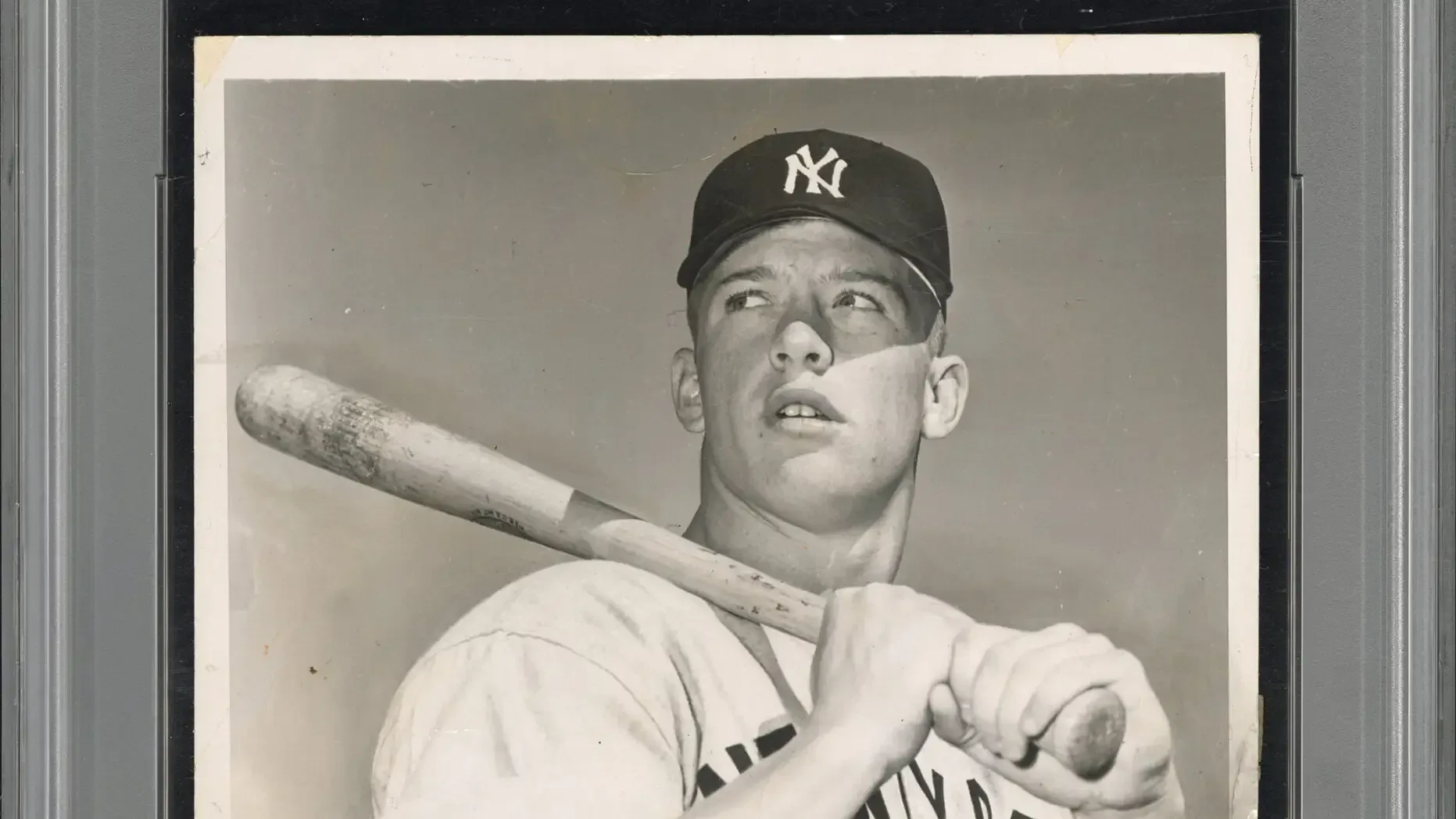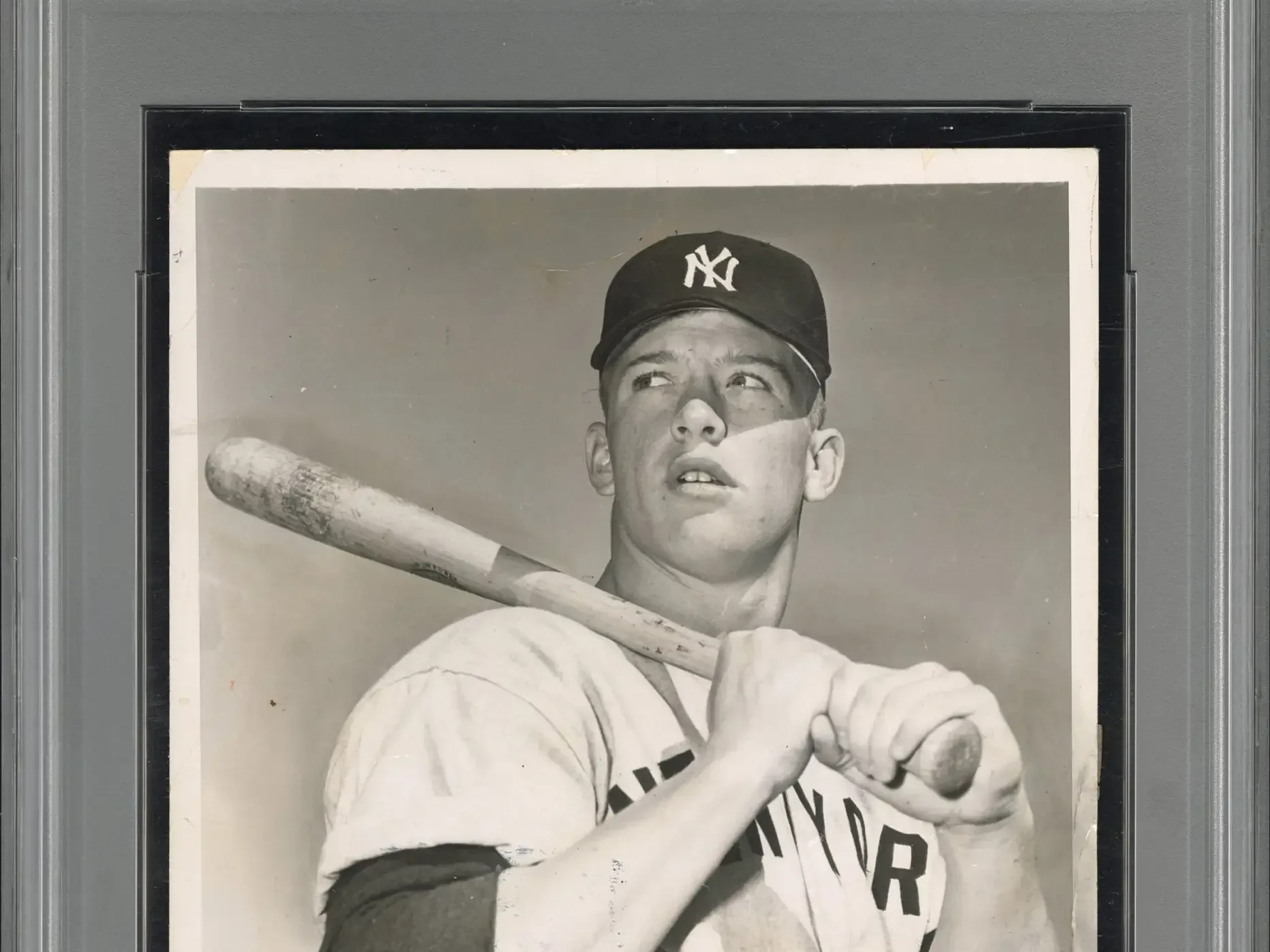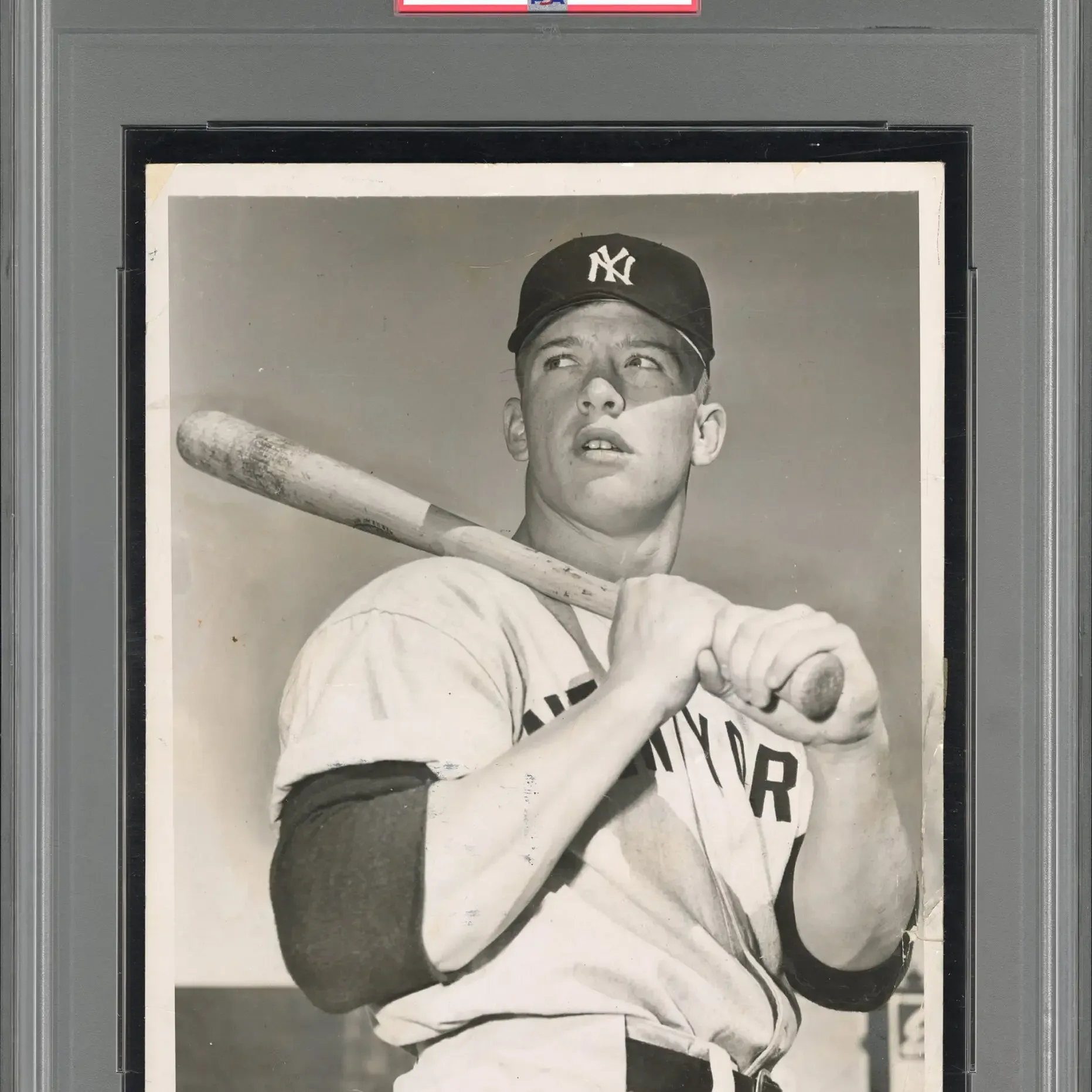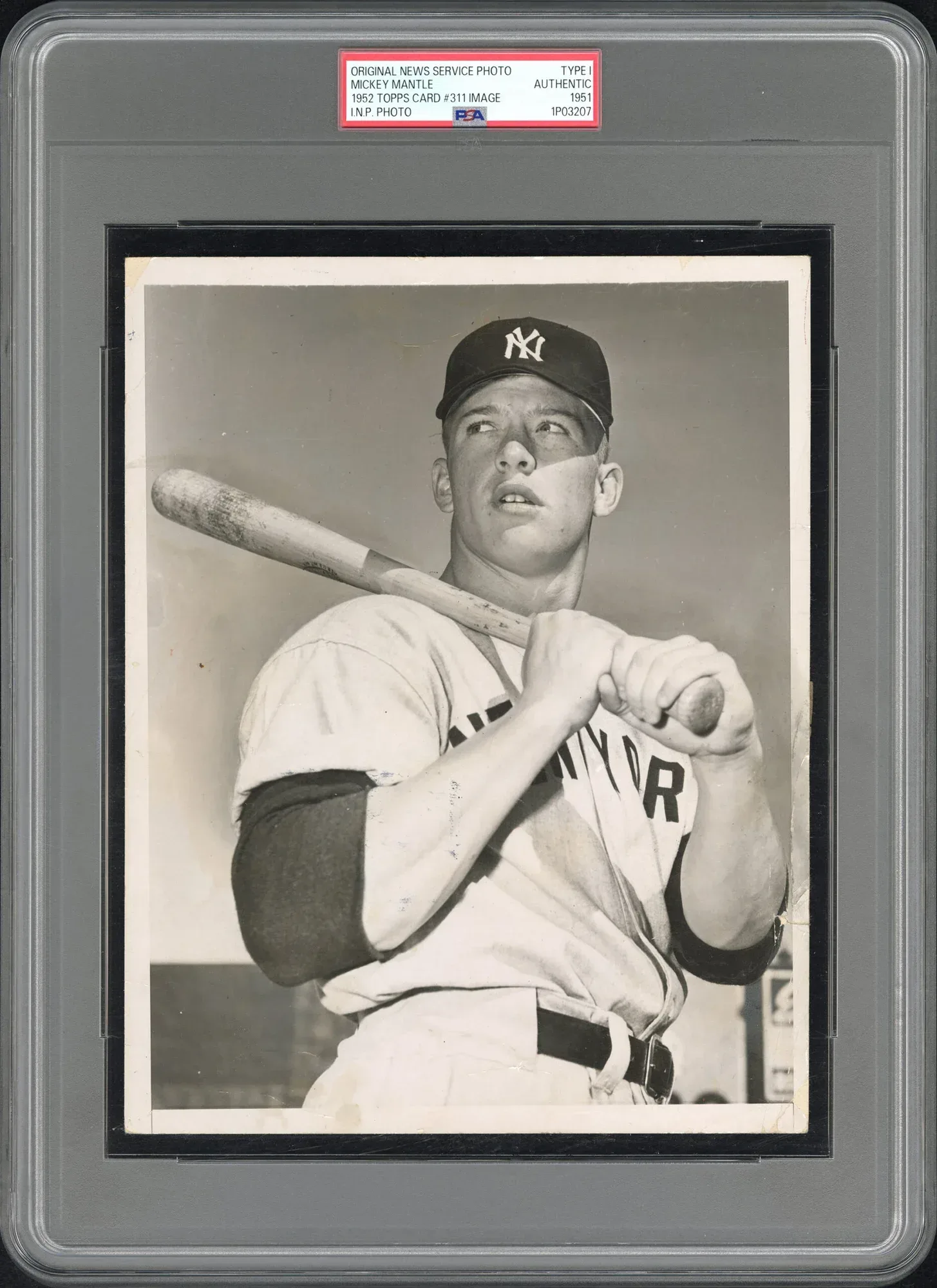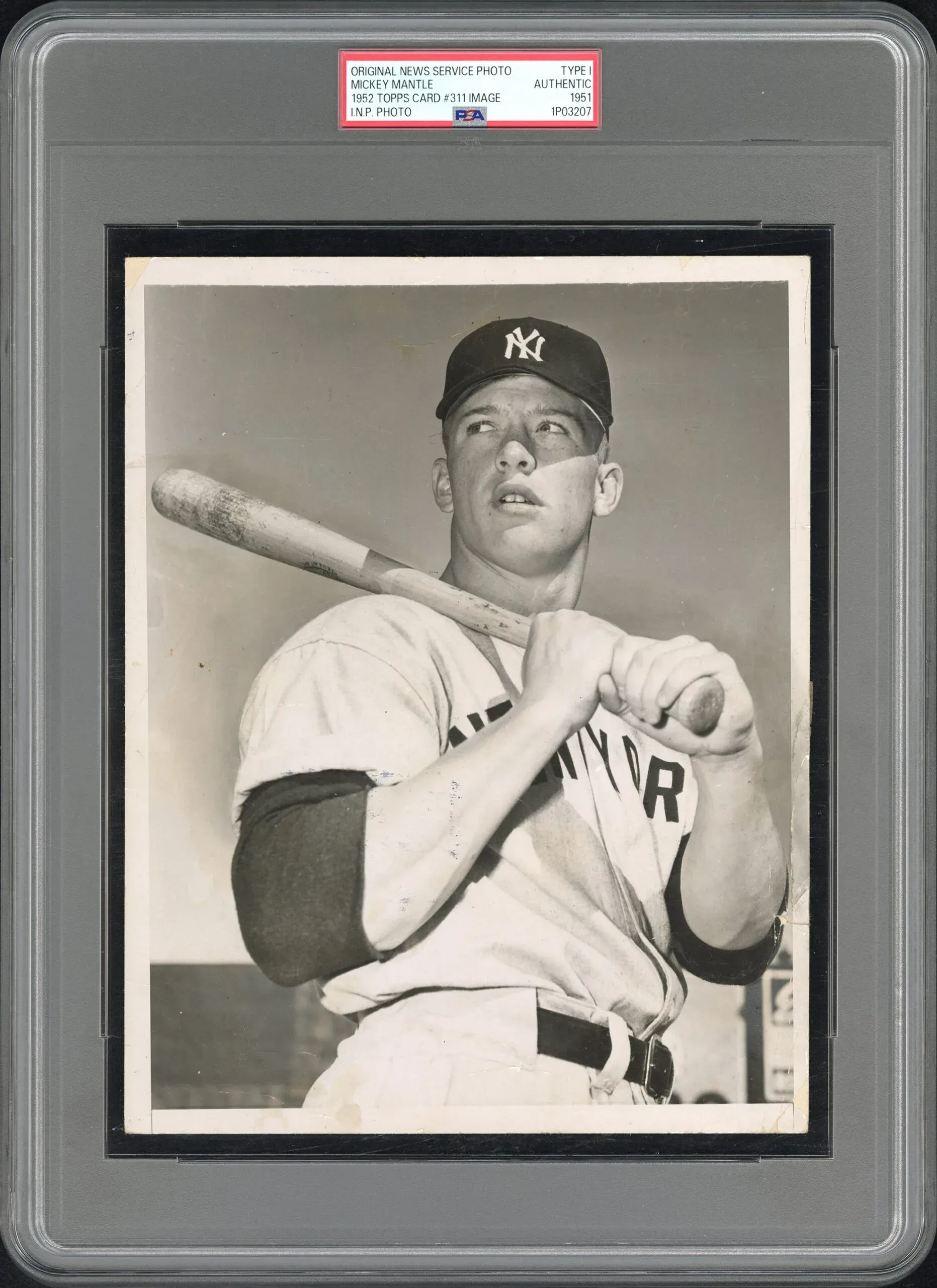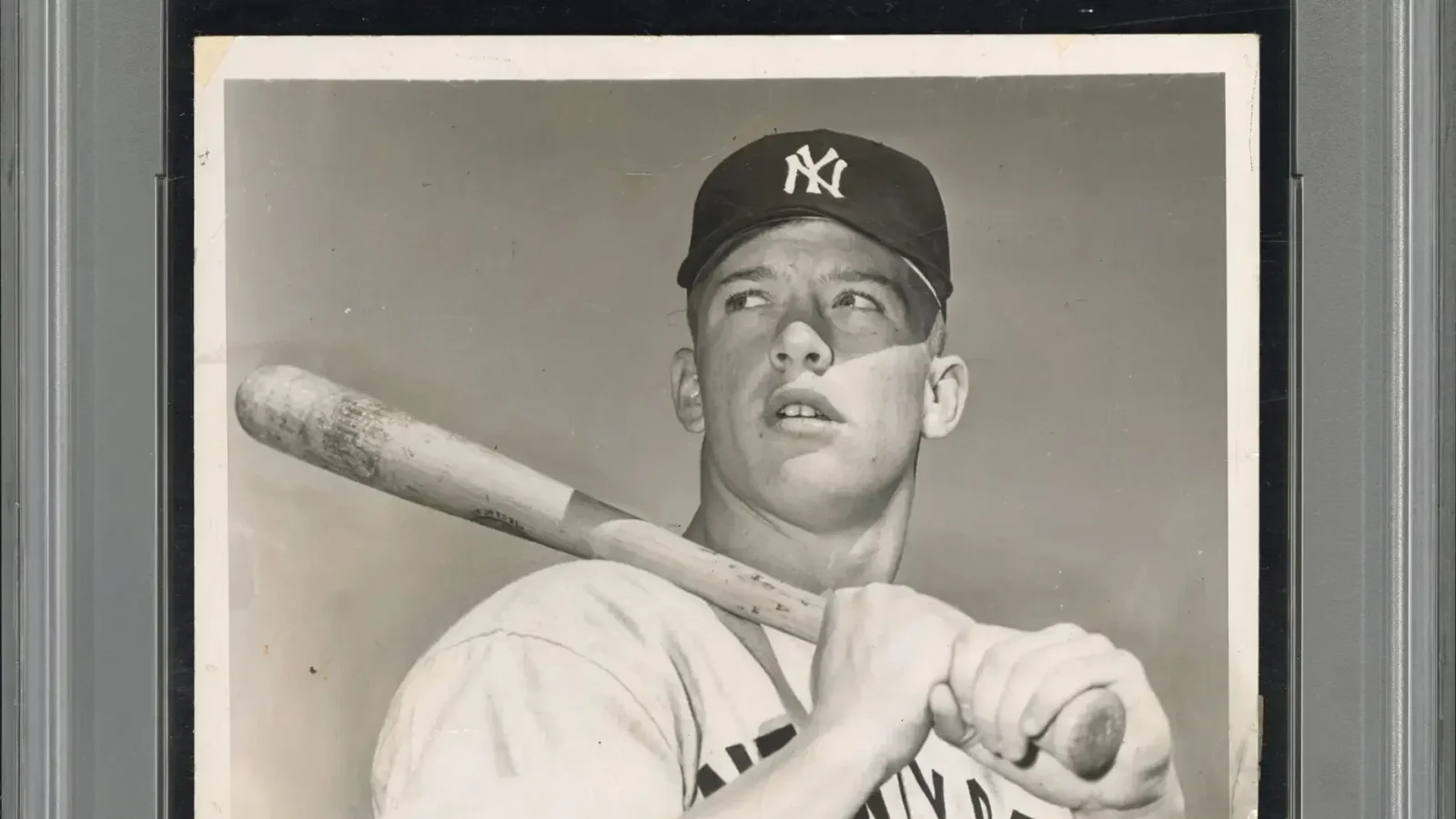
A landmark piece of baseball and hobby history has reached a new pricing tier. The original Type I photograph tied to Mickey Mantle’s iconic 1952 Topps card has sold in a private transaction for $3 million, establishing a new record for a PSA-authenticated Type I photograph.
The sale adds another headline to an already surging Mantle market, where high-grade examples of the 1952 Topps card have commanded multi-million-dollar prices for years. This time, however, the focus shifted from the card itself to the original black-and-white image that helped create one of the most recognizable trading cards ever produced.
The photograph was acquired through Hunt Auctions on behalf of collector Ron Firman. Beyond the price tag, the result is significant because it pushes original sports photography deeper into the top tier of the memorabilia market, alongside elite cards, tickets, and game-used artifacts.
A New Benchmark for Type I Sports Photos
The $3 million result now stands as the highest publicly disclosed price for a PSA-authenticated Type I photograph. It easily moved past the previous record for an unsigned Type I original photograph, which was set at $843,750 on April 7, 2024. That earlier record also belonged to a Mantle image, the photo later used for his 1951 Bowman rookie card.
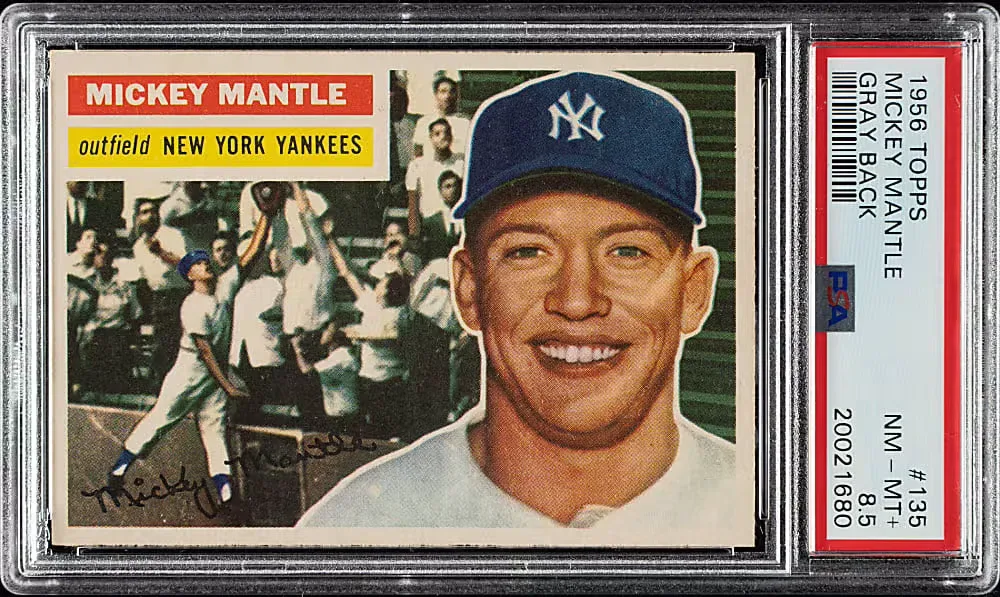
For more collector background, read 1956 Topps Mickey Mantle Leads a Vintage-Heavy September REA Auction.
For collectors who follow vintage photography, the jump is substantial. It confirms that certain original images are no longer viewed as niche items within the hobby. Instead, the most important examples are being treated as foundational artifacts, especially when they can be directly linked to legendary cards.
That connection is the key here. The 1952 Topps Mickey Mantle is not just a famous baseball card. It is one of the hobby’s central icons and one of the most recognizable postwar collectibles in American culture. Owning the original image behind that card places this photograph in an extremely small and prestigious class of material.
Why This Mantle Photo Matters So Much
The image used for Mantle’s 1952 Topps card carries unusual weight because the card itself has become a symbol of the trading card boom, blue-chip vintage investing, and the mythology of postwar baseball collecting. Even people outside the hobby often recognize the card by sight.
The photo captures Mantle as a 19-year-old Yankees prospect during spring training on March 5, 1951. At the time, he was still an emerging player, not yet the fully formed Hall of Fame legend collectors would eventually chase for generations. That makes the image an early visual record of one of baseball’s defining stars, taken before his cardboard legacy exploded.
The photograph measures 7 by 9 inches and was taken for International News Service, commonly abbreviated as INS. The identity of the photographer is not definitively known, though the image is believed to have been taken by either an employee or a freelancer working for the service.
Its importance comes from more than age and subject matter. This exact image became the visual basis for Mantle’s first Topps card, creating a direct bridge between baseball photography and card history. For advanced collectors, that kind of crossover appeal is powerful. It brings together vintage Yankees material, original news photography, rookie-era Mantle content, and one of the hobby’s most important card designs in a single object.
What Makes a Photo Type I?
Type I photographs occupy the top of the market because of how they are classified. A Type I photo is a first-generation photograph developed from the original negative within roughly two years of when the image was taken. In hobby terms, that means it is as close to the original creation of the image as collectors can reasonably get.
That classification matters because later prints, restrikes, file copies, and editorial reproductions do not carry the same historical immediacy or scarcity. A true Type I is considered the most original version of the image available, which is why elite examples are prized across baseball, boxing, football, and other sports categories.
The Type I system commonly used in the hobby grew out of research and standards developed to help collectors distinguish original period photographs from later generations. As the sports photo segment matured, those distinctions became crucial to valuation.
In Mantle’s case, rarity adds another layer. PSA has authenticated only three Type I copies of the photo used for the 1952 Topps card. That tiny population helps explain why this example reached such a massive number.
The Road From $59,750 to $3 Million
This particular photograph has one of the more dramatic value growth stories in the hobby.
The piece was discovered in 2012 in the archives of a regional American newspaper. Doug Allen found it while working through the publication’s holdings. After the photo was authenticated and encapsulated by PSA/DNA that same year, it sold for $59,750, which was itself considered a major result at the time.
Since then, the market has moved sharply upward.
Another one of the known Type I examples sold in November 2019 for $375,000. That copy reportedly had a chipped upper-right corner and a “Newark Sunday News” stamp on the reverse. Even with condition issues, it reset the category at the time.
The latest $3 million sale blows past both earlier milestones and shows just how aggressively top-tier Mantle material has appreciated. It also reflects a broader hobby trend where unique or near-unique pieces tied to famous cards now attract buyers willing to pay premiums once reserved almost entirely for cardboard.
The Card Market Helped Set the Stage
One major factor behind the timing of the sale appears to be the strength of Mantle’s card market, especially the 1952 Topps issue.
Not long before the photo changed hands, a PSA 8 example of the 1952 Topps Mickey Mantle sold for $3.721 million on Aug. 23. That price reinforced the card’s status near the top of the postwar market and likely helped crystallize the value of the original image behind it.
There is a logic to the comparison. The best photographs tied to iconic cards often move in sympathy with the cards themselves, particularly when collectors begin thinking beyond the standard checklist and start chasing the visual origin of a hobby legend.
For years, Mantle’s best cards have functioned like blue-chip assets. Now, this sale suggests the rarest supporting artifacts around those cards can rise alongside them. In this case, the original photograph became a parallel market indicator for the 1952 Topps Mantle itself.
Scarcity, Use, and Survival Drive the Premium
Part of the allure of news-service photography is that these prints were never intended to be preserved as high-end collectibles. They were working tools of the editorial world, distributed in small numbers and handled by newspapers and wire services for immediate publication needs.
That practical use often led to heavy wear, markings, stamps, date notations, crop lines, and eventually disposal. Many were simply thrown away after serving their purpose. Surviving examples therefore tend to be limited, and the survival rate becomes even lower for specific images connected to major athletes and famous cards.
This Mantle example carries multiple indicators of period editorial use. The reverse reportedly includes an “International News Photo” stamp and at least five date stamps showing newspaper handling and publication activity. Rather than detracting from the piece, those markings strengthen its historical appeal for many photo collectors, since they help document provenance and original use.
Among the three known Type I copies, this example is also said to be distinguishable by editorial markings on the middle right side. Details like that can make one example more recognizable than another within an already microscopic population.
What the Sale Means for the Photo Segment
The sports photography market has been steadily climbing for years, but a sale at this level sends a message far beyond one buyer and one Mantle item. It creates a new reference point for elite Type I material and may influence asking prices for other trophy photographs tied to major stars and key card images.
The effect may be strongest in the short term for Mantle, whose market has repeatedly shown the ability to absorb new highs. But the ripple could extend to other cornerstone names as well, especially players whose defining card images can be traced to scarce original photographs.
Collectors may now look more closely at photo opportunities involving Roberto Clemente, Sandy Koufax, Joe DiMaggio, Jackie Robinson, Willie Mays, and other hobby pillars. When a category leader posts a massive price, interest often spreads into adjacent material, especially when availability is limited and the historical connection is easy to understand.
Unlike cards, original photographs do not have the same volume of public comp data. The market can behave more like fine art, where singularity, provenance, subject importance, and visual familiarity all matter at once. That makes each major sale particularly influential, because each one helps establish the next valuation tier.
Where This Sits in the Hierarchy of Hobby Grails
Within Type I photography, the Mantle image used for the 1952 Topps card is widely viewed as one of the category’s crown jewels. It occupies a place similar to the card itself in the larger hobby: a postwar grail with broad recognition and intense demand.
Among prewar image-based holy grails, the photograph of Honus Wagner taken by Carl Horner in 1902 and later used for the T206 card is often regarded as the ultimate prize. Only one known example of that Wagner photograph is believed to exist in private hands, and it has long stood as a measuring stick for what the very top of the sports photo market could become.
The Mantle sale does not eclipse the mythology of the Wagner image, but it strengthens the modern side of the comparison. Just as the T206 Wagner anchors prewar card lore, the 1952 Topps Mantle anchors postwar card culture. The original image behind that Mantle card now has a price result that reflects its status.
Collector Takeaway From the $3 Million Mantle Photo
This transaction underscores how the hobby continues to reward originality, rarity, and direct historical linkage. A card can be iconic on its own, but the original image that gave birth to that card can occupy an even scarcer and more story-rich position.
For collectors, the lesson is not limited to seven-figure material. Editorial markings, provenance, date stamps, and photo classification now matter more than ever across the original-photo segment. As more buyers dig into the roots of famous card images, authenticated Type I examples tied to recognizable players may continue attracting stronger attention.
With only three PSA-authenticated Type I copies of this Mantle image known, the latest sale may not offer many immediate follow-up opportunities. But it does establish a major benchmark for how the market views elite original photography connected to the hobby’s most famous cardboard legends.
Photo Gallery