The 1950s remain one of the most important decades in football card history. For vintage collectors, the era offers a combination that is hard to match: foundational early issues, memorable designs, and some of the most important rookie cards the sport has ever produced. Long before modern parallels and serial-numbered inserts changed the hobby, these releases built their reputations on star power, scarcity in high grade, and visual identity.
What makes a football set truly iconic is rarely just one thing. Rookie cards matter. So does the look of the checklist, the challenge of finding strong examples, and the way a set continues to hold attention decades after release. The 1950s produced several landmark football products, but six sets in particular still stand above the rest for many collectors.
Why 1950s Football Sets Still Matter
Vintage football cards from the 1950s sit at the intersection of history and scarcity. This was a period when the hobby was still taking shape, and manufacturers were creating products that today feel both simple and distinctive. Card stock, photography, illustrations, and unusual sizing all gave these sets their own personality.
Condition is a major part of the appeal. Many of these cards are notoriously difficult to find well-centered and clean, and that challenge has helped preserve demand for high-grade examples. At the same time, collectors do not need gem mint copies to appreciate the era. Even lower-grade examples of key cards from the decade often remain desirable because the names on the fronts are so strong.
For more collector background, read Top 3 Most Valuable Johnny Unitas Football Cards Ever Sold.
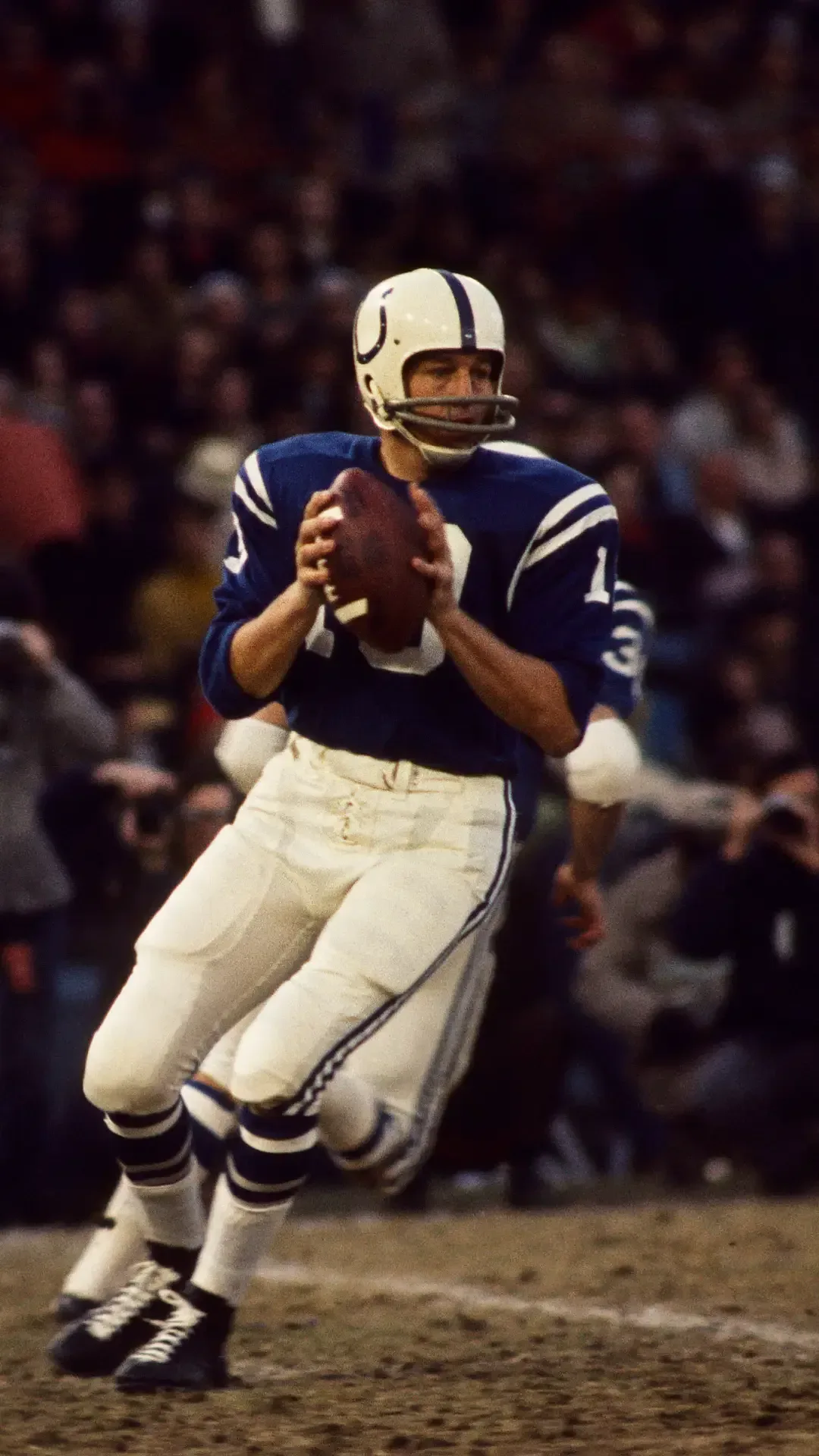
The 1950s also helped establish a pattern that still drives the market now: elite rookie cards anchor a set’s legacy. When a checklist includes names like Johnny Unitas, Jim Brown, Bart Starr, Paul Hornung, Otto Graham, and Tom Landry, collectors pay attention.
6. 1958 Topps Football
1958 Topps Football is one of those sets that benefits enormously from its checklist. While it may not be the most celebrated design of the decade, it carries enough star power to ensure its place among the hobby’s most important vintage football releases.
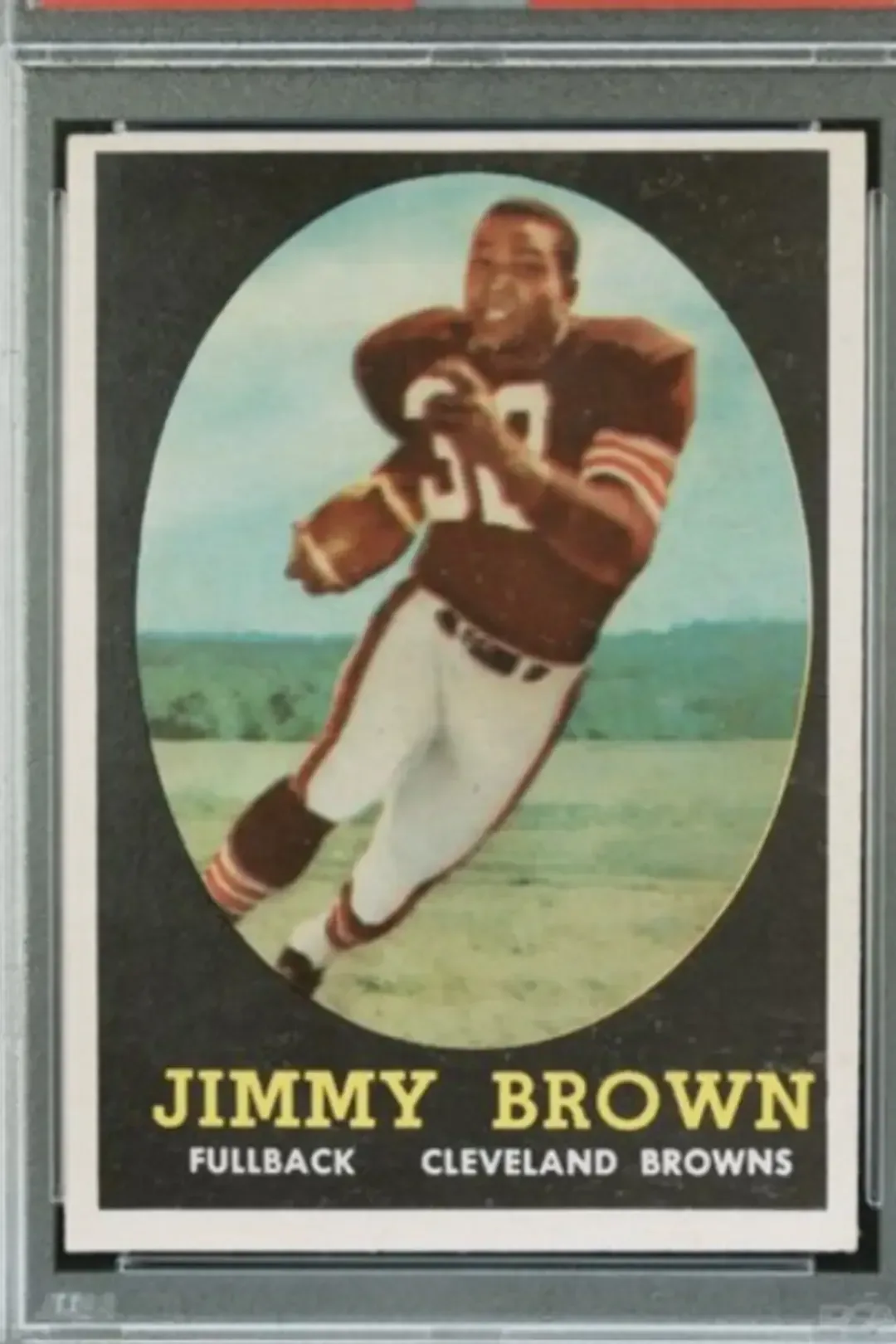
The headline card is the Jim Brown rookie, card No. 62. Brown’s place in football history gives the set an instant boost, and his rookie remains one of the cornerstone cards of vintage football collecting. Strong copies continue to command serious money, especially when the card presents well or reaches higher grades.
The set also includes Johnny Unitas on card No. 22 and Sonny Jurgensen’s rookie on card No. 90. That combination gives collectors a Hall of Fame-driven chase that still feels substantial today. Jurgensen may not receive the same broad hobby attention as some other names from the decade, but his rookie remains an important card within vintage football.
For many collectors, 1958 Topps is less about design dominance and more about content. It may not outrank some earlier sets in aesthetics or innovation, but a release that includes Jim Brown’s rookie card will never be overlooked for long.
Key cards from 1958 Topps Football
- Johnny Unitas, Card #22
- Jim Brown RC, Card #62
- Sonny Jurgensen RC, Card #90
5. 1951 Bowman Football
1951 Bowman Football has a different kind of appeal. It is not flashy, and that is part of the reason it has aged so well. The set’s clean, straightforward design gives it a classic vintage feel that still resonates with collectors who prefer understated presentation over bolder layouts.
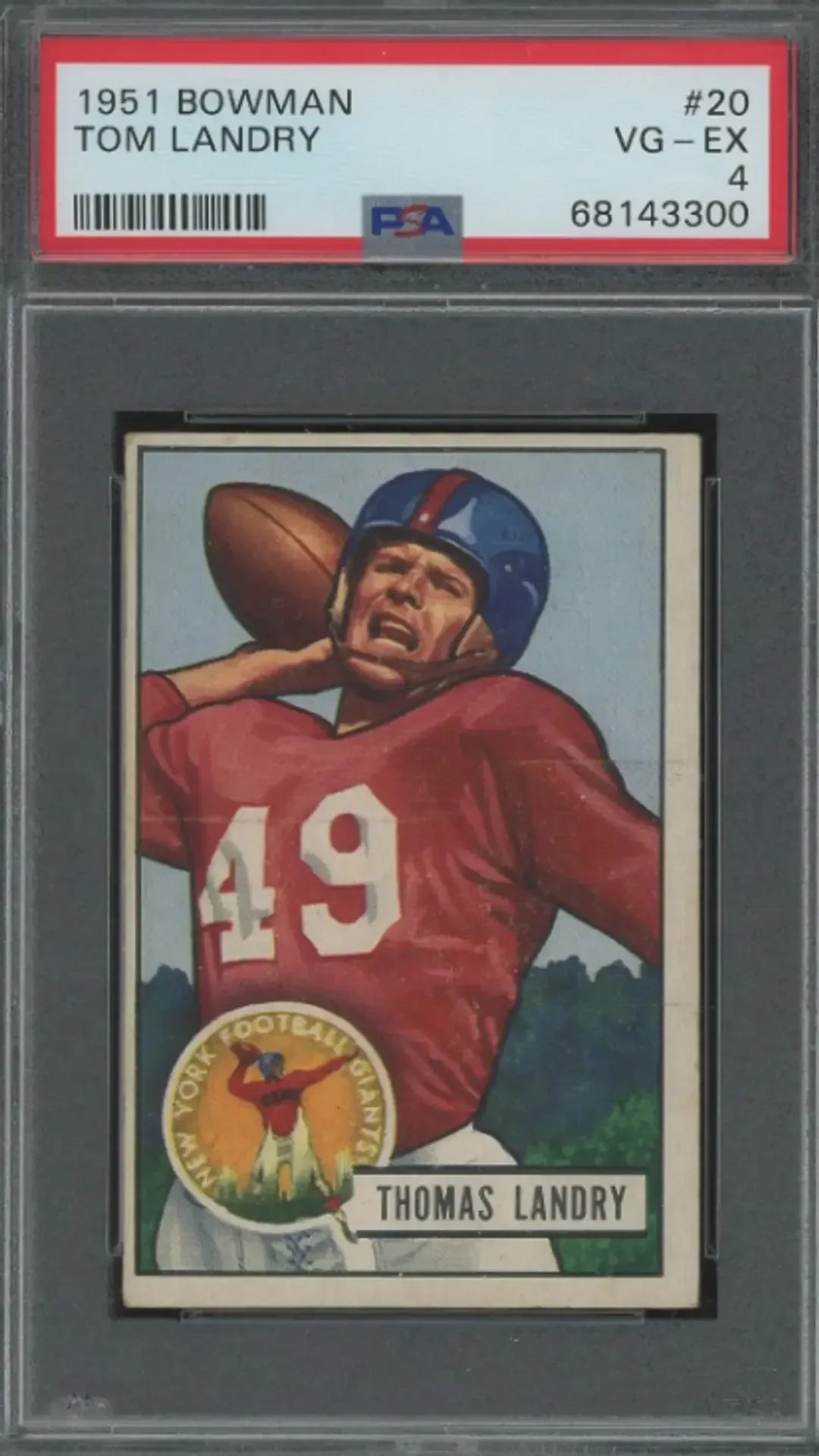
Bowman’s football issues from this period can sometimes live in the shadow of later Topps releases, but this set has real importance. It captures an early chapter of football card history and offers a checklist that includes both stars and significant rookie cards. Among the most notable are Norm Van Brocklin’s rookie on card No. 4 and Tom Landry’s rookie on card No. 20.
Landry’s presence adds a unique angle to the set. He is one of the defining coaching figures in NFL history, and his rookie card gives 1951 Bowman a crossover appeal that extends beyond player collectors alone. Otto Graham, card No. 2, is another major name tied to the release.
Set builders also know that assembling 1951 Bowman in attractive condition is not easy. Vintage football collectors often place a premium on sets that combine strong names with genuine difficulty, and this one checks both boxes.
Key cards from 1951 Bowman Football
- Otto Graham, Card #2
- Norm Van Brocklin RC, Card #4
- Tom Landry RC, Card #20
4. 1956 Topps Football
The 1956 Topps Football set is historically significant because it marked the beginning of Topps football licensing in a way that would shape the category for years to come. That alone gives the set a place in hobby history, but it also has enough player content to stand on its own beyond the milestone factor.
Collectors often connect 1956 Topps with the roots of Topps football identity. The release has continued to influence how the company references its own football heritage, and its place in the vintage timeline makes it especially appealing to collectors who like owning first-year or early-era landmark products.
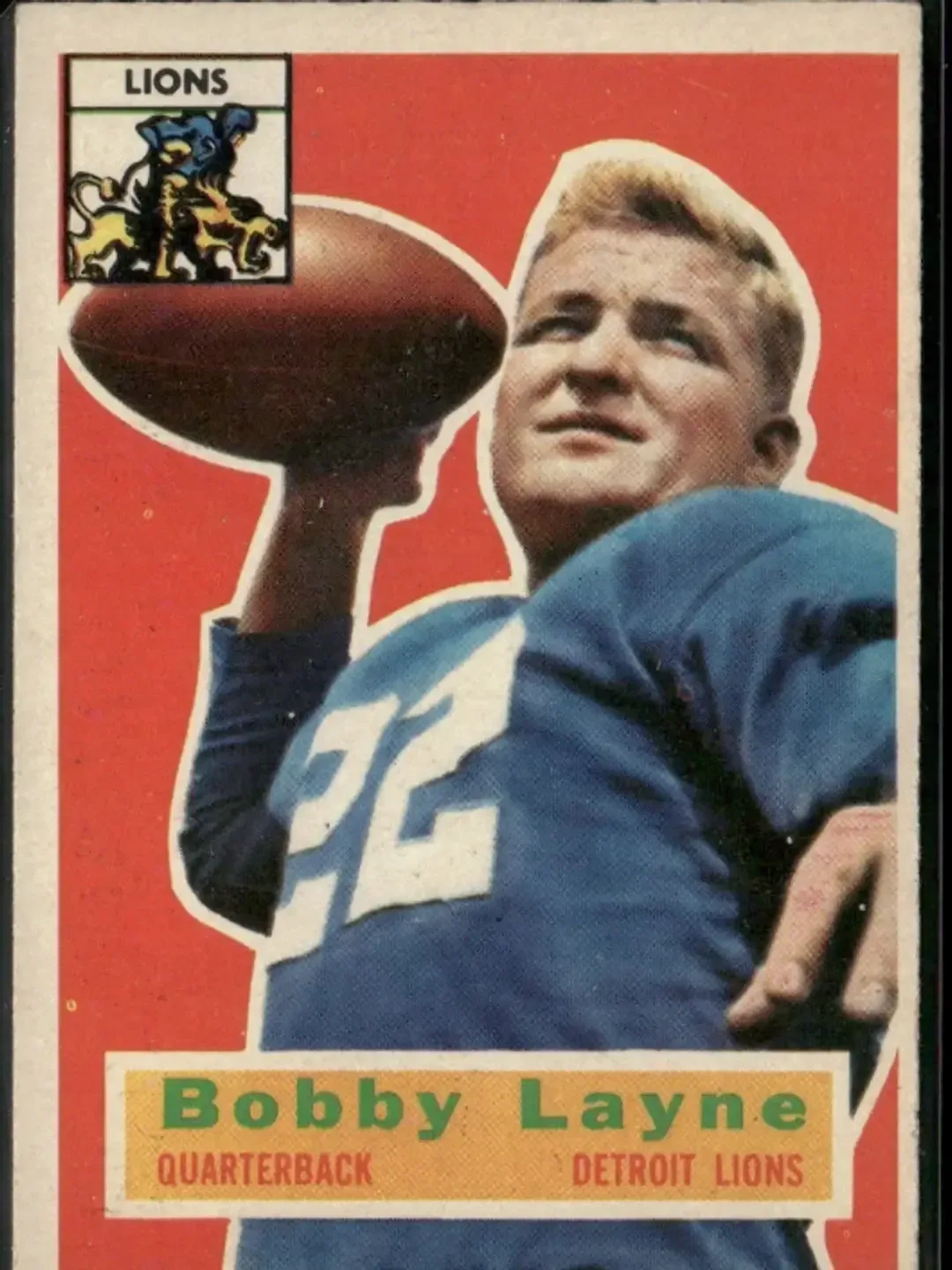
The rookie card content includes Roosevelt Brown on card No. 41 and Lenny Moore on card No. 60. Bobby Layne, card No. 116, is another key name associated with the set. While it may not have the top-heavy rookie trio found in 1957 Topps, it remains one of the decade’s most important releases because of both its historic standing and its respected checklist.
Like many vintage football issues, 1956 Topps becomes much tougher when collectors start chasing sharp corners, strong centering, and clean surfaces. That condition sensitivity keeps premium examples firmly on the radar.
Key cards from 1956 Topps Football
- Roosevelt Brown RC, Card #41
- Lenny Moore RC, Card #60
- Bobby Layne, Card #116
3. 1955 Topps All-American Football
There is no set on this list quite like 1955 Topps All-American Football. Rather than focusing on a standard professional checklist, the release highlights 100 collegiate stars and football legends, giving it a broader historical flavor than many NFL-centered products of the era.
That concept is a major reason the set continues to stand out. It brings together famous names from different parts of the game’s past and presents them in a design that leans heavily into patriotic red, white, and blue elements. The result is instantly recognizable and distinct from the rest of the decade’s football offerings.
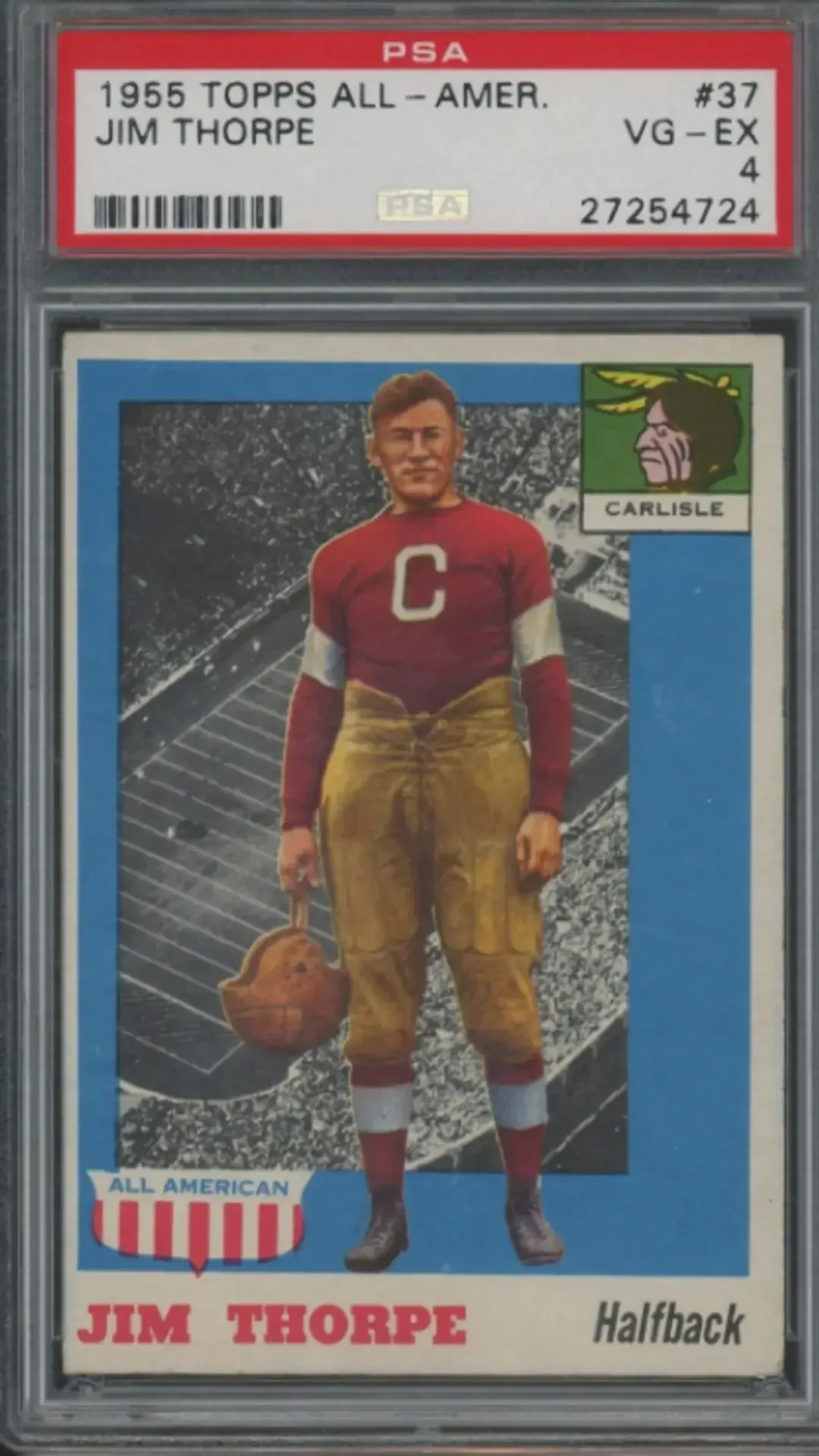
Among the most important cards in the set are Knute Rockne, card No. 16, Jim Thorpe, card No. 37, and The Four Horsemen, card No. 68. Sammy Baugh is another notable name on the checklist, adding to the release’s broad historical appeal.
The set draws interest from more than one corner of the hobby. Vintage football collectors, college football history fans, and collectors of legendary sports figures all have reasons to chase it. Jim Thorpe and Rockne tend to lead the conversation, but the bigger story is how much football history is packed into one release.
Key cards from 1955 Topps All-American Football
- Knute Rockne, Card #16
- Jim Thorpe, Card #37
- The Four Horsemen, Card #68
2. 1950 Bowman Football
1950 Bowman Football earns its place near the top because almost everything about it feels memorable. The square format immediately separates it from standard card designs, and that unusual size gives the set a visual identity that collectors remember right away. In a decade full of strong designs, uniqueness matters, and 1950 Bowman has it.
The compact dimensions also add a practical challenge. Cards from the set can be difficult to find in strong condition, and that helps keep collector interest high. Vintage football enthusiasts who enjoy issues with unusual formats often circle back to this set for exactly that reason.
The checklist is another major strength. It includes the rookie cards of Doak Walker, card No. 1, Marion Motley, card No. 43, and Otto Graham, card No. 45, along with Sammy Baugh on card No. 100. Graham’s rookie is widely viewed as the most desirable card in the set and one of the essential vintage football rookies from the decade.
Once color, design, and checklist are weighed together, it is easy to see why 1950 Bowman remains one of the foundational football sets of the 1950s. It does not simply benefit from age. It still feels distinctive.
Key cards from 1950 Bowman Football
- Doak Walker RC, Card #1
- Marion Motley RC, Card #43
- Otto Graham RC, Card #45
- Sammy Baugh, Card #100
1. 1957 Topps Football
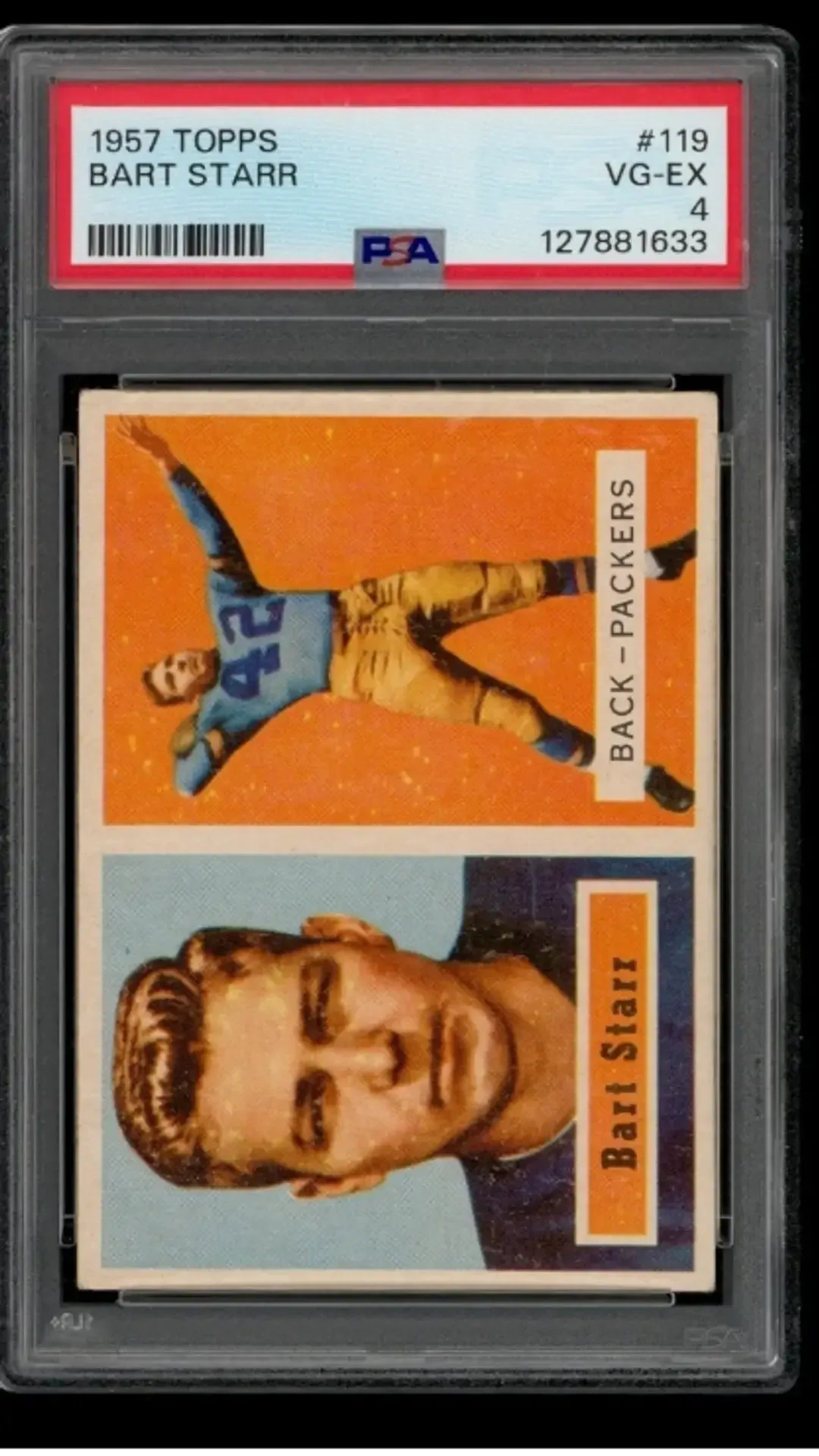
If one 1950s football set best represents the power of rookie cards to define a release, it is 1957 Topps Football. The set is anchored by three enormous names: Bart Starr, Johnny Unitas, and Paul Hornung. That trio gives the product a level of hobby gravity that few football sets from any era can match.
Starr’s rookie appears as card No. 119, Unitas’ rookie as card No. 138, and Hornung’s rookie as card No. 151. For vintage football collectors, those cards form one of the strongest rookie groups in the hobby. A set builder can spend years chasing all three, especially in presentable or higher-grade condition.
The long-term appeal of 1957 Topps comes down to more than scarcity. These are the kinds of names that continue to matter across generations of collectors. Unitas remains one of the most important figures in football card history. Starr’s legacy with the Packers gives his rookie enduring demand. Hornung’s place in the game adds another Hall of Fame-level chase to the same checklist.
That combination of star power and collecting difficulty puts 1957 Topps at the top of many 1950s football conversations. When a single set delivers multiple cornerstone rookie cards of this caliber, its place in hobby history becomes very hard to challenge.
Key cards from 1957 Topps Football
- Bart Starr RC, Card #119
- Johnny Unitas RC, Card #138
- Paul Hornung RC, Card #151
What separates these six sets from the rest
Each of these releases reaches iconic status for a slightly different reason. Some are driven by superstar rookie cards. Others stand out because of unusual design choices or because they mark a major turning point in football card production. Together, they show how the 1950s established many of the traits collectors still value now.
1957 Topps sits on top thanks to an extraordinary rookie lineup. 1950 Bowman remains unforgettable because of its square shape and early star power. 1955 Topps All-American offers a broader football history lesson than almost any other set from the decade. 1956 Topps carries first-year significance for Topps football. 1951 Bowman brings quiet vintage charm and important early rookies. 1958 Topps rounds out the group with Jim Brown’s rookie leading the way.
For collectors exploring vintage football, these sets offer multiple entry points. Some will gravitate toward marquee rookies, others toward design, and others toward the challenge of building full runs from a defining era. No matter the path, the 1950s remain one of the deepest and most rewarding decades in football card collecting, and these six releases continue to shape that conversation every time another vintage star comes to market.
Photo Gallery