Johnny Unitas remains one of the defining figures in football history, and his card market reflects that legacy. Long before the modern passing explosion, Unitas helped establish the image of the field-general quarterback, pairing toughness, timing, and late-game command with one of the most recognizable looks of his era.
For collectors, that legacy shows up most clearly in his vintage cardboard. The biggest Unitas sales are concentrated in a small group of landmark issues from the late 1950s and 1960s, with elite-condition examples separating themselves from the rest of the market. Here is OTIA Sports' Top 3 list of the most valuable Johnny Unitas football cards based on the sale prices provided.
Top 3 Johnny Unitas Cards by Recorded Sale Price
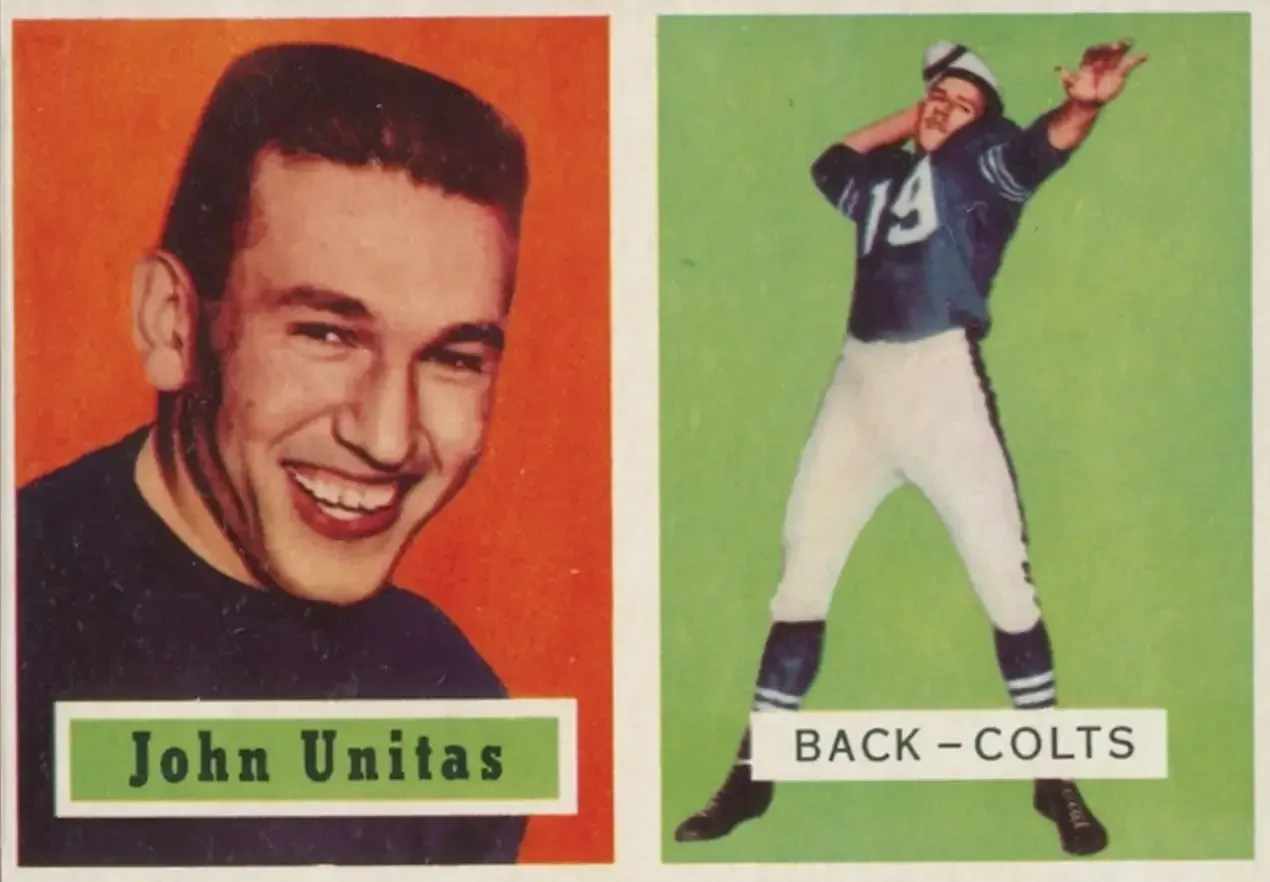
- 1957 Topps John Unitas #138 - PSA 9 sold for $167,300 on November 16, 2016
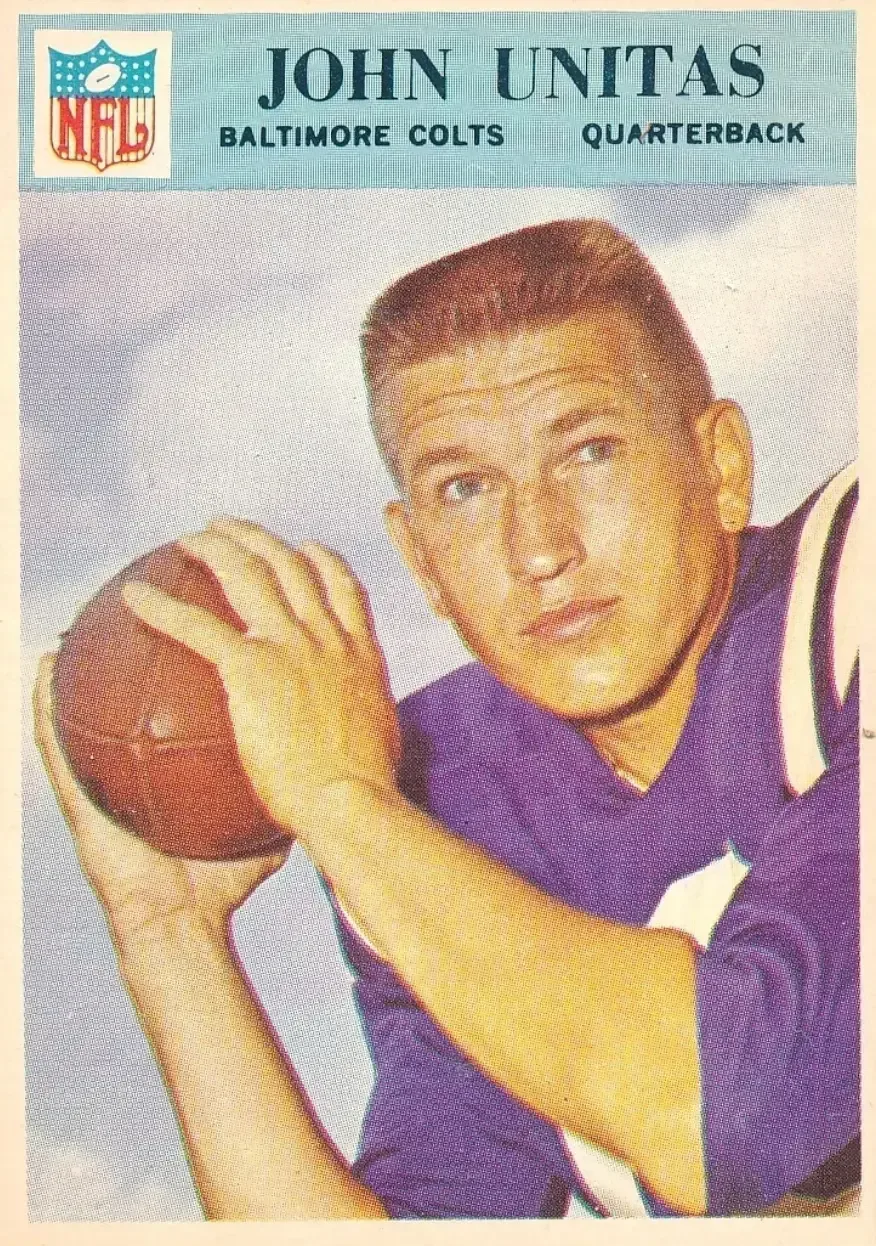
- 1966 Philadelphia John Unitas #24 - PSA 9 sold for $29,280 on September 18, 2026
- 1963 Topps John Unitas #1 - PSA 9 sold for $27,799 on May 6, 2017
The gap between No. 1 and the other two cards is massive. Unitas' 1957 Topps rookie stands in a different tier, while the 1966 Philadelphia and 1963 Topps cards form the rest of this Top 3 based on the values cited here.
1. 1957 Topps John Unitas #138
Top recorded sale noted: PSA 9 for $167,300 on November 16, 2016
For more collector background, read Top 3 Gale Sayers Cards Ever: His Most Valuable and Iconic Football Issues.
PSA 9 population: 9
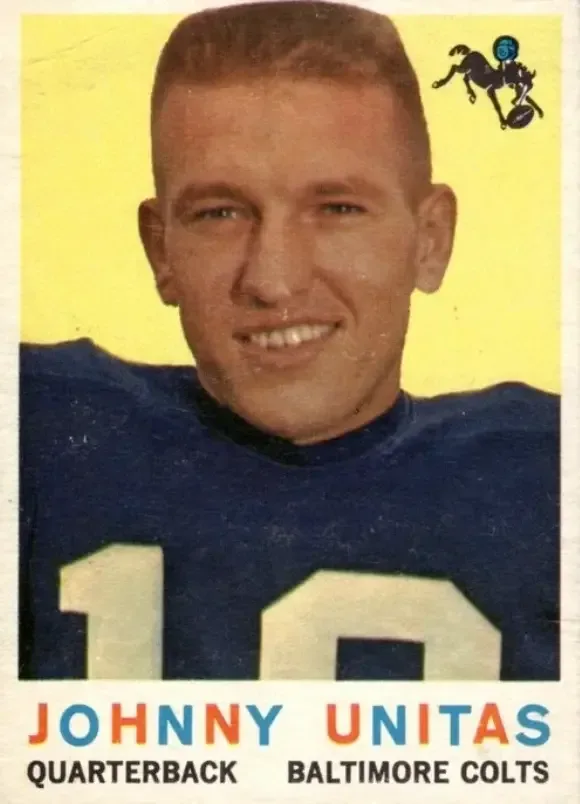
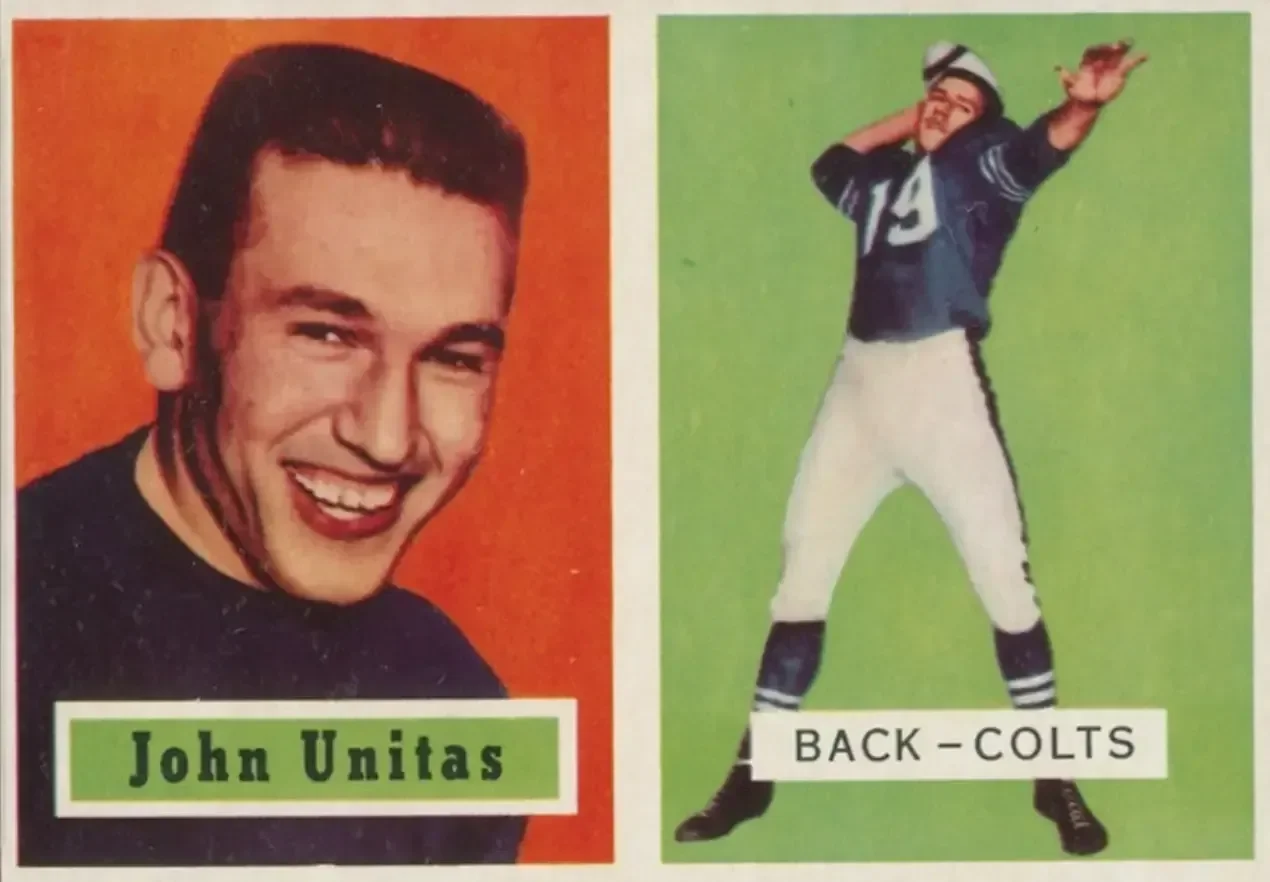
If there is one Johnny Unitas card that towers above the rest, it is his 1957 Topps rookie. This is the key card in his catalog and the clear heavyweight of the three biggest sales listed here. Rookie-card status, vintage Topps importance, and Hall of Fame demand all combine to make this one the centerpiece of the Unitas market.
The design is a major part of the appeal. Collectors get a youthful portrait on one side and an action throwing pose on the other, a layout that feels instantly tied to 1950s football card history. The card also captures Unitas early in his professional rise, wearing Colts colors and presenting the image many collectors want most when chasing a foundational quarterback rookie.
For another perspective on this story, read The 3 Most Valuable Johnny Unitas Football Cards.
Condition is where the market becomes especially interesting. A PSA 9 example is not just desirable because it is a rookie, but because surviving high-grade copies from 1957 are exceptionally difficult to locate. Centering, print quality, edges, and surface all matter more on a card of this age, and even minor flaws can separate one grade from another by a large margin in value.
The sale figure of $167,300 shows just how much premium collectors place on top-end quality. It also illustrates the steep drop from Unitas' flagship rookie to his later issues. Even among elite vintage football cards, this one commands special respect because it checks every major box: rookie status, Hall of Fame player, iconic set, and a low number of true upper-tier examples.
Among all Johnny Unitas cards, the 1957 Topps #138 is the one most closely tied to his long-term collecting identity. When vintage football collectors talk about cornerstone quarterback cards, this is the kind of issue they mean.
2. 1966 Philadelphia John Unitas #24
Top recorded sale noted: PSA 9 for $29,280 on September 18, 2026
PSA 9 population: 4
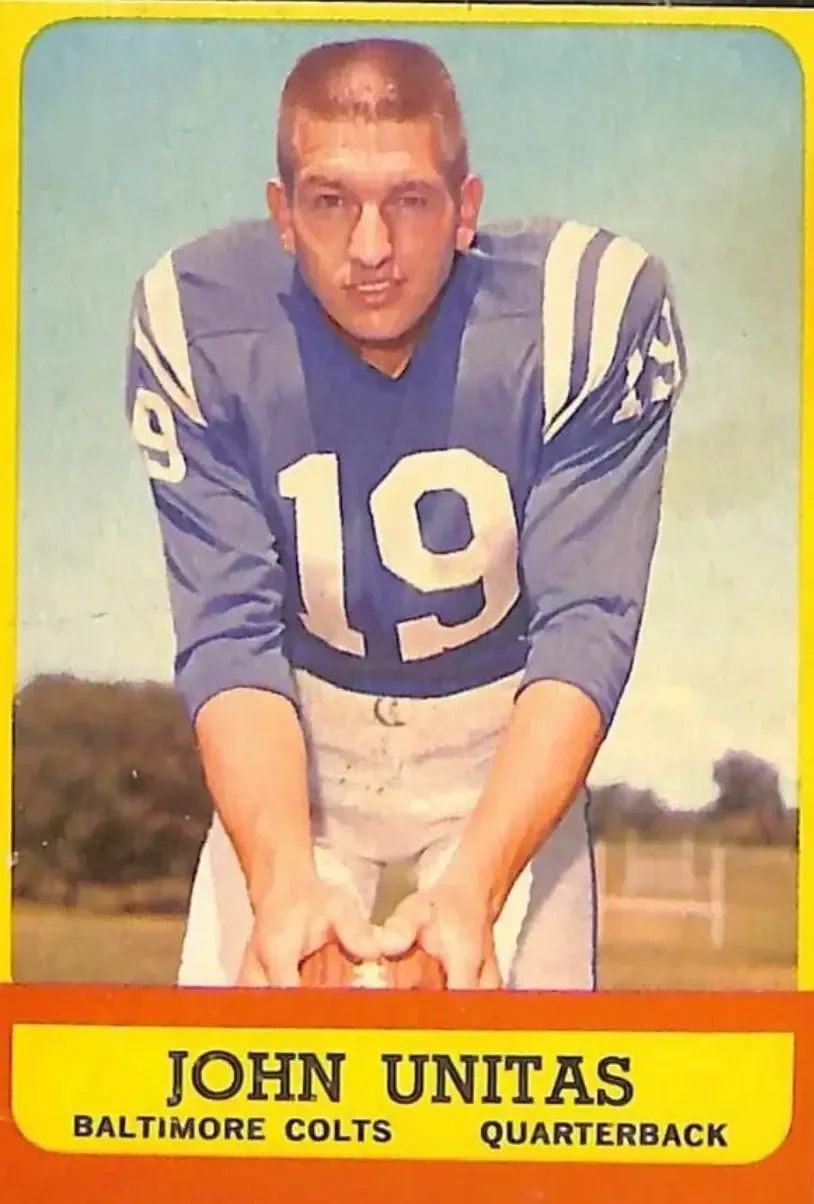
The second spot in this Top 3 belongs to 1966 Philadelphia #24, a card that reached $29,280 in PSA 9. While it sits far behind the 1957 rookie in absolute price, it edges the rest of the field presented here and stands as one of the strongest Unitas sales outside his debut issue.
This card benefits from a classic mid-1960s football-card presentation, with Unitas shown in a poised quarterback stance and scanning downfield. It is the kind of image collectors associate with him at the height of his reputation: calm, controlled, and ready to attack a defense. His signature crew cut and unmistakable presence only add to the period appeal.
One of the biggest drivers behind the card's value is the scarcity of gem-level examples. With just four PSA 9 copies noted, the card becomes a serious condition-sensitive chase. That matters in vintage football, where supply at the top of the grading scale can be razor thin even when lower-grade copies remain attainable.
Philadelphia issues from the 1960s have long held an important place in football collecting. They are not always discussed the same way as flagship Topps cards, but premium Hall of Fame subjects in top grades can generate serious attention. Unitas is a perfect example. His stature as one of the greatest quarterbacks ever gives even non-rookie vintage cards strong collector support, and the low pop pushes that demand into a higher price bracket.
For buyers who want a premier Unitas card beyond the rookie, the 1966 Philadelphia often checks the right boxes. It is vintage, visually strong, linked to his prime, and notably difficult in PSA 9 condition. Those factors help explain why it lands at No. 2 on this list.
3. 1963 Topps John Unitas #1
Top recorded sale noted: PSA 9 for $27,799 on May 6, 2017
PSA 9 population: 4
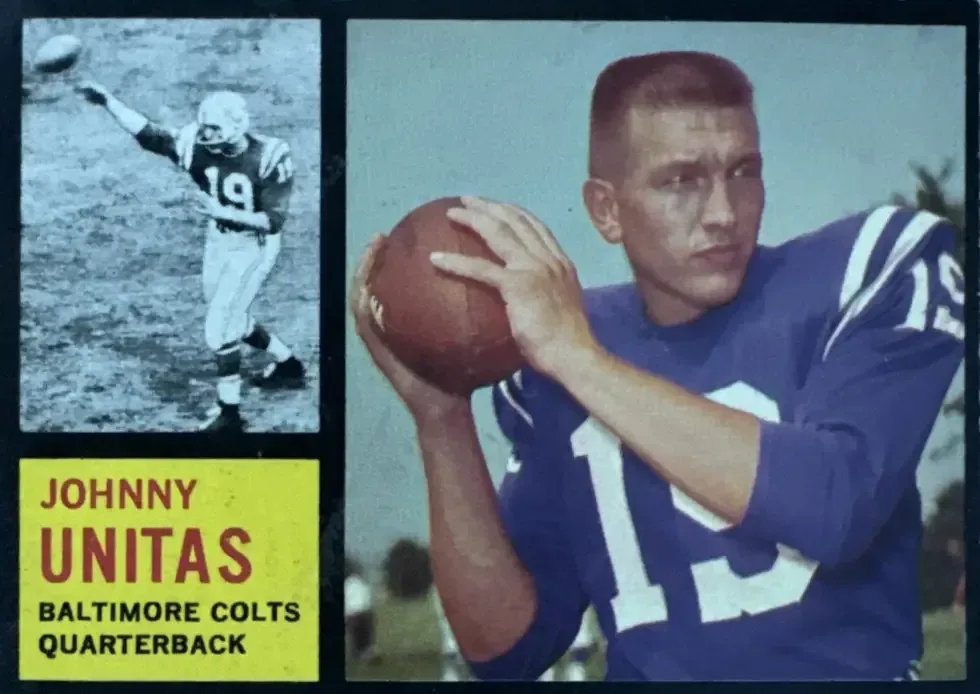
Rounding out the Top 3 is 1963 Topps John Unitas #1, which reached $27,799 in PSA 9. The card's No. 1 slot in the set adds another layer of appeal, since many collectors are naturally drawn to opening-card stars from vintage releases, especially when the featured player is a football legend.
Visually, the card has a memorable perspective. Unitas is shown straight on, creating an image that gives the viewer the feel of being in the offense with him. It is a strong football composition and one that stands apart from many more static portrait-heavy vintage cards. For a player as important as Unitas, design details like that can matter when collectors decide which non-rookie issues they value most.
The population data also plays a major role here. Like the 1966 Philadelphia, this card is listed with only four PSA 9 examples. That puts it in extremely exclusive territory at the top grade and helps explain why it has been able to command a figure near the $30,000 mark.
The early 1960s remain an appealing collecting window for Unitas cards because they capture him after he had already established himself as one of the game's premier quarterbacks. That gives these issues a different kind of significance than the rookie. Rather than representing early promise, they reflect a player already carrying the authority and stature that would define his career.
For set builders, player collectors, and vintage football specialists, 1963 Topps #1 is a compelling combination of star power, set-position appeal, and high-grade scarcity. Those ingredients are enough to keep it firmly in the Top 3 for Johnny Unitas sale prices cited here.
Why These Three Cards Stand Above the Rest
There are a few clear reasons these three cards separate themselves from other Johnny Unitas issues. First is player importance. Unitas is not simply a Hall of Famer. He is one of the most historically important quarterbacks the sport has ever seen, which gives his best cards broad appeal across football collectors, vintage collectors, and investor-minded buyers.
Second is era. Cards from the 1950s and 1960s remain central to serious football collecting because they represent a foundational period in the hobby. When one of the signature players of that era appears on an iconic rookie or a low-pop star card, the market tends to reward it.
Third is condition rarity. Every card in this Top 3 reached its headline number in a premium grade, and the population counts underscore how difficult those examples are to find. The 1957 Topps rookie has nine PSA 9s noted, while the 1966 Philadelphia and 1963 Topps each sit at four PSA 9 copies. That kind of scarcity creates natural competition whenever one of these cards surfaces publicly.
Finally, presentation matters. The 1957 Topps rookie is a true centerpiece card, the 1966 Philadelphia offers a strong in-action quarterback image, and the 1963 Topps card benefits from both design appeal and its No. 1 placement in the set. For collectors spending at the top of the market, visual impact is often part of the equation.
Collector Notes on the Johnny Unitas Market
The most notable takeaway from this Top 3 is how dominant the 1957 Topps rookie remains. Its highest cited sale is well over five times the figure of the next card on the list. That kind of gap shows the difference between a marquee rookie and even highly desirable later-career vintage issues.
At the same time, the two non-rookie cards here show that top-grade scarcity can create meaningful value on its own. A Hall of Fame quarterback in a low-pop PSA 9 holder from a respected vintage set will always attract attention, especially when the available supply is so limited.
Collectors tracking Unitas cards should pay close attention to grade, eye appeal, and the specific set involved. For high-end buyers, the best opportunities usually come when a truly elite example reaches the open market. In Unitas' case, that means the 1957 Topps #138 remains the signature card, while the 1966 Philadelphia #24 and 1963 Topps #1 continue to stand out as major blue-chip options within his vintage run.
Photo Gallery