Upper Deck is adding a new high-end hockey brand to the calendar with 2025-26 Upper Deck Tableau Hockey, a debut product scheduled to release on November 11, 2026. Built around premium photography, mixed-media card design and encased content, Tableau enters the market with a format that leans heavily into presentation while still giving collectors a serious rookie chase.
The timing is especially notable for anyone still following the 2025-26 rookie class through trading cards. Names such as Matthew Schaefer, Ivan Demidov, Michael Misa and Jimmy Snuggerud help give this first Tableau edition immediate relevance, and the early previews suggest Upper Deck is aiming for an art-forward product that still delivers the autograph and serial-numbered appeal expected from a premium hockey release.
Release date and box format
2025-26 Upper Deck Tableau Hockey is set to arrive on November 11, 2026. Each hobby box includes eight packs with three cards per pack, plus three encased premium cards, bringing the total to 27 cards per box.
The premium breakdown is one of the major selling points. Boxes are expected to contain either two or three encased autographs. If a box does not include a third encased autograph, that spot is replaced by a card numbered to 100 or less. That structure gives the product a clear high-end identity and helps separate it from more traditional pack-heavy hockey releases.
For more collector background, read 2025-26 Upper Deck Stature Brings Premium Hockey Cards, Hard-Signed Autos and Rookie Patch Chase Cards.
Collectors can also expect eight base cards per box. Those are described as four veterans plus four stars or rookies from the base set checklist, with the possibility of Rookie Watch cards appearing within that mix.
What is in the base set
The base set is built in three tiers, giving Tableau a broad checklist while still keeping a premium feel.
- 100 veterans with at least two players from each NHL franchise from the season represented in the product.
- 50 NHL stars featuring top names from around the league, with at least one player from every team.
- 30 rookies tied to the Rookie Watch theme and the Dark Ice Rookies insert lineup.
That structure should make the product appealing to multiple types of collectors. Team collectors get broad league coverage, star-focused buyers have a dedicated section to chase, and prospect-driven hockey collectors have a rookie class that looks strong enough to carry significant hobby attention.
Why Tableau Hockey stands out
Upper Deck appears to be positioning Tableau as more than just another autograph-and-patch release. The early card previews point to a set driven by image quality, framing, texture and creative card stock choices. Several of the announced insert concepts push into a gallery-style presentation rather than relying only on standard chrome or glossy photography.
That matters in a crowded premium space. High-end hockey products often compete on autograph quantity, patch quality and rookie selection. Tableau looks ready to compete in those areas, but the bigger early takeaway is that the line may win collectors over through design. Borders, acetate elements, lighting-based photo choices and layered visual concepts are all part of the product identity shown so far.
If the rest of the checklist follows the same direction as the early reveals, Tableau could quickly become a product that collectors open for both chase value and visual appeal.
Five early cards and inserts getting attention
Upper Deck has already shown enough to give collectors a feel for how Tableau will look in hand. Several early cards stand out not just because of the players involved, but because they highlight the design language of the set.
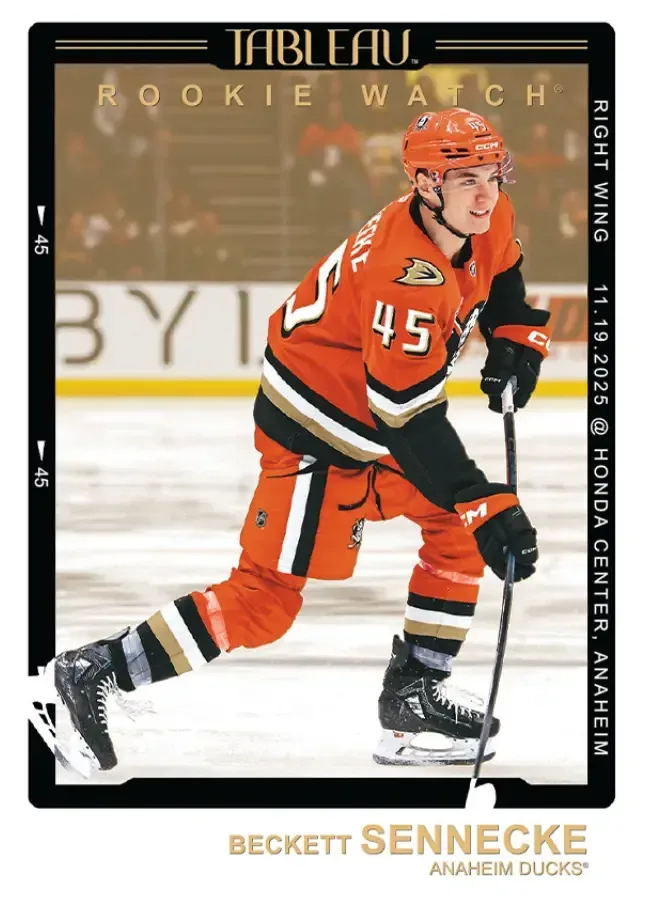
Rookie Watch OTIA Sennecke
The Rookie Watch design appears to be one of the key entry points for the product’s rookie chase. A preview card featuring OTIA Sennecke shows a black-bordered layout with white text that includes the date and location of the photo. The result is clean, high-contrast and documentary in style.
For collectors, Rookie Watch could become one of the defining subsets of debut-year Tableau. Sennecke is also a fitting example because products in this release window tend to gain traction when they can pair premium design with a prospect name that still carries hobby upside.
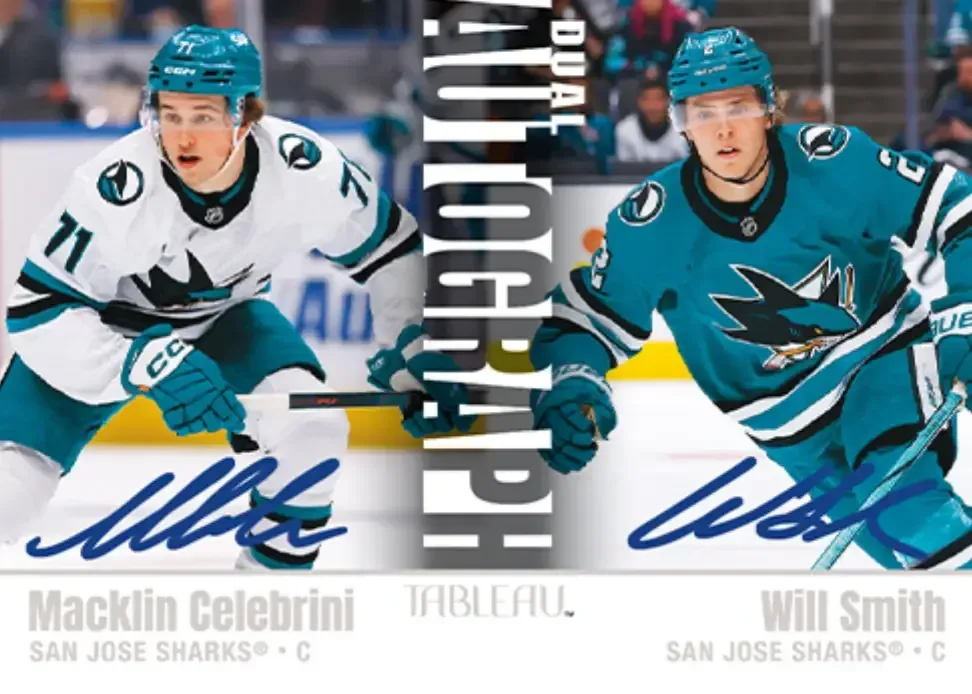
Dual Autograph Macklin Celebrini and Will Smith
Few themes in hockey cards work better than pairing young teammates with major long-term upside, and a dual autograph featuring Macklin Celebrini and Will Smith checks that box immediately. The card ties two of San Jose’s most important young talents together on a single premium piece, giving the set one of its more obvious chase formats.
Dual autos are often a focal point in premium hockey products because they create both player-driven and team-driven demand. In this case, the combination of Celebrini and Smith should be especially attractive for collectors who are buying into the Sharks’ future.
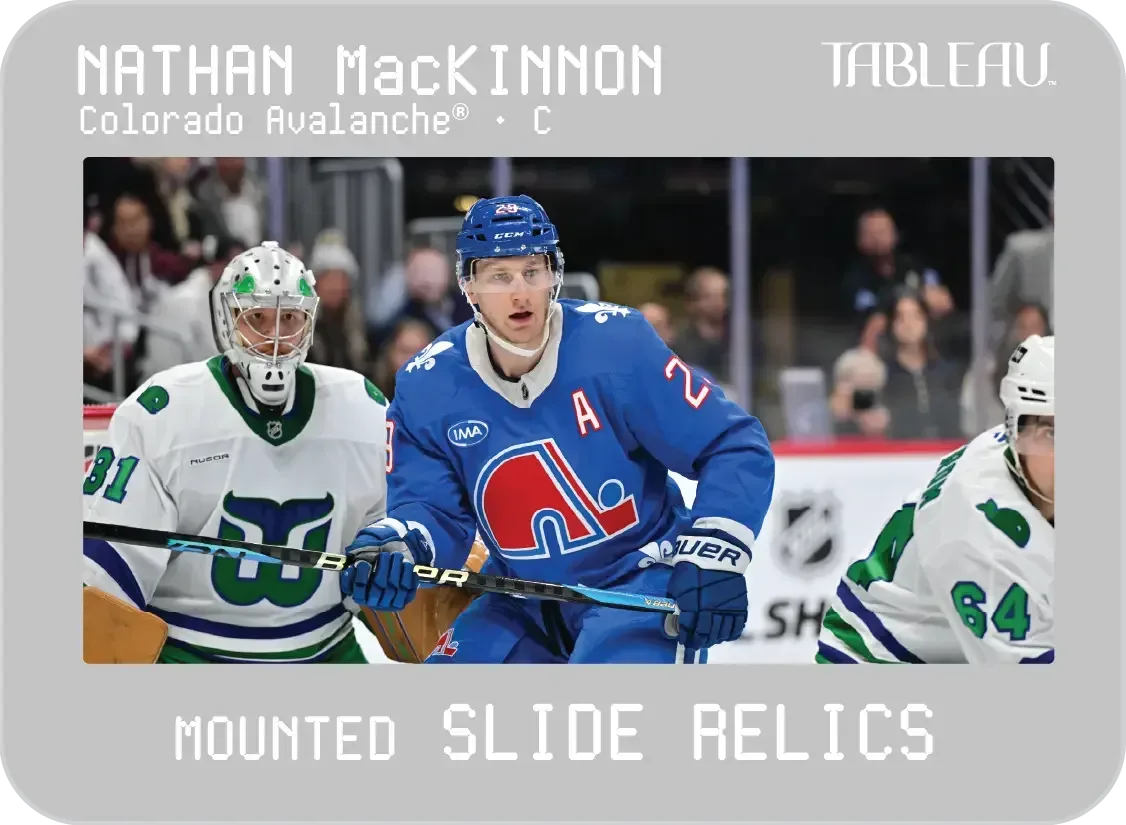
Mounted Slide Relics Nathan MacKinnon
One of the more inventive concepts previewed so far is Mounted Slide Relics. A Nathan MacKinnon example shows a design inspired by classic projector slides, using a translucent acetate-style image framed by a more solid border. The effect is meant to let light interact with the image in a way that standard card stock cannot replicate.
This insert has the potential to become one of Tableau’s signature visual achievements. It blends nostalgia, photography and unusual materials in a way that feels different from the usual relic-card playbook. Even without leaning on oversized swatches or loud foil treatment, it looks like a card type that could stand out immediately in person.
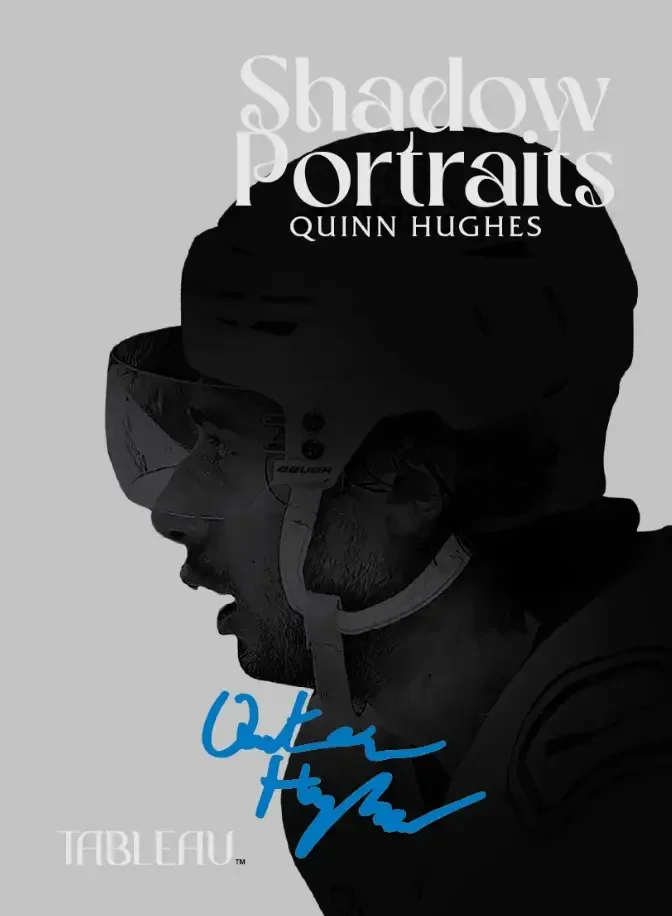
Shadow Portraits Quinn Hughes
Shadow Portraits may be the most art-driven concept shown in the early preview cycle. The Quinn Hughes sample uses low-key lighting and deep contrast, with portions of the image disappearing into dark shadow while finer details remain sharp and visible.
That kind of composition is not common in mainstream sports card photography, which is part of what makes the insert notable. It gives the card a dramatic look and suggests Tableau may be willing to take visual risks that are less common in traditional base or insert sets. If the full checklist holds that standard, Shadow Portraits could emerge as a collector favorite.
Shutter Speed Signatures Jimmy Snuggerud /25
A Jimmy Snuggerud Shutter Speed Signatures autograph numbered to 25 may be the clearest example yet of what Tableau wants to be. It combines a premium rookie subject, a limited print run and a design concept centered on motion and photographic style. For collectors who chase first-year talent in high-end releases, this is exactly the kind of card that can define a product’s early buzz.
Snuggerud also fits the broader storyline of this release. Tableau is arriving with a rookie class that should keep interest strong, and limited autographs tied to notable young names are likely to be among the most closely watched cards after release day.
Other inserts already on the radar
Beyond the five previewed examples, several additional insert names have already surfaced. Triple Exposure is one of the most interesting because it uses three images to simulate motion, creating a more cinematic effect than a standard single-photo card. That kind of treatment fits the Tableau identity and could become one of the more recognizable subsets in the product.
Other announced or teased concepts include Aspects, Dark Room and Imprints. While full checklist and pack-out specifics for those lines have not yet been detailed here, the names alone reinforce the product’s emphasis on mood, visual storytelling and image-based design rather than simple parallel stacking.
Dark Ice Rookies also stands out because it ties directly into the rookie structure of the set. With 30 rookies connected to both Rookie Watch cards and Dark Ice Rookies inserts, new collectors and prospect-focused buyers should have multiple ways to chase the same class.
The rookie class gives this debut product real hobby weight
A brand-new product line always needs more than attractive design to gain traction. It also needs players that collectors care about. That is where Tableau may have an advantage right away.
The 2025-26 class gives the product names with major hobby intrigue, and the preview language around Schaefer, Demidov, Misa and Snuggerud shows that Upper Deck understands where collector attention is likely to land. When a premium product launches with a rookie list that can carry both prospect speculation and long-term star potential, it has a stronger chance to stick.
That is especially important for a first-year brand. Debut releases often face questions about identity, value and staying power. By combining a strong class with a clear visual direction, Tableau has a better shot at establishing itself quickly within the hockey card landscape.
Collector checklist for what to watch on release day
- Encased content: Boxes promise three encased premium cards, with either two or three encased autographs.
- Fallback serial-numbered hit: If the third encased auto is not present, that slot becomes a card numbered to 100 or less.
- Rookie chase: Rookie Watch, Dark Ice Rookies and limited autographs should draw immediate attention.
- Design-driven inserts: Shadow Portraits, Mounted Slide Relics, Triple Exposure, Aspects, Dark Room and Imprints give the release a distinct visual identity.
- Base structure: 100 veterans, 50 NHL stars and 30 rookies provide broad team and player coverage.
- Box composition: Eight packs, three cards per pack, plus three encased cards for 27 total cards.
What Tableau Hockey could mean for Upper Deck’s premium lineup
Launching a new premium hockey brand is a notable move on its own, but Tableau looks positioned to fill a specific lane. Rather than trying to be defined only by giant patch windows or maximum autograph count, it appears designed to appeal to collectors who value premium print execution and memorable photography.
That approach can work well in hockey, where collectors often respond strongly to cards that capture atmosphere and personality as much as action. With acetate-inspired relic concepts, shadow-heavy portraits and motion-based insert design, Tableau is arriving with a visual identity that feels deliberate from the start.
The biggest questions will be how the full checklist holds up, how accessible the key rookies are across autograph and insert formats, and how collectors respond once the cards are in hand. For now, the early preview suggests 2025-26 Upper Deck Tableau Hockey has the pieces to become one of the more talked-about hockey releases on the November calendar, especially for collectors chasing premium rookies and distinctive card design.
Photo Gallery