Vintage baseball cards have kept attracting serious attention in 2026, even as parts of the broader card market have shown signs of cooling. That shift has become especially important as uncertainty builds around the 2027 MLB season, with collectors watching labor talks and weighing how a possible disruption could affect demand across the hobby.
When confidence softens around modern and highly speculative cards, money often looks for safer ground. In the baseball card market, that usually means established Hall of Famers, iconic Topps issues, and condition-sensitive vintage cards with strong long-term collector demand. Three 1950s cards stood out in particular this year, combining major percentage gains with strong eye appeal, historic player appeal, and scarce high-grade supply.
Here is OTIA Sports' Top 3 list of the hottest 1950s baseball cards surging in 2026.
Top 3 hottest 1950s baseball cards in 2026
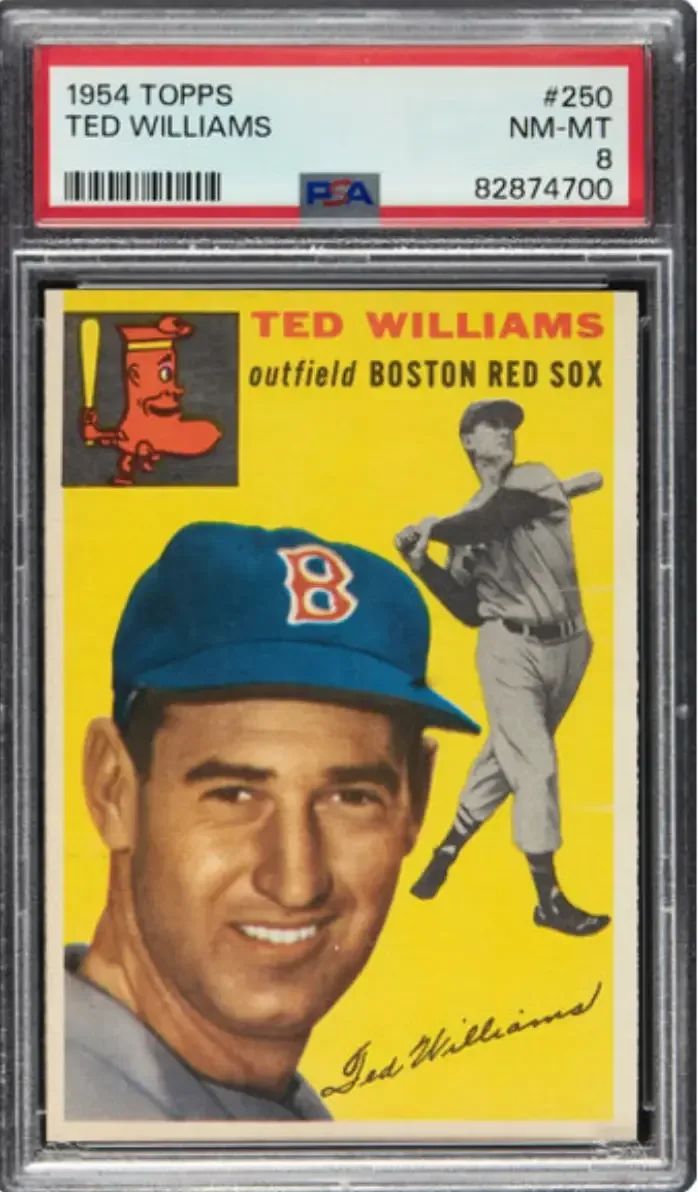
1. Ted Williams 1954 Topps #250 PSA 8
The strongest mover among this group is the 1954 Topps Ted Williams #250 in PSA 8. A sale at $17,700 on October 26, 2026 represented a massive jump from earlier sales of $3,419 on April 17, 2026 and $3,000 on February 26, 2026. That works out to a 418% increase, making it the sharpest rise among the top cards highlighted here.
For more collector background, read 2026 Holiday Sports Cards to Know: Topps Baseball and Football, Panini Mangaverse, and Absolute Countdown Calendar.
There are several reasons this card has accelerated so quickly. First, it carries major hobby significance as Williams' first Topps card, a detail that gives it extra status with vintage collectors. While it is not a rookie card in the traditional sense of being his earliest cardboard appearance, many collectors still view it as a key Topps debut and a cornerstone piece from the 1950s.
Second, card #250 sits in a condition-sensitive spot within the 1954 Topps set. Williams was featured twice in the release, appearing on both card #1 and card #250. Cards at the beginning and end of vintage sets were often handled more heavily by collectors building sets and were especially vulnerable to rubber band wear, edge chipping, and corner damage. That historical handling pattern continues to matter today when high-grade examples reach the market.
The population data reinforces that scarcity. Of the 4,943 copies graded by PSA, only 11 have received a grade higher than PSA 8. That is an extremely small number for a player of Williams' stature, and it helps explain why the market reacted so strongly once buyers had the chance to compete for a clean mid-high grade copy.
The card also benefits from the enduring legacy of Williams himself. He remains one of the most revered hitters in baseball history, and elite vintage collectors continue to chase key cards of all-time great batsmen. When a card ties together Hall of Fame prestige, historic set positioning, and legitimate grade scarcity, it has the ingredients to move fast when demand shows up.
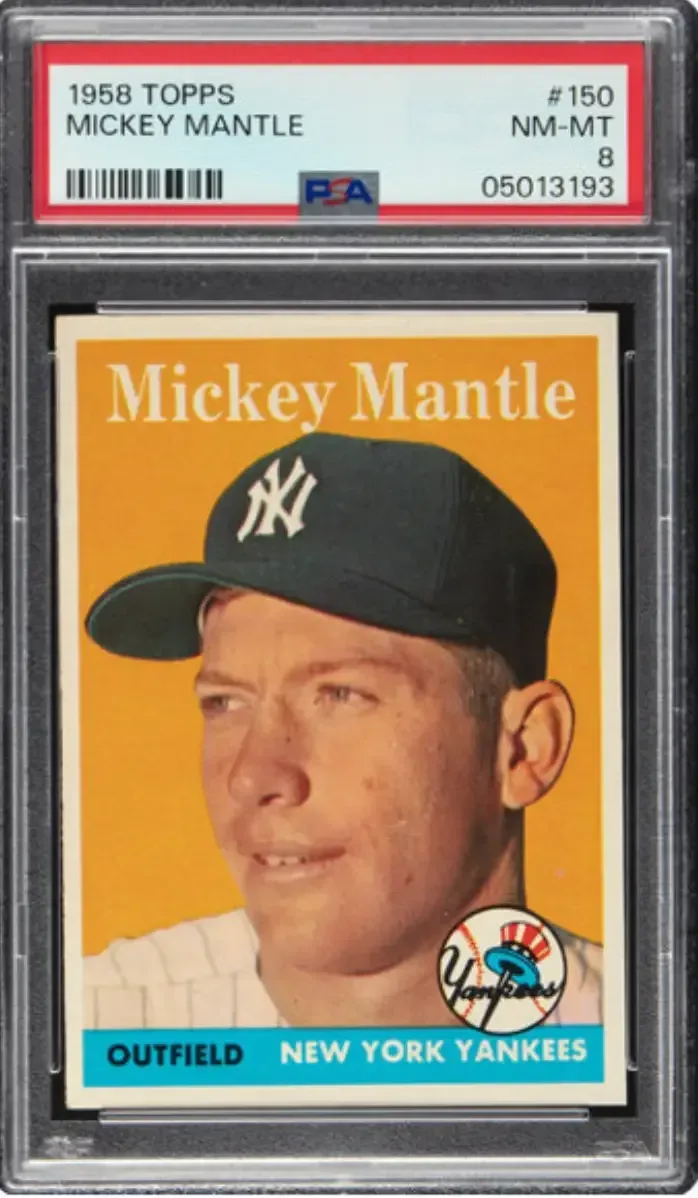
2. Mickey Mantle 1958 Topps #150 PSA 8
The second card on the Top 3 list is the 1958 Topps Mickey Mantle #150 in PSA 8. It sold for $41,500 on October 26, 2026 after previous sales at $12,600 on May 31, 2026 and $14,100 on May 18, 2026. That run represents a 229% increase and underlines how powerful Mantle remains in the vintage baseball market.
Mantle has long held a unique place in the hobby. Even outside of his ultra-iconic 1952 Topps card, his 1950s Topps issues routinely attract strong bidding because they combine star power, Yankee history, and broad collector recognition. The 1958 Topps #150 is one of his most recognizable cards from the decade, helped by the vivid orange background and classic late-1950s Topps design.
What makes this jump especially notable is that the card is not obscure and it is not ultra low-pop in absolute terms. PSA has graded 10,070 copies of the 1958 Mantle #150, so collectors are not dealing with a card that almost never surfaces. Instead, the premium is being driven by grade separation at the top. Only 41 copies have been graded higher than PSA 8, which means buyers looking for sharp, investment-level examples are competing over a much thinner portion of the surviving population.
The strength at the next level up adds another layer to the story. A PSA 9 copy of the same card sold for $189,100 on October 26, 2026, while the previous high was $92,000. Only 28 PSA 9 copies exist, and there are no PSA 10s. That kind of top-end pressure often pulls up the value of the grade directly below it, especially when collectors decide they still want quality and eye appeal but cannot justify six-figure pricing.
The Mantle market also tends to react quickly when collectors seek stability. In uncertain periods, the hobby often circles back to proven blue-chip names, and few names are more blue-chip than Mantle. As collectors rebalance away from riskier modern speculation, classic Mantle cards frequently become landing spots for capital.
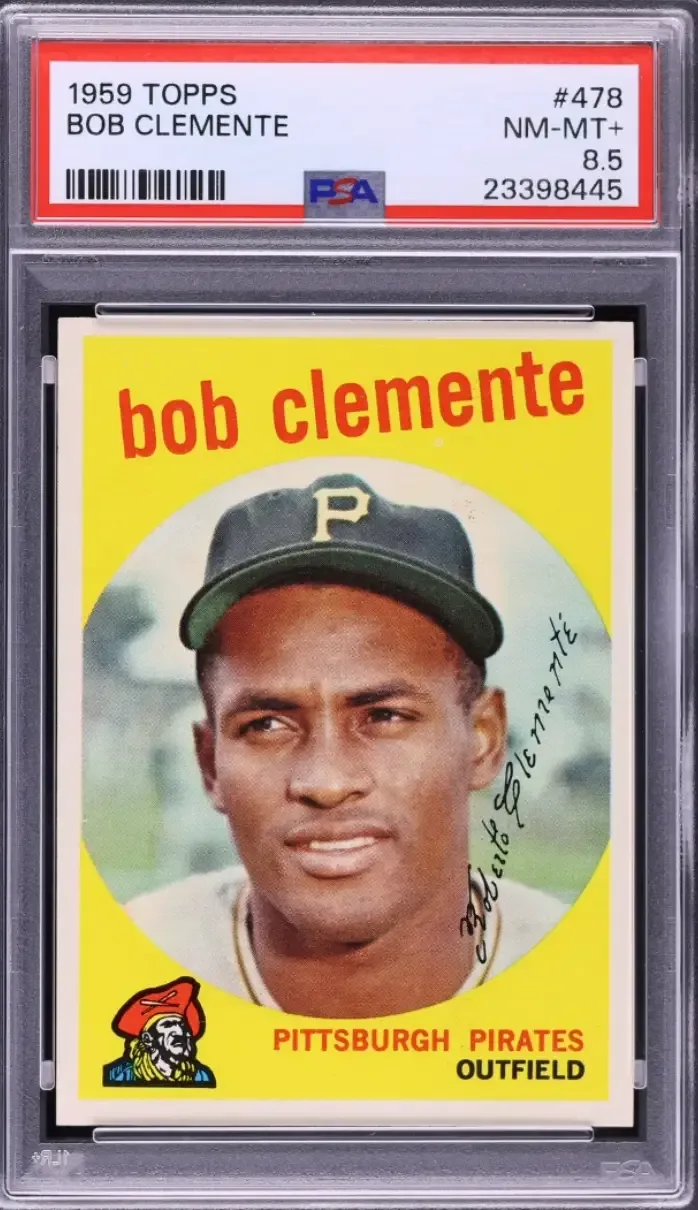
3. Roberto Clemente 1959 Topps #478 PSA 8.5
Rounding out the Top 3 is the 1959 Topps Roberto Clemente #478 in PSA 8.5. A sale at $19,800 on August 23, 2026 followed earlier sales of $9,150 on May 18, 2026 and $5,600 on November 28, 2025. That performance equals a 116% increase in 2026 and shows sustained momentum rather than a one-time spike.
Clemente cards have always carried emotional and historical weight, but this particular card checks several boxes that can ignite a run. The 1959 Topps design gives the card immediate shelf appeal, with a bright yellow background and a youthful image of the Pirates star. For many collectors, it is one of the most visually attractive Clemente cards from his playing days.
Scarcity at the upper end also matters here. PSA has graded only 57 examples higher than 8.5, and there are no PSA 10 copies. That creates a strong incentive for advanced Clemente collectors to pursue top-tier examples whenever they become available. In a market where high-grade vintage supply can be thin, a single strong sale can reset expectations fast.
Clemente's global popularity adds another demand driver. He remains one of the most beloved figures in baseball history and an especially important icon throughout Latin America. That gives his vintage cards appeal that extends beyond team collectors or set builders. When a card has broad cross-market demand and limited high-grade availability, it is easier to understand how values can move aggressively in a relatively short span.
His market also benefits from a collector profile that tends to be more legacy-focused than trend-driven. Clemente buyers are often pursuing historic greatness, cultural significance, and long-term importance, not simply short-term flips. That type of demand can be more durable, especially when collectors turn their attention toward vintage during uncertain market cycles.
Why these three cards are moving now
There is a bigger story behind these price jumps than simple auction momentum. The baseball card market in 2026 has not moved uniformly. Some modern cards and prospect-driven segments have cooled after a strong run, while premium vintage has continued to post impressive results. That divergence matters.
If collectors become more cautious about chasing speculative upside, they often migrate toward cards with deep hobby history and established collector bases. Ted Williams, Mickey Mantle, and Roberto Clemente fit that profile perfectly. Each player is a foundational name. Each card comes from a respected 1950s Topps release. Each example listed here also sits in a grade tier where true quality is difficult to replace.
Labor uncertainty surrounding the 2027 MLB season may also shape collector behavior. If concerns about a shortened season or lockout continue to grow, that could put even more attention on vintage material tied to players whose legacies are already fully secured. Vintage cards do not depend on current performance, next month's call-up, or offseason hype. Their appeal is rooted in history, rarity, and hobby permanence.
That does not mean every vintage card rises automatically. The cards that usually break away from the pack still need a combination of strong player demand, recognizable set status, attractive presentation, and scarcity in the assigned grade. These three cards have all of those traits, which helps explain why they have separated from the field in 2026.
What collectors should watch next
Collectors tracking this part of the market should keep an eye on repeat sales in the same grades, not just isolated record prices. Follow-up transactions can show whether a jump is becoming the new normal or whether a result was driven by two determined bidders on a particular night. Population reports also matter, especially when values are climbing on cards with very few examples graded higher.
Eye appeal is another important factor. Vintage collectors will often pay a premium for centering, color, print quality, and surface presentation that stand out within the holder grade. Two PSA 8 cards or two PSA 8.5 cards can command very different prices if one presents far better than the other. That is especially true for visually strong issues like 1954 Topps, 1958 Topps, and 1959 Topps.
It is also worth watching whether rising prices on marquee examples start to influence lower and mid-grade copies. If top-end sales remain strong, broader demand can trickle down into more affordable grades and create new entry points for collectors who still want exposure to major vintage names. For now, the strongest 2026 momentum among 1950s baseball cards belongs to Ted Williams' 1954 Topps #250, Mickey Mantle's 1958 Topps #150, and Roberto Clemente's 1959 Topps #478.
Photo Gallery