The sports card market is sending mixed signals heading into late 2026. On one side, reported online sales remain enormous, with Card Ladder data showing more than $1 billion spent on trading cards in October alone. On the other, many dealers working major shows are describing softer foot traffic, fewer impulse buys, and noticeably more caution when shoppers reach higher price points.
That split has created a familiar question across the hobby: if record money is still being spent, why do so many show tables feel slower?
The clearest answer may be that the market is not disappearing. It is moving.
A Big Show, but Some Expected Sellers Stayed Put
At the Nashville Card Show, often called the Nash-ional, dealers had a front-row view of that shift. The event is one of the largest in the country, featuring roughly 1,400 tables spread across three buildings, with hundreds of dealers and thousands of collectors on site.
For more collector background, read Top 3 Vintage Baseball Card Record Sales Collectors Need to Know This Week.
That kind of setting usually gives certain cards a natural advantage. Player and team affinity matter at regional shows, and Atlanta Braves autographs have historically been strong sellers in Nashville. Yet even with that backdrop, some cards that looked like obvious fits for the room drew little traction.
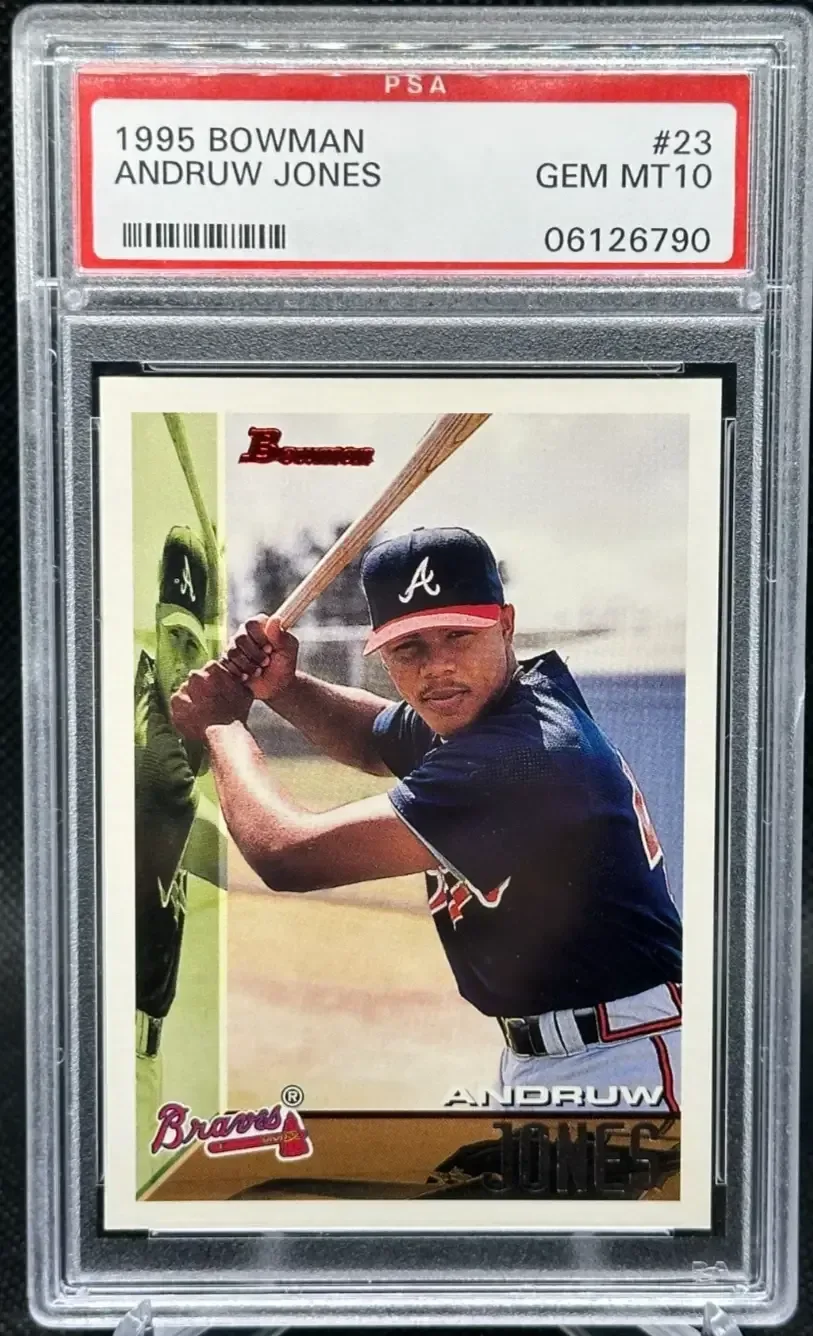
One example was a Topps Dynasty Chipper Jones autograph that checked several boxes collectors usually want: premium brand, strong visual presentation, on-card appeal, and a Hall of Fame level name with deep regional popularity. Despite that, interest was limited. Other Braves autos from stars such as Tom Glavine, John Smoltz, and Andruw Jones reportedly generated even less attention.
That kind of result matters because it reflects more than a single missed sale. It highlights a broader change in buyer behavior. Cards that once felt like reliable show-floor inventory are no longer automatic movers just because the setting seems ideal.
Dealers Are Hitting Goals, but the Sales Mix Is Changing
One of the more important details in the current environment is that a slower feel does not always mean a bad weekend. Dealers can still meet sales targets while walking away with the sense that the room was tougher than expected. That disconnect is becoming a larger part of the hobby conversation.
In practice, it means a dealer may post acceptable total sales while still noticing that key showcase pieces did not move, buyer traffic felt thinner, or customers spent more time thinking before committing. Conversations at the end of shows increasingly reflect that tension. The concern is not always that nothing sold. It is that the cards dealers expected to sell quickly either stalled out or required much more patience.
That is an important distinction. A market slowdown can happen in feel before it shows up in aggregate spending. If money is still entering the hobby but flowing into different categories, different price tiers, or different sales channels, the people selling one slice of the market may feel pressure long before the broader numbers look weak.
Why the Market Feels Split in Two
Right now, the hobby appears to be operating in two realities at once.
The first reality is the macro picture. Reported online sales remain powerful, and that data captures only part of the full market. It does not fully account for in-person show transactions, local card shop sales, live selling streams, or retail activity through big-box stores. When those channels are considered, total hobby spending is clearly much larger than the public online data alone suggests.
The second reality is what dealers are experiencing in person. At many shows, especially smaller ones, traffic is not as aggressive as it was during hotter stretches of the market. Shoppers are pausing longer. Fewer people are stretching up for big cards on instinct. Inventory that once created immediate buzz can now sit in a case for multiple events.
Those realities are not necessarily contradictory. They simply show that strong total demand does not guarantee equal demand for every category of card, every venue, or every price band.
This Looks More Like Reallocation Than Collapse
The word that best explains the current market is reallocation.
Instead of a broad hobby crash, the evidence points to money shifting from one part of the market to another. Earlier in 2026, that shift was visible in the move away from some ultra-modern material and into 1990s and 2000s cards tied to all-time great players. More recently, another adjustment appears to be taking shape: buyers are moving from higher-dollar cards toward more affordable inventory.
That kind of change can make the market feel weaker to dealers who are heavily exposed to premium showcases, even while lower and mid-tier material continues to transact at a healthy pace. In other words, total spending can remain elevated while the composition of that spending changes dramatically.
Collectors who once shopped in the $10,000 range may now be more comfortable buying at $5,000. Buyers who regularly grabbed $100 cards may be concentrating on $50 pieces instead. When enough of those adjustments happen at the same time, the market can feel slower at the top even though activity below it remains steady.
For dealers, that creates a practical inventory problem rather than a simple demand problem. If the case is loaded with cards priced for the old version of the buyer, and the current buyer is shopping one tier down, the room will naturally feel colder.
The $25 to $100 Range Is Drawing Attention
One of the more notable signs of the shift is the increased focus on lower and middle price bands, particularly in the $25 to $100 range. That segment has become especially important for repack products and for buyers looking to stay active without taking on major risk per card.
Graded cards appear to be drawing an outsized share of that demand. That makes sense in the current environment. Slabs offer a level of standardization and presentation that many buyers prefer when they are trying to maximize value and reduce uncertainty. For collectors spending carefully, a graded card in a manageable price range can feel like a more controlled purchase than an ungraded higher-end gamble.
This does not mean expensive cards have lost their market. Rare and desirable premium pieces still sell, and marquee names continue to attract money. What has changed is the ease of the sale. Buyers appear less willing to chase every major card on impulse and more interested in disciplined, selective spending.
Show Traffic Matters, but So Does Buyer Confidence
Foot traffic is still one of the simplest ways dealers judge the health of a show, and many have noted that attendance energy is not always matching prior peaks. Smaller shows, in particular, seem more vulnerable to softer floors. Fewer bodies in the room naturally mean fewer chances to convert inventory, especially for sellers relying on walk-up purchases rather than pre-arranged deals or deep customer networks.
But traffic alone does not explain everything. A room can be busy and still produce a cautious tone if buyers are hesitant. That hesitation is becoming more visible in the way collectors shop. Many are still engaged, still interested, and still spending, but they are asking more questions, comparing more options, and taking fewer rushed swings on larger cards.
That kind of behavior often shows up when discretionary income tightens or when buyers become more value conscious. It can also happen after periods when fear of missing out had been a major market driver. Once FOMO cools, buyers stop treating every attractive card as a must-buy-right-now opportunity.
Healthy Markets Usually Reset Instead of Moving in Straight Lines
Hobby veterans know that sports cards rarely move in a straight line for long. Booms cool off. Strong categories pause. New pockets of demand emerge while old favorites flatten temporarily. That process can be uncomfortable, but it is often a sign of a market finding firmer footing.
When a market gets too hot, some level of reset is normal. Prices and buyer expectations recalibrate. Speculative behavior fades. Collectors become more deliberate. Dealers who were leaning on fast flips and thin margins face more pressure, while those with diversified inventory and flexible pricing tend to adapt more effectively.
The current environment fits that pattern. It does not suggest that collectors have stopped caring about cards. It suggests they are becoming more selective about where their money goes.
That distinction matters because a selective market is not inherently a weak market. In many cases, it is a healthier one. Frenzied buying can create impressive short-term spikes, but it also raises the risk of sharp disappointment when momentum slows. A more measured market may feel less exciting from show to show, yet it often provides a more stable base for long-term collecting and business planning.
What Dealers May Need to Adjust
For dealers, the current shift is a reminder that inventory strategy matters as much as market direction. A seller heavily concentrated in one type of customer or one price tier is more exposed when buyer behavior changes. If the room is leaning toward affordable graded cards and the showcase is stacked with four-figure and five-figure pieces, the mismatch can be costly.
That does not mean abandoning premium inventory. It means understanding that premium inventory may need stronger presentation, better targeting, more patience, and a broader mix around it. Dealers with a balanced case can still serve the serious buyer while capturing steady volume from collectors shopping lower bands.
It also reinforces the value of adaptability across sales channels. If some high-end cards are moving more slowly on the show floor, they may still find the right audience online, through direct networks, or at different regional events where player and team demand lines up more naturally.
What Collectors Should Watch Next
Collectors trying to read the market should pay attention to more than headline sales. Record public transactions can coexist with softness in other areas. The better question is where the money is concentrating.
Right now, several themes appear worth tracking:
Whether high-end cards continue to require longer selling windows.
How much buying power stays centered in the $25 to $100 range.
Whether graded mid-tier material keeps outperforming comparable raw cards.
How smaller regional shows handle softer attendance and more cautious spending.
Whether legacy stars from the 1990s and 2000s continue to absorb hobby dollars at the expense of ultra-modern speculation.
Those trends should tell a clearer story than a single slow weekend or one major auction result. The market is still active. The key is that activity is becoming more concentrated and more selective.
The Cards Are Still Selling, Just Not Always Where Dealers Expect
The lesson from recent show floors is not that the hobby has run out of buyers. It is that buyers are behaving differently than they did during hotter stretches. Some of the cards that once felt automatic now need the right room, the right collector, or the right price to move. At the same time, lower-cost and graded material continues to attract attention from collectors looking for value and flexibility.
That helps explain why a major show can produce strong total sales while still leaving dealers uneasy about what stayed in the case. The money is still in the hobby. It is simply being deployed with more care, and often at a lower price point than some sellers had built around. For anyone watching the market in late 2026, that may be the most important signal on the floor.
Photo Gallery