Say you want a shiny parallel from 2025 Topps Series 1 Baseball. If the card you mean is a retail-exclusive Holo base parallel, the standard Hobby box’s autograph-or-relic guarantee doesn’t help you get it. The Value Box is the format Topps actually advertises for that chase. Change your goal to opening a box with a stated autograph-or-relic guarantee, and the choice changes too.
Start with what would make the opening fun for you: packs to share, cards to sort, or a shot at something specific. Then check whether the exact box delivers it. The baseball and hockey releases below show how to make that comparison; they aren’t current price or availability checks.
Identify the box before you compare it
Start by writing down the year or season, sport, set name, and full format name. A listing that says only “2025 Topps Series 1” hasn’t told you enough. Even “Hobby” may leave room for confusion if the seller offers both standard Hobby and Hobby Jumbo. Match the exact name and pack count to the manufacturer’s product page or format guide. If a listing combines several versions under one product title, confirm which one you’ve selected before checking out.
Treat retail as a group of formats, not a single configuration. A Value Box, blaster, tin, and hanger need to be checked individually. That matters even if you’ve already looked up the checklist: a set checklist can tell you that a card exists without telling you whether the box in your cart can contain it. If a seller calls a box “loaded with rookies” or “the one with the exclusive parallels,” ask for the exact format and verify the relevant checklist or odds entry rather than relying on the description.
Count the packs you’ll open, not just the cards you’ll get
For 2025 Topps Series 1 Baseball, the standard Hobby box contains 20 regular packs of 12 cards, or 240 cards before the bonus Silver Pack identified in Topps’ checklist spotlight. The Value Box contains seven packs of 12 cards, or 84 cards. The regular packs have the same number of cards in this comparison, but the two boxes make for different sessions. Seven packs may be just right for a quick opening. Twenty give you more to divide among friends or open a few at a time.
If you’re building the base set, don’t read 240 cards as 240 different base cards. Total card count is not a count of unique cards you need: an insert, a parallel, or a duplicate won’t fill the same binder slot as a missing base card. As a practical rule, packs make more sense when you’re happy to sort whatever turns up. If you’re already down to a short want list, price those missing cards directly before buying another box. You can still choose the box for fun, but you’ll know what you’re paying for the opening rather than assuming it’s the most direct route to finishing the set.
Read the guarantee as written, especially the word “or”
Topps states that the standard 2025 Series 1 Baseball Hobby box contains one autograph or relic. A relic without a signature satisfies that wording. The same release’s Hobby Jumbo format is a different proposition: Topps’ configuration guide lists one autograph and two relics. If the main reason you’re considering Hobby is that you want to reveal a signature, standard Hobby’s guarantee doesn’t settle the decision. And neither description promises an autograph from a player you collect.
Topps lists no guaranteed autograph or relic for the 2025 Series 1 Value Box. That isn’t the same as saying it has no chance of containing one. It means you shouldn’t count on such a card as part of the opening. A useful test before paying more for a guarantee: picture the least exciting result that still meets it. If an ordinary relic from a player you don’t follow would leave you wishing you’d bought the cheaper box, the guarantee may not be worth the difference to you. If you’d enjoy revealing either kind of card, it may be a feature worth paying for.
Compare the same odds row across exact formats
Upper Deck’s 2024–25 Series 1 Hockey checklist gives a good reason not to ask whether “retail odds” are worse. For base Young Guns, Upper Deck lists 1:2 in Hobby packs and 1:2.25 in blaster packs. It also lists 1:2 in tins and hangers. If you’re comparing Hobby with a blaster, the published pack rates differ. If you’re comparing Hobby with a tin or hanger, they match for that one category. That says nothing by itself about the number of packs you’ll get or what else those packs can contain.
Upper Deck lists 12 packs of 12 cards for Hobby and describes six Young Guns per box on average. The average makes sense at one Young Guns per two packs across 12 packs, but it isn’t a promise of six in the box you open. And the 1:2 figure is for the category, not for one player’s Young Guns card. If you just enjoy seeing which rookies turn up, the category rate helps you compare formats. If you only want one player, the same number is a poor shortcut for your chance of getting the card you actually want.
Check where a parallel appears before asking how rare it is
A format exclusive tells you where to look. It doesn’t tell you how often you’ll find the card. Topps advertises retail-exclusive Holo base parallels for the 2025 Series 1 Baseball Value Box. If that finish is the reason you’re shopping, the Value Box has a feature the standard Hobby hit guarantee can’t replace. Look up the full parallel name, not just a seller’s description of it as shiny or numbered. Then check which formats the manufacturer actually names, without extending the claim to every retail configuration.
Also watch for cards that appear in more than one format. Upper Deck lists 2024–25 Series 1 Hockey Outburst Red parallels numbered to 25 as random inserts in both Hobby and e-Pack. Calling them Hobby-only would miss the second format. And “/25” describes the number of copies of that card, not one pull in every 25 packs. If the manufacturer identifies eligible formats but you don’t have a published rate for your exact chase, leave the rate unknown. A serial number can describe the card you’d like to own without helping you decide how many boxes to buy.
Use your budget to compare openings, not just box prices
Suppose you’re hosting a pack night and everyone wants a few turns. Your useful comparison is total cost for the number of packs you’ll actually pass around. If you’re opening alone and care more about a stated hit than the number of turns, compare the wording of the guarantees instead. A cost-per-pack comparison can help in the first scenario, but it won’t tell you whether an extra pack matters more to you than a shot at a parallel or a promised relic.
Set the ceiling for the whole session before you shop, especially if you’re weighing several smaller boxes against one larger one. If you’re buying online, do the comparison with shipping included. Then ask what you’d keep if the opening were unremarkable. A collector who likes sorting base cards or trading extras may get more enjoyment out of volume than a collector who wants just one card for a display. Neither has to be right about what a box is worth to anyone else. The point is to choose a purchase you’ll still be comfortable with if the best pull never comes.
Price the single before you pay for the chase
If you can name the player, set, and exact parallel you’d like to own, compare the box with buying that single. Check that the listing is for the right version and condition, then include any shipping in the comparison. For example, if you’d be happy with a Holo of almost anyone on your team, a Value Box gives you a chance at several outcomes you’d enjoy. If you only want one player’s Holo for a binder page, even pulling the right parallel of a different player leaves that spot empty. You may enjoy the same packs less because your definition of success is narrower.
You don’t have to choose between only buying singles and only opening boxes. If your budget allows, you can earmark money for the card you know you want and set aside a separate amount for packs. That way, missing the chase doesn’t make a second box feel like the next step in finishing the purchase. If you can’t find the single at a price you’re comfortable paying, waiting is also an option; an unavailable or expensive single doesn’t make a box more likely to contain it.
Make the last check at checkout
Before you order, try finishing this sentence: “I’m buying this exact format because…” A good answer names something you can check. “There are enough regular packs to share” sends you to the box configuration. “I’d be happy with either an autograph or a relic” sends you to the guarantee. “I want a shot at this parallel” sends you to the checklist and, if available, the odds for that format. If the listing and manufacturer description don’t line up, resolve the mismatch before buying.
Then finish one more sentence: “If I miss my chase, I’ll still enjoy…” If the answer is sorting the cards, trading with friends, or simply taking your time with the packs, you’ve identified what the box is buying you besides a chance at a hit. If the only satisfactory ending is owning one specific card, there’s no need to make a box do a single’s job.
Sources
- www.topps.com - 2025 Topps Baseball Series 1 - Hobby Box
- ripped.topps.com - What 2025 Topps Baseball Series 1 Box is Best? - Topps Ripped
- upperdeck.com - 2024-25 Upper Deck Series 1 Checklist - Upper Deck
- www.topps.com
- ripped.topps.com
- upperdeck.com - 2024-25 Upper Deck Series 1 Hockey: Young Guns®, New Chases, and Everything in Between - Upper Deck
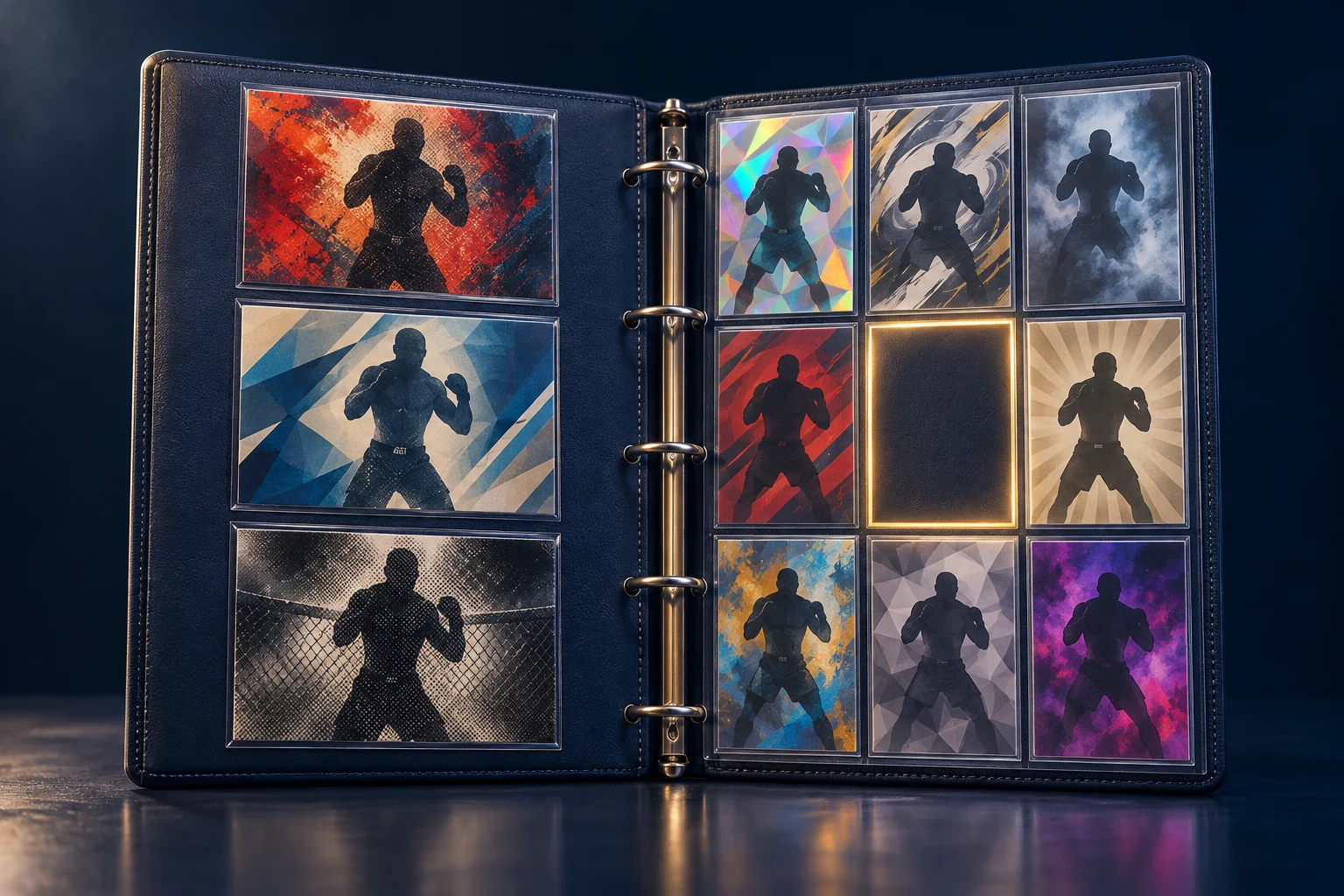
Illustration generated for this guide; not a photograph of an actual card, product or event.
Photo Gallery