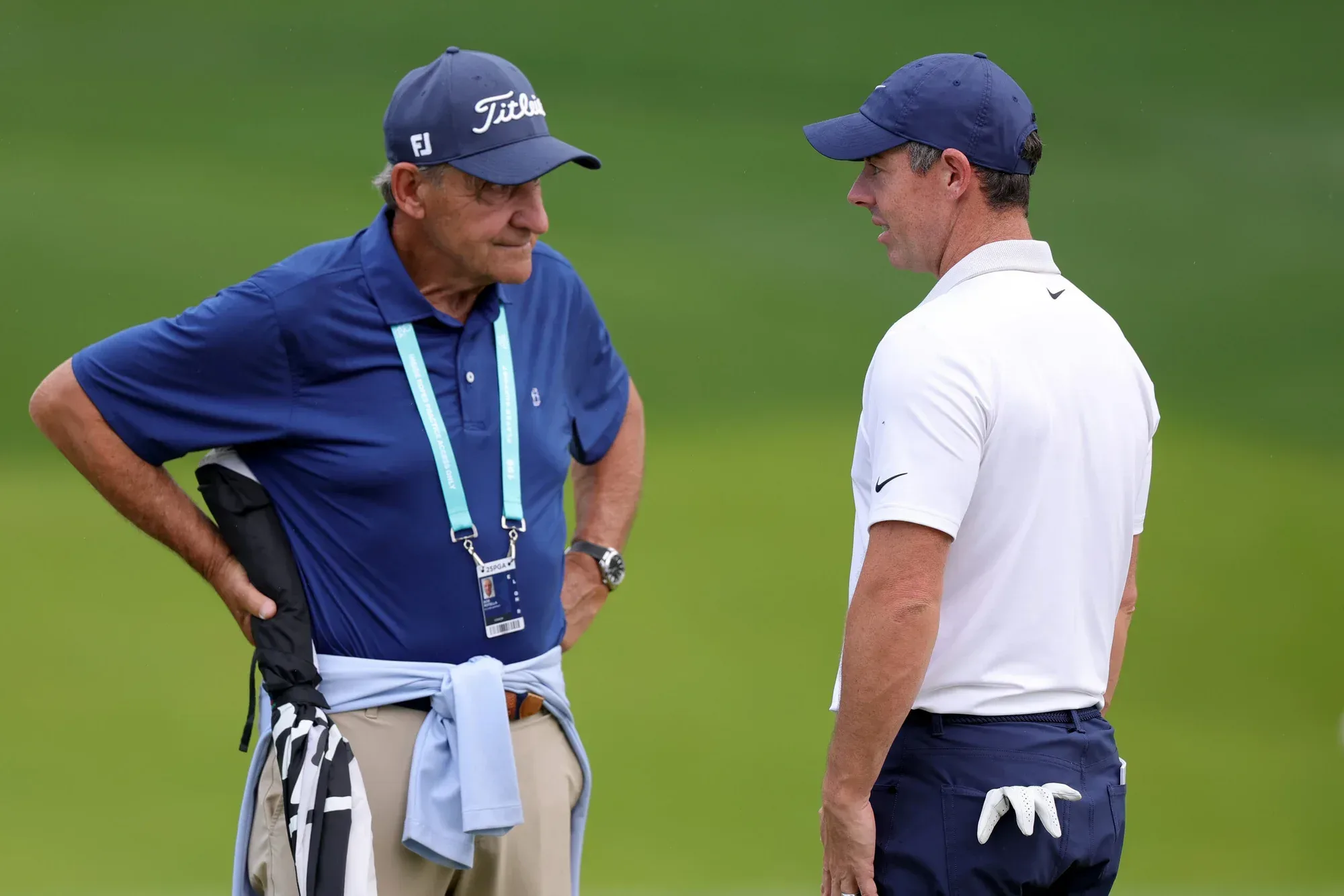
Bob Rotella’s memorabilia room is more than a display of signed keepsakes. It is a visual record of one of the most influential careers in modern performance psychology, built through decades of work with major champions, Hall of Famers, college powers, and stars from well beyond the golf course.
The longtime sports psychologist has accumulated an extraordinary collection of gifts from athletes and coaches who credit him with helping them perform at their best. In his Charlottesville, Virginia home, the walls and floors are filled with signed photos, posters, flags, rings, jerseys, trophies, and personal mementos tied to some of the biggest names in sports.
For collectors, the appeal goes far beyond autograph value. Rotella’s collection stands out because nearly every piece has a story attached to a turning point, a title run, or a defining moment in an athlete’s career.
Rory McIlroy’s Rolex leads a remarkable group of gifts
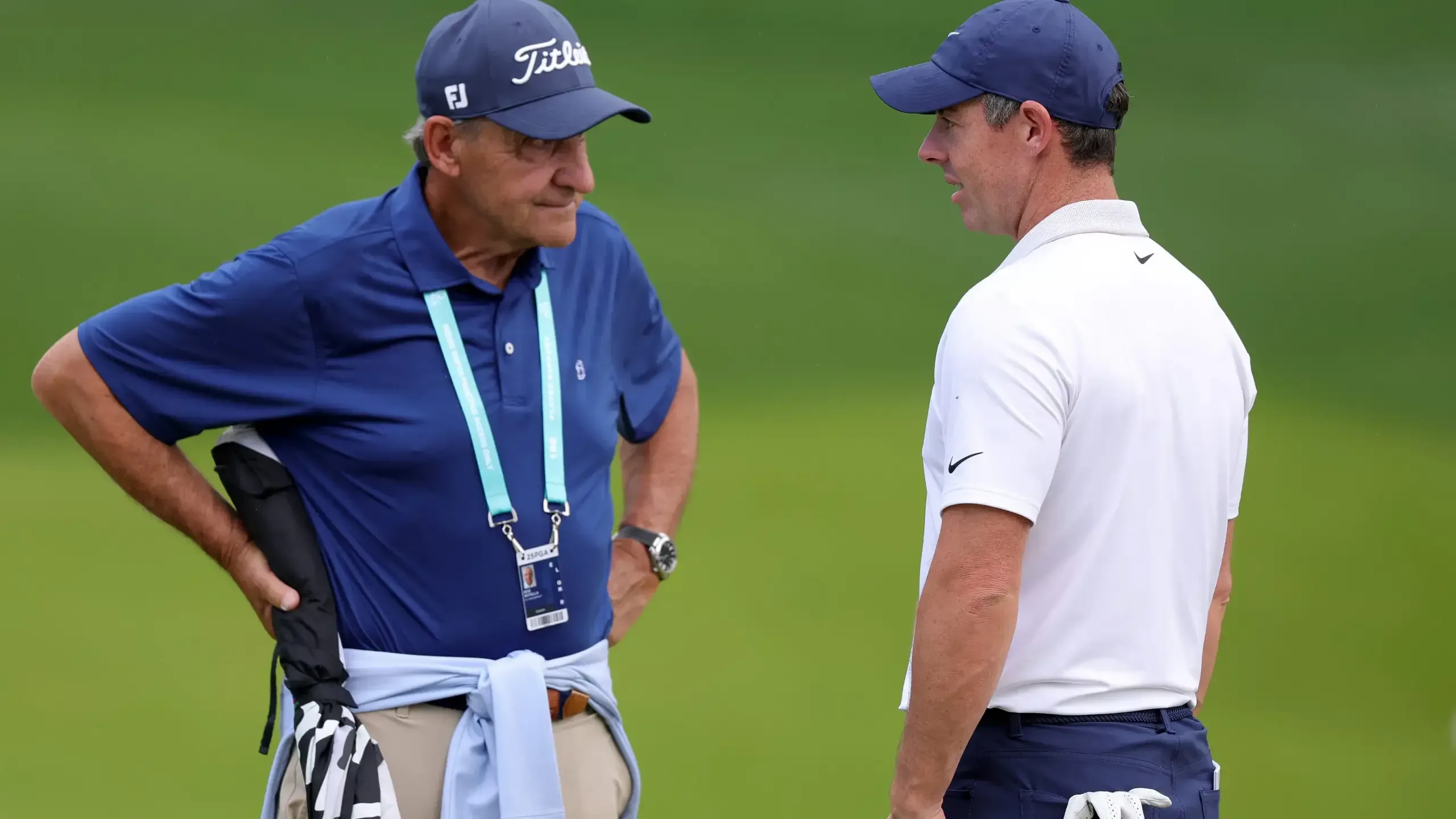
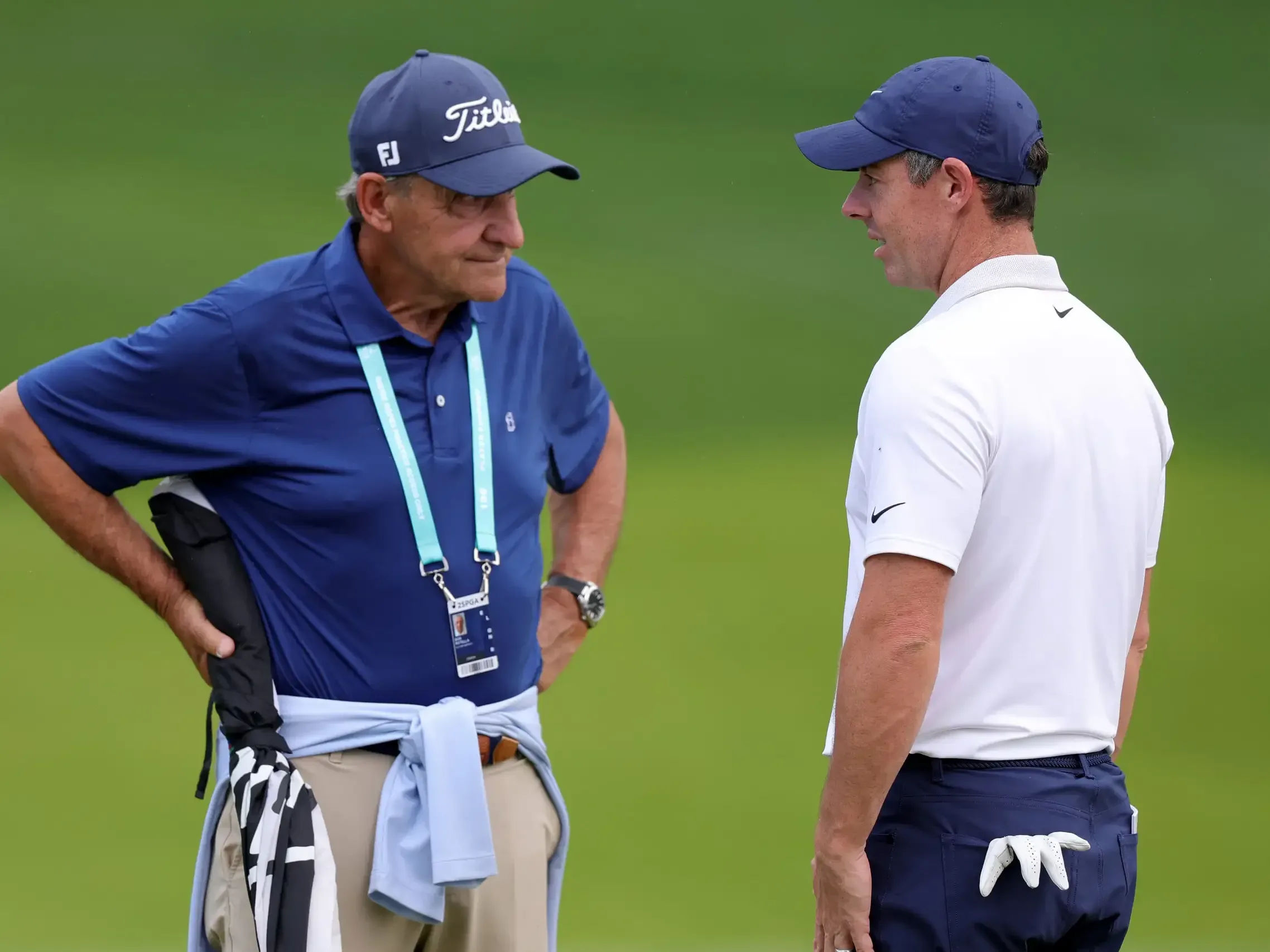
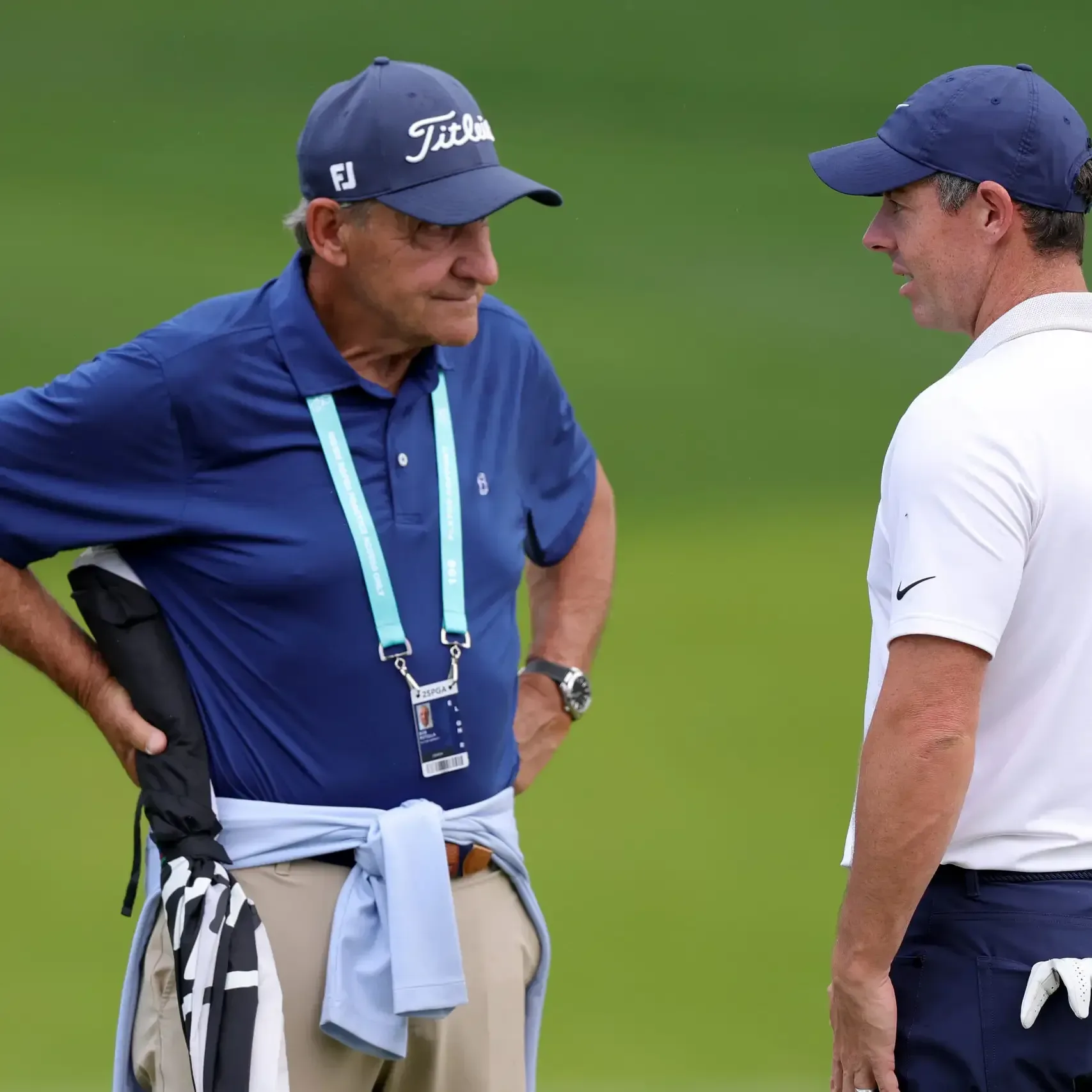
One of the most striking pieces in Rotella’s collection is a Rolex gifted by Rory McIlroy after the 2025 Masters. The watch commemorates a victory Rotella helped McIlroy prepare for mentally, and it gained even more significance when McIlroy followed it by winning again the next spring.
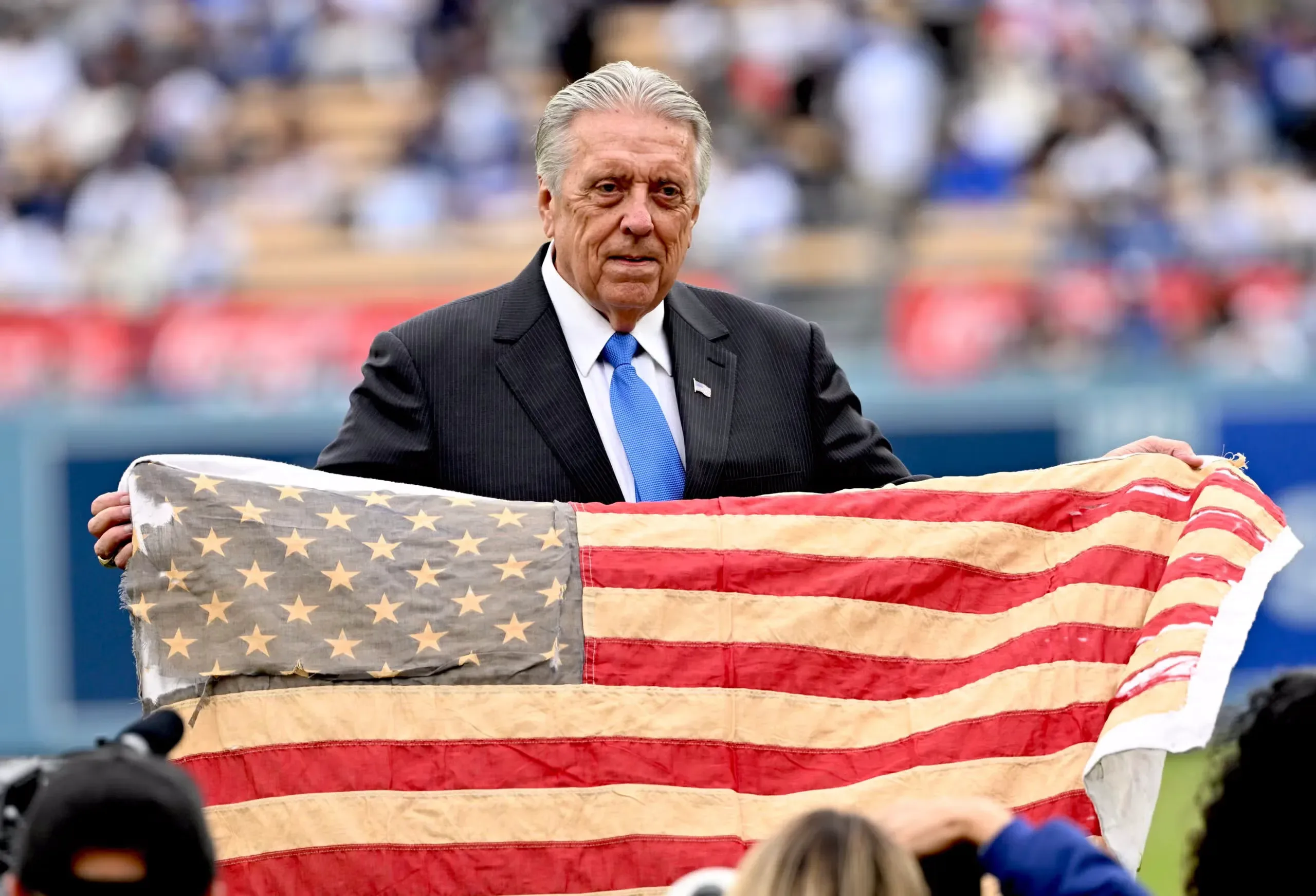
For more collector background, read Rick Monday’s Saved Flag Takes Center Stage at the Baseball Hall of Fame.
That item captures the theme of the entire collection. These are not random signed souvenirs. They are thank-you gifts tied directly to championships, breakthrough performances, and long-term relationships between Rotella and elite competitors.
Rotella’s lower level reportedly features signed images and flags from major golf champions, creating a setting that reflects just how deeply he has been woven into the game’s highest levels. For visiting players, the room functions almost like a private museum of competitive success and mental preparation.
How Rotella built a career that touched nearly every major sport
Rotella’s memorabilia collection makes sense only when viewed alongside the scope of his career. He worked with athletes across golf, basketball, baseball, football, and other sports, helping performers handle pressure, confidence, mistakes, and expectations.
His path began far from the polished world of championship gifts and framed inscriptions. Growing up in Rutland, Vermont, Rotella was immersed in sports from an early age and developed a lasting love of coaching. He later became a three-sport athlete and spent part of his college years teaching basketball and swimming to special needs students, an experience he considered especially meaningful.
While earning his doctorate at UConn, Rotella also had success coaching defensive lacrosse. That eventually led him to the University of Virginia, where he taught performance psychology and helped launch a doctoral program in the field. One of the standout athletes in that period was Ralph Sampson, who went on to become one of college basketball’s most decorated players.
At a time when sports psychology was still developing as a discipline, Rotella established a reputation that eventually took him beyond academia and into private consulting with world-class athletes.
Baseball and basketball pieces reveal the breadth of the collection
Although golf dominates the collection, some of Rotella’s most personal pieces come from baseball and basketball.
Among his favorites is an autographed color photo of Ernie Banks inscribed, “To Doc, Keep going, Ernie Banks.” That item carries added meaning because Rotella used an Ernie Banks model fielder’s glove as a kid, making the signed image a bridge between childhood fandom and a lifetime in sports.
There is also a Greg Maddux Chicago Cubs jersey, another reminder that Rotella’s reach extended into baseball clubhouses and to some of the sport’s most accomplished names. His client list has included Hall of Famers such as Maddux, Randy Johnson, and Ken Griffey Jr., reflecting just how widely his methods resonated.
On the basketball side, the collection includes rings from the Philadelphia Eagles’ Super Bowl championship and the Kentucky Wildcats’ 2012 NCAA title, along with an autographed basketball from John Calipari. Rotella also owns a framed color photo from Kentucky’s championship win over Kansas in New Orleans, complete with the final score on an inset plaque: Kentucky 67, Kansas 59.
Those items show that the collection is not centered solely on individual stars. It also preserves memories of team triumphs, locker-room belief, and the psychological side of navigating tournament pressure.
Framed tributes from college basketball coaches stand out
Several of the most compelling display pieces come with personalized messages that directly speak to Rotella’s influence.
One is a framed photo of former George Mason coach Jim Larranaga cutting down the net during the school’s stunning 2006 Final Four run. The inscription thanks Rotella and credits him with playing an important role in the journey. A separate framed display tied to that Cinderella run includes clippings, photos, and a magazine cover featuring George Mason star Lamar Butler under the headline “Sweet Surprises.”
Another major item comes from Virginia’s 2019 national championship team. A framed poster signed by coach Tony Bennett includes a handwritten message thanking Rotella for always believing in Bennett and the team, while also saying he played a big part in Virginia winning the title.
For collectors, inscriptions like these transform memorabilia into historical documents. The value is not only in the signature itself, but in the direct evidence of impact from championship-level figures.
Rick Carlisle, Bill Walsh, and other notable names appear throughout the room
Rotella’s relationships with athletes and coaches often stretched over decades, and some of his favorite items reflect those long ties.
A color photo of Rick Carlisle kissing the NBA championship trophy after leading the Dallas Mavericks to the 2011 title is one example. Carlisle, who had earlier been a co-captain on Virginia’s 1984 Final Four team, inscribed the photo with thanks for decades of friendship and guidance. The piece represents not just a title moment, but a mentorship connection that lasted for years.
Rotella also has a framed photo of himself with legendary San Francisco 49ers coach Bill Walsh. While not every item in the room is described in full detail, names like Walsh reinforce the caliber of the figures who crossed paths with Rotella during his career.
The collection even extends beyond sports. John Rzeznik of the Goo Goo Dolls is among the entertainers Rotella has worked with, and the memorabilia tied to that relationship includes a framed display with a performance image and discs from the multi-platinum album Dizzy Up the Girl.
Golf memorabilia forms the heart of the collection
If there is a centerpiece category in Rotella’s memorabilia room, it is golf. That is fitting given how closely his name has become associated with the mental game and with generations of PGA Tour talent.
Rotella’s love of golf goes back to childhood, when he caddied for four-time British Open champion Bobby Locke at Rutland Country Club. A key turning point came in 1978 when a speech he gave on sports psychology at Madison Square Garden caught the attention of people looking to expand mental instruction in golf. That opportunity opened the door to work with tour players and eventually some of the biggest champions in the sport.
Among the golf items, one of the most treasured is a signed color poster of Ben Hogan’s iconic 1-iron shot at the 18th hole during the 1950 U.S. Open at Merion. The image is one of the most celebrated in golf history, tied to Hogan’s “Miracle at Merion” comeback after a near-fatal car accident. Rotella spent time with Hogan at Shady Oaks in 1989 and received the signed poster directly from him.
For any collector of golf memorabilia, that is the kind of piece that sits in the highest tier: an iconic image, a legendary player, and a strong personal provenance.
Jack Nicklaus, Padraig Harrington, Trevor Immelman and Ryder Cup pieces add depth
Rotella’s golf collection includes multiple items from major champions and major moments.
An autographed color photo of Jack Nicklaus carries the inscription, “To Bob, Keep the kids thinking straight. Good Luck. Jack Nicklaus.” The wording speaks directly to Rotella’s role as a teacher and guide, giving the piece a personal quality beyond a standard signed photo.
Padraig Harrington gave Rotella a replica Claret Jug after his Open Championship success, an especially prestigious item in the room. Rotella has described that piece as particularly special, with the trophy preserved in its presentation box from The Royal and Ancient Golf Club of St. Andrews.
Trevor Immelman’s contribution is another standout. Rotella has a framed display featuring a photo of Immelman wearing the green jacket after winning the 2008 Masters, paired with a yellow pin flag bearing a handwritten note thanking Rotella and saying the victory would not have been possible without his support and advice.
He also owns signed posters from the 2016 Ryder Cup at Hazeltine National, bearing the signatures of U.S. captain Davis Love and European captain Darren Clarke. Another notable image in the collection shows Rotella with Tom Kite and famed instructor Harvey Penick, whose Little Red Book remains a cornerstone text in golf instruction.
The memorabilia also reflects Rotella’s philosophy
Rotella’s place in golf history is tied not only to his clients, but to his writing. His bibliography includes 15 books, with titles such as The Golfer’s Mind, Your 15th Club, and the widely influential Golf Is Not a Game of Perfect.
That message has shaped generations of players, from tour stars to weekend golfers. The core idea is simple and enduring: golf is a game of mistakes, and success depends less on perfection than on acceptance, recovery, and scoring anyway.
That philosophy played a visible part in his work with McIlroy, particularly around major championship preparation. In the lead-up to tournaments, Rotella has spent time helping shape plans involving mindset, attitude, and strategy, while also sending detailed reminders players can revisit during an event. The process is not static either, with adjustments made based on what happened the previous day.
For memorabilia collectors, that context matters. These gifts are not merely celebratory. They are artifacts of an approach to performance that athletes felt changed outcomes.
Why Rotella’s collection resonates with collectors
There are larger celebrity collections and there are collections with greater pure market value, but Rotella’s stands apart for a different reason. It captures the private side of public victories.
Instead of focusing on purchased items, the room is filled with pieces that were presented directly to him by athletes, coaches, and performers. Many include inscriptions that explain why the gift was given. That gives the collection unusual emotional and historical depth.
It also crosses collecting categories in a way that few personal archives can match. Golf fans can find major championship history. Basketball collectors can trace NCAA and NBA connections. Baseball collectors can spot Hall of Fame links. Football is represented through championship jewelry and coaching ties. Even music memorabilia has a place in the room.
One recently added piece points to the collection’s continuing evolution: a large black-and-white poster of McIlroy on his knees after winning the 2025 Masters, with the crowd rising behind him. It is another vivid entry in a room already packed with moments that mattered, and another reminder that Rotella’s legacy lives not just in trophies won, but in the gratitude those wins inspired.
Photo Gallery