Rick Monday built a long and accomplished major league career, earning two All-Star selections, winning a World Series title and delivering one of the biggest postseason home runs in Dodgers history. Yet the piece of memorabilia most closely tied to his legacy is not a bat, ball or jersey. It is an American flag.
That flag, rescued by Monday during a dramatic on-field moment at Dodger Stadium in 1976, is now on display at the Baseball Hall of Fame in Cooperstown as part of the nation’s 250th birthday celebration. Nearly 50 years after the play, the flag remains one of the most powerful crossover artifacts in baseball memorabilia, connecting the sport to a singular moment of patriotism, controversy and quick reaction under pressure.
For collectors and baseball historians alike, the renewed attention brings fresh focus to one of the game’s most unforgettable non-baseball plays, and to the artifact that preserved it.
The moment that turned into baseball history
The incident happened on April 25, 1976, during a Cubs-Dodgers game at Dodger Stadium. Monday, then playing center field for the Cubs, noticed commotion in left-center during the bottom of the fourth inning when two intruders came onto the field.
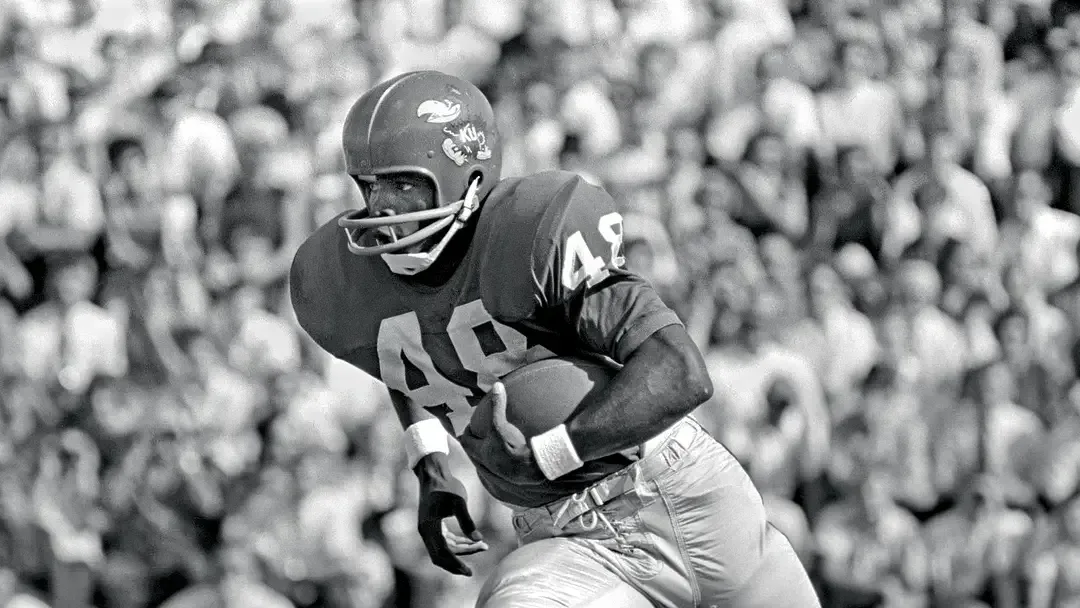
For more collector background, read 1966 Topps Football Still Stands Out for Its TV-Frame Design, Tough Grades, and AFL Star Power.
What initially looked like another interruption quickly became something far more serious. One of the men unfurled an American flag on the grass and began dousing it with lighter fluid. Monday said he could smell the fluid as he ran toward them and saw a match being struck, only for the wind to blow it out.
In that split second, Monday decided not to engage the men directly. Instead, he zeroed in on the flag itself. He sprinted in, grabbed it before it could be ignited and ran it toward the third-base side of the field. As he escaped with the flag, one of the intruders threw the can of lighter fluid at him and missed.
Monday later recalled feeling the moisture from the lighter fluid on the flag as soon as he picked it up. He briefly checked to make sure it was not burning before getting it to safety. He handed it off near third base to Dodgers pitcher Doug Rau while security moved in to apprehend the intruders.
For another perspective on this story, read Rick Monday’s 1976 Flag Rescue Lives On at the Hall of Fame.
The stadium reaction turned the moment into something larger than a routine fan interference incident. With the crowd stunned by what had just happened, fans began singing “God Bless America.” When Monday came to bat in the next inning, the Dodger Stadium scoreboard delivered a simple tribute: “Rick Monday … You Made a Great Play.”
Why the flag still matters as memorabilia
Baseball memorabilia often gains significance through performance, rarity or player association. Monday’s flag carries a different kind of weight. Its importance comes from circumstance and symbolism.
Torn and weathered, the flag is not pristine in the way many collectors expect display pieces to be. Its condition is part of its historical power. The visible wear reinforces that this was not a ceremonial keepsake created after the fact. It is the actual object taken from the field during a live major league game in one of the most remembered acts of intervention in baseball history.
That authenticity gives the piece unusual reach. It is meaningful to baseball fans, but it also resonates with military families, patriotic collectors and museum visitors who may not follow the hobby closely. Few baseball-related artifacts carry that kind of immediate recognition beyond the sport itself.
Monday eventually obtained the flag from the Dodgers after legal proceedings involving the intruders were completed. Over the years, he used it in charitable efforts, touring with it in the offseason to help raise money for veterans and their families. That extended public life gave the artifact an added layer of significance. It did not disappear into a private collection or a vault. It remained active in public memory.
A Hall of Fame display with built-in emotional pull
The flag’s current Cooperstown display places it in one of the sport’s most visible historical settings. The exhibit includes the actual flag in a glass case along with video of Monday discussing the event, bringing together the object and the firsthand account behind it.
For museum visitors, that combination matters. A great sports artifact becomes even more effective when viewers can connect it to voice, movement and context. In this case, Monday’s own recollections help frame the urgency of what happened, from the smell of lighter fluid to the quick decision to take the flag rather than tackle the men.
The display also arrives at a fitting time. With the nation marking its 250th birthday celebration, the Hall of Fame exhibit gives the artifact fresh relevance, not just as a baseball relic but as a piece of American cultural history.
In the memorabilia world, context often determines whether an item is simply collectible or truly museum-grade. Monday’s flag clearly falls into the second category. Its story, preservation and public exhibition place it among the more distinctive non-card baseball artifacts of the modern era.
Recognition that reached beyond the ballpark
Monday’s run to the flag was immediately recognized as more than an athletic reflex. It became national news and led to one of the more remarkable postgame responses tied to a regular-season contest.
After the game, Monday was met by a crowd of reporters in the Cubs clubhouse. He also received a phone call from President Gerald R. Ford, who thanked him for his actions. Monday was later invited to the White House and received a Presidential Commendation for “Service to Others.”
That level of recognition is part of why the artifact has remained so relevant. Many famous baseball objects matter because of championships, records or iconic players. This one matters because it crossed into national civic symbolism while still remaining rooted in a clearly documented moment on a major league field.
Dodgers owner Peter O’Malley later called the play one of the great moments in Dodger history, a notable statement considering Monday made it while wearing a Cubs uniform. Monday would join the Dodgers after the 1976 season and spend the final eight years of his career in Los Angeles, deepening the connection between player, franchise and event.
Rick Monday’s own perspective on the rescue
Monday has consistently tied his decision that day to his respect for veterans and military service. He served six years in the U.S. Marine Corps Reserves from 1966 to 1971, fulfilling that commitment while his professional baseball career was underway.
His comments over the years have underscored how personally he viewed the attempted desecration. He has spoken about visiting veterans hospitals and seeing the cost paid by service members, and about the role the American flag plays in military funerals and remembrance. In his view, that context made the decision immediate.
He has also maintained a measure of humility about the act, saying he does not know anyone who would not have done the same thing. Even so, the moment has long stood apart from the rest of his baseball résumé in the public imagination.
That is saying something for a player with substantial on-field credentials. Monday was the first overall pick in the inaugural MLB Draft in 1965, a two-time All-Star in 1968 and 1978, and a member of the 1981 World Series champion Dodgers. He also hit the winning home run in Game 5 of the 1981 National League Championship Series. Still, the image most fans associate with him remains that dash across the outfield grass in 1976.
The role of photography and broadcast history
Part of what preserved the moment so powerfully was the imagery attached to it. One famous still photograph captured Monday reaching down to snatch the flag away from the intruders. That image became one of the defining sports photographs of the era and was nominated for the Pulitzer Prize.
Just as memorable was Vin Scully’s radio call, which remains one of the most cited audio descriptions of an unexpected event at a ballpark. Scully later ranked it among his top calls, and Monday has said hearing it still gives him chills.
For years, many believed the still photograph was the only visual documentation of the play. Monday later learned that video of the incident did exist, discovered after a chance meeting in 1984 with someone connected to a local TV studio. The footage had been shot with a newer camera by an individual working at a local film studio.
That surviving video now adds another dimension to the Hall of Fame presentation. In hobby terms, it also strengthens provenance. When an artifact is paired with clear photographic evidence, audio history and moving footage, its place in the historical record becomes even more secure.
How the moment lived on in collectibles
The rescue has not only survived through museum exhibition and archival footage. It has also appeared in the broader collectible landscape.
One of the more unusual stadium giveaways tied to the event came on Aug. 27, 2013, when fans attending a Cubs-Dodgers game at Dodger Stadium received a bobblehead depicting Monday in his Cubs uniform running with the flag. That promotion showed how thoroughly the moment had entered baseball culture. It was no longer just remembered. It had become collectible in its own right.
That matters because not every famous baseball event translates into a memorabilia category. Monday’s rescue did. The original flag became a museum artifact. The famous image became a lasting photographic collectible. The story inspired commemorative items. The broadcast call became part of baseball audio lore. Very few off-script game moments produce that many collectible touchpoints.
For collectors focused on baseball history rather than pure player value, it is a reminder that significance can come from narrative as much as performance. A game-used bat from an ordinary contest may carry less historical weight than an object tied to a single unforgettable act that still resonates decades later.
The game itself and the lasting legacy
Lost in the legend is the fact that Monday also had an excellent day at the plate. He collected three hits and drove in a run in the 1976 game, though the Cubs ultimately lost 5-4 in 10 innings. In another setting, that line might have led the story. Instead, it became a footnote to one of baseball’s most memorable interruptions.
Monday’s connection to the saved flag did not end when he took it off the field. Once it was returned to him by the Dodgers, he carried it on speaking appearances and fundraising trips, helping turn the object into a continuing symbol rather than a frozen moment. Even decades later, he often brought the flag with him during public appearances.
Earlier in 2026, the 50th anniversary of the rescue was recognized at Dodger Stadium, another indication that the play still occupies a special place in the game’s memory. Now, with the flag on display in Cooperstown, the artifact has taken on renewed visibility at a national level.
For a hobby increasingly driven by rarity, provenance and storytelling, Rick Monday’s saved flag checks every box. It is instantly identifiable, tied to a precisely documented moment, supported by iconic imagery and preserved through public exhibition. That makes it more than a conversation piece from baseball’s past. It stands as one of the sport’s most meaningful surviving artifacts, with a story that remains as powerful in a museum case as it was in motion on a spring afternoon in 1976.
Photo Gallery