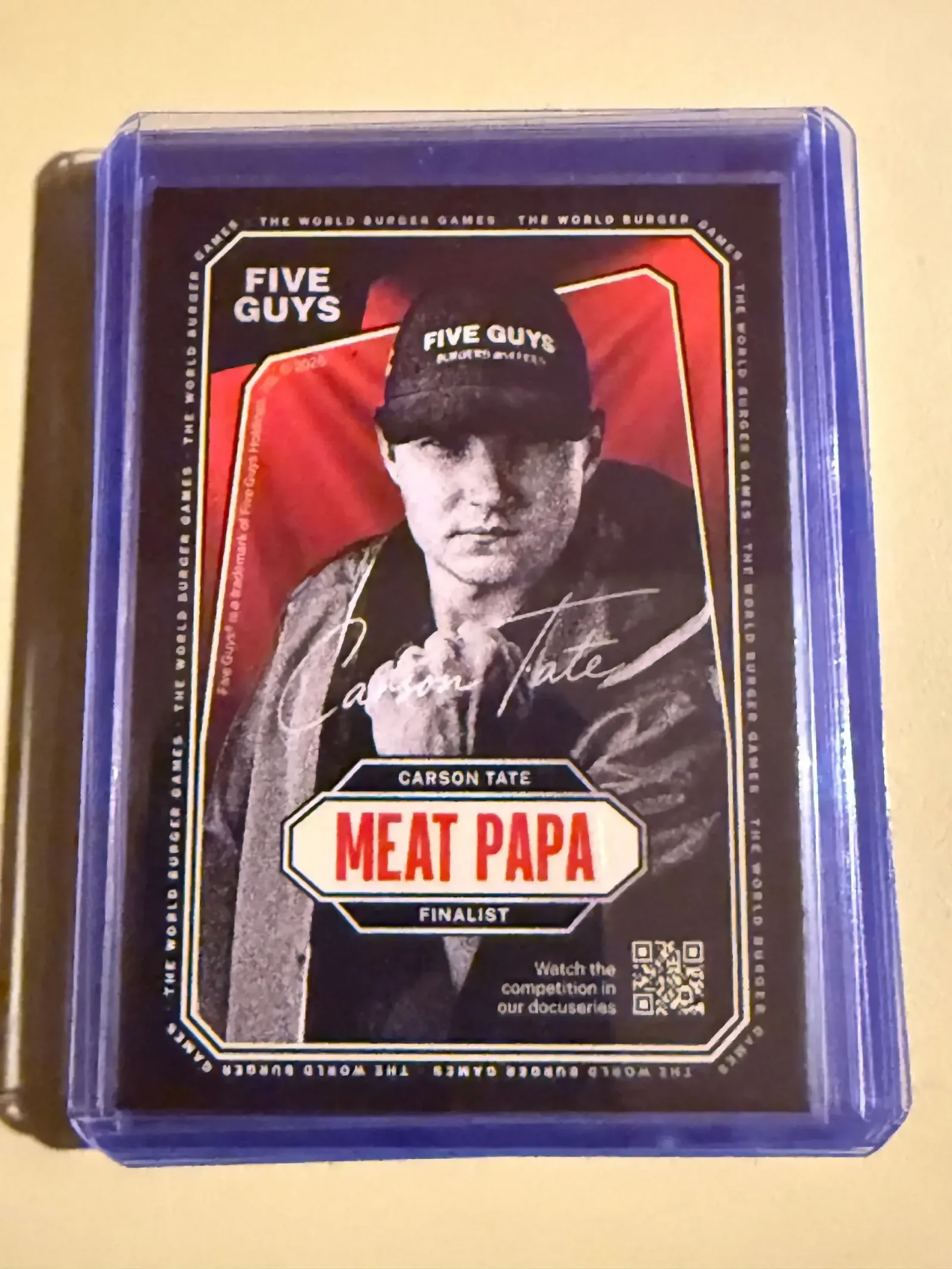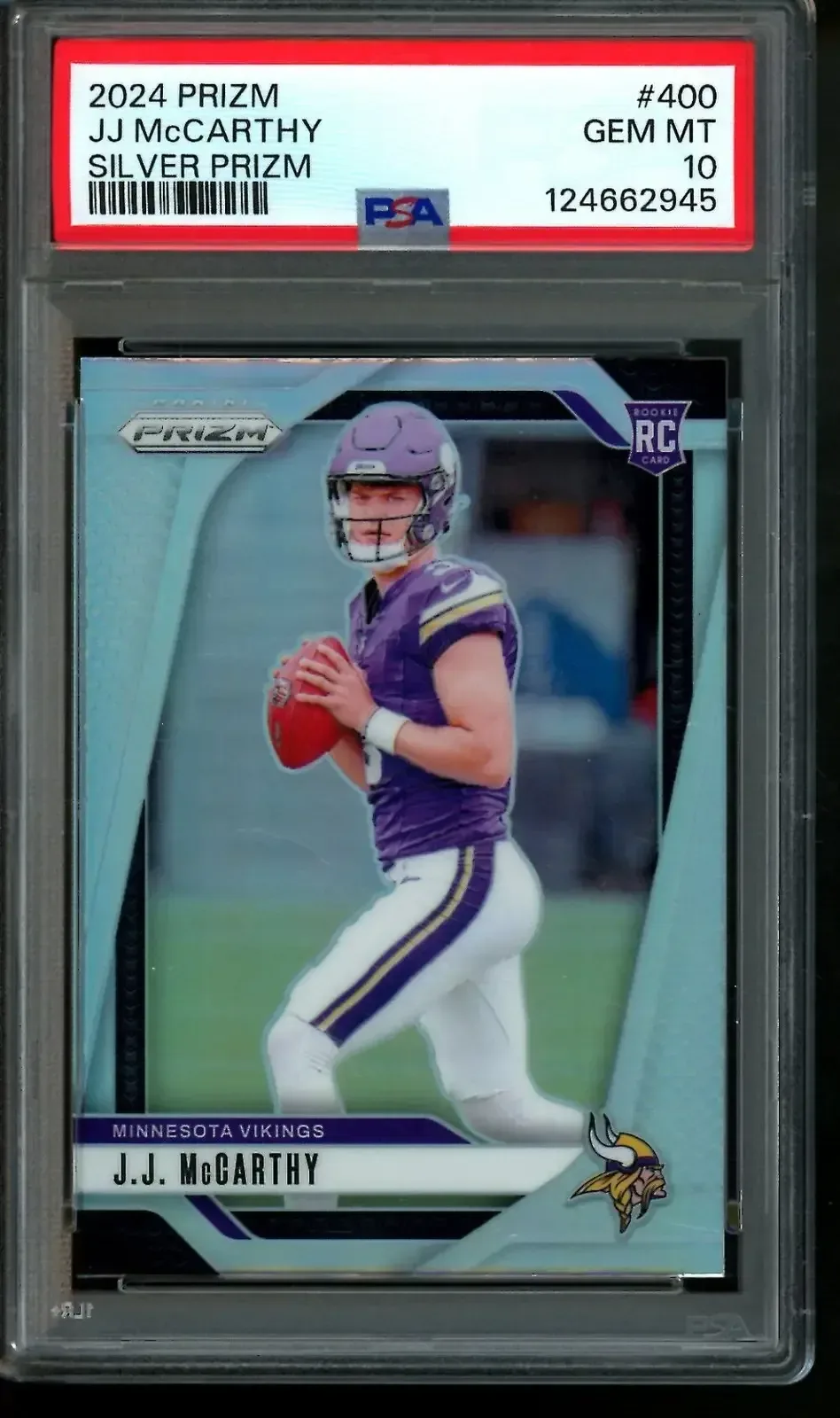
Collectors use vintage and modern as if the line is obvious, but the more useful distinction is how cards from different eras actually behave. Older cards are usually simpler physical objects with fewer built-in rarity layers. Newer cards are usually more complex products, with chromium finishes, parallels, serial numbering, and tighter expectations around condition.
A practical framework comes from PSA’s current sport-era buckets as of the research date: Modern Sport covers 1986 through 2016, and Ultra-Modern Sport covers 2017 to the present. That does not create a universal rule that everything before 1986 is automatically vintage, but it gives you a workable way to compare older cardboard with contemporary releases. Once you focus on printing, condition, availability, and collecting style, the differences become far easier to understand.
1. Use era labels as a guide, not a law
The hobby does not run on one official cutoff for vintage versus modern, so collectors are better off using the terms as shorthand instead of rigid categories. PSA is clear about the newer side of the timeline: Modern Sport is 1986 to 2016 and Ultra-Modern Sport is 2017 to present, as of the research date. That leaves pre-1986 as a practical older-card zone by inference, not by universal decree.
Why does that matter? Because expectations change by era. If you are looking at a 1960s or 1970s card, you are usually dealing with decades of handling, storage, and survival. If you are looking at a current chromium release, you are usually dealing with version-chasing, pack-fresh inspection, and a market that may care intensely about whether the card lands as an 8, 9, or 10.
A useful habit is to ask two questions before you buy. First, what era logic am I entering? Second, what does that era usually reward? Older cards often reward patience with eye appeal and realistic standards. Newer cards often reward product knowledge and precision. Mixing those standards is how collectors end up disappointed, either by expecting perfection from old cardboard or by underestimating how much tiny factory flaws matter on a modern premium card.
- Treat PSA’s era buckets as a reference point, not a hobby commandment.
- Judge cards within the standards of their own era.
- Decide early whether you care more about history, visual sharpness, or product complexity.
2. Printing shifted from straightforward cardboard to engineered chase products
One of the clearest differences between vintage and modern cards is manufacturing philosophy. Older cards are generally associated with paper or cardboard-era simplicity. Modern cards increasingly use chromium stock, refractors, alternate surface treatments, and other engineered variations that make the same player card exist in many different forms.
Topps places an important marker in that change. It says its Chrome technology first appeared in 1993 Topps Finest Baseball, and that Topps Chrome debuted in 1996 as a chromium-stock version of flagship-style cards. That history helps explain why newer collectors often think in product families and parallel trees, while older collectors more often think in sets, players, and condition.
Topps also defines parallels as alternate versions of a base card distinguished by changes in border color, texture, pattern, material, image variation, or printing technology. That means a modern card is rarely just one card. It may have a base version, multiple color parallels, several numbered versions, and perhaps autograph or image-variation forms. When you buy modern, the exact version is often the real object being collected, not merely the player pictured on it.
That creates a practical buying difference. With older cards, identification usually starts with year, set, player, and basic authenticity. With modern cards, identification can require checklist work and careful visual comparison. Two cards may look nearly identical in a listing photo yet represent very different print structures and scarcity profiles. That complexity can be fun, but it also means sloppy buying gets punished faster.
- For older cards, start with set, year, and stock expectations.
- For modern cards, verify the exact parallel or finish before comparing prices.
- If a listing uses vague color terms, assume you still need checklist confirmation.
3. Better technology did not eliminate defects; it changed them
Modern collectors sometimes assume premium printing should produce premium perfection. The grading standards say otherwise. PSA allows slight printing imperfections even on some higher grades and uses a PD qualifier for significant print defects. Beckett also states that manufacturer print defects and ink smears reduce grade, and its grading language specifically points to print spots, focus, registration, and metallic print lines as meaningful issues.
That matters because the very surfaces that make many modern cards attractive are also the surfaces that reveal flaws. Chromium stock can show lines, scratches, and edge chipping. Reflective finishes can exaggerate factory marks that would be far less noticeable on traditional matte cardboard. A card can come straight from a sealed pack and still fall short of a top grade because of production defects you did not cause.
Vintage cards have their own printing problems, but the collector’s eye usually works differently there. With an older card, the central question is often whether the example presents honestly for the issue. Does it have normal registration for the set? Is the centering acceptable? Is there surface wear or a crease that changes its category entirely? On modern cards, the conversation often becomes finer and harsher because buyers expect a cleaner starting point.
A practical example: if you are inspecting a chrome-style card, tilting it under direct light is essential because faint surface lines may only appear at an angle. If you are inspecting an older paper card, careful attention to creases, paper loss, and broad centering usually tells you more than chasing microscopic shine defects. Different materials demand different inspection habits.
- Pack-fresh does not mean gem-mint.
- Chrome-style cards deserve angled-light surface checks.
- Older paper cards deserve stronger focus on creases, centering, and paper integrity.
4. Condition is harder in different ways depending on the era
Collectors often say vintage is tougher in condition, and broadly that is true, but not for only one reason. PSA explicitly notes that age matters and that vintage cards may still be worth grading and collecting even in low grade. That reflects a basic survival truth: many older cards did not make it through decades of handling and storage in strong shape, so the market often accepts visible wear as normal.
PSA also says that since 2018, about 90 percent of Ultra-Modern Sport cards from 2017 to present and about 80 percent of Modern Sport cards from 1986 to 2016 have graded PSA 8 or higher, while cautioning that these figures are approximate and each card is judged individually. The important takeaway is directional, not absolute. Newer cards more often survive in higher condition bands than older cards do.
But modern condition has its own trap: expectations are much stricter. On many newer issues, the difference between a card that feels excellent and one that earns a top grade may come down to minor centering, a tiny print speck, a faint scratch, or slight edge wear. So the challenge is not usually survival. It is precision.
That is why collectors should not apply one condition mindset to every era. If you want a mid-century or 1970s star card, it may make perfect sense to prioritize eye appeal over a high numerical grade. If you want a modern serial-numbered parallel, the grade may be part of the card’s identity in a way it is not for older material. A smart buyer asks whether the premium is attached to the card’s importance, the card’s grade, or both.
- Vintage often rewards realistic acceptance of wear.
- Modern often rewards strict attention to small flaws.
- Before buying, decide whether you are paying for historical importance, top condition, or both.
5. Vintage scarcity usually comes from survival; modern scarcity often comes from configuration
Scarcity is where collectors can get confused fastest. With older cards, limited availability is often a survival story. The card may still exist in decent numbers overall, but high-grade or highly attractive copies can be far harder to locate because of chronic issue problems such as rough cuts, centering trouble, or long-term wear. PSA’s population-report discussion uses 1969 Topps Lou Brock as an example of a card that is difficult in high grade because of consistent centering problems. That is a classic vintage pattern: available in some form, difficult in elite form.
Modern scarcity is often built into the product from the beginning. Topps defines numbered cards as short-printed cards whose print run is stated on the card, and it describes rainbow collecting as a modern hobby phenomenon. So a current player’s base card may be widely available, while a specific color parallel, low-numbered version, or autograph version is intentionally limited.
This changes how you should think about supply. In vintage, the hard part may be finding a nice survivor. In modern, the hard part may be identifying and locating the exact version you want. Those are not the same challenge. One is driven mainly by time and attrition. The other is driven mainly by product architecture.
For collectors, the practical lesson is simple: separate card scarcity from version scarcity. Owning a plentiful modern base card is not the same thing as owning a scarce modern parallel, just as owning a worn older star card is not the same thing as owning a sharply centered high-grade example. If you do not define what is actually scarce, you are likely to overpay for the wrong thing.
- Ask whether the scarce thing is the card, the grade, or the specific version.
- Serial numbering can clarify supply, but only for that exact parallel.
- A modern base card and a low-numbered modern parallel should not be treated as the same collectible.
6. Population reports are useful, but they are not a shortcut to truth
Collectors in both vintage and modern segments love population reports because they appear to turn scarcity into a clean number. PSA itself warns against that kind of oversimplification. Low population should not automatically be treated as true rarity, because pop reports can be shaped by submission habits, newly recognized variations, labeling changes, and whether people had any reason to grade a card in the first place.
That warning is especially important when comparing eras. A low population vintage card may reflect genuine difficulty in finding examples clean enough to submit. A low population modern card may reflect unopened product, collector indifference to grading that issue, or the fact that many copies remain raw. The number by itself does not explain which story you are looking at.
A better collector routine is to use population data as a prompt for more questions. If an older issue shows very low high-grade counts, ask whether the set is known for poor centering, fragile stock, or rough factory cuts. If a newer card shows low graded totals, ask whether it is serial-numbered, whether the product has many variations, and whether grading that parallel is common behavior among the people who collect it.
Consider a simple hypothetical. Two cards both show a population of 25 in a top grade. One is a late-1960s card from a set with chronic centering issues. The other is a recent numbered parallel from a product that still has unopened wax in the market. Those two populations are not evidence of the same kind of rarity. One may reflect decades of condition difficulty. The other may reflect timing. You need context before you can call either one scarce in a meaningful way.
- Use pop counts to start research, not finish it.
- Compare population data with known set traits and print-run information.
- Be wary of using the same scarcity logic for old cardboard and new parallels.
7. Grading older cards requires context; grading newer cards requires precision
A common mistake is assuming grading works identically in practical terms across every era. The principles are consistent, but issue context matters. PSA notes that eye appeal can affect how borderline centering is judged. Beckett graders have also discussed evaluating some older issues in light of their known manufacturing realities, including naturally rough-cut examples from certain sets such as 1970s O-Pee-Chee.
That does not mean vintage gets a free pass. It means knowledgeable grading recognizes the difference between an issue-typical characteristic and damage that meaningfully hurts the card. A collector who understands a set’s normal weaknesses can judge older cards more fairly and buy with more confidence.
Modern grading tends to be less about contextual tolerance and more about ruthless separation at the top end. On newer premium cards, tiny defects can matter a great deal because so much of the market is hunting top-condition examples. What looks excellent in a listing scan can become merely good when viewed under proper light and magnification.
The most practical takeaway is this: with vintage, buy the card first and the number second if budget matters. With modern, decide whether the grade is part of the target before buying raw. If your entire interest is tied to owning a crisp premium parallel, then grade sensitivity is not optional homework. It is the center of the purchase.
- Learn issue-specific flaws before shopping older cards.
- Assume tiny defects can matter a lot on modern premium releases.
- Match your grading expectations to the card’s era and market role.
8. The right collecting lane depends on the kind of homework you enjoy
Vintage and modern collecting do not just differ in materials. They reward different styles of attention. PSA’s grading guidance notes that vintage cards can still be worth collecting in lower grade because of rarity, scarcity, or sentimental value. Modern Topps material, by contrast, highlights numbered cards, refractors, and rainbow-building as core parts of the product experience. One lane leans more toward history and survivors. The other leans more toward format mastery and exact versions.
Authentication and trust signals also differ. Upper Deck says it introduced security holograms into trading cards after its 1988 founding, and Beckett describes anti-counterfeit features in newer labels, including holographic metallic material, a hidden UV pattern, and a reactive badge. By comparison, older cards predate many of these built-in modern-era security tools, which means vintage collectors often depend more on issue knowledge and third-party authentication expertise.
That difference can help you choose what fits your temperament. If you enjoy learning checklists, tracking parallels, and distinguishing among multiple forms of the same player card, modern collecting may feel engaging rather than exhausting. If you prefer a smaller set of variables and enjoy evaluating age, design, and eye appeal in historical context, vintage may be the more satisfying lane.
Neither path is superior. They simply distribute the challenge differently. Vintage usually offers simpler objects but harder survivors. Modern usually offers better-preserved objects but more complicated products. Once you understand that tradeoff, you can build a collection with fewer category mistakes and more deliberate choices.
- Choose vintage if you value history and can work within realistic wear standards.
- Choose modern if you enjoy version-chasing and close condition inspection.
- If you collect both, keep separate buying rules for each lane.
Illustration generated for this guide; not a photograph of an actual card, product or event.
Photo Gallery