Babe Ruth remains one of the most powerful names in sports collectibles, and the market keeps proving it. The latest reminder came when the jersey Ruth wore during his famous 1932 World Series “Called Shot” game sold for $24.12 million, setting a new all-time record for sports memorabilia.
For collectors, the sale was another landmark moment in a hobby that continues to push elite historic pieces into a different financial stratosphere. For Ruth’s family, it was also a fresh example of how deeply the public still connects with the man behind the legend.
Tom Stevens, Ruth’s grandson, has followed the major sales closely over the years. The eye-popping result for the jersey did not shock him, especially given the way premium collectibles have continued to rise alongside modern player salaries and franchise spending.
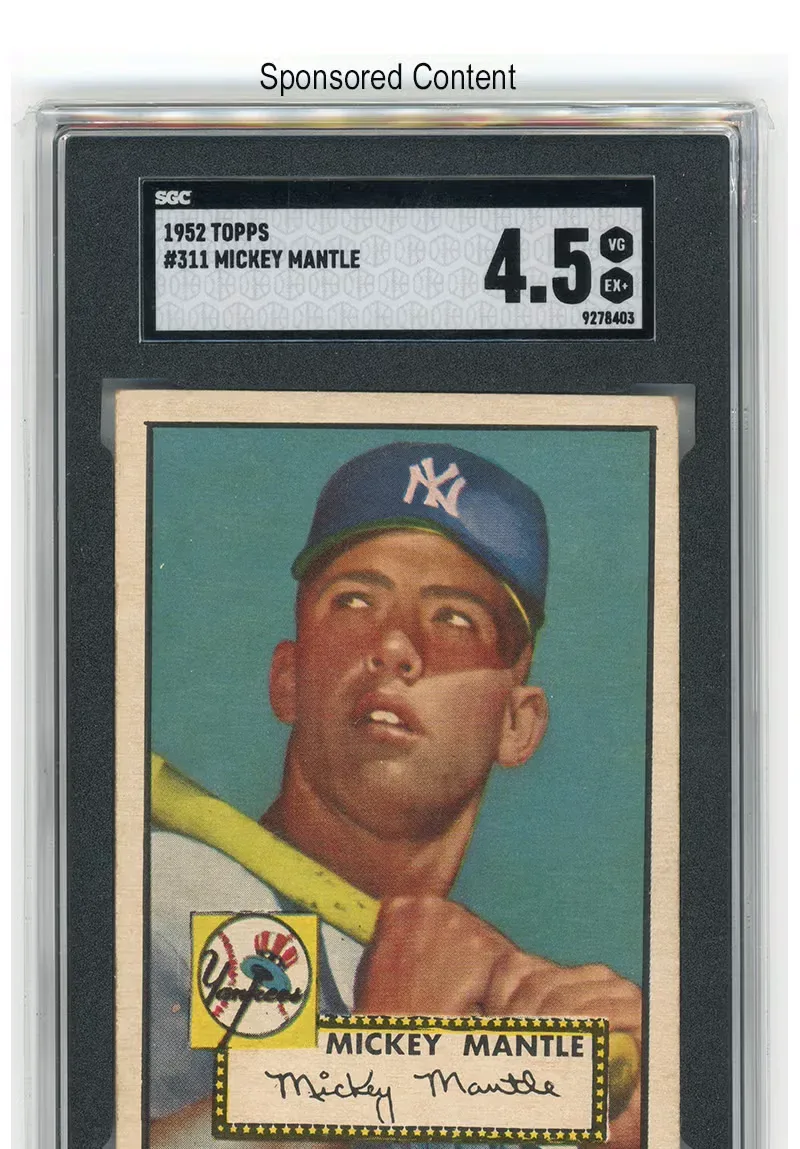
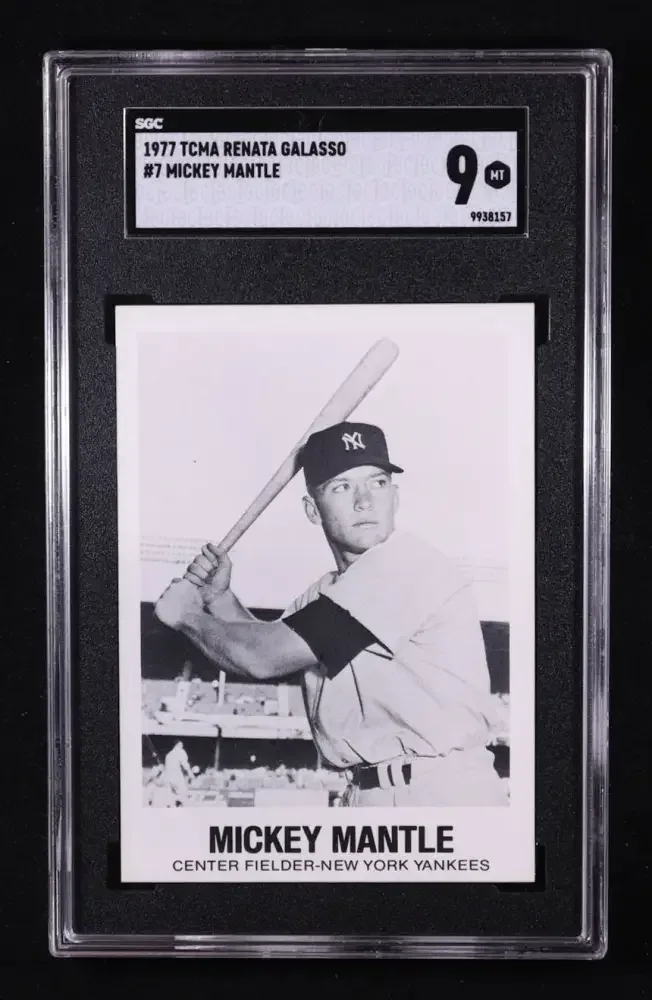
The number itself still stands out. It blew past the $12.6 million paid for a 1952 Topps Mickey Mantle card in 2022, and it more than doubled the previous high-water mark for a game-worn jersey, Michael Jordan’s 1998 NBA Finals jersey at $10.1 million. It also dwarfed the last public sale of Ruth’s 1932 jersey, which brought $940,000 about 19 years earlier.
For more collector background, read Mile High Fall Auction Loaded With Babe Ruth, Mickey Mantle and Registry-Caliber Vintage Sets.
Ruth artifacts have repeatedly rewritten price guides at the top of the market. In April 2023, a Ruth game-used bat from the 1920 season sold for $1.85 million, then a record for any baseball bat. That surpassed the prior bat record of $1.68 million, which also belonged to Ruth.
The numbers are extraordinary, but they only tell part of the story. Within the Ruth family, the appeal has never been limited to dollar figures. The memorabilia is valuable because it connects generations to baseball history and to a larger-than-life figure whose influence still shapes the sport.
The $24.12 Million Called Shot Jersey and Why It Matters
The jersey sale reignited interest in one of the most debated moments in baseball history: whether Ruth truly called his home run in Game 3 of the 1932 World Series at Wrigley Field.
For another perspective on this story, read Babe Ruth’s Family Keeps His Collecting Legacy in Perspective.
That debate has never fully cooled. Some fans and historians view the gesture as a definitive called shot. Others believe the story has grown beyond what the available evidence can prove. A surviving home movie filmed from behind home plate shows Ruth gesturing, but many still consider the footage inconclusive when it comes to what exactly he meant.
For the family, the discussion itself is part of the legacy. Ruth’s granddaughter Linda Ruth Tosetti has pointed to eyewitness recollections shared with the family over the years, including one account from a man who told her mother that he was in the stands that day and saw Ruth point. Ruth’s daughter Julia Ruth Stevens also firmly believed her father did exactly that.
Whether the moment can ever be settled to everyone’s satisfaction may not matter much to the market. The jersey is tied to one of the sport’s most enduring images, and that combination of fame, mythology, and proven game use created a perfect storm for collectors.
Tom Stevens owns a replica of the famous road gray uniform and has noted that even simple details like the wool construction help bring the era to life. That kind of connection helps explain why Ruth’s best artifacts are not just expensive memorabilia pieces. They are treated more like cultural objects.
How the Ruth Family Views the Collectibles Boom
Even as Ruth pieces continue to command seven- and eight-figure prices, the family’s relationship with the memorabilia world has remained personal. Stevens has said the family keeps track of major sales out of genuine interest, and over the years the family website has highlighted notable Ruth-related auction offerings.
Some of the items that have surfaced publicly are remarkable in their own right, including a Lou Gehrig signed and inscribed photo to Ruth, Ruth’s Yankees professional model cleats, and his signed 1935 final major league contract with the Boston Braves.
Still, the biggest financial prizes are mostly no longer in family hands. Stevens has explained that bats, uniforms, and other premium pieces once associated with Ruth’s Riverside Drive apartment eventually passed into other collections. He has recalled seeing a cedar chest with some of Ruth’s uniforms and a duffle bag filled with bats while visiting his grandmother Claire. As a child, he would try to swing them, choking up heavily on the handle because of their size and weight.
That memory says a lot about how Ruth collectibles function in two different worlds at once. In the public market, they are elite trophies. In the family, they were once household objects tied to stories, visits, and inherited memory.
Stevens has been clear that he is not focused on cashing out what remains. What the family still has is meant to be preserved and passed down, especially as younger generations become more interested in Ruth and his place in baseball history.
Autographs, Family Keepsakes, and the Items That Mean the Most
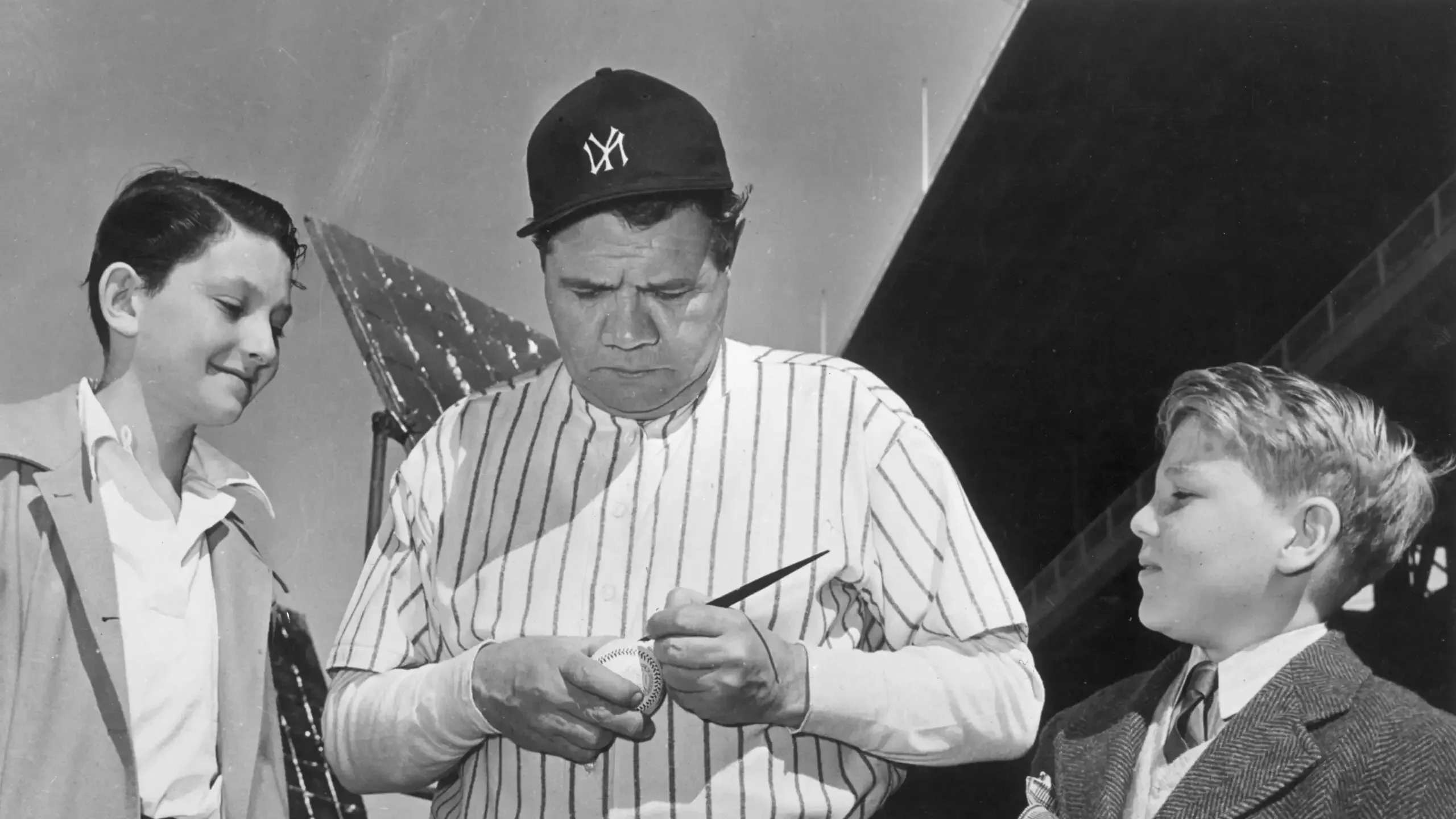
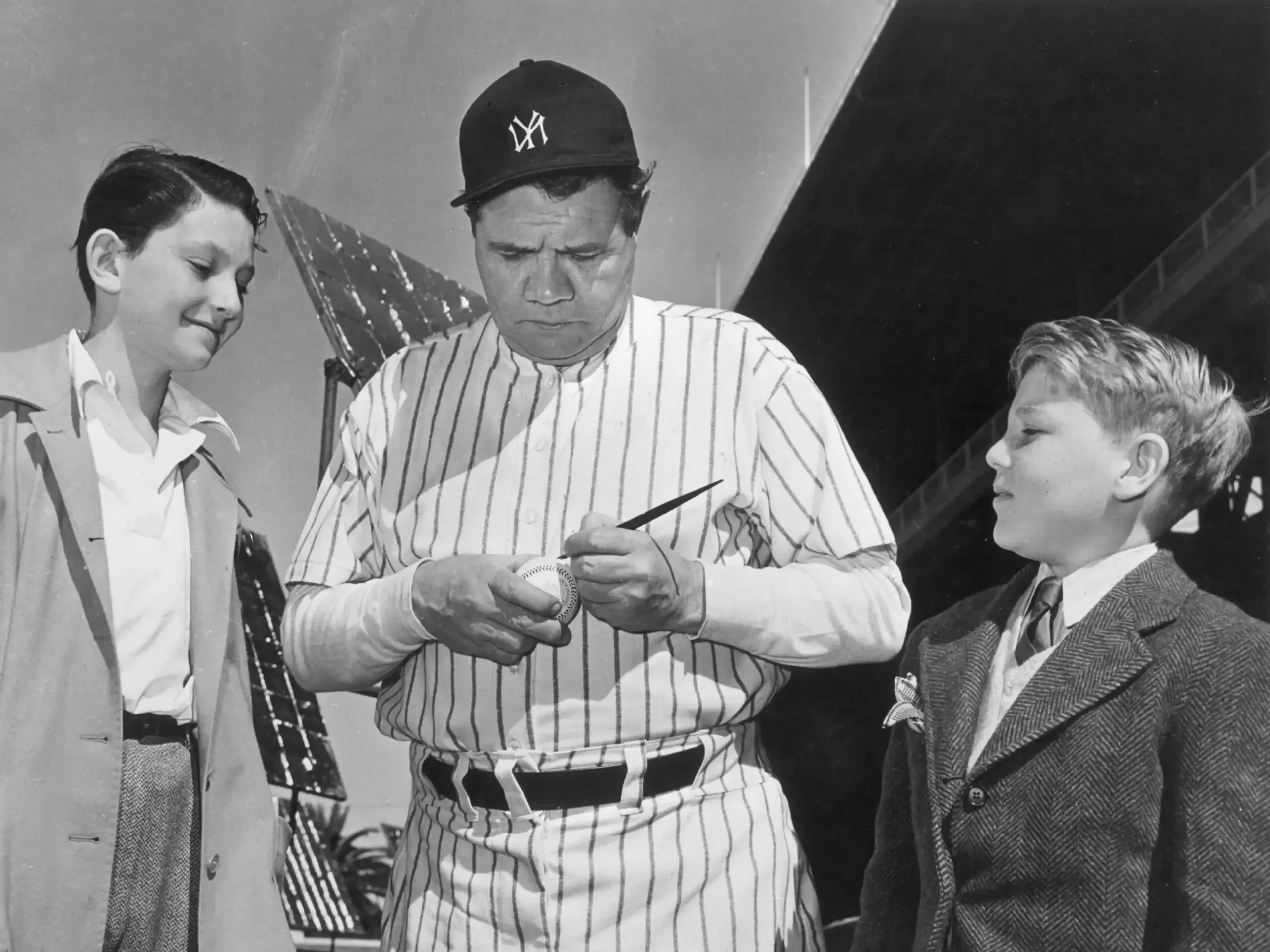
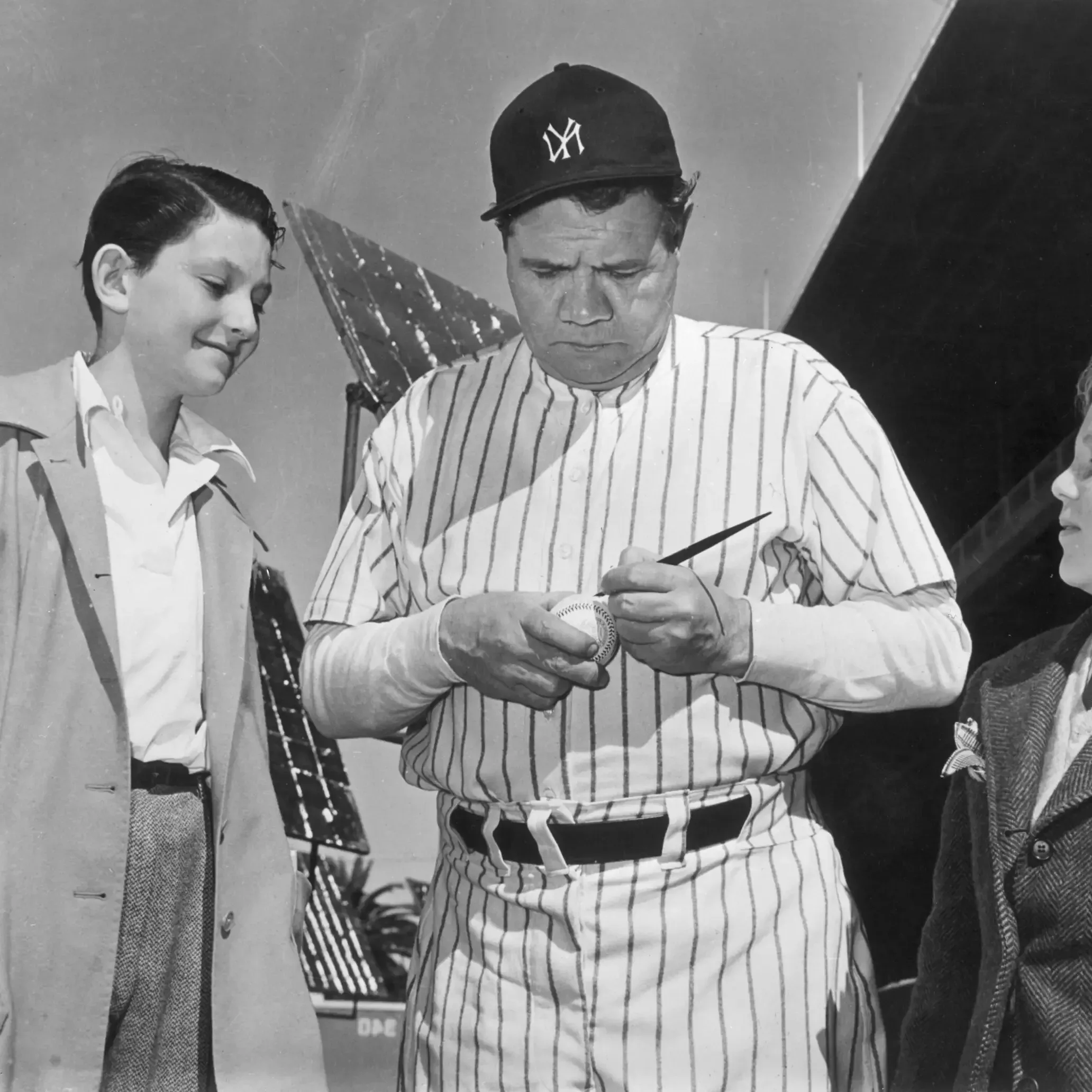
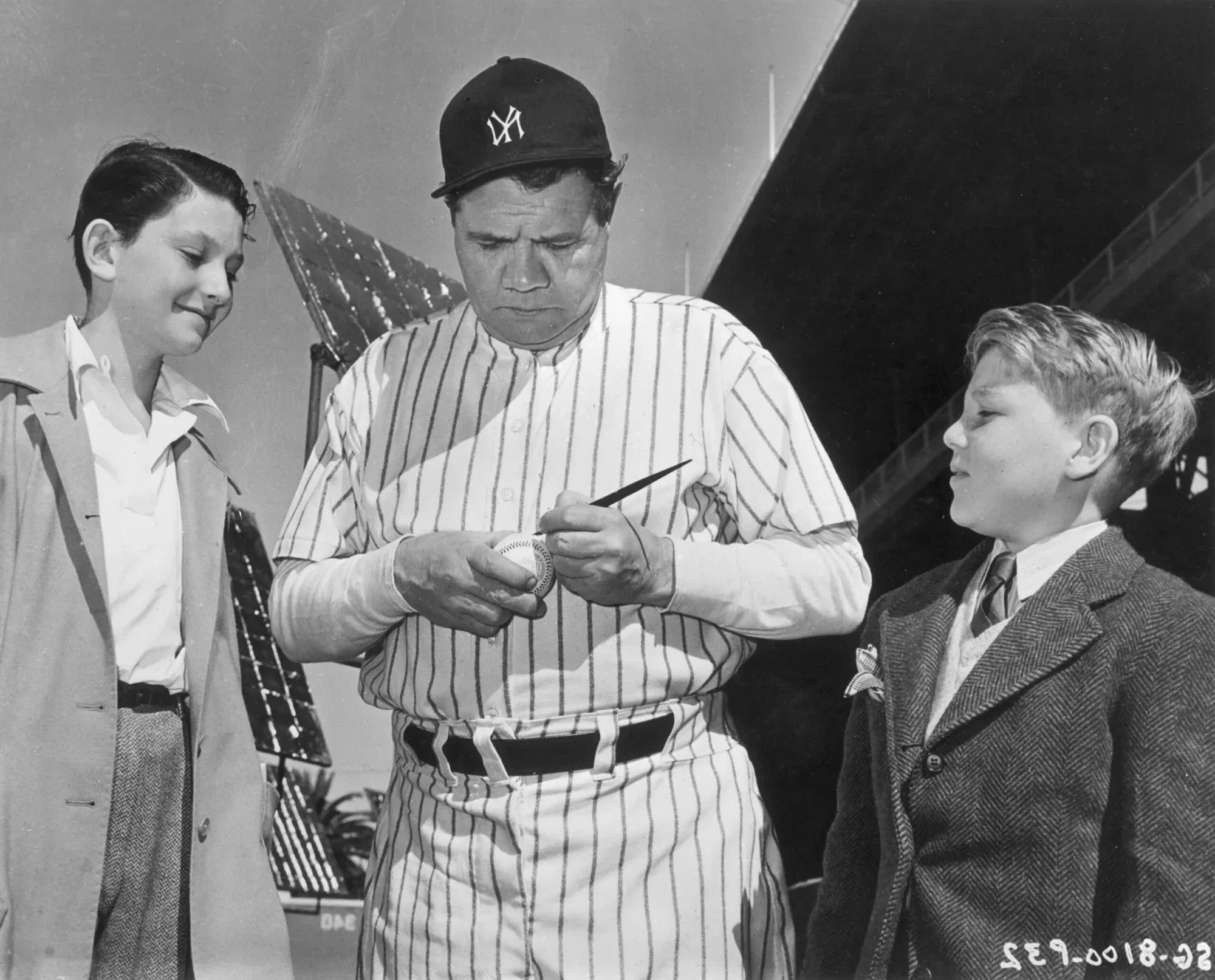
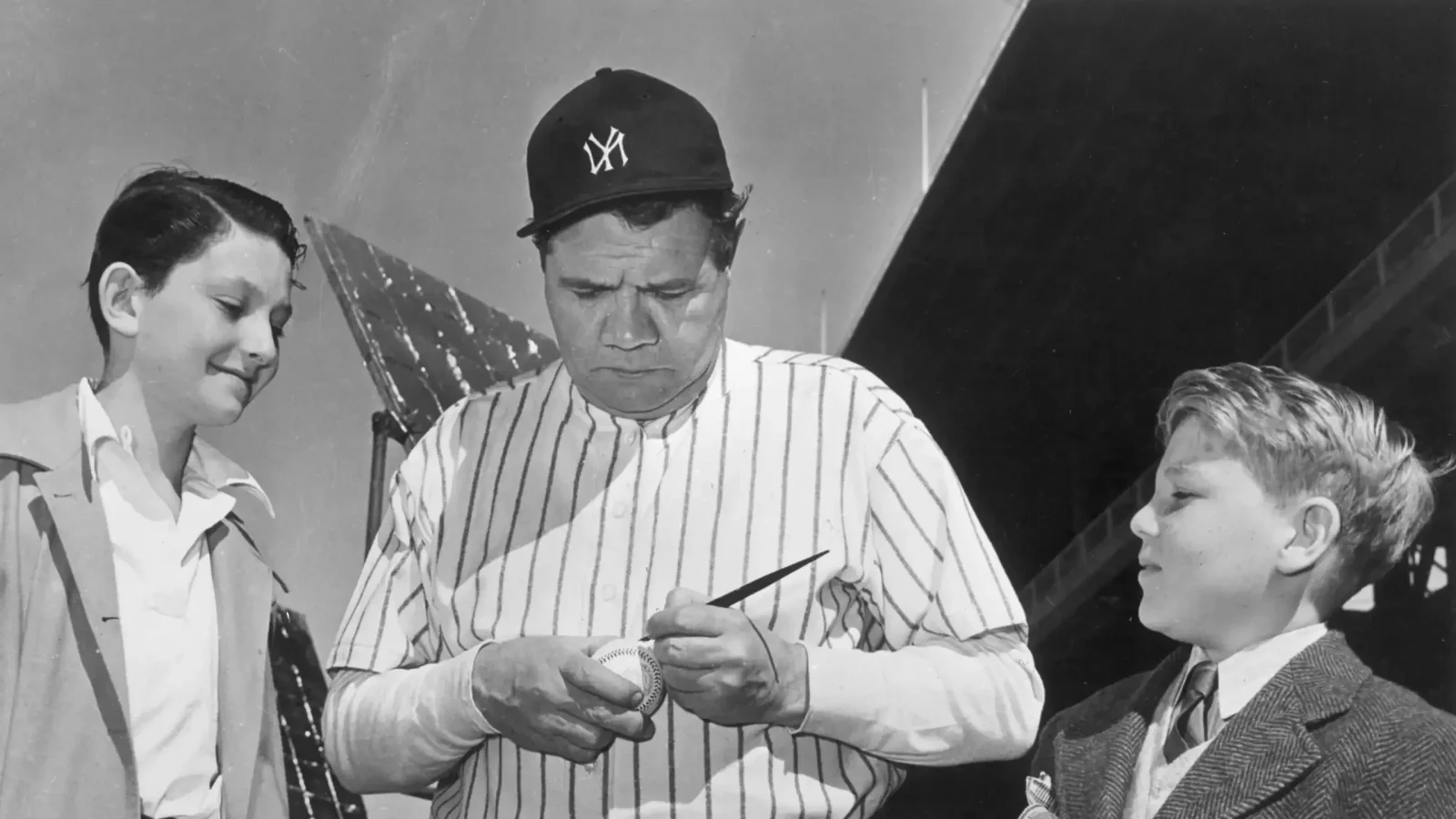
Ruth signed an enormous number of autographs during his lifetime, and his reputation as a generous signer has become part of hobby lore. Unlike many modern autograph relationships shaped by paid appearances and authentication events, Ruth was known for signing freely for fans, especially children.
That generosity created a huge surviving autograph population, but it also created stories that continue to fuel interest in his signed pieces. One of the most moving family recollections involves the period late in Ruth’s life when children would gather outside his hospital window hoping to see him. He would wave, sign autographs, and have them delivered down to the kids, or sometimes drop them from the window.
Within the family, not every treasured Ruth signature is a premium display item. Stevens has said he owns examples on bank deposit slips and similar documents signed “George Ruth” or “G. H. Ruth.” Those pieces are collectible, though they do not command the same premiums as classic “Babe Ruth” signatures on ideal mediums such as baseballs or photographs.
One of the most sentimental items in the family is a baseball signed by Ruth along with Ty Cobb and Tris Speaker, presented by Claire to Stevens. From a hobby perspective, Stevens understands that a single-signed Ruth ball on a pristine baseball could be more valuable in strict market terms. From a family perspective, the multi-signed ball matters because of where it came from and what it represents.
That distinction between sentimental value and market value runs through the Ruth story. A canceled check, a personal note, or a worn cap may not always top the auction headlines, but in many cases those are the items closest to the family’s lived history.
The David Wells Cap Story Still Stands Out
Few Ruth collectibles have generated as much modern-era buzz as the cap purchased by Yankees pitcher David Wells in 1997. Wells paid $35,000 for the hat and, in a move that instantly turned the piece into baseball news, wore it during a Yankees start despite being warned it would violate uniform rules.
The hat had “G Ruth” stitched inside, and Wells said wearing it created an emotional connection to one of his heroes. He was fined $2,500, and the episode became one of the more unusual intersections of game-used memorabilia and active major league play.
Years later, Wells sold the cap at auction for $537,278, illustrating again how Ruth items often gain even more intrigue when layered with later baseball history. It was not just a Ruth relic anymore. It had become a Ruth relic with a David Wells chapter attached to it.
Why the Hall of Fame Holds So Much of Ruth’s Material
Collectors sometimes wonder why the Ruth family does not control more of the legendary slugger’s best artifacts. A major reason is that much of that material was directed to the Baseball Hall of Fame through Ruth’s estate.
Stevens has said Ruth wanted to support the Hall as it built its collection and public displays. That decision helped shape how generations of fans have encountered Ruth. Rather than remaining hidden in private storage, many of his belongings became part of a museum setting dedicated to telling the story of the game.
The scale of Ruth’s presence there remains unusual. While many Hall of Famers are represented with relatively modest displays, Ruth’s artifacts occupy a much larger footprint. Visitors can move through a dedicated gallery filled with memorabilia that once belonged to him, a reflection of both his stature and the volume of material preserved.
That museum presence has also played a role in keeping Ruth central to baseball’s public memory. A bat or jersey in a private collection may make headlines when it sells, but a bat or jersey in a permanent exhibit keeps introducing Ruth to new fans year after year.
A Family Collection Built Around More Than Baseball
Ruth memorabilia in the family has never been limited to game-used gear or signed baseballs. Stevens grew up around a wider range of keepsakes assembled largely by his mother, Julia Ruth Stevens. Her home featured display cases with Ruth-themed merchandise, including statuettes, mugs, plates, steins, and branded promotional items such as Red Rock Cola bottles and a box of Wheaties.
The walls also held both baseball and family photographs, along with images tied to Ruth’s celebrity beyond the field. Stevens now displays some inherited pieces in his South Carolina home, including signed photos and entertainment-related mementos connected to his mother and grandmother.
That crossover into American pop culture is part of what still makes Ruth different from almost every other athlete in the memorabilia world. He was not just a baseball star. He was one of the first truly national sports celebrities, and the collectibles ecosystem around him reflects that.
His family also continues to contribute to that public record. Stevens and Ruth’s great-grandson Brent Stevens recently worked on a coffee table book, Out of the Mouth of Babe, built around famous Ruth quotations along with lesser-known facts and trivia.
Why Babe Ruth Still Drives Demand in 2026
Ruth’s sustained relevance is one of the most striking facts in the entire hobby. More than three-quarters of a century after his death, he remains one of the few athletes whose memorabilia can lead the market across categories including jerseys, bats, autographs, documents, and display pieces.
Part of that staying power comes from the records and the mythology. Ruth retired with more than 50 major league and American League records. Even after many of those marks fell, his name never left the center of the sport. His career WAR of 182.6 remains staggering, especially because it captures his combined value as both hitter and pitcher. His career OPS and OPS+ still stand at the top of the all-time lists. Every time baseball revisits power history, postseason history, or two-way greatness, Ruth returns to the conversation.
The modern game has only reinforced that place. Shohei Ohtani’s rise as a two-way superstar has prompted a new generation of comparisons, reminding fans how singular Ruth’s career really was.
Museum officials and historians have long argued that the real force behind Ruth memorabilia is the story attached to each artifact. Fans do not just want a signed baseball or a game-used item. They want a physical connection to a player who became the sport’s enduring standard.
That helps explain why Ruth remains unmatched in public imagination as well as price performance. His family may not own every famous jersey, bat, or cap still associated with his career, but they remain custodians of something even bigger: the personal stories behind the collectibles, the memories behind the signatures, and the sense that baseball’s largest legend is still very much alive in the hobby.
As long as those stories keep resonating, Ruth memorabilia will continue to do more than sell. It will keep carrying baseball history from one generation to the next.
Photo Gallery