Every collector has moments when the hobby starts to feel more like math than excitement. Prices, pop reports, grading outcomes, and resale talk can take over fast. Then something simple cuts through all of that and reminds people why opening packs, chasing inserts, and following players became appealing in the first place.
That is what happened during a massive 2026 Bowman Chrome player break built around Los Angeles Angels infielder Denzer Guzmán. He was not the headliner of the release, and he was not one of the most expensive names in the product. That made him a surprisingly appealing target.
With about $144 tied up in Guzmán spots across two huge release-day player breaks, the chase became less about landing a life-changing card and more about having a reason to watch 750 boxes get opened. Instead of only hunting the biggest possible return, the experience turned into something the hobby sometimes forgets to emphasize: entertainment, anticipation, and a new player to follow.
Why Denzer Guzmán Became the Right Chase
Part of the appeal was that Guzmán was not the obvious choice. Collectors could spend much more chasing bigger 2026 Bowman Chrome names, but lower-cost player spots can create a different kind of fun. They offer enough skin in the game to stay engaged without making every unopened pack feel like a financial referendum.
For more collector background, read Three Topps Pre-Orders to Watch on October 5: Bowman U Best Football, Cosmic Chrome Baseball and Inception Football.
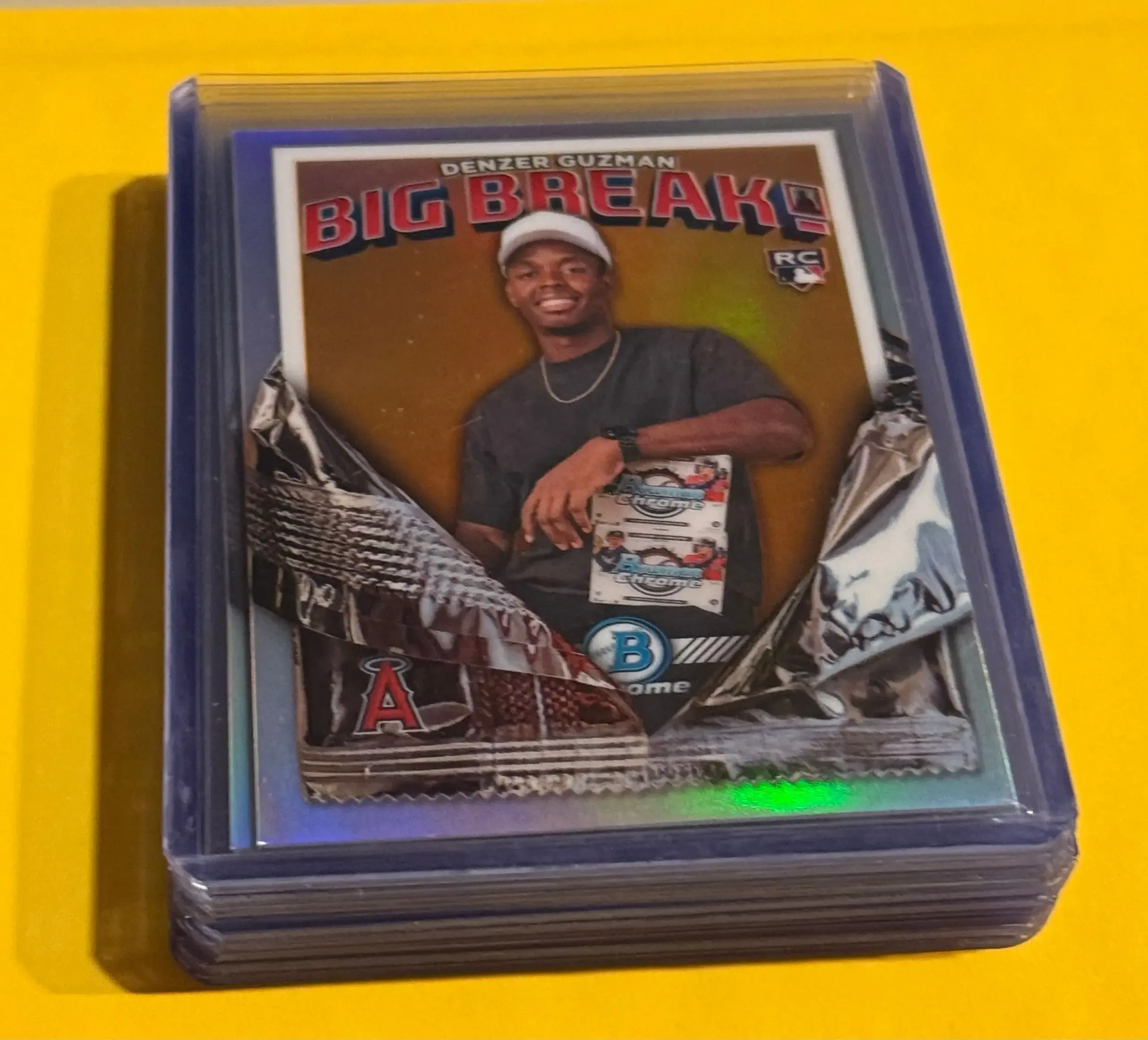
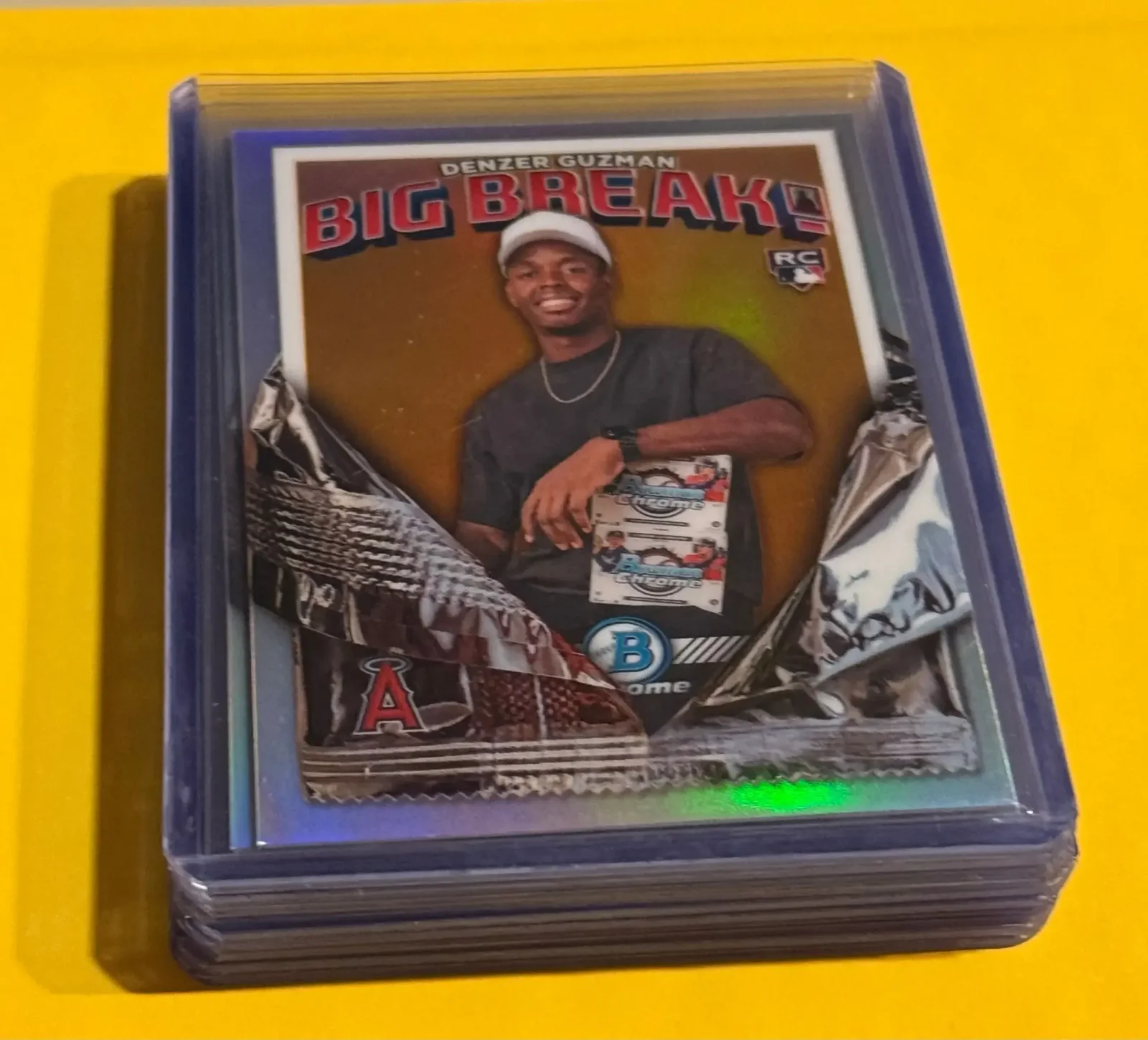
Guzmán’s key draw in the product was his appearance in the Big Break insert set. The concept itself fits Bowman Chrome well. The cards show prospects and rookies ripping packs, mirroring the break format that many collectors now use to experience a major release. It is a modern insert idea that feels tied directly to how the product is consumed.
The 25-card Big Break checklist includes several prominent names, such as Ethan Holliday, Jac Caglianone, Leo De Vries, and Jacob Misiorowski. Guzmán may not have entered the product with the same hobby heat as some of those players, but that gap is exactly what made the chase accessible.
The Big Break Insert Had Plenty to Hunt
Even though Guzmán had only one card in the release, that single lane still provided multiple levels of scarcity for collectors to chase. His Big Break card came with a full ladder of parallels that turned a single-player spot into a long-shot pursuit with several possible payoff points.
For another perspective on this story, read Denzer Guzmán Bowman Chrome Chase Shows the Fun Beyond the 1/1.
The available Big Break parallels for Guzmán included:
- Mini-Diamonds /150
- Gold /50
- Orange /25
- Red /5
- SuperFractor 1/1
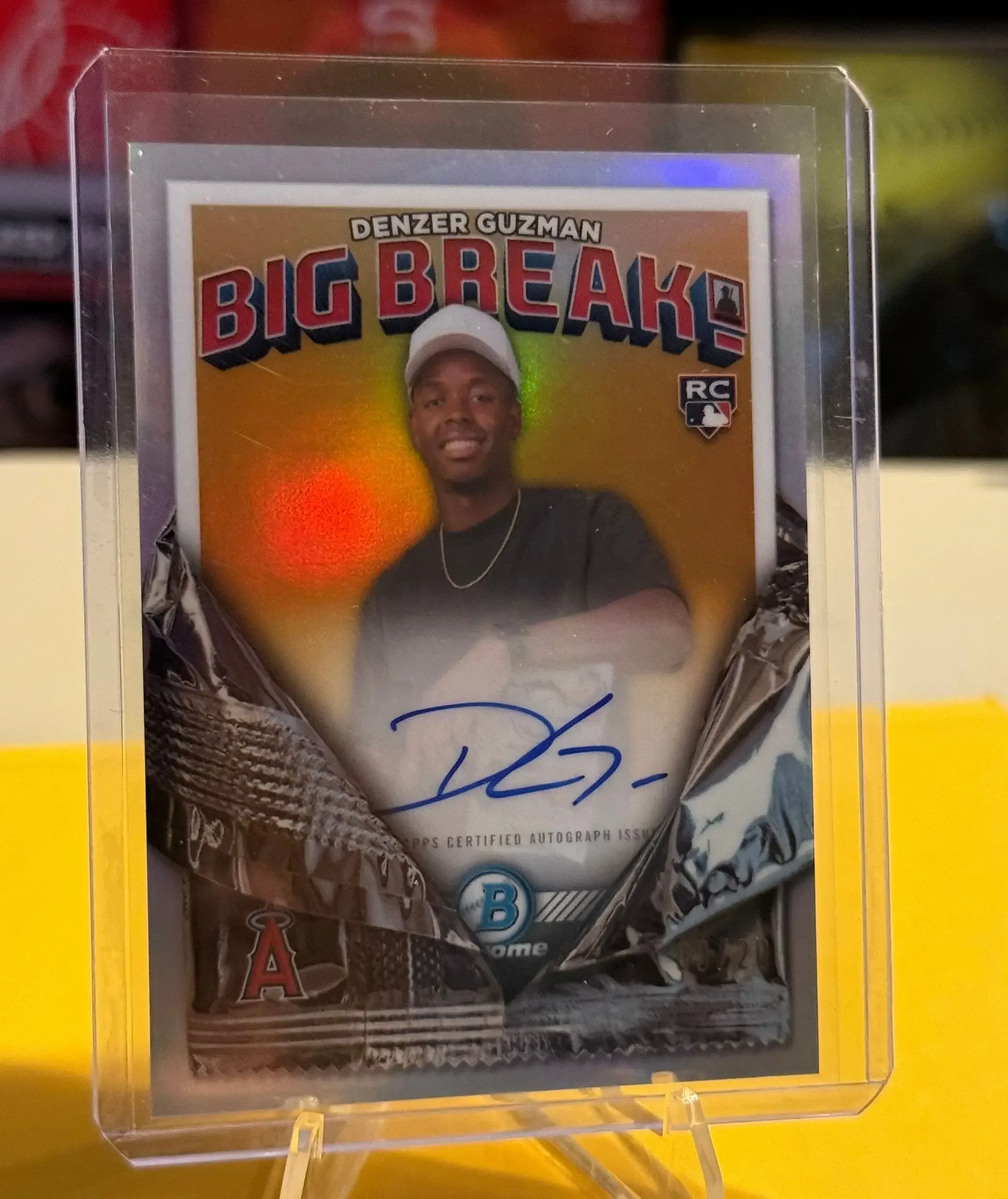
On top of those, Guzmán was one of just 13 players in the Big Break Autograph Variation lineup, with those autographs numbered to 20 copies. That mattered because it gave the chase a premium hit that was rare enough to feel special while still existing in more than a single copy.
The stated pack odds help show the scale of difficulty. The Big Break Autograph Variation fell at odds of 1:7,007 Hobby packs or 1:575 Breaker’s Delight packs for any of the 13 autograph subjects. That is a steep climb when the target is one specific player within that small autograph group.
The SuperFractor chase was even longer. Official odds for any Big Break SuperFractor were listed at roughly one in 42,000 to 68,000 packs depending on box configuration, and that covers all 25 players in the insert set, not one individual name.
In other words, even a break spanning 750 boxes was not close to a guarantee for the card most collectors would circle first.
What Makes a Massive Player Break Appealing
Breaking is one of the hobby’s most debated formats. For some collectors, it adds excitement and efficiency. For others, it can feel too close to pure chance, especially when money is poured into low-odds outcomes. Both sides of that discussion are easy to understand.
What stands out here is that the appeal was not framed around a jackpot mentality. A lower-cost buy-in spread across an enormous amount of sealed product can create a different experience than aggressively chasing one monster card through personal wax.
Instead of ripping a small number of boxes and hoping for a miracle, a player break lets a collector narrow the field to one name and stay invested for a long stretch of openings. That changes the rhythm of the event. Every relevant card becomes part of the story, not just the rarest parallel in the product.
That kind of participation matters. It gives collectors a reason to watch case after case unfold, celebrate small wins, and appreciate base cards and lower-numbered parallels that might be overlooked in a more profit-driven setting.
The Results From 750 Boxes
The biggest card did not surface. Guzmán’s one-of-one Big Break SuperFractor never appeared in the break, which is exactly the kind of outcome the odds suggested was likely.
But the chase still produced a strong stack of cards:
- Nine base Big Break cards
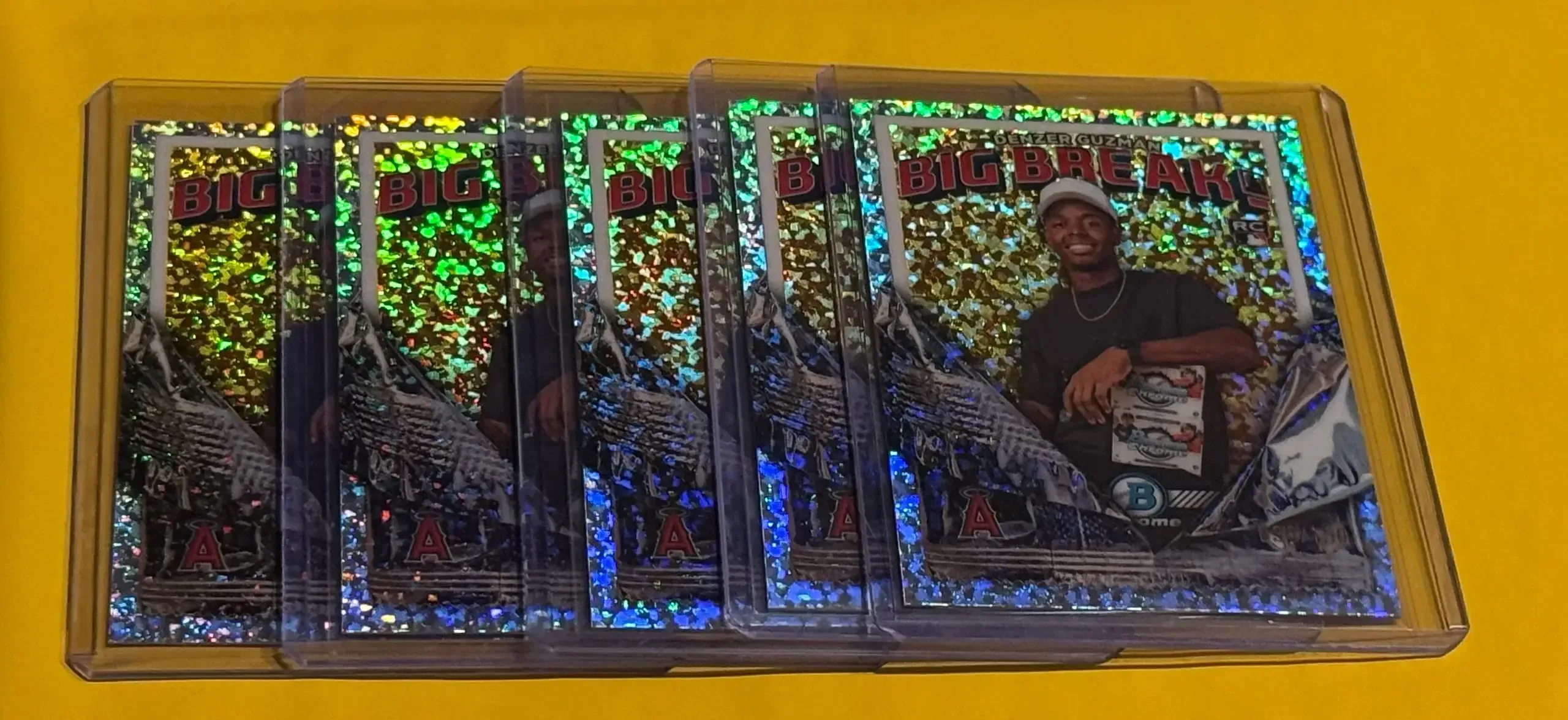
- Five Mini-Diamond parallels numbered to 150
- One Big Break Autograph Variation numbered to 20
That autograph became the standout hit of the entire run. It may not be Guzmán’s most famous card, his first Bowman, or the card most likely to define his hobby market years from now. None of that really changes why it mattered in the moment.
For this type of break, the autograph represented the perfect middle ground between realism and excitement. It was scarce enough to feel meaningful, hard enough to chase that pulling one felt rewarding, and accessible enough that the pursuit did not require a massive bankroll.
The five Mini-Diamond parallels were notable too. With a print run of 150, landing five copies means controlling 3.33% of that parallel’s total production. That is the kind of quirky, collector-friendly result that can make a player chase memorable even when the headline card remains elusive.
When the Hobby Stops Being Only About Value
One of the strongest takeaways from this kind of experience is how quickly collecting becomes more enjoyable when every card is not judged solely by its resale ceiling. A prospect does not need to be the most expensive player in a product to be worth following. A break does not need to produce a one-of-one to feel successful.
There is a growing tendency in the hobby to filter everything through expected value, grading upside, or long-term investment language. Those factors are real, and they do matter. But they are not the only reasons people stay engaged with cards year after year.
Sometimes the payoff is simpler. A collector buys into a player, watches the cards roll in, and suddenly starts checking that player’s box scores, looking for highlights, and hoping the next season brings more attention. Cards become the entry point to fandom.
That shift is easy to underestimate. The hobby works differently when collectors have reasons to care about players outside the top tier. It broadens the experience and keeps products interesting beyond the same small cluster of names.
Guzmán Turned Into More Than a Random Pick
The most interesting part of the chase came after the break ended. Guzmán closed the season in strong form, including a stretch in which he homered in four straight games during the Angels’ final road trip. That kind of finish gave the card pile more life.
Instead of sitting in a box as a random speculative purchase, the cards became attached to an actual player trajectory. That is one of the hobby’s most satisfying developments. A collector starts with a product decision and ends up with a new rooting interest.
Prospecting usually focuses on identifying the next breakout before the market catches up. There is nothing wrong with that. But there is also a lot to like about discovering a player almost by accident and letting the card chase create the connection.
That is especially true in a release like Bowman Chrome, where collectors are already trained to think about the next wave of talent. Not every meaningful chase has to revolve around the most expensive first-year card or the loudest preseason buzz.
Why This Bowman Chrome Break Resonates
Large-scale breaks can sometimes flatten a product into a checklist of wins and losses. This one offered a good reminder that they can also do the opposite. They can slow collectors down enough to enjoy the small stuff: a stack of base inserts, a run of numbered parallels, a rare autograph, and the suspense of waiting to see if a long-shot card will appear.
That is what made a 750-box opening around one lower-profile player memorable. The experience delivered a legitimate hit, plenty of chaser cards, and a reason to care about what Denzer Guzmán does next. For a modest buy-in relative to the scale of the break, that is a pretty strong hobby result.
Collectors do not always need the biggest rookie, the hottest prospect, or the most expensive box to get something meaningful out of a release. Sometimes a single insert slot, a few numbered parallels, and one autograph numbered to 20 are enough to make a product feel personal again.
In a market that often pushes collectors toward bigger stakes and bigger names, a lower-cost Bowman Chrome player chase showed there is still plenty of room for simple fun, even when the SuperFractor never shows up.
Photo Gallery