The start of a new NHL season always brings renewed attention to Upper Deck Series 1, and the 2026-27 edition looks built to keep that tradition going. The flagship release arrives October 7 with the familiar mix collectors expect: Young Guns rookies, numbered parallels, staple inserts, and a handful of difficult super short print chase cards that can define a box break.
Upper Deck did not overhaul the formula here, which is usually a good thing for hockey collectors. Series 1 remains centered on rookie recognition and recognizable brand continuity, but there are also a few fresh insert concepts mixed in with established favorites. That combination should make the product appealing to both longtime flagship builders and collectors chasing the next breakout name.
The biggest storyline, as usual, is Young Guns. This year’s 49-player rookie checklist brings together highly drafted prospects, early NHL contributors, and players entering the season with an opening to claim bigger roles. Add in the usual parallel rainbow and a lineup of SSP content, and there is plenty for collectors to target from release day onward.
Young Guns once again drives the product
For many hockey collectors, Series 1 begins and ends with Young Guns. The brand has been one of the hobby’s cornerstone rookie card lines for decades, and that status is not changing in 2026-27. The new class appears deep enough to support everything from player collecting to speculative ripping, especially with several names carrying real momentum into the season.
For more collector background, read 2026-27 Upper Deck Tim Hortons NHL Cards Launch in Canada With Macklin Celebrini, Prize Cards and Trade Nights.
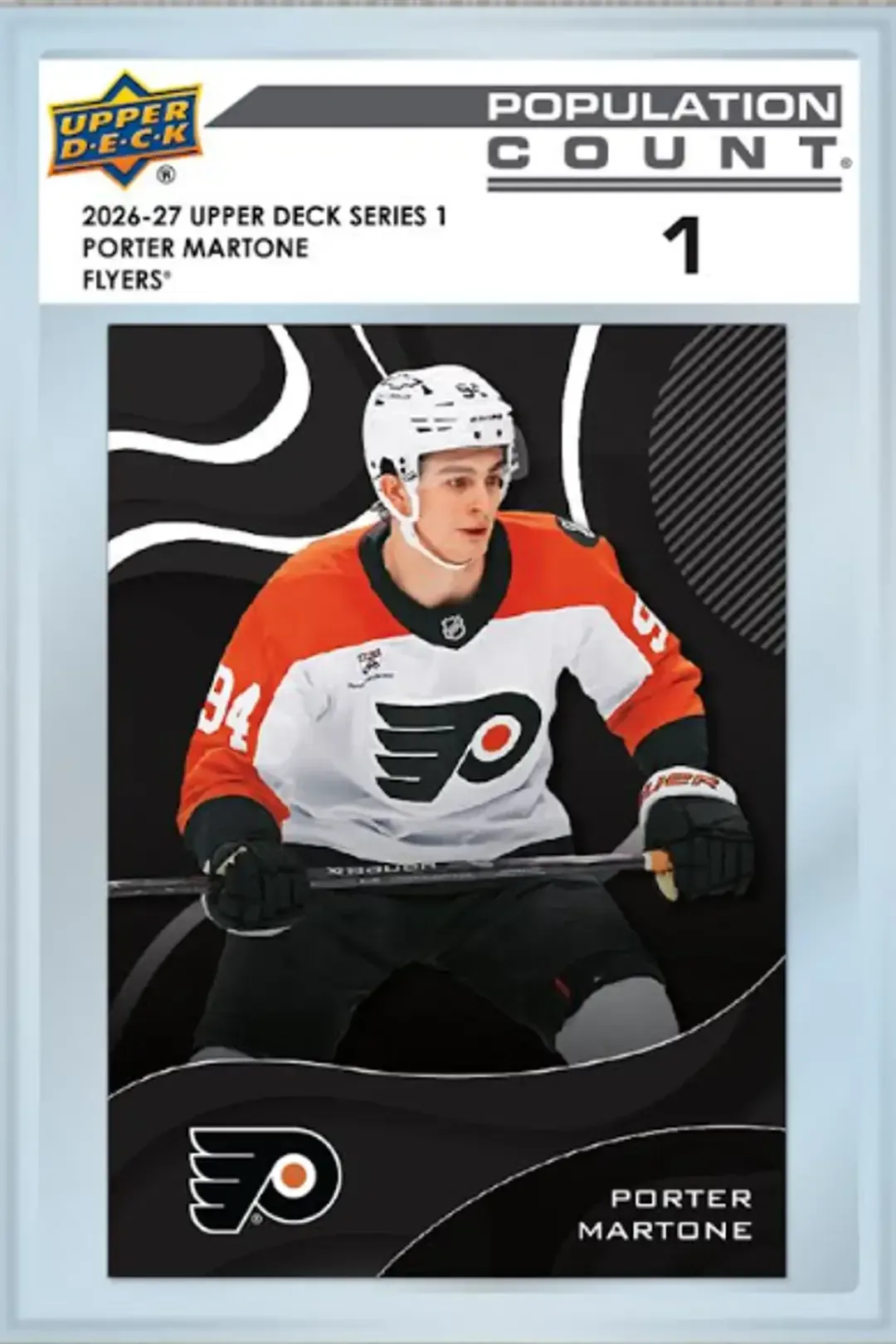
Porter Martone stands near the top of the chase. The Flyers winger already flashed the kind of offensive upside that attracts hobby attention, posting 10 points in nine regular-season games before adding five more in the playoffs. Production like that, combined with a prominent role, gives his Young Guns card a strong early foundation.
James Hagens is another key name to watch. The No. 5 pick in the 2025 draft enters the season with top-six potential on a talented Bruins roster. High-end draft capital and a path to meaningful minutes tend to matter quickly in the market, especially when a player lands in a hockey-heavy market with broad collector interest.
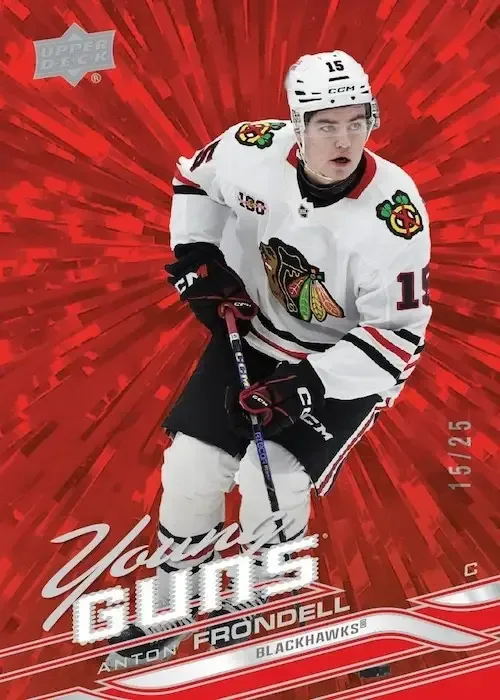
Anton Frondell also looks like one of the headline rookies in the set. The 2025 No. 3 pick is skating on Chicago’s first line alongside Patrick Kane and could eventually share power-play ice with Connor Bedard. That kind of exposure can elevate demand in a hurry, and it helps explain why Frondell projects as one of the most pursued Young Guns names in the product.
There is depth beyond those three. Cole Hutson should draw attention from collectors familiar with his family name, but there is more here than simple recognition. He produced 10 points in 14 NHL games last season, giving collectors a real statistical sample to work with entering the new year.
Ilya Protas adds another layer of intrigue to the checklist. The reigning AHL Rookie of the Year opens the season on Washington’s third line, where he also shares a team connection with his brother Aliaksei. Awards, a transition to NHL opportunity, and room for growth are the types of factors that often turn secondary rookies into active hobby targets as the year develops.
Key Young Guns and rookie names to watch
- Porter Martone, Philadelphia Flyers
- James Hagens, Boston Bruins
- Anton Frondell, Chicago
- Cole Hutson, Washington Capitals
- Ilya Protas, Washington Capitals
The larger takeaway is that Upper Deck appears to have assembled a rookie crop with both star power and depth. That is important for flagship hockey, because Series 1 tends to live longest when collectors can chase more than just one or two obvious names.
Parallels keep the flagship rainbow intact
Collectors chasing player rainbows should find plenty to work with. Upper Deck is again offering a broad mix of veteran and Young Guns parallels, including several formats that have become staples of the brand. The appeal here is straightforward: flagship base cards remain accessible, while the harder-to-find versions create different lanes for set builders, player collectors, and higher-end chasers.
Returning parallels include Clear Cut acetate versions, Deluxe numbered to 250, Exclusives numbered to 100, and High Gloss numbered to 10. Outburst parallels also return in several levels, including Silver, Red numbered to 25, and one-of-one Gold versions.
For collectors, that means there are multiple ways to approach the product. Some will target core rookie cards and stop there. Others will hunt serial-numbered versions of their favorite players. And for those who like premium scarcity inside a flagship release, the lower-numbered Outbursts and High Gloss cards should remain major focal points.
2026-27 Upper Deck Series 1 parallels at a glance
- Clear Cut acetate
- Deluxe /250
- Exclusives /100
- High Gloss /10
- Outburst Silver
- Outburst Red /25
- Outburst Gold 1/1
That range of scarcity also helps Series 1 appeal across price points. A collector can chase a standard Young Guns rookie, move into a mid-tier serial-numbered parallel, or take a swing at true case-level and near-impossible hits depending on budget and goals.
Returning inserts give the product familiar structure
Upper Deck kept several recognizable inserts in the release, which should help maintain continuity for collectors who rip flagship every year. Dazzlers, Debut Dates, Population Count, and UD Canvas all return, giving the product a mix of visual variety and established checklist appeal.
Dazzlers has become a regular color-driven chase in modern hockey products, while UD Canvas remains one of the more dependable and widely collected side brands within flagship Upper Deck. Debut Dates adds another rookie-focused angle, and Population Count continues to stand out because of its layered scarcity structure.
Population Count is especially notable because of its parallel ladder, which ranges from 1000 all the way down to 1. That setup gives the insert broader reach than a standard SSP concept. Collectors can land more attainable versions while still knowing the lowest-numbered copies carry serious scarcity.
The value of returning inserts in a product like this is stability. Not every collector wants a checklist built entirely around new ideas. Familiar inserts make Series 1 easier to navigate, easier to sort, and easier to chase year after year.
New insert themes add a fresh look
While the product leans on proven flagship elements, it is not standing still. Two of the more notable additions are Here We Go! and Stencils, each bringing a very different visual approach.
Here We Go! uses an overhead perspective of players in the faceoff circle, giving the set a different look than the more traditional action photography often seen in flagship hockey products. That change in angle alone could make the insert stand out in hand and in scans, especially for collectors who appreciate photography-driven designs.
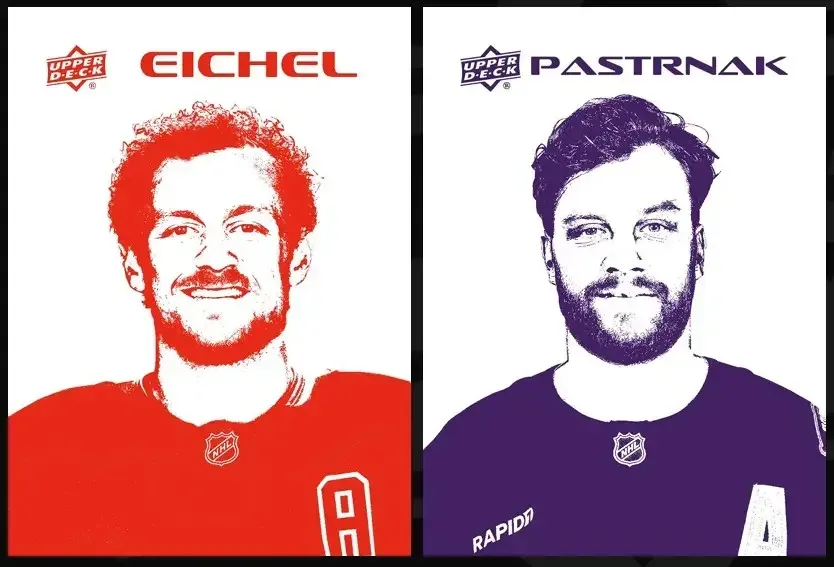
Stencils may be the more distinctive of the two. The 100-card set strips down the front design to essentials, using a shoulder-up player portrait, the player’s last name, and the Upper Deck logo in foil rather than relying on a standard ink-heavy presentation. The result is a minimalist style with a more modern feel than many flagship inserts usually offer.
Stencils also comes with six color parallels, giving the insert an additional chase layer. The known range runs from red numbered to 399 down to purple numbered to 25. For collectors who enjoy rainbow building beyond the base set, that structure should add another target inside boxes and breaks.
New insert highlights in Series 1
- Here We Go! with overhead faceoff-circle photography
- Stencils with foil-driven minimalist front design
- Stencils parallels in six colors
- Stencils Red /399
- Stencils Purple /25
These additions matter because flagship products can sometimes feel too familiar if every year looks and breaks the same way. Here We Go! and Stencils appear designed to refresh the visual mix without moving too far away from what Series 1 collectors expect.
SSP cards bring the biggest long-shot chases
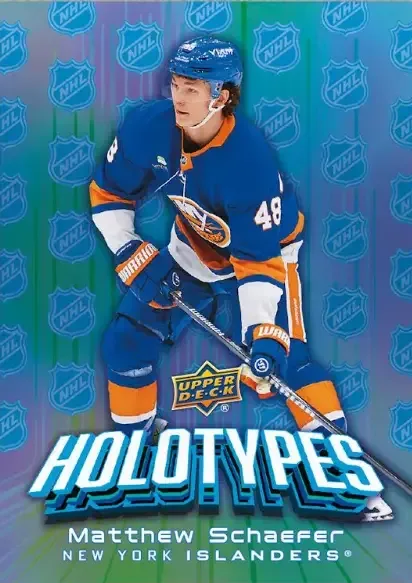
The super short print content may be the most dramatic part of the release. Upper Deck is continuing Holotypes as a living set, and those cards land at 1 in 1,008 packs. That is already difficult enough to make them notable chase pieces in the product.
But the bigger mountain comes with the additional SSPs, which fall at 1 in 2,880 packs. That rate makes them true long-shot hits and positions them as major break-room talking points after release. At those odds, these are the kinds of cards that can become instant centerpiece pulls when they surface.
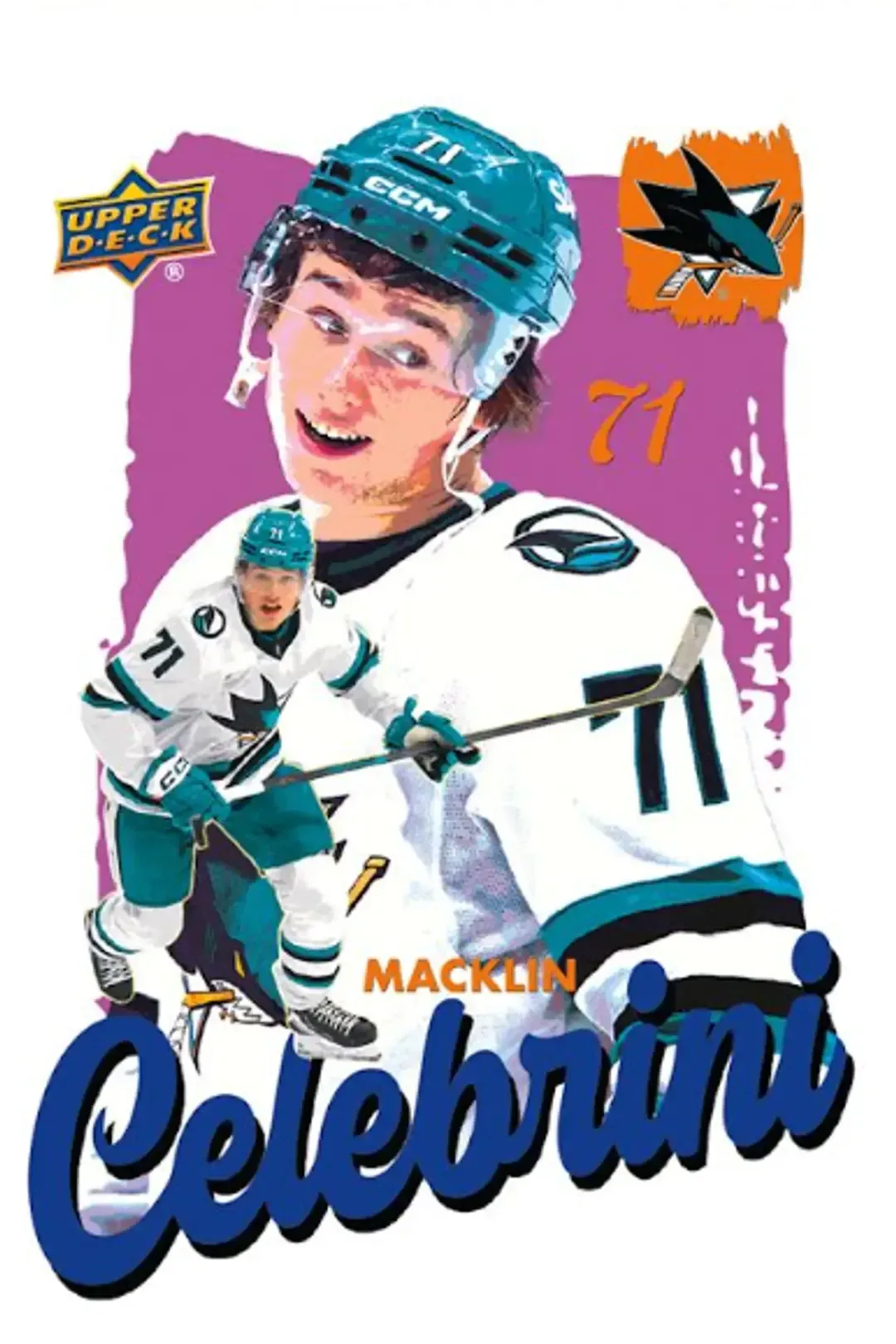
Bootleg returns in a second edition and should attract strong attention thanks to the player selection and distinct finish treatment. Each of the 18 cards uses its own design and combines foil, soft-touch, and gloss elements. Macklin Celebrini and Matthew Schaefer are among the young stars included, which should help push collector interest even higher.
Electric Soul makes its Series 1 debut as another SSP concept. The design uses a single-hue rendering of each player against a background featuring his team’s primary colors, giving the set a stylized and modern look that differs sharply from flagship base photography.
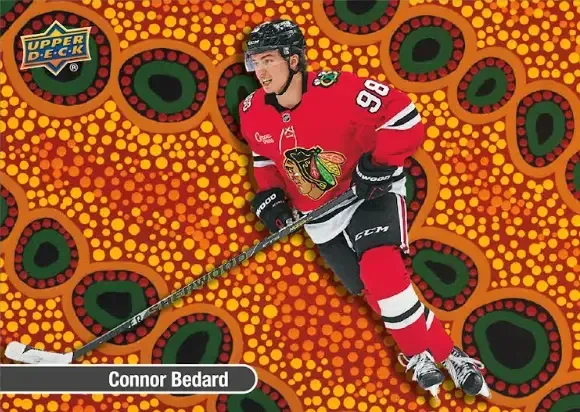
Youthful Spirits may be the most artistically ambitious of the SSP group. Instead of standard action shots, the set features original artwork created specifically for the release by award-winning Aboriginal artist Presten Warren. The 12-player lineup includes NHL stars such as Connor Bedard and Macklin Celebrini, combining star power with an art-card presentation that should stand apart immediately from the rest of the checklist.
Super short print chase cards to know
- Holotypes, inserted 1:1,008 packs
- Bootleg, inserted 1:2,880 packs
- Electric Soul, inserted 1:2,880 packs
- Youthful Spirits, inserted 1:2,880 packs
For many collectors, these SSPs will be aspirational rather than expected pulls. That is part of the appeal. Series 1 can still be opened for rookies and flagship staples, while the hardest inserts create that extra level of possibility that keeps product ripping interesting.
Why Series 1 should matter to collectors this season
Flagship hockey products succeed when they create multiple entry points, and 2026-27 Upper Deck Series 1 appears positioned to do exactly that. Rookie chasers can focus on the 49-player Young Guns checklist. Parallel hunters have a familiar scarcity ladder to work through. Insert collectors get a blend of returning staples and new visual ideas. High-risk breakers still have legitimate SSP targets with very difficult pull rates.
The release date also helps. Landing on October 7 places the product right in the early-season window when collector enthusiasm is elevated and opinions on the rookie class are still forming in real time. Strong starts from names like Martone, Hagens, or Frondell could quickly sharpen demand around their cards, especially if early boxes do not flood the market with supply.
Collectors looking for a pure flagship NHL release with recognizable structure should know what they are getting here. The core appeal remains the same, but the mix of a promising Young Guns class, new inserts such as Here We Go! and Stencils, and difficult SSPs like Bootleg and Youthful Spirits gives this year’s product enough new material to keep the chase active when packs reach hobby shops on October 7.
Photo Gallery