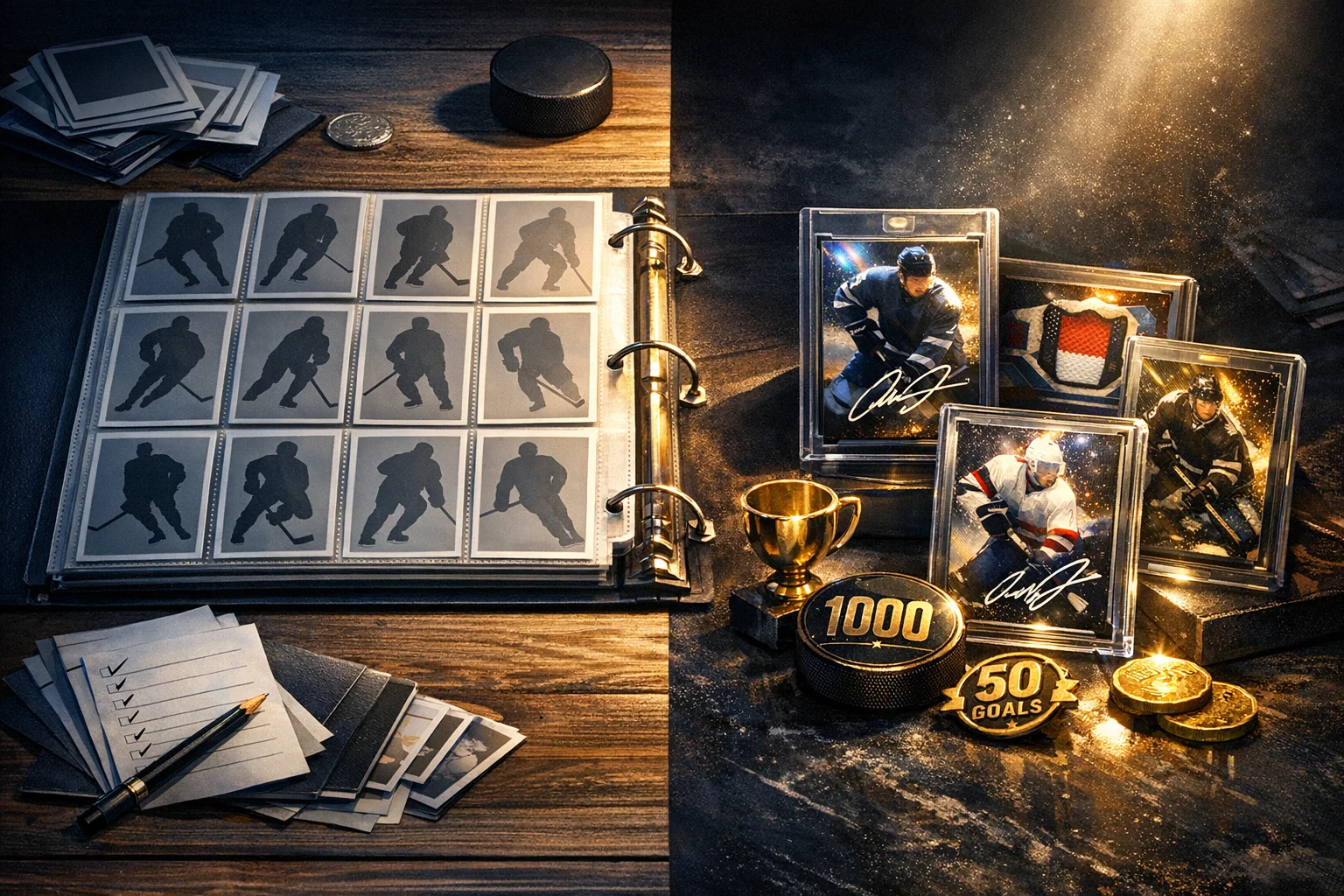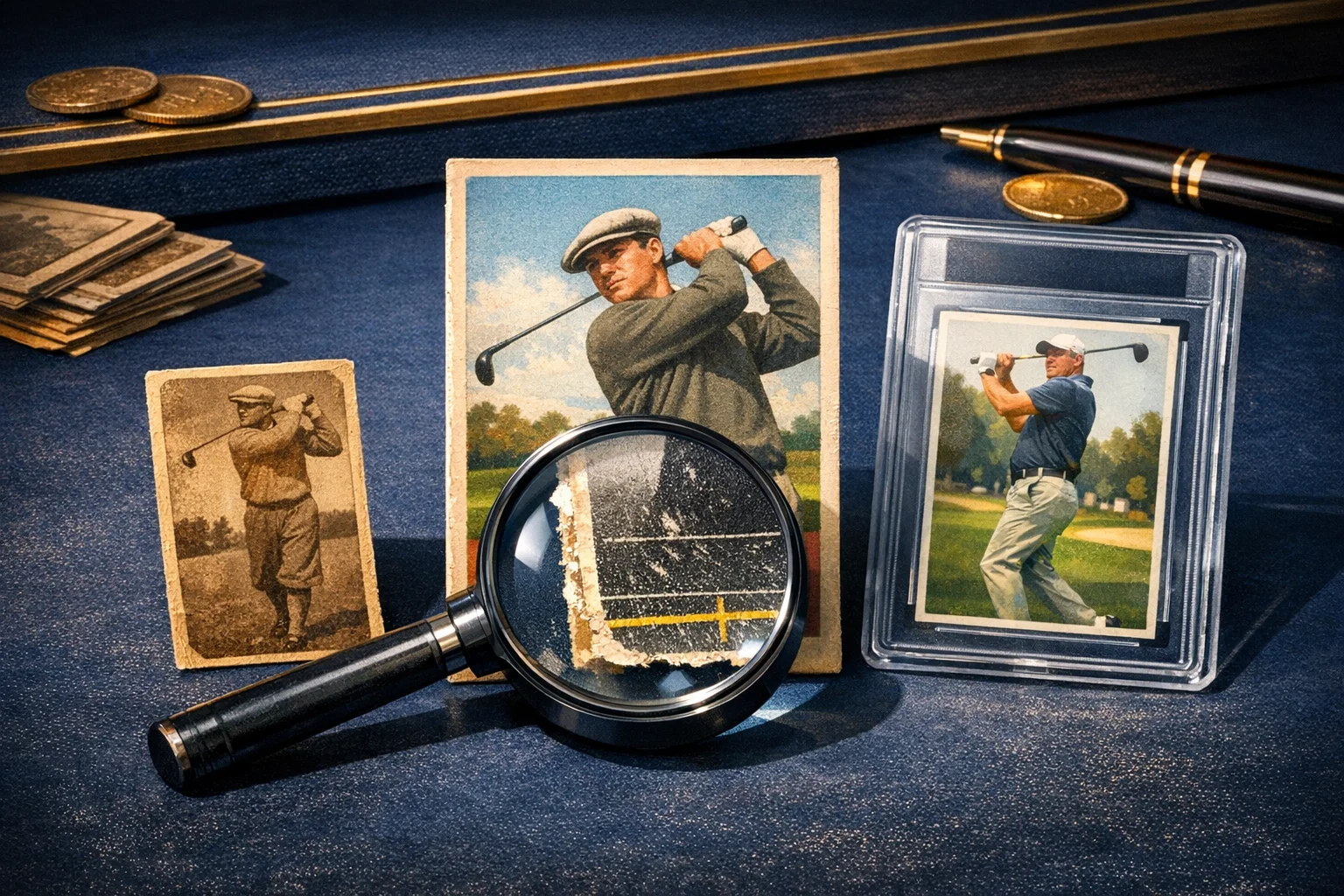
A checklist is not just a shopping list. In modern card collecting, it is one of the clearest tools for figuring out exactly what a card is, where it belongs, and whether a gap in your binder is real or only apparent.
The most reliable approach is simple: identify the card itself, verify its place on an official manufacturer checklist, then use odds and product configuration to decide whether you are actually missing a card, chasing the wrong format, or mixing together different goals.
That workflow can save you from common mistakes, like calling an insert a parallel, expecting a hobby box to produce a retail-exclusive card, or assuming a player should be in one flagship release when he actually belongs in another.
Start with six identifiers before you search anything
When a card confuses you, the temptation is to jump straight to marketplace listings and copy the first title that looks close enough. That usually creates more noise than clarity. A listing may leave out the parallel name, use the wrong set title, or mix hobby shorthand with guesswork. A better starting point is the card in your hand.
A practical identification method begins with six fields: year, manufacturer, set, player, card number, and parallel. Those are the core details that separate one issue from another, especially in a hobby where multiple products can share similar design language and the same player can appear in several releases during the same year. Some of those details may be on the front, some on the back, so it pays to inspect both sides before you search.
This first step is less glamorous than chasing comps, but it is where most mistakes can be prevented. Two cards may use the same photo but belong to different products. A base card and a parallel may share the same numbering. A chromium release may echo a flagship design without being the same set. If you begin by recording only what the card itself can prove, you reduce the chance of building your research on a bad assumption.
A simple habit helps here: write down those six identifiers exactly as you see them, even if one field is incomplete. If you know the player, manufacturer, and card number but not the exact set, that partial information is still useful. You are trying to narrow possibilities, not solve everything by instinct. In collecting, accurate description almost always comes before confident identification.
- Check both front and back before searching.
- Record year, manufacturer, set, player, card number, and parallel if visible.
- Treat marketplace titles as clues, not proof.
Use official manufacturer checklists to separate card types correctly
Once you have the basic identifiers, the next question is not whether the card looks rare. It is whether you are placing it in the right category. Official manufacturer checklists are valuable because they do more than list player names. They show the release structure: what is base, what is a parallel, what is an insert, and what belongs to another subset entirely.
That structure matters because many collecting arguments are really classification problems. A collector believes a card is missing from a base set when it is actually part of an insert run. Another assumes a color-shifted card is a parallel when the effect is simply part of the insert design. An official checklist gives you the cleanest way to sort those categories before money changes hands or a want-list grows in the wrong direction.
Upper Deck’s checklist format is a strong example of how useful this can be. Its checklist database is organized as a dedicated hub for hobby product checklists, and individual checklist pages break out card families by named parallels and related details. In the 2025-26 Upper Deck Ice Hockey checklist, for example, parallel rows identify versions such as Green with a print limit of 99 and Gold with a print limit of 25. That kind of row-level separation is exactly what helps a collector confirm a true parallel instead of relying on color alone.
For your own process, ask three questions every time a card seems unclear. Is it part of the base checklist? Is it listed as a named parallel of that base card? Or is it in a separate insert, autograph, memorabilia, or variation section? Those questions sound basic, but they prevent a surprising amount of wasted searching and mislabeled inventory.
- Use the checklist to classify the card before valuing it.
- Look for separate checklist sections, not just matching player names.
- Named parallels are stronger evidence than visual similarity alone.
Know the difference between a checklist, odds page, and box configuration
Many collectors use the word checklist as if it explains everything about a product. It does not. A checklist tells you what cards exist within a release. An odds page tells you how difficult certain cards are to pull. A product configuration tells you what a specific pack, box, or format contains or guarantees. Those are three different documents answering three different questions.
Keeping those categories separate makes hobby research much cleaner. If your question is, Does this card exist in the release, the checklist is the right tool. If your question is, How hard is it to pull, the odds page matters. If your question is, Should I have expected this from the hobby box I opened, then configuration is the key piece. Confusing one for another is how collectors talk themselves into thinking something was shorted when it may never have been in play for that format.
Topps makes this distinction especially useful because it maintains separate checklist and odds hubs while also publishing details on product pages. As of the research date, the 2026 Topps Series 1 Baseball Hobby Box page lists 12 cards per pack, 20 packs per box, with one autograph or relic card per box. That explains the format’s structure, but it does not mean every card shown on the release-wide checklist is equally available from that box type.
Fanatics Collect’s support language helps put this into plain English by defining a checklist as the full set of cards that can come out of a release, alongside odds of pulling them. For collectors, the practical lesson is clear: build your want-list from the release map, but build your expectations from the odds and the exact format you bought.
- Checklist answers what exists.
- Odds answer how hard it is to pull.
- Configuration answers what your chosen format contains or guarantees.
Define what complete means before you decide something is missing
Collectors use the phrase missing card in very different ways. One person means a base card needed to finish a numbered set. Another means a specific insert from a favorite subset. Another means the last color in a player rainbow. Those are not the same project, so they should not use the same standard of completion.
Before you compare your stack to any checklist, decide what you are actually trying to finish. Are you building base only? Base plus certain inserts? A full player run? A parallel rainbow? A master-style project that includes as much of the release as possible? The answer changes how you read the checklist and what counts as a real gap versus optional chase content.
This is where complete-set products become useful in a very specific way. Topps says its 2026 Baseball Complete Set contains all 700 cards from 2026 Topps Series 1 and Series 2 Baseball. That solves the base-set problem neatly for a collector whose goal is flagship base completion. It does not solve the separate problem of inserts, parallels, autographs, relics, or other pack-pulled chase material. If you still feel unfinished after buying a complete set, your actual goal may be broader than base cards even if you have not said that out loud yet.
A practical system is to split your want-list into tiers. Tier one might be base set completion. Tier two might be selected inserts you genuinely care about. Tier three might be numbered parallels of one player or team. That kind of structure prevents the checklist from becoming an endless pile of possibilities and helps you spend with more purpose. This is analysis rather than a measured market claim, but many collecting headaches come from undefined completeness more than from any shortage of cards.
- Write down your project goal before using the checklist.
- Use separate tiers for base, inserts, and parallels.
- A complete set solves base completion, not every chase objective.
A player may not be missing at all; he may belong to another release
One of the easiest mistakes in modern baseball collecting is assuming every notable player from a given season should appear in the first flagship release of that year. Official product structure says otherwise. Topps describes Update as the final flagship release of the year and notes that it captures in-season call-ups, players in new uniforms after trades, and memorable moments from across the season.
That matters because many apparent checklist gaps are really release-identification mistakes. If you are hunting a player who changed teams midseason, arrived as a later call-up, or became relevant after Series 1 was finalized, the missing card may belong in Update rather than in Series 1 or Series 2. The issue is not scarcity. It is timing within the annual product calendar.
This is especially useful for collectors who build yearly flagship runs of favorite players. If your goal is one flagship card from that season, checking only one release can create false frustration. A player’s proper place may be in Update because that release was designed to capture roster movement and season developments that were not represented earlier. The same broader lesson applies outside baseball too: a player’s absence from one checklist does not automatically signal omission if another release was built to cover a different moment or format.
A good working habit is to ask not just Where is this player, but Why would this product include him? Once you think in terms of product purpose, not just product year, checklist searches become more efficient and a lot less maddening.
- Check annual release structure before assuming a player was omitted.
- For flagship baseball, search Series 1, Series 2, and Update separately.
- A wrong release is often mistaken for a hard-to-find card.
SKU exclusives can make a full checklist feel misleading
Even if you have the right release, you may still have the wrong format. Modern products often spread content across hobby boxes, blasters, mega boxes, and special editions. Some parallels or inserts are specific to one SKU. That means a full release checklist can look complete on paper while still being incomplete for the exact product you opened.
Topps’ Series 1 product ecosystem illustrates the point. Release pages indicate that some content is tied to particular formats, including material described as exclusive to the Celebration Mega Box. So while the release-wide checklist may include all of that content, a collector opening standard hobby boxes should not automatically expect those exclusives to appear there.
This is where many collectors accidentally turn format mismatch into bad luck. Suppose you are chasing a certain parallel color because it suits a team display or a player rainbow. If that parallel belongs to a mega box format and you keep opening hobby, your problem is not poor pulls. It is that your acquisition path does not match your target card. The same logic applies in breaks: if a breaker names the release but not the specific product format, you may not know whether your chase is actually available in that break.
The fix is simple and repeatable. Compare the official checklist, the exact SKU, and the odds or product description side by side. If those three do not line up, you probably have your answer. The tradeoff is extra homework, but the reward is clarity. Once you know a card is format-specific, you can stop expecting the wrong box to deliver it and decide whether buying singles makes more sense.
- Always record the exact format you opened or bought into.
- Do not assume every checklist item is available in every SKU.
- If your target is format-exclusive, singles may be more efficient than ripping.
Verify suspected parallels with names and numbering, not color alone
Parallels create some of the most common checklist confusion because they are designed to feel familiar while still being distinct. A slight foil change, a border tint, or a reflective treatment can lead a collector to declare a parallel before verifying anything. Sometimes that instinct is right. Other times the effect belongs to an insert design, a scan artifact, or another product family that happens to resemble the base card.
The safest method is to verify in layers. First confirm the underlying card by player and card number. Then check whether that exact card family has named parallels on the official checklist. After that, use serial numbering or print limits where available. If the checklist shows Green to 99 and Gold to 25 for the same base family, and your card carries numbering that matches one of those tiers, your identification becomes much stronger than a visual guess ever could.
Not every legitimate parallel will be serial-numbered, so the checklist still matters even when the card lacks numbering. What you want is official confirmation that the parallel name exists within that release. From there, careful comparison of finish and layout can help, but your language should stay precise. It is better to say a card appears to match a named checklist parallel than to declare rarity based purely on color or shine.
There is also an important limit here. A checklist can prove existence and sometimes print limits, but it does not automatically tell you how easy a card will be to source later or how strongly collectors value that tier. Identification comes first. Market conclusions come after that. For organization, your inventory will be cleaner if you log cards by exact checklist names rather than by improvised descriptions like blue shiny or gold-ish border.
- Confirm the base card before naming the parallel.
- Use exact checklist terminology in your inventory.
- Serial numbering supports identification but does not replace checklist verification.
Build a repeatable checklist workflow for any sport or release
The most useful collecting skill is not memorizing every product. It is having a process that works across brands and sports. When a card seems misidentified or a binder slot will not fill, a repeatable workflow keeps you from bouncing between guesses, listings, and rumors.
Start by recording every identifier you already know. If the card is in hand, note year, manufacturer, player, card number, visible parallel clues, and any serial numbering. If the card is the one you do not have, note the exact checklist section where it appears. Next, confirm the release structure on the official checklist and make sure you are in the right category: base, parallel, insert, autograph, memorabilia, or variation. Then check the odds and configuration for the exact SKU you opened or plan to buy. Only after those steps should you decide whether the smart move is trading, buying a single, opening a different format, or shrinking the project scope.
Consider a simple hypothetical. You pull a base card of a star, then later see what looks like a green version online. Instead of assuming your box should have produced that card too, you check whether that exact card number has a named green parallel, then whether that parallel belongs to your format or another one, and then whether the pull odds make it a realistic target at all. Now your decision is grounded. You might buy the single, ignore it because you are base only, or switch formats if the parallel is central to your goal.
That kind of workflow does more than improve accuracy. It lowers hobby frustration. Instead of feeling that your box, break, or set build somehow came up short, you can identify the real issue: wrong release, wrong section, wrong format, or simply a different collecting objective than the one you first had in mind.
- Record identifiers first.
- Confirm checklist section second.
- Check odds and exact SKU third.
- Choose your acquisition strategy only after those steps.
The smartest checklist users know what a checklist cannot do
A checklist is one of the hobby’s best verification tools, but it still has limits. It can tell you what belongs in a release and often how sections are organized. It may also show parallel names, serial caps, or distribution notes. What it does not do by itself is tell you how cards were actually collated in every format, how easy they will be to buy later, or whether a seller labeled a card correctly. Those are related questions, not the same question.
That is why the best use of a checklist is as part of a system. The checklist handles existence and structure. Odds handle pull difficulty. Product pages handle configuration and SKU differences. Your own project goals determine what missing really means. Once those jobs are separated, a lot of hobby confusion disappears.
Official sources matter here because they are designed around release structure, not sales copy from a random listing. They are not flawless, and access to some product pages can be inconsistent, but they remain the clearest starting point for verification. If you use them before you browse listings, you will usually describe your target card more accurately and avoid chasing the wrong thing.
The most valuable habit to take from all this is simple: ask What exactly is this card before you ask What is it worth. In practice, many collecting mistakes happen at the identification stage, not the pricing stage. A good checklist will not remove every uncertainty, but it will keep your want-list cleaner, your purchases more intentional, and your collection better organized.
- Use checklists for structure, not as a one-page answer to everything.
- Pair official checklists with odds and configuration details.
- Always define the card and the project before worrying about price.
Illustration generated for this guide; not a photograph of an actual card, product or event.
Photo Gallery