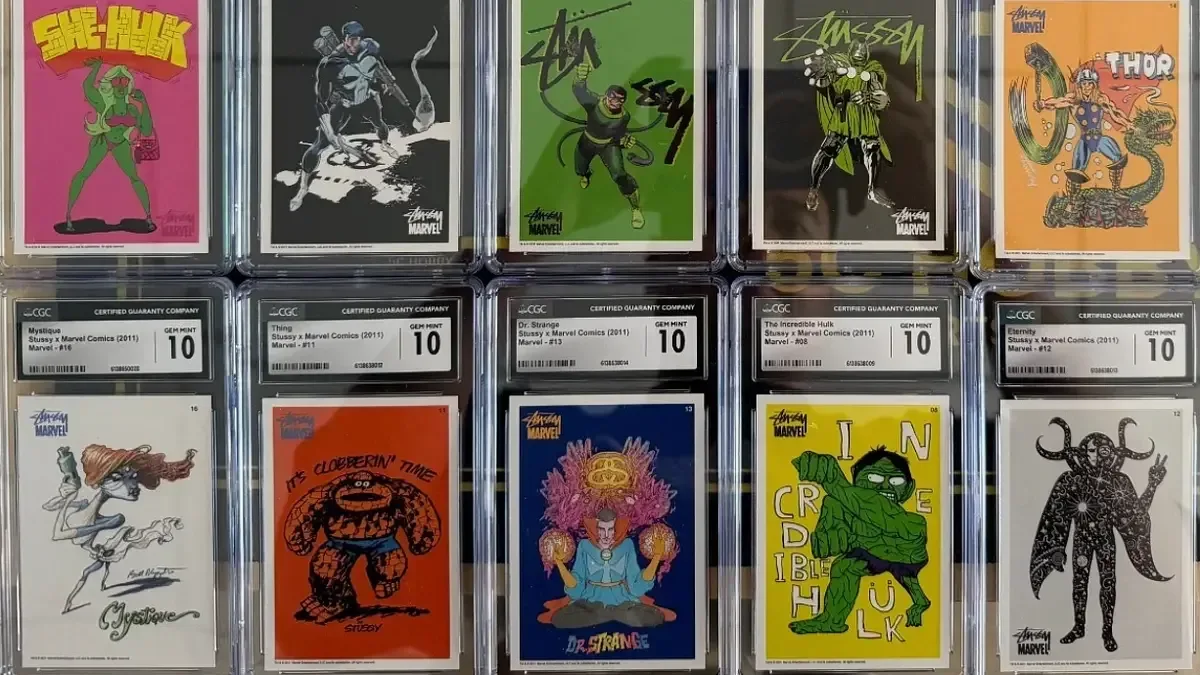
The modern trading card market has widened far beyond traditional sports releases, and one of the more intriguing rediscoveries is a 2011 collaboration that blended streetwear, comic art, and pack-issued cards long before that formula became familiar. The Stüssy x Marvel cards, once treated as a simple add-on to apparel, are now attracting a fresh wave of collector interest as non-sports cards continue to gain momentum.
What makes the release stand out is not just its age or scarcity. It is how clearly the project anticipated several collecting trends that would become much more visible years later: artist-driven reinterpretations, cards tied to apparel drops, and crossover collectibles that sit between fashion, comics, and the hobby.
A 2011 Release That Feels Built for Today’s Market
Stüssy partnered with Marvel in 2011 on a project that arrived in two parts and tied trading cards to T-shirt purchases. At the time, the cards did not necessarily appear to be the centerpiece. The shirts reportedly retailed for $36, and the card packs functioned more like a bonus element within a broader apparel collaboration.
That context matters now. In 2011, modern card grading was nowhere near as common or influential as it is today. Many buyers likely opened, handled, or stored the cards casually, without thinking about long-term gem-mint potential. As a result, the market today is being shaped not just by nostalgia and crossover appeal, but also by condition sensitivity.
For more collector background, read Pokémon Pokopia Part 2 DLC Trailer Reveals New Accessories Ahead of Late 2026 Release.
The release now looks unusually forward-thinking. It combined recognizable Marvel characters, a major streetwear label, collectible packaging, and artist-focused design choices years before similar concepts became more common across trading cards and lifestyle brands.
How the Stüssy x Marvel Set Was Structured
The collaboration was divided into Series 1 and Series 2.
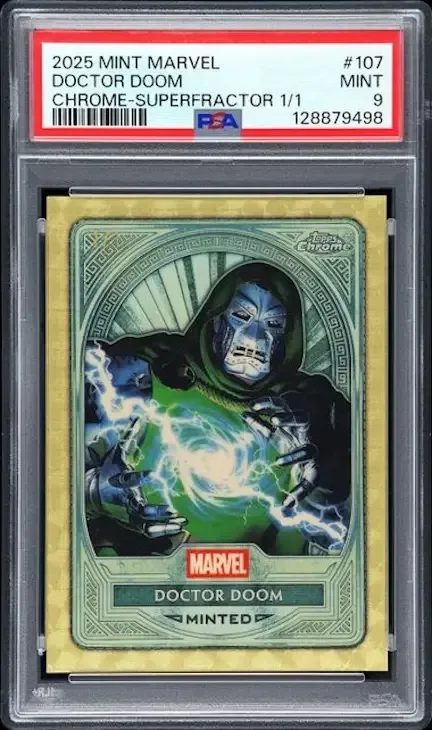
Series 1 launched in April 2011 and leaned on vintage Marvel imagery. Characters featured in that portion of the release included Wolverine, Captain America, Silver Surfer, Punisher, Doctor Octopus, Doctor Doom, and Ghost Rider. For the imagery, the project reportedly pulled from original comics and collector posters spanning the 1960s through the 1990s. That gave the cards and apparel a visual identity rooted in Marvel history rather than only contemporary branding.
For another perspective on this story, read Stüssy x Marvel’s 2011 Trading Cards Look Like a Blueprint for Modern Collecting.
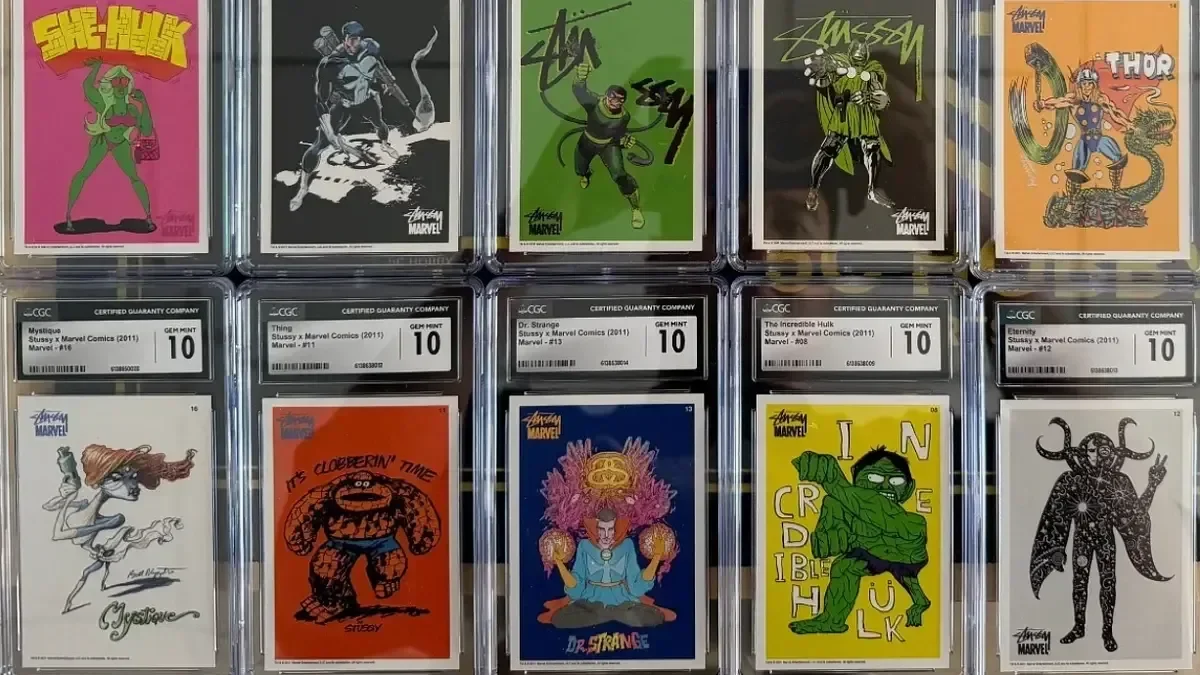
Series 2 followed in May 2011 and took the concept in a more artist-driven direction. Contemporary artists reinterpreted Marvel characters in their own styles, a concept that now feels highly familiar in the collectibles world. Among the known pairings were James Jarvis with The Thing, David Shrigley with Hulk, Todd James with She-Hulk, Gary Panter with Thor, and Mister Cartoon with Spider-Man.
The full release is described as a 17-card set made up of seven Stüssy Marvel character cards, nine Artist Series cards, and one Marvel cover card. That structure gives the set a split identity that appeals to more than one kind of collector. Comic fans can chase recognizable characters, streetwear collectors can connect the cards to the clothing drop, and card hobbyists can focus on complete sets, key singles, and graded examples.
Why Collectors Are Paying Attention Now
There are a few reasons this release is being reexamined in the current market.
First, non-sports cards have become far more accepted as a serious category. The collector base now regularly moves between sports cards, entertainment cards, artist projects, gaming properties, and branded collaborations. That broader collecting culture makes a set like 2011 Stüssy x Marvel much easier to appreciate than it may have been at launch.
Second, the collaboration sits at the intersection of several powerful collector communities. Marvel has a built-in audience. Stüssy has decades of influence in surf and streetwear culture. Add artist connections and low-visibility pack distribution, and the result is the type of crossover release that can stay under the radar for years before the market catches up.
Third, the issue of condition has become increasingly important. A release that may have been casually handled in 2011 can become much tougher in top grades by 2026 standards. That naturally pushes collector focus toward population scarcity, premium slabs, and standout characters.
Key Cards Leading the Market
The card drawing the most attention appears to be Spider-Man #10, featuring Mister Cartoon’s interpretation of the character. That card has emerged as one of the flagship pieces in the release, helped by the strength of the Spider-Man character itself and the added interest surrounding Mister Cartoon’s artistic name recognition.
A PSA 10 copy of Spider-Man #10 recently sold for $1,000 on eBay after another PSA 10 reached $950 in July. For comparison, a PSA 10 of the same card sold for $644 in July 2022. That kind of price movement does not guarantee a straight-line rise, but it does show how much more attention the card is receiving compared with just a few years ago.
Wolverine #1 is another notable card in the set. CGC 10 examples reportedly sold for $600 on both Aug. 18 and Aug. 20, reinforcing that the release is not being carried by a single card alone. Strong characters with broad fan bases are helping drive the market, and Wolverine remains one of the most collectible names in the Marvel universe.
Other cards and characters from the set may continue to gain traction as more collectors learn the checklist and chase complete runs. In crossover releases, market depth often starts with the biggest character names and then expands outward once collectors become familiar with the full scope of the set.
Sealed Packs Are Becoming a Story of Their Own
Single-card sales are only one part of the market. Sealed Stüssy x Marvel packs are also drawing attention, which is often a sign that collectors view the product as more than a short-term flip on one or two cards.
A sealed pack reportedly sold for $465 on Sept. 7. That same type of item had sold for $149.95 in March 2022. A jump of that size suggests collectors are assigning growing value not just to the individual cards, but also to the original unopened format and the broader identity of the release.
Sealed material in niche crossover products can be especially interesting because survival rates are hard to predict. Some packs get opened by card collectors, others stay with apparel buyers, and some disappear into closets, personal collections, or mixed streetwear archives. When a product was not initially treated like a major card release, unopened examples can become particularly compelling later.
The Scarcity Question
One of the most intriguing parts of the Stüssy x Marvel story is the lack of a widely documented production figure. Without a public print run attached to the release, collectors are left to judge availability through marketplace appearances, graded populations, and anecdotal supply.
That kind of uncertainty can work both ways. It can create excitement because collectors do not feel flooded by copies, but it can also make market analysis less precise than with modern products that have transparent serial numbering or fully published production details.
Even with that uncertainty, the market is clearly responding to a few observable realities:
- High-grade copies do not appear to be easy across the board.
- Character selection matters, with Spider-Man and Wolverine standing out early.
- Sealed material is getting more expensive.
- The release benefits from multiple collector entry points, including Marvel, streetwear, art, and cards.
Another sign of growing hobby legitimacy is that PSA’s Set Registry recognizes all 17 cards. Registry inclusion can help turn a niche release into a more structured chase, especially for collectors who prefer complete-set goals over isolated single purchases.
Why the Artist Element Matters
One reason this release feels so modern is the way it used artists. Today, collectors are comfortable with reinterpretations, alternative art, and projects built around a creator’s visual identity. In 2011, that was much less normalized in the card space, particularly in a mainstream crossover involving fashion and comics.
The artist pairings gave Series 2 a distinct personality. Instead of simply reproducing standard Marvel imagery, the release invited a more curated, design-conscious approach. That added a layer of collectibility that extends beyond pure character fandom. A buyer may want Spider-Man because it is Spider-Man, but another collector may specifically want that card because it is the Mister Cartoon Spider-Man.
That kind of layered demand tends to age well. It gives a release more than one route to relevance and helps explain why these cards are being revisited now.
Checklist Snapshot and Notable Content
While the full card-by-card breakdown is not widely circulated in the same way as a traditional hobby checklist, several key structural details are established for the 17-card release.
- Seven Stüssy Marvel character cards
- Nine Artist Series cards
- One Marvel cover card
Known characters and artist pairings connected to the collaboration include:
- Wolverine
- Captain America
- Silver Surfer
- Punisher
- Doctor Octopus
- Doctor Doom
- Ghost Rider
- The Thing by James Jarvis
- Hulk by David Shrigley
- She-Hulk by Todd James
- Thor by Gary Panter
- Spider-Man by Mister Cartoon
That mix of iconic heroes, villains, and artist-linked variations gives the release a diverse identity. It does not read like a standard comic card product, and it does not function like a conventional sports release either. Its appeal is precisely in how many collecting lanes it touches at once.
Where This Release Fits in the Broader Hobby
The 2011 Stüssy x Marvel cards now look like an early example of a format that became much more viable later. They arrived before artist-centered projects became a regular talking point, before card inserts tied to apparel collaborations became a recurring novelty, and before the present non-sports card surge expanded what many collectors are willing to chase.
That does not automatically make every card in the set a long-term powerhouse. But it does explain why collectors are circling back to it. The release has a believable historical angle, a compact set size, recognizable characters, visual variety, and a market that is finally ready to value the concept.
For collectors tracking overlooked crossover products, this is the kind of release that checks several important boxes at once: genuine age, cultural relevance beyond the card world, rising high-grade prices, growing interest in sealed material, and enough mystery around supply to keep attention on the market as more copies surface.
As more collectors dig into the 17-card run, the key questions will likely center on which characters prove strongest across grades, how often sealed packs continue to appear, and whether the set’s artist-driven cards can widen demand beyond the headline names already leading sales.
Photo Gallery