Breaks can be a fun way to chase cards from products you would rather not buy sealed on your own, but the format matters more than many collectors realize.
A spot is not a universal promise. It means only what the listing, show notes, and platform terms say it means. Before you join a pick-your-team break, a random-team break, or any variation built around players, divisions, packs, boxes, or cases, you need to know exactly what you are buying and how cards will be assigned.
The safest habit is simple: treat every break as its own contract. Read the format, the allocation rules, the shipping terms, and the cancellation posture before you click buy.
1. Start with the basic question: what exactly is the seller offering?
Collectors often say they are 'joining a break' as if that phrase explains the deal. It does not. A break spot can represent a team, a player, a division, a pack, a box, a case position, or another defined slot. That first definition changes everything about what you should expect to receive.
In a pick-your-team break, usually shortened to PYT, you choose a named team and receive the cards assigned to that team under the posted rules. In a random-team break, you usually buy a slot first and teams are assigned later by a disclosed random process. Those are useful starting definitions, but they are only the headline. The real terms live in the listing and any show notes tied to that specific event.
That distinction matters because different slot types create different collecting experiences. A team spot is built around franchise assignment. A division spot groups several teams together. A player spot can be far narrower and riskier. A pack or box break can entitle you to an unopened unit rather than cards sorted by team. If you assume one structure while buying another, you can misunderstand the offer even if the seller follows the posted rules exactly.
Before you buy, force yourself to answer one plain question: when this break ends, what category of cards or product am I entitled to receive? If you cannot answer that from the written details, you do not understand the offer well enough yet.
- PYT usually means you choose a specific team before checkout.
- Random team usually means you buy a slot first, then receive a team through a disclosed random assignment process.
- A 'spot' may also represent a player, division, pack, box, case position, or another unit defined by the seller.
2. Why PYT and random-team breaks feel different even with the same product
Two breaks can use the same sealed boxes and still create very different decisions for collectors. PYT offers clarity up front. You know the team you are chasing before you pay, so it is easier to match the purchase to your collecting goal. If you collect one franchise, follow one roster closely, or want to stay focused on a specific rookie class tied to a team, PYT is usually the most direct format to evaluate.
Random-team breaks create a different kind of appeal. Instead of choosing the exact team, you accept uncertainty in exchange for a different buying experience. The key point is not that one format is better. It is that the disappointment happens in different places. In PYT, you might feel let down because your chosen team simply did not show up much in the opened product. In random team, you might feel let down before a pack is even opened because the random assignment lands you on a team you would never have selected for yourself.
That practical difference should guide your decision more than hobby chatter does. Imagine you are a Braves collector and only really want cards that fit your personal collection. A random-team spot may still be perfectly legitimate, but if you would be unhappy receiving any of twenty-nine other teams, the format is fighting your goal from the start. On the other hand, if you mostly want the experience of opening along with a room and can accept any team outcome, random team may fit your temperament better.
The useful test is simple: which kind of uncertainty bothers you less? Not controlling the team, or controlling the team but not controlling what the product yields? Once you know that answer, choosing between PYT and random team gets much easier.
- Choose PYT when your collecting target is specific.
- Choose random team only if you are genuinely comfortable with any team assignment allowed by the rules.
- The format changes how cards are assigned, not how the sealed product itself behaves.
3. The single most important line in a break listing is your entitlement
Many collector disputes start with a vague assumption that a spot should guarantee a useful pile of cards, a hit, or some minimum return. That is the wrong baseline. What matters is the exact entitlement attached to the slot you purchased. If the listing sells a team slot, your right is to receive the cards allocated to that team under the posted rules. If it sells a pack, box, or slot position, your right is tied to that defined unit.
This sounds obvious, but it changes how you read a listing. Do not just scan for the product name and the team name. Look for the promise. Is your slot defined by franchise, by player, by division, by a numbered random draw position, or by a sealed unit? Precision protects both sides. The more specific the slot definition is, the less room there is for disappointment built on assumptions rather than terms.
A good habit is to restate the purchase to yourself before checkout. For example: 'I am buying the Orioles spot in a PYT break of two hobby boxes,' or 'I am buying one random slot that will be assigned a team later.' If that sentence feels hard to write, the listing probably is not clear enough for a confident purchase.
Also be careful about verbal enthusiasm during a livestream. Excitement can help sell a break, but your decision should rest on the written structure of the deal. If a point affects what you may receive, how cards are assigned, or whether anything extra is available, it should be clear before payment rather than left to room energy or hobby shorthand.
- Find the slot definition, not just the break headline.
- Restate the purchase in one sentence before buying.
- Treat vague hype as secondary to the written terms.
4. Read allocation rules like they are part of the product, because they are
There is no single hobby-wide rulebook that forces every breaker to handle every edge case the same way. That means one of the most important parts of any listing is often the least glamorous section: the allocation rules. Those rules tell you what happens when a card does not fit neatly into one slot.
Multi-team and multi-player cards are the classic example. If a dual autograph features players tied to different teams in the break, how is it awarded? Some sellers may use a random method among eligible spots. Others may use another clearly stated tiebreaker. The important point for you is not guessing which method is most common. It is knowing which method this listing uses before you pay.
The same logic applies to other awkward scenarios. What happens with retired players? What about cards that do not clearly map to one team the way you expected? If the listing is silent on obvious edge cases, you are not buying certainty. You are buying ambiguity, and ambiguity usually feels much worse after the packs are open than before.
Here is a practical scenario. Suppose you join a PYT football break because a product checklist includes several attractive duals involving your team and a rival team. If the listing clearly says all multi-team cards are randomized between eligible spots, you can decide whether that risk is acceptable. If the listing says nothing, you may be paying for upside that is not actually defined. That is why allocation rules deserve the same attention as the sealed product name itself.
- Check how multi-team or multi-player cards are awarded.
- Look for written handling of edge cases before you buy.
- Silence on obvious allocation questions is a reason to pause, not a reason to assume the outcome you prefer.
5. Separate break format from product randomness
Break formats shape assignment, but they do not override how sealed trading card products work. Manufacturers state that pack and box contents are randomly distributed and, unless a guarantee appears on the packaging, there is no promise of particular players, teams, cards, inserts, or secondary-market value. That reality should sit in the front of your mind before you buy any spot.
Collectors sometimes drift into 'due' thinking. If a team has not appeared yet, or the first boxes were quiet, chat can start acting as if the next box owes the room a monster card. That feeling may be entertaining, but it is not a reliable basis for a purchase decision. A dry run for your team does not prove a bad break. It may simply be the normal downside of random distribution inside sealed product.
This matters in both major formats. In PYT, choosing a team does not mean that team will appear often in the opened boxes. In random team, landing a strong franchise on paper does not guarantee the best cards from that team will surface in your particular break. The format answers who gets what. It does not guarantee what the product contains.
Think about a hypothetical basketball collector who lands the exact team he wanted in a random-team break. That may feel like a win before the first pack is opened. But if that team's biggest rookies and star inserts never appear in the opened boxes, the good team draw still leads to a weak result. The process can be fair and the outcome can still disappoint. Those are separate issues, and keeping them separate helps you judge breaks more clearly.
- A fair break can still produce a weak personal result.
- No format guarantees that every team will appear in the opened product.
- Do not treat chat momentum as evidence that a hit is 'due.'
6. Platform rules matter because they shape visibility, consistency, and recourse
Collectors often focus only on the breaker and ignore the platform. That is a mistake. Platform terms can determine whether certain break types are allowed, what disclosures sellers must give, whether the opening must stay visible on camera, whether a replay exists afterward, and whether you can cancel the purchase once you commit.
On eBay, case breaks, box breaks, and pack breaks are allowed only from pre-approved sellers, and buyers must receive the entire pack, box, or slot purchased. eBay also requires that information shown in the listing and livestream be accurate, complete, and not misleading, and that the listing stay consistent with what is said or shown live. During opening activity, products must remain within the camera frame and clearly visible while they are opened. Those details matter because they create a baseline for transparency.
Replay availability matters too. If a break is recorded and viewable afterward, you have a way to check how a randomization was done or how a disputed card was handled. That does not guarantee you will like the ruling, but it does reduce the chance that the entire event vanishes into memory and argument.
Cancellation posture is another practical issue. If a platform largely treats livestream purchases as final, your only safe time to solve confusion is before checkout. For a collector, the lesson is straightforward: do not treat platform terms as fine print for somebody else. They affect how much clarity you get before, during, and after the break.
- Verify that the break type is allowed on the platform under current rules.
- Check whether the opening must stay visible on camera and whether a replay should exist.
- Assume that pre-purchase reading matters more when cancellations are restricted.
7. Be careful with seller-controlled features: available does not mean guaranteed
Some platforms offer features that can make a break feel more flexible, but you should never assume a platform feature automatically becomes your right in every break. Seller-controlled options still depend on the seller offering them and explaining how they work.
A clear example is tradebacks on Fanatics Collect. The feature exists only if the seller offers it. The seller may set specific rules in the show notes. Approval is not guaranteed, and if a tradeback is granted, it is final. That is exactly the kind of detail collectors should slow down to read. The feature can be real without being automatic.
Why does that matter? Imagine a buyer joins a break expecting a safety valve if the result is disappointing. If the seller has not actually offered tradebacks for that event, or has limited when they can be used, the buyer's assumption has no value. The misunderstanding is not about the card outcome. It is about reading a platform capability as though it were a built-in promise.
The broader lesson is simple: treat any seller-controlled option as a bonus layer, not as the core reason to buy. First decide whether the underlying spot, allocation rules, and product risk make sense on their own. Only then should a feature like tradebacks influence your choice between otherwise acceptable breaks.
- A platform feature is not the same thing as an automatic buyer right.
- Read show notes for seller-specific conditions.
- Do not let a secondary option distract you from weak core terms.
8. A practical pre-join checklist you can use every time
The best break strategy is not glamorous. It is repeatable. If you build a quick checklist and actually use it, you will avoid many of the misunderstandings that cause buyer regret.
Start with format and slot definition. Is this PYT, random team, random player, division, pack, box, or case? Then write down what your purchase represents in one sentence. If random assignment is involved, find the method before you buy, not after. Next, read the allocation rules for awkward cards and edge cases. After that, confirm shipping expectations, timing, replay availability, and the platform's stance on cancellations or finality.
Consider two hypothetical collectors. Collector A is a baseball fan who wants only one franchise for a personal team collection. A random-team break may still be valid, but it is a poor fit if every non-target team feels like dead weight to that buyer. Collector B mostly wants the entertainment of a live opening and is comfortable with any team outcome as long as the process is clear. That buyer might reasonably accept a random-team format but should still inspect the randomization and allocation terms before paying.
The goal of a checklist is not to eliminate risk. Breaks are built around uncertainty. The goal is to make sure the uncertainty you accept is the uncertainty you actually intended to buy.
- Format: What kind of break is this?
- Slot definition: What exactly does my purchase represent?
- Randomization: If assignment happens later, how is it done?
- Allocation: How are multi-team or awkward cards handled?
- Product risk: Am I comfortable if my slot yields little or nothing notable?
- Shipping and timing: When and how are cards sent?
- Platform terms: Will a replay exist, and are cancellations restricted?
9. The healthiest mindset: buy the terms first and the dream second
Breaks are easiest to enjoy when you define success correctly. Success is not pulling a monster card every time. Success is entering a format you understand, at a price you knowingly accept, under rules you have actually read.
That mindset protects you from two common traps. The first is fantasy value thinking, where room excitement makes the upside feel more controlled than it is. The second is false standardization, where hobby slang makes a break sound familiar even though the important details are still seller-specific. Clear disclosures, visible openings, written allocation rules, and realistic expectations are much more useful than assumptions about how a break 'usually' works.
If you are newer to breaks, simpler is often better. A straightforward PYT or random-team break with clear rules, visible opening procedures, and replay access may teach you more than a more complicated event with multiple layers of conditions. Complexity is not sophistication if you do not understand where the cards can go or what your rights actually are.
The bottom line is simple. When the rules make sense before the stream begins, you are far less likely to confuse a normal bad outcome with a broken process. That is how you stay clear-eyed, protect your budget, and keep breaks fun instead of frustrating.
- Judge breaks by clarity, not by room excitement.
- Prefer formats you can explain back to yourself in plain language.
- A disappointing result is not automatically a rules failure.
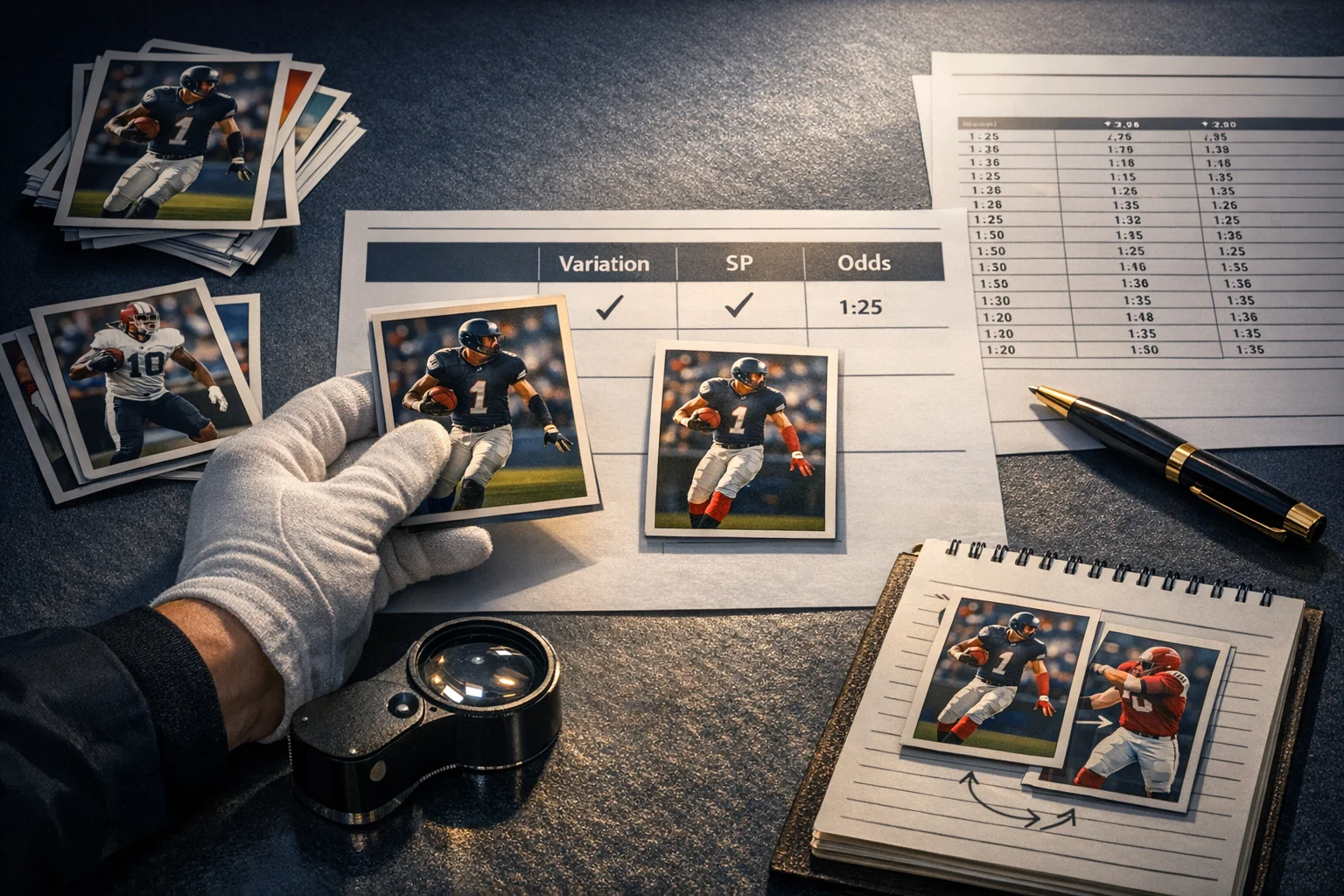
Illustration generated for this guide; not a photograph of an actual card, product or event.
Photo Gallery