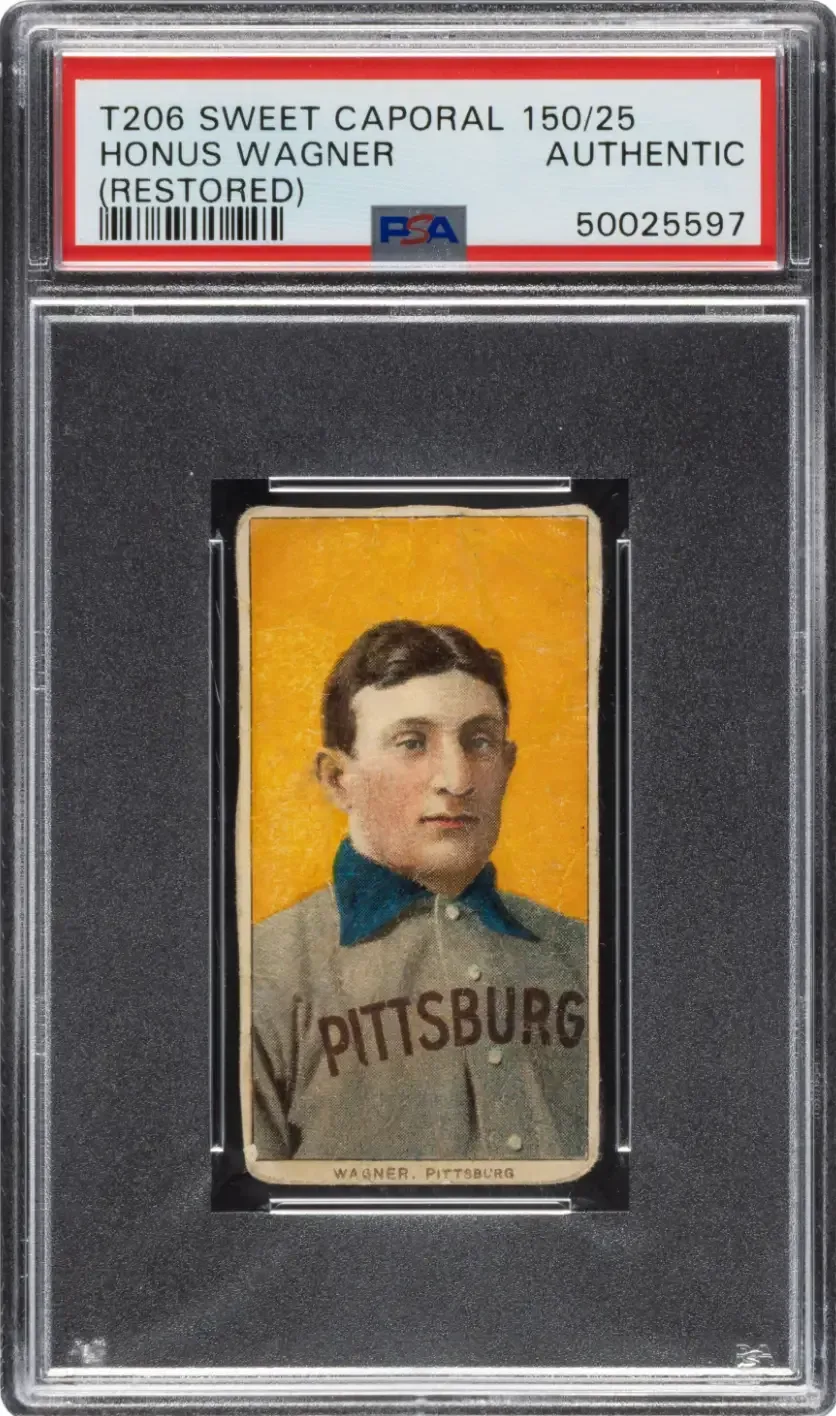
A restored 1909 T206 Sweet Caporal Honus Wagner has moved past the $1 million mark once again, adding another chapter to the long market history of one of the most important cards in the hobby.
The current offering has drawn attention not only because it is a T206 Wagner, but because it also sits at the center of one of collecting's most persistent questions: how much value will buyers place on a restored example of a card that already exists in extremely limited supply?
At the time referenced in the auction listing, bidding had reached $1,025,000 with more than 11 days remaining. That figure alone would be notable for nearly any prewar card, but with a Wagner, every sale becomes a measuring stick for scarcity, condition, authenticity, and collector tolerance for alteration.
The result is especially intriguing because this is not a newly discovered card and not an example entering the marketplace for the first time. It is a widely watched copy with a documented history of major public sales, which gives collectors a rare opportunity to compare pricing across multiple points in the current vintage boom.
For more collector background, read Michael Jordan’s 1998 NBA Finals Game 2 Jersey Sells for Record $14 Million.
A famous card with a different kind of market test
The T206 Honus Wagner has long held a place far beyond standard baseball card collecting. Its rarity, the lore surrounding its production, and Wagner's place in baseball history turned it into a cultural symbol as much as a sports collectible.
The familiar version of the story centers on Wagner objecting to the use of his likeness in connection with cigarette promotion, leading to the card's limited distribution and eventual scarcity. Whether discussed as a baseball artifact, a tobacco-era collectible, or a cornerstone of the vintage card market, the T206 Wagner remains one of the hobby's most recognizable pieces.
This specific example adds another layer because restoration changes the usual conversation. With ultra-rare cards, collectors are often weighing two powerful forces against each other. One is originality. The other is accessibility. A restored Wagner may not satisfy buyers who prioritize untouched condition, but it can still command extraordinary money simply because the chance to own any genuine T206 Wagner is so limited.
That tension is what makes this auction more than a routine seven-figure sale. It serves as a live test of how the market currently prices restoration on a legendary card where rarity can outweigh nearly every other concern.
This Wagner has already built a strong public sales record
One reason the current auction is getting so much attention is that this same restored card has changed hands several times in recent years. The card's PSA serial number allows its transaction history to be tracked, giving the market a clear chain of publicly known sales.
Its recorded major sales include:
- $1,102,806 in November 2021
- $1,968,000 in September 2023
- $1,980,000 roughly a year and a half later in another public sale
That run of results shows how dramatically pricing can move on trophy-level vintage cards, even when the card's restoration status is already understood. The first number comfortably cleared seven figures. The next two nearly touched the $2 million level.
With bidding now back above $1 million in the latest auction, the hobby is watching to see whether this copy returns to the upper end of its recent range, falls short of prior results, or establishes a new reference point for restored examples.
Because the card already has a transparent sale history, the final price will likely be discussed in context immediately. Collectors will compare it not just to other Wagners, but to this exact card's own performance over time.
Why restored cards remain one of the hobby's hardest categories to price
Restoration has always been a complicated topic in sports cards. In broad terms, restoration refers to work performed to improve appearance or structural stability after a card has already suffered wear or damage. In practice, that can mean very different things depending on what was done and how much of the original card was altered.
Examples of restoration or intervention can include edge work, corner rebuilding or reinforcement, trimming, color retouching, ink application in areas of paper loss, and attempts to flatten creases or bends. Some collectors view any such alteration as disqualifying from top-tier demand. Others see certain forms of conservation as acceptable, particularly for cards of extreme rarity where pristine untouched examples are realistically out of reach.
The subject becomes even more nuanced when discussing high-end prewar material. A common vintage card with visible restoration may see its market shrink sharply. A T206 Wagner is different. There are so few genuine examples available that even cards with issues, qualifiers, trimming notes, or restoration can still bring extraordinary prices.
That does not mean the market ignores restoration. It means the market prices it differently. On a card of this stature, buyers may be deciding less between restored and unrestored, and more between owning a Wagner and not owning one at all.
The latest auction puts that distinction in clear view. The card is not simply being sold as a bargain substitute for a higher-grade copy. It is being offered as a legitimate collecting opportunity attached to one of the most famous baseball cards ever made.
Recent Wagner sales show just how wide the high end can be
The seven-figure bidding on this restored Sweet Caporal example also lands during a period when other Wagner sales have pushed the upper limits of the market much higher.
In August 2026, a 1909 Piedmont Cigarettes Honus Wagner sold for $5,856,000 and carried an SGC Authentic designation with noted signs of trimming. Earlier in February 2026, a PSA 1 copy sold for $5,124,000.
Those prices are critical to the conversation because they highlight just how valuable the Wagner name remains across condition tiers and grading outcomes. They also show that serious buyers can still pursue altered or low-grade examples aggressively when the card itself is scarce enough.
At the same time, they help frame the current restored copy's position in the market. A bid just over $1 million is already a major number, but it sits well below the prices achieved by other notable Wagner examples this year. That gap reflects the market's attempt to assign a discount for restoration while still honoring the importance of the card.
The final hammer price will help clarify how steep that discount currently is. For collectors and market observers, that is where the real significance of the sale lies.
The player behind the cardboard legend
Any discussion of the T206 Wagner eventually circles back to Honus Wagner himself, whose baseball career is strong enough on its own to support the card's mythology.
Wagner began his professional career in 1897 with the Louisville Colonels. When he joined the Pittsburgh Pirates in 1900, he immediately established himself as one of the game's dominant hitters, batting .381 and earning the first of his eight batting titles. He finished his career with a .328 lifetime average and became one of the inaugural members of the Baseball Hall of Fame in Cooperstown.
That résumé matters in the market. Collectors are not simply buying scarcity. They are buying scarcity attached to an all-time great, a player whose name is inseparable from early baseball history. The T206 issue would likely still be important if Wagner had been merely a star. Because he was one of the era's defining players, the card's status rose to another level.
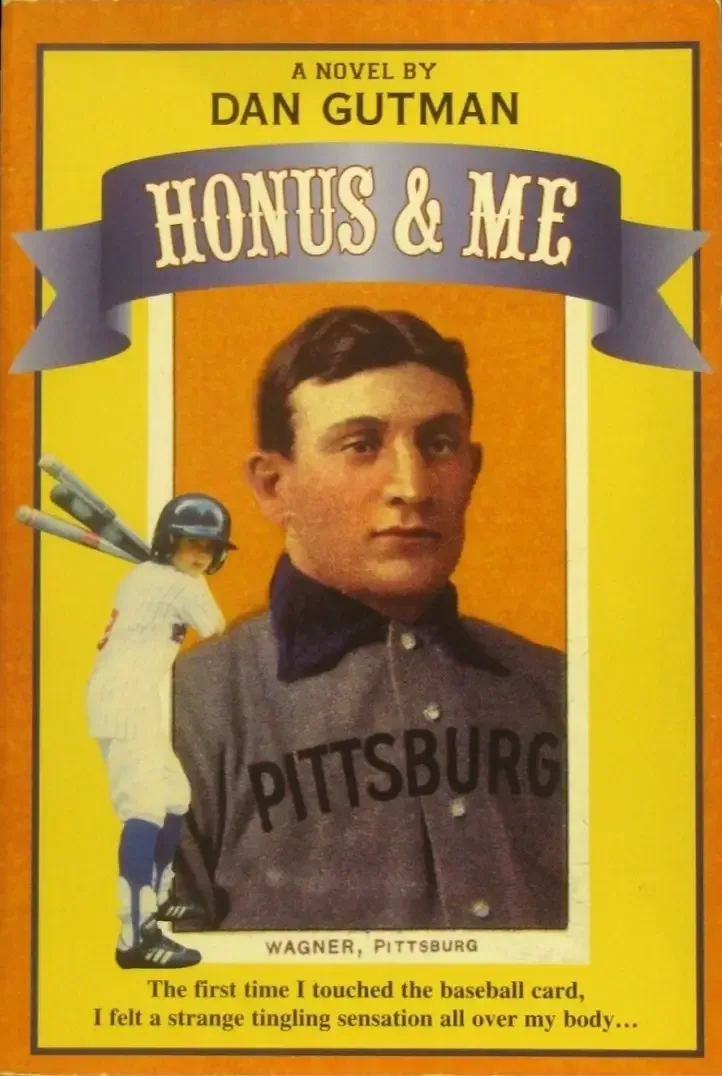
The image itself also helped. The portrait design, with Wagner in uniform set against a vivid orange background, is one of the most iconic visuals in the hobby. For many collectors, the card is the vintage baseball card, a piece that communicates both artistry and scarcity in a single glance.
What the auction says about the state of elite vintage collecting
The market for blue-chip vintage cards has matured into something that often behaves more like fine art or premier memorabilia than traditional collecting. Buyers at this level are not always chasing population reports or high numeric grades alone. They are competing for category-defining assets with broad recognition and long-term prestige.
A restored T206 Wagner fits that description, even if it occupies a more debated niche within the elite tier. It is still a genuine Wagner. It still carries immense historical significance. It still attracts bidders willing to spend seven figures despite known restoration.
That matters because it suggests the hobby's highest end remains deep enough to support multiple lanes of demand. There is demand for top-graded examples. There is demand for low-grade originals. There is even meaningful demand for restored copies when the underlying card is important enough.
It also reinforces a basic truth about rare prewar icons: supply is so thin that collectors often make peace with imperfections they would reject in more available cards. A restored 1980s star card may face a very different market response than a restored T206 Wagner simply because one can be replaced and the other cannot.
Why collectors will watch the finish closely
As the auction continues, the final number will be studied for more than headline value. Buyers, sellers, auction houses, and vintage specialists will be looking at where it lands relative to the card's own past sales and relative to other Wagner examples sold in 2026.
If it climbs near its previous levels around $2 million, that would reinforce strong confidence in restored examples of hobby-defining cards. If it finishes materially lower, the result may suggest buyers are becoming more selective about how they price alteration even at the highest end of the market.
Either way, the sale has already accomplished something important by pushing back above $1 million with substantial time left in the auction window. That benchmark confirms that restoration does not remove a genuine T206 Wagner from elite territory. It simply changes the lane in which elite buyers compete for it.
For collectors following the vintage market, that makes this auction one of the clearest current indicators of how the hobby values rarity, originality, and historical significance when all three do not line up perfectly in the same card.
Photo Gallery