Pokémon 30th Celebration is built around nostalgia, and one of its strongest hooks is the return of classic cards from multiple eras of the Pokémon TCG. The set’s reprints are not just familiar names on a checklist. They connect modern collectors to some of the hobby’s most recognizable artwork, memorable competitive cards, and character-driven favorites.
That nostalgia is already showing up in the market. In several cases, the new 30th Celebration versions are selling at strong early levels because of launch-week demand and the excitement of opening a modern pack with a legendary design inside. In other cases, the original card remains the clear heavyweight because of scarcity, age, or long-term collector prestige.
Here is a closer look at the first five notable reprints making waves in 30th Celebration, along with how their current values stack up against the original cards that inspired them.
Why the 30th Celebration reprints matter
Anniversary products tend to do well when they balance fan service with accessibility. That is exactly what these reprints are trying to do. Instead of asking collectors to chase only brand-new art or mechanics, 30th Celebration leans into some of the most memorable cards from Pokémon TCG history and gives them a modern release point.
For more collector background, read Pokémon 30th Celebration Pull Rates Are Pushing Singles Prices Down Fast.
For longtime collectors, that means another shot at favorite cards that may have become too expensive, too condition-sensitive, or simply too difficult to find in the wild. For newer collectors, it creates an entry point into iconic names such as Base Set Charizard without requiring a four-figure budget for an original copy.
Still, the market treats reprints and originals very differently. A modern anniversary version may carry fresh demand, but original releases often retain the edge in historical significance. The comparison between the two reveals a lot about how the hobby values nostalgia, rarity, play history, and character popularity.
Base Set Pikachu returns in holo form
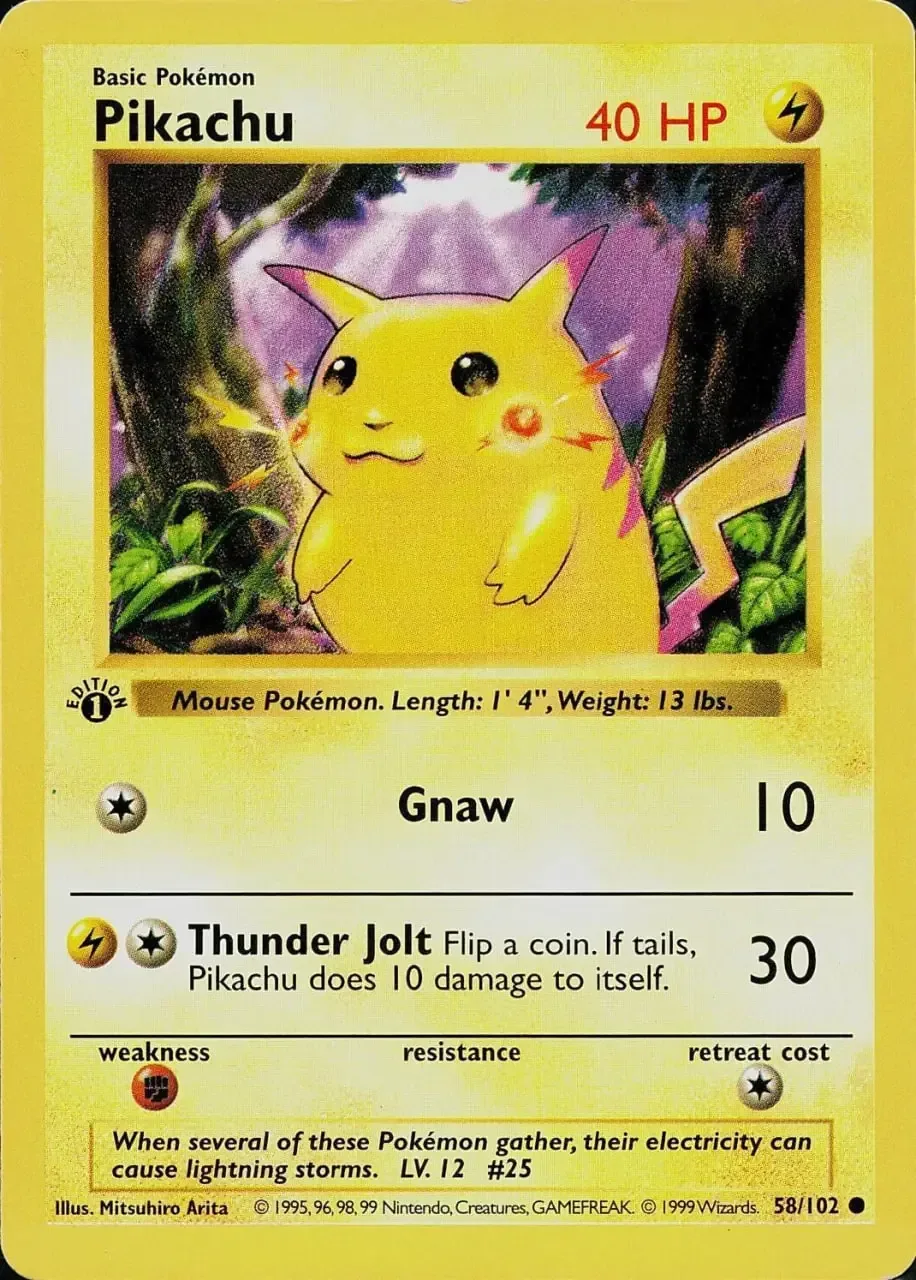
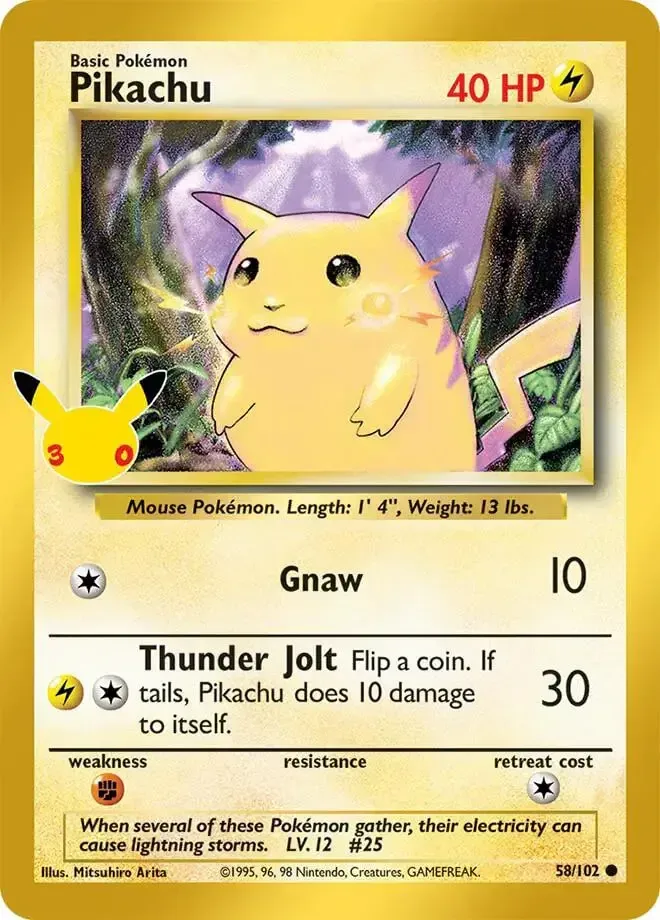
Few Pokémon cards are as instantly recognizable as Base Set Pikachu. The 30th Celebration Classic Collection revisits that famous early design, including the rounded, heavier look that earned the card its “Chonkachu” nickname among collectors.
For another perspective on this story, read Pokémon 30th Celebration Reprints Put Five Classic Cards—and Their Price Gaps—Under the Microscope.
The anniversary edition stands out because it turns that familiar image into a holo release, giving a different feel to one of the franchise’s most important cards. Pikachu has always been the natural face of a milestone product, and this reprint was always likely to draw attention early.
There is also another point of nostalgia tied to the original. Collectors continue to talk about the “Red Cheeks” version of Base Set Pikachu, a well-known printing variant in which Pikachu’s cheeks appear red rather than the more common yellow styling. That variant remains one of the hobby’s enduring conversation pieces from the earliest Pokémon era.
On the price side, the 30th Celebration Pikachu reprint has been trading around $30 shortly after release. The original Base Set version sits noticeably lower at about $14. That puts the reprint at more than double the price of the original in this early window.
That gap says a lot about launch momentum. The original is historically significant, but it is also widely known and relatively accessible compared with many early-era grails. The new holo treatment and anniversary branding are doing the heavy lifting for the 30th Celebration version right now.
Base Set Charizard remains the set’s emotional centerpiece
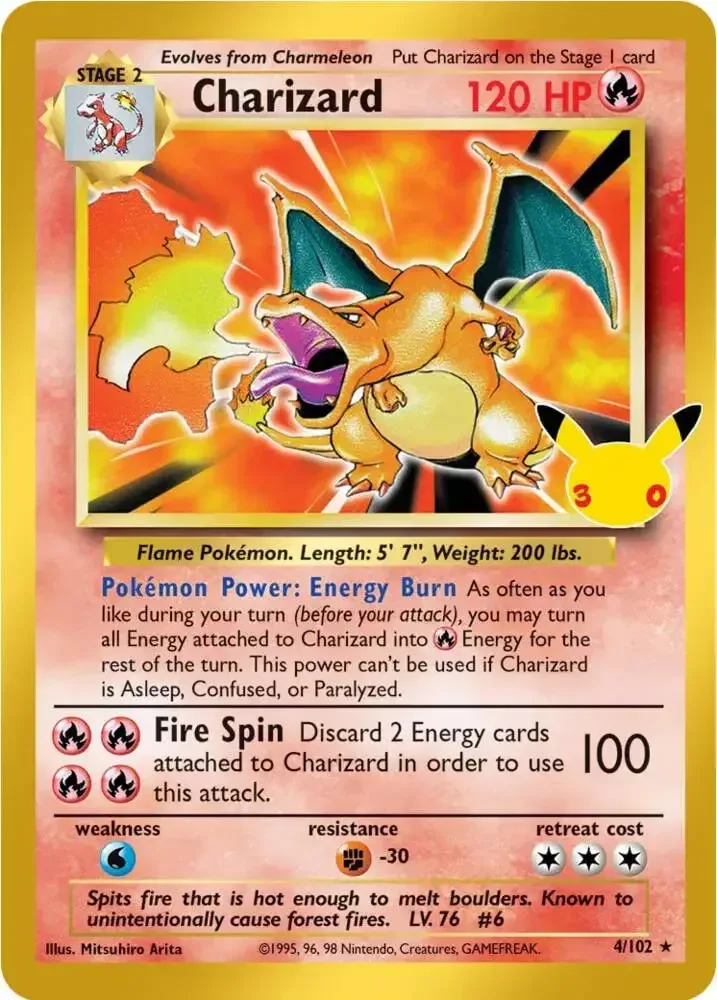
If any card can anchor an anniversary product, it is Base Set Charizard. Even after years of reprints, redesigns, and special sets, Charizard remains one of the biggest names in the hobby. Its inclusion in 30th Celebration was always going to be one of the top talking points around the release.
The appeal is easy to understand. Pulling a Charizard tied to the original Base Set look still delivers the kind of moment collectors chase, even when the card is clearly marked as a modern issue. The artwork may feel old-school compared with current Pokémon card design, but that is part of the point. Collectors are not buying into this card because it looks cutting-edge. They are buying into the emotional weight of the original design.
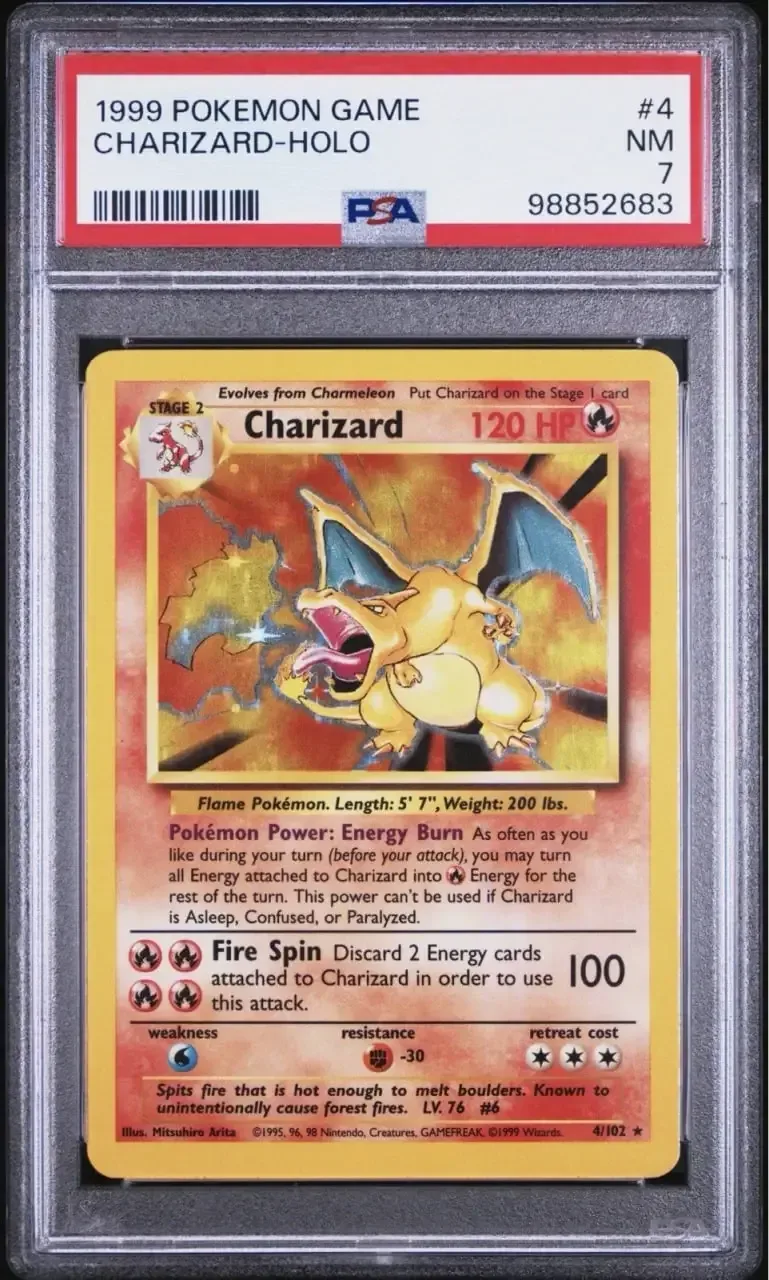
The 30th Celebration Charizard is visually separated from the original by a distinctly different holo pattern and a large Pikachu 30th anniversary logo in the bottom-right area of the frame. Those changes make it unmistakably modern while still preserving the image that made the original such a hobby giant.
In value terms, there is no confusion about which card still carries the greater long-term prestige. The 30th Celebration Charizard is sitting around $180, while an original Base Set Charizard in ungraded Near Mint condition is near $1,000.
That is a major gap, but it also highlights why the reprint matters. For many collectors, a modern copy priced well below the original is still a meaningful chase if it delivers the same nostalgic hit. The anniversary card may never replace the original in the market hierarchy, but it does not need to. Its role is to make the experience of chasing that image available to a wider part of the hobby.
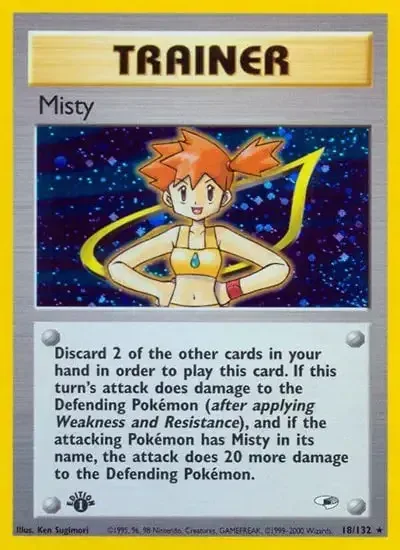
Gym Heroes Misty shows the power of character collecting
Not every successful reprint in 30th Celebration is driven by pure competitive legacy or all-time grail status. Gym Heroes Misty is a good reminder that character popularity can be just as important.
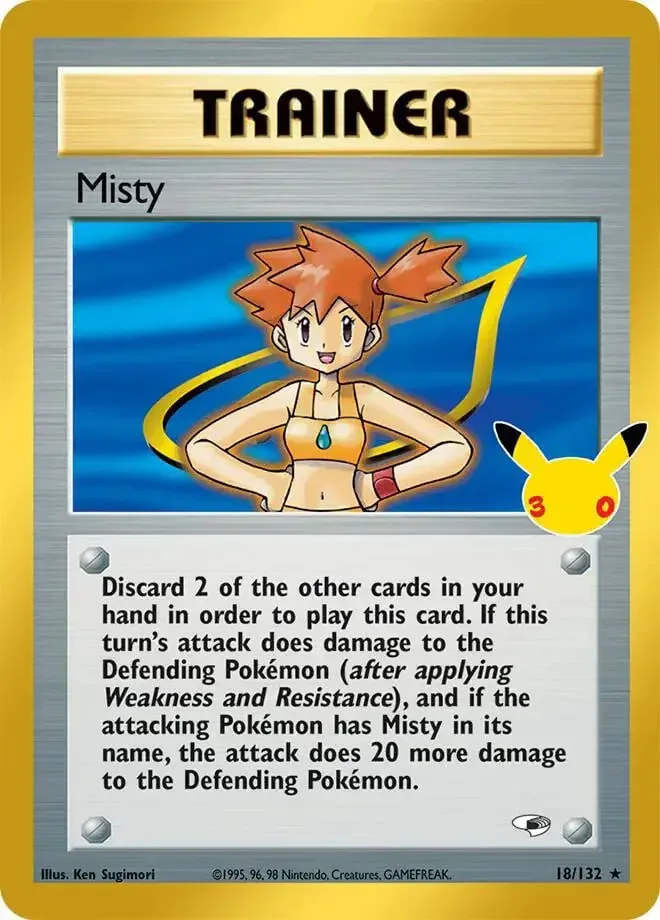
Misty remains one of the most recognizable human characters in Pokémon history thanks to her place in the anime and her long-standing fan-favorite status. That matters in a collector market where trainer cards and character-centric cards have steadily gained stronger followings over time.
The original Gym Heroes Misty also carries some historical interest because it was among the early trainer cards to receive holographic treatment, making it stand out during its era. While it was never in the same class as the hobby’s most iconic monster cards, it has held a level of interest that goes beyond raw gameplay.
The current pricing difference is striking. The 30th Celebration Misty reprint is around $11, while the original Gym Heroes version averages about $180. That makes Misty one of the clearest examples in this group where the original’s age, character demand, and established collector base dramatically outweigh the launch premium of the reprint.
For collectors, that makes the 30th Celebration copy a lower-cost way to own a recognizable piece of Pokémon history. For original-card collectors, the market is reinforcing that the first release still commands a very different level of respect.
Erika’s Jigglypuff flips the usual price script
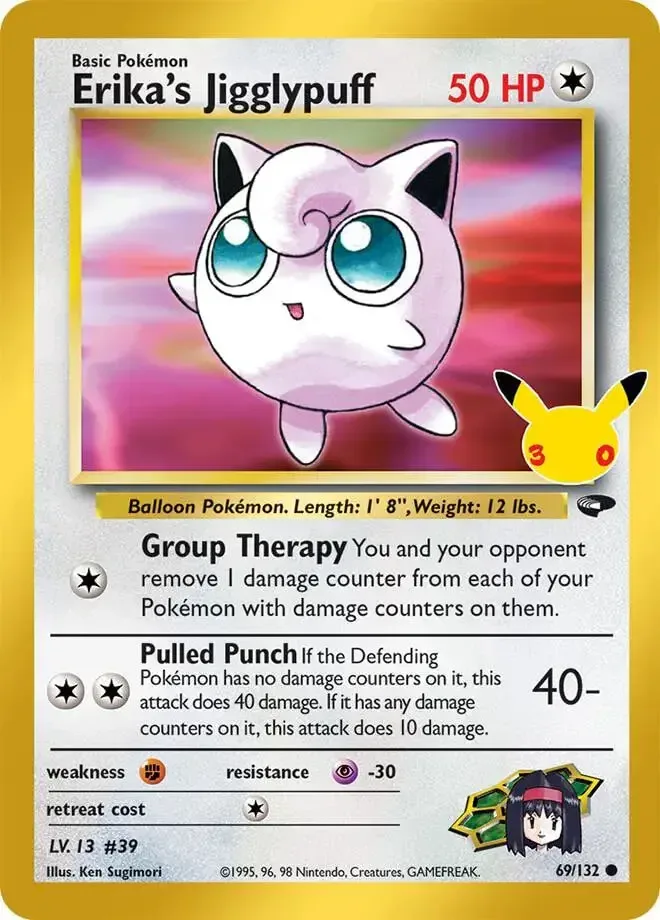
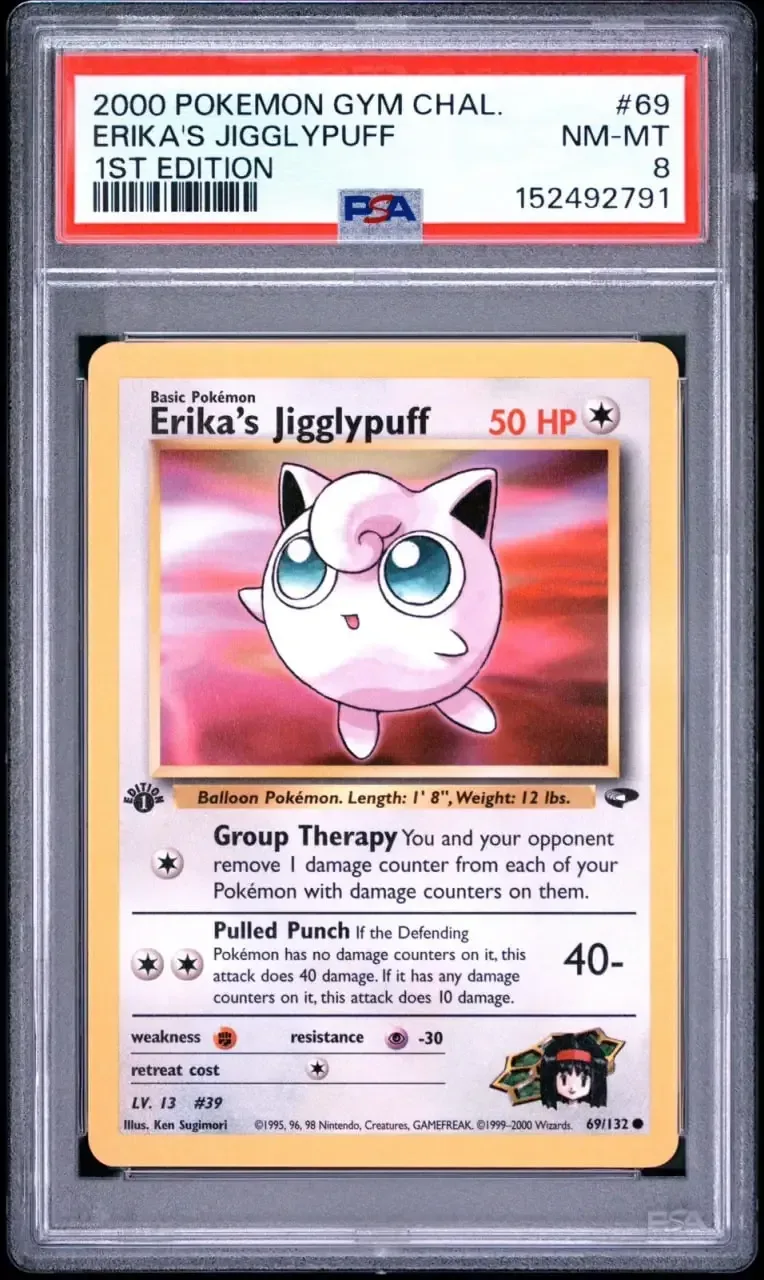
One of the more interesting early comparisons belongs to Erika’s Jigglypuff from Gym Challenge. Unlike Charizard or Misty, this is not a card fueled primarily by broad pop-culture fame. Its reputation is tied more closely to how useful it was in competitive play during its original era.
Erika’s Jigglypuff earned attention because of Pulled Punch, an attack that could apply serious pressure for the time. Requiring only one Double Colorless Energy to deal 40 base damage made it a very playable option in an environment where most Pokémon had far lower HP totals than many modern cards. During that period of the game, efficient attacks mattered greatly, and Erika’s Jigglypuff fit that mold.
Despite that competitive past, the market for the original has remained modest. The 30th Celebration Classic Collection holo is currently around $17, while an original Erika’s Jigglypuff can be found for less than $3.
That makes this one of the clearest examples of a modern anniversary reprint outperforming its original counterpart, at least in the short term. The reason likely comes down to presentation and timing. A fresh holo treatment inside a high-interest anniversary release can create more immediate demand than an older card that is respected historically but not especially expensive or scarce in the current market.
Collectors looking for value may see this as one of the most affordable original pickups among the group. Meanwhile, those building a 30th Celebration run may still pay the premium for the version tied directly to the anniversary product.
Neo Genesis Sneasel brings back one of the game’s most infamous cards
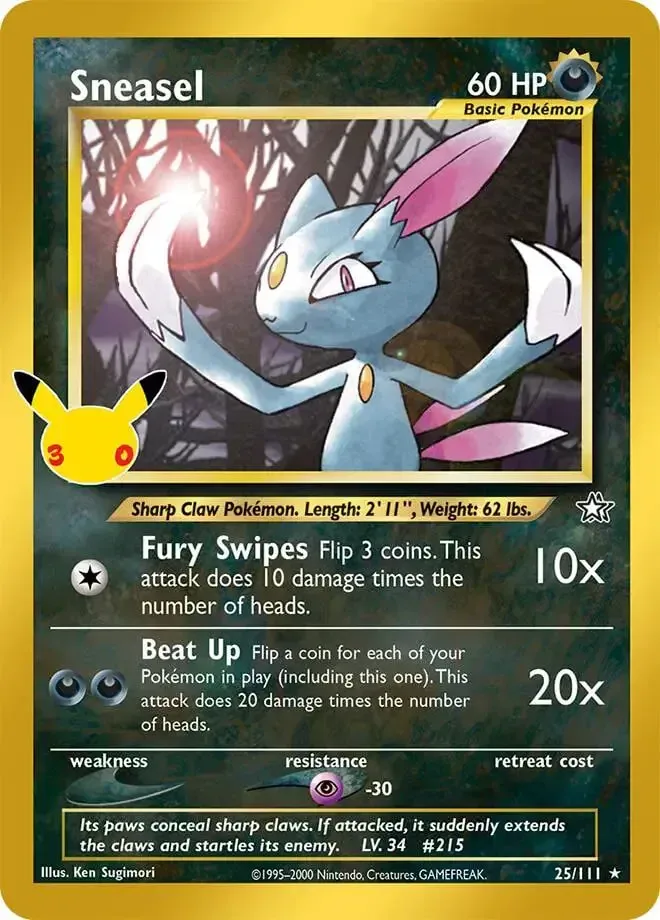
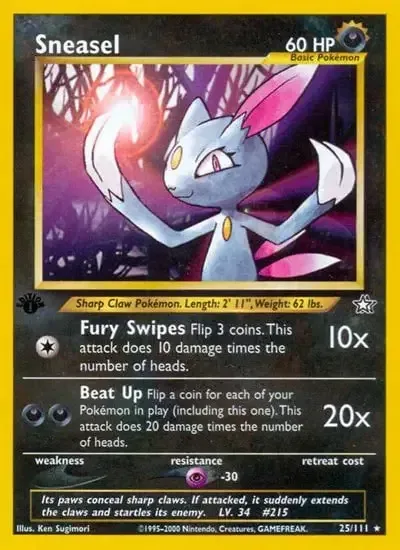
Neo Genesis Sneasel has a very different type of legacy. Its status comes from competitive history, where it became known as the first banned card in the Pokémon TCG.
The reason was simple: it was incredibly strong for its time. Fury Swipes was useful, but Beat Up is what made the card notorious. For only two Darkness Energy, Sneasel could threaten knockouts on a huge portion of the format, especially when coin flips went its way. Add in the fact that it had no type weakness and no retreat cost, and the card became a serious problem during its era.
The 30th Celebration version preserves those defining features, including the lack of weakness and retreat cost, making it a faithful callback to one of the most memorable competitive cards from early Pokémon play.
Price-wise, this is one of the tightest matchups in the group. The 30th Celebration Sneasel is sitting a little above $6, while the original Neo Genesis copy is around $8.
That narrow spread suggests the market sees both cards as accessible and interesting, but not separated by the same kind of prestige gulf found with Charizard or Misty. It is a solid example of a reprint and original existing in nearly the same price lane while appealing to slightly different buyers. One side values the anniversary connection, and the other values the original competitive artifact.
Price checklist: 30th Celebration vs. original cards
- Base Set Pikachu
- 30th Celebration reprint: about $30
- Original Base Set variant: about $14
- Base Set Charizard
- 30th Celebration reprint: about $180
- Original Base Set Charizard, ungraded Near Mint: near $1,000
- Gym Heroes Misty
- 30th Celebration reprint: about $11
- Original Gym Heroes Misty: about $180
- Gym Challenge Erika’s Jigglypuff
- 30th Celebration reprint: about $17
- Original card: less than $3
- Neo Genesis Sneasel
- 30th Celebration reprint: just over $6
- Original Neo Genesis copy: about $8
What these early comparisons tell collectors
The first wave of 30th Celebration pricing shows that nostalgia does not hit every card the same way. Cards such as Charizard and Misty continue to prove that original releases hold their own category of collector importance. Their first printings are not just older versions of the same image. They are foundational hobby pieces with long-established demand.
At the same time, reprints can outperform originals when the anniversary product adds enough excitement, scarcity perception, or visual appeal. That is what is happening with cards such as Pikachu and Erika’s Jigglypuff, where the fresh release energy is creating stronger short-term pricing than the originals currently command.
For collectors deciding between originals and 30th Celebration copies, the right choice depends on the goal. Buyers chasing history will still gravitate toward the earliest versions. Buyers focused on set building, modern pack-pulled nostalgia, or lower-cost access to classic designs may prefer the anniversary versions. With 30 cards in the reprint lineup, these first five already show how differently the market can treat each name, even when all of them draw from the same nostalgia-driven formula.
Photo Gallery