The football card market continues to behave differently from almost every other corner of the hobby. Even with the NFL sitting at the center of American sports culture, many dealers and collectors say football cards still trail baseball and basketball in both headline value and broad demand. At the same time, they are not disappearing from show floors or shop counters. In many cases, they are selling quickly, just not always at prices that feel logical.
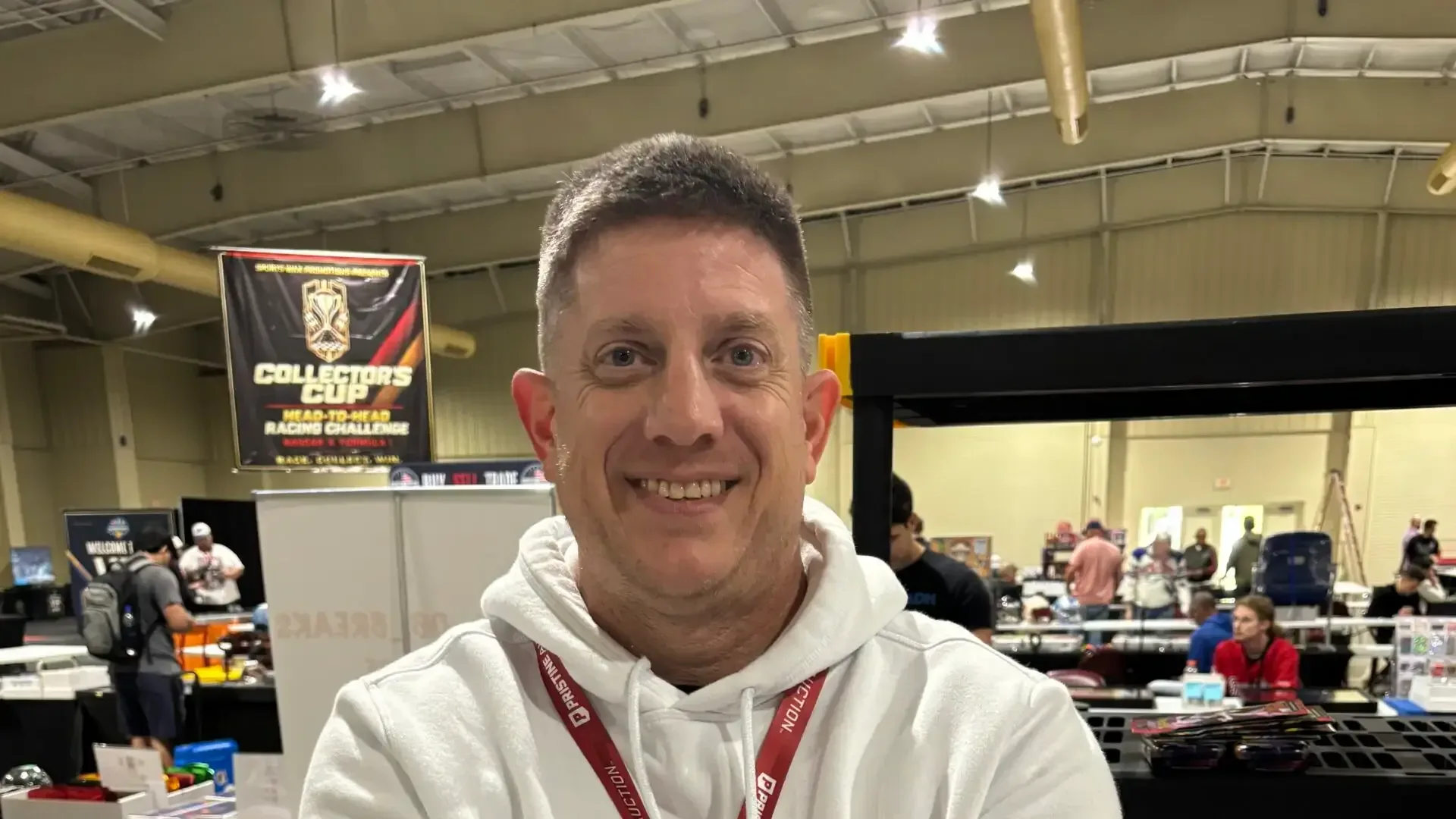
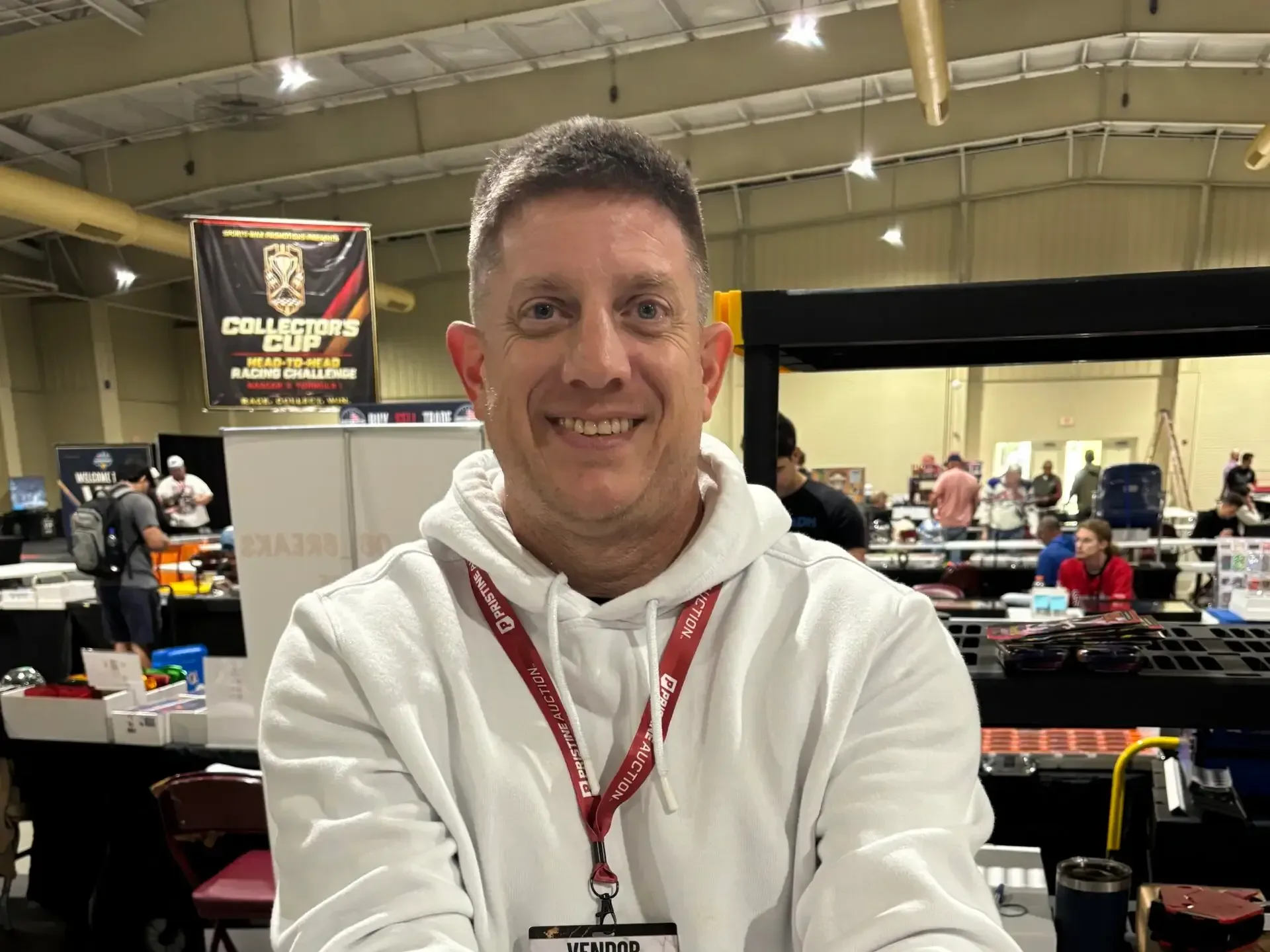
That tension was visible at a recent card show in Concord, North Carolina, where football cards were easy to find across a 500-plus table setup. The mix ranged from affordable vintage singles to modern quarterback rookies and high-end one-of-ones, illustrating a market that can be active and unpredictable at the same time.
For collectors trying to understand where football cards stand in 2026, the message is fairly clear: the category still moves, but its values can shift rapidly based on performance, hype, injuries, position, and local fan interest. That makes football one of the hobby's most fluid markets and one of its most difficult to price with confidence.
Why football cards feel so volatile right now
Several factors are shaping the current football card environment. Dealers point to the shorter NFL season, the week-to-week intensity of the sport, and a collector base that often reacts immediately to what happens on the field. A breakout game can send a player's cards climbing in a matter of days. A poor outing or injury can cool that same market just as quickly.
For more collector background, read How Collectors and Dealers Can Reduce Theft, Scams and Security Risks in the Card Hobby.
The quarterback effect remains central. In football, no position drives hobby attention like QB. Collectors are still putting the most money into quarterbacks first, followed by wide receivers and running backs. That creates a steep value curve in which one player on a roster can carry major hobby interest while other productive stars lag behind.
It also creates fragility. Football careers can turn quickly, and the hobby often prices upside long before a player has built a lasting résumé. That leaves plenty of room for corrections, especially when early hype outpaces production.
Another factor is scarcity. Dealers at the show noted that football card production runs can feel smaller than some other sports categories, which can support interest. But scarcity alone does not guarantee stronger prices, especially when demand remains concentrated in a narrow group of players.
Fantasy football has also helped shape buying patterns. Collectors often chase players they watch every week or roster in fantasy lineups, adding another layer of short-term momentum to certain cards. That can be good for liquidity, but it also adds to the market's swing-heavy nature.
Dealers say football cards can be among the hobby's quickest movers
One of the most revealing details from the Concord show was not the top-end asking prices. It was how often dealers described football cards as fast sellers, especially in the lower slabbed price ranges.
Cards priced roughly from $30 to $100 were described as particularly active. That matters because it shows football does not need to dominate the ultra-premium market to remain healthy at a practical level. A card category can be volatile and still be highly liquid, especially when collectors are willing to make impulse buys tied to current performance and weekly buzz.
That kind of movement is different from a vintage baseball card market built on long-term historical demand or from elite basketball cards that can command major trophy prices. Football often lives closer to the action. Buyers react to game results, depth chart changes, rookie flashes, and playoff narratives.
For dealers, that creates opportunity. Inventory can turn quickly, particularly during the season. For collectors, it creates a market where timing matters as much as card quality. Selling into a hot streak can look smart. Holding through an injury or slump can be painful.
Quarterbacks still dominate the football card economy
If there is one rule that continues to shape football cards, it is this: quarterbacks run the market. From bargain bins to showcase cases, QB cards attract the deepest attention and usually the strongest pricing.
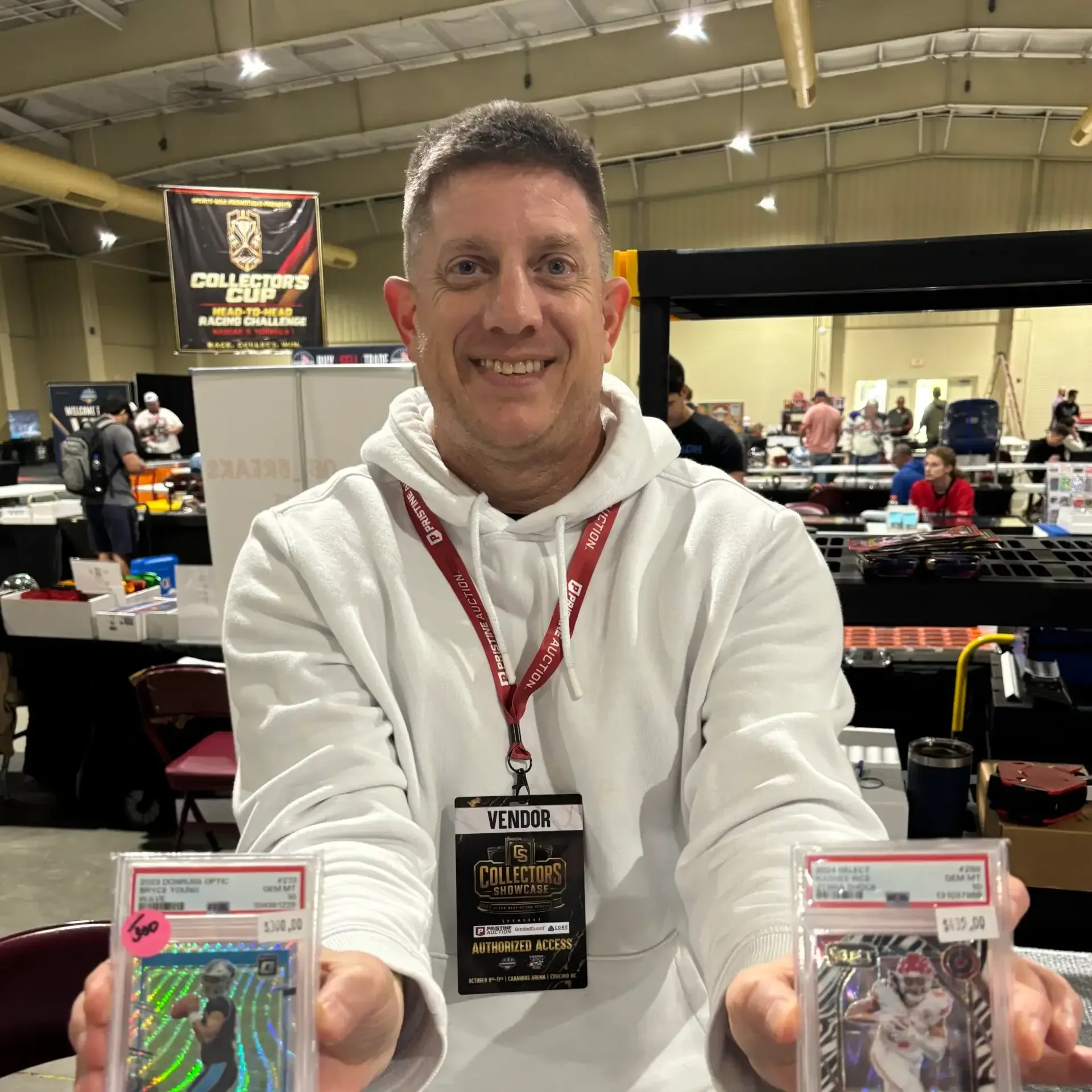
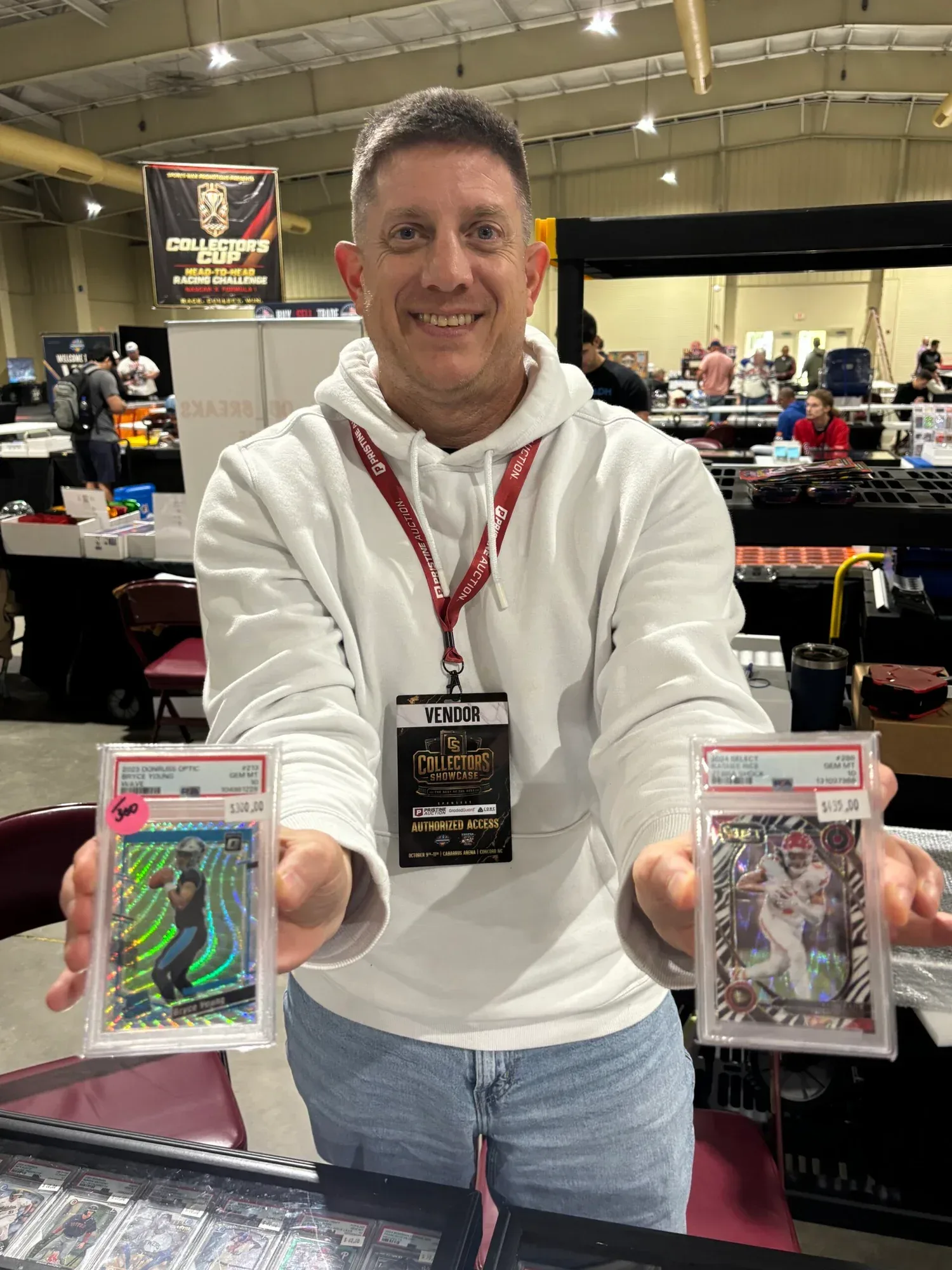
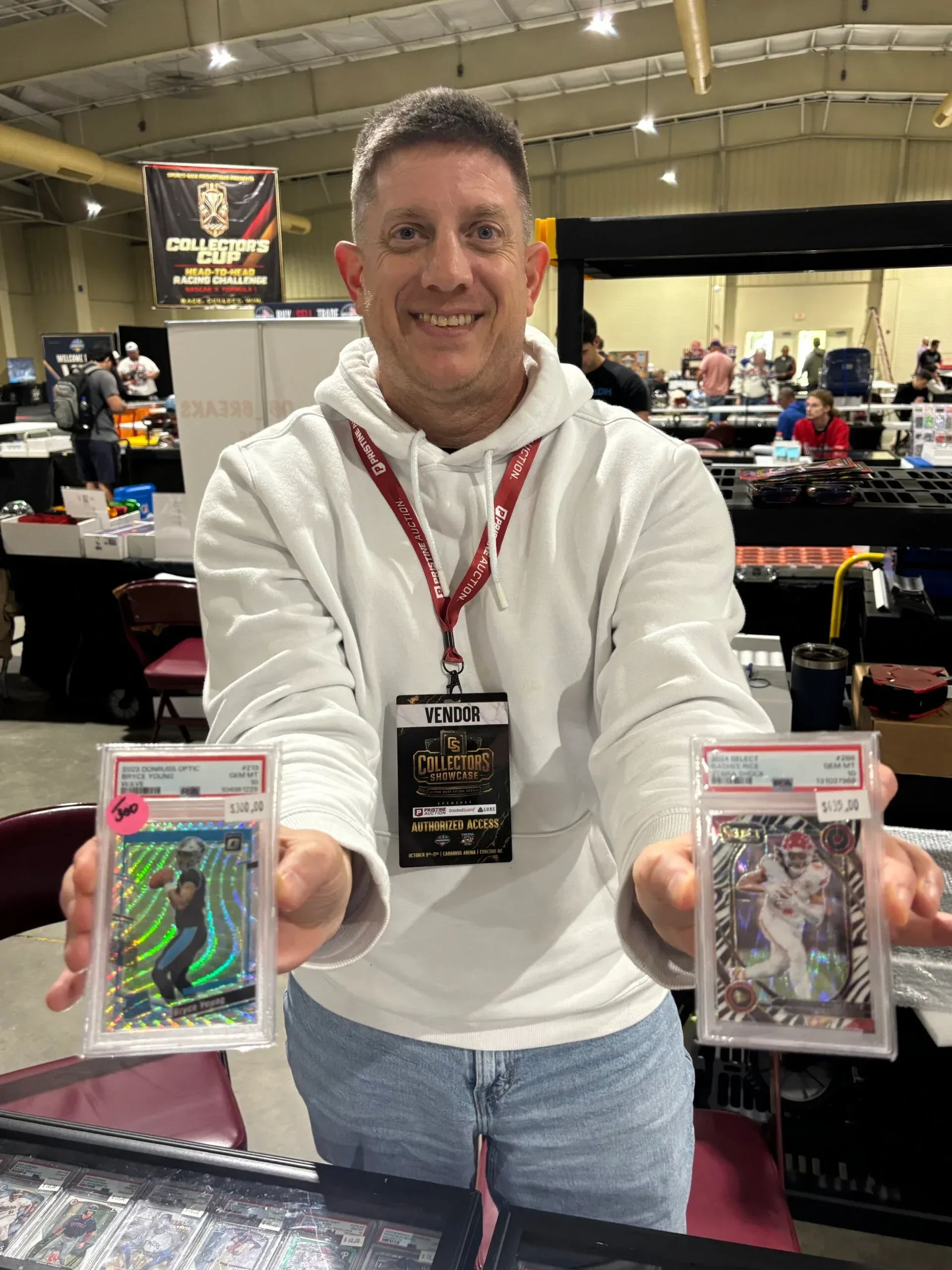
That was visible in Concord, where Bryce Young's 2023 Donruss Optic rookie card carried a $300 asking price from one vendor. On the high end, one-of-one cards of Lamar Jackson and Shedeur Sanders were spotted at $2,500 and $2,000, respectively. Those numbers reflect how strongly the market still leans into quarterback upside, star power, and scarcity.
Collectors and dealers alike also acknowledge the downside of that structure. When so much hobby value is concentrated in quarterbacks, it can make football card investing feel narrow. If a box break or singles strategy misses on the right QB, the chances of meaningful returns drop fast. Even productive non-quarterbacks often struggle to match the hobby heat of passers with far less accomplishment.
That imbalance is one reason football can feel frustrating. A young quarterback with limited NFL proof can sometimes outsell a legendary Hall of Famer. In a pure market sense, that reflects demand for future upside. In a collector sense, it often feels disconnected from career achievement.
Vintage football may be one of the market's clearest value plays
One of the strongest themes coming out of the show was the belief that vintage football remains underappreciated. Dealers pointed to low-priced cards of Hall of Fame quarterbacks as evidence of a category that has not kept pace with modern speculation.
Among the examples seen on the floor were vintage Topps cards of Terry Bradshaw, Joe Theismann, and Len Dawson marked at $5. For longtime collectors, that kind of pricing can feel shockingly soft, especially when compared with what modern rookies and unproven quarterbacks can command.
Joe Montana was another name used to illustrate the gap. Dealers argued that it makes little sense for a quarterback with Montana's résumé to be priced below players who have yet to establish themselves in the NFL. Whether the broader market agrees is another question, but the value disconnect is hard to ignore.
For collectors who prefer accomplished players, football's vintage segment may offer one of the better opportunities in the hobby. It lacks the weekly heat of modern quarterback speculation, but it can provide recognizable names, historical importance, and lower entry points than many mainstream collectors expect.
Local demand does not always match team success or player awards
Another notable wrinkle in the football card market is that local demand can be inconsistent, even in an NFL team's home region. Dealers at the North Carolina show said there was less interest than expected in cards tied to the Carolina Panthers, including Bryce Young and wide receiver Tetairoa McMillan.
That stood out because McMillan entered the conversation with strong credentials, including an NFL Rookie of the Year award the previous season. Yet strong on-field recognition did not appear to translate into runaway card demand at the event.
One 2025 Topps Chrome McMillan card graded PSA 9 carried a $225 price tag, while some of his other rookies were available in the $5 range. That spread says a lot about the current market. Certain graded or premium examples can still attract notable asking prices, but the broader base of a player's cards may remain accessible.
For collectors, this is a reminder that fan base, market size, highlight visibility, and hobby narratives can matter as much as awards. Football card pricing is not always a clean reflection of football achievement.
Brick-and-mortar shops are still seeing football demand
Show activity is only one piece of the story. Store-level demand also suggests that football remains very much alive as a collecting category. At least one North Carolina hobby shop reported football as its top seller, ahead of baseball.
That kind of local demand reinforces an important distinction. Football may not consistently produce the same value ceiling as baseball and basketball, but it still brings in buyers. Shops benefit from the NFL's broad audience, recognizable stars, and constant news cycle. During the season, that momentum can create regular walk-in interest from collectors chasing rookies, team sets, low-end slabs, and affordable singles.
It also supports the idea that football's strength may be wider than it is deeper. The category may not always lead the hobby in monster prices, but it can deliver a steady stream of transactions across lower and middle price tiers.
What collectors are chasing in 2026
The current football buying pattern appears to break into a few familiar lanes:
- Modern quarterbacks: Still the center of hobby attention, especially rookies, second-year breakouts, and stars with MVP-level upside.
- Affordable slabs: Graded cards in the $30 to $100 range remain attractive because they are easy to move and accessible to a wide group of buyers.
- High-end serial-numbered cards: One-of-ones and scarce premium pieces continue to headline dealer cases.
- Bargain rookies and team favorites: Many collectors are still happy to buy in the $3 to $20 range, especially for personal collections.
- Vintage Hall of Famers: A quieter lane, but one many experienced collectors see as undervalued.
That last category may deserve more attention if the hobby begins to shift away from pure speculation. If collectors become more selective about paying major premiums for unproven quarterbacks, vintage football could gain ground simply because the value proposition is easier to understand.
The hobby lesson behind football's price swings
Football cards may be one of the clearest examples of the difference between collecting and flipping. Hobbyists who buy what they enjoy can often live with the volatility. They are building player collections, chasing teams, or using sales to fund future purchases. Short-term price movement matters, but it is not the only reason they are in the market.
For flippers and speculators, football can be tougher. The market can reward fast timing, but it also punishes hesitation. A card bought after a breakout performance may already be near its short-term peak. A card held too long can cool before the next sale window appears.
That is especially true when collectors focus on college-to-pro projections. Chasing quarterbacks before they fully establish themselves remains common, but it carries obvious risk. The NFL does not offer much patience, and neither does the hobby.
The more grounded approach may be the one many longtime collectors already understand: buy cards you are comfortable holding, recognize that hype can vanish quickly, and remember that value is only proven when a buyer is ready to pay.
What the current market says about football cards going forward
The 2026 football card market is not dead, and it is not stable. It sits in a middle ground that can be both frustrating and exciting. Prices lag other major sports in many areas, yet cards can move quickly. Vintage legends remain cheap, while emerging quarterbacks can command eye-catching numbers. Local fan enthusiasm does not always show up at the table, but football still draws steady attention in stores and at shows.
For collectors willing to navigate the weekly swings, that creates a lot of lanes to explore. There are premium quarterback targets, affordable slab opportunities, inexpensive team and rookie cards, and vintage Hall of Famers that still look overlooked. In a market built around momentum, understanding why a card is moving may matter more than simply noticing that it is.
As the NFL season pushes deeper into the calendar, expect the same forces to keep shaping football cards: quarterback play, injuries, hype cycles, and collectors deciding whether they want to chase the next breakout or hunt for long-term value in names the market has left behind.
Photo Gallery