A digital repack can cost as little as $1 or as much as $10,000. At either end of that range, the key question is the same: What are you getting for the price? The card on the promo page shows what you could pull. The checklist and odds tell you considerably more about what you’re paying for.
The same distinction matters after the reveal. A platform may advertise a 100% buyback, but that percentage can refer to the platform’s valuation of the card, not the price you paid for the pack. Before buying, it pays to look at three things separately: what’s in the pack, how the cards are valued and what you can do with the card once it’s yours.
What is a digital sports card repack?
A digital repack is a mystery pack assembled by a third party rather than the company that made the cards. You buy and open the pack online, but the reveal can represent a physical card that you can keep or, if the platform makes an offer, sell back. The repack company selects the cards and sets the price and terms.
Many platforms organize packs into tiers, with different card pools or checklists tied to different buy-in amounts. Others use a single checklist across price levels. If two packs share a list, don’t assume they give you the same chance at any particular card. Check the odds for the specific pack you’re considering and see what, if anything, changes at the higher price.
For more collector background, read Top 3 Things Collectors Should Know About the Five Guys Trading Card Promo.
How much do digital repacks cost?
PrizePicks has offered packs starting at $1, with long odds of pulling something substantial at that price. Around $25 is a more common starting point. At the higher end, Trove and Arena Club have offered packs priced up to $5,000, while Courtyard has offered a $10,000 option. Prices and availability can change, so treat those figures as examples of the range rather than a current price list.
A higher price can put different cards in play, but it doesn’t tell you whether the jump in price is worth it. Look at how much more you’re paying, which cards or value bands that gets you access to, and the odds attached to those outcomes. If a specific card is the main reason you’re looking at a pack, check what it would cost to buy that card outright. That gives you a useful comparison between paying for the card and paying for a chance at it.
What a repack checklist tells you that a hit list doesn’t
A full checklist shows the pool of possible pulls. A hit list may show only the featured cards. That’s enough to tell you whether a chase card is in play, but not necessarily enough to know what you might pull if you miss it. If the platform publishes odds by value band, read those alongside the checklist. The list answers what’s available; the odds tell you how often you can expect a result in each band.
For another perspective on this story, read Digital Card Repacks Explained: Checklists, Odds, Buybacks and the Questions Collectors Should Ask.
Pay particular attention to the more common outcomes. A headline card can make a pack look appealing, but the lower value bands give you a better sense of what you might be asked to keep or sell back. Also check whether the odds apply to a specific card or to a group of cards. The chance of landing in a premium band is not necessarily the chance of hitting the one card you want from that band.
How instant buybacks work
After the reveal, some platforms give you a choice: keep the card or take an immediate buyback offer. Offers in the space have ranged from 80% to 100% of a card’s assigned value. Trove has offered a 100% instant buyback with a one-minute window to accept. That deadline matters just as much as the percentage if you were counting on having time to research the card after opening.
Consider a hypothetical $100 pack that yields a card the platform values at $60. A 100% buyback would return $60, not $100. Conversely, a lower percentage on a higher valuation can produce a larger dollar offer. The number to compare is what you’d actually receive, not the percentage on the banner.
Check the buyback terms before you open a pack. Know when the offer expires, what value the percentage applies to and what happens if you let the clock run out. If there’s only a minute to decide, it’s also worth establishing in advance whether you’re mostly buying to keep cards or whether the ability to sell back is what makes the purchase appealing.
Why a single card sale can skew a repack valuation
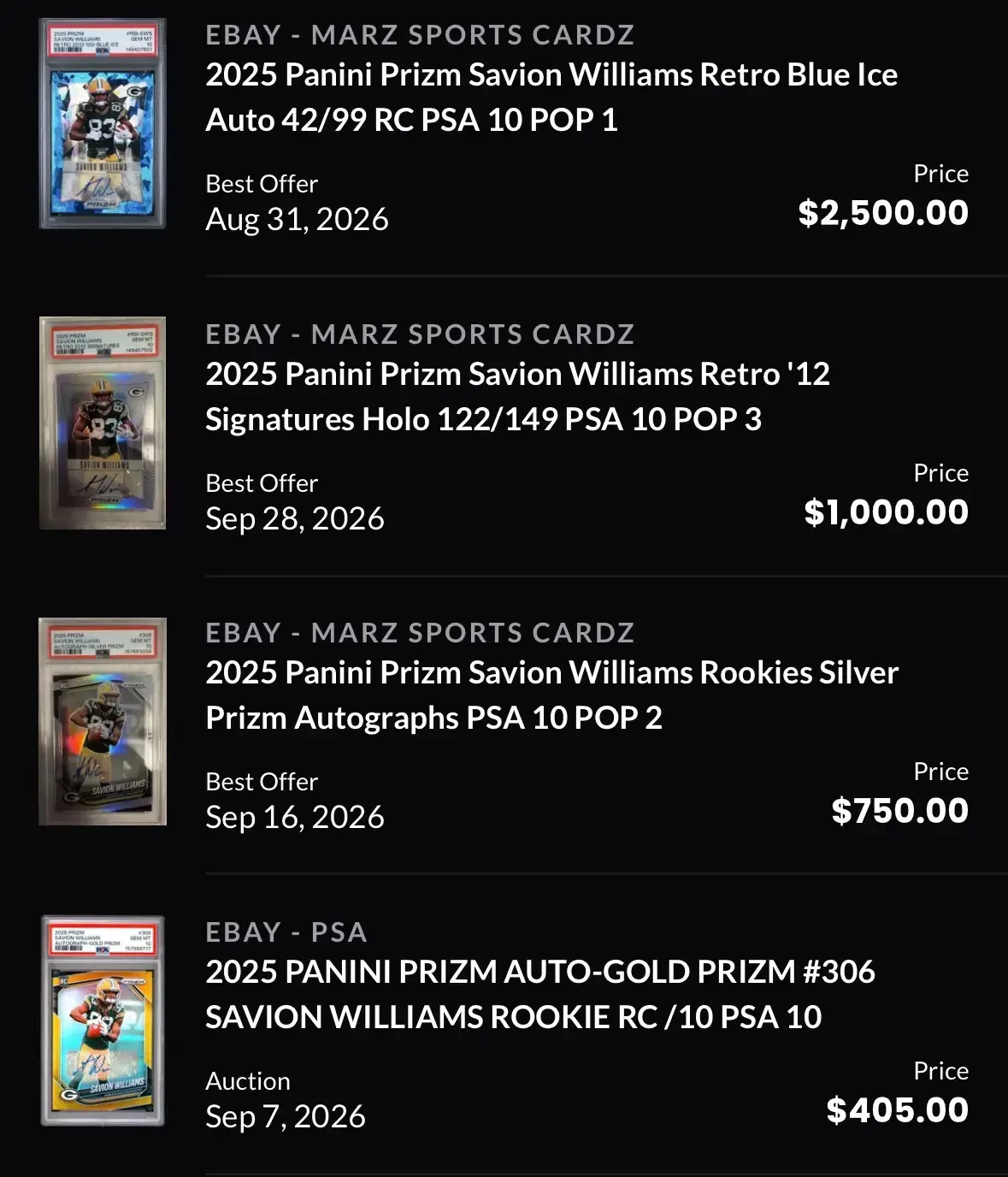
A Savion Williams Panini Prizm autograph numbered to 99 provides a useful example. A Cracked Blue Ice Prizm autograph graded PSA 10 recorded a $2,500 sale, close to a $2,600 valuation that drew attention. A week later, a Gold autograph numbered to 10 sold for less than one-fifth of that $2,500 figure. The three highest recorded Williams sales cited in that comparison also came from the same seller.
The Gold and Cracked Blue Ice cards aren’t interchangeable: parallel, grade and timing can all affect the price. The discrepancy doesn’t establish why the cards sold for those amounts, but it does show the risk of treating one unusually high sale as the market. A completed sale is a data point, not a guarantee of what the next buyer will pay.
When you can, look for multiple completed sales of the same card, matching the year, set, parallel, serial numbering and grade. If there aren’t enough exact matches, use nearby comparisons to establish a range rather than a precise number. And if an influencer shows an unusually generous buyback, check whether the same terms apply to ordinary customers before treating that offer as a benchmark.
What to check if you plan to keep the card
The reveal is only the first step for collectors who want the card in hand. Before purchasing, find out whether the pack contains only graded cards, whether it’s limited to PSA slabs and whether the card goes into a vault or can be shipped to you. Look for shipment timelines and any costs to take delivery, especially if you’d rather put the card in your collection than leave it on the platform.
Vaulting and other perks can matter if they fit how you collect. Trove uses the PSA Vault and has advertised annual rewards of up to 4% tied to vaulted cards. Some platforms offer their own grading services, and others have branched into watches or sneakers. Trove has also offered winner-take-all pack battles, where the outcome of the contest determines who keeps the cards. That’s a different proposition from opening a pack on your own.
If you’re buying to build a collection, compare the cost of putting a card in hand, not just the price on the pack screen. A low buy-in is less useful if the likely pulls don’t fit your collection or if you haven’t factored in the cost of getting the card shipped.
Photo Gallery