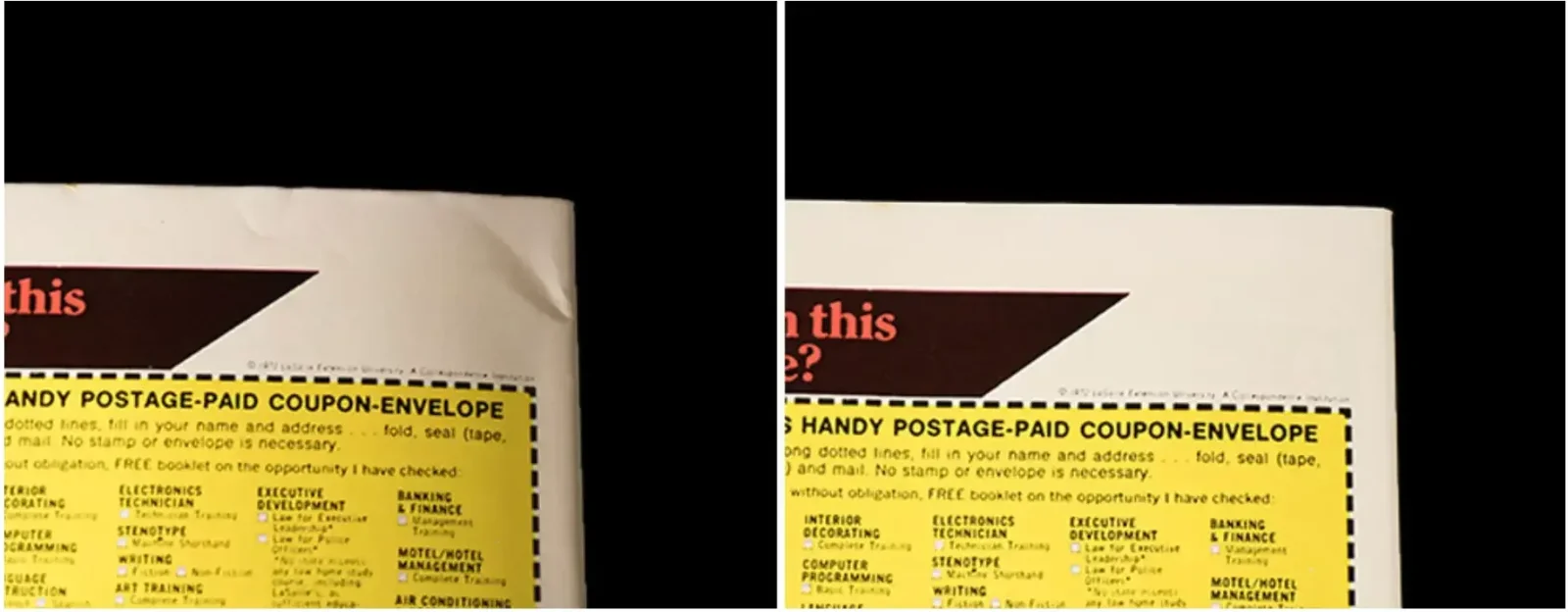
Sports card collectors usually agree on the easy examples. Wiping away a fingerprint is widely seen as basic care. Trimming an edge, rebuilding a corner, or recoloring visible damage is broadly treated as alteration.
The gray area sits in the middle, and that is where hobby debate gets much more complicated. If a card has a storage curl, a raised corner, surface residue, or a light indentation, is it acceptable to reduce the defect without adding or removing material? Or does any attempt to improve the card’s appearance move it into altered territory?
That question matters because grading standards, collector expectations, and market value do not always align. Some treatments may be viewed by one collector as responsible preservation and by another as a disqualifying modification. In a hobby where condition drives prices, the distinction is more than philosophical.
Why the line is harder to define than it sounds
Most collectors use a simple framework at first. If something is being added to the card, taken away from the card, or changed in a way that permanently alters the original object, it should count as alteration. That standard makes trimming and recoloring relatively easy calls.
For more collector background, read Three Topps Pre-Orders to Watch on October 5: Bowman U Best Football, Cosmic Chrome Baseball and Inception Football.
The harder cases involve defects that developed after the card left the factory. Dirt, fingerprints, wax residue, minor warping, and pressure-related bends were not part of the card’s intended original condition. Because of that, some hobby participants argue that removing contamination or relaxing physical distortion is not the same as changing the card itself.
That argument becomes more persuasive when the goal is not to create sharper corners or larger borders, but simply to bring the card closer to how it looked before storage damage or handling took a toll. Even so, grading companies have to judge the final object in front of them, and they also have to consider whether a treatment leaves evidence, changes stock dimensions, or creates long-term uncertainty.
PSA treats comics and sports cards differently
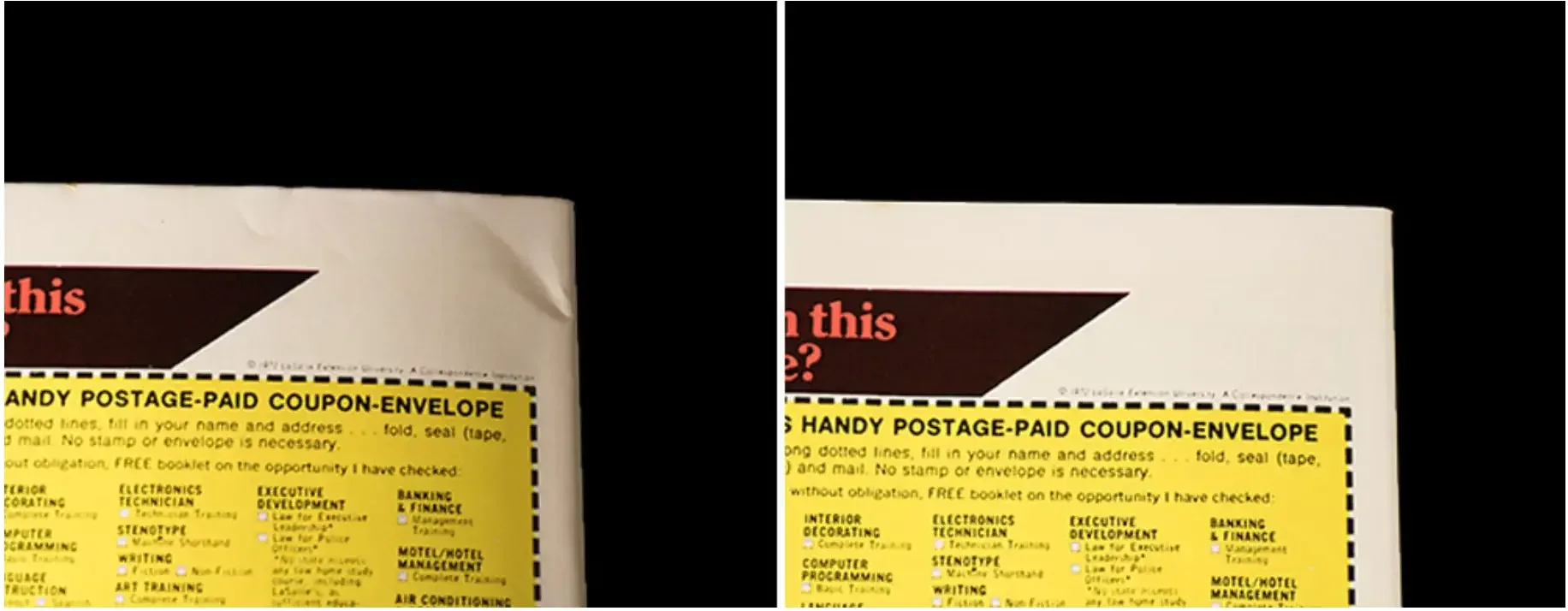
One reason the discussion keeps resurfacing is that PSA allows pressing and cleaning services for comics and magazines, but takes a much stricter approach with sports cards. For comics and magazines, pressing can reduce wrinkles, waves, and folds before grading. In that category, the service is an established part of the collecting landscape.
For another perspective on this story, read Card Care or Card Alteration? The Grading Line Is Still Debated.
Sports cards are different. PSA considers crease or wrinkle pressing to be a form of alteration in cards. The company’s reasoning centers on material differences and hobby standards. Comics and magazines are thinner and can sometimes be pressed without leaving obvious evidence, while thicker card stock may respond differently and can potentially be affected in ways that alter dimensions or structure.
There is also a cultural side to the policy. Comic collectors have historically shown more acceptance toward pressing, while sports card collectors have placed heavier emphasis on untouched originality. Even if two collectibles are both made of paper-based material, the market expectations around them are not identical.
That distinction helps explain grading policy, but it does not eliminate the hobby’s disagreement. A card with a storage curl or a lifted corner presents a difficult question: is flattening the defect a prohibited modification, or a form of stabilization that preserves the card?
Why pressing remains one of the biggest flashpoints
Pressing is especially controversial because it can improve eye appeal without the more obvious red flags of trimming or recoloring. Collectors who oppose it argue that the treatment changes the card’s physical state and can mask damage that would otherwise be visible. Collectors who defend certain forms of pressing argue that no paper, ink, or coating has been added or removed, and that the process may simply reverse warping or pressure-related distortion.
Humidity makes the issue even more complex. When card stock becomes more flexible through moisture exposure, a card may be easier to flatten or reshape. That raises another concern for grading companies. Even if the card looks better when submitted, they cannot always know what process was used or whether the result is stable over time.
The hobby has already seen examples of storage methods creating unintended changes. Screw-down holders, once viewed as premium protection for important cards, have long been associated with excessive compression. In severe cases, that pressure can flatten or distort a card enough to trigger an altered designation from a grading company.
That history shows why collectors continue to separate harmless handling from aggressive intervention. Pressing is not judged only by appearance. It is judged by whether the card’s stock, thickness, texture, or original presentation may have been materially changed.
Cleaning can be even more controversial than pressing
If pressing is divisive, cleaning may be an even bigger minefield. Most hobby participants are comfortable with the lightest forms of care, such as using a microfiber cloth to remove a fresh fingerprint or surface dust. The hesitation starts when any liquid, solvent, or purpose-made product enters the conversation.
Grading standards reflect that caution. Certain cleaning methods and treatments can result in a card being labeled altered rather than receiving a numerical grade. The issue is not only whether the card looks improved today. It is also whether the process changed gloss, disturbed the print layer, affected coatings, or introduced substances that could react with the card years later.
That long-term uncertainty matters because grading companies stand behind the grades they assign. A card that presents strongly right after treatment but degrades later would create a problem for both buyers and graders. A surface that appears normal in the short run may not remain stable over a decade or two, especially if unknown chemicals were used.
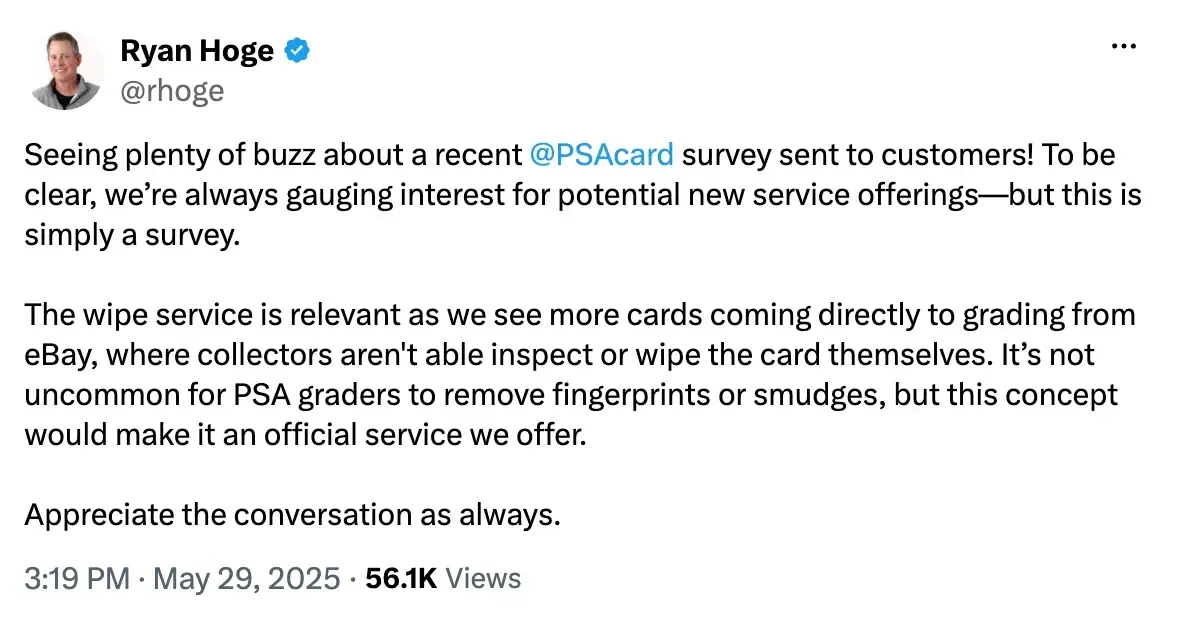
The hobby has seen movement on the less invasive side of this debate. In 2025, PSA explored the idea of a limited card-cleaning service focused on removing fingerprints, smudges, and dirt. PSA President Ryan Hoge clarified that the concept centered on basic surface cleanup rather than more aggressive restoration. He also noted that graders already sometimes remove fingerprints and smudges during the normal handling process, suggesting that minimal cleaning is not automatically beyond the pale.
That detail is important. It shows that even within strict grading frameworks, there is a practical difference between simple surface cleanup and more substantive treatment.
The card-care viewpoint from inside the hobby
Not everyone in the hobby believes cleaning or pressing should automatically be categorized as alteration. Kurt’s Card Care has become one of the most visible names in that debate, especially among collectors interested in preserving older raw cards or improving presentation before grading.
Kurt’s position is built around a narrower definition of alteration. In that view, alteration occurs when a person adds something to the card, removes original material from the card, or changes it in a way that damages or reconstructs the original object. Under that framework, trimming and recoloring are clear violations, while removing later contamination or addressing warping is not necessarily the same thing.
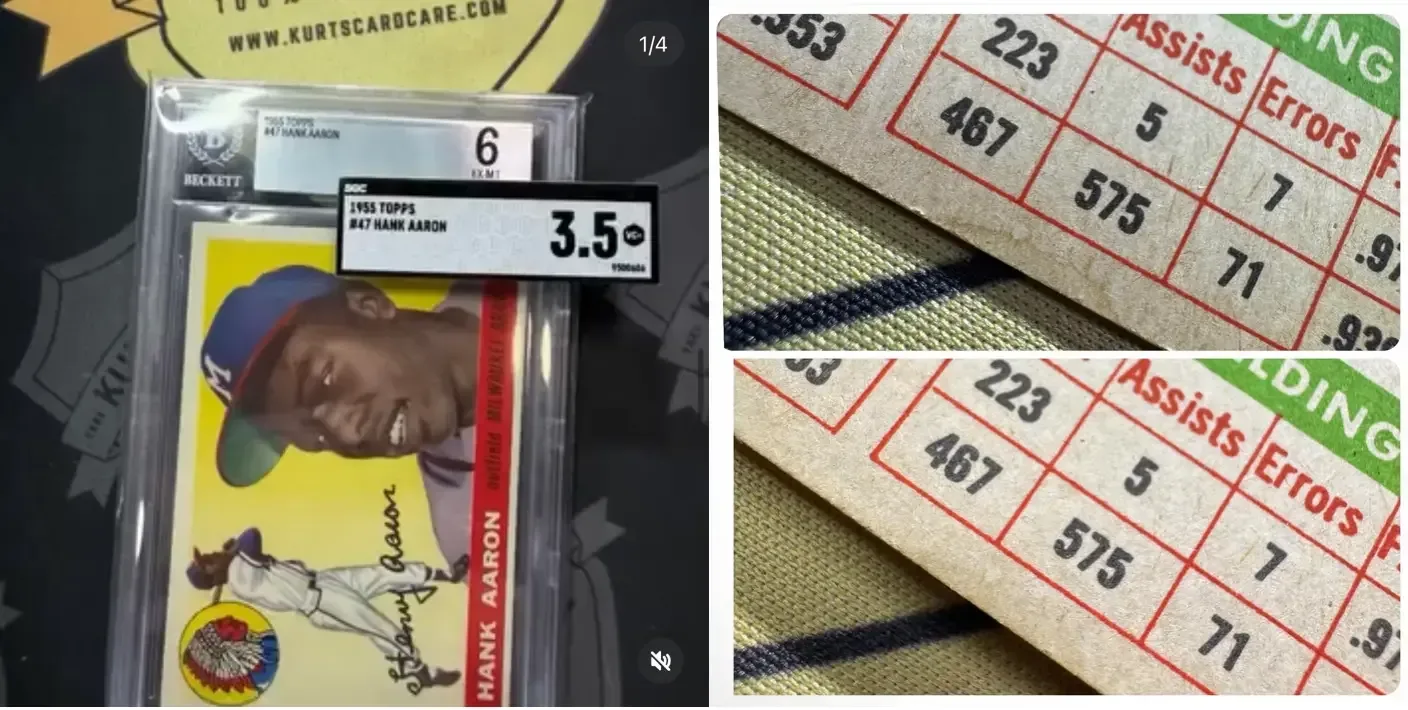
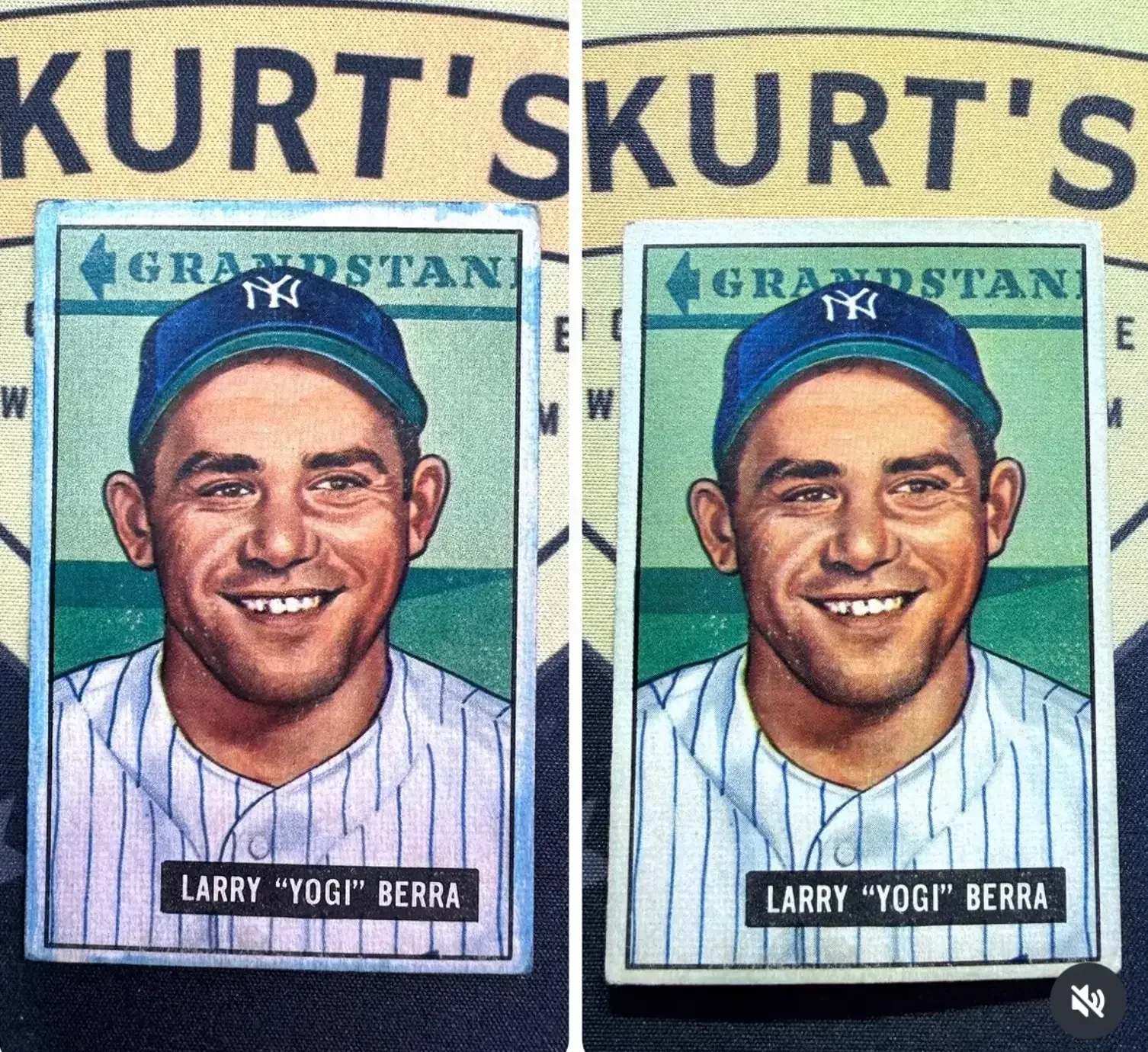
That perspective has drawn attention because of examples where cards improved significantly and later received numerical grades rather than altered labels. One frequently cited case involved a 1955 Topps Hank Aaron that had been in an SGC 3.5 holder before crease work and later crossed to a BGS 6. Another example involved a 1951 Bowman Yogi Berra from which blue marker was removed before the card later received a BGS 4.
Supporters of card-care services point to those outcomes as evidence that some defects can be reduced without fundamentally changing what the card is. Critics respond that a successful grade bump does not settle the ethical question, and that one grading result should not be treated as a universal endorsement of a process.
Kurt has also argued that the product and the operator matter. In his view, hobby-specific chemistry differs from improvised use of household or automotive cleaners, and experience is essential. That does not eliminate risk. It simply means the debate is not only about whether a product touched the card, but about what the product is, how it was used, and whether the underlying stock or surface was truly changed.
Altered cards can still carry major value
One part of the discussion that often gets overlooked is that an altered designation does not automatically destroy a card’s desirability. High-end examples with extraordinary rarity or hobby importance can still command major money even when alteration is known or disclosed.
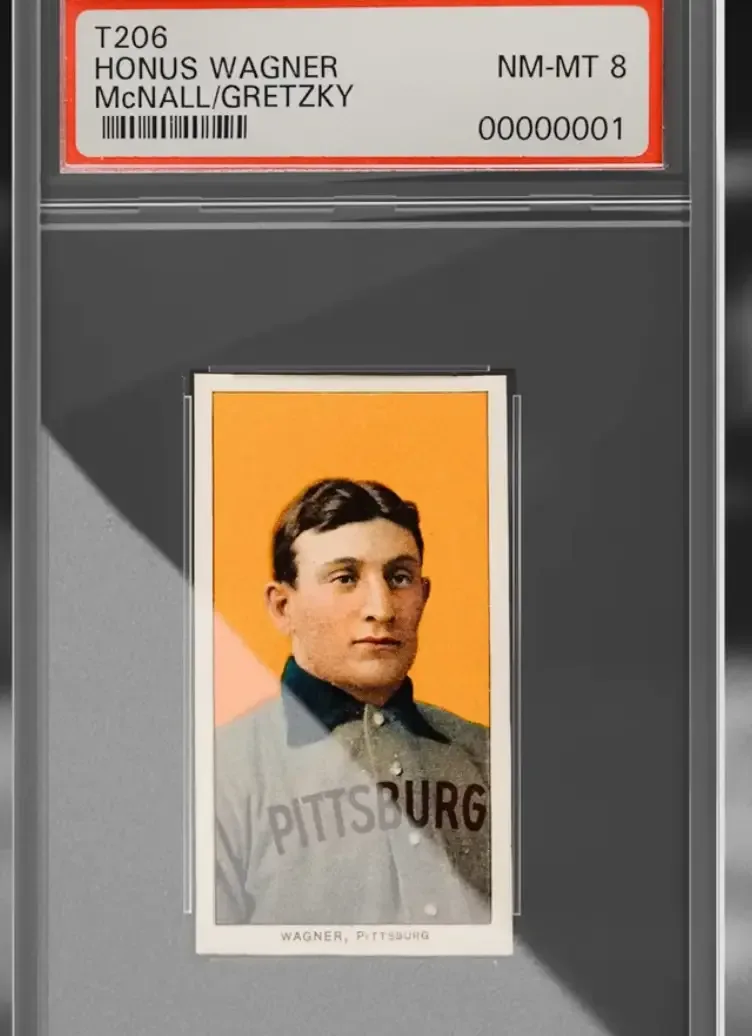
The most famous example remains the T206 Honus Wagner that was once owned by Wayne Gretzky. It became the first card graded by PSA, receiving PSA 8 and certification number 00000001. Bill Mastro later admitted that he had trimmed the card before it was graded. Despite the card’s controversy, it remains one of the most iconic pieces in the hobby.
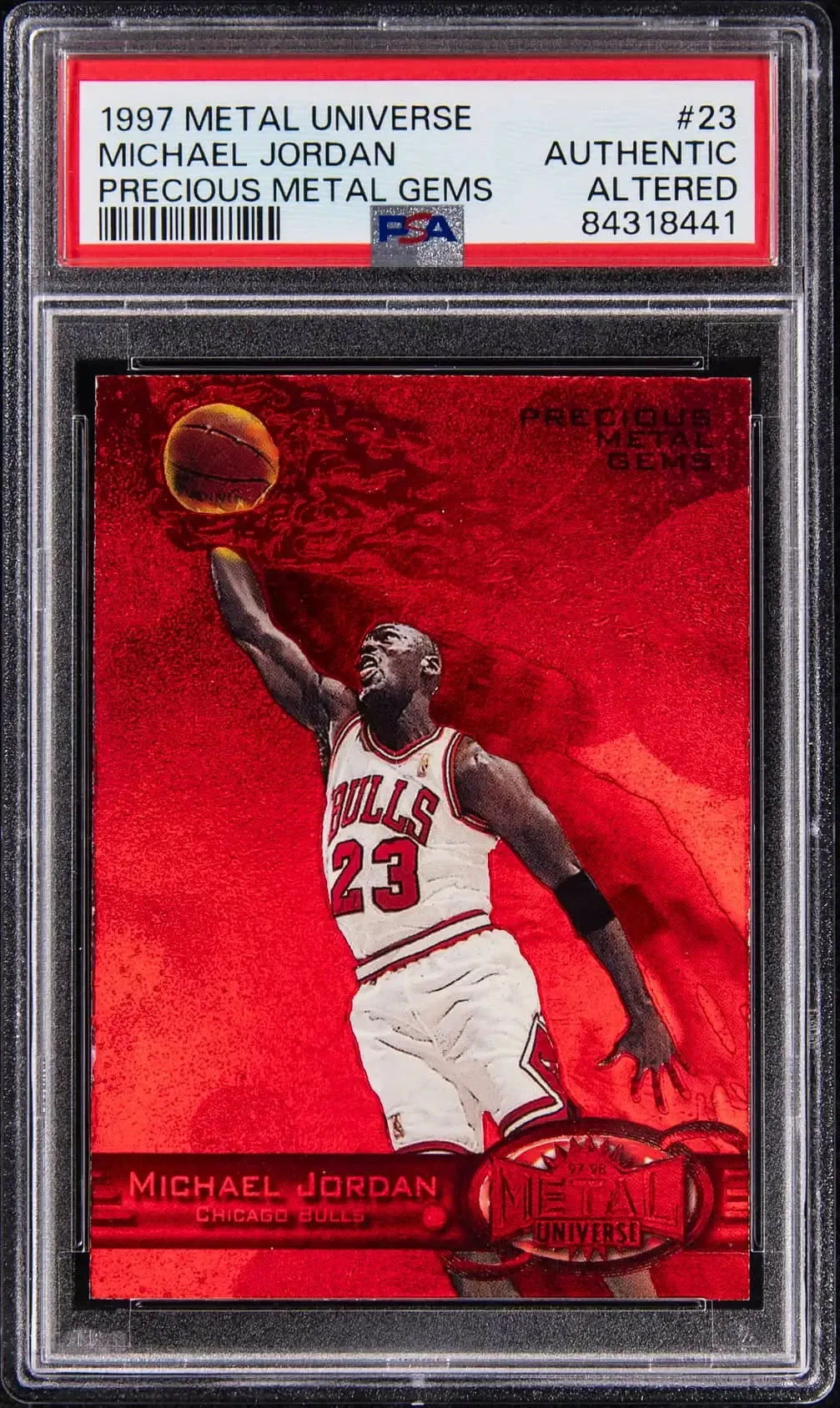
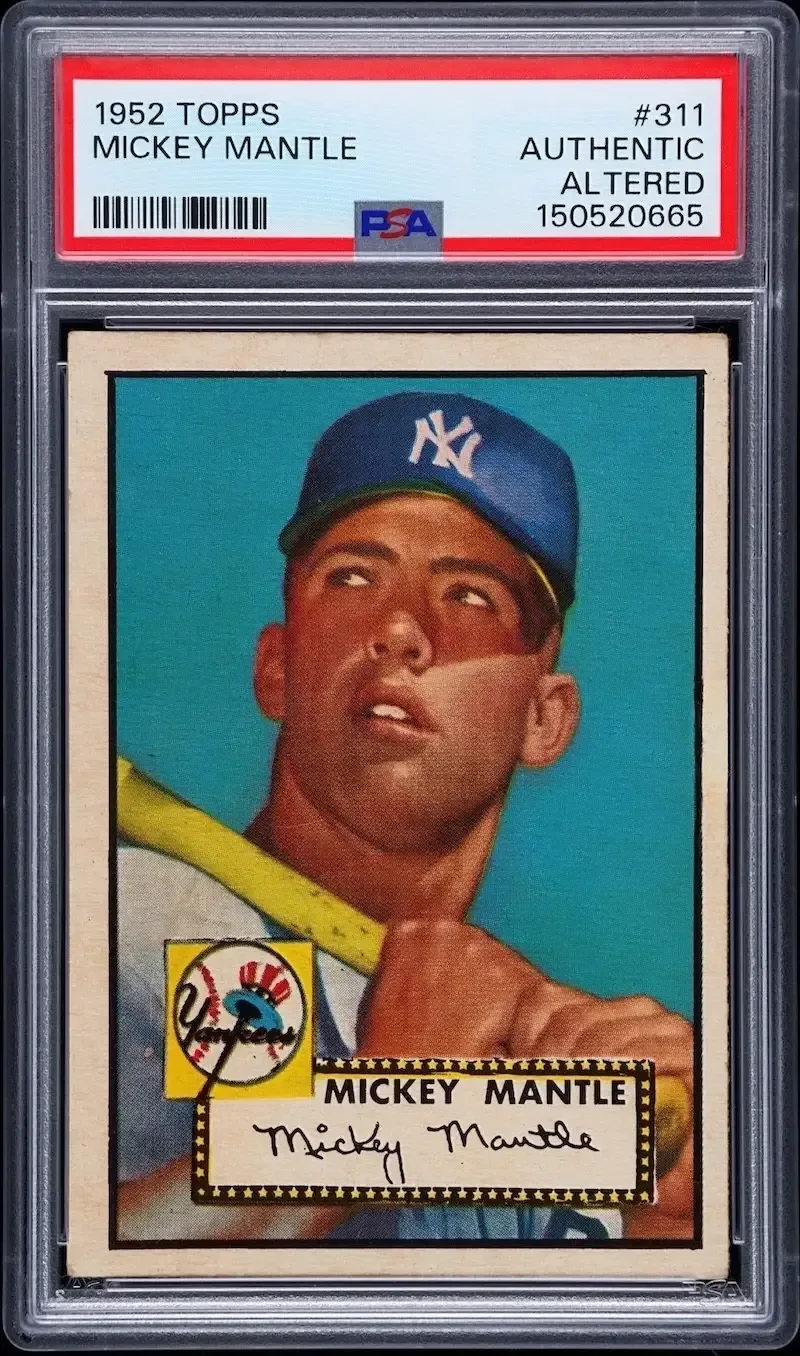
There are more recent examples as well. A 1997 Metal Universe Michael Jordan Precious Metal Gems Red, numbered to 90, sold for $244,000 while carrying a PSA “Authentic Altered” label. A 1952 Topps Mickey Mantle with the same type of altered designation sold for $130,000.
Those sales do not make alteration acceptable to the broader hobby. They do show, however, that scarcity, player significance, and visual appeal can keep demand strong even when a card no longer qualifies for a straight numerical grade.
What collectors should consider before doing anything to a card
For collectors deciding whether to clean, press, or otherwise work on a card, the first question should be the intended outcome. If the card is likely headed to PSA, SGC, BGS, or another grader, the relevant company’s standards matter more than any individual opinion. A process that seems harmless to the owner may still trigger an altered result or keep the card from receiving a numerical grade.
The second question is reversibility. If a step cannot be undone, the risk goes up sharply. Trimming, rebuilding, recoloring, and adding gloss or foreign material all create obvious danger because they permanently change the original object.
The third question is expertise. Even hobby-friendly products can cause damage when used incorrectly. Pressure, moisture, heat, and chemical application all carry the potential to harm stock, surface, corners, or print layers. A treatment meant to reduce one flaw can easily create another.
Collectors who never plan to grade may approach the issue differently. Many vintage collectors keep cards raw and care more about preservation and display than slab outcomes. In that part of the hobby, card care is often discussed less as a grading tactic and more as collection stewardship.
Where the hobby keeps drawing the line
There is still broad agreement around the clearest no-go practices. Trimming edges, shaving stock, recoloring corners, rebuilding paper loss, and adding material to improve appearance remain on the wrong side of the line for most collectors and grading companies alike.
The unresolved part is whether reducing a bend, softening a wrinkle, flattening a corner lift, or removing foreign residue should be treated the same way. Some collectors see those steps as restoration to a more original state. Others see any intentional cosmetic improvement beyond basic dusting or fingerprint removal as crossing into alteration.
As long as grading standards, collector ethics, and market incentives remain slightly different from one another, that middle ground will stay contested. For now, the safest rule is simple: the more a process changes the card’s original stock, surface, dimensions, or print layer, the more likely the hobby is to treat it as alteration rather than care.
Photo Gallery