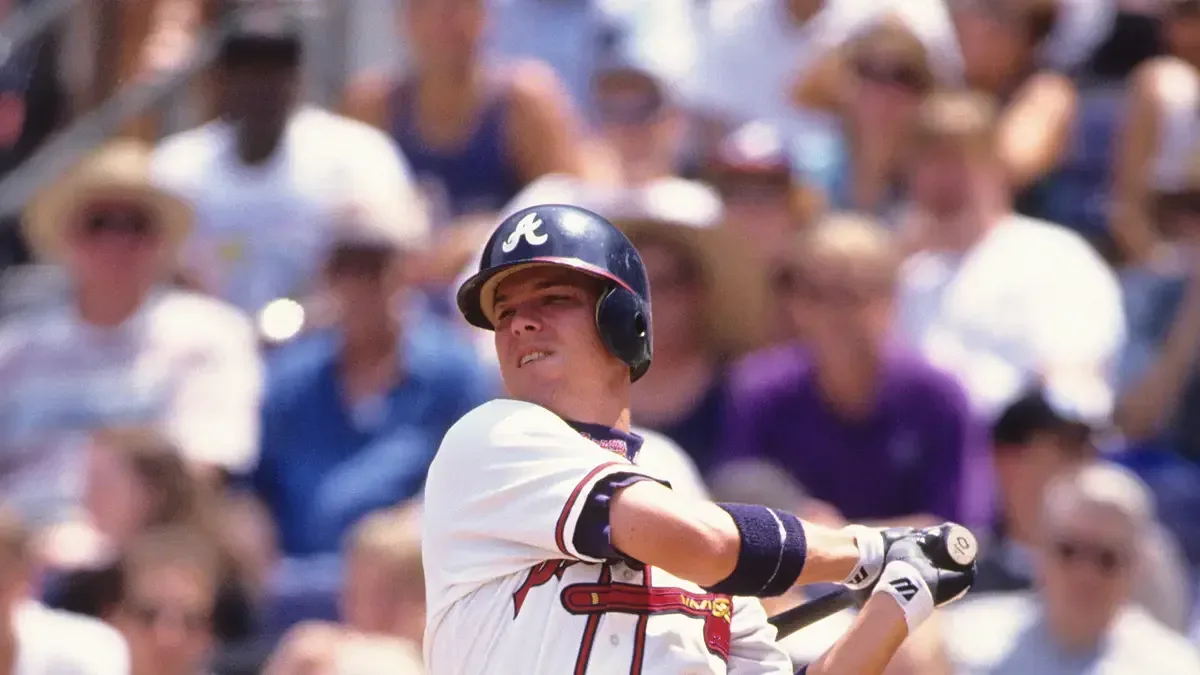
Chipper Jones remains one of the most collectible stars of the early 1990s baseball card era. His Hall of Fame resume, long run with the Atlanta Braves, and status as one of the best switch-hitting third basemen the game has seen continue to support steady demand across the hobby. For collectors, Jones offers something many stars from his era do not: several true rookie-era options with very different price points, print profiles, and condition challenges.
That mix is what keeps his market interesting. A collector can start with an affordable mainstream rookie, move into scarcer premium issues, or chase one of the most coveted parallel-style releases of the period. There is also an early-career card that is not technically a rookie but still ranks among the most important Chipper Jones cards ever made.
Here is a closer look at the Chipper Jones rookies and early cards that stand out most for collectors today.
Why Chipper Jones Cards Still Matter
Jones debuted during a baseball card boom, but his legacy rose above the noise of the era. He was the No. 1 overall pick in the 1990 MLB Draft, developed into a franchise cornerstone, won National League MVP honors, and built a Cooperstown-worthy career that gave his rookie cards lasting relevance.
For more collector background, read What a 1/1 Sports Card Really Means and Why a Player Can Have More Than One.
Collectors also benefit from a card catalog that reflects several hobby lanes at once. Some Jones cards are notable because of scarcity. Others are popular because they are affordable entry points tied to a famous rookie season buildup. A few are especially desirable because high-grade examples are tough to find, which creates a strong premium when elite copies hit the market.
For anyone building a focused Chipper Jones collection, the cards below form the core of the conversation.
1991 Topps Desert Shield Chipper Jones
If there is one Chipper Jones rookie that consistently sits near the top of collector want lists, it is the 1991 Topps Desert Shield issue. The card shares its base design with standard 1991 Topps, but the Desert Shield version carries a much different hobby profile due to its unusual distribution and limited surviving population.
For another perspective on this story, read Five Chipper Jones Cards That Define the Hall of Famer’s Early Collecting Run.
These cards were distributed to U.S. service members stationed in the Middle East during the Gulf War, and that history gives the release significance beyond simple scarcity. Because it is difficult to know exactly how many copies returned to the United States, and how many survived decades of handling in strong condition, the card has long carried an aura that standard flagship rookies from the same year cannot match.
That combination of historical context and scarcity is reflected in the market. A PSA 9 copy has recently sold for close to $5,000, placing it in a very different tier from Jones' more widely available rookie cards.
Collectors considering this card should pay close attention to authentication, centering, corners, and surface quality. As with other Desert Shield cards, originality and condition are major parts of the value equation. For many hobbyists, this is the centerpiece Chipper Jones rookie.
1991 Bowman Chipper Jones
The 1991 Bowman Chipper Jones is one of the most recognizable and popular rookie cards in his catalog. While it does not reach the same price levels as Desert Shield, it remains a hobby staple because it offers a true rookie card with stronger scarcity than many of its 1991 contemporaries.
Bowman expanded its set size around that period, and the release became known for a strong rookie crop. Within that class, Jones emerged as the biggest name from a pricing perspective. That standing has helped keep the card relevant even as the broader early 1990s market has shifted over time.
One reason collectors continue to like this card is balance. It is accessible enough for newer buyers, but still respected enough to fit in advanced collections. A PSA 10 example has recently traded around $150, making it one of the more approachable Chipper key rookies in top grade.
For collectors who want a classic rookie without stretching into four-figure territory, Bowman is often the logical place to begin. It has hobby recognition, a clean rookie-year identity, and enough scarcity compared to mass-produced base issues to remain desirable.
1991 Upper Deck Chipper Jones Top Prospect
The 1991 Upper Deck Chipper Jones Top Prospect card has long been a favorite for collectors who enjoy rookie-era photography and iconic early 1990s Upper Deck presentation. It stands out from some of Jones' other rookie cards because it shows more action-oriented imagery rather than a simple posed shot.
That visual difference gives the card added personality. It also connects to an earlier stage of Jones' development, when he was still seen through the lens of a premium infield prospect. Many collectors also appreciate that this card reflects a point before Jones became firmly associated with third base, adding a little extra historical interest to the issue.
In market terms, this is one of the more affordable notable Chipper rookies. Gem-mint examples can be found for around $80, which keeps it firmly in play for collectors building on a budget.
Affordability does not mean lack of importance. Upper Deck rookie and prospect cards from this era still carry strong brand recognition, and Jones is one of the names that helps anchor that nostalgia. For set builders and player collectors alike, it remains one of the essential cards from his first wave of releases.
1991 Topps Tiffany Chipper Jones
The 1991 Topps Tiffany Chipper Jones offers a premium version of Jones' flagship-era Topps rookie. Topps Tiffany factory sets were known for glossy card fronts, brighter visual presentation, and heavier card stock compared with regular Topps issues. For player collectors, that premium treatment often turns an otherwise familiar card into a much tougher target.
Jones is a perfect example. The standard 1991 Topps release is easy to find, but the Tiffany version occupies a very different place in the market. It retains the same basic design while adding a scarcer factory-set identity that many advanced collectors prefer.
Production figures for 1991 Topps Tiffany are often discussed in general terms rather than pinned to an exact number, but the accepted hobby view is that only several thousand sets were distributed. That is more than enough to make the Jones a meaningful step up from the regular issue.
A PSA 9 copy has recently sold for around $700, showing that collectors are willing to pay a premium for a sharper, scarcer version of a flagship rookie-era card. For those who enjoy chasing parallel-like upgrades before modern parallels dominated the hobby, Topps Tiffany is an especially appealing target.
1993 SP Foil Chipper Jones
Not every cornerstone Chipper Jones card is a rookie. The 1993 SP Foil card is one of the clearest examples of an early-career issue becoming just as important as a true rookie because of design, scarcity in top condition, and long-term hobby respect.
This card is especially famous for condition sensitivity. The foil stock that makes the card so visually memorable also makes it much more vulnerable to surface wear and edge problems. That has kept gem-mint examples elusive and helped drive strong prices when high-end copies come to market.
A PSA 10 has recently sold for close to $3,000, which underscores just how much demand remains for this card. It is not simply a nice-looking early Chipper issue. It is a serious condition-rarity chase that holds a major place in 1990s baseball card collecting.
Collectors who focus on eye appeal often love the SP design, while registry-driven buyers appreciate the difficulty of landing premium grades. Even without rookie-card status, this is one of the defining Chipper Jones cards of the decade.
How These Cards Compare for Collectors
Each of these cards appeals to a slightly different type of buyer.
- 1991 Topps Desert Shield: Best fit for advanced collectors chasing scarcity, history, and a true blue-chip rookie.
- 1991 Bowman: Strong all-around rookie card with solid hobby respect and manageable pricing in top grade.
- 1991 Upper Deck Top Prospect: A budget-friendlier key rookie-era card with strong visual appeal and brand nostalgia.
- 1991 Topps Tiffany: Ideal for collectors who want a premium, scarcer version of a flagship-era Chipper card.
- 1993 SP Foil: A major early-career card for collectors who value condition rarity and iconic 1990s design.
That range is part of why Jones has such a healthy collector base. A newer hobbyist can start with Upper Deck or Bowman. A more experienced buyer might target Topps Tiffany or SP Foil in high grade. A serious Chipper specialist may ultimately view Desert Shield as the must-have trophy piece.
What to Watch Before Buying
Condition matters on all five cards, but for different reasons. The Desert Shield and Tiffany issues require extra care because of scarcity and the possibility of strong premiums for authenticated high-grade examples. Bowman and Upper Deck may be easier to locate, but sharp centering and clean surfaces still separate average copies from premium ones. The 1993 SP Foil is its own category due to the stock's sensitivity to wear.
Collectors should also think about goals before buying. If the aim is simply to own a notable Chipper rookie, Bowman and Upper Deck offer good access points. If the aim is building a high-end player run, Desert Shield and SP Foil become much more important. If the goal is collecting the best version of a flagship rookie without spending Desert Shield money, Topps Tiffany is a compelling middle ground.
Pricing can shift with grade, eye appeal, and market timing, so recent sale levels should be viewed as guideposts rather than fixed rules. Even so, the hierarchy among these cards remains clear: Desert Shield is the heavyweight rookie, SP Foil is the elite early-career non-rookie, and Bowman, Upper Deck, and Tiffany each hold their own lane in the broader Chipper Jones market.
The Chipper Jones Cards That Define the Early Years
More than three decades after his first cards arrived, Chipper Jones still offers one of the deeper and more satisfying rookie-era card selections among Hall of Fame players from the early 1990s. The 1991 Topps Desert Shield sits at the top for many collectors because of its scarcity and significance. The 1991 Bowman and 1991 Upper Deck Top Prospect remain foundational rookie choices. The 1991 Topps Tiffany adds a premium twist to the flagship look, and the 1993 SP Foil stands as one of the toughest and most admired early cards tied to his rise.
For Braves fans, Hall of Fame player collectors, and anyone building around key names from the era, those five cards form a strong Chipper Jones foundation with options that stretch from affordable to elite.
Photo Gallery