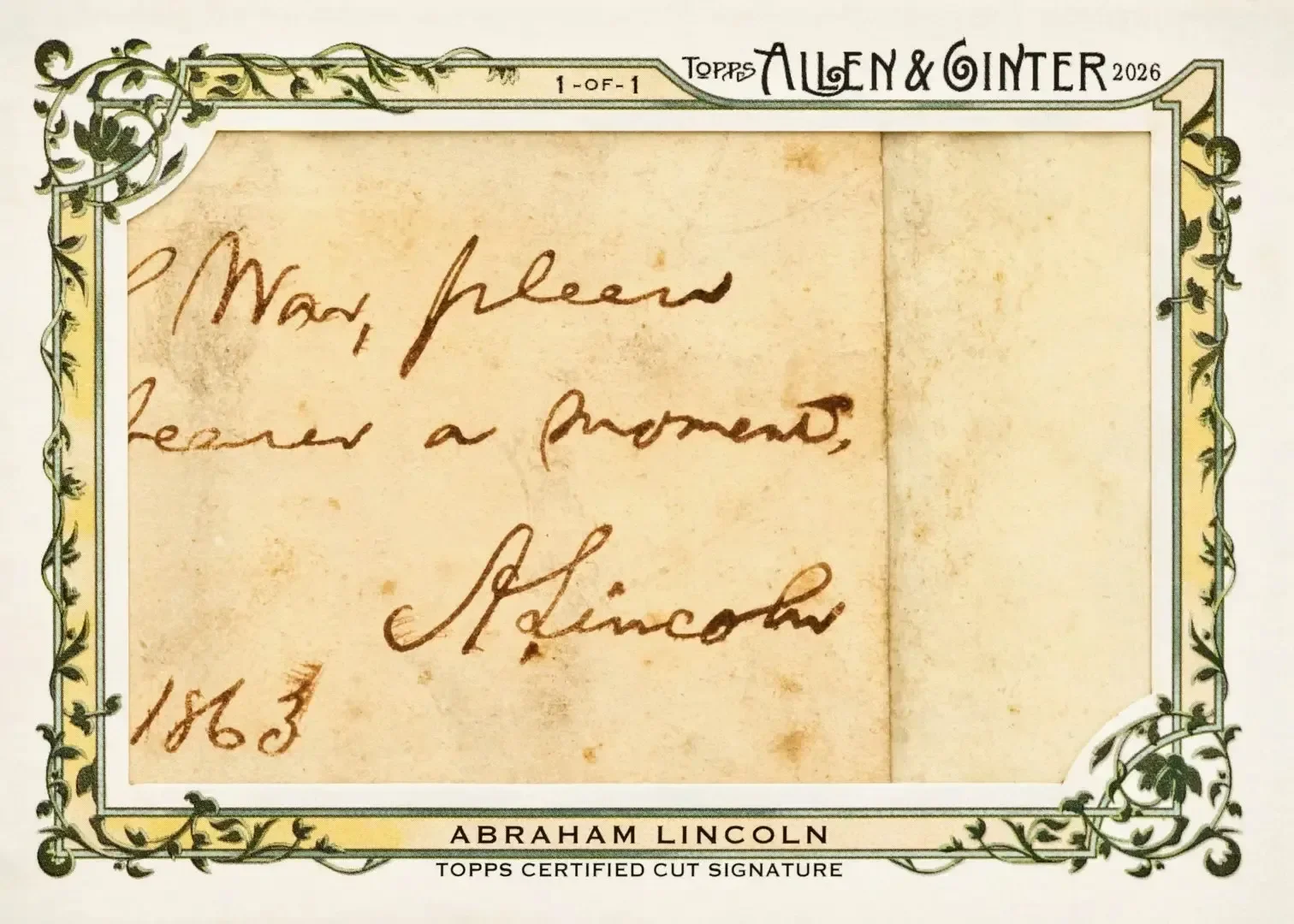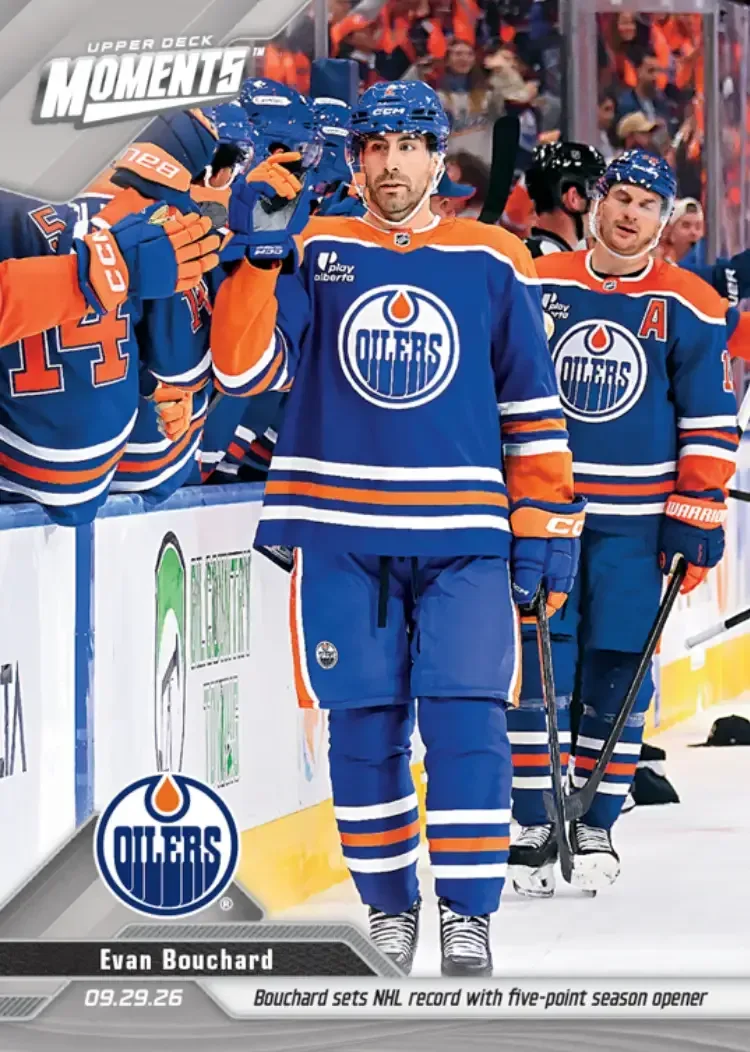
The first time many collectors see two different cards of the same player both stamped 1/1, it feels like a contradiction. If one card is one of one, how can another card also be one of one?
The answer is simpler than the hobby’s language sometimes makes it sound. In modern cards, 1/1 usually means there is one copy of that exact version of that exact card. It does not usually mean it is the only card of that player, image, autograph, or design in the entire product. Once you separate base cards, inserts, autographs, relics, and printing plates into their own lanes, the idea starts to make sense.
For collectors, that distinction matters. It affects how you read listings, compare cards, judge scarcity, and decide whether a specific 1/1 fits your collecting goals. The useful follow-up question is not simply “Is it a 1/1?” but “1/1 of what, exactly?”
Start with the narrow definition, not the dramatic one
Upper Deck’s collector glossary gives a practical foundation for the hobby’s use of the term. It defines a “1-of-1” as a card that is the only one like it in existence. The same glossary also defines a parallel as a serial-numbered version of another card and a printing plate as a one-of-a-kind piece used to print cards, usually in black, cyan, magenta, and yellow.
Taken together, those definitions point collectors toward a narrow reading. “Only one like it” refers to a specific card version, not automatically to every card sharing the same player or image. That is why a collector can accurately describe a base parallel as a 1/1 while a separate autograph parallel of the same player is also accurately called a 1/1. They are not the same card version.
This matters because hobby language can flatten important distinctions. A listing that says “Player X 1/1” may sound as if it names the single rarest card of that athlete in a set, but that is not what the stamp alone proves. The stamp proves uniqueness inside a defined card category. The checklist, odds sheet, or product structure tells you what that category actually is.
If you train yourself to read 1/1 as “one copy of this exact build,” you will make fewer buying mistakes. You will also be less likely to overstate scarcity when selling, trading, or valuing your own cards.
- A 1/1 usually signals uniqueness at the version level.
- A parallel is a separate version of another card, not the same card by another name.
- Printing plates are their own one-of-a-kind category.
Why the same player can have several legitimate 1/1s in one release
The fastest way to understand multiple 1/1s is to stop thinking about a product as one big set and start thinking about it as a stack of smaller card families. Manufacturers routinely break a release into base cards, inserts, themed subsets, autographs, memorabilia cards, and specialty chase formats. Each family can have its own parallel ladder, and each ladder can end with a unique top version.
Topps’ 2023 Bowman U Best Football odds sheet shows this clearly. Separate card families such as Base Card Parallels, Campus Captains Parallels, Fight Song Parallels, Gunslingers & Bandits Die Cut Parallels, Neon Neophytes Parallels, Bowman Masterpieces Parallels, and Constellations of Greatness Parallels all include SuperFractor versions. In practical collecting terms, that means the same player could appear in multiple distinct card lines, each with its own one-copy SuperFractor endpoint.
That structure does not undermine the meaning of 1/1. It explains it. A SuperFractor 1/1 in one insert family is not claiming to eliminate the possibility of a SuperFractor 1/1 in another insert family. Each one is unique within its own checklist line.
This is one reason experienced collectors ask for the exact set name and insert name before reacting to the serial number. “1/1” is a major clue, but it is incomplete without the card family attached. A Neon Neophytes SuperFractor and a Bowman Masterpieces SuperFractor can both be singular and still be very different cards in design, pull context, and collector appeal.
For buyers, the practical lesson is straightforward: never compare two 1/1s as if the stamp alone makes them equivalent. They may come from entirely different sections of the product.
- One product can contain many separate 1/1 tracks.
- Insert families often have their own unique 1/1 parallel.
- The same player can appear in several different 1/1 insert or subset versions.
Autographs create another layer of one-of-one versions
Once autographs enter the picture, the number of valid 1/1 versions can expand again. An autograph card is not just a rarer copy of the unsigned base card. In product structure, it is often a separate card line with its own parallel map. That means a player can have a non-auto 1/1 and an autograph 1/1 without any inconsistency.
The same Bowman U Best Football odds sheet lists SuperFractor Autograph versions for multiple insert areas, and for Best Of 2022 Autograph Parallels it lists both SuperFractor and Printing Plate versions. That is important because it shows how manufacturers stack rarity formats. A player may have a one-of-one autograph parallel in one family and a separate one-of-one printing-plate autograph version tied to another autograph line.
Collectors often blur this distinction when talking casually. You may hear “his 1/1” as though one card can stand in for every unique version. In reality, a sticker or hard-signed autograph version is part of a different checklist branch than the unsigned card. The ink is not a small add-on. It creates a separate object within the release structure.
That does not tell you which card is better. That part is analysis and preference. Some collectors will always prioritize the signed version because the autograph adds a direct player element. Others may prefer a clean unsigned flagship-style 1/1 because it better represents the base design. The point is that both can coexist honestly. The serial stamp is truthful within each version’s lane.
When you evaluate a 1/1 autograph, read past the number. Ask whether the autograph card is its own set, whether it uses the same photo as the unsigned card, and whether the 1/1 is a true top parallel in that autograph line or a printing plate tied to it.
- Unsigned 1/1s and autograph 1/1s are commonly separate checklist branches.
- An autograph line can have its own one-of-one parallel structure.
- A 1/1 autograph should be evaluated as its own card family, not assumed to replace every other 1/1.
Printing plates are the clearest reason multiple 1/1s exist
If you want the cleanest explanation for how several cards can all be 1/1, look at printing plates. Upper Deck defines printing plates as one-of-a-kind pieces used to print cards, usually in four process colors: black, cyan, magenta, and yellow. That four-color note is the key detail.
For one card image or one print component, there can be up to four separate printing plates, each unique in its own color. So even before you consider base parallels, autos, or memorabilia versions, one subject can naturally produce several different one-of-one plates. A black plate can be a 1/1. A cyan plate can also be a 1/1. The same goes for magenta and yellow. None of them cancels the others out because each is the only one of that specific plate.
Collectors new to the category sometimes treat plate 1/1s as if they should function the same way as a premium finished-card 1/1. Structurally, both are unique. But they are not the same kind of item. A printing plate is tied to the printing process. A finished-card parallel is usually designed as a pack-in chase version of the card itself.
That difference affects collecting strategy. If you want the rarest possible artifact connected to a card’s production, a plate may be appealing. If you want the cleanest presentation of the finished design, a non-plate 1/1 may be more satisfying. Neither preference is universal. What matters is recognizing that “plate 1/1” and “finished-card 1/1” are different categories, even when they feature the same player and image.
In listings and trades, this is why precision matters. A seller who just says “1/1” leaves out critical information. A more useful description would identify the card as a black printing plate, cyan printing plate, SuperFractor, Black Finite, or another specific one-of-one format.
- Printing plates are usually produced in black, cyan, magenta, and yellow.
- Each color plate can be a separate 1/1.
- Plate 1/1s and finished-card 1/1s are both unique, but they are not the same type of collectible.
Different product sections can each end in a 1/1
Panini’s 2021 Prizm Football Hobby PIS offers another useful example because it spreads one-of-one versions across clearly separated product sections. The document lists Black Finite One-of-One in multiple categories, including Base Prizm, Rookies Prizm, Rookie Autographs Prizm, Rookie Patch Autographs Prizm, and Franchise Legends Signatures Prizm.
That layout shows how manufacturers think in programs, not just individual cards. Base, rookies, rookie autographs, rookie patch autographs, and signature inserts are treated as distinct card programs. Each program can have its own highest-rarity finish. So when collectors encounter more than one Black Finite 1/1 for a player in a release, the right response is to identify which Prizm branch it belongs to, not to assume something improper happened.
This is especially helpful for newer football collectors because products like Prizm can use familiar color branding across multiple parts of the checklist. The repeated label makes the cards sound more alike than they really are. But a Base Prizm Black Finite and a Rookie Patch Autographs Black Finite do not occupy the same place in the release. One is a base-style card. The other is a patch autograph program.
For buyers, this reinforces a practical rule: product architecture matters as much as serial numbering. The exact checklist family shapes availability, visual identity, and collector demand. Even within one brand, a 1/1 can mean very different things depending on whether it came from a main set, an insert, a signature checklist, or a memorabilia-autograph card line.
It also helps explain why experienced collectors often describe cards with multiple layers of specificity. They are not being overly technical. They are telling you which unique object the stamp actually refers to.
- A single brand can place 1/1 versions in base, rookie, auto, patch-auto, and signature insert programs.
- Shared branding does not mean cards are the same checklist branch.
- The exact card program is part of the scarcity story.
The most useful collector question is “1/1 of what?”
Once you accept that a 1/1 is usually version-specific, the hobby gets easier to navigate. The best follow-up question becomes “1/1 of what?” That one question forces clarity about card family, finish, and checklist role.
In practice, the answer might be base-card 1/1, autograph 1/1, patch autograph 1/1, insert 1/1, printing plate 1/1, Black Finite 1/1, or SuperFractor 1/1. Those labels are not interchangeable. They tell you what kind of uniqueness you are looking at. A card can be singular without being singular in every other format the product created.
This is especially important when browsing auction listings or social posts where shorthand dominates. “Massive 1/1 pull” may be accurate, but it does not tell you whether the card is from the base set, an insert, an auto line, or a plate run. Without that context, you cannot fairly compare it to another card or even understand what it is supposed to represent in the product.
For your own organization, try writing full card names in your inventory. Instead of noting only player, year, and 1/1, include the set, subset, and parallel type. That habit prevents confusion later, especially if you collect players who appear across many modern parallel structures.
This is not just a paperwork tip. It improves judgment. When you force yourself to name the exact lane of a 1/1, you become less likely to treat all unique serial numbers as equal. That leads to smarter collecting decisions and clearer conversations.
- Ask for set name, subset, and parallel type.
- Do not treat “1/1” as a complete card description.
- Inventory records are better when they name the exact 1/1 category.
How to read a listing without overestimating scarcity
A careful collector can learn a lot from a 1/1 listing before spending any money. The first step is identifying the full card type. Is it a main-set parallel, a themed insert, an autograph, a relic, a patch autograph, or a printing plate? The serial number will not answer that by itself.
Next, look for wording that signals a separate family. Terms such as SuperFractor, Black Finite, Printing Plate, Rookie Autographs, or Patch Autographs usually indicate that the card belongs to a distinct branch of the checklist. If the description stops at player name plus 1/1, you may need more detail before you can compare it with other cards accurately.
A practical buying example: imagine two cards of the same player surface in the same week. One is a base-set SuperFractor 1/1. The other is a yellow printing plate 1/1 from an autograph line. Both are legitimately unique. But they are unique in different ways. The first may appeal to collectors who want the strongest version of the unsigned card. The second may appeal to collectors who specifically enjoy production artifacts or autograph-related issues. Treating them as direct substitutes would skip over the product structure entirely.
Another example: suppose you see a Black Finite 1/1 and assume it is the single ultimate card of that player in the whole Prizm release. The Panini product information shows why that assumption can fail. The player may also have a rookie auto Black Finite 1/1 or a patch auto Black Finite 1/1 in another category. That does not lessen the uniqueness of the first card, but it changes the claim you can make about it.
The goal is not to become cynical about 1/1 cards. The goal is to become specific. Specificity protects you from paying for a story that the checklist never actually told.
- Identify the card family before you judge rarity.
- Separate finished-card 1/1s from printing-plate 1/1s.
- Do not assume one branded 1/1 replaces every other 1/1 in the same product.
Tradeoffs: not all one-of-ones serve the same collecting goal
Collectors often talk about 1/1 cards as if uniqueness automatically settles every preference question. It does not. The sources support the structure of these cards, but choosing among them still involves tradeoffs that are matters of collecting analysis rather than measurable universal fact.
One tradeoff is finish versus function. A printing plate is undeniably unique, but some collectors prefer a polished final-card parallel because it better showcases the intended design. Others like the industrial feel and direct production tie of a plate. Another tradeoff is card simplicity versus added features. A base-card 1/1 may feel cleaner and more iconic to one buyer, while another would rather have the autograph or patch autograph because it combines uniqueness with another chase element.
There is also a comparison problem across families. A flashy insert 1/1 can be more visually striking than a base-card 1/1, but some collectors still put more weight on flagship-style foundations. That is not a contradiction. It is a reminder that scarcity is only one variable. Design, player photo, autograph presence, memorabilia inclusion, and brand recognition all affect what a given 1/1 means to an individual collector.
This is why it helps to decide your goal before you shop. If you want the closest thing to the top version of the standard card, focus on the base-family 1/1. If you want a signed centerpiece, prioritize autograph families. If you enjoy oddities and production artifacts, printing plates may be exactly your lane. The right answer depends on what you want your collection to say, not on a false idea that every 1/1 occupies the same status.
Thinking this way also lowers regret. Instead of buying the first unique serial number you can afford, you can wait for the category that matches your preferences.
- A plate 1/1 and a finished-card 1/1 serve different tastes.
- Base 1/1s, insert 1/1s, auto 1/1s, and patch-auto 1/1s are not one-size-fits-all.
- Choose the type of uniqueness that fits your collection goal.
A few caveats can keep you honest
The hobby uses broad shared language, but product structure is still manufacturer-specific in practice. Upper Deck’s glossary is educational and useful, yet it is not a universal legal code that dictates every company’s checklist architecture. The safest approach is to let the product’s own checklist, odds sheet, or information sheet define what the 1/1 refers to in that release.
It is also worth noting that pre-release or promotional product information can come with limits. Panini’s 2021 Prizm Football Hobby PIS states that the information is accurate at the time of posting and subject to change. That means such documents are strong evidence of intended structure, but collectors should avoid treating every pre-release detail as an unchangeable guarantee of final pack-out.
The same caution applies when generalizing across brands. A Topps product showing many SuperFractor 1/1 lanes does not mean every other manufacturer organizes parallels the exact same way. The important lesson is not that every release is identical. It is that the 1/1 label typically operates within a specific version or checklist branch, and the exact branch can differ by product.
If you keep those caveats in mind, you can speak more precisely and avoid overstating scarcity. Precision is not a buzzkill in this hobby. It is part of what makes collecting modern cards intelligible.
As of the research date of September 17, 2026, the clearest evidence supports a practical reading: a 1/1 generally means one copy of a defined card version, which is why several different cards of the same player can all legitimately be stamped 1/1.
- Use product-specific structure to interpret a 1/1.
- Pre-release product sheets can be subject to change.
- Avoid claiming that one 1/1 is the only card of a player unless the checklist actually supports that statement.
Illustration generated for this guide; not a photograph of an actual card, product or event.
Photo Gallery