Week 10 brought a fresh jolt to the NFL card market, and few developments landed harder than Kirk Cousins stepping into Minnesota and immediately changing the tone around the franchise. One game does not guarantee a playoff berth, let alone a Super Bowl run, but collectors do not wait for full certainty before reacting. They price in momentum, narrative, and the possibility that a team has suddenly found its path.
That is what makes this point in the season so important for the hobby. A contender can emerge in a hurry. A fallen quarterback can stop the bleeding with one strong stretch. A muddled division can still produce a surprise playoff team, and that team can create short-term heat for cards that had gone quiet.
Three situations stand out coming out of Week 10: the Vikings getting a major spark from Cousins, the Chargers trying to salvage value around Justin Herbert, and the NFC South remaining a chaotic but potentially useful buying ground for patient collectors.
Kirk Cousins Changes the Temperature in Minnesota
Minnesota has looked like a team with a quality defense for much of the season, but the ceiling always depended on whether the offense could become functional enough to support a real playoff push. Cousins changes that equation immediately.
For more collector background, read 2026 NFL Rookie Card Report: Week 10 Rankings, QB Debuts and the Biggest Movers.
His arrival reportedly cost only a 2027 third-round pick, a relatively modest price for a veteran quarterback capable of raising the floor of an entire offense. That matters in the standings, and it matters just as much in the hobby. When a team moves from respectable to dangerous, interest spreads quickly beyond the quarterback spot.
The on-field storyline is easy to understand. Minnesota already had a defense playing at a high level, and now it has a proven veteran who can keep the offense on schedule, maximize its weapons, and give the team a believable postseason identity. That does not mean the Vikings are suddenly a lock to make a deep run, but it does mean collectors have a far more compelling case to revisit this roster.
For Cousins himself, the reaction may not come all at once. His 2012 rookie cards do not have the kind of deep, liquid market that can produce instant fireworks off one result. Lower population counts can make the market slower to move, and prices can lag until more buyers decide the story has real staying power. If Minnesota strings together wins and gets firmly into the playoff picture, that could change in a hurry.
For another perspective on this story, read Kirk Cousins Trade Reshapes Vikings Card Watch as Herbert and NFC South Bets Stay Volatile.
The appeal with Cousins is not just statistical. It is narrative-driven. A veteran quarterback arriving in Minnesota and helping steady a franchise with legitimate postseason hopes is exactly the kind of late-season plotline that can create renewed demand, especially if the wins are visible and meaningful.
Justin Jefferson Could Be One of the Biggest Beneficiaries
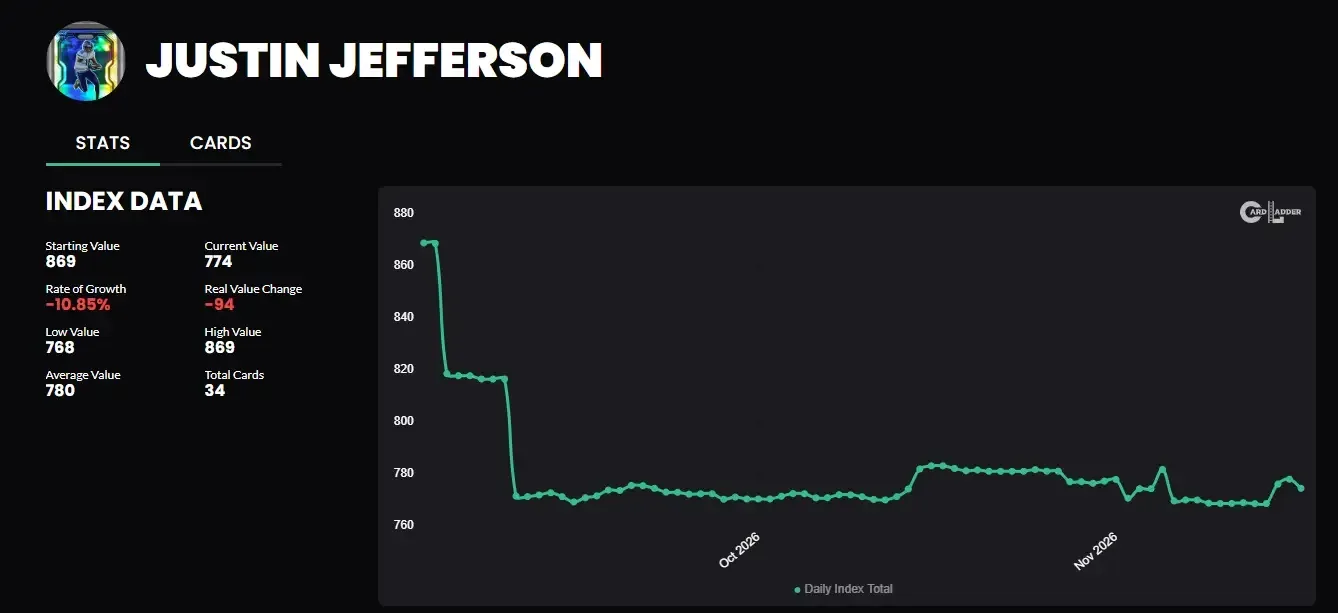
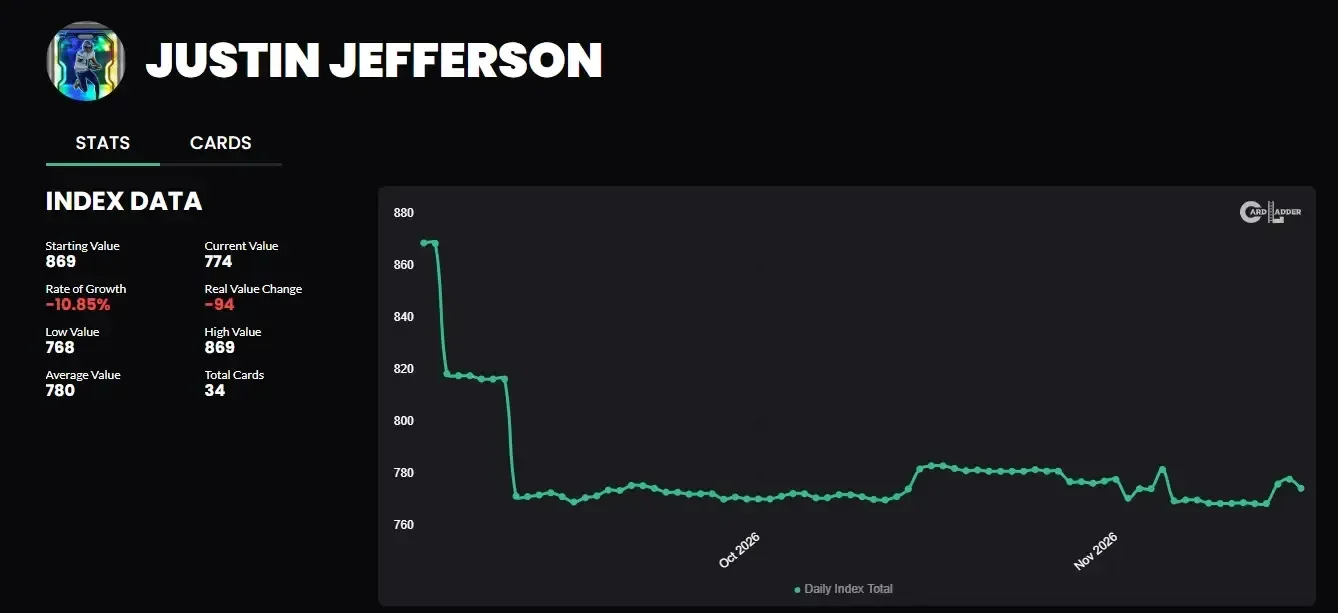
If Cousins gives Minnesota credible playoff aspirations, Justin Jefferson may be one of the most interesting hobby names to monitor. Elite wide receivers depend heavily on quarterback quality, not just for production but for market confidence. Even great players can see their card values flatten when the passing game becomes unreliable.
Jefferson has remained one of the premier talents in the league, but stagnant offensive conditions can mute excitement around even the best non-quarterbacks. A more stable passing attack could quickly revive attention around his top rookie cards, especially if the Vikings start winning games that matter in the playoff race.
Collectors looking at Jefferson are really balancing two questions. First, can his production rebound enough to create highlight-worthy momentum? Second, can Minnesota turn that improved offense into a postseason push? If the answer to both is yes, Jefferson has room to regain hobby energy that had cooled.
There is also a broader halo effect to consider. When a team becomes newly relevant, longtime veterans often get short-term bumps based on legacy, milestones, or simple increased visibility. That could put names like Harrison Smith, Aaron Jones, and T.J. Hockenson back on the radar. None carry the same hobby weight as Jefferson, but all could benefit from a stronger team narrative if Minnesota stays in the hunt.
The key for collectors is not to assume one game solves everything. Minnesota still faces a difficult road, and a strong debut from Cousins must be backed up. But the basic hobby takeaway is clear: the Vikings moved from a roster with interesting talent to a roster with investable momentum.
Minnesota Cards to Watch After Week 10
For collectors trying to identify where attention could flow next, Minnesota offers several different levels of risk and reward.
- Kirk Cousins rookie cards: Lower-population 2012 issues could react more slowly than modern, high-volume markets, but that also means meaningful demand can tighten supply quickly if the playoff case strengthens.
- Justin Jefferson key rookies: A revived passing game could make his premium rookie cards one of the most attractive non-quarterback NFL plays if production spikes again.
- T.J. Hockenson cards: Tight ends rarely lead the hobby conversation, but postseason relevance can create incremental value and more market activity.
- Harrison Smith veteran cards and autos: Legacy collectors often return when a respected veteran is part of a surprising contender.
- Aaron Jones cards: Running back markets are usually shorter-term, but team momentum can still create quick windows of opportunity.
This is the kind of team situation where collectors often do best by focusing on key cards rather than buying the entire roster indiscriminately. Minnesota is more interesting now, but not every player will benefit equally.
Justin Herbert and the Search for a Floor in Los Angeles
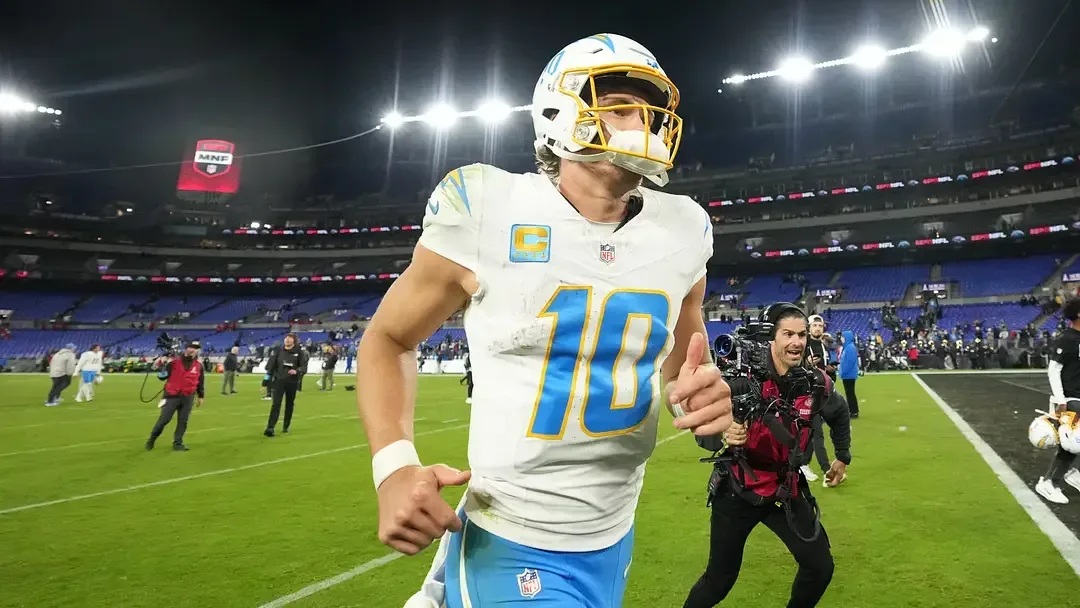
The Chargers have spent most of the season destroying optimism. A miserable start and a prolonged collapse pushed the team out of serious relevance, and the market responded exactly as expected. Justin Herbert, once one of the hobby's most reliable young quarterback names, has seen a significant decline.
One benchmark illustrates the drop clearly. Herbert's 2020 Prizm Silver PSA 10 reportedly fell to $711 after trading near $1,600 at the start of the season. That is a steep pullback, and it reflects more than just box-score disappointment. It reflects collectors reassessing the franchise, the trajectory, and the gap between Herbert's talent and his results.
Still, the market does not always need a full turnaround to stop falling. Sometimes it just needs a stable stretch. That is what makes the upcoming schedule so relevant. Games against weaker or compromised opponents can create a window for Los Angeles to collect a few wins, post cleaner offensive performances, and slow the downward momentum around Herbert cards.
No realistic late-season surge erases the damage already done. Herbert is not one hot month away from reclaiming all of the value the market stripped out. But if the Chargers win a few games and he starts looking more like a premium quarterback again, collectors may treat current levels as a correction rather than a collapse.
That distinction matters. In the hobby, there is a major difference between an asset that is repricing lower and one that is losing its long-term thesis. Herbert's talent still gives him a path back to hobby relevance. The question is whether the team environment can stop undermining that case.
How Collectors Should Read Herbert's Current Market
There are at least two ways to approach Herbert right now, and both carry risk.
The first is the bargain thesis. If you believe the market has overreacted to a brutal team season, premium Herbert rookies could look attractive after such a dramatic reset. This approach depends on faith in talent and the assumption that a cleaner supporting structure will eventually return.
The second is the wait-and-see approach. Instead of buying the dip immediately, collectors can watch whether the Chargers actually capitalize on a favorable stretch. If the team continues to sputter, even discounted prices could drift lower. If Herbert stabilizes, buyers may pay a bit more later but with stronger confirmation.
The critical point is that this is no longer a pure hype play. Herbert's market is now a test of conviction. Buyers are not chasing an undefeated contender or a breakout season. They are deciding whether a star quarterback's long-term ceiling still outweighs the present mess around him.
Even a modest winning streak would help. It would not restore peak pricing, but it could establish a short-term floor and make the market feel less fragile heading into December.
The NFC South Remains a Mess, Which Creates Opportunity
No division captures late-season uncertainty quite like the NFC South. More than halfway through the season, none of the four teams has separated from the pack. That makes for frustrating football, but it can create useful hobby openings because playoff access is still available even without dominant play.
When collectors look at weak divisions, the temptation is to dismiss them entirely. That can be a mistake. A division winner still gets national attention, playoff exposure, and at least a temporary increase in relevance. For discounted players, that can be enough to trigger a meaningful short-term move.
Three teams stand out most in the current NFC South card conversation: Tampa Bay, Atlanta, and Carolina.
Tampa Bay Offers Veteran Quarterback Speculation
Tampa Bay's defense has helped keep the club from falling completely out of the race, and the path ahead is workable. With only two remaining games against teams above .500, there is room for the Buccaneers to stack wins if Baker Mayfield can get healthy enough to steady the offense.
That health piece is everything. Veteran quarterbacks with an established hobby track record can move quickly when they return to meaningful games, especially if the market has been quiet for a stretch. Mayfield does not need to produce an MVP-level run to matter. He simply needs to guide Tampa Bay into contention and give collectors a reason to believe the division title is attainable.
For buyers who like shorter-term playoff speculation, that makes Tampa Bay one of the cleaner bets in the division. The team profile is straightforward, and a winnable schedule gives the market a believable reason to pay attention.
Atlanta's Tyler Shough Faces a Tougher Test
Tyler Shough opened eyes earlier in the season, but the market has cooled as the path became more difficult. That is often how young quarterback cycles work. Early excitement can push prices higher quickly, but maintaining those gains requires weekly reinforcement.
The upcoming stretch against the Bears, Bengals, and Packers could prove decisive. If Shough keeps producing against stronger opposition, interest can return fast because young quarterbacks still drive the broadest hobby excitement. If the offense stalls, collectors may continue to rotate elsewhere.
Shough remains one of the more volatile names in the division. He probably carries more upside than some veteran plays, but also more downside in the short term because expectations can swing so sharply around emerging quarterbacks.
Bryce Young May Be the Most Interesting Buy-Low Name in the Division
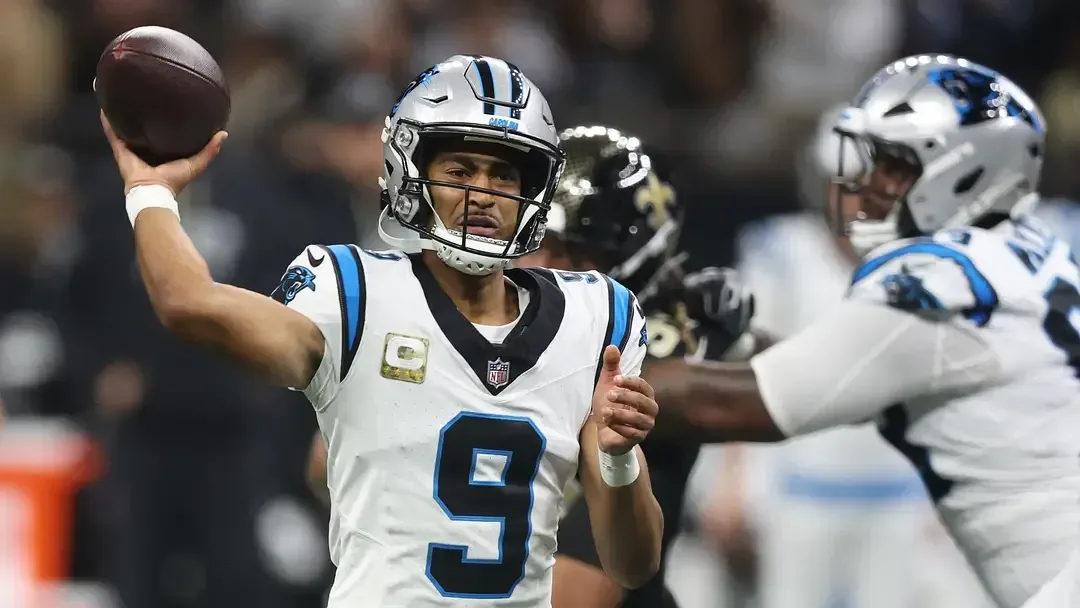
Carolina's season has been uneven, but Bryce Young still has a case as the most intriguing speculative play in the NFC South. Earlier in the year, he flashed enough production to remind collectors why he entered the league with major hobby appeal. Then injuries around him, especially up front, helped drain much of that momentum.
If the offensive line gets healthier and the schedule softens as expected, Young could still finish the regular season with a renewed push. That possibility matters because his market has already experienced both hype and disappointment, creating a more complicated but potentially rewarding buy point.
The Panthers also have a clear late-season measuring stick. Their final stretch includes tougher matchups against Cincinnati, Pittsburgh, and Seattle. If Carolina can take advantage of the more manageable portion of the schedule before that closing run, Young's cards could see a renewed wave of interest. If not, collectors may treat any temporary uptick as a selling window rather than the start of a sustained rebound.
Among the NFC South names, Young may offer the most compelling blend of pedigree, past hobby strength, and remaining upside if the team can get functional play around him.
What Week 10 Means for NFL Card Buyers
The biggest lesson from Week 10 is that market direction can change quickly when a team gains a new quarterback answer, even if that answer is a veteran rather than a rookie sensation. Minnesota now has a story collectors can buy into. Los Angeles has a chance to stop the damage, even if a full recovery remains distant. And the NFC South continues to offer discounted playoff speculation for buyers willing to tolerate volatility.
For now, the most actionable situation is in Minnesota. Cousins has revived belief in the offense, Jefferson has a clearer path back to center stage, and the supporting cast could benefit from the glow of meaningful late-season football. Herbert remains more of a patience test, while the NFC South demands a sharper appetite for risk.
As the calendar turns deeper into November, every win starts carrying postseason weight, and that is usually when hobby narratives harden into real price movement. Collectors watching these teams over the next few weeks will be tracking more than standings. They will be watching for the moment when possibility turns into demand.
Photo Gallery