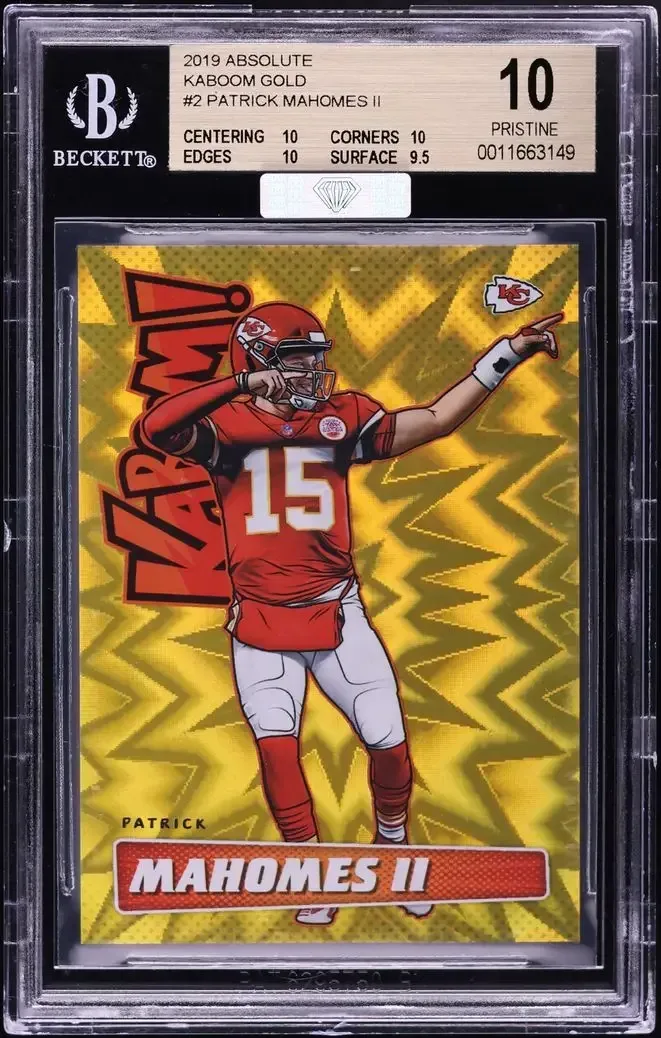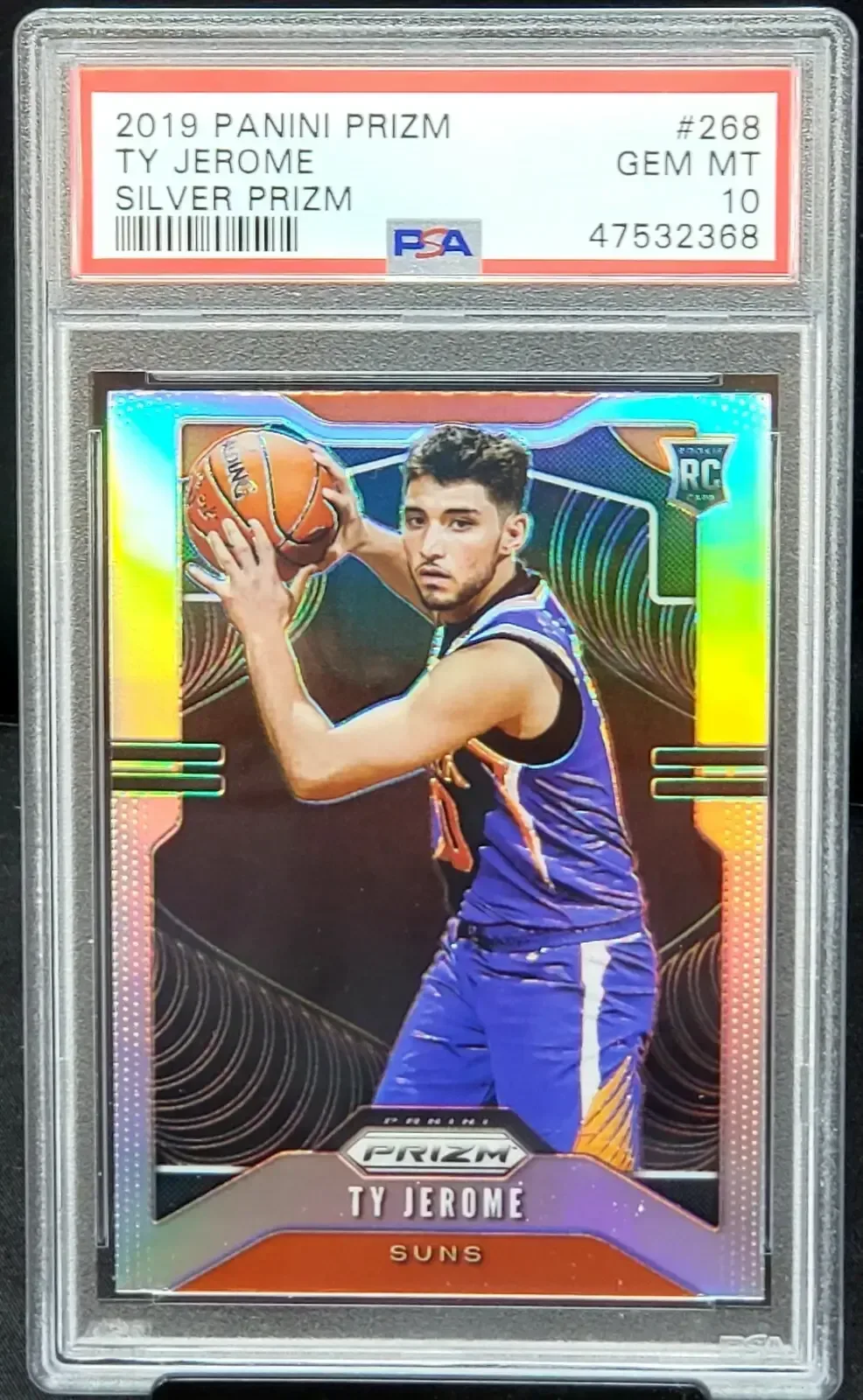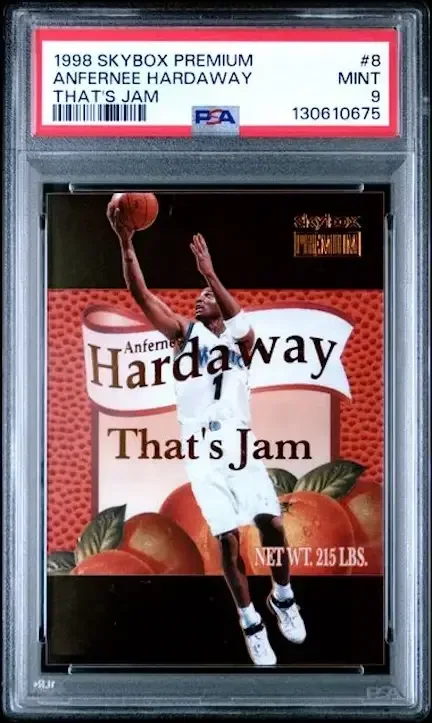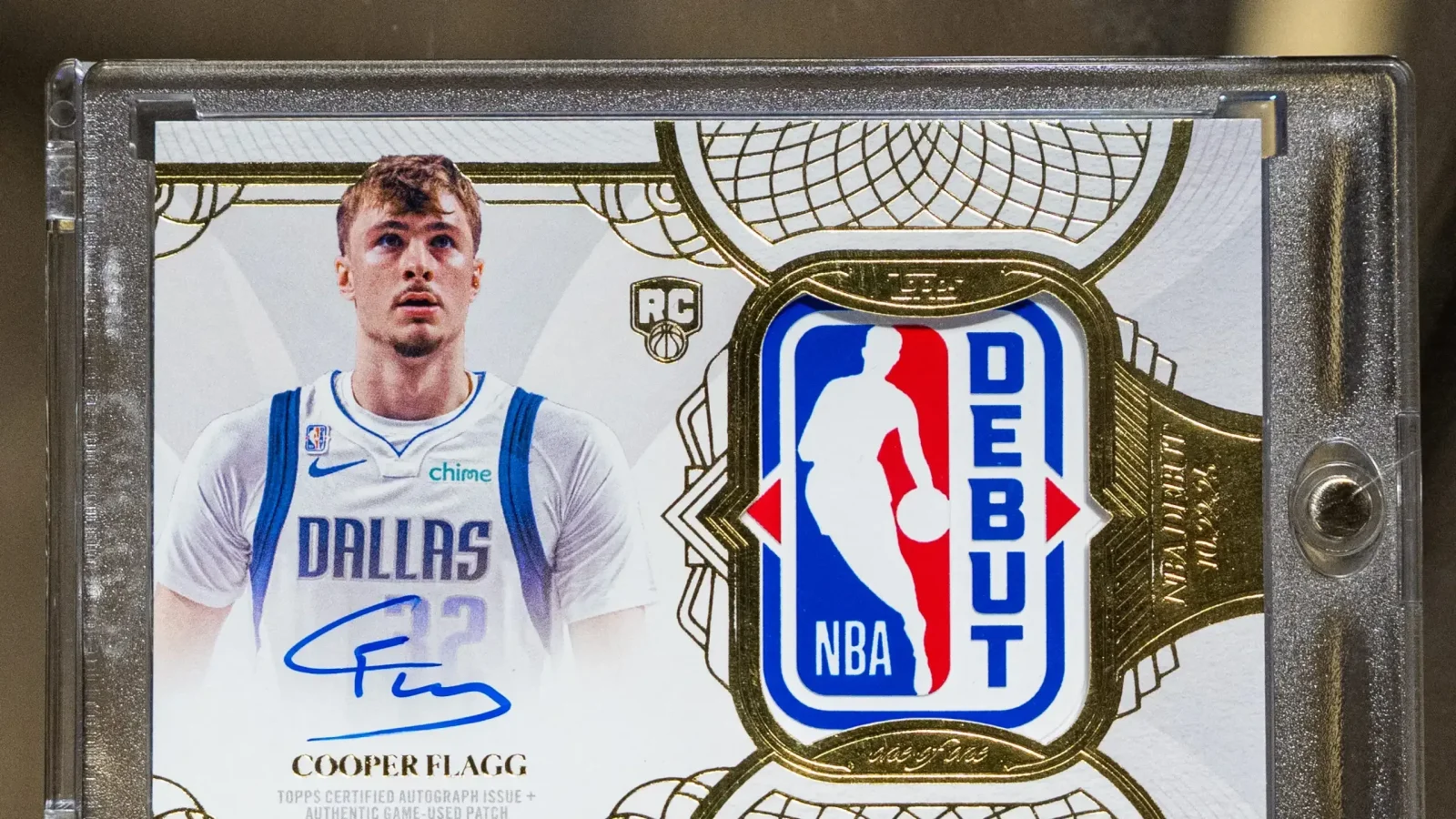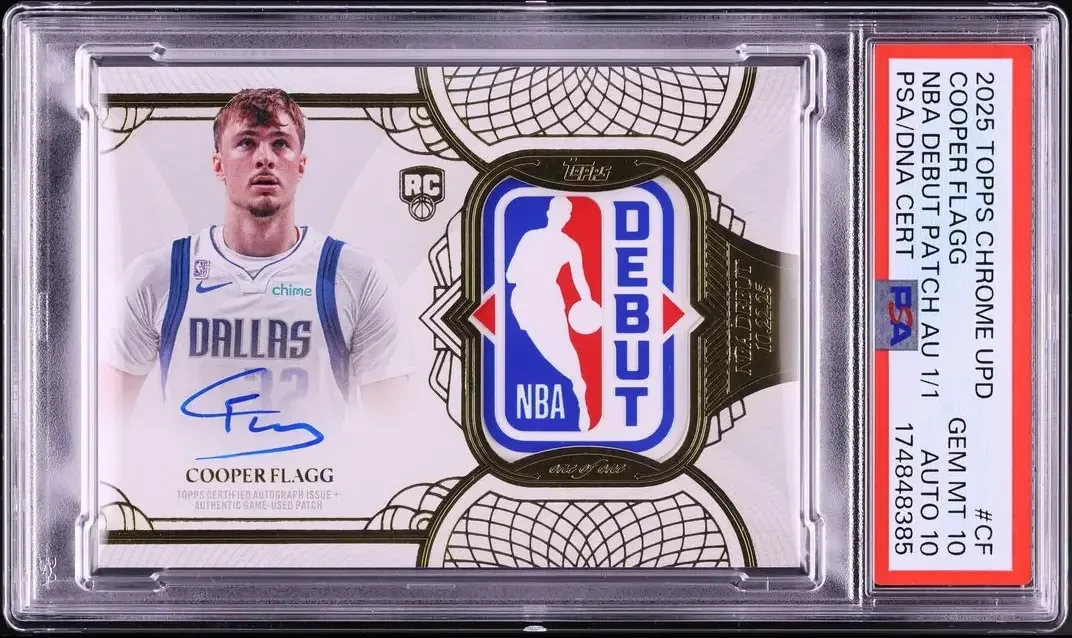
Signed sports cards can look simple in a holder and still involve three separate judgments. One judgment may concern whether the signature is considered genuine. Another may score how strong or attractive that signature appears. A third may assess the physical condition of the card itself.
For collectors, the practical problem is not vocabulary. It is assumption. Many buyers see “authenticated” or “graded” and mentally upgrade that into “excellent card,” “excellent autograph,” or “protected forever.” The major grading and authentication companies do not describe their services that broadly. If you buy signed cards regularly, understanding those distinctions can save you from overpaying, misunderstanding a label, or expecting guarantee coverage that was never offered.
1. Start with the three separate questions a signed card can answer
When you evaluate a signed sports card, it helps to break the item into layers instead of treating the slab as one all-purpose verdict. The first question is authenticity: is the autograph considered genuine, or was it witnessed at the time of signing by the company’s representative? The second question is autograph quality: how strong, complete, clean, and visually appealing is the signature itself? The third question is card condition: how sharp and original is the cardboard or chromium piece underneath the ink?
Those questions sound related because they all live on one object, but the companies handling them separate the tasks. PSA offers a dual workflow for card and autograph grading, which reflects that a signed card can be judged both as a card and as a signature-bearing item. Beckett’s service descriptions likewise separate autograph authentication from autograph grading. SGC and CGC also publish terms and guarantee language that make clear a holder is not a single unlimited promise covering every possible trait of a signed collectible.
For buyers, this framing matters immediately. A signed rookie card can have an authentic autograph and still be an average card grade because of corner wear, print defects, or centering. It can also be a strong card grade with an autograph that looks faint, rushed, or imperfect. Once you start reading signed cards this way, slab labels become more informative and less misleading.
- Authentication asks whether the signature is genuine or was witnessed.
- Autograph grading evaluates the signature’s quality and presentation.
- Card grading evaluates the card’s physical condition.
2. What autograph authentication actually evaluates
Autograph authentication is fundamentally about signer attribution and signature genuineness, not beauty. If a company authenticates a signature, it is expressing an opinion that the autograph is genuine, or in some programs, that the signature event was directly witnessed. That distinction is important because witnessed programs are not the same thing as after-the-fact forensic opinions, even if both can produce a labeled holder.
Beckett’s published descriptions draw this line clearly. Its authentication language centers on confirming that a signature is genuine, while its witness service states that a BAS representative personally saw the item being signed. CGC distinguishes among witnessed signatures, unwitnessed signatures, and signatures authenticated through JSA on different labels. PSA’s signed-card process also separates autograph authentication from the other evaluations that may happen during encapsulation.
As a buyer, this means you should not read “authenticated” as shorthand for “nice autograph.” Authentication does not tell you whether the blue ink is bold across the whole name, whether the pen skipped on the last letter, or whether the autograph lands neatly on the ideal part of the card. It tells you the company is addressing genuineness, not necessarily presentation. That is why two cards with equally authentic signatures can have very different eye appeal and very different outcomes if autograph grading is also requested.
- A witnessed signature program addresses the signing event directly.
- An unwitnessed signature may be authenticated after the fact based on expert review.
- Authentication alone does not score pen strength, cleanliness, or placement.
3. What autograph grading evaluates, and why collectors often miss it
Autograph grading is a different exercise from authentication. Instead of asking whether the signature is genuine, autograph grading evaluates the quality, condition, and visual strength of the signature itself. PSA’s autograph grading standards emphasize strength versus weakness in the signature, eye appeal, and how representative the autograph is of the signer’s typical pattern. Beckett’s service language similarly describes autograph grading as an evaluation of the autograph’s quality and condition.
This becomes especially useful when two cards have legitimate signatures but very different presentation. Imagine two on-card autographs from the same athlete. One is dark, complete, and well-placed. The other is slightly faded, trails off at the end, or overlaps a dark background that makes it hard to read. If both are genuine, authentication may not separate them much in your mind, but autograph grading should. That is the whole point of the added evaluation.
PSA also notes that on multi-signed items, individual autographs may be graded and then combined into an overall result, with different treatment once an item reaches three or more signatures. That detail underlines the core principle: autograph grading is not a yes-or-no call on legitimacy. It is a condition and presentation judgment about ink on a surface. For collectors who care about display quality, that can be as important as authenticity itself.
- Authentication and autograph grading are complementary, not interchangeable.
- A genuine autograph can still receive a modest autograph grade.
- Multi-signed items may involve multiple signature-grade judgments.
4. What card grading evaluates on a signed card
Card grading still focuses on the card. That sounds obvious, but signed-card buyers frequently blur the cardboard with the ink. PSA’s grading standards address centering, corners, gloss, stains, surface wear, trimming, recoloring, restoration, and other physical characteristics. Beckett’s grading services describe an examination of the card itself, including condition details and subgrades in certain formats. SGC’s grading scale likewise describes a system for evaluating physical condition.
On a signed card, then, the company may be evaluating at least two separate things on one piece: the underlying trading card and the autograph placed on that card. That is why a dual-service result can show very different numbers or designations. The card might have soft corners, print lines, or rough centering that suppress the card grade, while the autograph remains bold and attractive enough for a strong autograph grade.
This is one of the easiest areas for buyers to overread. A sharp-looking autograph does not fix edge wear. A mint-looking card surface does not improve a weak, rushed signature. If your goal is long-term collector satisfaction, train yourself to inspect both layers separately before you decide whether the price makes sense.
- Card grade reflects the condition of the physical card stock or surface.
- Autograph appearance does not automatically improve the card grade.
- A signed card can legitimately carry different evaluations for card and autograph.
5. What authentication does not guarantee
The most expensive misunderstanding in this category is treating authentication as a full-coverage promise. The published policies do not support that leap. Authentication does not automatically mean the autograph will receive a high autograph grade. It does not mean the card itself is high grade. It does not mean the ink will never fade, and it does not necessarily mean every additional feature on the item is guaranteed genuine under broad company guarantee language.
PSA’s guarantee terms are especially important here because many collectors assume the most recognizable brand name implies the broadest protection. PSA states that its financial guarantee does not apply to the authenticity or grade assigned to any autograph, including manufacturer-certified and after-market autographs. PSA also states elsewhere that autograph grades cannot be guaranteed for the life of the item because signatures can deteriorate over time. That is a major limitation for anyone who assumes a slab turns fading ink into a permanent condition result.
CGC is similarly explicit. For cards, it says the authenticity of pack-pulled or manufacturer-certified autographs is not guaranteed under its card guarantee, and the grade of any autograph is not guaranteed. CGC also notes that unwitnessed signatures on its green Qualified label are not guaranteed authentic. Beckett’s witness service language is stronger regarding the authenticity of the signature event, because the company states a BAS representative personally witnessed the item being signed. Even there, though, the statement addresses authenticity of the autograph, not a promise that the signature is visually pristine or that the card’s condition is elite.
- Authentication is not the same as a high autograph grade.
- Authentication is not the same as a high card grade.
- Major-company guarantees may exclude autograph authenticity, autograph grade, or both depending on the program.
6. What grading does not guarantee, even when the label looks definitive
Grading has limits too. A numerical grade is an opinion at a point in time, not an all-weather warranty against age, light, moisture, mishandling, or later tampering. PSA says an autograph grade is guaranteed only at the time of authentication, not for the life of the item, because signatures can fade and decline over time. PSA’s financial guarantee also excludes a number of conditions and events, including environmental damage, sunlight exposure, mold, tampering, and items removed from holders.
CGC’s guarantee language also narrows what some collectors casually assume is covered. The grade of any autograph is not guaranteed, and the company’s guarantee has scope and timing limits, including a ten-year claim window from grading. It also excludes the authenticity of additive features and manufacturer-certified autographs from its card guarantee. Those are not minor footnotes for signed-card collectors. They are central to understanding risk.
SGC’s terms add another practical reminder. The company states that grading and authentication involve subjective professional opinion, can change over time, and come with broad warranty limitations except where expressly stated. SGC also notes that its holders are not waterproof or UV-resistant. That statement is useful well beyond one brand. Slabs provide storage and handling benefits, but they do not eliminate deterioration risk. If you display signed cards near windows or under harsh light, no holder language should be treated as a substitute for careful storage.
- A grade reflects the item when evaluated, not necessarily forever.
- Environmental exposure can fall outside guarantee coverage.
- A slab helps protect a card, but published terms do not treat it as total protection.
7. How to read a signed-card listing without overpaying
The easiest practical upgrade you can make as a collector is to slow down when reading seller descriptions. If a listing says “authenticated auto,” that should prompt one set of questions. Was the signature witnessed, or authenticated after the fact? Is the autograph separately graded? Is the card itself graded? If so, what is the card grade, and is the seller using the autograph result to distract from a lower underlying card grade?
A useful buying routine is to decode the listing in a fixed order. First, identify the card issue itself: set, year, player, and whether the card is a pack-issued autograph, an after-market signed card, or another category. Second, identify whether the slab service addresses autograph authenticity, autograph grade, card grade, or some combination. Third, inspect the visible signature quality. Is the ink complete and readable? Does it run across a clean area of the design or disappear into a dark photo background? Fourth, inspect the card independently for centering, edge chipping, corner wear, scratches, or staining if images allow.
Here is a practical example. Suppose a seller offers a signed rookie card described as “authenticated and slabbed.” That phrase alone should not justify a premium equal to a dual-graded example. If the signature is authentic but ungraded, you still do not know whether the autograph presents strongly by grading standards. If the card is authentic but ungraded, you also do not know whether the cardboard would earn a high number. In other words, the holder may answer one important question while leaving two others open. Pricing should reflect that uncertainty, not ignore it.
- Ask whether the autograph was witnessed or authenticated later.
- Separate the autograph evaluation from the card evaluation.
- Do not let a single reassuring word in the listing stand in for missing details.
8. Smart buying scenarios: when to prioritize authentication, autograph grade, or card grade
Different collecting goals justify different priorities. If you mainly want confidence that a signature is genuine on a personally meaningful card, authentication or a witnessed program may be the primary need. In that case, the best question is not “Why isn’t this dual graded?” but “Does the holder clearly tell me how the company handled the autograph?” That approach can make sense for collectors who care more about legitimacy than resale presentation.
If you collect for display and visual impact, autograph grade may matter more than the card grade on some pieces. A slightly off-center card with a clean, bold autograph can be more satisfying on display than a stronger card carrying a faint or streaky signature. That is an analytical preference, not a universal market law, but it is a real distinction many collectors discover only after they have already bought a few disappointing signed cards. Knowing your own priority can stop you from paying for the wrong kind of quality.
If you focus on rookie cards, flagship keys, or condition-sensitive modern chrome cards, the card grade may still drive your interest. In those cases, do not let an authenticated autograph distract you from centering, surface lines, or edge problems that materially affect the underlying card. The cleanest way to think about it is simple: buy the evaluation that matches your purpose. If your purpose is authenticity, pay for authenticity. If your purpose is presentation, pay attention to autograph grade. If your purpose is cardboard condition, keep card grade at the center of the decision.
- Prioritize authentication when genuineness is your main concern.
- Prioritize autograph grade when signature appearance matters most to you.
- Prioritize card grade when the underlying card issue and condition are the real target.
9. The collector takeaway: treat the holder as a label with scope, not a blanket promise
The healthiest habit in signed-card collecting is to treat every slab as a defined statement with boundaries. Authentication answers whether the signature is regarded as genuine or witnessed. Autograph grading answers how strong and appealing the signature appears. Card grading answers the condition of the card itself. None of those answers automatically fills in the others.
That matters because the hobby often compresses all three ideas into one loose compliment. Sellers say a card is “slabbed,” “authenticated,” or “graded” as though those terms communicate equal certainty and equal value. They do not. The details of the service, the label type, and the company’s guarantee terms decide what has actually been evaluated and what remains your own risk as the buyer.
So before you purchase a signed sports card, ask a short set of disciplined questions. What exactly was authenticated? What exactly was graded? What does the company explicitly decline to guarantee? If you can answer those three questions from the holder and the company’s published terms, you are already shopping more carefully than a large share of the market. That does not remove all subjectivity or all future risk. It does put you in a far better position to buy signed cards with clear eyes instead of comforting assumptions.
- Read the slab as a scoped opinion, not a universal assurance.
- Authentication, autograph grading, and card grading each solve different problems.
- Before buying, match the label’s actual coverage to your collecting goal.
Illustration generated for this guide; not a photograph of an actual card, product or event.
Photo Gallery