Some card concepts age well. Others look even better once the hobby catches up to them.
That is the case with 2006-07 Upper Deck Chronology Letterman Patch Autographs, a release that blended several collecting pillars into one premium idea: hard-signed autographs, game-used material, player-specific letter patches, and limited serial numbering. Nearly two decades later, the format still stands out as one of the more ambitious basketball insert concepts of its era.
At a time when collectors continue to push prices higher for elite game-worn memorabilia, Chronology Letterman cards feel especially relevant. They offered a way to own a signed piece of a player-worn jersey in card form, with each card built around a single letter pulled from the nameplate. For star collectors, the chase did not stop with one card. The real challenge was assembling an entire surname, letter by letter.
Why the Chronology Letterman concept still resonates
Letterman patch cards have long had visual appeal, but the 2006-07 Chronology version elevated the formula by tying the patch window to autographs and a full-name collecting goal. Instead of chasing one centerpiece card, collectors could pursue a complete run that spelled out a player surname such as JORDAN or BRYANT.
For more collector background, read Upper Deck Launches Real-Time NHL Cards on e-Pack With New Upper Deck Moments.
That created a very different kind of scarcity. These were not just low-numbered cards. Each individual letter had its own print run, and each missing character could stall a set for years. In practical terms, that turned full-name builds into long-term hobby projects rather than quick pickups.
The cards also delivered a strong display factor. A single letter patch auto works as a premium card on its own, but a full framed surname becomes something closer to a curated memorabilia piece. That crossover appeal is part of why the subset still attracts attention from both card collectors and game-used enthusiasts.
Michael Jordan remains the headline chase
If one player defines the high end of the 2006-07 Chronology Letterman Patch Autograph subset, it is Michael Jordan. His surname requires six letters, and each letter card was numbered to 40 copies. That sounds attainable until the market reality sets in: surviving examples are tightly held, and building a full JORDAN run is exceptionally difficult.
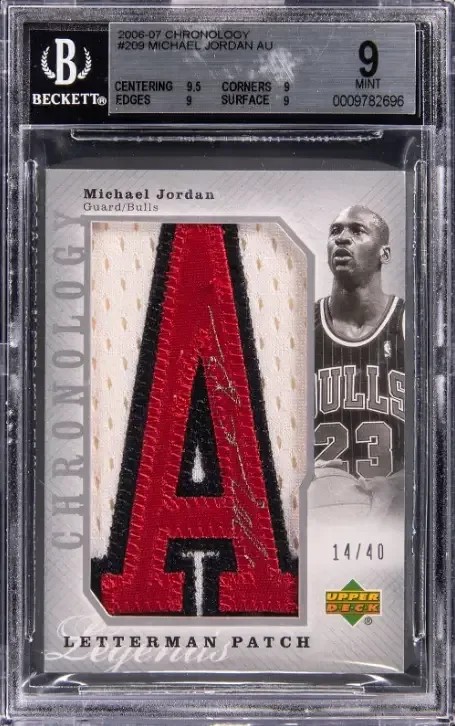
A notable recent sale helps illustrate the demand. A 2006-07 Upper Deck Chronology Letterman Patch Autograph Michael Jordan card, serial-numbered 14/40 and graded BGS Mint 9, sold for $18,910 on August 15, 2026. That number underscores how much premium collectors are willing to pay for a single letter from one of the most iconic names in sports.
Sales history also hints at how infrequently these cards surface. Since 2007, only nine Jordan Letterman Patch Auto sales have been tracked in Card Ladder data referenced in the source material. For a player with Jordan's global hobby footprint, that is an extremely thin public market record.
Scarcity alone does not make a card special, but scarcity combined with player demand, design identity, and set-building difficulty creates a much stronger long-term case. Jordan checks every box in this subset.
Completing a surname is the real challenge
The most interesting part of the Chronology Letterman run may be that individual card values tell only part of the story. These cards were designed to create a second layer of collecting pressure: completion.
Anyone chasing a full surname has to deal with several complications at once:
- Each letter is a separate card with its own availability.
- Some letters may surface far less often than others in public sales.
- Collectors building the same player name can compete for the same missing character.
- Private deals can remove key letters from the public market for long stretches.
That means price guides and auction records do not always capture the real challenge. In many cases, the hardest letter to find may not be the most visually impressive one. It is simply the card nobody is willing to move.
This dynamic helps explain why complete name runs are so rarely seen together. Even when individual letters occasionally appear, seeing a full surname assembled at one time is unusual.
Kobe Bryant adds another layer of interest
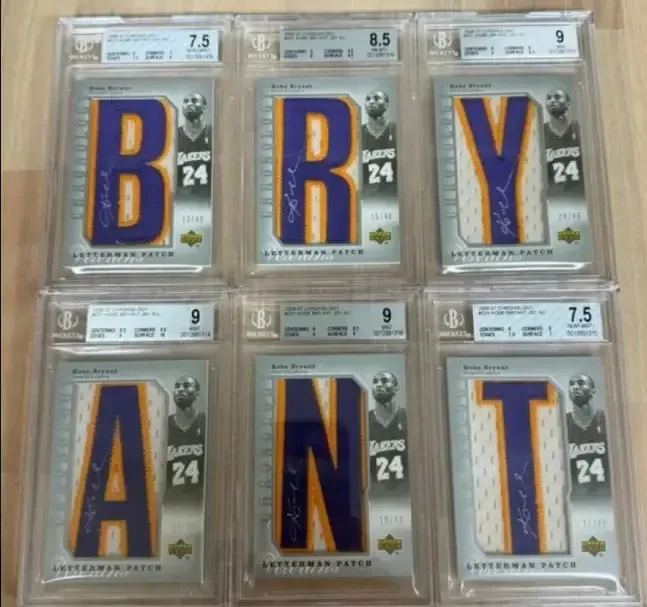
Kobe Bryant is another major attraction in the 2006-07 Chronology Letterman subset, and his BRYANT name run carries obvious collector appeal. Interest in Bryant memorabilia and cards has remained strong, and high-end game-worn pieces tied to his career continue to draw attention.
That broader memorabilia spotlight matters for these cards. On September 30, 2026, a rare Kobe Bryant gold No. 8 jersey from his championship era was brought to auction, with the jersey described as being worn in games where the Lakers went 16-1. The piece also featured a Larry O'Brien Championship Trophy logo patch, adding another layer of significance to the item.
While a full jersey and a card-based letter patch auto are very different collectibles, they exist in the same conversation for many advanced buyers: game-used material, player significance, visual display value, and long-term desirability. Chronology's BRYANT letters benefit from that same appetite for meaningful Kobe memorabilia, especially because collectors can pursue the complete surname as a showpiece.
A publicly displayed complete BRYANT graded set has already shown what that presentation can look like when fully assembled. That kind of visibility tends to reinforce demand, because it reminds collectors that the set is not just a stack of singles. It is a finished project.
Hall of Fame names give the subset depth
Jordan and Bryant understandably dominate attention, but the strength of the Chronology Letterman checklist goes deeper. The subset includes several Hall of Fame-level names that give collectors multiple entry points depending on budget and player preference.
Among the shorter surname targets are:
- Jerry West
- Larry Bird
- Yao Ming
- Steve Nash
There are also longer-name challenges for collectors who enjoy the added difficulty of multi-letter pursuits, including:
- David Robinson
- Nate Archibald
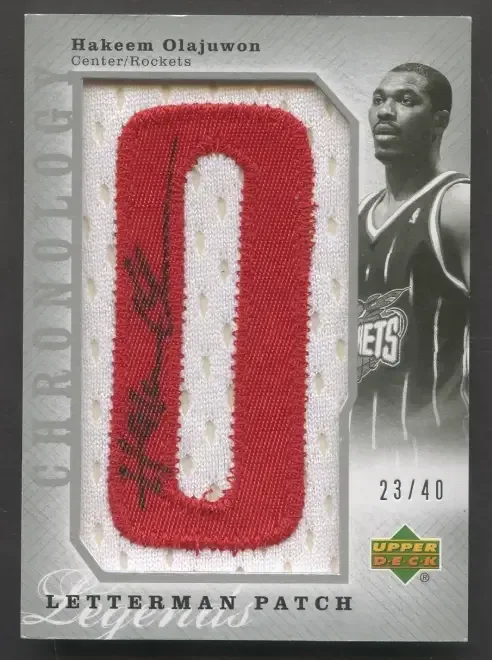
- Hakeem Olajuwon
This mix is one of the subset's underrated strengths. Not every collector can chase Jordan or Kobe at peak pricing, but the same letterman concept extends to other basketball stars with major legacies. That gives the product a broader collecting base and more staying power.
The range in values can also be dramatic. One referenced sale showed a 2006-07 Upper Deck Chronology Hakeem Olajuwon Letterman Auto Patch card, letter D, serial-numbered 23/40, selling for $232.50 on April 25, 2022. That kind of result illustrates how some Hall of Fame players can still offer a lower-cost path into a premium and historically interesting subset.
Why these cards fit today's memorabilia-driven market
The hobby's renewed focus on elite game-used memorabilia has made certain older patch-autograph concepts feel more important. As record-setting prices for jerseys and other player-worn artifacts keep grabbing headlines, collectors are paying closer attention to cards that offer a direct connection to those same categories.
Chronology Letterman cards sit at a useful intersection. They are not full-size memorabilia, but they are more than standard autographs or relics. The appeal comes from combining several features at once:
- Game-used jersey material
- Autograph content
- Nameplate-style letter patches
- Low serial numbering
- Set-building challenge
- Strong display presentation
That combination feels especially modern, even though the product debuted years ago. Current collectors regularly gravitate toward cards with story, scarcity, and visual identity. Chronology Letterman Patch Autos had all three long before many current high-end releases leaned fully into that approach.
What makes the design different from a standard patch auto
Plenty of patch autographs offer rarity and star power, but Chronology Letterman cards created a different collecting experience because each card was tied to a letter rather than simply a swatch window. That changed the way collectors interacted with the set.
A standard patch auto can usually stand alone as the definitive target. A Letterman auto invites the collector to keep going. One letter becomes two, two becomes four, and eventually the project shifts from card acquisition to name completion.
That distinction matters in the secondary market. Cards with built-in continuity often create stronger collector attachment, because selling one letter can break up a years-long effort. Once a collector gets close to finishing a surname, the final missing letter may become far more valuable to that specific buyer than any historical comp suggests.
That is one reason public auction prices do not always tell the full story of this subset. The emotional premium tied to completion can be substantial.
Collector appeal goes beyond pure investment talk
There is a temptation to view a set like this strictly through a value lens, especially when a Jordan example pushes toward five figures and game-worn memorabilia prices keep climbing. But the staying power of Chronology Letterman Patch Autos is not only about future upside.
These cards work because they deliver a memorable collecting experience. They are difficult without feeling gimmicky. They look premium without relying on flashy excess. They connect directly to player-worn material while still offering the compact appeal of a trading card. And for player collectors, they create a goal that is both visually satisfying and legitimately hard to complete.
That is a big part of why the subset still gets attention years after release. Many products produce chase cards. Fewer create hobby projects.
Checklist highlights from the 2006-07 Chronology Letterman subset
The source material specifically highlighted these notable names from the 2006-07 Upper Deck Chronology Letterman Patch Autograph lineup:
- Michael Jordan
- Kobe Bryant
- Jerry West
- Larry Bird
- Yao Ming
- Steve Nash
- David Robinson
- Nate Archibald
- Hakeem Olajuwon
For collectors exploring the set today, those names represent different levels of difficulty, cost, and completion challenge. Shorter surnames may require fewer total cards, while longer names can become more involved builds with more opportunities for a single missing letter to hold up the project.
That structure is a major reason the 2006-07 Upper Deck Chronology Letterman Patch Autograph subset still feels distinctive in a crowded hobby. It did not just offer autographed game-used cards. It turned player names into collectible quests, and that idea still stands out in the modern market.
Photo Gallery