High-end Pokémon collectors just added another remarkable chapter to the market, with five major sales between October 17 and October 24 combining for $5,353,000. The headline result came from an unusual piece tied to the franchise's earliest years in Japan: a 1997 Japanese CoroCoro phone card that sold for $2,255,000 in PSA 10 condition.
The week stood out not only for the total dollar figure, but also for the range of material drawing premium bids. Traditional grails like 1st Edition Charizard still performed at an elite level, but two vintage Japanese telephone cards proved that serious money is also chasing scarce promotional items outside the standard trading card format. That mix of iconic cards and niche early releases says a lot about where top-end Pokémon collecting sits right now.
Pokémon Swept the Top Sales Again
All five of the top TCG-related transactions for the week were Pokémon items, and the combined total jumped well beyond the prior week's mark. The strongest gains came from pieces with either deep historical importance or extreme condition rarity, especially items tied to the brand's early expansion in Japan.
Two different Japanese phone cards alone accounted for $2,737,000 of the week's $5.353 million total. That is a significant share of the market action for a category that does not receive the same everyday attention as Base Set holos, trophy cards, or modern ultra-premium promos.
For more collector background, read Pokémon’s Top 3 TCG Sales of the Week Were Led by a $1.037 Million Art Academy Pikachu.
At the same time, familiar names remained central to the leaderboard. Charizard placed twice among the top five, including a seven-figure Base Set result that reaffirmed its status as one of the hobby's most durable blue-chip cards. A 2015 Art Academy Pikachu also returned to the spotlight, showing that collector appetite remains strong for one-of-a-kind style releases and competition-linked pieces with unusual artwork origins.
The $2.255 Million Sale: 1997 Japanese CoroCoro Phone Card
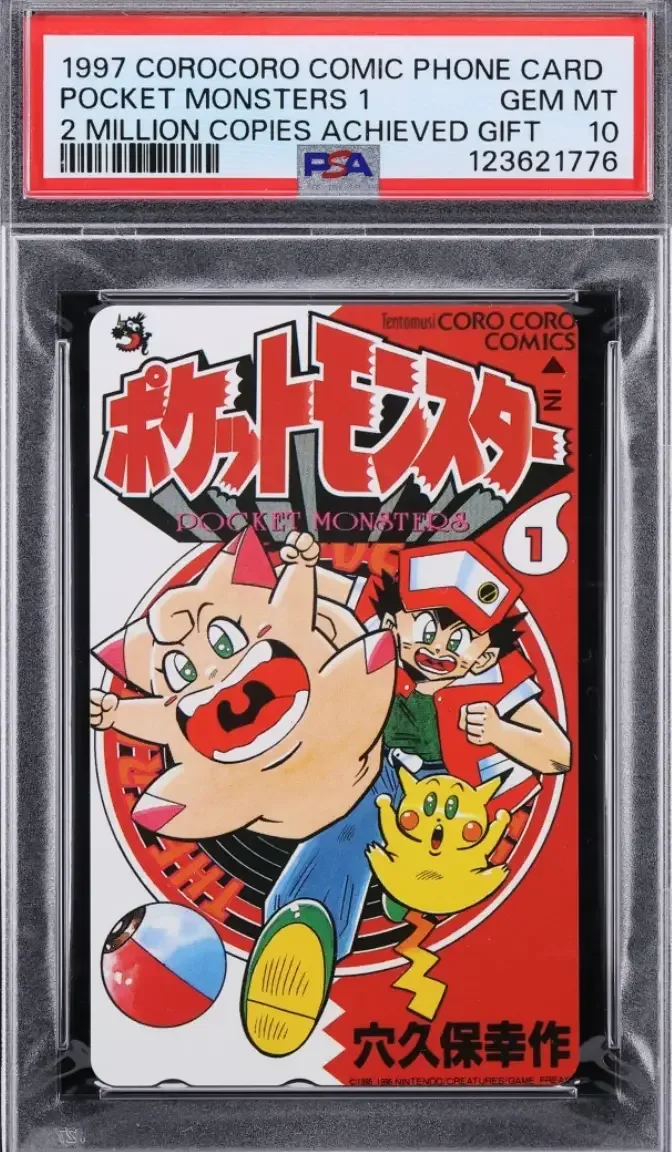
The week's top sale was a 1997 Pokémon Japanese CoroCoro phone card commemorating a two-million-copy milestone. Graded PSA 10, the card reached $2,255,000 on October 23.
That result immediately puts the piece among the most notable Pokémon-related sales of the year, and it stands out because it is not a traditional pack-issued trading card. Instead, it comes from a promotional lane of collecting that is far less familiar to many hobby participants, especially collectors whose focus centers on English TCG staples.
Its appeal is easy to understand once the context is clear. The card dates to Pokémon's early rise in Japan, a period that continues to carry enormous weight in the hobby. Collectors at the highest end often pay substantial premiums for items connected to the franchise's formative years, especially when they combine rarity, distinctive format, and exceptional condition.
Telephone cards from that era occupy an interesting space. They overlap with pop culture memorabilia, promotional history, and Pokémon collecting all at once. For advanced buyers, that kind of crossover can make an item more compelling, not less. Instead of competing directly with mass-recognized TCG staples, these pieces stand apart as relics of how Pokémon was marketed and experienced in Japan before the global boom fully took shape.
A $2.255 million result also signals confidence in nontraditional categories within the Pokémon market. Even in a hobby where trophy cards and sealed product often dominate premium headlines, rare phone cards can clearly attract world-class demand when the backstory and condition align.
Base Set Charizard Returns to Seven Figures
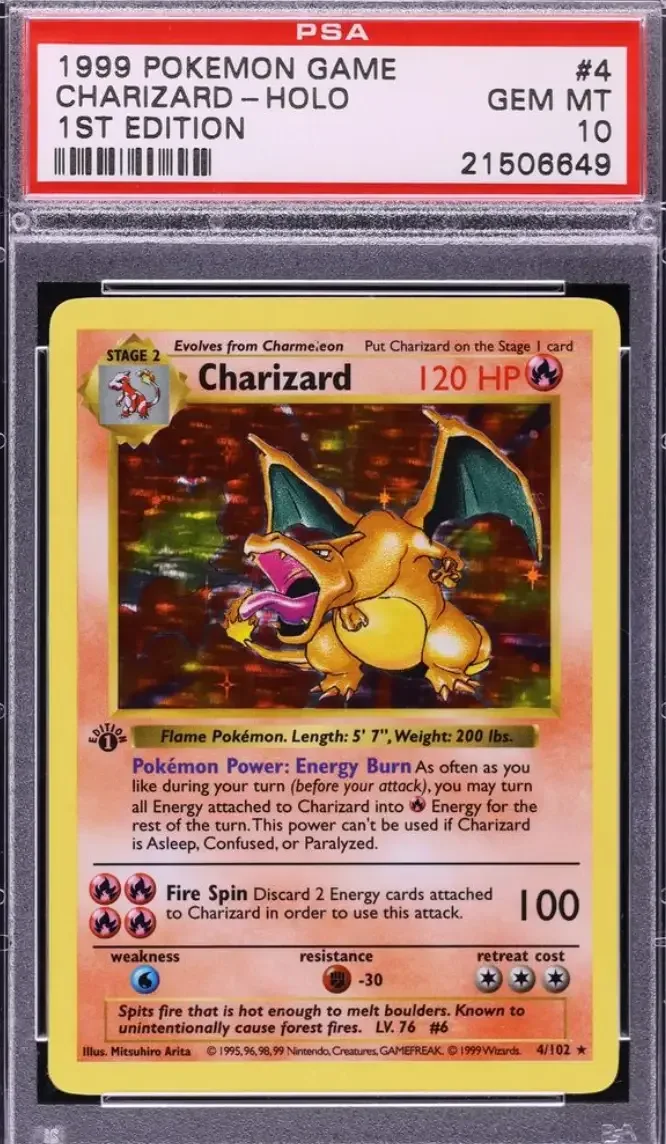
At No. 2 for the week was one of the hobby's most familiar giants: a 1999 Pokémon Base Set 1st Edition Shadowless Holo Charizard #4 graded PSA 10. The card sold for $1,380,000 on October 23.
No matter how much the market evolves, this card remains one of the clearest measuring sticks for elite Pokémon demand. It represents the original English-language Base Set, features the franchise's most iconic monster, and carries both the 1st Edition and Shadowless distinctions that collectors prize. In PSA 10, it sits in the condition tier where supply is limited and competition becomes intense whenever strong examples appear.
The sale is also a reminder that while exotic promos and obscure Japanese pieces can steal headlines, the hobby's cornerstone cards continue to command enormous confidence. For many collectors, 1st Edition Charizard is still the card that defines the top of the mainstream Pokémon market.
Crossing back into seven figures reinforces its staying power. Buyers at this level are not simply purchasing nostalgia. They are targeting one of the most established and recognizable assets in the entire trading card space, Pokémon or otherwise.
Art Academy Pikachu Keeps Drawing Major Attention
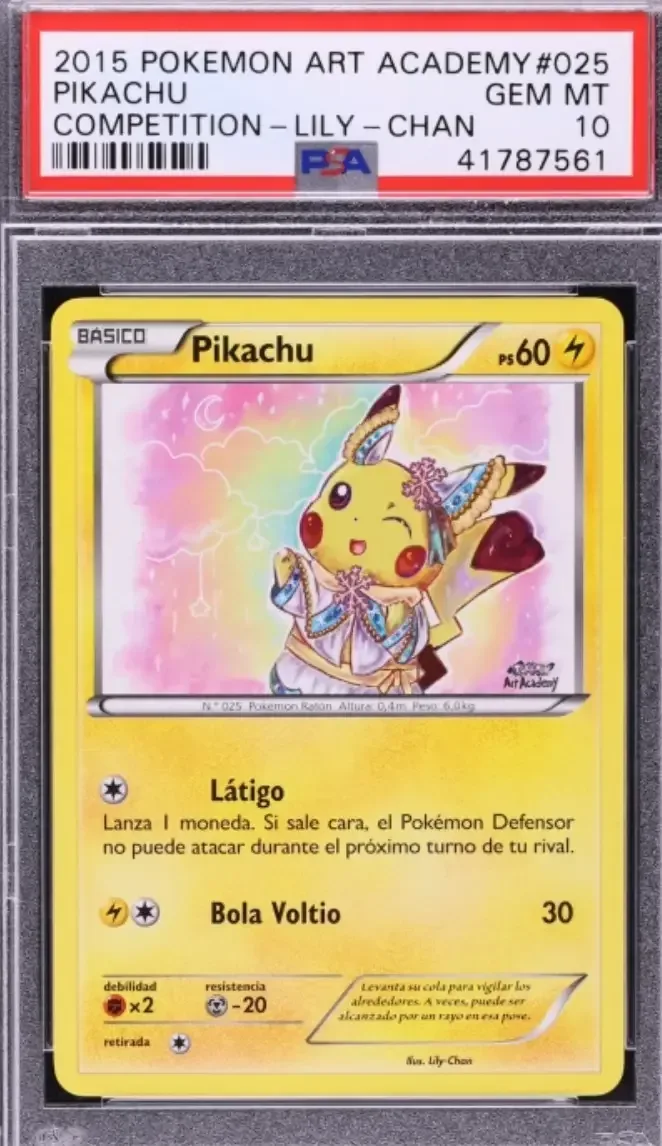
The third-highest sale of the week came from the 2015 Pokémon XY Art Academy Competition line. A Lily-Chan Pikachu #25 graded PSA 10 sold for $660,000 on October 18.
Art Academy cards have built a powerful following because they break from the normal product structure. Rather than fitting into a standard set chase, these cards are tied to a competition and showcase artwork with a very different feel from mainstream Pokémon releases. That combination of scarcity, story, and visual distinctiveness has made them a favorite category for advanced collectors seeking something beyond traditional grails.
This latest sale continues a broader pattern of serious interest in Art Academy material. Collectors clearly place a premium on cards that represent a unique artistic angle within Pokémon history, particularly when the card's origin is tied to a special event or contest rather than a conventional retail release.
At $660,000, the Lily-Chan Pikachu also shows how broad the top end of the Pokémon market has become. A collector no longer has to focus only on Base Set, trophy cards, or vintage Japanese holos to pursue six- and seven-figure pieces. Competition promos and alternate-format collectibles now occupy a much more prominent place in elite conversations.
Legendary Collection Charizard Continues Its Run
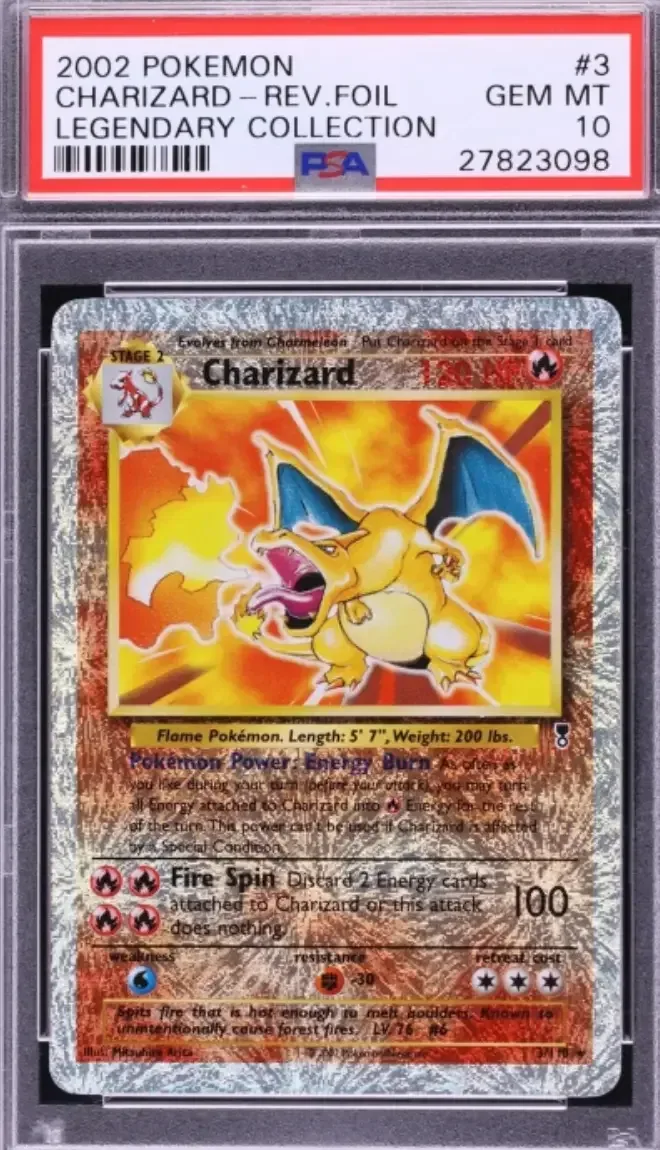
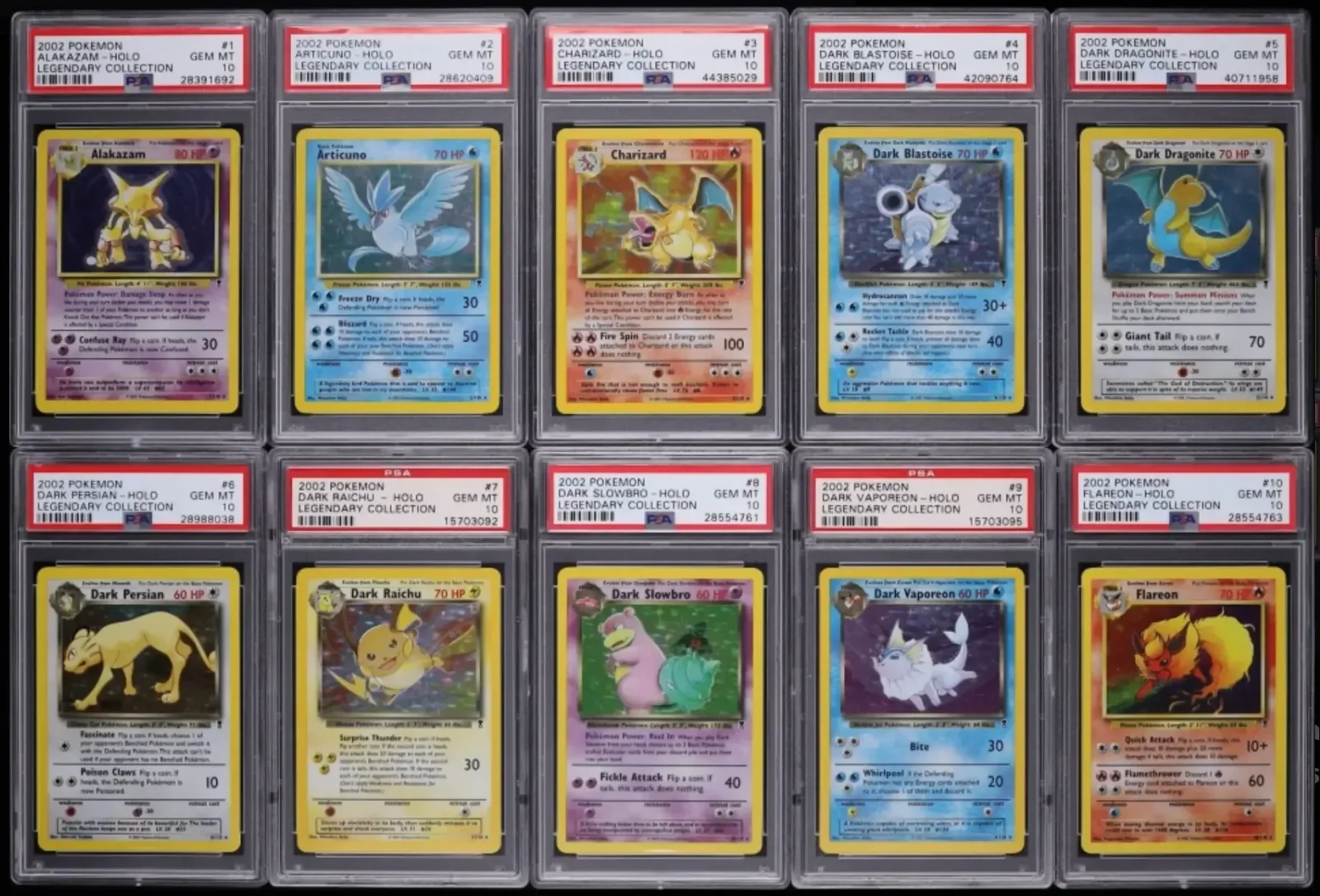
Another Charizard appearance landed at No. 4 for the week: a 2002 Pokémon Legendary Collection Reverse Holo Charizard #3 graded PSA 10, which sold for $576,000 on October 18.
The Legendary Collection reverse holo pattern has long been one of the most visually distinctive treatments in vintage Pokémon. Its fireworks-style foil design gives the card a completely different presence from standard holographic issues, and that visual identity has helped the set maintain a dedicated following for years.
In gem-mint condition, the card sits in a premium category that merges three powerful collecting traits. It is a Charizard. It comes from a set with a memorable and highly recognizable design. And it carries the condition standard that serious registry and top-end collectors pursue aggressively.
Nearly $600,000 for a single Legendary Collection reverse holo Charizard underscores that demand for standout set-specific grails remains very healthy. Not every monster sale has to come from Base Set or a trophy release. When a card combines iconic character appeal with a beloved niche within the hobby, it can still reach extraordinary numbers.
The Other Phone Card That Turned Heads
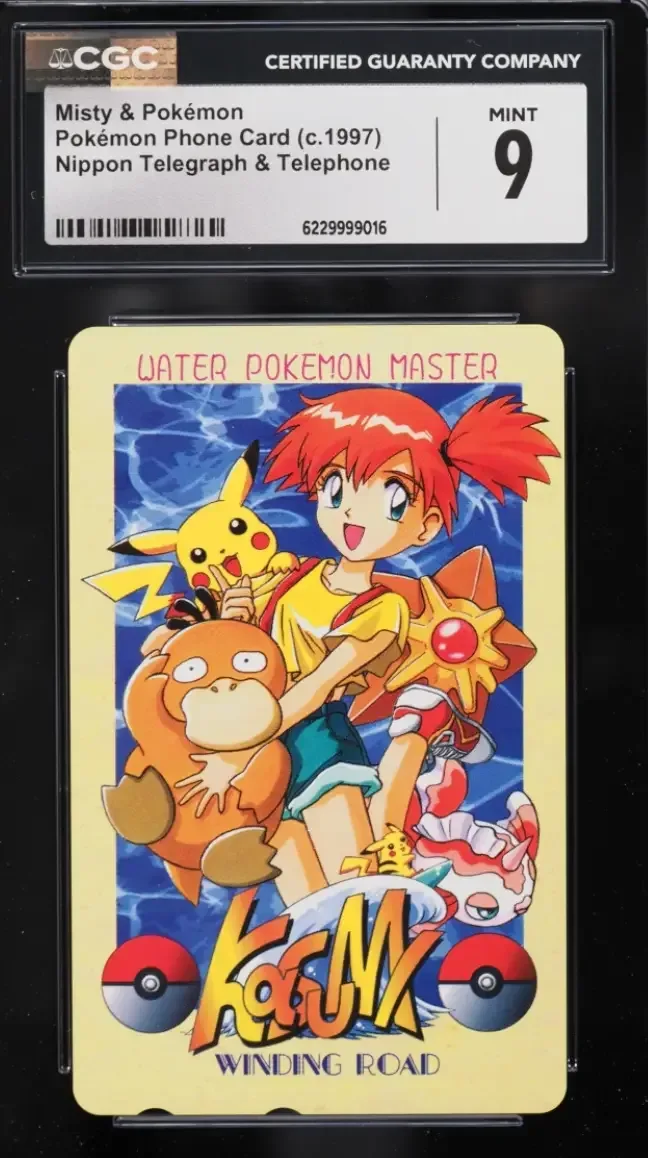
The No. 5 sale for the week was another item from the telephone card category: a 1997 Pokémon Nippon Telegraph & Telephone Phone Card Misty & Pokémon graded CGC 9, which sold for $482,000 on October 23.
That number would be eye-catching on its own, but it becomes even more interesting alongside the week's top sale. With two separate 1997 Japanese phone cards posting major results in the same week, collectors have fresh evidence that this area of the market deserves close attention.
The Misty card brings a different kind of appeal than a flagship Charizard. It taps into character collecting, early Japanese promotional history, and format rarity all at once. Because these were not typical trading cards, they occupy a specialized lane that can feel both nostalgic and underexplored compared with the most famous TCG issues.
For advanced buyers, that kind of difference matters. Scarce items that sit outside the usual product map can attract strong bidding because they offer something even major collections may lack. A nearly half-million-dollar sale for a CGC 9 example makes it clear that demand for rare Pokémon promotional material is not limited to one headline-grabbing card.
Top Five Pokémon Sales for October 17 to October 24, 2026
- 1. 1997 Pokémon Japanese CoroCoro Phone Card 2 Million Copies Gift Pocket Monsters PSA 10: $2,255,000
- 2. 1999 Pokémon Base Set 1st Edition Shadowless Holo Charizard #4 PSA 10: $1,380,000
- 3. 2015 Pokémon XY Art Academy Competition Lily-Chan Pikachu #25 PSA 10: $660,000
- 4. 2002 Pokémon Legendary Collection Reverse Holo Charizard #3 PSA 10: $576,000
- 5. 1997 Pokémon Nippon Telegraph & Telephone Phone Card Misty & Pokémon CGC 9: $482,000
What These Sales Say About the Pokémon Market
This five-sale snapshot highlights several trends that continue to shape the upper end of Pokémon collecting. First, the market remains willing to pay aggressively for established icons. The $1.38 million Base Set Charizard proves that the biggest legacy cards still have elite liquidity and prestige.
Second, collectors are rewarding originality and historical nuance. The CoroCoro phone card and the Misty phone card are not standard hobby staples, yet together they produced nearly $2.74 million in sales. That suggests top-end buyers are increasingly comfortable moving beyond the best-known TCG checklist targets and into adjacent categories with strong scarcity and provenance appeal.
Third, artwork and presentation continue to matter. The Art Academy Pikachu and Legendary Collection reverse holo Charizard both benefit from visuals that stand apart from more conventional issues. In a mature collecting landscape, eye appeal and category identity can be just as important as set popularity.
For collectors watching the market, this week offered a useful reminder that Pokémon's strongest sales do not come from a single lane. Vintage English staples, Japanese promotional oddities, competition cards, and specialty foil treatments all earned major attention. That kind of breadth is one reason the category continues to produce standout numbers at the top end of the hobby.
With a $2.255 million phone card leading the way and more than $5.35 million changing hands across just five sales, the premium Pokémon market remains active across both classic grails and harder-to-find early promotional pieces.
Photo Gallery