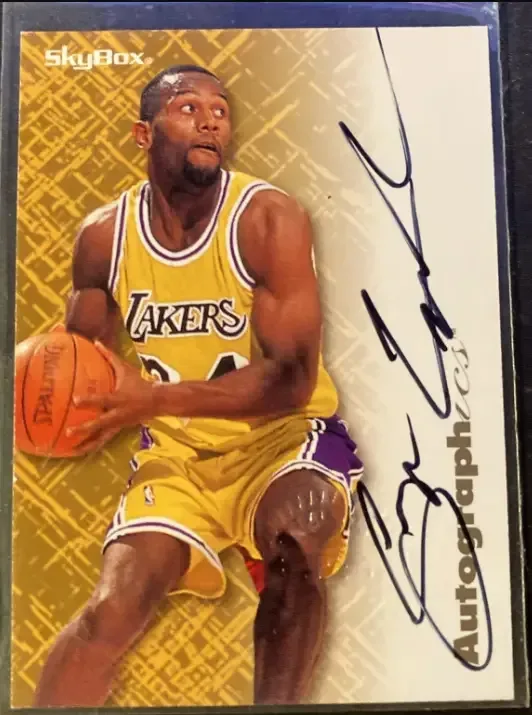
Long before autographs became expected in nearly every major release, 1996 SkyBox Autographics gave basketball collectors something that felt almost unbelievable at the time: real, pack-pulled signatures as the centerpiece of the product.
That distinction is a big reason the debut Autographics issue still carries so much weight. For a generation of collectors, this was the set that made signed cards feel accessible, exciting, and worth chasing pack after pack. It was not just another insert. It was a turning point.
Nearly three decades later, the 1996 release remains one of the hobby's most recognizable autograph sets. It combined a clean design, a large 95-player checklist, meaningful rookie presence, and a tougher condition profile that has helped stronger examples stand out in the market.
Why 1996 Autographics Was Different
Pack-issued autographs did exist before 1996, but they were still uncommon in basketball products. Earlier examples had surfaced in limited fashion, often tied to small groups of stars, redemption formats, or very difficult pull rates. Signed cards were more novelty than standard chase.
For more collector background, read Refractor, Prizm, or Foil? How to Use Shiny-Parallel Terminology Without Mislabeling Your Cards.
SkyBox changed that dynamic by making Autographics the main attraction across its 1996 basketball offerings. Instead of treating signatures like a side feature, the company built an entire identity around them. Collectors were no longer hunting for a once-in-a-blue-moon surprise buried in a broader product concept. They were buying packs with the autograph chase firmly in mind.
That shift may seem ordinary now, but in the mid-1990s it helped redefine collector expectations. The hobby had already embraced inserts, parallels, and premium designs. Autographics showed that authenticated-looking, pack-pulled signatures could become a major category of demand on their own.
The 95-card checklist also mattered. Rather than limiting the release to only the biggest names in the sport, the set mixed stars, young talent, rookies, and role players. That gave more collectors a realistic chance to hit an autograph, even if it was not a top-tier superstar. For many people, the thrill came from pulling any signed card at all.
The Design That Made the Set Memorable
Part of the enduring appeal of 1996 SkyBox Autographics is how simple the cards look. The signature area is easy to spot, the Autographics logo stands out, and the format leaves the autograph as the focal point rather than an afterthought.
That simplicity has aged well. Many later autograph sets added foil, serial numbering, bolder graphics, and layered technology. Those elements created bigger chases, but the debut Autographics cards still feel distinctive because they do not need much to make an impression. The signed ink does the heavy lifting.
Collectors also tend to remember the set for its visual consistency. Whether the card features a Hall of Famer, a rookie, or a supporting player, the design language ties the checklist together. That gives the release a strong set-building identity that some autograph-driven products never quite achieve.
There is also a nostalgic quality to the presentation. The cards are unmistakably products of the 1990s, yet they avoid feeling overdesigned. That balance is one reason collectors still return to the inaugural release even after years of newer autograph innovations.
Black Ink, Blue Ink, and the Chase Structure
The base autograph version in the set is the black-ink card, inserted at a stated rate of 1:72 packs. On its own, that was enough to give collectors a serious chase. Pulling any autograph was memorable, and the odds kept the cards from feeling common in real time.
SkyBox added another layer through blue-ink parallels. In most cases, these have been reported with print runs of 100, giving collectors a scarcer version to pursue long before serial-numbered autograph parallels became standard throughout the hobby.
That black-versus-blue structure created a collecting wrinkle that still drives interest today. Some players are easier to locate in one ink color than the other, and certain exceptions within the set have developed reputations of their own. Those quirks matter to advanced collectors, especially anyone trying to complete a master run or chase unusual player-specific scarcity patterns.
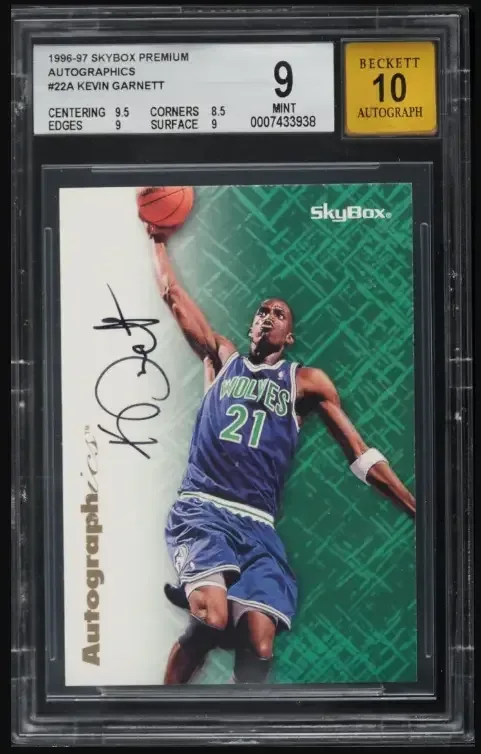
Kevin Garnett is one of the most notable examples. He reportedly signed about two-thirds of his cards in blue, making his black-ink version much tougher than collectors might assume if they only glance at the standard chase structure. That kind of player-specific variation helps explain why some Autographics cards trade well above what a generic checklist spot might suggest.
Hakeem Olajuwon offers another unusual case. Rather than having the expected split between black and blue, he signed all of his cards in blue. Even without the typical parallel setup, his cards remain a major target because of his stature and the importance of the set itself.
Key Names on the Checklist
Not every major 1990s star appears in the release, but the checklist still carries plenty of hobby credibility. Hall of Famers such as Hakeem Olajuwon, Kevin Garnett, and Scottie Pippen help anchor the veteran side of the set.
The rookie and young-player appeal is also a major reason the product has held attention. The 1996 NBA draft class remains one of the most celebrated groups in basketball history, and Autographics captured several names from that era at an early stage of their careers. That connection gives the set added historical depth beyond simple nostalgia.
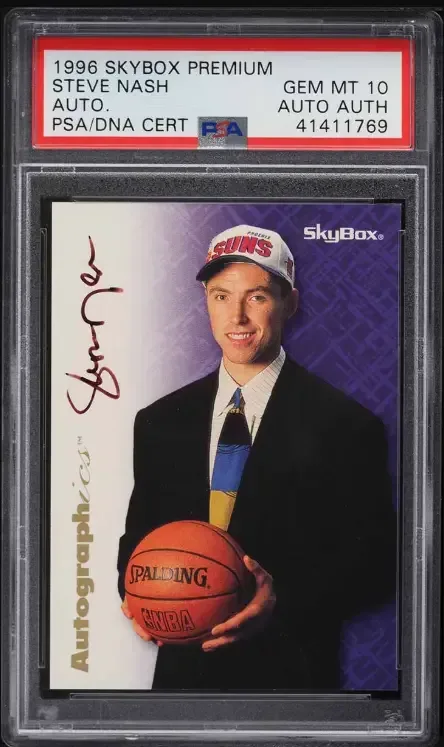
Steve Nash has emerged as the market standard-bearer for the release. His cards account for the six highest single-card sales recorded for the set, illustrating how strongly collectors respond when a major career arc intersects with an early autograph issue from an iconic brand. A PSA 10 black-ink Autographics reached $3,150 on September 4, while a BGS 9 example with a 10 auto grade in blue ink sold for $2,900 in December 2021.
Other notable names that have topped the four-figure mark include Grant Hill and Ray Allen. Garnett's scarcer black-ink copy in a BGS 9 holder sold for $1,495 on March 16, while Olajuwon's highest reported sale sits at $940 from August 2025. These numbers help show the range in the set: elite names with high-grade or scarcer variations can command strong premiums, but the market is not limited to one or two stars.
Condition Sensitivity Keeps High Grades Scarce
One reason 1996 Autographics continues to draw respect from seasoned collectors is that top-condition examples can be difficult to find. These cards are not impossible in nice shape, but several factors work against gem-level populations.
First, many signatures have faded over time. That issue affects the visual appeal of the card and can reduce buyer enthusiasm, especially for collectors who want bold, easily visible ink. Fading is a frequent concern with autograph cards from this era, and it is a major point of scrutiny when shopping for raw copies.
Second, the back design is vulnerable to wear. The black border on the reverse can make edge and corner chipping much easier to spot. A card that looks strong from the front may still show noticeable wear once turned over, which helps explain why truly sharp examples are less common than collectors might hope.
Those condition hurdles create an important separation in the market. Lower-end raw cards of less celebrated players can remain relatively affordable, while premium names in strong grades can jump significantly in value. The same set can offer both nostalgic, inexpensive pickups and highly competitive graded targets.
The Strange Case of George McCloud
Most of the set's more common names can still be found in a modest price range, often around $5 to $10 for raw examples. That accessibility is part of what makes the release appealing to player collectors and set builders. It is possible to own a piece of autograph history without chasing only the biggest names.
But the checklist also contains one especially curious outlier: George McCloud.
McCloud's 1996 Autographics has developed a reputation as a notorious short print among set collectors. His card is far tougher to locate than a typical common from the checklist, and that scarcity has translated into a surprisingly strong market. A raw example last sold for $300 on September 6.
That kind of player-specific anomaly gives the set an extra layer of personality. In many autograph products, value follows a straightforward star hierarchy. In Autographics, checklist lore plays a role too. Odd scarcity pockets like McCloud's can become essential knowledge for serious collectors and can turn a seemingly ordinary player card into one of the toughest pieces in the run.
How the Brand Evolved After 1996
The success of the debut release helped establish Autographics as a long-running brand rather than a one-year curiosity. SkyBox continued the basketball line for four more seasons and expanded the concept into baseball, football, and hockey.
Subsequent basketball issues added more structured parallel chases, including Century Marks cards numbered to 100 in 1997 and later versions with /250 and /50 print runs. Those developments reflected a wider hobby trend as collectors increasingly embraced serial-numbered scarcity and layered chase formats.
By 2003, Autographics had become its own standalone product with base cards and multiple signed parallels. The brand had fully graduated from groundbreaking insert concept to recognized product line.
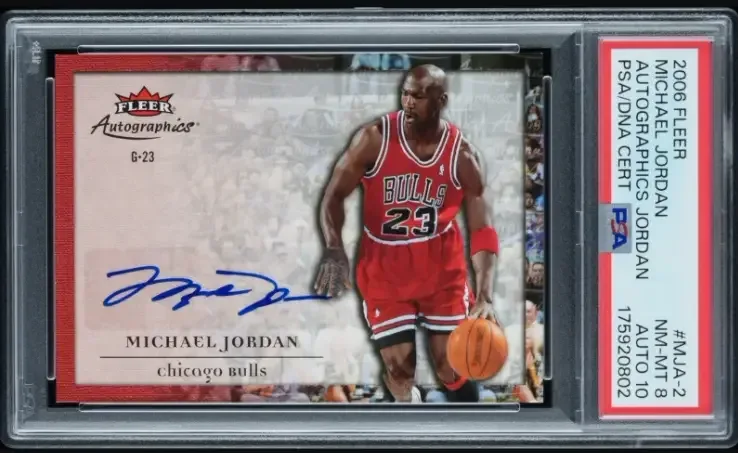
Its reach extended further after Upper Deck acquired the Fleer-SkyBox properties in 2005. The Autographics name returned in later basketball releases, and by 2006 Fleer, collectors could finally chase Michael Jordan Autographics. A PSA example of a 2006 Fleer Michael Jordan Autographics sold for $14,500 on September 21, showing how much power the brand name still carries when attached to one of the hobby's biggest icons.
Later retro-themed products also revisited earlier Autographics aesthetics, introducing the look to collectors who were not around for the original run. Even so, the 1996 debut remains the benchmark because it represents the moment the concept truly arrived.
Why Collectors Still Keep Coming Back
The hobby now offers no shortage of autograph cards. Collectors can chase on-card signatures, sticker autos, low-numbered parallels, logoman combinations, and premium high-end releases across every major sport. Yet 1996 SkyBox Autographics still holds a special place because it captured a moment before autograph saturation changed the landscape.
There is a purity to the set that modern collectors still appreciate. The cards are recognizable, the chase structure is interesting without being overwhelming, and the autograph remains the reason the card matters. That formula helped shape what collectors would come to expect from signed inserts in the decades that followed.
It also remains a deeply collectible set at multiple levels. A nostalgic collector can pick up lower-end examples without spending heavily. A player collector can target early signatures of Hall of Famers and stars from the 1996 rookie class. A high-end buyer can pursue top-graded copies or difficult ink-color variations. A set builder can spend years chasing scarce names and condition-sensitive upgrades.
Very few autograph sets from the 1990s can cover that many lanes at once. That is the real legacy of 1996 SkyBox Autographics. It did not just give collectors signed cards to chase. It helped establish the autograph card as one of the hobby's defining experiences, and the original 95-card run still stands as one of the clearest snapshots of that shift.
Photo Gallery