The original 1985 Transformers trading card release is getting fresh momentum in the vintage non-sports market, with collectors chasing high-grade singles, character favorites, and complete sets more than 40 years after the product first arrived.
That renewed attention comes at an interesting time for the category. Interest in older entertainment and pop-culture cards has broadened well beyond traditional sports issues, and Transformers sits in a strong nostalgia lane with deep cross-generational recognition. For longtime fans, the set captures the brand near the beginning of its rise. For newer buyers, it offers recognizable characters, colorful design, and a direct connection to one of the most durable toy and media franchises of the past four decades.
Recent sales show that demand is not spread evenly across the set. Collectors are clearly paying premiums for key characters in top condition, and those results are starting to separate star singles from even strong complete-set offerings.
What makes the 1985 Transformers set important
Released by Hasbro and Milton Bradley, the 1985 Transformers set includes 192 cards and 24 stickers. Packs originally contained eight cards and one sticker. The release mixed character-focused cards with animated-series imagery, giving collectors both portrait-style highlights and scene-driven cards tied to the early life of the franchise.
For more collector background, read 2026 Upper Deck Team Canada Juniors: 10 Standout Cards Collectors Are Chasing.
One of the biggest attractions today is how closely the character cards connect to the original toy-line experience. The card backs included profile-style information similar to the Tech Specs found on vintage Transformers packaging, adding another layer of appeal for collectors who grew up studying those details on boxes and backing cards.
The checklist also benefits from having multiple cornerstone characters that remain central to the brand. Optimus Prime, Bumblebee, Grimlock, and Megatron all have lasting recognition, which matters in any trading card market. When a set has identifiable stars, collectors tend to focus on a handful of cards first, especially when high-grade examples are scarce or visually strong.
Why collectors are circling back now
Transformers has had unusually long cultural staying power. The animated series debuted in 1984 and ran for four seasons. The comic book line launched that same year and eventually reached 80 issues. The franchise expanded again with 1986's Transformers: The Movie, then introduced itself to an even broader audience with the live-action movie era beginning in 2007.
That kind of franchise longevity matters for cards. It creates multiple entry points for collectors. Some buyers want items tied specifically to Generation 1. Others come in through comics, animation, or the live-action films. When all of those audiences recognize the same central characters, older cardboard connected to the original era can gain traction quickly.
The timing is also notable because new Transformers cards are on the way. Upper Deck recently announced a new licensing agreement with Hasbro that will bring fresh Transformers trading card products to collectors in 2026. New licensed releases often shine a light on older material, especially foundational sets that predate modern chromium, autograph, and parallel-driven products.
That upcoming pipeline includes a Transformers: The Movie 40th Anniversary Special Edition set scheduled to arrive exclusively at Target in September. Each box is set to include the complete base set, a Stellar System insert, and chances at parallels and Peter Cullen autographs. A larger 100-card Transformers: The Movie 40th Anniversary release under the Fleer brand is also planned for later in the year, built around characters and scenes from the 1986 film with lenticular inserts, parallels, and autographs from select voice actors.
When a property gets fresh hobby attention through new product, older issues often benefit from renewed discovery. That appears to be happening here as collectors take a harder look at the original 1985 release.
Recent sales show where the market is focusing
The strongest evidence of the current chase is in recent completed sales. The names at the top are exactly the ones most collectors would expect, but the prices still stand out.
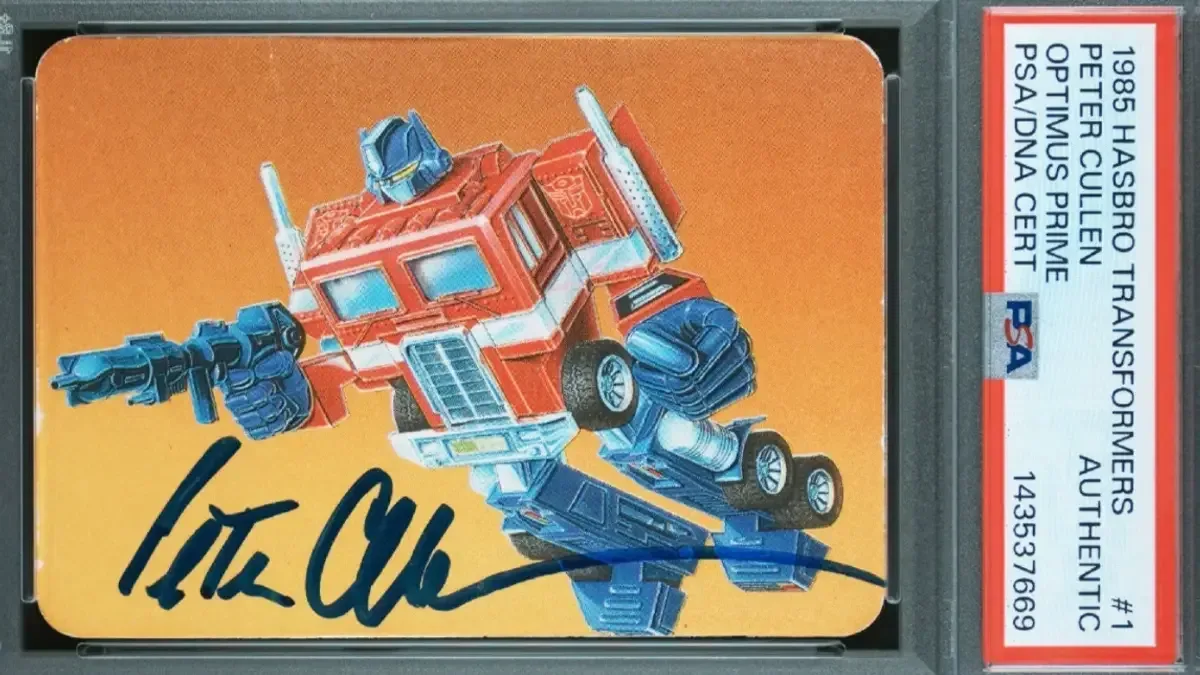
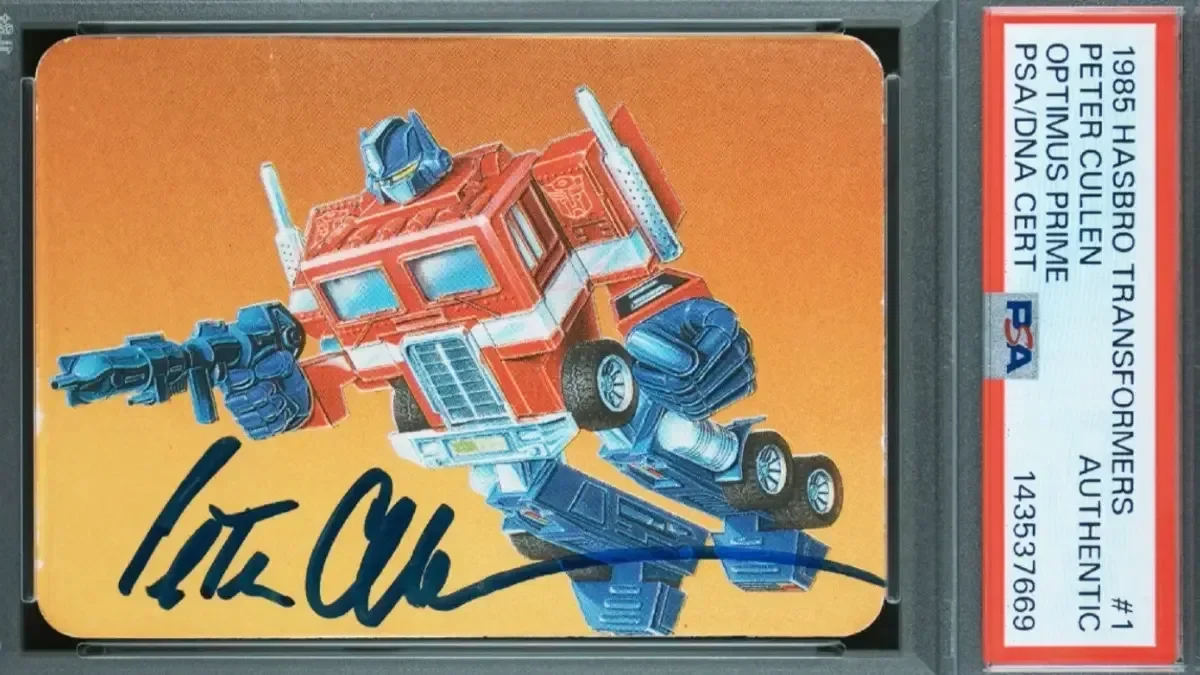
An autographed 1985 Transformers #1 Optimus Prime, authenticated by PSA/DNA and signed by Peter Cullen, sold on eBay for $2,499.99 on Aug. 28. The card carries extra emotional significance because Cullen was the defining voice of Optimus Prime for generations of fans, first in the 1984 animated series and later in the live-action films. He died on Aug. 26 at age 85, and that timing likely added immediate attention to signed pieces tied to his legacy.
A PSA 10 copy of Bumblebee #28 sold for $1,910 on Sept. 1. That result is especially interesting because it reflects the strength of a clean, high-grade unsigned single centered on one of the franchise's most beloved characters. Bumblebee has long been one of the hobby's safest Transformers names, and his mainstream visibility expanded even further through the live-action films and the 2018 Bumblebee movie.
A high-grade complete 192-card set with 23 of the 24 stickers sold for $1,650 on Aug. 30. While that is a strong number for a substantial near-master offering, it came in below the PSA 10 Bumblebee. That gap says a lot about the current market. Collectors are willing to pay more for elite-condition examples of cornerstone characters than for broad checklist coverage.
Megatron #97 in PSA 10 sold for $1,500 on Aug. 31, reinforcing the idea that top villain cards can command serious money when they feature a central character and top-tier grade. Megatron has always been one of the most recognizable names in the franchise, and collectors building focused character runs or high-end type collections naturally gravitate to his key early cards.
Key 1985 Transformers sales to know
- Optimus Prime #1 PSA/DNA Peter Cullen autograph sold for $2,499.99 on Aug. 28
- Bumblebee #28 PSA 10 sold for $1,910 on Sept. 1
- Complete 192-card set plus 23 stickers sold for $1,650 on Aug. 30
- Megatron #97 PSA 10 sold for $1,500 on Aug. 31
Those numbers do not mean every card in the set is suddenly expensive. What they do show is that there is real buyer energy around premium examples, especially when a card checks several boxes at once: iconic character, early issue, strong eye appeal, and top certification grade.
Character cards appear to be leading the way
One clear takeaway from the recent market action is that character-first collecting is driving much of the interest. That is common in entertainment cards, where the fan relationship is often tied more to individual heroes and villains than to team sets or broad year-based checklist completion.
Optimus Prime is the obvious leader. As card #1 in the set, he combines flagship placement with the franchise's most recognizable hero. Signed examples have an added tier of appeal because Peter Cullen's connection to the character is so deeply embedded in Transformers history.
Bumblebee is another major driver. He appeals to original fans, younger movie-era fans, and collectors who prioritize central Autobots with strong standalone identity. A PSA 10 result near $2,000 suggests that buyers see his 1985 card as more than just a nostalgic pickup.
Megatron offers the villain counterpart that many franchise collectors want in any focused run. High-end collectors often look for symmetry between hero and villain centerpieces, and Megatron fills that role naturally in the 1985 set.
Grimlock was also named among the standout character cards from the release, and it would not be surprising to see Dinobot-related demand strengthen if more collectors start building graded runs from the set. Franchise collecting often expands outward from the biggest names to the most charismatic secondary characters, and Grimlock fits that pattern well.
Why grade matters so much for this set
The difference between complete-set pricing and elite-single pricing highlights a familiar hobby reality: condition scarcity can shift value quickly. Vintage non-sports cards were often not preserved with grading in mind, and entertainment issues that were once treated casually can become surprisingly tough in gem-mint holders.
For 1985 Transformers cards, grade matters for several reasons. First, the set attracts nostalgia buyers who may want only one or two key cards, which concentrates demand on a small number of recognizable singles. Second, franchise collectors often prefer display-ready copies of signature characters rather than larger raw lots. Third, PSA 10 examples can function almost like trophy pieces in a category that has not always been tracked as aggressively as sports cards.
That helps explain why a high-grade near-complete set could trail a single PSA 10 Bumblebee in price. A set offers breadth, but a top-pop style star card offers clarity, branding, and easy marketability when the time comes to sell.
How new releases could affect the vintage market
The coming wave of licensed Transformers products from Upper Deck could create several ripple effects. The most immediate is awareness. New retail and hobby product tends to pull lapsed fans back into the category, and some of those buyers eventually look for original-era pieces.
Another possible effect is character hierarchy. Modern products often emphasize marquee names, movie moments, inserts, and autographs, which can push collectors to revisit where those characters began in card form. If a new buyer chases current Optimus Prime or Bumblebee content, the 1985 set becomes an obvious historical target.
The Peter Cullen autograph element in the upcoming 40th Anniversary product also keeps attention on one of the most important voice connections in the franchise's history. Signed vintage character cards tied to Cullen may remain especially meaningful to collectors who want a direct link to the original Optimus Prime era.
What collectors should watch next
If the 1985 Transformers market continues to strengthen, several signals will be worth following. One is whether additional PSA 10 sales appear for key characters beyond Optimus Prime, Bumblebee, and Megatron. Another is whether sticker demand begins to rise alongside the base set. In many vintage and non-sports markets, adjacent components such as stickers, promos, or packaging can get a second look once the main set gains momentum.
It is also worth watching whether complete sets start to close the gap with elite singles. Right now, star-card pricing appears to be ahead of broad set pricing. If more collectors decide they want full-run ownership rather than just key characters, complete and near-complete offerings could become more competitive.
For collectors entering the market, the 1985 issue offers several lanes: flagship singles like Optimus Prime, fan-favorite characters like Bumblebee, villain anchor cards like Megatron, raw set building, or high-grade complete-set hunting. The recent sales suggest that the biggest premiums are landing on the best individual examples, especially when the card features one of the franchise's defining names.
With new licensed Transformers cards arriving and nostalgia for 1980s entertainment properties still running strong, the original 1985 set is no longer just a throwback item tucked into old collections. It is becoming a more active target for collectors who want foundational cardboard tied to one of pop culture's most enduring brands.
Photo Gallery