The 1956 Topps Baseball set has held its place near the top of the vintage hobby for decades, and it is not hard to see why. The 340-card release blends bold color, painted portrait styling, in-game action imagery, clean white borders and an all-star checklist that reads like a Hall of Fame roll call. For many collectors, it is one of the most attractive postwar baseball sets ever produced.
Its popularity is not built on just one card or one rookie. Instead, the appeal comes from the complete package. Mickey Mantle headlines the set, but the checklist also includes Ted Williams, Willie Mays, Jackie Robinson, Hank Aaron, Al Kaline, Sandy Koufax, Roberto Clemente, Harmon Killebrew, Whitey Ford and more. Add in the challenge of white-back and gray-back variations on many cards, plus unusually strong surviving supply in respectable grades, and 1956 Topps continues to draw both player collectors and serious set builders.
A design that still feels iconic
Collectors often point to the look of 1956 Topps first. The cards feature a player portrait paired with an action image, creating a front design that feels more dynamic than many earlier releases. The artwork-driven portrait area keeps the classic 1950s Topps visual identity intact, while the action scenes add movement and personality.
That combination helps the set stand out even among other celebrated Topps issues from the decade. The bright colors pop, the white borders frame the images cleanly, and the layout gives collectors two different views of the same player on a single card. It is a format that has helped cards like Mantle, Aaron and Robinson become especially memorable.
For more collector background, read 1985 Transformers Cards Are Heating Up as Vintage Non-Sports Collectors Revisit the Original Set.
The backs are part of the charm as well. In addition to player statistics, collectors get the kind of biographical notes and trivia-style storytelling that defined many classic Topps releases. That extra personality matters in vintage collecting, especially for hobbyists who value the full card and not just the front image.
Mickey Mantle’s return changed the set
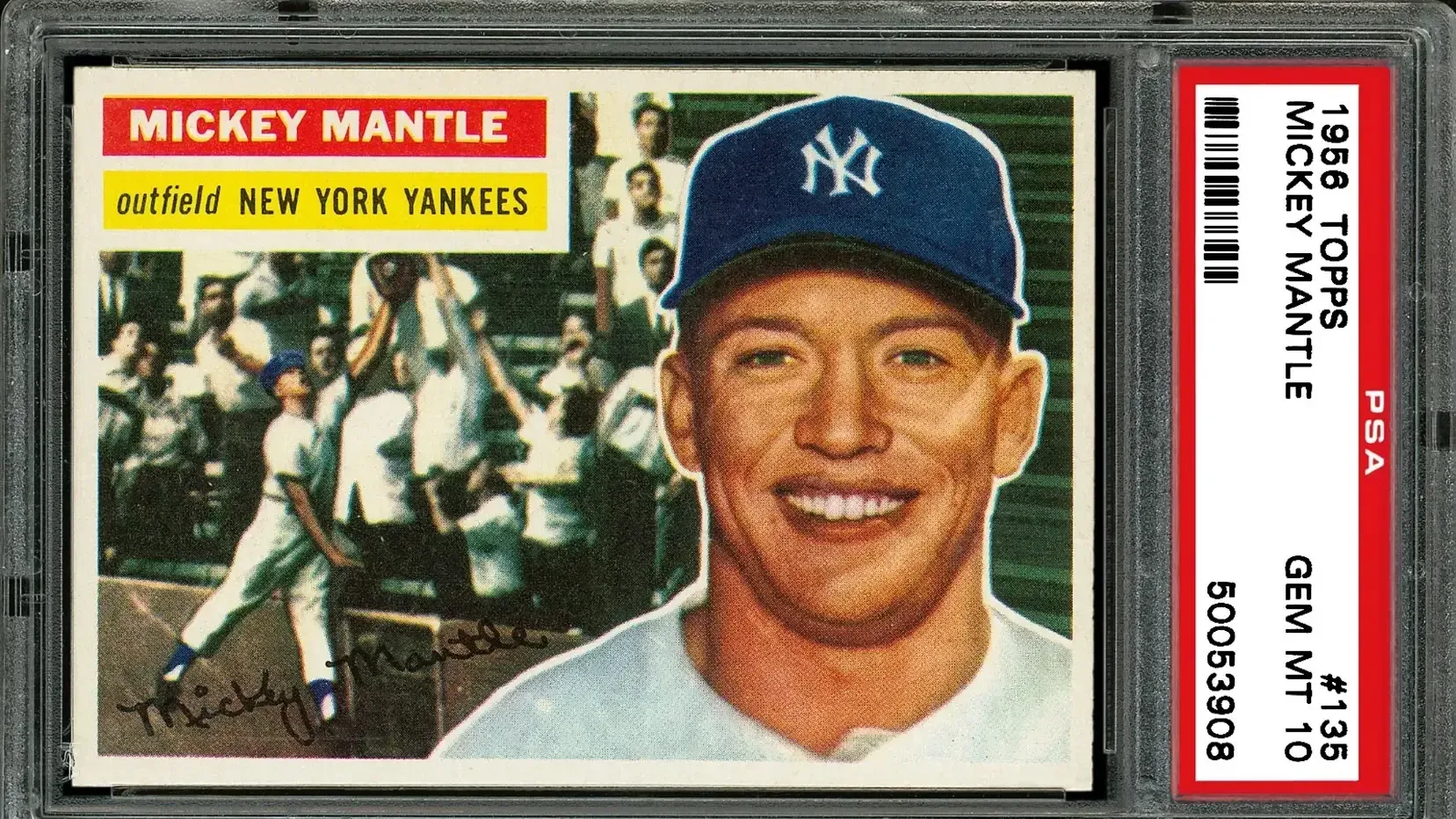
If there is one card that symbolizes the importance of 1956 Topps, it is Mickey Mantle’s. Mantle appeared in Topps sets in 1952 and 1953, then disappeared from the brand’s baseball releases in 1954 and 1955 during Bowman’s exclusive run with the Yankees star. After Topps acquired Bowman in January 1956, Mantle returned to the flagship set, and that comeback instantly elevated the release.
The timing could hardly have been better. Mantle’s 1956 season became one of the defining years of his career, ending with a Triple Crown. That historical context gives his card even more weight. For many collectors, the 1956 Topps Mantle sits comfortably among his most desirable issues, alongside other hobby favorites from the early part of his career.
For another perspective on this story, read 1956 Topps Baseball Still Has the Cleanest Card UI in the Vintage League.
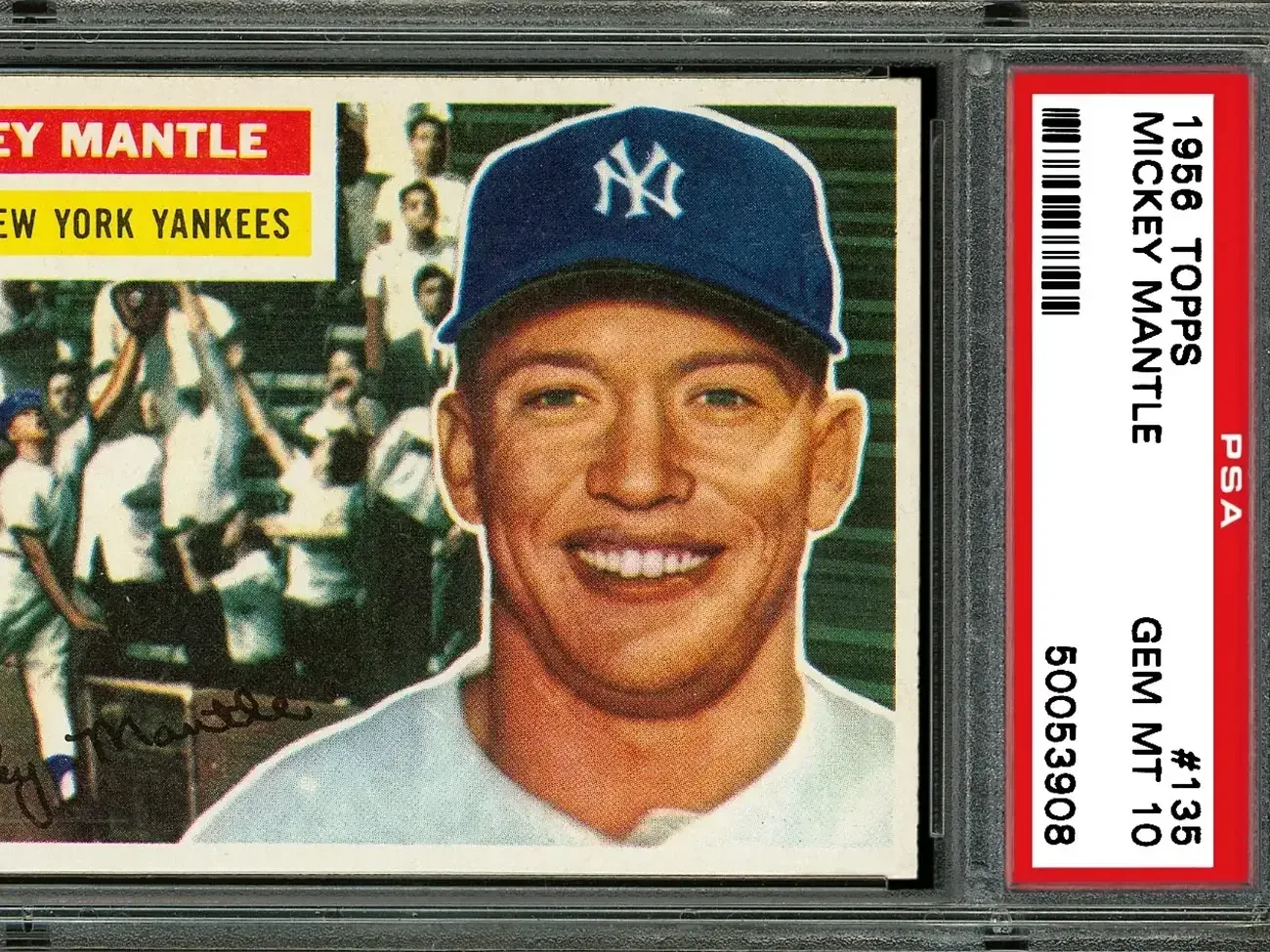
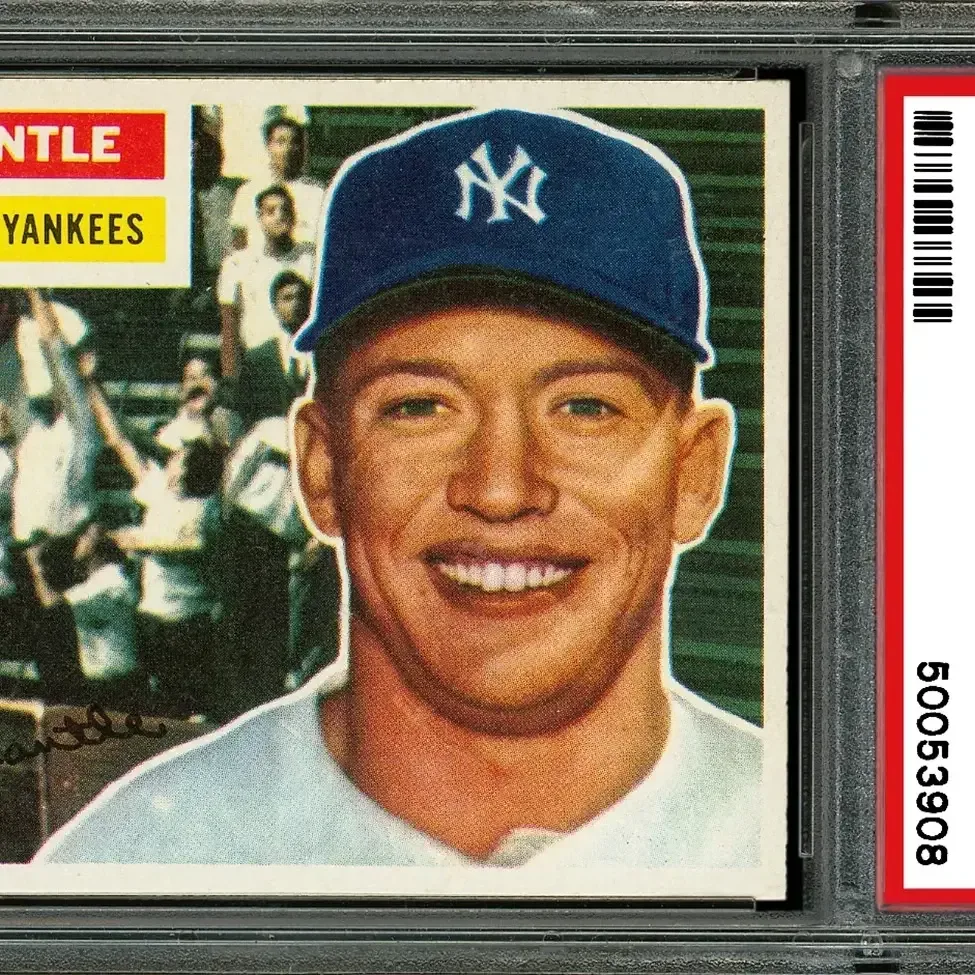
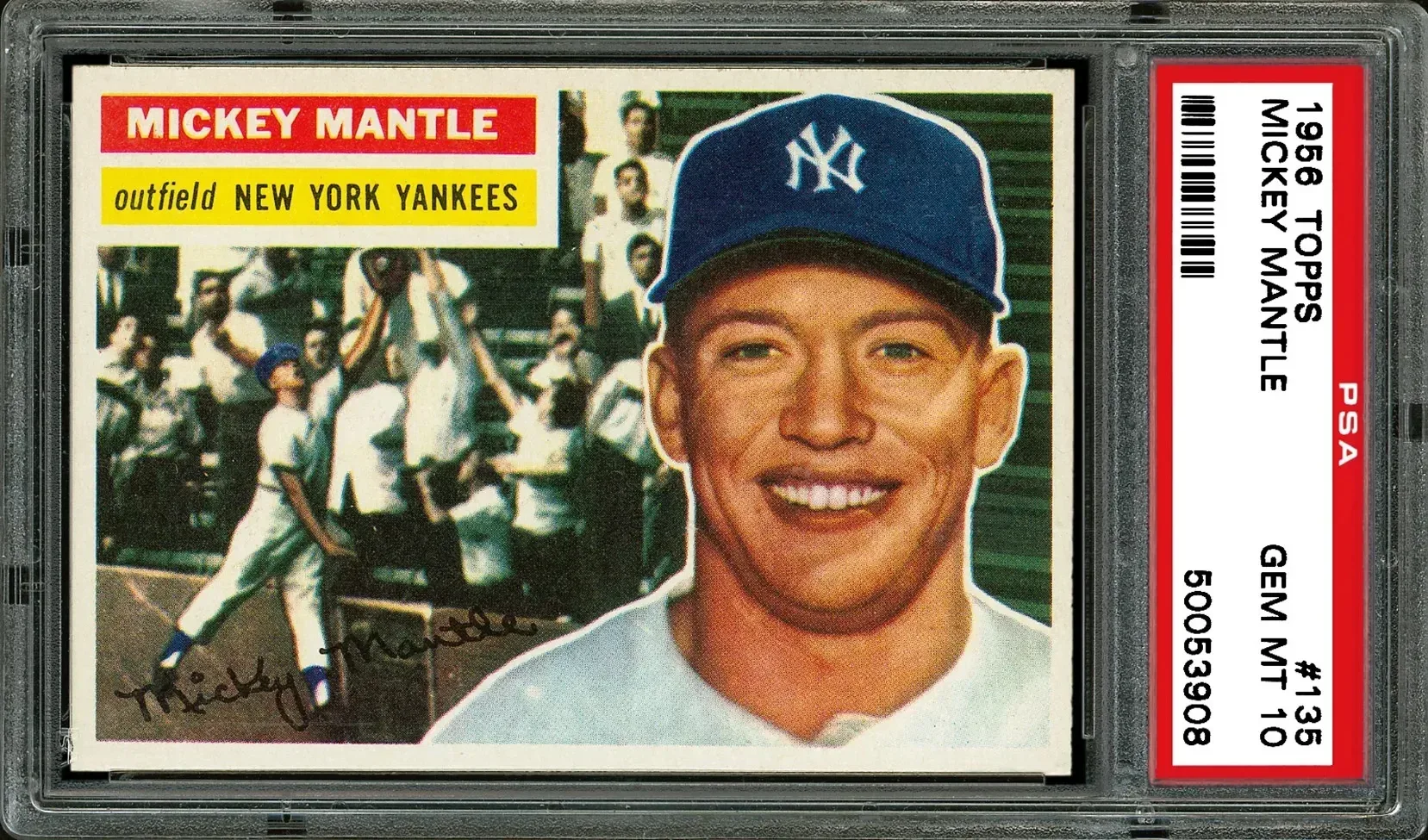
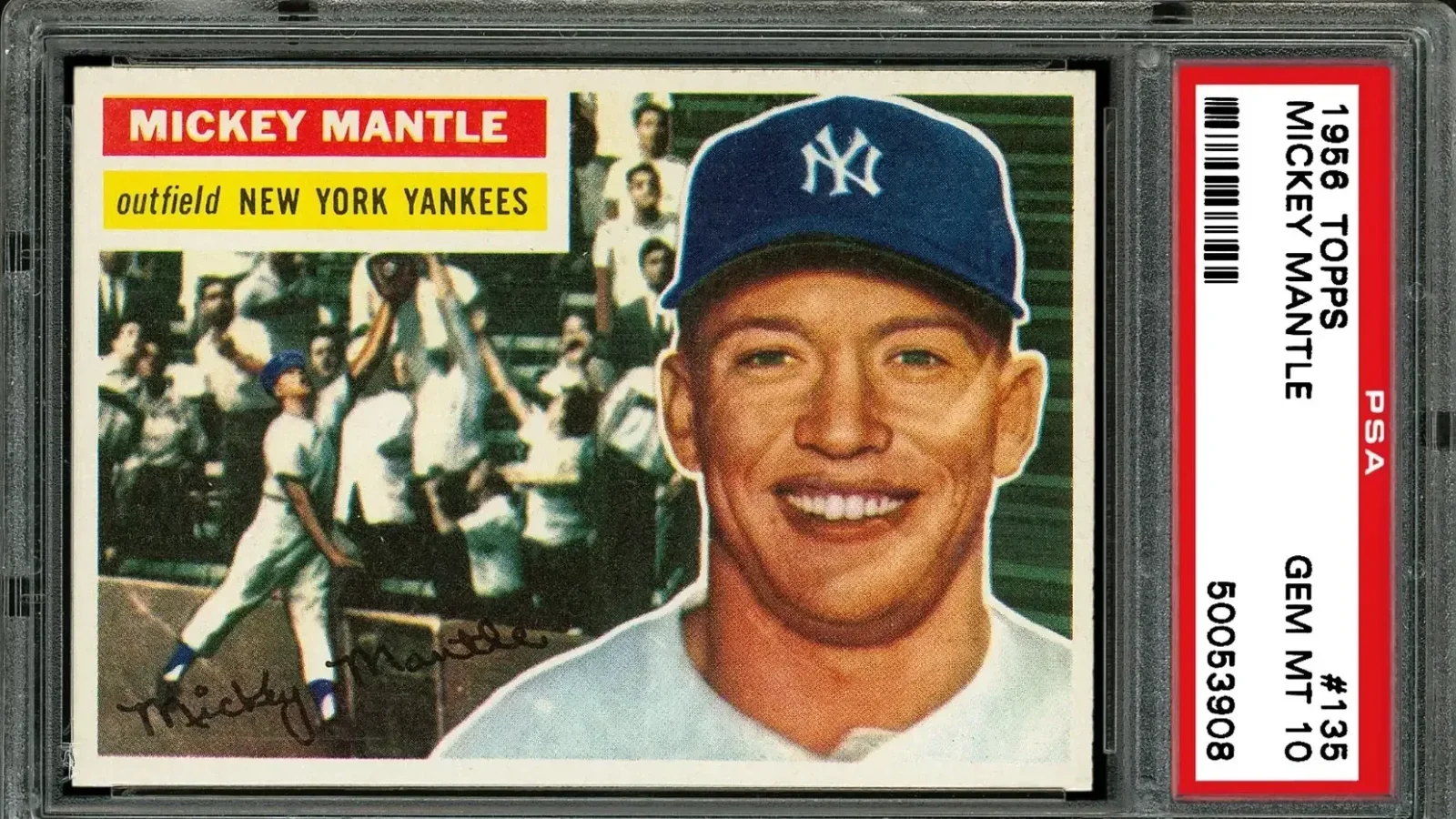
The card itself helps explain the demand. It is Mantle’s only horizontal Topps card, and the presentation is unforgettable. A smiling portrait anchors one side, while the background action image shows him making a leaping catch near the stands. It is one of those cards where design, player, era and story all come together in a way that feels bigger than a standard base card.
Whitey Ford and Bob Feller also returned to Topps in 1956, but Mantle was the key figure. His presence gave Topps its biggest star back, and the company made the most of the moment.
Star power across the 340-card checklist
One reason the set remains so widely collected is that it does not depend solely on a rookie class. In fact, compared with some neighboring Topps years, 1956 is not viewed as especially deep in headline rookies. Luis Aparicio is the major rookie anchor and a worthy one as a Hall of Fame shortstop, but the real strength of the set is the concentration of established stars.
That matters because collectors can chase nearly every major name of the era within one release. The set includes strong early-career cards of Mantle, Mays and Aaron, plus second-year cards of Koufax, Clemente and Killebrew. Robinson, Williams and Kaline add even more weight to the checklist.
For vintage collectors who want a set loaded with recognizable names from start to finish, 1956 Topps is unusually satisfying. There are very few stretches where the checklist feels flat. Even collectors who are not pursuing the full 340-card run often build mini collections around the set’s biggest stars because the visual presentation is so consistent.
Why the set remains attainable
Another major factor in the enduring demand for 1956 Topps is availability. Even 70 years after release, the set remains far more obtainable than some other iconic 1950s issues. Topps increased production after the success of its 1955 set, and that larger print run still shows up in grading data and market supply.
As of the end of January 2026, PSA had graded 391,296 cards from the 1956 Topps set. That total was nearly double the 212,795 graded from 1955 Topps over the same period. For vintage collectors, that kind of supply changes the experience of building a set. Cards are still valuable, especially stars in strong grades, but there are enough surviving examples to make the project realistic.
The grading distribution is notable too. Nearly 80,000 copies from the set have received PSA 8 grades or higher, and 305 cards have reached PSA 10. For a mid-1950s baseball release, those are healthy numbers. The white borders likely help, especially compared with later dark-border sets that show edge wear much more clearly.
That accessibility creates a sweet spot in the hobby. The set is vintage, historically important and star-filled, but it is not so scarce that only elite collectors can participate. Raw cards, mid-grade singles and partial runs all remain within reach compared with more punishing prewar or high-number-heavy projects.
Set Registry competition keeps demand strong
Because the set is available in quantity and can be found in higher grades than many collectors might expect, 1956 Topps has become a major target for PSA Set Registry builders. Registry competition changes how people chase a set. It is not just about finishing the 340 cards. It becomes about improving weighted GPA, replacing 8s with 8.5s, and eventually hunting 9s on difficult cards.
That competitive layer has helped keep 1956 Topps relevant with advanced collectors. High-grade examples of stars and condition-sensitive commons can bring serious money when registry participants are looking to move up a slot. Even cards that seem plentiful at first can become expensive when the target shifts from completion to elite ranking.
One longtime registry participant assembled a high-grade 1956 set in just a few months back in 2015, then spent years upgrading once the basic run was complete. That arc tells the story of the set well. Entry is possible, but mastery is expensive. The supply allows competition to happen, and the competition pushes premium copies into another pricing tier.
That dynamic helps explain why values on key cards have climbed so sharply. A Mantle in PSA 8.5 that changed hands for $5,700 in 2015 looks very different in today’s market. The same pattern has shown up on stars like Jackie Robinson and Hank Aaron, especially when grades reach 8.5 and 9.
White backs vs. gray backs
One of the most distinctive collecting wrinkles in 1956 Topps is the back variation structure. Cards numbered 1 through 180 were printed with both white and gray backs. For cards numbered 1 through 100, white backs are generally more common. For cards numbered 101 through 180, gray backs are generally more common.
This gives the set an extra layer of depth that many vintage collectors enjoy. Basic set builders can complete the standard 340-card run, while variation chasers can push much further by targeting both back types where applicable.
The population data illustrates how meaningful those differences can be. Ted Williams card #5 has a PSA population of 5,319 in white back and 2,344 in gray back. Mantle’s #135 flips the script dramatically, with 10,334 gray backs graded versus just 1,109 white backs.
That rarity gap carries straight into pricing. In October 2025, a PSA 5 Mantle white back sold for $4,500. A PSA 5 Mantle gray back sold for $2,800 in January 2026. Same player, same grade, same year, but the scarcer back commands a substantial premium.
For many collectors, these variations are part of what makes the set fun rather than frustrating. They offer real scarcity without turning the whole release into an impossible chase. They also create a reason to revisit familiar star cards from a new angle.
The last oversized Topps baseball set
1956 Topps also marks the end of an era in card dimensions. It was the final year Topps used its larger format, measuring 2 5/8 by 3 3/4 inches. Beginning in 1957, Topps moved to the 2 1/2 by 3 1/2 standard that has defined modern trading cards ever since.
That makes the 1956 issue a bridge between early Topps design traditions and the format collectors still know today. The larger canvas gives the artwork and action scenes more room to breathe, which is part of why the set feels so visually rich. It is a subtle detail, but one that matters when the cards are viewed alongside later issues.
Key collecting notes on 1956 Topps Baseball
- Set size: 340 cards
- Card dimensions: 2 5/8 by 3 3/4 inches
- Notable rookie: Luis Aparicio
- Important second-year cards: Sandy Koufax, Roberto Clemente, Harmon Killebrew
- Major stars: Mickey Mantle, Willie Mays, Ted Williams, Jackie Robinson, Hank Aaron, Al Kaline, Whitey Ford, Bob Feller
- Variation structure: White and gray backs on cards #1-180
- Back availability trend: White backs are more common on #1-100, gray backs are more common on #101-180
- Historical note: Mantle returned to Topps in 1956 after missing the 1954 and 1955 Topps baseball sets
Why collectors keep coming back to it
Few vintage baseball sets offer this many entry points. Mantle collectors chase one of his most famous cards. Hall of Fame player collectors can pick from a deep bench of legends. Registry participants can spend years upgrading. Variation hunters can pursue white-back and gray-back combinations. Traditionalists can appreciate the final oversized Topps format and the storytelling on the reverse.
The set also benefits from something many vintage issues lack: flexibility. A collector can build it on a budget in lower grade, target eye appeal over technical grade, assemble a run of stars only, or compete for one of the best graded sets in the hobby. That range keeps demand broad and healthy.
Sealed material is a different story. While singles and completed sets remain accessible, unopened wax and even wrappers from 1956 are extremely difficult to locate. Unlike some other vintage products, there have not been major hobby discoveries that flooded the market with fresh unopened supply. For pack collectors, that makes original sealed 1956 Topps material a much tougher pursuit than the cards themselves.
What continues to separate 1956 Topps from many other classic sets is that it combines beauty, history and practicality. It has the visual impact collectors want, the star names the hobby values, and enough surviving supply to keep the chase active across multiple price levels. That balance is a big reason it still ranks among the most admired vintage baseball sets on the market.
Photo Gallery