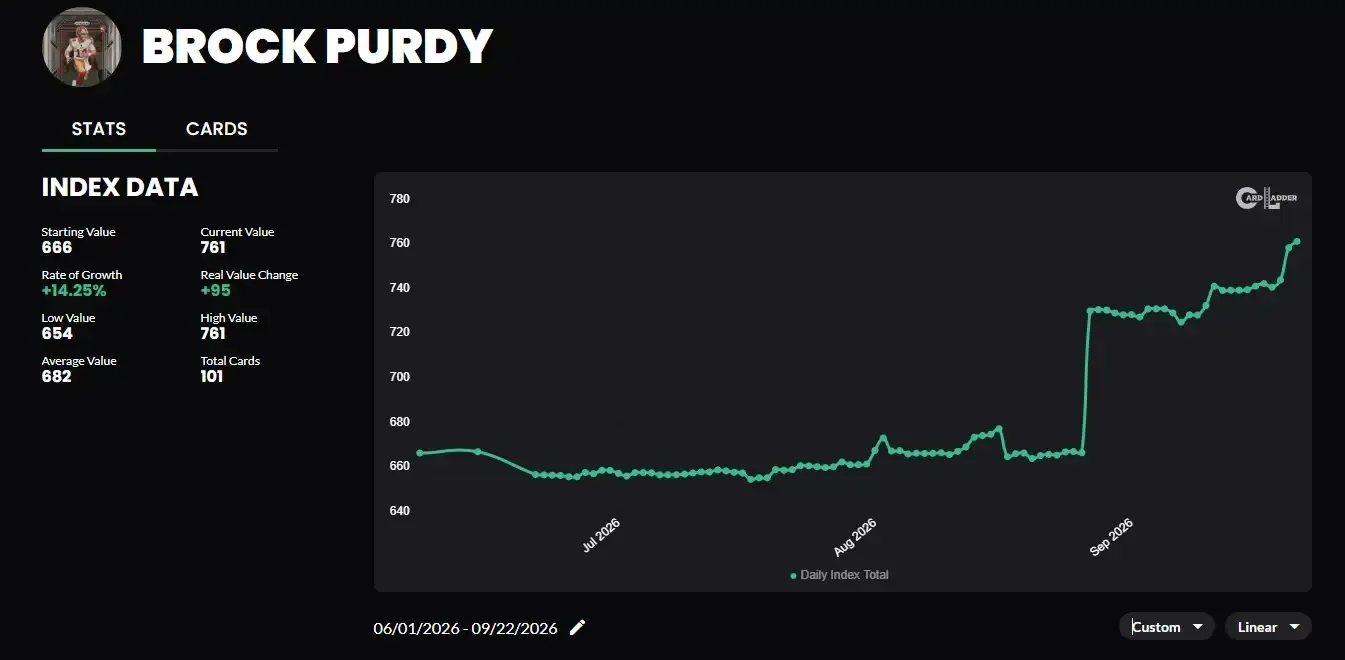
Two weeks into the NFL season, the quarterback card market is already shifting hard. Week 1 pushed collectors toward early breakout stories and fresh optimism. Week 2 brought a much different tone, with injuries creating immediate uncertainty for some of the hobby's most watched young passers while a pair of veterans and late bloomers gained traction.
That combination is exactly what makes the football card market move so quickly in September. A strong start can send flagship rookies higher in a matter of days. A significant injury can erase momentum just as fast, especially when the player involved depends heavily on future upside rather than a long-established resume.
Three developments stand out after Week 2: the injury-related pressure on Jayden Daniels and Jaxson Dart, the continued rise of Brock Purdy as San Francisco keeps winning, and the fast-building hobby appeal of Tyler Shough in New Orleans. Caleb Williams also remains part of the conversation, though his situation appears far less damaging in the short term.
Jayden Daniels faces another market stress test
Jayden Daniels has already shown how sensitive his card market can be to health concerns, and Week 2 introduced another major variable. The Washington quarterback suffered a dislocated elbow in the loss to Dallas, marking the third time he has had that issue in roughly the last 10 months. Even if he avoids surgery, the repeated nature of the injury changes the way collectors are likely to view his risk profile.
For more collector background, read Caleb Williams Card Market Jumps After Big NFL Week 1 Performance.
In the modern football card market, mobile quarterbacks often command aggressive prices because collectors are buying ceiling as much as present production. Daniels fits that model perfectly. His athleticism, improvisation, and highlight potential make him one of the more exciting quarterbacks to own when healthy. But repeated injuries, particularly to the same area, can cool that enthusiasm fast because they create concern not just about missed games, but about long-term durability and style-of-play sustainability.
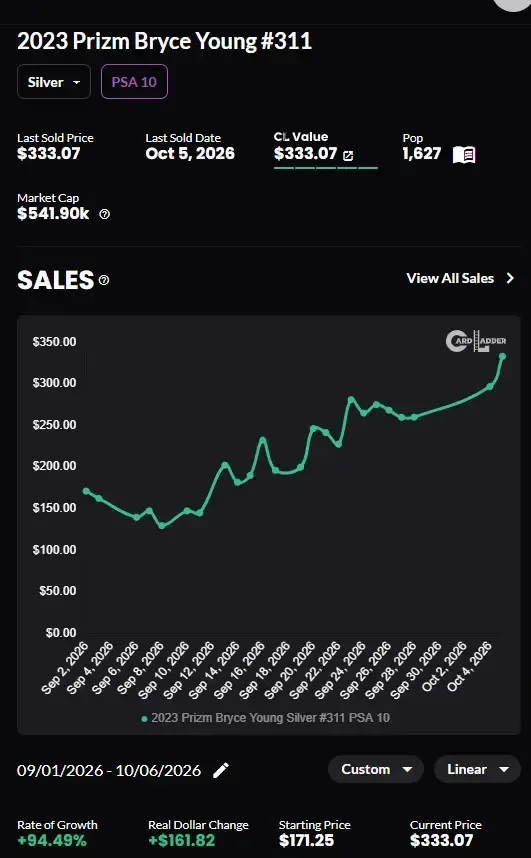
One of the clearest indicators is the prior movement in his key rookie cards. Daniels' rookie Silver Prizm PSA 10 had reportedly been selling in the $800 to $900 range before his injury setback last November, then slid to roughly $570 by the end of the season. That earlier drop offers a useful roadmap for what the market tends to do when optimism gives way to uncertainty.
If Daniels misses a month or more, it would not be surprising to see another softening period in his top rookie slabs, especially if Washington struggles during his absence. Team context matters in football cards. Quarterbacks tied to losing teams often face more volatility because there is less margin for error in their valuations. If the club continues to look overmatched, some buyers may step back and wait for a more favorable re-entry point later in the season.
That does not necessarily mean a permanent collapse. Daniels still carries star-level talent and hobby relevance. But in the near term, collectors should expect cautious price action rather than a quick rebound, particularly on premium Prizm rookies and other high-visibility flagship releases.
Jaxson Dart's injury puts development upside on hold
Jaxson Dart's market outlook took an even harsher turn in Week 2. With surgery expected and a likely season-ending absence now in view, the Giants quarterback appears headed for the kind of interruption that can freeze a young player's hobby momentum almost overnight.
Dart's market has been built less on proven NFL production and more on projection. That is common for young quarterbacks, but it also makes their prices more fragile. When a player is still trying to establish himself, every game matters because each appearance either strengthens or weakens the case that he can become a long-term starter. Missing the season removes that runway entirely.
For collectors, the immediate challenge is that injured young quarterbacks often enter a holding pattern. There can still be interest in low-pop cards, autographs, and speculative rookie formats, but the urgency tends to disappear. Without new highlights, without week-to-week growth, and without any short-term chance to outperform expectations, the market often shifts from momentum buying to patient bargain hunting.
That can lead to wider gaps between asking prices and actual completed sales. Sellers may not want to cut loose at a discount, while buyers may see little reason to chase. The result is often a slower market with sporadic transactions instead of steady upward movement.
Dart's longer-term hobby future now depends on how collectors view his recovery timeline and whether he can return next season with a clearer path to meaningful playing time. Until then, his cards may appeal more to patient speculators than to short-term performance chasers.
Caleb Williams avoids the worst-case scenario
Caleb Williams belongs in the Week 2 market discussion because his injury scare briefly threatened to add another major name to the list of quarterback setbacks. At this stage, though, his situation appears far less severe than those involving Daniels and Dart.
That matters because the hobby tends to react strongly to uncertainty first and details second. The initial fear around a quarterback injury can cause collectors to hesitate, but when the damage appears limited, pricing often stabilizes quickly. Williams still carries one of the strongest collector bases in football, and that foundation can help absorb short-term nerves more effectively than it would for a less established young quarterback.
Rather than a sustained slide, his market may simply pause while collectors wait for confirmation that he is fully healthy and back on track. For major names with deep demand, a brief injury concern often creates noise more than a true long-term pricing event.
Brock Purdy keeps giving the market reasons to buy
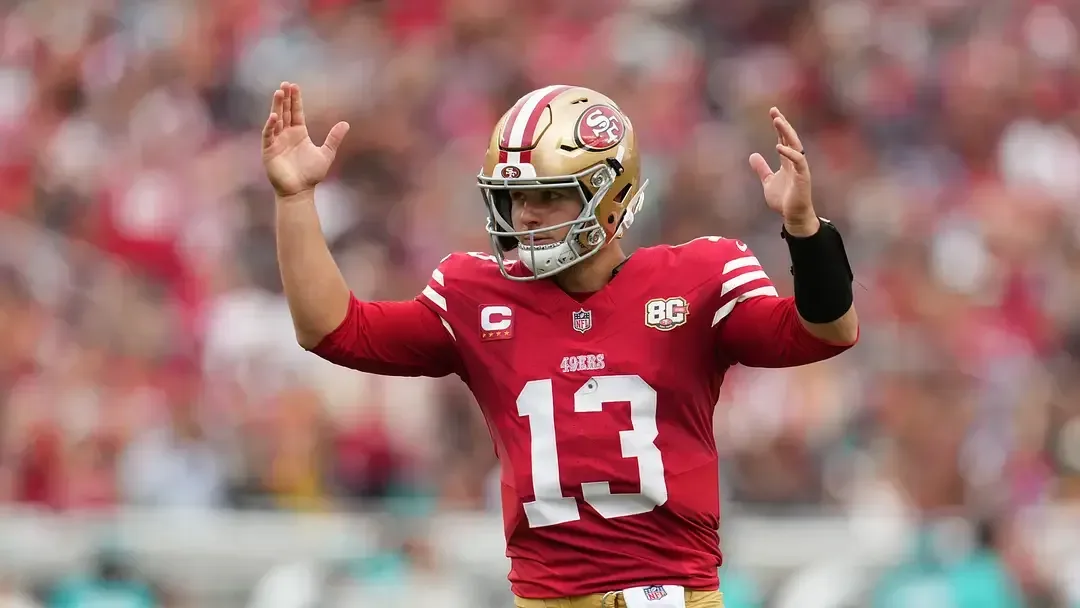
On the other side of the Week 2 quarterback landscape is Brock Purdy, whose market continues to strengthen as San Francisco stacks early wins. The 49ers are 2-0, and Purdy was highly efficient in the victory over Miami, throwing for nearly 300 yards and two touchdowns while missing on only a couple of passes.
That type of performance fits neatly with what has already become one of the most important hobby narratives of the season: Purdy is no longer just a feel-good success story. He is increasingly being priced like a quarterback capable of driving a legitimate contender deep into the postseason again.
Performance matters, but context matters just as much. San Francisco's system, supporting cast, and win expectation all create a favorable environment for hobby growth. Quarterbacks on teams expected to contend for conference titles tend to receive more benefit of the doubt from collectors, especially when efficiency numbers stay strong. Purdy has the advantage of both production and team credibility.
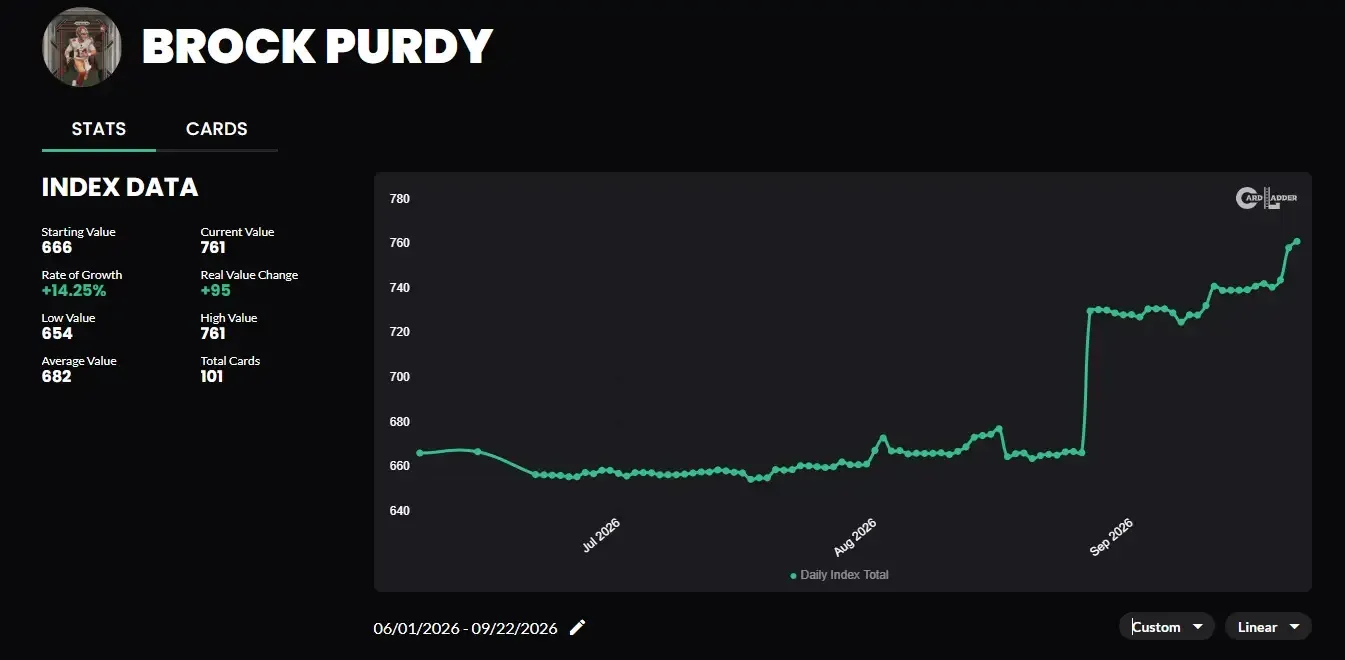
His market has reportedly risen by nearly 15 percent since June, and one of his cornerstone cards, the rookie Prizm PSA 10, has climbed by close to $250 over that span. That is a notable move, especially for a player whose market has already been heavily discussed since his rookie season.
The next step for Purdy's cards is simple: sustain the early-season pace and keep the 49ers near the top of the NFC. If that happens, flagship rookies, color parallels, and key autographs could continue trending toward the stronger levels seen during his earlier hobby peak. Another strong performance against a division opponent would only reinforce that momentum.
Collectors looking at Purdy now are not buying novelty. They are buying a quarterback who continues to compile wins, protects his statistical profile, and plays for a team with realistic Super Bowl aspirations. In football cards, that combination remains one of the safest formulas for steady in-season growth.
Why Purdy's market feels more durable than a quick spike
There is an important distinction between a player whose cards jump because of one hot game and a player whose cards rise because the broader hobby thesis keeps improving. Purdy appears closer to the second category.
He has already crossed several hurdles that often hold quarterbacks back. He has playoff credibility. He has a recognizable flagship rookie base. He has mainstream attention. And unlike speculative names whose values depend on what they might become, Purdy's market is increasingly tied to what he already is: a productive starter on a team expected to win a lot of games.
That does not make his cards immune to pullbacks. A poor stretch or an injury could change the mood quickly. But when collectors view a quarterback as playoff-relevant and system-stable, prices tend to hold better than they do for prospects still trying to prove they belong.
Tyler Shough is becoming one of the hobby's early surprise risers
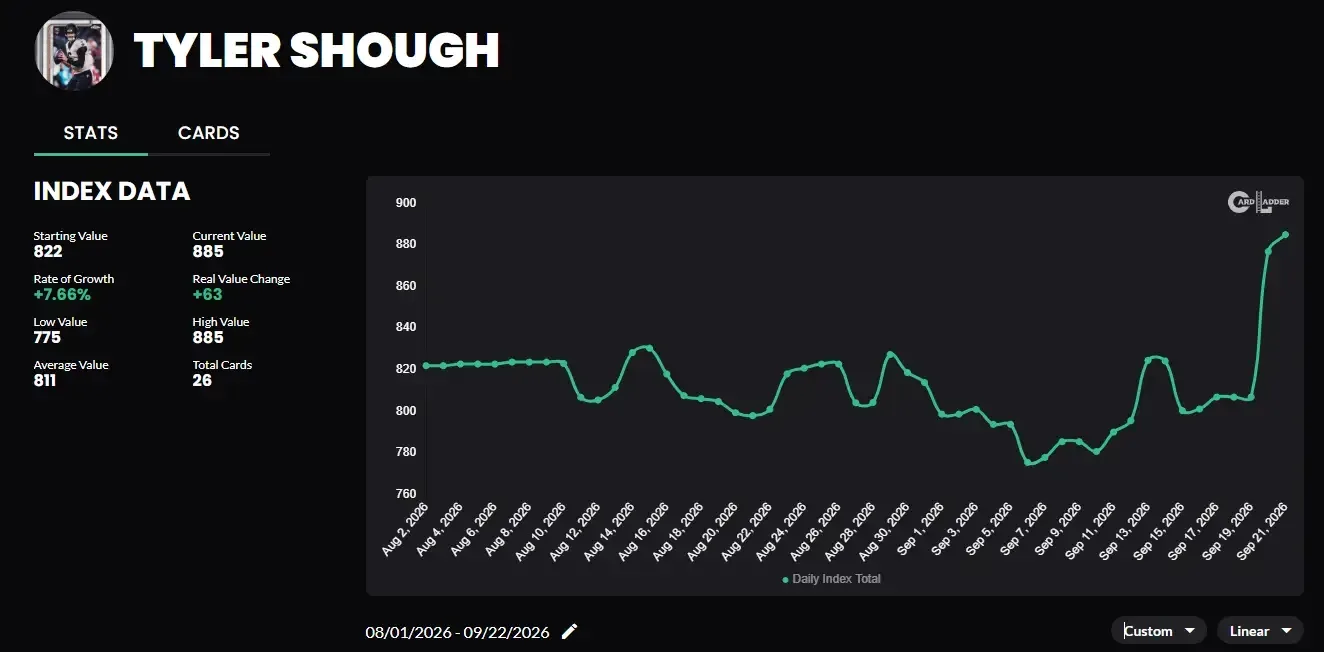
One of the biggest post-Week 2 winners is Tyler Shough. After already drawing attention following New Orleans' dramatic opener, he added another layer of credibility with an impressive road win in Baltimore. That combination has pushed his card market from curiosity status into a much more serious conversation.
Shough's rise is interesting because it is not just about box score momentum. It is also about opportunity. The quarterback market always looks for fresh stories, and at the moment there are not many newly drafted passers forcing their way into the spotlight. That has created space for Shough to attract collectors who want exposure to a quarterback with a visible path to wins and headlines.
Age has not hurt him as much as some might expect. At 26, Shough is older than the typical breakout investment target, but football card buyers will often overlook age when a quarterback starts producing in meaningful games. Winning changes the framing. Instead of focusing on prospect uncertainty, the hobby starts focusing on the possibility of a division title, strong counting stats, and national visibility.
That is where the Saints' team context becomes especially important. Through two weeks, New Orleans looks like the clear favorite in the NFC South. If that remains true, Shough could benefit from a schedule that gives him repeated chances to compile numbers and keep the team in first place. Collectors do not need a quarterback to be perfect for the market to rise. They need a believable path to relevance, and Shough currently has one.
There is also a scarcity angle at work. When the newest draft class is not providing immediate quarterback stars, hobby attention often concentrates on whichever emerging passer is actually delivering results. Shough has stepped into that vacuum at the right time.
What collectors should watch next with Shough
The question now is whether Shough's market can transition from fast spike to sustained tier change. A lot depends on whether the Saints keep winning and whether his individual play remains strong enough to support the story.
If New Orleans continues to control the division, his rookie cards could keep climbing, especially if more collectors begin treating him as a legitimate playoff quarterback rather than an early-season novelty. That kind of narrative upgrade is often the difference between a short-term run and a true market reset.
There is still risk. Shough's prospect profile was never universally embraced, and older breakout quarterbacks can face sharper corrections if performance dips. But right now, the market is rewarding results, and he is giving collectors exactly what they want: wins, visibility, and a believable path to relevance deep into the season.
How Week 2 reshapes the quarterback card market
The biggest takeaway from Week 2 is that the quarterback market remains brutally reactive, but not all reactions are created equal. Daniels and Dart are dealing with the type of injuries that can stall or reverse hobby momentum because so much of their value is tied to future projection. Williams appears to have avoided that same level of damage, which should help steady his market quickly.
Purdy, meanwhile, is benefiting from the opposite dynamic. Winning, efficiency, and team strength are reinforcing an already solid hobby profile. Shough is the early riser whose market is being pulled upward by both performance and a favorable competitive landscape.
For collectors, this is the point in the season when patience and timing matter most. Injured young quarterbacks can create future buying opportunities, but only if the risk is priced correctly. Established winners can keep climbing, but only if the team success continues. And emerging names like Shough can reward early conviction, though they also carry the sharpest week-to-week volatility.
As Week 3 approaches, the market focus will stay fixed on health updates for Daniels and Dart, San Francisco's ability to keep rolling with Purdy, and whether Shough can keep turning surprise into staying power.
Photo Gallery