Tight ends rarely command the same hobby attention as franchise quarterbacks, explosive rookie wide receivers, or headline-running running backs. Even productive veterans at the position can remain surprisingly affordable for long stretches, especially when their roles do not translate into fantasy football hype or weekly highlight packages.
Week 1 offered a reminder that the position still matters on the field and, at least in bursts, in the card market. Dalton Kincaid, Dallas Goedert, and Travis Kelce each delivered early production that gives collectors a reason to revisit their markets. The numbers are different for each player, and so are the hobby entry points, but all three fit the same bigger question: can elite or high-upside tight end play create meaningful momentum for football cards?
The early answer is yes, at least when performance, team context, and collector confidence line up.
Why tight ends usually lag in the hobby
The sports card market has long favored positions that feel easier to project and easier to sell. Quarterbacks drive NFL products. Wide receivers often bring flash plays and long touchdowns. Rookie running backs can spike quickly with a hot month. Tight ends usually live in a tougher lane, where strong real-life value does not always lead to fast hobby movement.
For more collector background, read Caleb Williams Card Market Jumps After Big NFL Week 1 Performance.
That gap can create opportunity. When a tight end becomes a trusted target in a productive offense, collectors can sometimes buy in at a lower level than they would for comparable production at another position. The challenge is that the market often needs repeated proof before prices make a meaningful jump.
Week 1 did not rewrite the entire football card landscape, but it did put three notable names back into focus for very different reasons. Kincaid looks like a young player with expanding star potential. Goedert remains a veteran whose prices still sit lower than many collectors would expect. Kelce is already an all-time great, and his market continues to reflect that status.
Dalton Kincaid showed the kind of usage collectors want to see
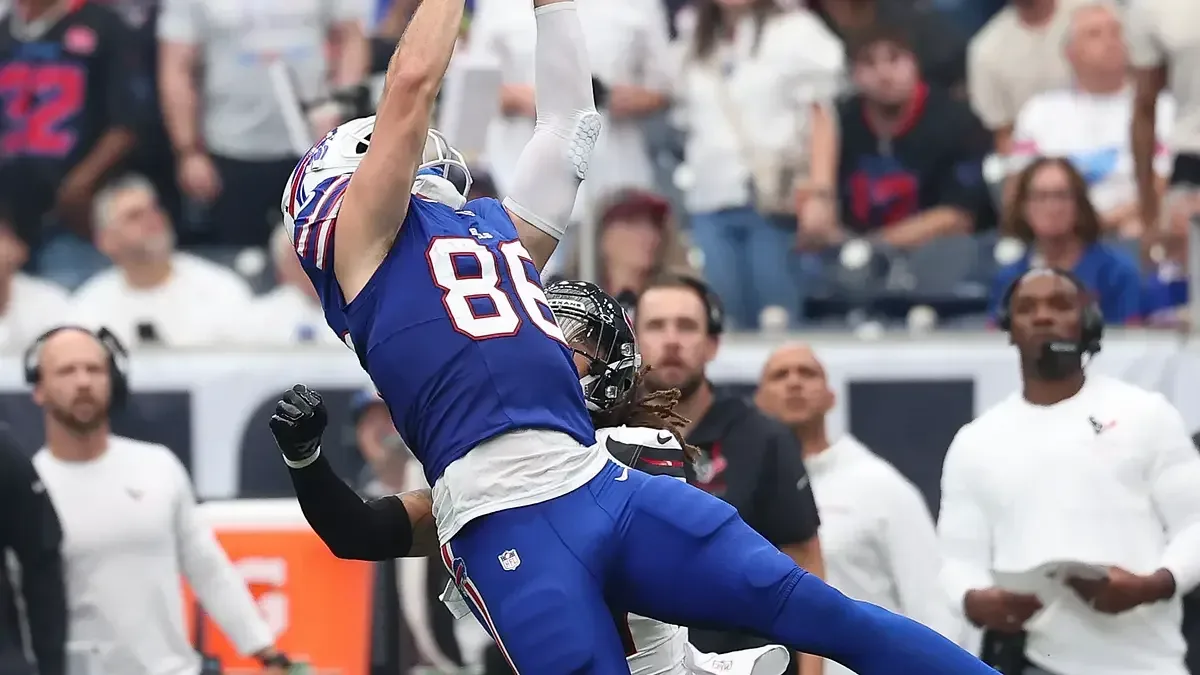
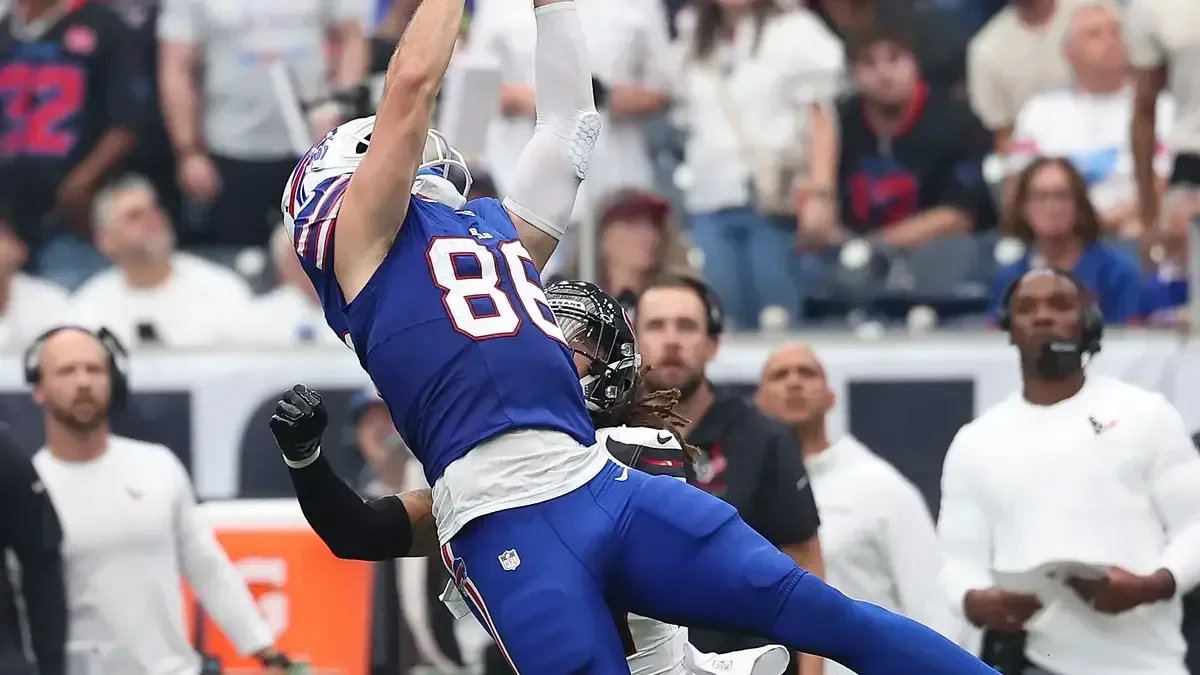
Buffalo’s Week 1 win over Houston gave collectors one of the clearest early signals of the season. Dalton Kincaid led the Bills in receiving and also led all NFL tight ends in receiving yardage for the week with 130 yards on five catches. More important than the raw total was what it suggested about his role. When Josh Allen leans heavily on a pass catcher, the hobby takes notice.
For young pass catchers, volume and quarterback trust are often the two biggest drivers of optimism. Kincaid checked both boxes immediately. A productive line in September can be dismissed as a small-sample outlier if it comes in a spread-the-ball attack. It becomes much more meaningful when it points to a tight end operating as a featured option in one of the league’s better offenses.
Collectors reacted fast. Card Ladder data showed 282 Kincaid cards sold in the three days after the win, a sharp burst of activity that reflects immediate buying interest. That kind of short-term rush does not guarantee long-term price growth, but it is the sort of response hobby watchers want to see when evaluating whether a player is moving from prospect intrigue into sustained demand.
Kincaid’s current high-water mark
Kincaid’s top public sale remains his 2023 Donruss Optic Rated Rookie Gold Vinyl Autograph 1/1, which sold for $4,999.99 on November 21, 2024. For a young tight end, that number is significant. It shows there is already willingness at the top of the market to chase premium, scarce rookie content tied to a player with offensive upside.
The next question is whether that ceiling can be tested again if his early-season role continues. Tight ends do not usually see the sort of week-to-week card spikes that skill-position rookies can generate, but Kincaid has a few advantages working in his favor. He is still early in his career, he plays with an elite quarterback, and he now has a Week 1 performance that supports the idea of true offensive centerpiece potential.
If Buffalo continues feeding him, collectors may start treating his top rookie autos less like niche positional cards and more like cornerstone pieces from a rising offensive star.
Dallas Goedert remains one of the more affordable proven names
Dallas Goedert’s Week 1 stat line was not built around massive yardage, but it was built around one thing the hobby always notices: touchdowns. The Eagles veteran caught four passes and turned two of them into scores, tying for the league lead in touchdown receptions among tight ends in the opening week.
There is also a larger usage angle here. With A.J. Brown no longer in Philadelphia, Goedert has a path to a more prominent role in the passing game. Continuity matters too. He and Jalen Hurts have been working together since 2020, and that familiarity can show up quickly when an offense needs dependable middle-of-the-field production. Add in the credibility of being part of a Super Bowl LIX-winning team, and Goedert checks several boxes that often help stabilize veteran card markets.
Yet his market remains approachable by modern football standards. That creates an interesting contrast. Goedert has name recognition, postseason credibility, and a productive start, but he still trades at a level far below the hobby’s headline tier.
Goedert’s key sales show the gap between production and price
His most expensive recorded card sale is a 2023 Panini Prizm Black Finite Prizm 1/1 that brought $1,200 on August 27, 2025. For a veteran starting tight end with a championship resume, that is modest compared with many star players at more celebrated positions.
His highest-selling rookie card is a 2018 Panini Contenders Cracked Ice Autograph PSA 10, which sold for $730 in 2019. What makes that card especially interesting now is the broader valuation context around it. Card Ladder places the value at nearly $4,500, suggesting the card could carry much more upside than its earlier sale history alone might indicate.
Goedert may never become a hobby centerpiece in the way a superstar quarterback can, but that is not the only path to relevance. There is room in the market for players whose prices lag behind role, résumé, and short-term production. If he keeps seeing red-zone looks and a larger target share, his cards could draw more attention from collectors looking for comparatively lower-cost football plays.
Travis Kelce is still the premium benchmark at the position
While Kincaid represents upside and Goedert represents relative value, Travis Kelce remains the established standard for tight end cards. His Week 1 line against Denver was not explosive by wide receiver standards, but for Kelce it served as another reminder that he is still heavily involved. He led Kansas City in receiving with 71 yards on three catches, his highest single-game receiving total since the 2022 season opener.
For collectors, Kelce is not a speculative buy. He is already an accomplished, historically significant player with one of the strongest résumés ever assembled at the position. That pushes his best cards into a completely different pricing tier from most tight ends, and Week 1 did nothing to weaken that standing.
The veteran also continues to stack milestones that matter in the hobby. Monday night’s production moved him past Jason Witten and into second place all-time in receiving yardage by a tight end. Record-chasing seasons often help keep legendary players relevant in the market, especially when they are still performing for a contender and still appearing regularly in national spotlight games.
Kelce’s market requires a premium commitment
Collectors looking for Kelce at the very top of the market are dealing with five-figure territory. His highest public sale is a 2013 National Treasures RC NFL Shield Auto 1/1, which sold for $32,700 on September 25, 2025. That number reflects more than a hot game or a temporary trend. It reflects legacy, scarcity, championship relevance, and long-term hobby trust.
Kelce also benefits from broad recognition beyond pure football circles, which can matter more than some collectors admit. Cross-audience visibility tends to keep stars in the conversation, and sustained cultural relevance can help preserve liquidity, especially for iconic rookie issues and ultra-premium patch autos.
There may not be much “hidden value” left at the top end of the Kelce market, but there is still a clear case for strength. If he stays healthy and continues adding to his career totals, his best cards should remain among the strongest tight end assets in the hobby.
What Week 1 may mean for the tight end card market
One big week does not create a full positional renaissance by itself. The football card market still revolves around quarterbacks first, with explosive skill-position stars close behind. But Week 1 did highlight an important truth: when tight ends produce in visible ways, collectors respond.
Kincaid’s surge looked like a classic early-career momentum play, backed by strong usage and immediate market activity. Goedert’s outing underscored how a proven veteran can remain undervalued even while stepping into a larger offensive role. Kelce reinforced that the top of the position still has real heavyweight status when a player pairs all-time production with iconic cards.
There is also a healthy collector lesson here. Tight ends can occupy different hobby lanes at once. Some are breakout candidates. Some are value buys. Some are legacy holds. The position may never dominate football cards the way quarterbacks do, but it can absolutely create meaningful opportunities for collectors who pay attention to usage trends, offensive context, and scarcity at the card level.
Key cards and market markers to watch
For collectors tracking this segment of the football market, these are the early reference points coming out of Week 1:
- Dalton Kincaid: 130 receiving yards on five catches in Week 1, 282 card sales in three days after the win, and a top sale of $4,999.99 for a 2023 Donruss Optic Rated Rookie Gold Vinyl Autograph 1/1.
- Dallas Goedert: Four catches and two touchdowns in Week 1, a top sale of $1,200 for a 2023 Panini Prizm Black Finite Prizm 1/1, plus a notable 2018 Panini Contenders Cracked Ice Autograph PSA 10 rookie card with a past sale at $730 and a much higher current valuation estimate.
- Travis Kelce: 71 receiving yards on three catches in Week 1, a move into second place all-time in tight end receiving yardage, and a market peak of $32,700 for a 2013 National Treasures RC NFL Shield Auto 1/1.
That spread of data tells the story well. Kincaid brings rising-young-player energy, Goedert offers a lower-cost veteran profile with room to move, and Kelce remains the premium standard collectors use when measuring the top of the tight end market.
Photo Gallery