Teruaki Sato is becoming one of the most closely watched names in the baseball card market outside Major League Baseball. After a monster season in Nippon Professional Baseball, the Hanshin Tigers slugger has moved from a niche international target to a player many collectors now view as a legitimate crossover star.
The appeal is easy to understand. Japan has produced a long list of players whose collecting markets expanded dramatically once MLB attention followed. For Sato, the hobby story is being built on power, production, and the possibility of even bigger visibility ahead. His recent numbers have pushed collectors toward scarce autographs and rookie-era cards, and several sales in 2026 show real momentum at the top of his market.
With Sato coming off a Triple Crown season and back-to-back elite power years, his cardboard has shifted from curiosity to upside play. The early market leaders are already taking shape.
Why Teruaki Sato Has Collectors Paying Attention
Sato’s latest season gave the hobby a clear statistical headline. He hit .306 with 39 home runs and 106 RBI, good enough to capture the Triple Crown. That kind of season carries weight in any professional league, and it gives collectors a simple narrative to rally around: elite production from a player still gaining broader international attention.
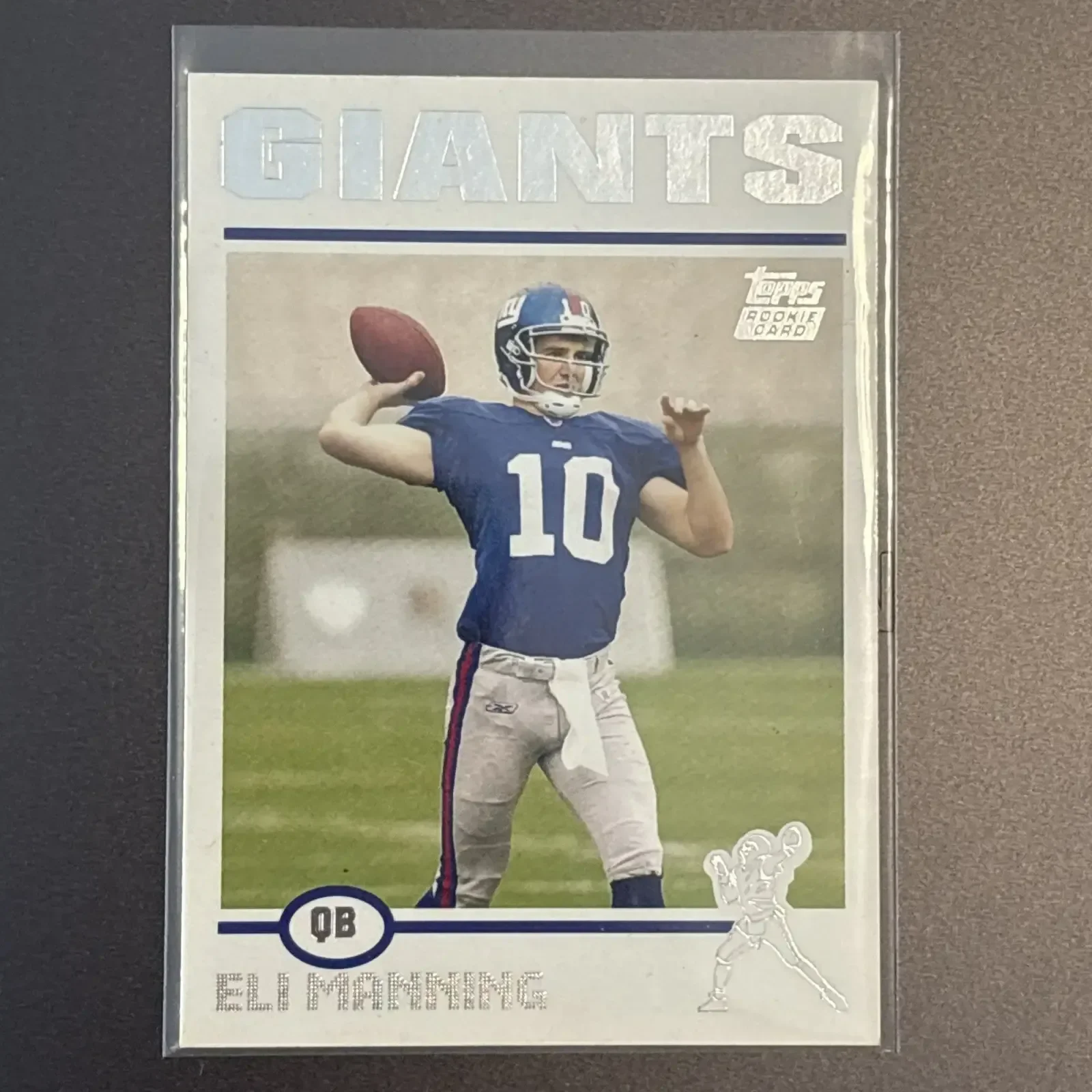
For more collector background, read Top 3 Eli Manning Football Cards That Define His Collecting Legacy.
The year before was hardly a fluke. Sato also posted 40 home runs and 102 RBI in the previous season, reinforcing the idea that his power is not a one-year spike. For collectors, that matters as much as any individual sale. Sustained production tends to support stronger long-term interest, especially when the player has room to grow in visibility beyond his home league.
That combination of performance and perceived future upside is now showing up in auction results and asking prices. The market is still developing, but the premium cards have already started to separate themselves from the rest of the field.
The Highest Recorded Sato Card Sale So Far
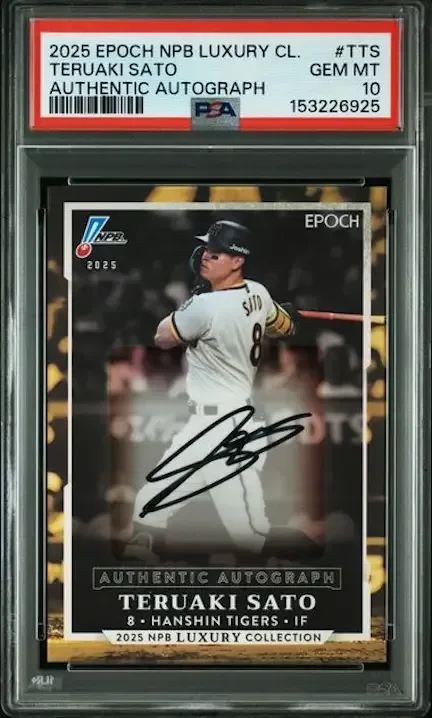
The current top public sale noted in the market is a 2025 EPOCH Authentic Autograph numbered to 39 in PSA 10 condition. That card sold for $2,450 on August 19, 2026, making it the strongest reported sale among Sato cards referenced here.
There are a few reasons this card makes sense at the top. First, it combines an established Japanese manufacturer with an autograph and a low serial number. Second, the PSA 10 grade adds another layer of scarcity, since premium-condition examples can be much harder to find than raw copies. Third, the timing aligned with Sato’s biggest on-field breakthrough, which often gives a sharp lift to rare, high-end material.
Collectors chasing Sato at the top of the market are clearly prioritizing three things: autograph content, low print runs, and condition. The EPOCH sale checks every box, which is why it currently stands as the benchmark.
Other Key Sales Driving the Market
Behind the leading EPOCH autograph, two more notable transactions help define the upper tier of Sato’s card market.
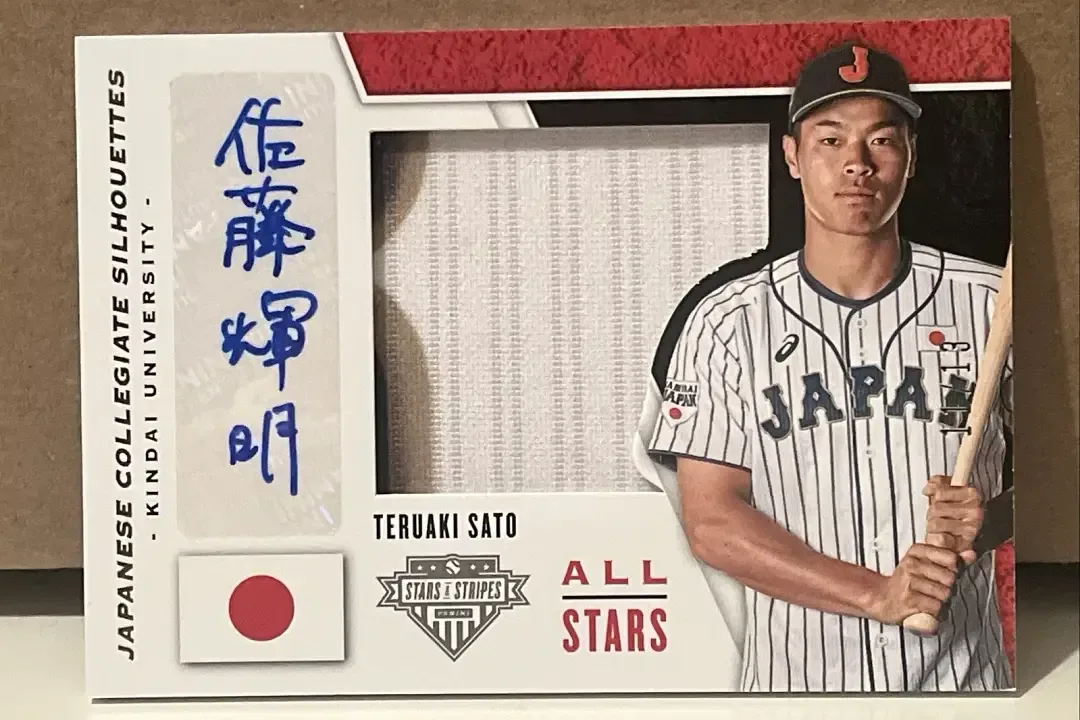
The second-highest reported sale is a 2019 Panini Stars & Stripes Autograph Patch numbered to 13, which sold for $2,200 on July 8, 2026. The appeal here is obvious. Patch autographs with a low serial number tend to draw strong interest even when they fall outside a player’s more traditional home-market releases. In Sato’s case, the card also benefits from being an early and visually premium issue, which gives it extra hobby visibility.
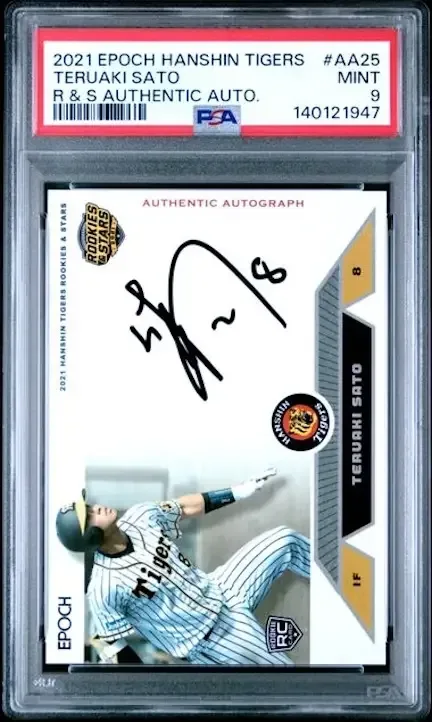
The third-highest sale referenced is a 2021 BBM Hanshin Tigers Rookies & Stars RC Auto numbered to 39 in PSA 9, which reached $2,000 on July 8, 2026. This card may be especially important to collectors who want a truer rookie-era anchor in the Sato market. BBM has long been a familiar name for collectors of Japanese baseball cards, and rookie autographs often become foundational cards for players who continue building their resume.
Taken together, these sales show that the market is not relying on a single outlier. Multiple cards across different brands and formats have reached strong levels, suggesting a growing base of collector confidence.
Teruaki Sato Cards Collectors Are Watching
Several specific cards stand out as the early pillars of Sato’s market:
- 2025 EPOCH Authentic Autograph /39 PSA 10 – Reported sale: $2,450 on August 19, 2026
- 2019 Panini Stars & Stripes Autograph Patch /13 – Reported sale: $2,200 on July 8, 2026
- 2021 BBM Hanshin Tigers Rookies & Stars RC Auto /39 PSA 9 – Reported sale: $2,000 on July 8, 2026
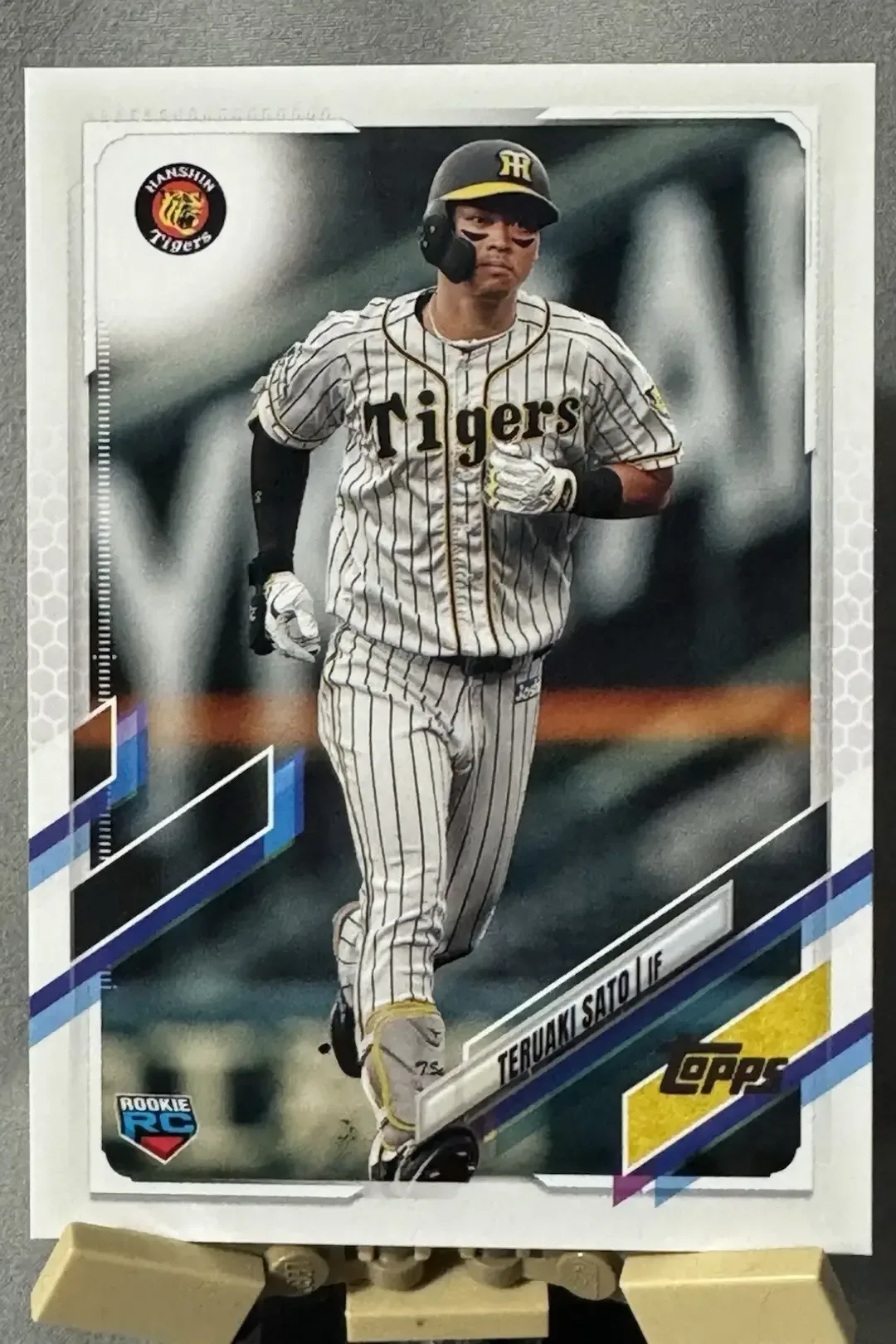
- 2021 Topps NPB Hanshin Tigers #N16 – Entry-level rookie card with lower buy-in
- 2021 Topps Chrome NPB Teruaki Sato – Chrome version drawing more hobby attention
- 2021 Topps Chrome Refractor NPB Teruaki Sato – More premium parallel with stronger pricing
That mix matters because it gives collectors multiple lanes into the market. High-end buyers can compete for low-numbered autographs, while prospect-minded collectors can still target more affordable rookie cards and parallels.
Entry-Level Sato Cards Still Offer a Lower-Cost Route
Not every Sato card requires four figures. Some of his most accessible issues still trade at levels that leave room for movement if collector demand continues to build.
The 2021 Topps NPB rookie card has been available around $25. The 2021 Topps Chrome version has been around $50. A 2021 Topps Chrome Refractor has been closer to $150. Those prices place Sato in an interesting part of the market: expensive enough that collectors are clearly paying attention, but still low enough that many hobby participants will view them as speculative buys rather than fully priced stars.
For collectors who prefer liquidity and broad recognizability, Topps-branded cards often become an important on-ramp. They may not carry the same scarcity as low-numbered autographs, but they can attract a much wider buyer pool. If demand accelerates, these are often the cards that see a fast increase simply because more collectors can afford to chase them.
What Is Fueling the Market Right Now
At this stage, Sato’s hobby rise is being driven by equal parts performance and projection. The performance case is already strong. A Triple Crown season, nearly 40 home runs, and consecutive years of elite run production give collectors a substantial statistical base.
The projection case is what adds heat. Whenever a Japanese star begins to look like a possible crossover name, collectors often move early. They are not just buying what the player has already done. They are buying the possibility of a larger stage, broader media attention, and a much deeper collector audience.
That kind of anticipation can create sharp swings. It tends to push rare autograph cards higher first, then pull rookie cards and recognizable chromium issues along with them. Sato’s market appears to be following that pattern.
Risk Factors Collectors Should Keep in Mind
As promising as the trend looks, this is still a market with clear risk. The first is timing. Anticipation can boost prices quickly, but if the next major career step takes longer than expected, some cards can cool just as fast. Prospect-style momentum does not always move in a straight line.
The second is the gap between domestic success and broader hobby adoption. Collectors who focus heavily on MLB products may not immediately rush into every NPB star, even when the talent is obvious. Some players transition to larger hobby relevance more smoothly than others, and card prices often reflect that uncertainty long before a player appears on a new stage.
Another factor is card selection. Not every Sato issue will rise at the same rate. Scarce autograph cards with strong visual appeal and established grading support are usually better positioned than generic base issues. Collectors entering the market now may want to decide whether they are prioritizing rarity, rookie status, brand familiarity, or affordability.
How Sato Fits Into the International Baseball Card Trend
Sato’s rise also reflects a broader shift in collecting. International baseball cards no longer sit as far outside the mainstream as they once did. More collectors now track NPB and other overseas markets, especially when a player shows middle-of-the-order power and potential for a larger spotlight.
That expanding awareness helps players like Sato because it creates demand before any career change becomes official. The market no longer needs to wait for a full transition to start pricing in upside. As soon as performance reaches star level, collectors start identifying which cards could become flagship pieces.
In Sato’s case, the early hobby leaders are already clear. EPOCH autographs, BBM rookie-era signed cards, and accessible Topps NPB rookies have all taken on bigger importance as his profile rises.
The Cards Most Likely to Stay in Focus
If collector attention keeps building, the cards most likely to remain central are the ones that tell the cleanest story. The 2025 EPOCH Authentic Autograph /39 PSA 10 currently serves as the headline sale. The 2021 BBM Hanshin Tigers Rookies & Stars RC Auto /39 PSA 9 offers rookie-year appeal with autograph scarcity. The 2021 Topps NPB and Topps Chrome issues remain the easiest way for a wider hobby audience to enter the market.
That gives Sato a healthy collecting ladder. Premium investors can chase trophy pieces. Mid-tier buyers can look for signed rookie material. Budget-conscious collectors still have recognizable rookie cards and refractors available at levels that remain approachable compared with many established stars.
For now, the market is being shaped by production, scarcity, and expectation. With a Triple Crown season now attached to his resume, Teruaki Sato has already given collectors a meaningful reason to keep watching his next card sale as closely as his next stat line.
Photo Gallery