The late 2000s delivered one of the most experimental and memorable stretches in Pokémon TCG history. It was a period that gave collectors and players Delta Species twists, LV.X stars, Team Galactic cards, and the unforgettable Prime era. With those designs now resurfacing in Pokémon 30th Celebration’s Classic Collection, collectors have a fresh chance to compare modern reprints with the cards that originally defined the era.
Five cards in particular stand out as snapshots of that time: EX Delta Species Metagross, Great Encounters Palkia LV.X, Legends Awakened Uxie, Platinum Crobat G, and HGSS Triumphant Gengar Prime. Some are driven almost entirely by nostalgia. Others still carry the weight of their competitive legacy. And in a few cases, the market gap between reprint and original says plenty about how collectors view each card today.
Why the late-2000s era still matters in Pokémon TCG
This stretch of Pokémon TCG history remains important because it blended gameplay innovation with card design that still feels distinct today. Delta Species cards reimagined familiar Pokémon through unusual typing. LV.X cards became prestige pulls that also had real tournament importance. Team Galactic-era cards added strong thematic identity, while Prime cards pushed bold close-up artwork that remains instantly recognizable.
That variety is a major reason these cards continue to resonate. They are not all expensive, and they are not all flashy, but each one represents a specific moment when the game was trying something different. Pokémon 30th Celebration leans into that history by reviving cards that longtime collectors remember from binders, decks, and chase lists.
For more collector background, read Pokémon 30th Celebration Reprints vs. Original Cards: Early Price Gaps for Pikachu, Charizard, Misty and More.
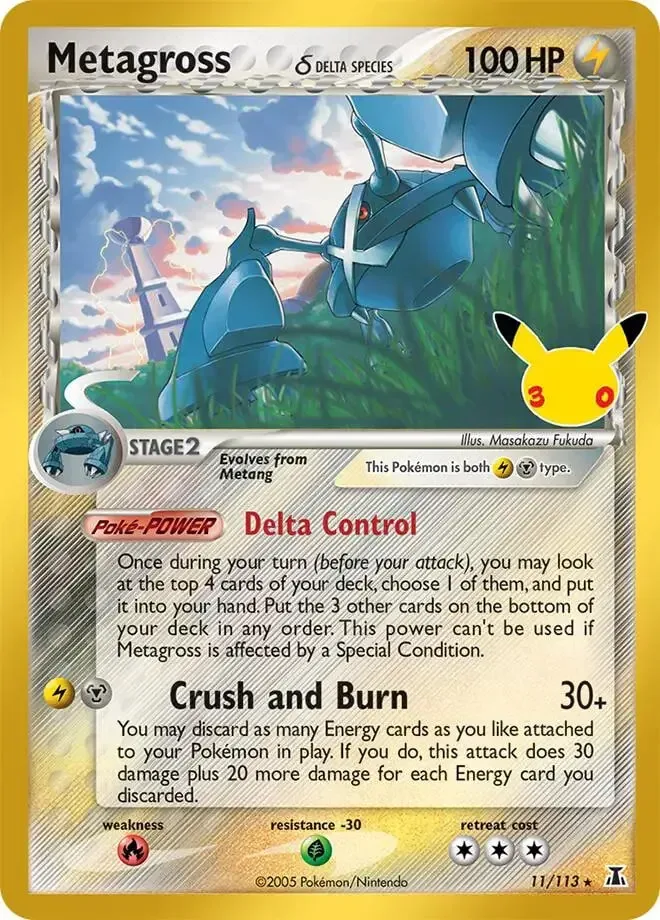
EX Delta Species Metagross brings back a true gimmick era
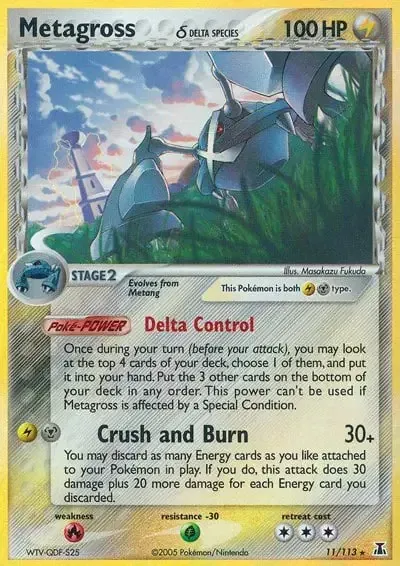
Few concepts in Pokémon TCG history capture their era quite like Delta Species. The mechanic altered Pokémon typings in ways that opened up unusual synergies and more creative deck-building decisions. For collectors who remember that period, the appeal was not just that the cards looked different. They also played differently, and that helped the set line build a lasting identity.
Metagross from EX Delta Species fits squarely into that conversation. It is not the most celebrated Metagross card ever printed, and it is not among the biggest stars in the Classic Collection, but it carries the weight of a very specific kind of nostalgia. For many collectors, that is enough.
The 30th Celebration reprint is currently one of the more affordable cards in the Classic Collection, sitting around $13. The original versions hold a stronger position. The standard holo trends near $130, while the reverse holo with the set logo frame is even higher at about $180.
That pricing gap suggests the original still matters far more than the reprint for collectors chasing authentic mid-2000s Pokémon TCG history. In this case, the reprint functions more as a tribute piece than a serious challenger to the original card’s standing.
Palkia LV.X shows why the LV.X era remains a collector favorite
LV.X cards continue to rank among the most beloved special card types in the hobby. They delivered premium presentation, competitive relevance, and a visual style that still feels unique compared with modern Pokémon releases. Even years later, the format stands as a high point for many collectors who grew up during that generation.
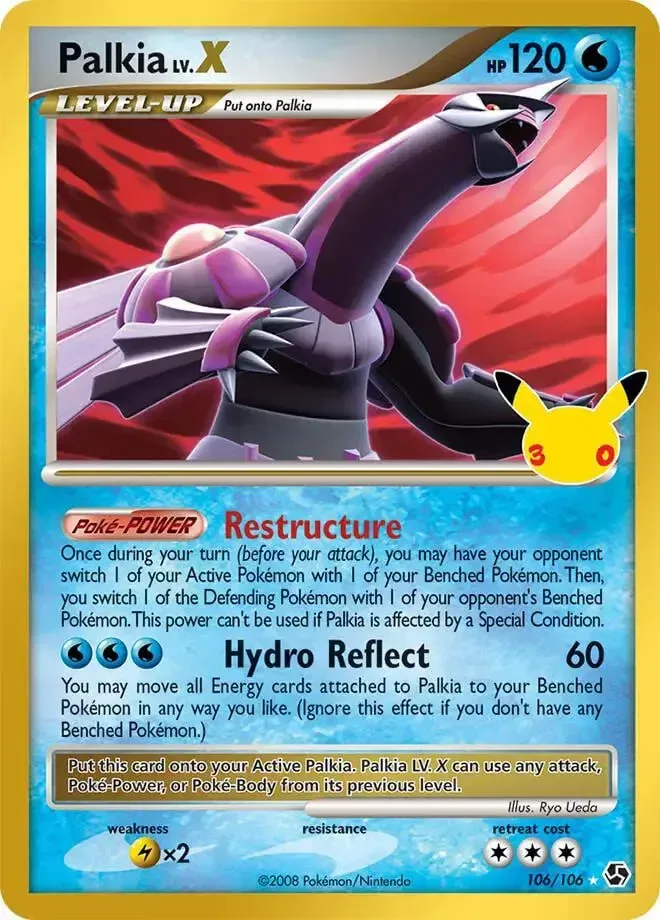
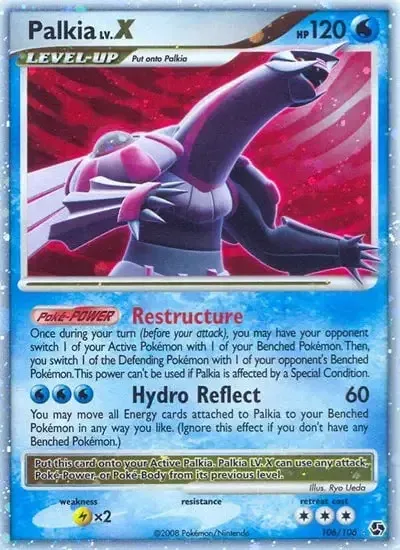
Palkia LV.X from Great Encounters may not sit at the very top of the LV.X hierarchy, but it remains an impressive card with broad nostalgia appeal. It may not command the same reputation as the era’s most dominant names, yet its design and historical placement still make it a standout inclusion in 30th Celebration.
The pricing difference between the reprint and original tells a clear story. The 30th Celebration version sits at roughly $14, making it accessible for collectors who want the look without paying premium-era prices. The original Great Encounters Palkia LV.X is in a much stronger position at around $215 and has been steadily climbing.
That kind of separation often reflects more than scarcity alone. It also reflects how much the original card’s design language, release-era prestige, and collector memory contribute to demand. For LV.X cards, those factors remain powerful, and Palkia is a good example of that staying power.
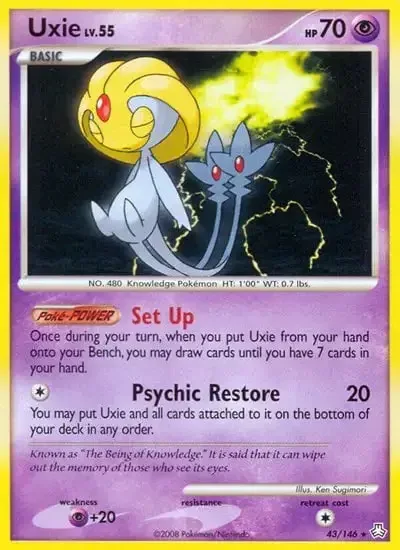
Legends Awakened Uxie is a reminder that playability can create legacy
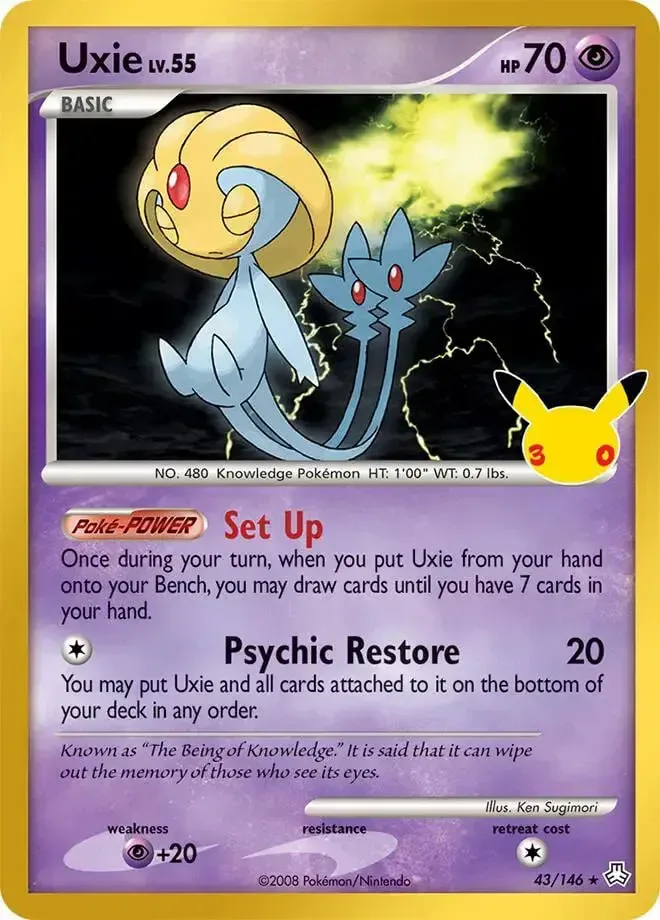
Not every card in a nostalgic subset needs to be a visual blockbuster. Some cards earn their place because they mattered when decks were being built and tournaments were being won. Uxie from Legends Awakened falls into that category.
At first glance, it is not the kind of card that overwhelms collectors with dramatic artwork or premium rarity appeal. Its long-term reputation comes more from utility, especially its role as a dependable support card through its Poké-POWER. That competitive usefulness helped give Uxie a place in Pokémon TCG memory even if it never became a true trophy chase card.
The 30th Celebration Uxie is among the cheapest cards in the Classic Collection at about $8. The original is still modestly priced at around $18, with the reverse holo sitting only slightly higher at roughly $23.
What makes Uxie interesting is how it bridges two collecting mindsets. For art-first buyers, it may seem underwhelming. For longtime players, it represents a key piece of deck-building history. That balance helps explain why it remains part of the conversation even without the dramatic price tags seen on bigger-name cards.
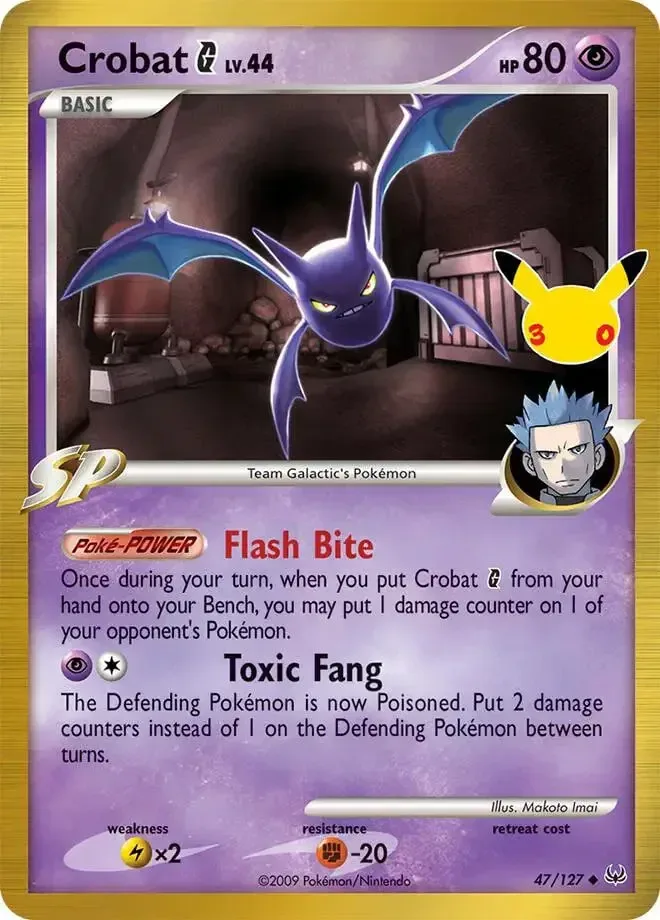
Crobat G flips the script with a reprint that outpaces the original base card
The Platinum-era Team Galactic cards carry a style all their own, and Crobat G remains one of the clearest examples. The “G” branding gave the card instant identity, tying it directly to one of the more memorable thematic runs in the Pokémon TCG. Even beyond the branding, Crobat G also built a following because of how useful it was in actual competition.
Its Poké-POWER, Flash Bite, helped make it a staple inclusion in a range of decks during its Standard-format life. That sort of competitive utility can leave a lasting impression, especially when paired with a card frame and naming convention that still feels distinctive years later.
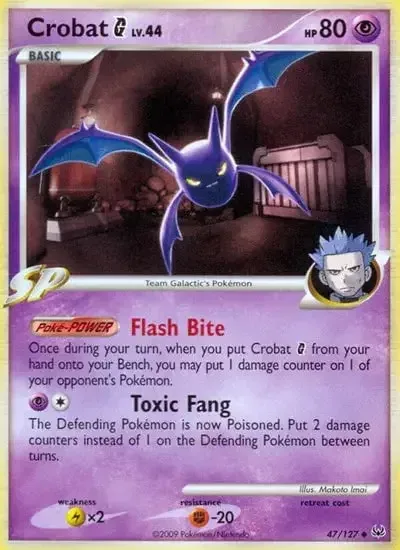
The market picture here is unusual. The 30th Celebration Classic Collection Crobat G is around $8, while the original base version from Platinum sits near $3. That makes it one of the few cases in this group where the reprint has actually moved ahead of the original regular copy. The reverse holo original, however, jumps to nearly $20 and restores some of the original card’s hierarchy.
That split is a useful reminder that not all originals behave the same way. Base copies, holo treatments, reverse versions, and release-era context all matter. In Crobat G’s case, collectors appear to be assigning stronger short-term value to the reprint than to the standard original, while still respecting the premium attached to a more desirable original variant.
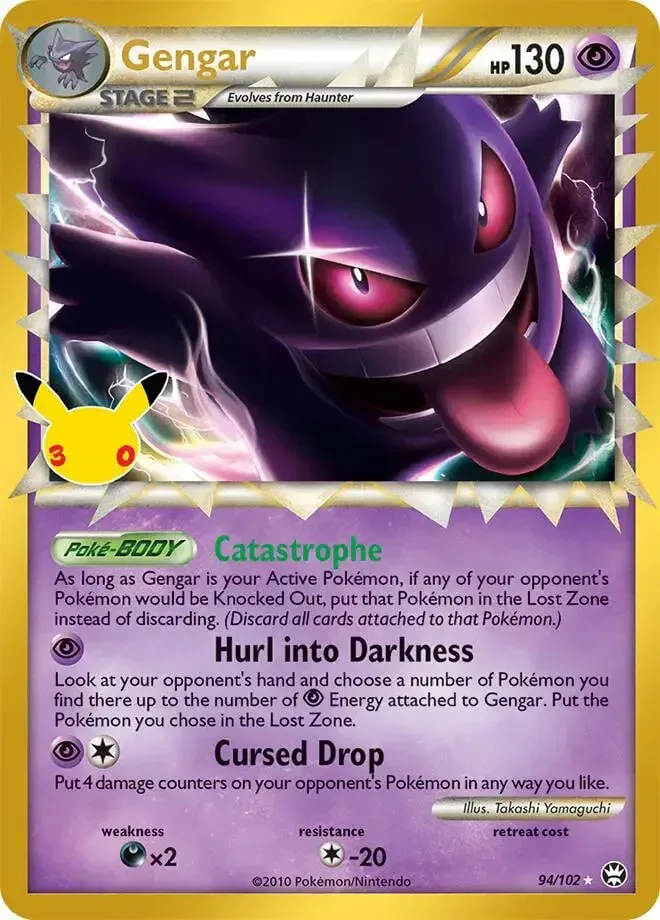
Gengar Prime remains the heavyweight of this group
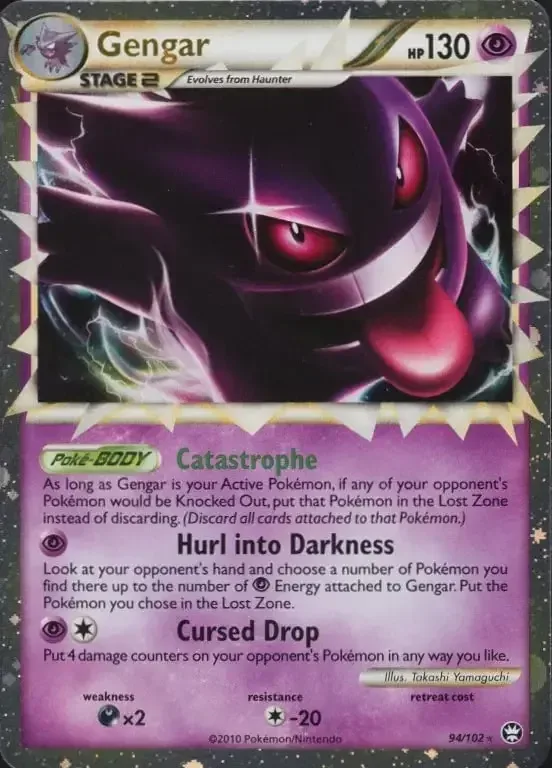
If one card in this batch carries clear headliner energy, it is Gengar Prime from HGSS Triumphant. Prime cards are already iconic within the hobby, and Gengar is one of the Pokémon most likely to command collector attention in nearly any format or era. Put those two factors together, and the result is one of the standout cards from the late 2000s and early HGSS period.
Part of the appeal comes from the Prime template itself. The close-up composition gives the impression that the Pokémon is coming right through the card frame, and that design choice helped separate Prime cards from many other premium styles in the game’s history. For Gengar, a Pokémon already associated with personality and visual impact, the format works especially well.
The 30th Celebration reprint remains relatively affordable compared with the original at around $80. That number is notable on its own, but the original HGSS Triumphant Gengar Prime still towers above it at roughly $560 in ungraded near-mint condition.
Among the cards in this five-card comparison, Gengar Prime has the clearest premium profile. It is presented not just as a nostalgic callback but as a card with enduring collector demand. Even if opinions vary on its competitive legacy, there is little debate about its status as a major collection piece from the era.
Price comparison checklist
Here is a quick look at how the five 30th Celebration cards compare with their original versions based on the supplied market figures.
- EX Delta Species Metagross
- 30th Celebration reprint: about $13
- Original holo: about $130
- Original reverse holo: about $180
- Great Encounters Palkia LV.X
- 30th Celebration reprint: about $14
- Original: about $215
- Legends Awakened Uxie
- 30th Celebration reprint: about $8
- Original: about $18
- Original reverse holo: about $23
- Platinum Crobat G
- 30th Celebration reprint: about $8
- Original base card: about $3
- Original reverse holo: nearly $20
- HGSS Triumphant Gengar Prime
- 30th Celebration reprint: about $80
- Original near-mint ungraded: about $560
What these five cards say about reprints and originals
The broad pattern is easy to spot. In most cases, the original card still carries much more market weight than the 30th Celebration reprint. That is especially true for Metagross, Palkia LV.X, and Gengar Prime, where the gap is wide enough to show how strongly collectors value the original release context.
Uxie sits in a different lane, with both reprint and original remaining affordable. That makes it less of a value battle and more of a historical marker for players who remember how useful the card was in decks.
Crobat G is the outlier, at least when comparing the reprint to the original base version. Its pricing suggests that modern nostalgia products can occasionally outpace a lower-tier original printing, particularly when the original regular copy does not command strong standalone demand. Once a premium original variant enters the picture, though, the balance shifts again.
Collector takeaway for this section of 30th Celebration
This five-card group works well because it does not rely on a single type of nostalgia. It spans creative mechanics, competitive staples, stylistic milestones, and one true heavyweight in Gengar Prime. That makes it a strong snapshot of why the late 2000s still hold such an important place in Pokémon collecting.
For collectors deciding between reprints and originals, the answer depends on the goal. The 30th Celebration versions offer a lower-cost path into some iconic designs and gameplay memories. The originals still hold the edge for authenticity, long-term nostalgia weight, and in most cases, stronger market respect. That is especially visible with cards like Palkia LV.X and Gengar Prime, where the gap between tribute and era-defining original remains substantial.
Anyone building around this period of Pokémon TCG history can also see how varied late-2000s collecting really was. A Delta Species Metagross, a support-driven Uxie, a Team Galactic Crobat G, and a Prime-era Gengar all come from different corners of the hobby, yet each one captures a real piece of what made that era memorable.
Photo Gallery